

1. Search Result
Search Result
Results for "

binding specificity

" in MedChemExpress (MCE) Product Catalog:

467

Inhibitors & Agonists

9

Screening Libraries

20

Fluorescent Dyes

34

Biochemical Assay Reagents

73

Peptides

6

MCE Kits

18

Inhibitory Antibodies

27

Natural
Products

17

Isotope-Labeled Compounds

65

Click Chemistry

17

Oligonucleotides

1

GMP Molecules

Cat. No. Product Name Target Research Areas Chemical Structure
  • HY-100675
    JTE-013
    5+ Cited Publications

    LPL Receptor Apoptosis Cancer
    JTE-013 is a potent and specific S1P2 (Sphingosine-1-Phosphate 2; EDG-5) antagonist. JTE-013 inhibits the specific binding of radiolabeled S1P to human and rat S1P2 with IC50s of 17 nM and 22 nM, respectively .
    JTE-013
  • HY-151835

    ADC Linker Others
    DBCO-PEG24-NHS ester is a click chemistry reagent. DBCO-PEG24-NHS ester is a click chemistry PEG reagent containing NHS ester that is able to react specifically and efficiently with primary amines (e.g. the side chain of lysine residues or aminosilane-coated surfaces) at neutral or slightly basic condition to form a covalent bond. The hydrophilic PEG spacer arm improves water solubility and provides a long and flexible connection that minimizes steric hindrance involved with ligation. DBCO is commonly used for copper-free Click Chemistry reactions. Reagent grade, for research use only .
    DBCO-PEG24-NHS ester
  • HY-151857
    TAMRA azide, 5-isomer
    1 Publications Verification

    Fluorescent Dye Others
    TAMRA azide, 5-isomer is a click chemical containing azide groups that can be used as a linker for TAMRA. The azide group of TAMRA Azide, 5-isomer enables copper-catalyzed click chemical reactions with alkynes, DBCO, and BCN . It contains an azide group and can undergo copper-catalyzed azide-alkyne cycloaddition (CuAAc) with molecules containing alkyne groups. It can also undergo ring strain-promoted alkyne-azide cycloaddition (SPAAC) with molecules containing DBCO or BCN groups (Ex/Em = 555/580 nm).
    TAMRA azide, 5-isomer
  • HY-D0838

    Biochemical Assay Reagents Others
    Dodecyltrimethylammonium bromide (DTAB) is a surfactant. Dodecyltrimethylammonium bromide interacts with DNA and changes the mechanical properties of DNA on binding and the specific binding parameters of the interaction .
    Dodecyltrimethylammonium bromide
  • HY-151840

    ADC Linker Others
    4-Azidobenzyl alcohol is a click chemistry reagent containing an azide group . 4-Azidobenzyl alcohol is a click chemistry reagent, it contains an Azide group and can undergo copper-catalyzed azide-alkyne cycloaddition reaction (CuAAc) with molecules containing Alkyne groups. It can also undergo strain-promoted alkyne-azide cycloaddition (SPAAC) reactions with molecules containing DBCO or BCN groups.
    4-Azidobenzyl alcohol
  • HY-151834

    ADC Linker Others
    DBCO-PEG2-DBCO is a click chemistry reagent containing a DBCO group. DBCO-PEG2-DBCO is a PEG linker containing two terminal DBCO groups. The DBCO groups is commonly used for copper-free Click Chemistry reactions due to its strain promoted high energy. T Reagent grade, for research use only .
    DBCO-PEG2-DBCO
  • HY-151817

    Biochemical Assay Reagents Others
    5-Azidomethyl-uridine is a click chemistry reagent containing an azide group. The azide function is widely used for coupling to alkyne-containing fragments via the renowned Click reaction.
    5-Azidomethyl-uridine
  • HY-151827

    ADC Linker Others
    DBCO-PEG2-NHS ester is a click chemistry reagent containing an azide group. DBCO-PEG2-NHS ester is a click chemistry PEG reagent containing NHS ester that is able to react specifically and efficiently with primary amines (e.g. the side chain of lysine residues or aminosilane-coated surfaces) at neutral or slightly basic condition to form a covalent bond. The hydrophilic PEG spacer arm improves water solubility and provides a long and flexible connection that minimizes steric hindrance involved with ligation. DBCO is commonly used for copper-free Click Chemistry reactions. Reagent grade, for research use only .
    DBCO-PEG2-NHS ester
  • HY-101908
    BMS CCR2 22
    1 Publications Verification

    CCR Inflammation/Immunology Endocrinology
    BMS CCR2 22 is a potent, specific and high affinity CC-type chemokine receptor 2 (CCR2) antagonist with excellent binding affinity (binding IC50 of 5.1 nM) and potent functional antagonism (calcium flux IC50 of 18 nM and chemotaxis IC50 of 1 nM) .
    BMS CCR2 22
  • HY-151863

    ADC Linker Others
    alpha-GalNAc-TEG-N3 is a click chemistry reagent. Click chemistry has great potential for use in binding between nucleic acids, lipids, proteins, and other molecules, and has been used in many research fields because of its beneficial characteristics, including high yield, high specificity, and simplicity . It contains an azide group and can undergo copper-catalyzed azide-alkyne cycloaddition (CuAAc) with molecules containing alkyne groups. It can also undergo ring strain-promoted alkyne-azide cycloaddition (SPAAC) with molecules containing DBCO or BCN groups.
    alpha-GalNAc-TEG-N3
  • HY-151847
    N3-TEMPO
    2 Publications Verification

    ADC Linker Others
    N3-TEMPO is a click chemistry reagent containing an azide group. Click chemistry has great potential for use in binding between nucleic acids, lipids, proteins, and other molecules, and has been used in many research fields because of its beneficial characteristics, including high yield, high specificity, and simplicity . It contains an azide group and can undergo copper-catalyzed azide-alkyne cycloaddition (CuAAc) with molecules containing alkyne groups. It can also undergo ring strain-promoted alkyne-azide cycloaddition (SPAAC) with molecules containing DBCO or BCN groups.
    N3-TEMPO
  • HY-P3732

    Integrin Cancer
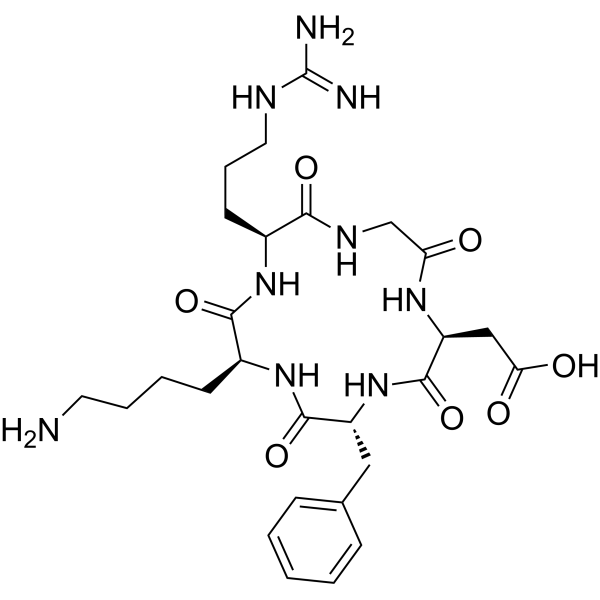
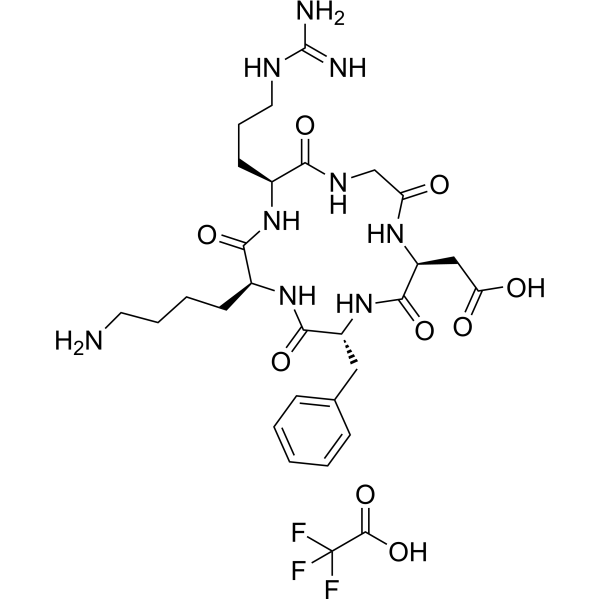
    RGD-4C is a arginine-glycine-aspartic acid peptide (ACDCRGDCFC) with integrin binding activity. The Arg-Gly-Asp (RGD) sequence serves as the primary integrin recognition site in extracellular matrix proteins, and peptides containing this sequence can mimic the recognition specificity of the matrix proteins. RGD-4C is a αv-integrin ligand, can conjugate with bioactive molecule to exert antitumor effects in animal models .
    RGD-4C
  • HY-151852

    Endogenous Metabolite Cardiovascular Disease
    9AzNue5Ac, 9-azido-9-deoxy-N-acetylneuraminic acid, is a click chemistry reagent and a Neu5Ac analogue with the substitution of 9-hydroxyl group with an azide. 9AzNue5Ac could be metabolized and incorporated into sialoglycans in living cells and mice. Click chemistry has great potential for use in binding between nucleic acids, lipids, proteins, and other molecules, and has been used in many research fields because of its beneficial characteristics, including high yield, high specificity, and simplicity . It contains an azide group and can undergo copper-catalyzed azide-alkyne cycloaddition (CuAAc) with molecules containing alkyne groups. It can also undergo ring strain-promoted alkyne-azide cycloaddition (SPAAC) with molecules containing DBCO or BCN groups.
    9AzNue5Ac
  • HY-102079
    SAFit1
    1 Publications Verification

    FKBP Neurological Disease Metabolic Disease
    SAFit1 is a FK506 binding protein 51 (FKBP51)-specific inhibitor with a Ki of 4±0.3 nM .
    SAFit1
  • HY-117280

    MDM-2/p53 Cancer
    GN25 is a specific p53-Snail binding inhibitor with antitumor effects .
    GN25
  • HY-151782A

    ADC Linker Others
    H-(Gly)3-Lys(N3)-OH (hydrochloride) is a click chemistry reagent. Click chemistry has great potential for use in binding between nucleic acids, lipids, proteins, and other molecules, and has been used in many research fields because of its beneficial characteristics, including high yield, high specificity, and simplicity . It contains an azide group and can undergo copper-catalyzed azide-alkyne cycloaddition (CuAAc) with molecules containing alkyne groups. It can also undergo ring strain-promoted alkyne-azide cycloaddition (SPAAC) with molecules containing DBCO or BCN groups.
    H-(Gly)3-Lys(N3)-OH hydrochloride
  • HY-151855

    ADC Linker Others
    Azido Myristic Acid is a click chemistry reagent containing an azide group. Azido Myristic Acid can be used to identify and characterize post-translationally myristylated proteins with using a simple and robust two-step labeling and detection technique . It contains an azide group and can undergo copper-catalyzed azide-alkyne cycloaddition (CuAAc) with molecules containing alkyne groups. It can also undergo ring strain-promoted alkyne-azide cycloaddition (SPAAC) with molecules containing DBCO or BCN groups.
    Azido Myristic Acid
  • HY-112737

    CGS23131; SKF107324

    Leukotriene Receptor Inflammation/Immunology
    LY223982 is a potent and specific inhibitor of leukotriene B4 receptor, with an IC50 of 13.2 nM against [ 3H]LTB4 binding to LTB4 receptor.
    LY223982
  • HY-112359

    β-catenin Wnt Cancer
    C-82 is a second-generation specific CBP/β-catenin antagonist, which inhibits the binding between β-catenin and CBP and increases the binding between β-catenin and p300 .
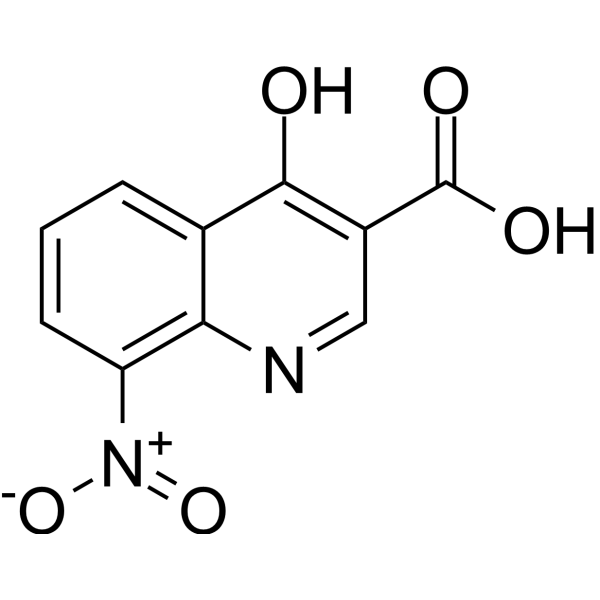
    C-82
  • HY-P2282
    APTSTAT3-9R
    1 Publications Verification

    STAT Cancer
    APTSTAT3-9R, a specific STAT3-binding peptide, inhibits STAT3 activation and downstream signaling by specifically blocking STAT3 phosphorylation. APTSTAT3-9R exerts antiproliferative effects and antitumor activity .
    APTSTAT3-9R
  • HY-151793

    ADC Linker Others
    beta-Lac-EO-N3 is a click chemistry reagent. Click chemistry has great potential for use in binding between nucleic acids, lipids, proteins, and other molecules, and has been used in many research fields because of its beneficial characteristics, including high yield, high specificity, and simplicity . It contains an azide group and can undergo copper-catalyzed azide-alkyne cycloaddition (CuAAc) with molecules containing alkyne groups. It can also undergo ring strain-promoted alkyne-azide cycloaddition (SPAAC) with molecules containing DBCO or BCN groups.
    2-Azidoethyl β-D-lactoside
  • HY-151858

    Biochemical Assay Reagents Others
    Boc-L-Lys(N3)-OH is a click chemistry reagent containing an azide group. Click chemistry has great potential for use in binding between nucleic acids, lipids, proteins, and other molecules, and has been used in many research fields because of its beneficial characteristics, including high yield, high specificity, and simplicity . It contains an azide group and can undergo copper-catalyzed azide-alkyne cycloaddition (CuAAc) with molecules containing alkyne groups. It can also undergo ring strain-promoted alkyne-azide cycloaddition (SPAAC) with molecules containing DBCO or BCN groups.
    Boc-L-Lys(N3)-OH
  • HY-126327A

    Histone Methyltransferase Cancer
    UNC4976 TFA is a positive allosteric modulator (PAM) peptidomimetic of CBX7 chromodomain binding to nucleic acids. UNC4976 TFA simultaneously antagonizes H3K27me3-specific recruitment of CBX7 to target genes while increasing non-specific binding to DNA and RNA .
    UNC4976 TFA
  • HY-P10115

    STAT Cancer
    APT STAT3 is a specific STAT3-binding peptide. APT STAT3 can bind STAT3 with high specificity and affinity (~231 nmol/L). APT STAT3 is a tractable agent for translation to target the broad array of cancers harboring constitutively activated STAT3 .
    APT STAT3
  • HY-110164
    AdipoRon hydrochloride
    35+ Cited Publications

    Adiponectin Receptor Metabolic Disease
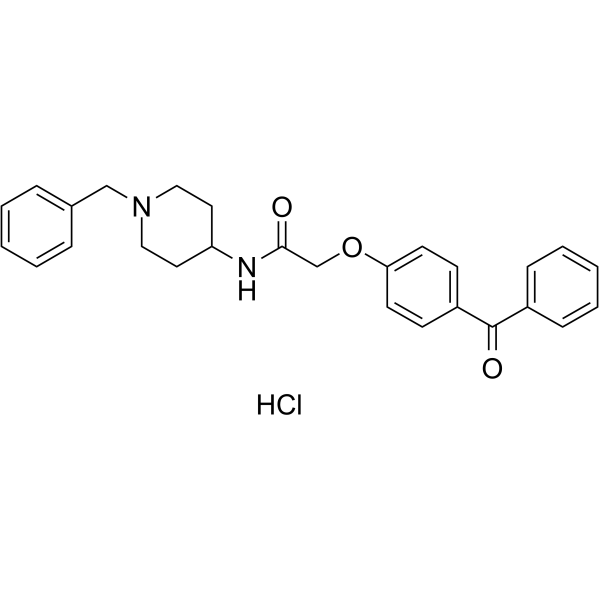
    AdipoRon hydrochloride is an orally active and specific AdipoR agonist, binding to AdipoR1 and AdipoR2, with Kds of 1.8 and 3.1 μM, respectively.
    AdipoRon hydrochloride
  • HY-B1327S

    7-Chlorotetracycline-d6 hydrochloride

    Bacterial Antibiotic Infection
    Chlortetracycline-d6 (hydrochloride) is the deuterium labeled Chlortetracycline hydrochloride. Chlortetracycline hydrochloride (7-Chlorotetracycline hydrochloride) is a specific and potent calcium ionophore antibiotic, inhibits binding of aminoacyl-tRNA to ribosomes.
    Chlortetracycline-d6 hydrochloride
  • HY-151854

    ADC Linker Others
    4-(Azidomethyl)benzoic acid is a click chemistry reagent containing an azide group. Click chemistry has great potential for use in binding between nucleic acids, lipids, proteins, and other molecules, and has been used in many research fields because of its beneficial characteristics, including high yield, high specificity, and simplicity . It contains an azide group and can undergo copper-catalyzed azide-alkyne cycloaddition (CuAAc) with molecules containing alkyne groups. It can also undergo ring strain-promoted alkyne-azide cycloaddition (SPAAC) with molecules containing DBCO or BCN groups.
    4-(Azidomethyl)benzoic acid
  • HY-151861

    ADC Linker Others
    N3-Aca-Aca-OH is a click chemistry reagent containing an azide group. Click chemistry has great potential for use in binding between nucleic acids, lipids, proteins, and other molecules, and has been used in many research fields because of its beneficial characteristics, including high yield, high specificity, and simplicity . It contains an azide group and can undergo copper-catalyzed azide-alkyne cycloaddition (CuAAc) with molecules containing alkyne groups. It can also undergo ring strain-promoted alkyne-azide cycloaddition (SPAAC) with molecules containing DBCO or BCN groups.
    N3-Aca-Aca-OH
  • HY-151814

    ADC Linker Others
    (2S,4S)-Fmoc-L-Pro(4-NHPoc)-OH is a click chemistry reagent containing an azide group.
    (2S,4S)-Fmoc-L-Pro(4-NHPoc)-OH
  • HY-151829

    ADC Linker Others
    Fmoc-L-Asn(EDA-N3)-OH is a click chemistry reagent containing an azide group. This building block is reported in literature for the modification of Amanitin via Click Chemistry. Alpha-Amanitin is the deadliest member of the amatoxin peptide family produced by the death-cap mushroom A. phalloides. It is an orally available, rigid, bicyclic octapeptide and one of the most lethal known natural products (LD50 = 50-100 μg/kg) acting as highly selective allosteric inhibitor of the RNA polymerase II . It contains an azide group and can undergo copper-catalyzed azide-alkyne cycloaddition (CuAAc) with molecules containing alkyne groups. It can also undergo ring strain-promoted alkyne-azide cycloaddition (SPAAC) with molecules containing DBCO or BCN groups.
    Fmoc-L-Asn(EDA-N3)-OH
  • HY-151781

    ADC Linker Others
    Fmoc-L-Dap(Poc)-OH is a click chemistry reagent containing an azide group. Amino acid building block suitable for side chain Click conjugation with standard protocols and together with tetrazine linkers in copper-free Click conjugation (Diels-Alder) .
    Fmoc-L-Dap(Poc)-OH
  • HY-151823

    ADC Linker Others
    8-Azido-octanoyl-OSu is a click chemistry reagent containing an azide group. Used as a building block to introduce 8-azidooctanoic acid (CAS 217180-76-2) fragment. This fragment is used for further modifications using Click-chemistry (CuAAC), as a protected aminogroup or is used in physico-chemical investigations . It contains an azide group and can undergo copper-catalyzed azide-alkyne cycloaddition (CuAAc) with molecules containing alkyne groups. It can also undergo ring strain-promoted alkyne-azide cycloaddition (SPAAC) with molecules containing DBCO or BCN groups.
    8-Azido-octanoyl-OSu
  • HY-P1507

    Integrin Cardiovascular Disease
    Fibrinogen Binding Inhibitor Peptide is a dodecapeptide (HHLGGAKQAGDV, H12), which is a fibrinogen γ-chain carboxy-terminal sequence (γ400-411). Fibrinogen Binding Inhibitor Peptide is a specific binding site of the ligand for activated glycoprotein (GP) IIb/IIIa.
    Fibrinogen Binding Inhibitor Peptide
  • HY-111936

    BML283

    Pyruvate Kinase Cancer
    ML083 is a member of a series of highly specific allosteric activators for the tumor-specific isoform of human pyruvate kinase (M2 isoform). ML083 affects the cooperativity of phosphoenolpyruvate (PEP) binding. ML083 can be used in the research of tumors .
    ML 083
  • HY-151864

    ADC Linker Others
    DecarboxyBiotin-Alkyne is a click chemistry reagent containing an azide group. Click chemistry has great potential for use in binding between nucleic acids, lipids, proteins, and other molecules, and has been used in many research fields because of its beneficial characteristics, including high yield, high specificity, and simplicity .
    DecarboxyBiotin-Alkyne
  • HY-151779

    ADC Linker Others
    N3-L-Dab(Fmoc)-OH is a click chemistry reagent containing an azide group. Click chemistry has great potential for use in binding between nucleic acids, lipids, proteins, and other molecules, and has been used in many research fields because of its beneficial characteristics, including high yield, high specificity, and simplicity . It contains an azide group and can undergo copper-catalyzed azide-alkyne cycloaddition (CuAAc) with molecules containing alkyne groups. It can also undergo ring strain-promoted alkyne-azide cycloaddition (SPAAC) with molecules containing DBCO or BCN groups.
    N3-L-Dab(Fmoc)-OH
  • HY-151849

    ADC Linker Others
    Z-L-Dap(N3)-OH is a click chemistry reagent containing an azide group. Click chemistry has great potential for use in binding between nucleic acids, lipids, proteins, and other molecules, and has been used in many research fields because of its beneficial characteristics, including high yield, high specificity, and simplicity . It contains an azide group and can undergo copper-catalyzed azide-alkyne cycloaddition (CuAAc) with molecules containing alkyne groups. It can also undergo ring strain-promoted alkyne-azide cycloaddition (SPAAC) with molecules containing DBCO or BCN groups.
    Z-L-Dap(N3)-OH
  • HY-151856

    ADC Linker Others
    N3-1,4-cis-CHC-OH is a click chemistry reagent containing an azide group. Click chemistry has great potential for use in binding between nucleic acids, lipids, proteins, and other molecules, and has been used in many research fields because of its beneficial characteristics, including high yield, high specificity, and simplicity . It contains an azide group and can undergo copper-catalyzed azide-alkyne cycloaddition (CuAAc) with molecules containing alkyne groups. It can also undergo ring strain-promoted alkyne-azide cycloaddition (SPAAC) with molecules containing DBCO or BCN groups.
    N3-1,4-cis-CHC-OH
  • HY-151844

    ADC Linker Others
    2-Azido-adenosine is a click chemistry reagent containing an azide group . 2-Azido-adenosine is a click chemistry reagent, it contains an Azide group and can undergo copper-catalyzed azide-alkyne cycloaddition reaction (CuAAc) with molecules containing Alkyne groups. It can also undergo strain-promoted alkyne-azide cycloaddition (SPAAC) reactions with molecules containing DBCO or BCN groups.
    2-Azido-adenosine
  • HY-151822

    ADC Linker Others
    Hydroxy-PEG3-DBCO is a click chemistry reagent containing an azide group. Hydroxy-PEG3-DBCO is a PEG linker containing a DBCO moiety and a terminal primary hydroxyl group. The hydroxyl can react with a variety of functional groups and the hydrophilic PEG spacer arm can provide better solubility to labeled molecules. DBCO is commonly used for copper-free Click Chemistry reactions. Reagent grade, for research use only .
    Hydroxy-PEG3-DBCO
  • HY-151769

    ADC Linker Others
    TCO-PEG2-Sulfo-NHS ester-EDC Urea is a click chemistry reagent containing an azide group. TCO-PEG2-Sulfo-NHS ester is a PEG linker containing a TCO moiety and a sulfo-NHS ester moiety. The sulfo group makes this molecule soluble in waqueous buffer. This reagent can be used to label antibodies, proteins and other primary amine-containing macromolecules with TCO moiety. Reagent grade, for research use only . TCO-PEG2-Sulfo-NHS ester-EDC Urea is a click chemistry reagent, it contains a TCO group that can undergo an inverse electron demand Diels-Alder reaction (iEDDA) with molecules containing Tetrazine groups.
    TCO-PEG2-Sulfo-NHS ester-EDC Urea
  • HY-151841

    ADC Linker Others
    N3-L-Lys(Boc)-OH is a click chemistry reagent containing an azide group . N3-L-Lys(Boc)-OH is a click chemistry reagent, it contains an Azide group and can undergo copper-catalyzed azide-alkyne cycloaddition reaction (CuAAc) with molecules containing Alkyne groups. It can also undergo strain-promoted alkyne-azide cycloaddition (SPAAC) reactions with molecules containing DBCO or BCN groups.
    N3-L-Lys(Boc)-OH
  • HY-151859A

    Biochemical Assay Reagents Others
    N3-Gly-Gly-OH DCHA is a click chemistry reagent containing an azide group. N3-Gly-Gly-OH DCHA undergoes copper-catalyzed azide-alkyne cycloaddition (CuAAc) with molecules containing an alkyne group. N3-Gly-Gly-OH DCHA also undergoes strain-promoted alkyne-azide cycloaddition (SPAAC) with molecules containing DBCO or BCN groups. N3-Gly-Gly-OH DCHA can be used to construct peptide-like ADC linkers via click chemistry .
    N3-Gly-Gly-OH DCHA
  • HY-151782

    ADC Linker Others
    The azide function is widely used for coupling to alkyne-containing fragments via the renowned Click reaction. Polyglycine fragments containing up to 7 glycines are reported to bind to surfaces and have potential application in nanotechnology constructs: constructs of Gly7-NHCH2-fragment containing peptides bind on mica surface in aqueous solution . It contains an azide group and can undergo copper-catalyzed azide-alkyne cycloaddition (CuAAc) with molecules containing alkyne groups. It can also undergo ring strain-promoted alkyne-azide cycloaddition (SPAAC) with molecules containing DBCO or BCN groups.
    H-(Gly)3-Lys(N3)-OH
  • HY-151842

    ADC Linker Others
    Fmoc-EDA-N3 is a click chemistry reagent containing an azide group . Fmoc-EDA-N3 is a click chemistry reagent, it contains an Azide group and can undergo copper-catalyzed azide-alkyne cycloaddition reaction (CuAAc) with molecules containing Alkyne groups. It can also undergo strain-promoted alkyne-azide cycloaddition (SPAAC) reactions with molecules containing DBCO or BCN groups.
    Fmoc-EDA-N3
  • HY-151843

    ADC Linker Others
    N3-L-Lys(Fmoc)-OH is a click chemistry reagent containing an azide group . N3-L-Lys(Fmoc)-OH is a click chemistry reagent, it contains an Azide group and can undergo copper-catalyzed azide-alkyne cycloaddition reaction (CuAAc) with molecules containing Alkyne groups. It can also undergo strain-promoted alkyne-azide cycloaddition (SPAAC) reactions with molecules containing DBCO or BCN groups.
    N3-L-Lys(Fmoc)-OH
  • HY-151824

    ADC Linker Others
    Boc-L-Phe(4-NH-Poc)-OH is a click chemistry reagent containing an azide group. Used as an orthogonally protected building block in peptide synthesis. Propargyloxycarbonyl, commonly abbreviated as Poc or Pryoc, can either be used as alkyne component for standard Click conjugation or in combination with tetrazine linkers in copper-free Diels-Alder type Click reactions. It also has applications as unusual protecting group for amines, hydroxy functions and as esters. All 3 are stable to neat TFA, but can be cleaved at ambient temperature with Co2(CO)8 in TFA:DCM. Deprotection with other transition metals like palladium have also been reported . Boc-L-Phe(4-NH-Poc)-OH is a click chemistry reagent, it contains an Alkyne group and can undergo copper-catalyzed azide-alkyne cycloaddition (CuAAc) with molecules containing Azide groups.
    Boc-L-Phe(4-NH-Poc)-OH
  • HY-151821

    ADC Linker Others
    Sulfo DBCO-PEG3-acid is a click chemistry reagent containing an azide group. Sulfo DBCO-PEG3-acid is an analog of DBCO-Acid with PEG linker and a DBCO group. The DBCO groups is commonly used for copper-free Click Chemistry reactions due to its strain promoted high energy. The hydrophilic PEG chain and sulfo group increase water solubility. The terminal carboxylic acid can react with primary amine groups in the presence of activators (e.g. EDC, or HATU) to form a stable amide bond. Reagent grade, for research use only .
    Sulfo DBCO-PEG3-acid
  • HY-126327

    Histone Methyltransferase Cancer
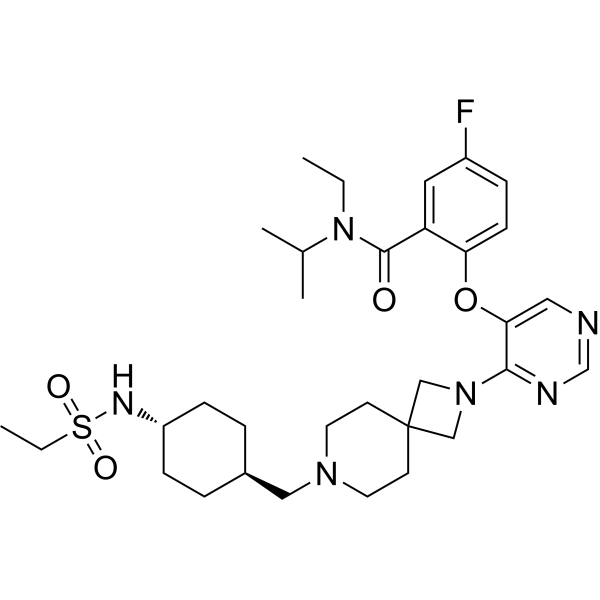
    UNC4976 is a positive allosteric modulator (PAM) peptidomimetic of CBX7 chromodomain binding to nucleic acids. UNC4976 simultaneously antagonizes H3K27me3-specific recruitment of CBX7 to target genes while increasing non-specific binding to DNA and RNA .
    UNC4976
  • HY-111848A

    SNIPERs PROTACs Androgen Receptor Cancer
    PROTAC AR Degrader-4 comprises a IAP ligand binding group, a linker and an Androgen Receptor (AR) binding group. PROTAC AR Degrader-4 is an AR degrader. Degradation inducers based on cIAP1 are called specific and non-genetic IAP-dependent protein erasers (SNIPERs) .
    PROTAC AR Degrader-4 TFA

Inquiry Online

Your information is safe with us. * Required Fields.

Salutation


Country or Region *

Applicant Name *


Organization Name *

Department *


Email Address *


Product Name *

Cat. No.


Requested quantity *

Phone Number *


Remarks

Inquiry Online

Inquiry Information

Product Name:
Cat. No.:
Quantity:
MCE Japan Authorized Agent:

