



(Pro3) GIP, human
(Pro3) GIP, human ((Pro3) Gastric Inhibitory Peptide, human) is an efficacious, stable and specific human GIP receptor (hGIPR) full agonist. (Pro3) GIP, human has high binding affinity for human GIPR with Ki/ Kd values of 0.90 nM. (Pro3) GIP, human can be used for the research of obesity-related diabetes.
For research use only. We do not sell to patients.
- CAS No.: 299898-52-5
- Formula: C226H338N60O64S
- Molecular Weight:4951.53
-
Storage:
Sealed storage, away from moisture and light.
Powder -80°C, 2 years , -20°C, 1 year* In solvent : -80°C, 6 months; -20°C, 1 month (sealed storage, away from moisture and light)

To place orders, for customer services and technical support, please contact: MedChemExpress USA
Tel: 609-228-6898 E-mail: [email protected] [email protected]


-
 Biological Activity
-
Chemical Information
- Protocols
- Purity & Documentation
- References
-
 Help & FAQs


-
HY-P2542
GIP (3-42), humanGIP Receptor Agonist -
HY-108743
Insulin degludecInsulin Analogue -
HY-P99665
Insulin efsitora alfaInsulin Receptor Agonist -
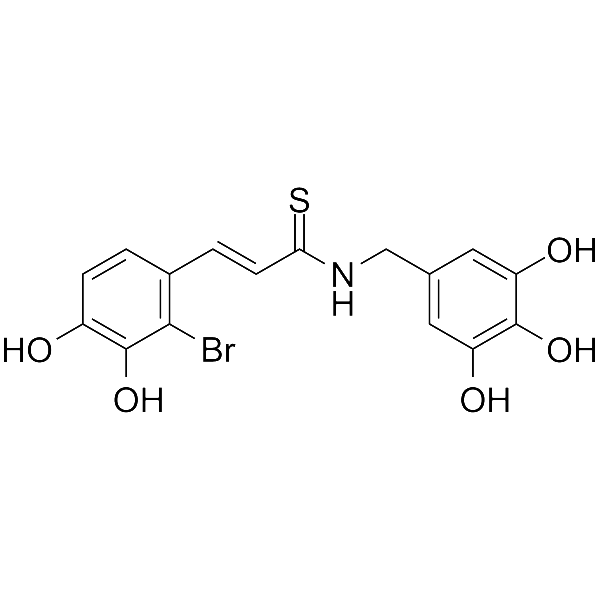
HY-145935
NT219IRS1/2/STAT3 Inhibitor -
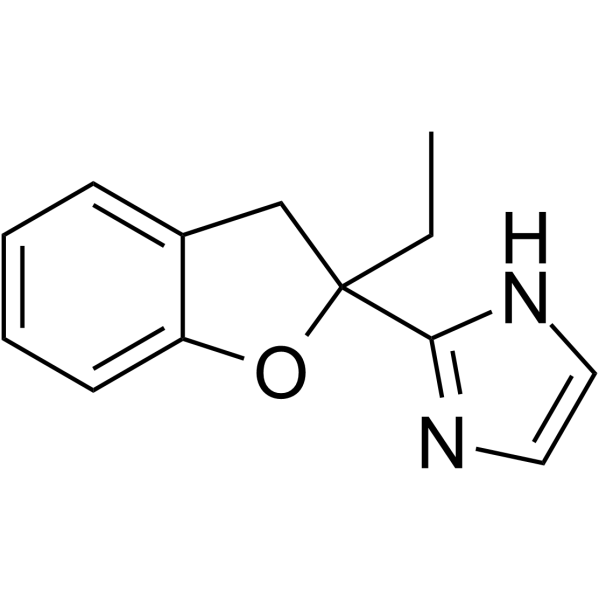
HY-15481
KU14RKATP Channel Inhibitor -
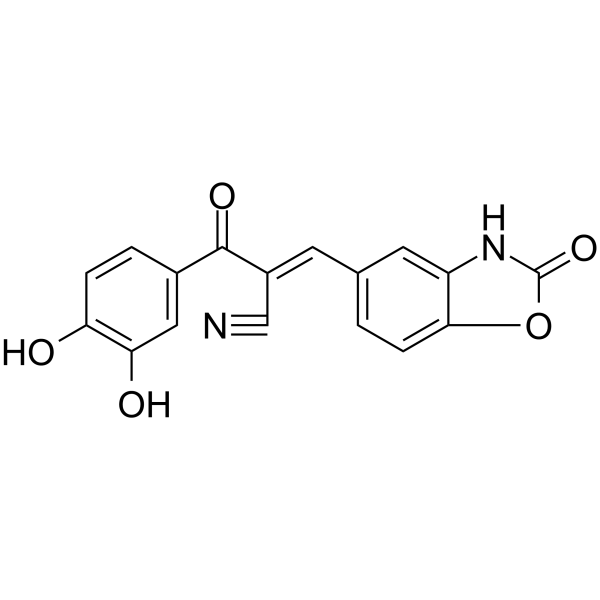
HY-112720
AGL-2263Insulin Receptor Inhibitor -
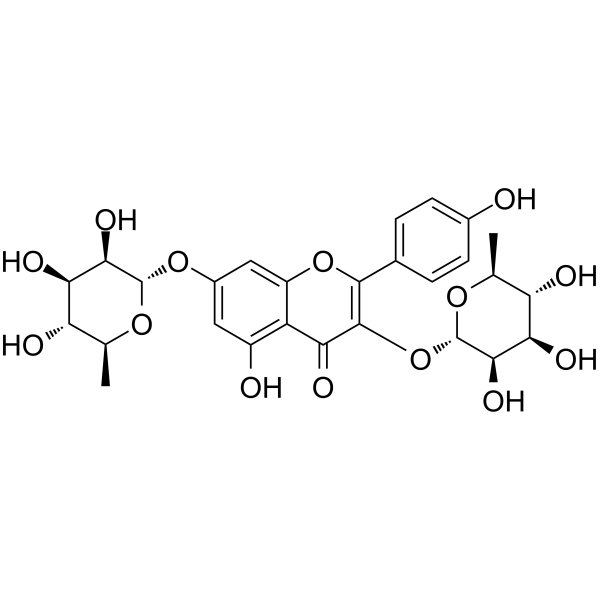
HY-N0628
KaempferitrinInsulin Receptor Activator -
HY-P3255
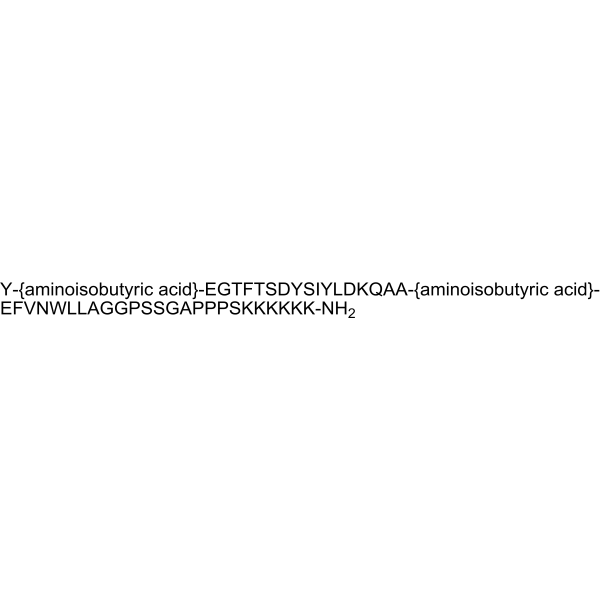
DA-JC4GLP-1/GIP Receptor Agonist -

HY-P99530
Valanafusp alfaAnti-HIR IDUA-Fusion mAb -
HY-P0035
Insulin (human)Recombinant Human Insulin -

HY-P0035A
Insulin solution (human)Polypeptide Hormone -
HY-10191
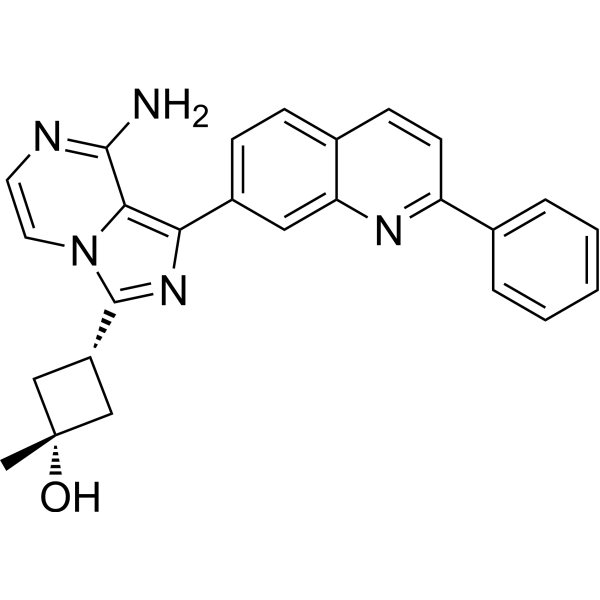
LinsitinibIGF-1R/Insulin Receptor Inhibitor


Biological Activity
Description
IC50 & Target
EC50: 0.026 nM (hGIPR)[2]
Ki/Kd: 0.90 nM (hGIPR); 1.1 nM (Rat GIPR); 0.72 nM (Mouse GIPR)[2]
In Vitro
(Pro3) GIP, human induces cAMP accumulation with an EC50 value of 0.026 nM[2].
(Pro3) GIP, human has high binding affinity for human GIPR, Rat GIPR and Mouse GIPR with Ki/ Kd values of 0.90 nM, 1.1 nM and 0.72 nM, respectively[2].
MedChemExpress (MCE) has not independently confirmed the accuracy of these methods. They are for reference only.
In Vivo
MedChemExpress (MCE) has not independently confirmed the accuracy of these methods. They are for reference only.


Chemical Information
-
CAS No. 299898-52-5
-
Appearance Solid
-
Molecular Weight 4951.53
-
Formula C226H338N60O64S
-
Color White to off-white
-
Synonyms
(Pro3) Gastric Inhibitory Peptide, human
-
Sequence
Tyr-Ala-Pro-Gly-Thr-Phe-Ile-Ser-Asp-Tyr-Ser-Ile-Ala-Met-Asp-Lys-Ile-His-Gln-Gln-Asp-Phe-Val-Asn-Trp-Leu-Leu-Ala-Gln-Lys-Gly-Lys-Lys-Asn-Asp-Trp-Lys-His-Asn-Ile-Thr-Gln
-
Sequence Shortening
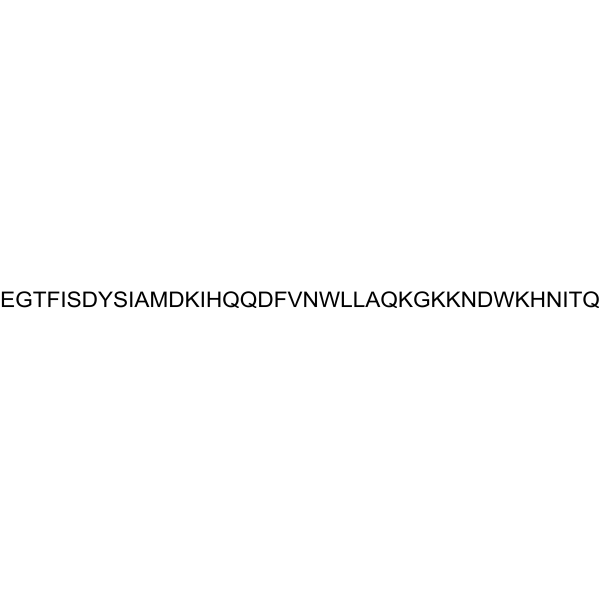
YAPGTFISDYSIAMDKIHQQDFVNWLLAQKGKKNDWKHNITQ
-
Shipping
Room temperature in continental US; may vary elsewhere.
-
Storage
Sealed storage, away from moisture and light
Powder -80°C 2 years -20°C 1 year * In solvent : -80°C, 6 months; -20°C, 1 month (sealed storage, away from moisture and light)


Purity & Documentation
-
Data Sheet (263 KB)
-
SDS (252 KB)
- English - EN (252 KB)
- Français - FR (252 KB)
- Deutsch - DE (252 KB)
- Norwegian - NO (252 KB)
- Español - ES (252 KB)
- Swedish - SV (252 KB)
- Italian - IT (252 KB)
- Korean - KR (252 KB)
- Portuguese - PT (252 KB)
-
Handling Instructions (2659 KB)
References
[1]. Victor A Gault, et al. Chemical ablation of gastric inhibitory polypeptide receptor action by daily (Pro3)GIP administration improves glucose tolerance and ameliorates insulin resistance and abnormalities of islet structure in obesity-related diabetes. Diabetes. 2005 Aug;54(8):2436-46. [Content Brief]
[2]. A H Sparre-Ulrich, et al. Species-specific action of (Pro3)GIP - a full agonist at human GIP receptors, but a partial agonist and competitive antagonist at rat and mouse GIP receptors. Br J Pharmacol. 2016 Jan;173(1):27-38. [Content Brief]

Calculators
Concentration (start) × Volume (start) = Concentration (final) × Volume (final)


(Pro3) GIP, human Related Classifications
HY-P3584 Related Classifications
 Powered by Bioz