



BMS CCR2 22
Based on 3 publication(s) in Google Scholar
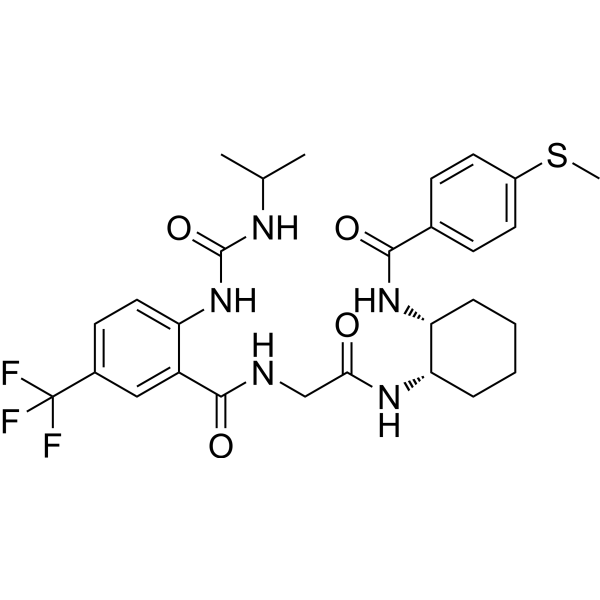
BMS CCR2 22 is a potent, specific and high affinity CC-type chemokine receptor 2 (CCR2) antagonist with excellent binding affinity (binding IC50 of 5.1 nM) and potent functional antagonism (calcium flux IC50 of 18 nM and chemotaxis IC50 of 1 nM).
商品は「研究用試薬」です。人や動物の医療用・臨床診断用・食品用の製品ではありません。
研究用途以外に使用した場合、当社は一切の責任を負いかねます。
- 純度 : 99.27%
- CAS 番号: 445479-97-0
- 分子式: C28H34F3N5O4S
- 分子量:593.66
-
保管条件:Powder -20°C, 3 years , 4°C, 2 years ; In solvent -80°C, 6 months , -20°C, 1 month

To place orders, for customer services and technical support, please contact: MedChemExpress USA
Tel: 609-228-6898 E-mail: [email protected] [email protected]


-
 生物活性
生物活性
-
化学情報
-
溶剤 & 溶解度
- プロトコル
- 純度とドキュメンテーション
- 参考文献
-
 Help & FAQs


-
HY-12080
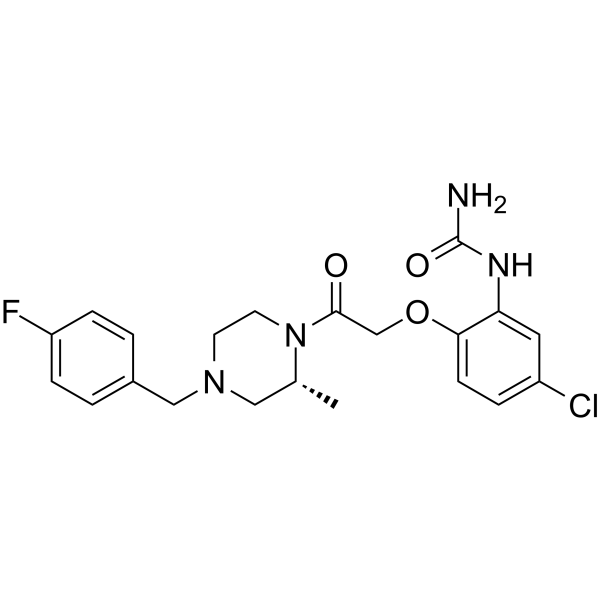
BX471CCR1 Antagonist -
HY-15418
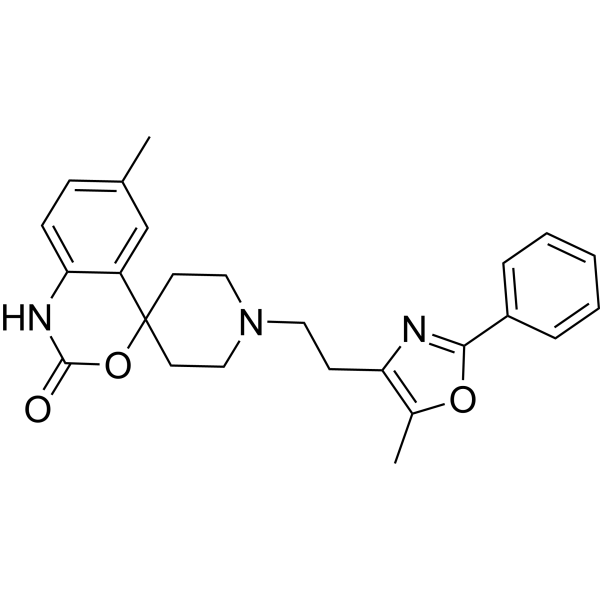
RS 504393CCR2 Antagonist -
HY-50674
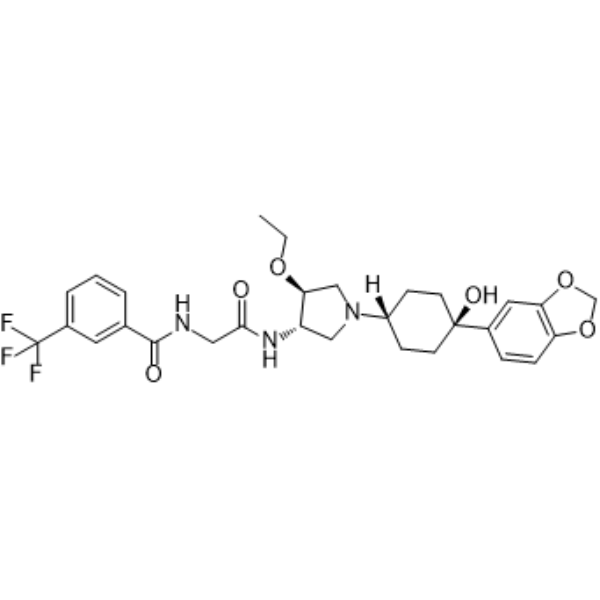
INCB3344CCR2 Antagonis -
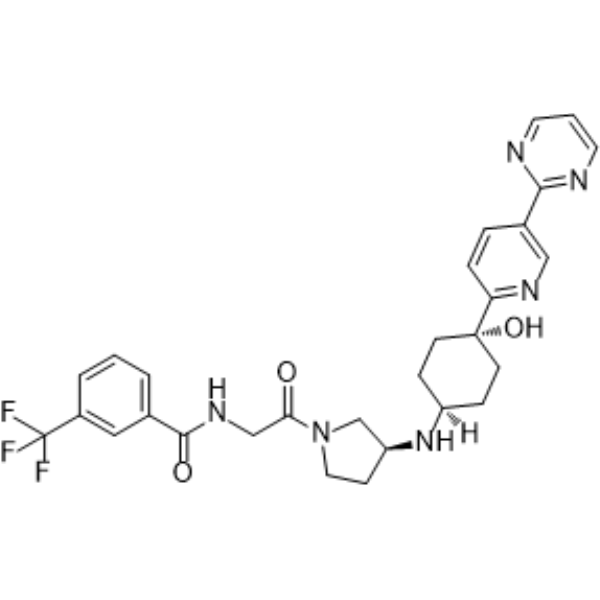
HY-13245
PF-4136309CCR2 Antagonist -
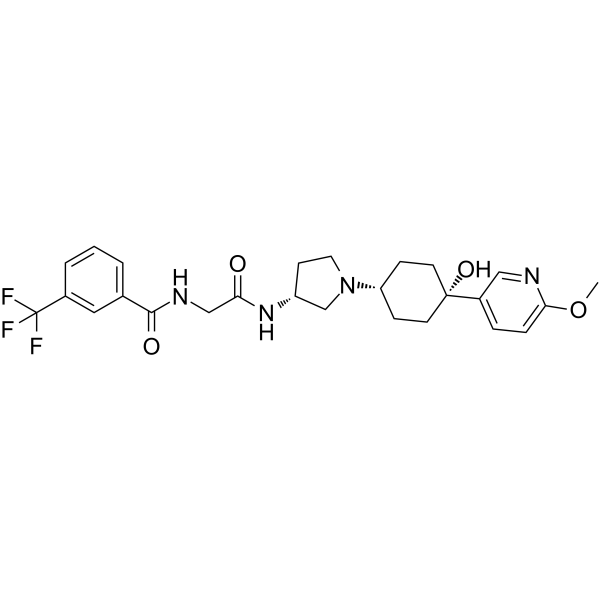
HY-15450A
INCB 3284CCR Antagonist -
HY-103363
SB-328437CCR3 Antagonist -
HY-107051
GW 766994CCR3 Antagonist -
HY-14882A
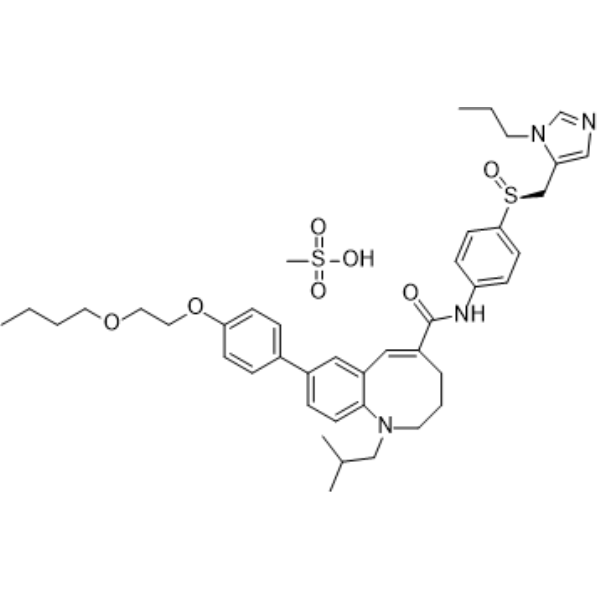
Cenicriviroc MesylateCCR2/5 Antagonist -
HY-P1034
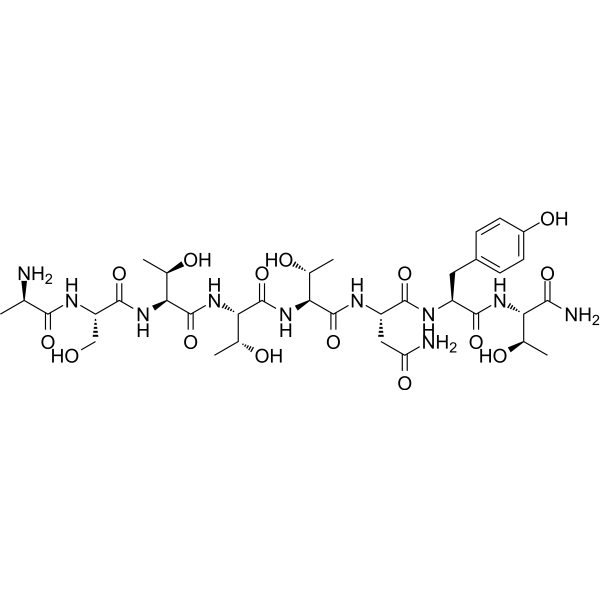
DAPTACCR5 Inhibitor -
HY-18611
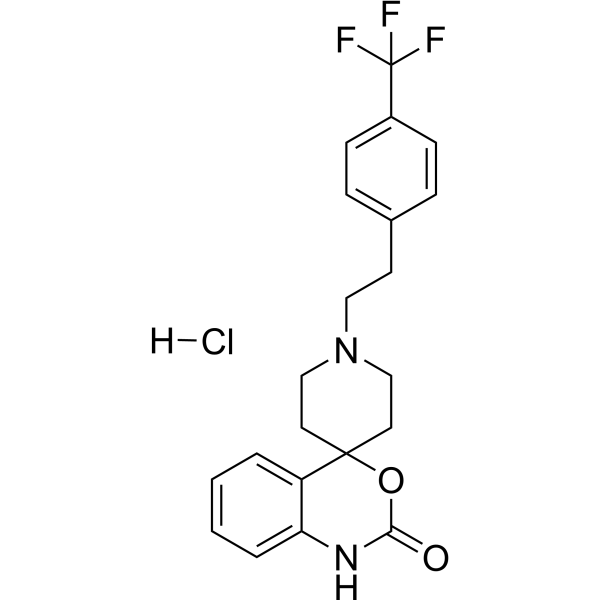
Abaucin hydrochlorideCCR2antagonist -
HY-13004
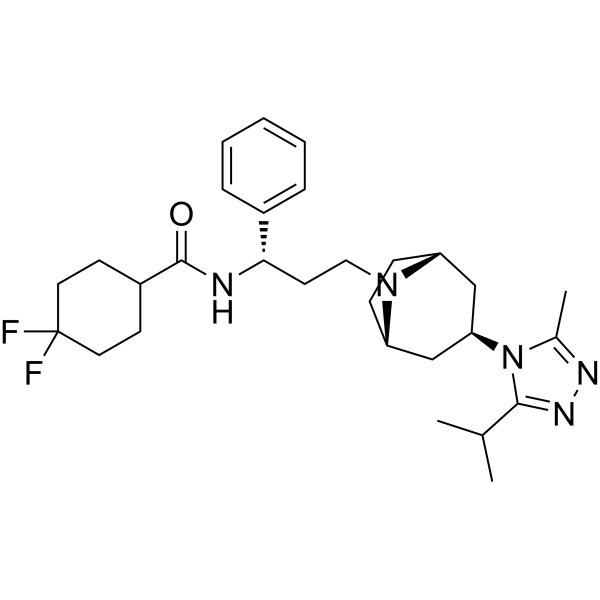
MaravirocCCR5 Antagonist -
HY-103364
C-021CCR4 Antagonist
MedChemExpress(MCE)の使用を引用している文献 BMS CCR2 22
More

生物活性
製品説明
IC50 & Target
[1]|
CCR2 5.1 nM (IC50) |
Cellular Effect
|
Cell Line

|
Type | Value | Description | References |
|---|---|---|---|---|
| HEK293-EBNA | IC50 |
5.1 μM
Compound: 2
|
Displacement of [125I]MCP1 from human CCR2B receptor expressed in HEK293-EBNA cells
Displacement of [125I]MCP1 from human CCR2B receptor expressed in HEK293-EBNA cells
|
[PMID: 20223662] |
体外実験
BMS CCR2 22 (Compound 22) has binding affinity for wild-type and E291A mutants with IC50 values of 7.5 nM and 3.7 nM, respectively[1].
BMS CCR2 22 prevents both the binding and the internalization of fluorescently labeled hMCP-1_AF647 internalization in human monocytes. BMS CCR2 22 inhibits the internalization of hMCP1_AF647 with an IC50 value of approximately 2 nM[2].
The addition of BMS CCR2 22 (0.1-10 μM; 24 h), cenicriviroc (CVC) or a combination of both BMS CCR2 22 and MVC to human aortic endothelial cells (HAoECs) prior to MCP-1 stimulation do not alter E-selectin, ICAM-1, or CD99 cell surface expression. Incubation of HAoECs with BMS CCR2 22 before MCP-1 significantly increases VCAM-1 and PECAM1 cell surface levels (from 72.8 to 160% and from 97.2 and 127%, respectively)[3].
MedChemExpress (MCE) has not independently confirmed the accuracy of these methods. They are for reference only.


化学情報
-
CAS 番号 445479-97-0
-
性状 Solid
-
分子量 593.66
-
分子式 C28H34F3N5O4S
-
Color White to off-white
-
SMILES
O=C(NCC(N[C@@H]1[C@H](NC(C2=CC=C(SC)C=C2)=O)CCCC1)=O)C3=CC(C(F)(F)F)=CC=C3NC(NC(C)C)=O
-
輸送条件
Room temperature in continental US; may vary elsewhere.
-
保管条件
Powder -20°C 3 years 4°C 2 years In solvent -80°C 6 months -20°C 1 month


Publications (3)
-
Journal Impact Factor
-
Most Recent
-
Commun Biol
2026 May 15;9(1):661. PMID: 42141167 -
-
bioRxiv
MAIT cell responses to S. aureus and sensitivity to HlgAB are modulated by activation and tissue-dependent virulence effects. [Abstract]2026 Mar 19:2026.03.17.712383. PMID: 41890076


溶剤 & 溶解度
体外:
DMSO : 250 mg/mL (421.12 mM; Need ultrasonic; Hygroscopic DMSO has a significant impact on the solubility of product, please use newly opened DMSO)
Please refer to the solubility information to select the appropriate solvent. Once prepared, please aliquot and store the solution to prevent product inactivation from repeated freeze-thaw cycles.
Storage method and period of stock solution: -80°C, 6 months; -20°C, 1 month. When stored at -80°C, please use it within 6 months. When stored at -20°C, please use it within 1 month.
Please refer to the solubility information to select the appropriate solvent. Once prepared, please aliquot and store the solution to prevent product inactivation from repeated freeze-thaw cycles.
Storage method and period of stock solution: -80°C, 6 months; -20°C, 1 month. When stored at -80°C, please use it within 6 months. When stored at -20°C, please use it within 1 month.
濃度 (開始) × 体積 (開始) = 濃度 (終了) × 体積 (終了)
体内:
Select the appropriate dissolution method based on your experimental animal and administration route.
- For the following dissolution methods, please ensure to first prepare a clear stock solution using an In Vitro approach and then sequentially add co-solvents:
- To ensure reliable experimental results, the clarified stock solution can be appropriately stored based on storage conditions. As for the working solution for In Vivo experiments, it is recommended to prepare freshly and use it on the same day.
- The percentages shown for the solvents indicate their volumetric ratio in the final prepared solution. If precipitation or phase separation occurs during preparation, heat and/or sonication can be used to aid dissolution.
In Vivo Dissolution Calculator
Please enter the basic information of animal experiments:
-
-
-
-
Recommended: Prepare an additional quantity of animals to account for potential losses during experiments.
Please enter your animal formula composition:
-
%DMSO +
Recommended: Keep the proportion of DMSO in working solution below 2% if your animal is weak.
-
%+
-
+%Tween-80 + +
-
%Saline +
The co-solvents required include: DMSO, . All of co-solvents are available by MedChemExpress (MCE). , Tween 80. All of co-solvents are available by MedChemExpress (MCE).
Working solution concentration: 0.22 mg/mL
Method for preparing stock solution: mg drug dissolved in μL DMSO. Stock solution concentration: mg/mL.
1. Take μL DMSO stock solution;
2. Add μL .
μL , mix evenly;
3. Then add μL Tween 80, mix evenly;
4. Then add μL
Please ensure that the stock solution in the first step is dissolved to a clear state, and add co-solvents in sequence. You can use ultrasonic heating (ultrasonic cleaner, recommended frequency 20-40 kHz), vortexing, etc. to assist dissolution.


純度とドキュメンテーション
-
データシート (276 KB)
-
SDS (251 KB)
- English - EN (251 KB)
- Français - FR (251 KB)
- Deutsch - DE (251 KB)
- Norwegian - NO (251 KB)
- Español - ES (251 KB)
- Swedish - SV (251 KB)
- Italian - IT (251 KB)
- Korean - KR (251 KB)
- Portuguese - PT (251 KB)
-
取扱説明書 (2659 KB)
参考文献
[1]. Cherney RJ, et al. Discovery of disubstituted cyclohexanes as a new class of CC chemokine receptor 2 antagonists. J Med Chem. 2008 Feb 28;51(4):721-4. [Content Brief]
[2]. Kredel S, et al. High-content analysis of CCR2 antagonists on human primary monocytes. J Biomol Screen. 2011 Aug;16(7):683-93. [Content Brief]
[3]. D'Antoni ML, et al. Cenicriviroc inhibits trans-endothelial passage of monocytes and is associated with impaired E-selectin expression. J Leukoc Biol. 2018 Dec;104(6):1241-1252. [Content Brief]


Complete Stock Solution Preparation Table
Please refer to the solubility information to select the appropriate solvent. Once prepared, please aliquot and store the solution to prevent product inactivation from repeated freeze-thaw cycles.
Storage method and period of stock solution: -80°C, 6 months; -20°C, 1 month. When stored at -80°C, please use it within 6 months. When stored at -20°C, please use it within 1 month.
| Optional Solvent | Concentration Solvent Mass | 1 mg | 5 mg | 10 mg | 25 mg |
|---|---|---|---|---|---|
| DMSO | 1 mM | 1.6845 mL | 8.4223 mL | 16.8447 mL | 42.1116 mL |
| 5 mM | 0.3369 mL | 1.6845 mL | 3.3689 mL | 8.4223 mL | |
| 10 mM | 0.1684 mL | 0.8422 mL | 1.6845 mL | 4.2112 mL | |
| 15 mM | 0.1123 mL | 0.5615 mL | 1.1230 mL | 2.8074 mL | |
| 20 mM | 0.0842 mL | 0.4211 mL | 0.8422 mL | 2.1056 mL | |
| 25 mM | 0.0674 mL | 0.3369 mL | 0.6738 mL | 1.6845 mL | |
| 30 mM | 0.0561 mL | 0.2807 mL | 0.5615 mL | 1.4037 mL | |
| 40 mM | 0.0421 mL | 0.2106 mL | 0.4211 mL | 1.0528 mL | |
| 50 mM | 0.0337 mL | 0.1684 mL | 0.3369 mL | 0.8422 mL | |
| 60 mM | 0.0281 mL | 0.1404 mL | 0.2807 mL | 0.7019 mL | |
| 80 mM | 0.0211 mL | 0.1053 mL | 0.2106 mL | 0.5264 mL | |
| 100 mM | 0.0168 mL | 0.0842 mL | 0.1684 mL | 0.4211 mL |


BMS CCR2 22 関連分類
HY-101908 関連分類
 Powered by Bioz