



Methoxy-X04 (solution)

Based on 1 Customer Validation
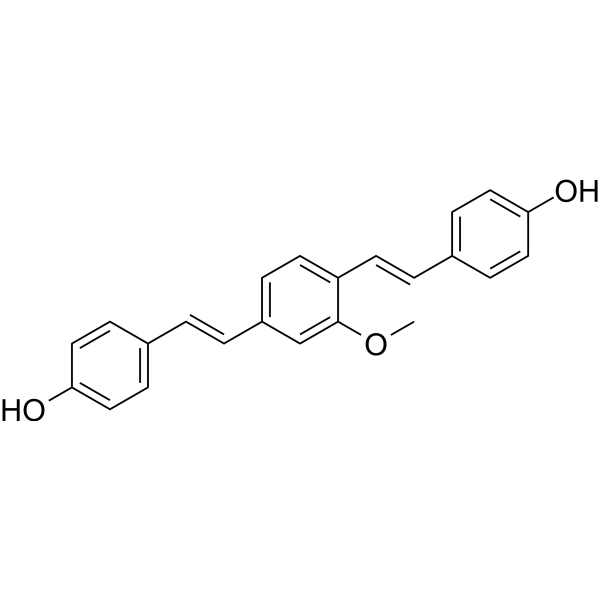
Methoxy-X04 (solution) is a fluorescent dye that crosses the blood-brain barrier and selectively binds to beta-pleated sheets found in dense core amyloid Aβ plaques. Methoxy-X04 retains in vitro binding affinity for amyloid b (Ab) fibrils (Ki= 26.8 nM). Methoxy-X04 is fluorescent and stains plaques, tangles, and cerebrovascular amyloid in postmortem sections of AD brain with good specificity.
Solvent and concentration: DMSO: 5 mg/mL
For research use only. We do not sell to patients.
- CAS No.: 863918-78-9
- Formula: C23H20O3
- Molecular Weight:344.41
-
Storage:
Please store the product under the recommended conditions in the Certificate of Analysis.


To place orders, for customer services and technical support, please contact: MedChemExpress USA
Tel: 609-228-6898 E-mail: [email protected] [email protected]


-
 Biological Activity
-
Chemical Information
- Protocols
- Purity & Documentation
- References
-
 Help & FAQs


-
HY-103240
Methoxy-X04Fluorescent Dye -
HY-103242
CRANAD-2Fluorescent Probe -
HY-19370
FPS-ZM1Amyloid-β Inhibitor -
HY-14602
TramiprosateNeuroprotection Agent -
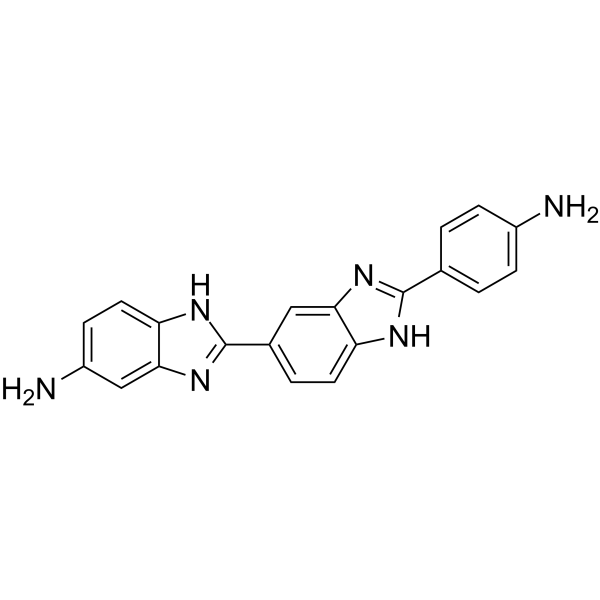
HY-103241
Ro 90-7501Amyloid β42 Inhibitor -

HY-P1061
ColivelinNeuroprotectant/STAT3 Activator -
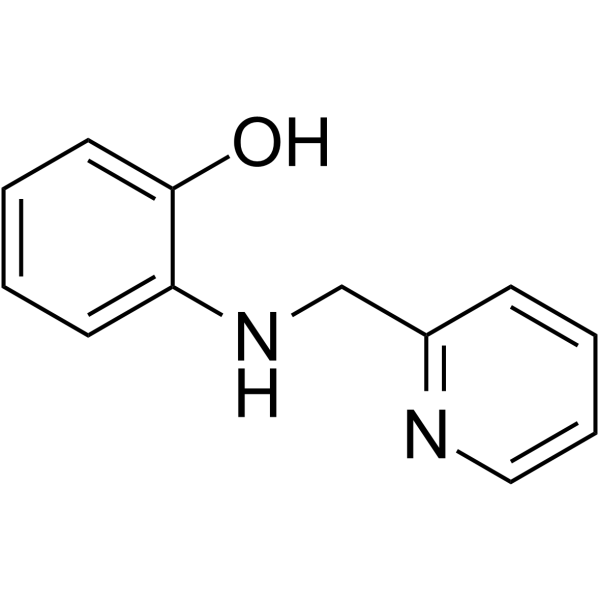
HY-18292
ARN2966APP Translation Modulator -
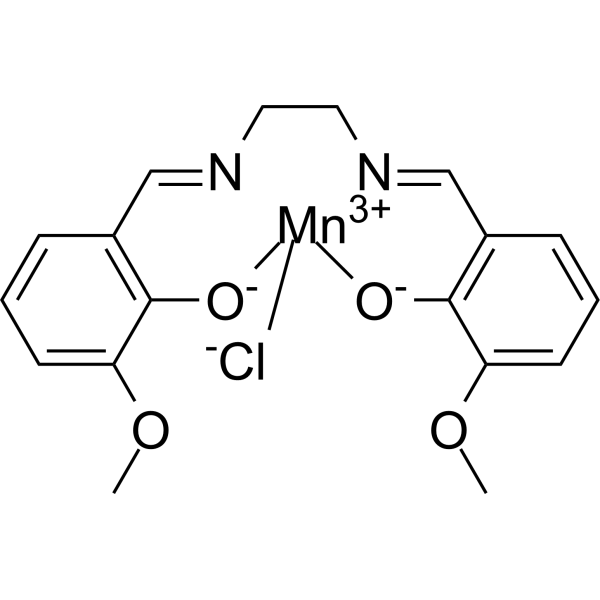
HY-100594
EUK-134SOD Mimetic -

HY-103240R
Methoxy-X04 (Standard)Reference Standard -
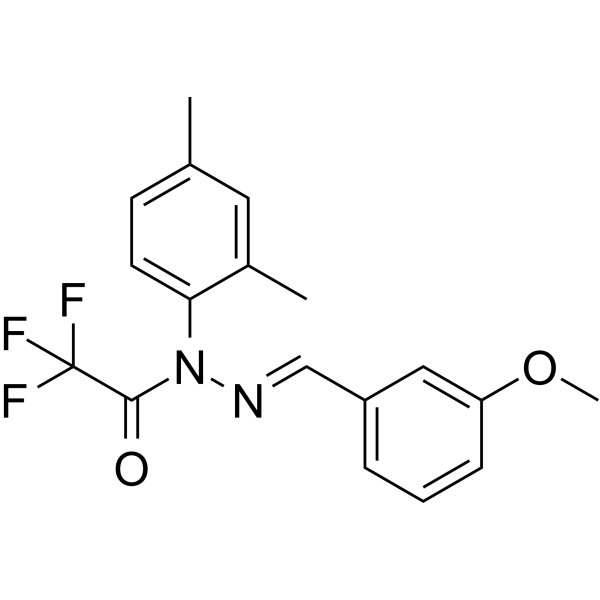
HY-13779
(E/Z)-J147Neuroprotective Agent -
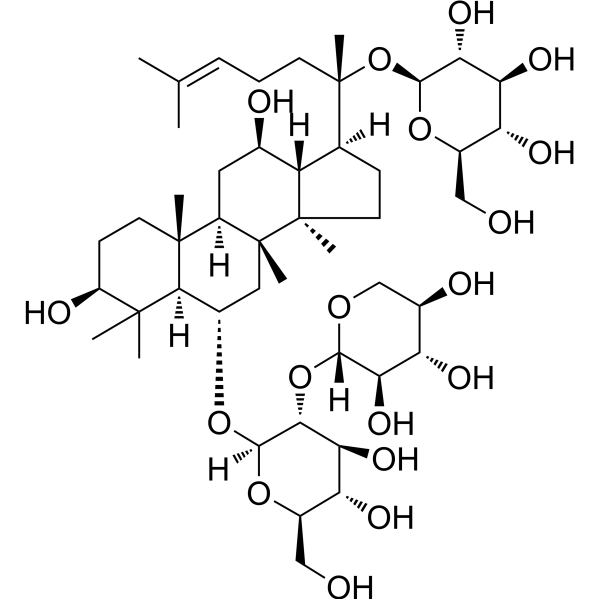
HY-N0615
Notoginsenoside R1Apoptosis Inhibitor -
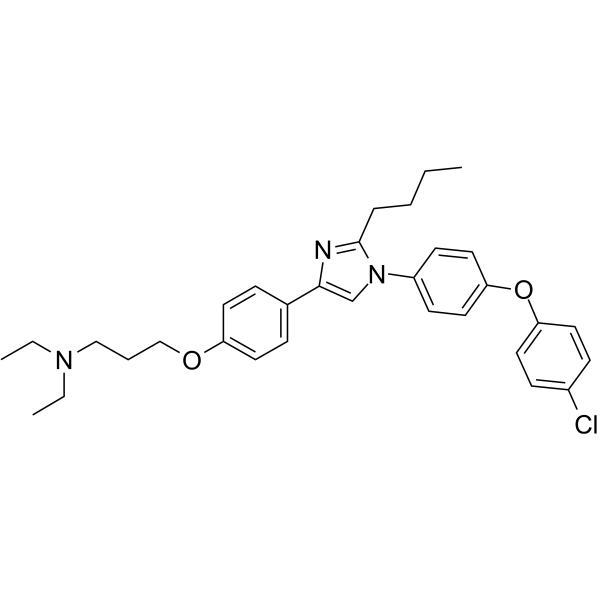
HY-50682
AzeliragonRAGE Inhibitor


Biological Activity
Description
Solvent and concentration: DMSO: 5 mg/mL
In Vivo
1. Methoxy-X04 Solution Injection
24 hr prior to perfusion, weigh the mice and give each mouse an intraperitoneal injection of methoxy-X04 at a dose of 10 mg/kg of body weight.
2. Transcardial Perfusion of the Injected Mice
3. Brain Sectioning Using a Vibratome
4. Section Screening for the Presence of Methoxy-X04-stained Plaques
Examine each section successively, to avoid drying out the sections, using the following procedure:
Add a droplet of PBS to a microscope slide with a disposable pipette, and place the section on the droplet.
Examine the section under a fluorescent microscope (excitation 340-380 nm) to identify regions containing Methoxy-X04 labeled Aβ plaques.
MedChemExpress (MCE) has not independently confirmed the accuracy of these methods. They are for reference only.


Chemical Information
-
CAS No. 863918-78-9
-
Appearance Liquid
-
Molecular Weight 344.41
-
Formula C23H20O3
-
Color Light yellow to yellow
-
SMILES
COC1=CC(/C=C/C2=CC=C(O)C=C2)=CC=C1/C=C/C3=CC=C(O)C=C3
-
Shipping
Room temperature in continental US; may vary elsewhere.
-
Storage
Please store the product under the recommended conditions in the Certificate of Analysis.

Protocols
-
Amyloid: Congo Red Amyloid Staining
Congo red amyloid staining is a histochemical method used to detect extracellular amyloid deposits in tissue sections based on the affinity of Congo red dye for β-pleated sheet-rich protein aggregates. When bound to amyloid, Congo red produces characteristic apple-green birefringence under polarized light microscopy, which is widely regarded as a diagnostic feature of amyloid deposition in histopathology. The diagnostic principle relies on the combination of dye binding (congophilia) and optical anisotropy under polarized illumination, which distinguishes amyloid from most non-amyloid eosinophilic extracellular deposits in routine histological evaluation. Amyloid identification by Congo red staining remains a cornerstone in diagnostic pathology despite the availability of adjunct methods such as immunohistochemistry and mass spectrometry, particularly because of its ability to localize deposits directly within tissue architecture. The specificity of Congo red-positive deposits is incre
-
Alzheimer’s Disease Modeling
Alzheimer’s Disease (AD) is a neurodegenerative disorder characterized by a progressive decline in cognitive functions and loss of specific types of neurons and synapses. Alzheimer's symptoms can be simulated in mice by injecting drugs (such as Aβ) or genetically modified.


Purity & Documentation
-
Data Sheet (268 KB)
-
SDS (252 KB)
- English - EN (252 KB)
- Français - FR (252 KB)
- Deutsch - DE (252 KB)
- Norwegian - NO (252 KB)
- Español - ES (252 KB)
- Swedish - SV (252 KB)
- Italian - IT (252 KB)
- Korean - KR (252 KB)
- Portuguese - PT (252 KB)
-
Handling Instructions (2659 KB)
References
[1]. Klunk WE, et al. Imaging Abeta plaques in living transgenic mice with multiphoton microscopy and methoxy-X04, a systemically administered Congo red derivative. J Neuropathol Exp Neurol. 2002 Sep;61(9):797-805. [Content Brief]
[2]. Bisht K, et al. Correlative Light and Electron Microscopy to Study Microglial Interactions with β-Amyloid Plaques. J Vis Exp. 2016 Jun 1;(112):54060. [Content Brief]

Calculators
Concentration (start) × Volume (start) = Concentration (final) × Volume (final)


Methoxy-X04 (solution) Related Classifications
HY-DY1045 Related Classifications
 Powered by Bioz