



Enoxacin-d8 hydrochloride

Based on 1 Customer Validation
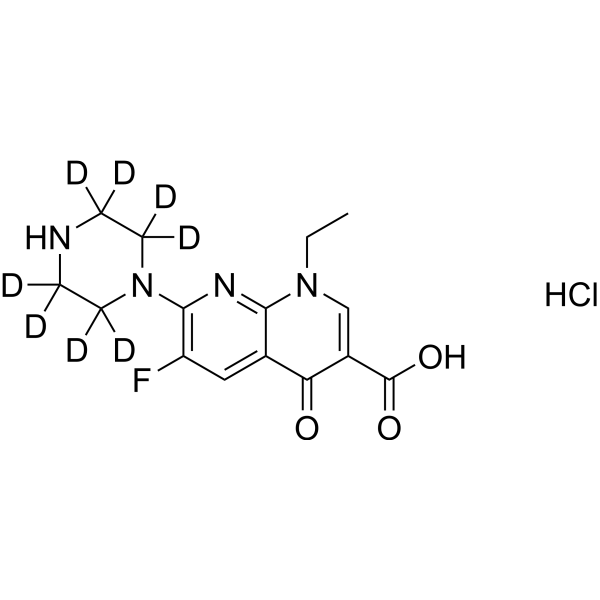
Enoxacin-d8 (hydrochloride) is deuterium labeled Enoxacin. Enoxacin (AT 2266), a fluoroquinolone, interferes with DNA replication and inhibits bacterial DNA gyrase (IC50=126 μg/ml) and topoisomerase IV (IC50=26.5 μg/ml). Enoxacin is a miRNA processing activator and enhances siRNA-mediated mRNA degradation and promotes the biogenesis of endogenous miRNAs. Enoxacin has potent activities against gram-positive and -negative bacteria. Enoxacin is a cancer-specific growth inhibitor that acts by enhancing TAR RNA-binding protein 2 (TRBP)-mediated microRNA processing.
For research use only. We do not sell to patients.
- Purity : 99.98%
- CAS No.: 2930288-95-0
- Formula: C15H10D8ClFN4O3
- Molecular Weight:364.83
-
Storage:
4°C, sealed storage, away from moisture
* In solvent : -80°C, 6 months; -20°C, 1 month (sealed storage, away from moisture)

To place orders, for customer services and technical support, please contact: MedChemExpress USA
Tel: 609-228-6898 E-mail: [email protected] [email protected]


-
 Biological Activity
-
Chemical Information
-
Solvent & Solubility
- Protocols
- Purity & Documentation
- References
-
 Help & FAQs


-
HY-B0522S
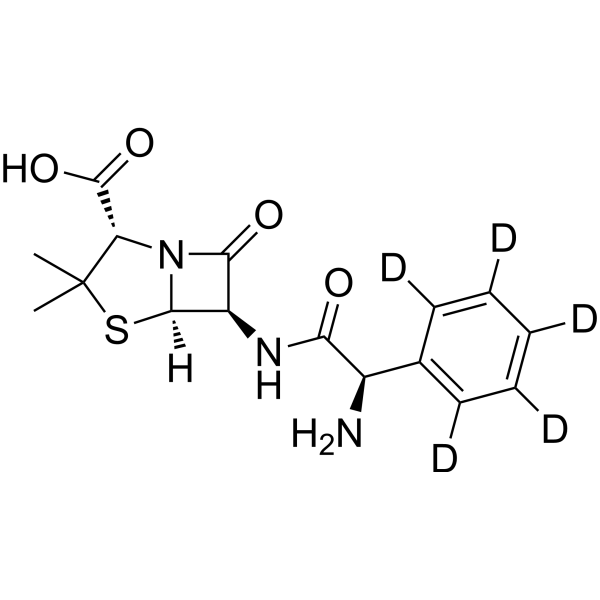
Ampicillin-d5Stable Isotope -
HY-122139
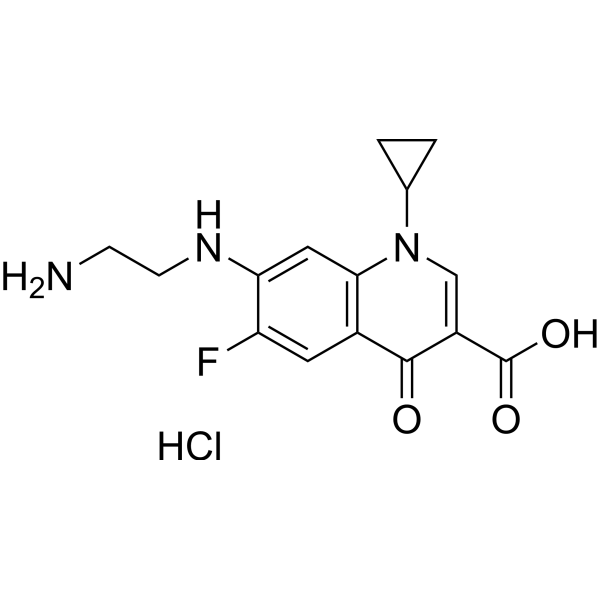
Desethylene Ciprofloxacin hydrochlorideDrug Metabolite -
HY-139324
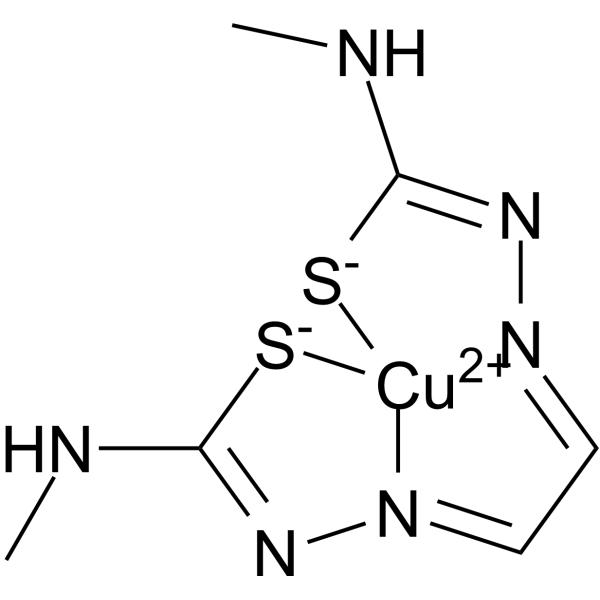
Cu(II)GTSMGSK3β/AβOs Inhibitor -
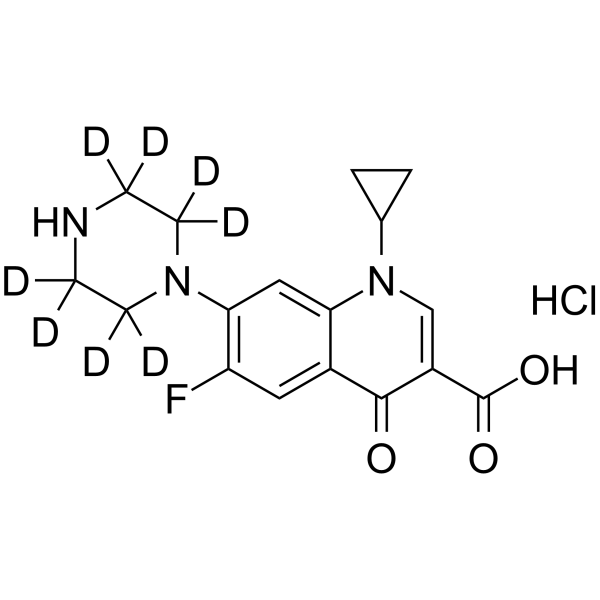
HY-B0356S
Ciprofloxacin-d8 hydrochlorideStable Isotope -

HY-122139R
Desethylene Ciprofloxacin hydrochloride (Standard)Reference Standard -
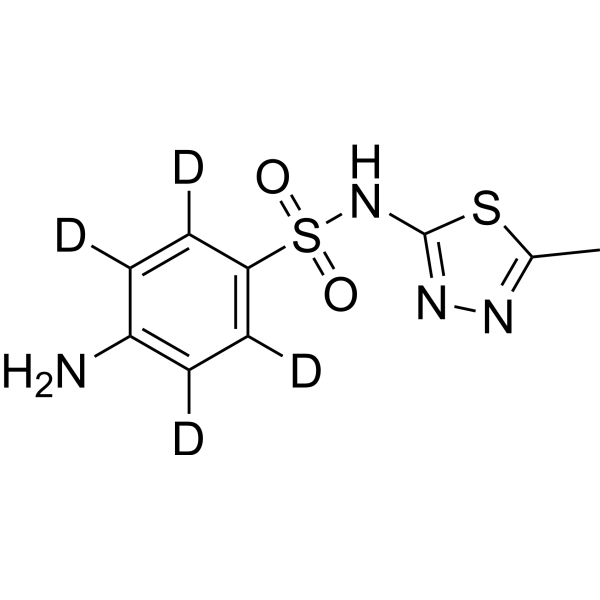
HY-B0333S2
Sulfamethizole-d4-1Stable Isotope -

HY-133685S
N-Hexanoyl-L-Homoserine lactone-d3Stable Isotope -
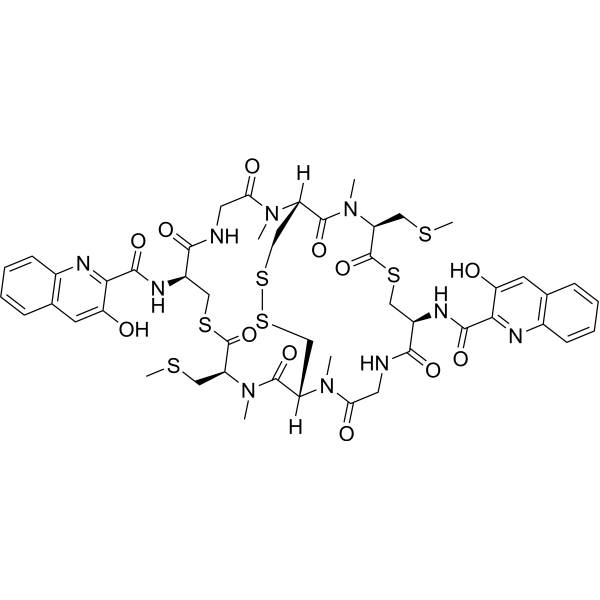
HY-P3116
ThiocoralineNatural Product -

HY-137139
10'-DesmethoxystreptonigrinAntibiotic -
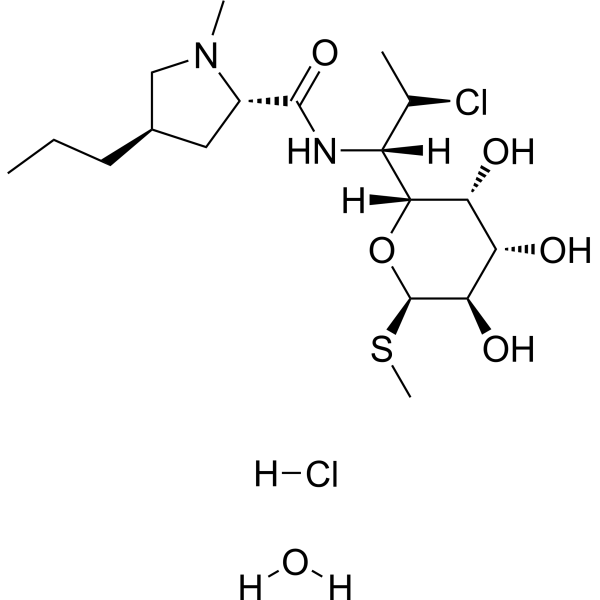
HY-N7118
Clindamycin hydrochloride monohydrateBacterial Inhibitor -

HY-N7118R
Clindamycin hydrochloride monohydrate (Standard)Bacterial Inhibitor -
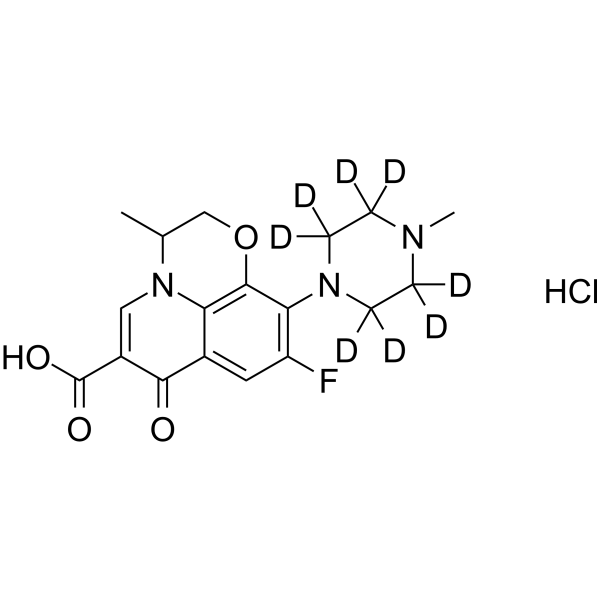
HY-B0125AS
Ofloxacin-d8 hydrochlorideStable Isotope


Biological Activity
Description
IC50 & Target
|
Quinolone |
In Vitro
Stable heavy isotopes of hydrogen, carbon, and other elements have been incorporated into drug molecules, largely as tracers for quantitation during the drug development process. Deuteration has gained attention because of its potential to affect the pharmacokinetic and metabolic profiles of drugs[1].
MedChemExpress (MCE) has not independently confirmed the accuracy of these methods. They are for reference only. Further protocols information, click here.
Application
1. This compound can be used as a tracer
2. This compound can be used as an internal standard for quantitative analysis by NMR, GC-MS, or LC-MS.


Chemical Information
-
CAS No. 2930288-95-0
-
Unlabeled CAS 74011-58-8
-
Appearance Solid
-
Molecular Weight 364.83
-
Formula C15H10D8ClFN4O3
-
Color White to off-white
-
SMILES
O=C(C1=CN(CC)C2=NC(N3C([2H])([2H])C([2H])([2H])NC([2H])([2H])C3([2H])[2H])=C(C=C2C1=O)F)O.Cl
-
Shipping
Room temperature in continental US; may vary elsewhere.
-
Storage
4°C, sealed storage, away from moisture
* In solvent : -80°C, 6 months; -20°C, 1 month (sealed storage, away from moisture)


Solvent & Solubility
In Vitro:
DMSO : ≥ 15 mg/mL (41.12 mM; Hygroscopic DMSO has a significant impact on the solubility of product, please use newly opened DMSO)
DMF : ≥ 0.1 mg/mL (0.27 mM)
* "≥" means soluble, but saturation unknown.
Please refer to the solubility information to select the appropriate solvent. Once prepared, please aliquot and store the solution to prevent product inactivation from repeated freeze-thaw cycles.
Storage method and period of stock solution: -80°C, 6 months; -20°C, 1 month (sealed storage, away from moisture). When stored at -80°C, please use it within 6 months. When stored at -20°C, please use it within 1 month.
Please refer to the solubility information to select the appropriate solvent. Once prepared, please aliquot and store the solution to prevent product inactivation from repeated freeze-thaw cycles.
Storage method and period of stock solution: -80°C, 6 months; -20°C, 1 month (sealed storage, away from moisture). When stored at -80°C, please use it within 6 months. When stored at -20°C, please use it within 1 month.
Concentration (start) × Volume (start) = Concentration (final) × Volume (final)

Protocols
-
RNA extraction experimental
By lysing cells, releasing RNA, and removing impurities such as proteins and DNA, high-purity RNA products are finally obtained. The commonly used traditional method is the guanidine isothiocyanate/phenol/chloroform method (Trizol), which is suitable for a variety of animal materials including animal tissues, microorganisms, cultured cells, etc., and most plant materials.
-
PCNA Immunodetection Proliferation Assay
PCNA immunodetection measures proliferative activity by detecting proliferating cell nuclear antigen, a nuclear protein associated with DNA polymerase δ function and DNA replication. The assay readout is the proportion of PCNA-positive nuclei among total counted cells, but PCNA labeling is not identical to BrdU labeling because PCNA can mark late G1/early S-associated replication competence and may persist beyond active DNA synthesis depending on fixation and extraction conditions.
-
Cell Cytotoxicity Assay
Cytotoxicity assays are usually based on the assessment of cell membrane damage, which can also be indirectly detected by measuring cell viability. Detection methods include MTT assay, CKK-8 assay, LDH assay and ATP assay, etc.
-
RNA interference technology
RNA interference (RNAi) is a cellular mechanism that inhibits gene expression by suppressing gene transcription or activating RNA degradation. This mechanism was discovered in plants in 1998 by Andrew Fire and Craig Mello. Today, this phenomenon can be observed in almost all eukaryotes, including protozoa, flies, nematodes, insects, parasites, and mammals.
-
Gram Staining of Tissue Sections
Gram staining of tissue sections is a histochemical technique used to differentiate Gram-positive and Gram-negative bacteria within histological specimens based on differences in bacterial cell wall structure and dye retention, adapted from classical bacteriological Gram staining into tissue-compatible “histological Gram stain” variants. In tissue applications, modifications of the Brown-Hopps and Brown-Brenn methods are commonly used to improve differentiation of microorganisms embedded within host connective tissue and to reduce overstaining or loss of Gram-negative signal, which are known limitations of earlier approaches. The principle relies on crystal violet-iodine complex retention in Gram-positive organisms and subsequent decolorization and counterstaining steps that allow contrast visualization of Gram-negative organisms against tissue background.


Purity & Documentation
-
Data Sheet (273 KB)
-
SDS (252 KB)
- English - EN (252 KB)
- Français - FR (252 KB)
- Deutsch - DE (252 KB)
- Norwegian - NO (252 KB)
- Español - ES (252 KB)
- Swedish - SV (252 KB)
- Italian - IT (252 KB)
- Korean - KR (252 KB)
- Portuguese - PT (252 KB)
-
Handling Instructions (2659 KB)
References
[1]. Russak EM, et al. Impact of Deuterium Substitution on the Pharmacokinetics of Pharmaceuticals. Ann Pharmacother. 2019;53(2):211-216. [Content Brief]
[2]. Sonia Melo, et al.Small molecule enoxacin is a cancer-specific growth inhibitor that acts by enhancing TAR RNA-binding protein 2-mediated microRNA processing. Proc Natl Acad Sci U S A. 2011 Mar 15;108(11):4394-9. [Content Brief]
[3]. M Takei, et al. Target preference of 15 quinolones against Staphylococcus aureus, based on antibacterial activities and target inhibition. Antimicrob Agents Chemother. 2001 Dec;45(12):3544-7. [Content Brief]
[4]. Ge Shan, et al. A small molecule enhances RNA interference and promotes microRNA processing. Nat Biotechnol. 2008 Aug;26(8):933-40. [Content Brief]
[5]. Rengen Fan, et al. Small molecules with big roles in microRNA chemical biology and microRNA-targeted therapeutics. RNA Biol. 2019 Jun;16(6):707-718. [Content Brief]
[6]. Chin, N.-X. and H.C. Neu, In vitro activity of enoxacin, a quinolone carboxylic acid, compared with those of norfloxacin, new beta-lactams, aminoglycosides, and trimethoprim. Antimicrobial agents and chemotherapy, 1983. 24(5): p. 754-763. [Content Brief]


Complete Stock Solution Preparation Table
Please refer to the solubility information to select the appropriate solvent. Once prepared, please aliquot and store the solution to prevent product inactivation from repeated freeze-thaw cycles.
Storage method and period of stock solution: -80°C, 6 months; -20°C, 1 month (sealed storage, away from moisture). When stored at -80°C, please use it within 6 months. When stored at -20°C, please use it within 1 month.
| Optional Solvent | Concentration Solvent Mass | 1 mg | 5 mg | 10 mg | 25 mg |
|---|---|---|---|---|---|
| DMSO | 1 mM | 2.7410 mL | 13.7050 mL | 27.4100 mL | 68.5251 mL |
| 5 mM | 0.5482 mL | 2.7410 mL | 5.4820 mL | 13.7050 mL | |
| 10 mM | 0.2741 mL | 1.3705 mL | 2.7410 mL | 6.8525 mL | |
| 15 mM | 0.1827 mL | 0.9137 mL | 1.8273 mL | 4.5683 mL | |
| 20 mM | 0.1371 mL | 0.6853 mL | 1.3705 mL | 3.4263 mL | |
| 25 mM | 0.1096 mL | 0.5482 mL | 1.0964 mL | 2.7410 mL | |
| 30 mM | 0.0914 mL | 0.4568 mL | 0.9137 mL | 2.2842 mL | |
| 40 mM | 0.0685 mL | 0.3426 mL | 0.6853 mL | 1.7131 mL |


Enoxacin-d8 hydrochloride Related Classifications
HY-B0268S1 Related Classifications
 Powered by Bioz