1. Search Result
Search Result
Results for "

synergistic

" in MedChemExpress (MCE) Product Catalog:

415

Inhibitors & Agonists

2

Screening Libraries

4

Fluorescent Dyes

11

Biochemical Assay Reagents

24

Peptides

2

MCE Kits

15

Inhibitory Antibodies

44

Natural
Products

4

Isotope-Labeled Compounds

3

Click Chemistry

7

Oligonucleotides

3

GMP Molecules

Cat. No. Product Name Target Research Areas Chemical Structure
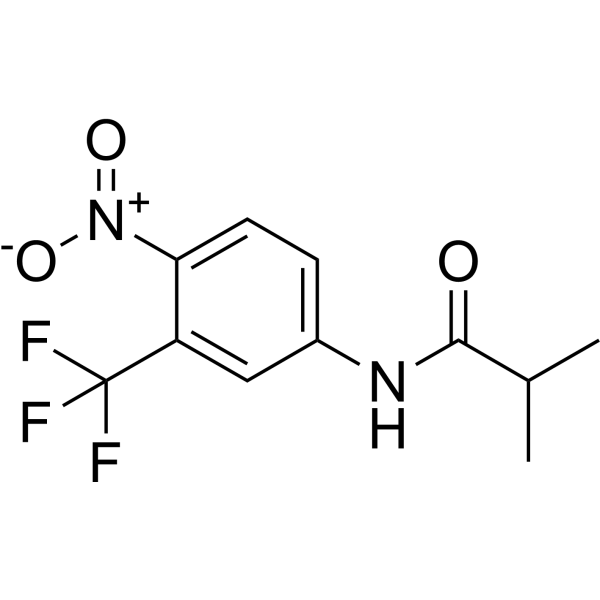
  • HY-B0022
    Flutamide
    10+ Cited Publications

    SCH 13521

    Androgen Receptor Cancer
    Flutamide is an Androgen Receptor antagonist with Ki=55 nM. Flutamide inhibits prostate cancer progression and has synergistic effects with Docetaxel (HY-B0011). Flutamide also has the potential to protect against hyperthermia-induced multiple organ dysfunction syndrome .
    Flutamide
  • HY-152848

    IBI351; GFH925

    Ras Cancer
    Fulzerasib (GFH925) is an irreversible KRAS G12C inhibitor, has a synergistic anti-cancer effect with cetuximab (HY-P9905). .
    Fulzerasib
  • HY-158102
    Rinzimetostat
    1 Publications Verification

    ORIC-944

    Histone Methyltransferase Cancer
    Rinzimetostat (ORIC-944) is a selective, orally active, allosteric inhibitor targeting the EED subunit of polycomb repressive complex 2 (PRC2). Rinzimetostat is synergistic with androgen receptor pathway inhibitors (ARPIs) for the study of metastatic prostate cancer.
    Rinzimetostat
  • HY-148419
    Ralometostat
    2 Publications Verification

    TNG908

    Histone Methyltransferase Cancer
    TNG908 is a MTAP synergistic PRMT5 inhibitor. TNG908 crosses the blood-brain barrier and is orally active. TNG908 could be used in cancer research .
    Ralometostat
  • HY-A0241
    Dalfopristin
    2 Publications Verification

    RP54476

    Antibiotic Bacterial Infection
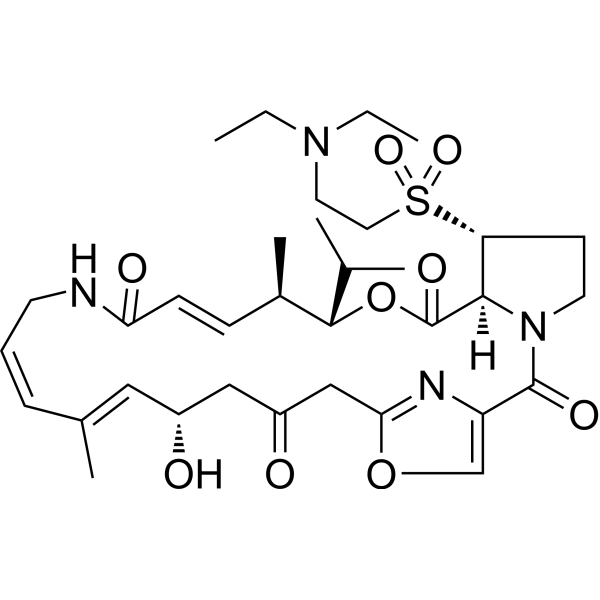
    Dalfopristin (RP54476) is a semisynthetic sulfone antibiotic. Dalfopristin alone has limited antibacterial activity, but synergistically with Quinupristin it has significant bactericidal activity against many pathogenic Gram-positive cocci .
    Dalfopristin
  • HY-30270

    p-Hydroxyanisole

    HSP Estrogen Receptor/ERR Endocrinology
    Mequinol (4-Methoxyphenol)yes MercurialisOne of the bioactive ingredients, mainly used for skin discoloration . MequinolIs an antioxidant that has additive/synergistic effects on carcinogenesis when combined with other phenolic antioxidants. Mequinolalso promote hERαDependent chaperone production with potential estrogenic activity .
    Mequinol
  • HY-12456

    Antibiotic ADC Payload DNA Alkylator/Crosslinker Necroptosis Apoptosis Cancer
    Duocarmycin SA is an orally active antitumor antibiotic with an IC50 of 10 pM . Duocarmycin SA is an extremely potent cytotoxic agent capable of inducing a sequence-selective alkylation of duplex DNA. Duocarmycin SA demonstrates synergistic cytotoxicity against glioblastoma multiforme (GBM) cells treated with proton radiation in vitro .
    Duocarmycin SA
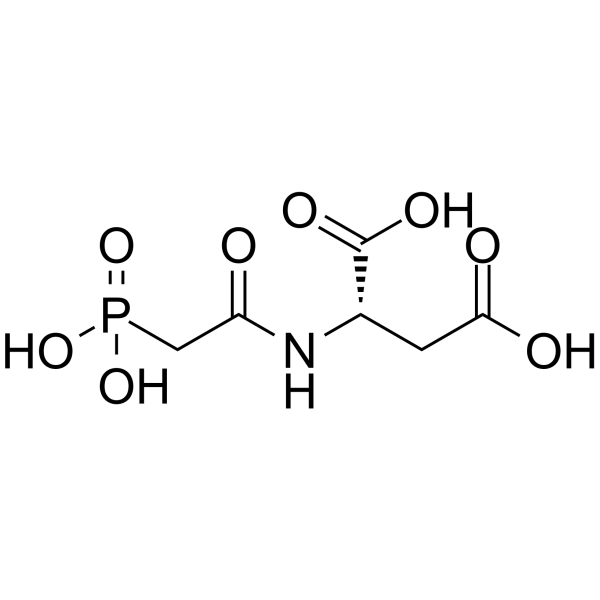
  • HY-112732
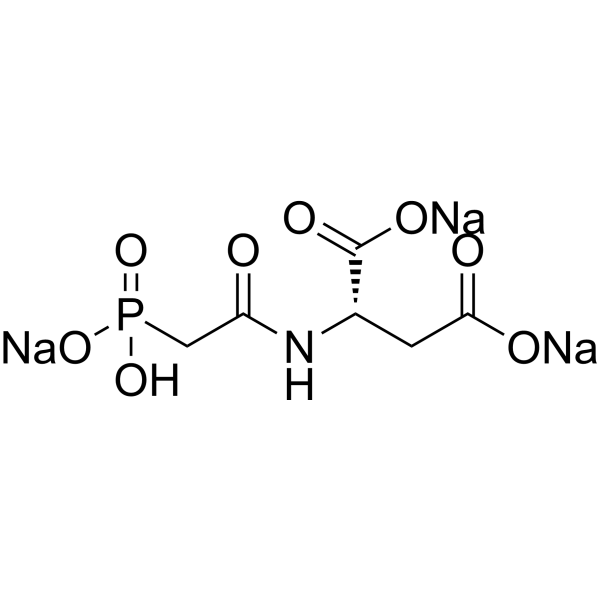
    Sparfosic acid
    4 Publications Verification

    Apoptosis Metabolic Disease Cancer
    Sparfosic acid, a DNA antimetabolite agent, is a potent inhibitor of aspartate transcarbamoyl transferase, the enzyme catalyzing the second step of de novo pyrimidine biosynthesis. Sparfosic acid synergistically enhances the cytotoxicity of a combination of 5-fluorouracil (5-FU) and interferon-alpha (IFN) against human colon cancer cell lines .
    Sparfosic acid
  • HY-B0901
    Bromperidol
    2 Publications Verification

    R-11333

    Dopamine Receptor Bacterial Infection Neurological Disease
    Bromperidol (R-11333) possesses antipsychotic activity, with a high affinity for central dopamine receptors D2. Bromperidol can kill Mycobacteria in a synergistic manner with Spectinomycin .
    Bromperidol
  • HY-12762
    QS11
    2 Publications Verification

    β-catenin Wnt Arf Family GTPase Cancer
    QS11 is an inhibitor of ARFGAP1 (ADP-ribosylation factor GTPase-activating protein 1), with an EC50 of 1.5 μM. QS11 activates Wnt/β-catenin signaling through an effect on protein trafficking. QS11 inhibits migration of ARFGAP overexpressing breast cancer cells .
    QS11
  • HY-108932

    Gemcitabine 5′-phosphate

    Apoptosis Cancer
    Gemcitabine monophosphate (Gemcitabine 5′-phosphate) is one of the active intermediates of Gemcitabine (HY-17026). Gemcitabine monophosphate has a synergistic anti-cancer effect and can be delivered by formulating it into nanoparticles .
    Gemcitabine monophosphate
  • HY-105336

    NSC 126849

    DNA/RNA Synthesis Nucleoside Antimetabolite/Analog Cancer
    3-Deazauridine (NSC 126849) is a uridine analogue. 3-Deazauridine competitively inhibits cytidine triphosphate synthase to inhibit the biosynthesis of cytidine-5'-triphosphate. 3-Deazauridine acts synergistically with several antineoplastic agents, acting as a biological response modifier .
    3-Deazauridine
  • HY-W012009
    2'-Deoxy-2'-fluorocytidine
    1 Publications Verification

    Influenza Virus Infection
    2'-Deoxy-2'-fluorocytidine, an nucleoside analog, is a potent inhibitor of Crimean-Congo hemorrhagic fever virus (CCHFV) replication. 2′-deoxy-2′-fluorocytidine can act synergistically with T705 to increase the potency of both compounds antiviral effects on CCHFV replication .
    2'-Deoxy-2'-fluorocytidine
  • HY-118924

    Fluorescent Dye Cancer
    IR-825 is a near infrared fluorescent dye.the end of IR-825 has carboxyl COOH active group, and can participate in the reaction to connect other molecules. IR-825 can be widely used in tumor photothermal study. .
    IR-825
  • HY-34740

    Mitochondrial Metabolism Neurological Disease Metabolic Disease
    Ethylmalonic acid is a short-chain organic dicarboxylic acid. Ethylmalonic acid synergistically induces mitochondrial permeability transition (MP) with Ca 2+, inhibits Mi-CK, and disrupts mitochondrial energy metabolism. Ethylmalonic acid can be used in the research of SCADD, EE and other genetic metabolic diseases characterized by EMA accumulation .
    Ethylmalonic acid
  • HY-175646

    Acyltransferase mTOR Ribosomal S6 Kinase (RSK) Apoptosis Cancer
    AGPAT4-IN-1 (Compound CL26) is a covalent AGPAT4 inhibitor with an IC50 of 795 nM. AGPAT4-IN-1 covalently binds to AGPAT4 at Cys 228 and significantly inhibits acyltransferase activity, LPA-to-PA conversion and downstream mTOR/S6K pathways. AGPAT4-IN-1 sensitizes hepatocellular carcinoma (HCC) tumors to Sorafenib (HY-10201) and significantly induces apoptosis with a synergistic response. AGPAT4-IN-1 has antitumor activity and reduces tumorigenicity and stemness in HCC xenograft mouse models .
    AGPAT4-IN-1
  • HY-160409

    Topoisomerase Apoptosis Cancer
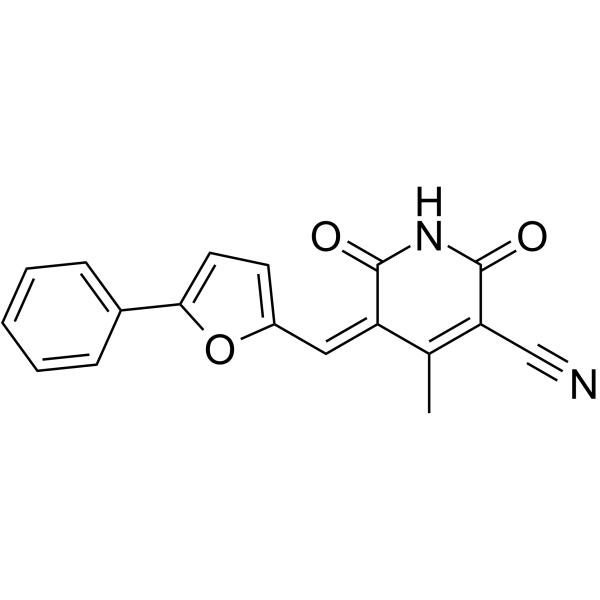
    TopBP1-IN-1 is a TopBP1 inhibitor. TopBP1-IN-1 has a synergistic effect with PARP inhibitors. TopBP1-IN-1 has antitumor activity .
    TopBP1-IN-1
  • HY-114170
    ML604440
    3 Publications Verification

    Proteasome Inflammation/Immunology
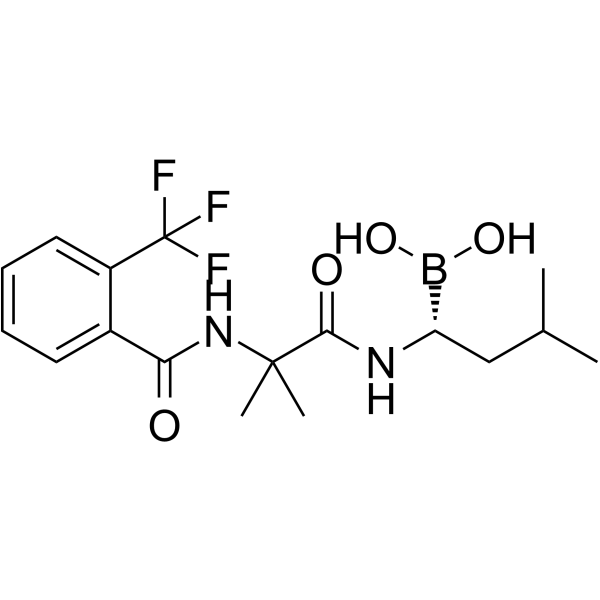
    ML604440 is a specific and cell-permeable Proteasome β1i (LMP2) subunit inhibitor. ML604440 can be used in experimental colitis, EAE and autoimmune disease research. ML604440 shows synergistic effects and advantageous when combined with LMP7 inhibitor .
    ML604440
  • HY-W134326

    Bacterial Infection Cardiovascular Disease Metabolic Disease
    Polydextrose is an orally active prebiotic. Polydextrose promotes the growth of Pediococcus pentosaceus ATCC 43200. Polydextrose reduces cholesterol and synergistically lowers blood sugar with Sitagliptin (HY-13749). Currently, it is mainly used in the research of diseases such as hyperlipidemia, type 2 diabetes, and postoperative iron deficiency anemia .
    Polydextrose
  • HY-W109754

    2',4'-DHC

    Bacterial Infection
    2',4'-Dihydroxychalcone, in combination with nalidixic acid (HY-B0398), exhibits synergistic effects against E. coli by reducing membrane permeability .
    2',4'-Dihydroxylchalcone
  • HY-106892

    348U87

    DNA/RNA Synthesis Infection
    BW 348U87 is an inhibitor for ribonucleotide reductase, which exhibits synergistic effect with Acyclovir (HY-17422), potentiate the antiviral activity of Acyclovir against herpes simplex virus (HSV) in athymic nude mouse model .
    BW 348U87
  • HY-19666
    DPI 201-106
    1 Publications Verification

    SDZ 201106

    Sodium Channel Cardiovascular Disease
    DPI 201-106 (SDZ 201106) is a cardiotonic agent with a synergistic sarcolemmal and intracellular mechanism of action. DPI 201-106 shows cardioselective modulation of voltage-gated sodium channels (VGSCs) resulting in a positive inotropic effect .
    DPI 201-106
  • HY-153731

    Deubiquitinase Cancer
    USP1-IN-4 (compound 10) is an effective USP1 inhibitor with an IC50 value of 2.44 nM. USP1-IN-4 has anticancer activity and synergistic activity with various anticancer drugs .
    USP1-IN-4
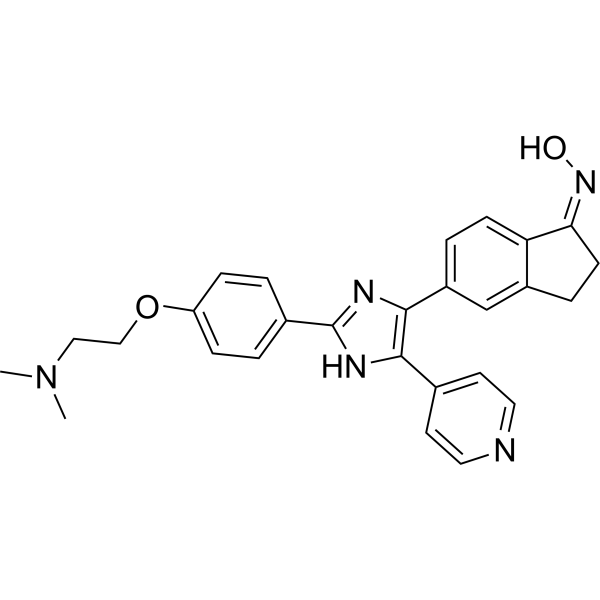
  • HY-118911

    ATM/ATR Cancer
    ATM Inhibitor-10 (compound 74), a 3-quinoline carboxamide, is a highly selective and orally active ATM inhibitor (IC50: 0.6 nM). ATM Inhibitor-10 has anti-tumor activity in SW620 xenograft models. ATM Inhibitor-10 is synergistic with Top I inhibitors .
    ATM Inhibitor-10
  • HY-147310

    Toll-like Receptor (TLR) Infection
    CU-CPD107 is a potent, selective toll-like receptor 8 (TLR 8) agonist. CU-CPD107 inhibits TLR8 signaling. CU-CPD107 converts to synergistic agonist activities in the presence of ssRNA and induces TLR8 signaling. CU-CPD107 inhibits proinflammatory factor expression and avoids immune responses in the presence of ssRNA .
    CU-CPD107
  • HY-168926

    Reactive Oxygen Species (ROS) Apoptosis Cancer
    NQO2-IN-1 (Compound 20b) is the inhibitor for quinone oxidoreductase (NQO) that inhibits NQO2 with an IC50 of 95 nM. NQO2-IN-1 overcomes the resistance of NSCLC cells to tumor necrosis factor-related apoptosis-inducing ligand (TRAIL) by induction of ROS and apoptosis .
    NQO2-IN-1
  • HY-164460

    Pim Cancer
    AZD1897 is a PIM1, PIM2, and PIM3 inhibitor with IC50 values of less than 3 nM for these three PIM kinases. AZD1897 exhibits anticancer activity and synergistically inhibits the activity of acute myeloid leukemia (AML) cells in combination with Capivasertib (HY-15431). This synergistic inhibitory effect is achieved through the inhibition of the mTOR and MCL1 pathways .
    AZD1897
  • HY-107461

    Glucocorticoid Receptor Cardiovascular Disease
    LY2623091 is a mineralocorticoid receptor antagonist for the treatment of refractory hypertension. LY2623091 exhibits CYP3A4-dependent clearance and synergistic effects with CYP3A4 inhibitors .
    LY2623091
  • HY-114658

    NSC-109351

    Drug Intermediate Drug Metabolite Cancer
    Daunomycinone (NSC-109351) is a metabolite of Daunomycin (HY-13062A) and anticancer intermediate. Daunomycinone binds to nucleic acids synergistically with metal ions. Daunomycinone can be used in the research of leukemia .
    Daunomycinone
  • HY-157937

    IFNAR Cancer
    VISTA-IN-3 (Compound A4) is a potent VISTA small molecule inhibitor with a KD value of 0.49 μM. VISTA-IN-3 can induce the release of IFN-γ cytokines. VISTA-IN-3 synergistically enhances anti-cancer activity with PD-L1 antibody .
    VISTA-IN-3
  • HY-155036

    Dopamine Transporter Neurological Disease
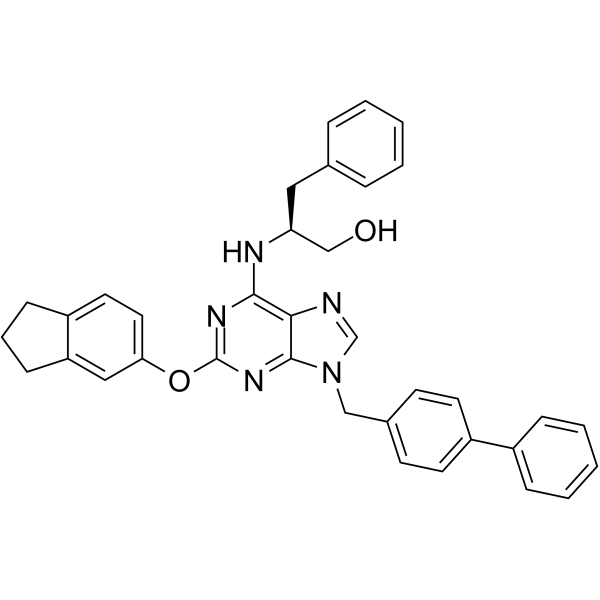
    Z1078601926 is an allosterical inhibitor of human dopamine transporter (hDAT). Z1078601926 has synergistic effect with Nomifensine (HY-B1110) .
    Z1078601926
  • HY-108932A

    Gemcitabine 5′-phosphate disodium

    Apoptosis Cancer
    Gemcitabine monophosphate (Gemcitabine 5′-phosphate) is one of the active intermediates of Gemcitabine (HY-17026). Gemcitabine monophosphate has a synergistic anti-cancer effect and can be delivered by formulating it into nanoparticles .
    Gemcitabine monophosphate disodium
  • HY-130079

    Penicillin G procaine

    Bacterial Infection
    Procaine benzylpenicillin (Penicillin G procaine) is an antimicrobial agent. Procaine benzylpenicillin shows inhibitory activity against gram-positive bacteria and synergistic activity with Neomycin (HY-B0470). Procaine benzylpenicillin can be used in the study of bovine mastitis in animal husbandry .
    Procaine benzylpenicillin
  • HY-109084A

    CT-707 tetrahydrochloride

    FAK Cancer
    Conteltinib tetrahydrochloride (CT-707 tetrahydrochloride) is the tetrahydrochloride salt form of Conteltinib (HY-109084). Conteltinib tetrahydrochloride is the inhibitor for FAK (IC50=1.6 nM), ALK, and Pyk2. Conteltinib tetrahydrochloride exhibits a synergistic anti-tumor efficacy with Cabozantinib (HY-13016) .
    Conteltinib tetrahydrochloride
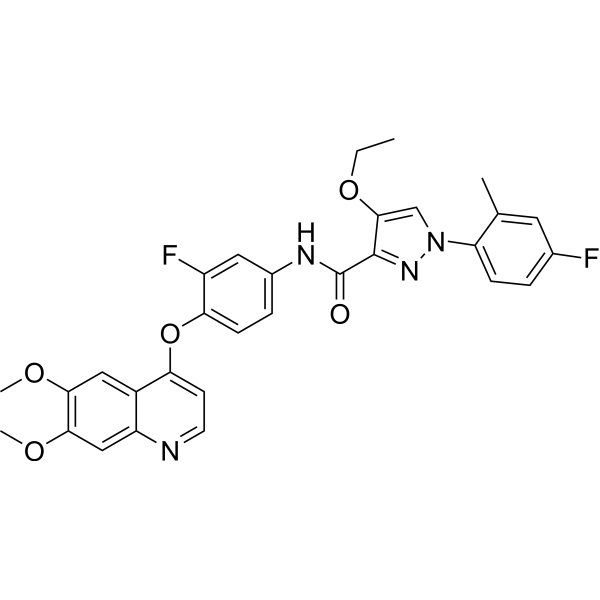
  • HY-162324

    Survivin Cancer
    MX106-4C is a survivin inhibitor that selectively kills ABCB1-positive colorectal cancer cells. MX106-4C can exert synergistic anticancer effects with Doxorubicin or resensitize drug-resistant ABCB1 cells to Doxorubicin .
    MX106-4C
  • HY-178019

    Beta-lactamase Bacterial Infection
    NDM-1-IN-10 (Compound CS-23) is an irreversible and covalent New Delhi metallo-β-lactamase-1 (NDM-1) inhibitor with an IC50 of 36  nM. NDM-1-IN-10 shows a synergistic effect with Meropenem (HY-13678) against NDM-1-expressing E. coli ( MIC of 0.25 μg/mL for E. coli BL21/pET15b-blaNDM-1). NDM-1-IN-10 can be used for bacterial infections research .
    NDM-1-IN-10
  • HY-179240

    Dopamine Receptor Neurological Disease
    UNC9815 is a D1 dopamine receptor (D1R) orthosteric allosteric modulator (PAM). UNC9815 can dose-dependently enhance the functional efficacy of dopamine in β-inhibitory protein recruitment experiments and cAMP accumulation experiments. When used in combination with other PAMs, UNC9815 exhibits a significant synergistic enhancement effect. UNC9815 can be used to study neurological and psychiatric diseases such as Parkinson's disease and schizophrenia .
    UNC9815
  • HY-N2044

    Others Others
    Methyl 3,4,5-trimethoxybenzoate can be synthesized from Gallic acid. Methyl 3,4,5-trimethoxybenzoate is mainly used in the production of Trimethoprim (TMP), Sulfa synergistic intermediates, and many other agents.
    Methyl 3,4,5-trimethoxybenzoate
  • HY-122289

    Dihydrofolate reductase (DHFR) Bacterial Infection
    Metioprim is a competitive inhibitor of bacterial Dihydrofolate reductase (DHFR). Metioprim has inhibitory activity against anaerobic bacteria. Metioprim shows synergistic activity in combination with DDS (HY-B0688) against E. coli. and various mycobacteria .
    Metioprim
  • HY-163191

    Beta-lactamase Bacterial Infection
    NDM-1 inhibitor-5 (compound 57) is a potent NDM-1 inhibitor, with a Ki of 2.5 μM. NDM-1 inhibitor-5 also shows antibacterial synergistic activity with meropenem (HY-13678) .
    NDM-1 inhibitor-5
  • HY-150583

    Fungal Inflammation/Immunology
    Chitin synthase inhibitor 2 (compound 2b) is a potent inhibitor of chitin synthase with the IC50 value of 0.09 mM and the Ki value of 0.12 mM. Chitin synthase inhibitor 2 has antimicrobial activities in vitro and shows synergistic or additive effects with fluconazole or polyoxin B .
    Chitin synthase inhibitor 2
  • HY-155011

    Bacterial Infection
    MB076 is a novel heterocyclic triazole with improved plasma stability. MB076 inhibits seven different Class C Acinetobacter-derived cephalosporinases (ADCs) β-lactamase variants with Ki values <1 μM. MB076 acts synergistically in combination with multiple cephalosporins to restore pBCSK(-) susceptibility .
    MB076
  • HY-W102510

    Glycosidase Metabolic Disease
    Gallacetophenone is an inhibitor of α-glucosidase with an IC50 value of 408.6 μM. When combined with 1-Deoxynojirimycin (HY-14860), Gallacetophenone exhibits synergistic inhibitory effects on mammalian α-glucosidase at high concentrations. Gallacetophenone can be used in the study of diseases such as type 2 diabetes .
    Gallacetophenone
  • HY-153788

    Casein Kinase Cancer
    CK2-IN-7 (compound 2) is an inhibitor of casein kinase 2 (CK2). CK2-IN-7 shows synergistic effect with structurally distinct CK2 chemical probe: SGC-CK2-1, against cancer .
    CK2-IN-7
  • HY-168861

    Beta-lactamase Bacterial Infection
    NDM-1 inhibitor-8 (Compound 18b) is the covalent inhibitor for new delhi metallo-β-lactamase-1 (NDM-1) with an IC50 of 7.03 μM. NDM-1 inhibitor-8 inhibits the drug resistant strains, exhibits synergistic antibacterial effect with the use of Meropenem (HY-13678). NDM-1 inhibitor-8 exhibits anti-infectious activity in mouse models .
    NDM-1 inhibitor-8
  • HY-143718

    JAK Btk Inflammation/Immunology
    JAK3/BTK-IN-3 is a potent inhibitor of JAK3/BTK. BTK and JAK3 are two important targets for autoimmune diseases. Simultaneous inhibition of the BTK/JAK3 signalling pathway exhibits synergistic effects. JAK3/BTK-IN-3 has the potential for the research of JAK3 kinase and/or BTK-related diseases (extracted from patent WO2021147952A1, compound 009)
    JAK3/BTK-IN-3
  • HY-143717

    JAK Btk Inflammation/Immunology
    JAK3/BTK-IN-2 is a potent inhibitor of JAK3/BTK. BTK and JAK3 are two important targets for autoimmune diseases. Simultaneous inhibition of the BTK/JAK3 signalling pathway exhibits synergistic effects. JAK3/BTK-IN-2 has the potential for the research of JAK3 kinase and/or BTK-related diseases (extracted from patent WO2021147952A1, compound 004)
    JAK3/BTK-IN-2
  • HY-143720

    JAK Btk Inflammation/Immunology
    JAK3/BTK-IN-5 is a potent inhibitor of JAK3/BTK. BTK and JAK3 are two important targets for autoimmune diseases. Simultaneous inhibition of the BTK/JAK3 signalling pathway exhibits synergistic effects. JAK3/BTK-IN-5 has the potential for the research of JAK3 kinase and/or BTK-related diseases (extracted from patent WO2021147953A1, example 35)
    JAK3/BTK-IN-5
  • HY-143719

    JAK Btk Inflammation/Immunology
    JAK3/BTK-IN-4 is a potent inhibitor of JAK3/BTK. BTK and JAK3 are two important targets for autoimmune diseases. Simultaneous inhibition of the BTK/JAK3 signalling pathway exhibits synergistic effects. JAK3/BTK-IN-4 has the potential for the research of JAK3 kinase and/or BTK-related diseases (extracted from patent WO2021147953A1, compound 003)
    JAK3/BTK-IN-4
  • HY-143716

    JAK Btk Inflammation/Immunology
    JAK3/BTK-IN-1 is a potent inhibitor of JAK3/BTK. BTK and JAK3 are two important targets for autoimmune diseases. Simultaneous inhibition of the BTK/JAK3 signalling pathway exhibits synergistic effects. JAK3/BTK-IN-1 has the potential for the research of JAK3 kinase and/or BTK-related diseases (extracted from patent WO2021147952A1, compound 002) .
    JAK3/BTK-IN-1

Inquiry Online

Your information is safe with us. * Required Fields.

Salutation


Country or Region *

Applicant Name *


Organization Name *

Department *


Email Address *


Product Name *

Cat. No.


Requested quantity *

Phone Number *


Remarks

Inquiry Online

Inquiry Information

Product Name:
Cat. No.:
Quantity:
MCE Japan Authorized Agent:

