



Sparfosic acid trisodium
Based on 6 publication(s) in Google Scholar
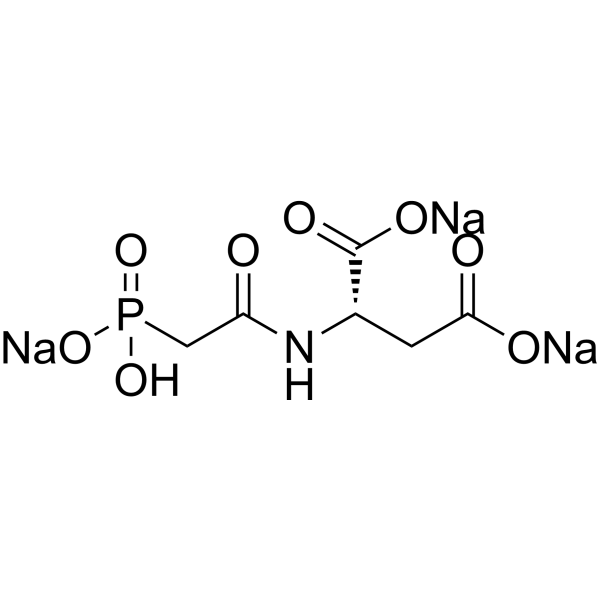
Sparfosic acid trisodium is a DNA antimetabolite agent and a potent inhibitor of aspartate transcarbamoyl transferase. Aspartate transcarbamoyl transferase catalyzes the second step of de novo pyrimidine biosynthesis. Sparfosic acid trisodium synergistically enhances the cytotoxicity of a combination of 5-fluorouracil (5-FU) and interferon-alpha (IFN) against human colon cancer cell lines.
For research use only. We do not sell to patients.
- Purity : 98.0%
- CAS No.: 70962-66-2
- Formula: C6H7NNa3O8P
- Molecular Weight:321.06
-
Storage:
-80°C, protect from light, stored under nitrogen

To place orders, for customer services and technical support, please contact: MedChemExpress USA
Tel: 609-228-6898 E-mail: [email protected] [email protected]


-
 Biological Activity
-
Chemical Information
-
Solvent & Solubility
- Protocols
- Purity & Documentation
- References
-
 Help & FAQs


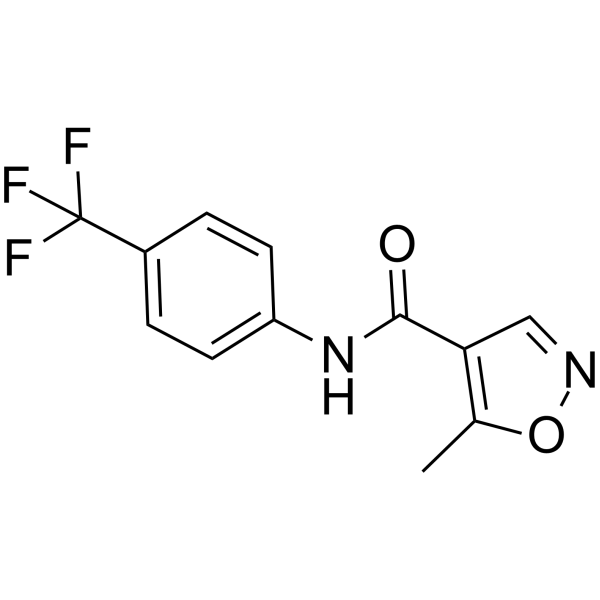
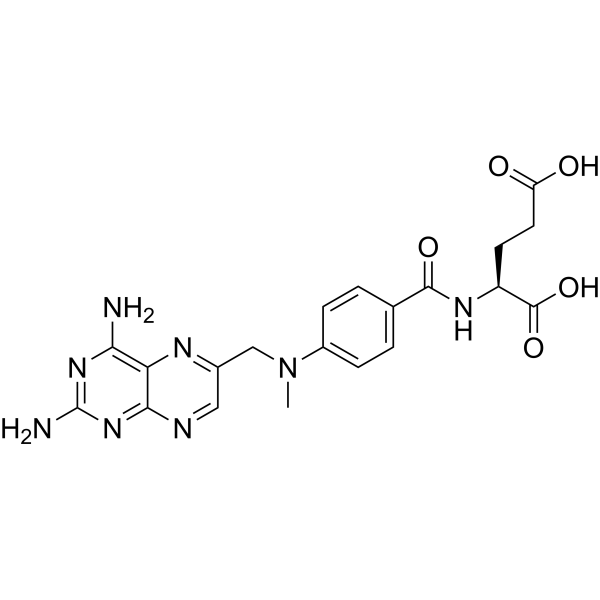
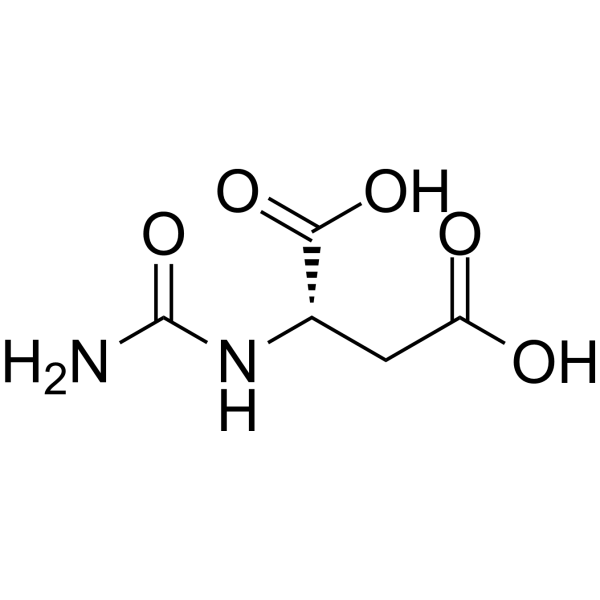
Publications Citing Use of MedChemExpress (MCE) Sparfosic acid trisodium
More Customer Validation & Images

-
Cell Proliferation/Viability Assay

-
Cell Migration/Invasion Assay

-
Cell Proliferation/Viability Assay


Biological Activity
Description
In Vitro
Sparfosic acid trisodium (N-(Phosphonacetyl)-L-aspartate, PALA) treatment causes apoptosis in the resistant Br1 cells[1].
Sparfosic acid trisodium (PALA, 300 μM) shows progressive accumulation of cells in S phase and activation of an apoptotic pathway leading to cell death[1].
MedChemExpress (MCE) has not independently confirmed the accuracy of these methods. They are for reference only. Further protocols information, click here.
-
Cell Line:Br-l and L-2 cell lines established from metastasis in nude mouse injected with the human tumor cell line MDA-MB-435.
-
Concentration:300 µM.
-
Incubation Time:12, 24 and 48 h.
-
Result:Cells were predominantly in S phase in both the cell lines, although slightly higher proportion of cells in S phase were noted in L-2 than Brl-3prl cells.
-
Cell Line:Br-l and L-2 cell lines.
-
Concentration:300 µM.
-
Incubation Time:4, 10 and 24 h.
-
Result:There was moderate difference in the level of phosphorylated Rb proteins seen in the two cell types.
Marked increase in the amount of cyclin A protein was detected in the L-2 cells undergoing apoptosis with the highest level detected at 10 h post-drug treatment.
In contrast, there was no increase in the level of cyclin A seen in the Brl-3prl cells.
Cyclin E protein was found elevated in the L-2 cells and Brl-3prl cells compared to their respective controls.
In Vivo
MedChemExpress (MCE) has not independently confirmed the accuracy of these methods. They are for reference only.


Chemical Information
-
CAS No. 70962-66-2
-
Appearance Solid-Liquid Mixture
-
Molecular Weight 321.06
-
Formula C6H7NNa3O8P
-
Color Colorless to off-white
-
SMILES
O=C(O[Na])C[C@@H](C(O[Na])=O)NC(CP(O)(O[Na])=O)=O
-
Shipping
Shipping with dry ice.
-
Storage
-80°C, protect from light, stored under nitrogen


Publications (6)
-
Journal Impact Factor
-
Most Recent
-
Nat Metab
Uridine-sensitized screening identifies demethoxy-coenzyme Q and NUDT5 as regulators of nucleotide synthesis. [Abstract]2025 Nov 13. PMID: 41233602
Sparfosic acid trisodium purchased from MedChemExpress. Usage Cited in: Nat Metab. 2025 Nov 13. [Abstract]
Proliferation assay of K562 cells over 5 days supplemented, as indicated, with 200 μM uridine, 200 µM CADi (Sparfosic acid trisodium), 10 μM DHODHi (brequinar) or 10 μM UMPSi (pyrazofurin).
-
Nat Commun
Hijacking of nucleotide biosynthesis and deamidation-mediated glycolysis by an oncogenic herpesvirus. [Abstract]2024 Feb 16;15(1):1442. PMID: 38365882 -
Mol Biomed
Lactate-driven pyrimidine synthesis promotes ferroptosis resistance in hepatocellular carcinoma. [Abstract]2026 Apr 17;7(1):53. PMID: 41996004 -
Life Sci
CAD drives Angiotensin II-induced vascular smooth muscle cell activation via upregulation of pyrimidine biosynthesis and rRNA synthesis. [Abstract]2026 Jun 9:401:124530. PMID: 42264140
Sparfosic acid trisodium purchased from MedChemExpress. Usage Cited in: Life Sci. 2026 Jun 9:401:124530. [Abstract]
Relative cell number in Ang II (100 nM)-treated VSMCs with or without PALA (Sparfosic acid trisodium, 150 μM).
Sparfosic acid trisodium purchased from MedChemExpress. Usage Cited in: Life Sci. 2026 Jun 9:401:124530. [Abstract]
Representative images showing the effects of PALA(Sparfosic acid trisodium, 150 μM) on VSMC migration (upper panel; scale bar = 40 μm), and quantification of migration and wound area (lower panel).
-
-


Solvent & Solubility
In Vitro:
H2O : 250 mg/mL (778.67 mM; Need ultrasonic)
DMSO : 180 mg/mL (560.64 mM; Need ultrasonic; Hygroscopic DMSO has a significant impact on the solubility of product, please use newly opened DMSO)
Please refer to the solubility information to select the appropriate solvent. Once prepared, please aliquot and store the solution to prevent product inactivation from repeated freeze-thaw cycles.
Storage method and period of stock solution: -80°C, 6 months (protect from light, stored under nitrogen). When stored at -80°C, please use it within 6 months.
* Note: If you choose water as the stock solution, please dilute it to the working solution, then filter and sterilize it with a 0.22 μm filter before use.
Please refer to the solubility information to select the appropriate solvent. Once prepared, please aliquot and store the solution to prevent product inactivation from repeated freeze-thaw cycles.
Storage method and period of stock solution: -80°C, 6 months (protect from light, stored under nitrogen). When stored at -80°C, please use it within 6 months.
* Note: If you choose water as the stock solution, please dilute it to the working solution, then filter and sterilize it with a 0.22 μm filter before use.
Concentration (start) × Volume (start) = Concentration (final) × Volume (final)
In Vivo:
Select the appropriate dissolution method based on your experimental animal and administration route.
- For the following dissolution methods, please ensure to first prepare a clear stock solution using an In Vitro approach and then sequentially add co-solvents:
- To ensure reliable experimental results, the clarified stock solution can be appropriately stored based on storage conditions. As for the working solution for In Vivo experiments, it is recommended to prepare freshly and use it on the same day.
- The percentages shown for the solvents indicate their volumetric ratio in the final prepared solution. If precipitation or phase separation occurs during preparation, heat and/or sonication can be used to aid dissolution.
Add each solvent one by one: 10% DMSO 40% PEG300 5% Tween-80 45% Saline
Solubility: ≥ 4.5 mg/mL (14.02 mM); Clear solution
This protocol yields a clear solution of ≥ 4.5 mg/mL (saturation unknown).
Taking 1 mL working solution as an example, add 100 μL DMSO stock solution (45.0 mg/mL) to 400 μL PEG300, and mix evenly; then add 50 μL Tween-80 and mix evenly; then add 450 μL Saline to adjust the volume to 1 mL.
Preparation of Saline: Dissolve 0.9 g sodium chloride in ddH₂O and dilute to 100 mL to obtain a clear Saline solution.
Add each solvent one by one: 10% DMSO 90% (20% SBE-β-CD in Saline)
Solubility: ≥ 4.5 mg/mL (14.02 mM); Clear solution
This protocol yields a clear solution of ≥ 4.5 mg/mL (saturation unknown).
Taking 1 mL working solution as an example, add 100 μL DMSO stock solution (45.0 mg/mL) to 900 μL 20% SBE-β-CD in Saline, and mix evenly.
Preparation of 20% SBE-β-CD in Saline (4°C, storage for one week): 2 g SBE-β-CD powder is dissolved in 10 mL Saline, completely dissolve until clear.
For the following dissolution methods, please prepare the working solution directly:
It is recommended to prepare fresh solutions and use them promptly within a short period of time.
The percentages shown for the solvents indicate their volumetric ratio in the final prepared solution. If precipitation or phase separation occurs during preparation, heat and/or sonication can be used to aid dissolution.
Add each solvent one by one: PBS
Solubility: 100 mg/mL (311.47 mM); Clear solution; Need ultrasonic
In Vivo Dissolution Calculator
Please enter the basic information of animal experiments:
-
-
-
-
Recommended: Prepare an additional quantity of animals to account for potential losses during experiments.
Working solution concentration: 0.22 mg/mL
This product has good water solubility, please refer to the measured solubility data in water/PBS/Saline for details.

Protocols
-
Cell Cytotoxicity Assay
Cytotoxicity assays are usually based on the assessment of cell membrane damage, which can also be indirectly detected by measuring cell viability. Detection methods include MTT assay, CKK-8 assay, LDH assay and ATP assay, etc.
-
Mammalian live/dead viability and cytotoxicity staining
Live/dead viability and cytotoxicity staining assays are based on the simultaneous detection of intracellular esterase activity in metabolically active (viable) cells and membrane integrity loss in non-viable cells. In commonly used dual-staining approaches, membrane-permeant fluorogenic substrates are converted by intracellular esterases into fluorescent products in live cells, while impermeant DNA-binding dyes selectively enter cells with compromised plasma membranes and label nucleic acids in dead or dying cells, enabling discrimination between viable and non-viable populations by fluorescence microscopy or flow cytometry.
-
Cell Viability Determination by MTT Colorimetric Assay
The following protocol uses the MTT colorimetric assay as a classic literature-established method for assessing cell viability/metabolic activity in cultured mammalian cells. MTT[3-(4,5-dimethylthiazol-2-yl)-2,5-diphenyltetrazolium bromide] is reduced by metabolically active cells to a colored formazan product; the amount of formazan is quantified spectrophotometrically and provides an indirect measure of metabolically active viable cells. Importantly, MTT reduction reflects cellular oxidoreductase/metabolic activity rather than an absolute direct count of living cells, so changes in cellular metabolism can alter the signal independently of cell number.


Purity & Documentation
-
Data Sheet (279 KB)
-
SDS (251 KB)
- English - EN (251 KB)
- Français - FR (251 KB)
- Deutsch - DE (251 KB)
- Norwegian - NO (251 KB)
- Español - ES (251 KB)
- Swedish - SV (251 KB)
- Italian - IT (251 KB)
- Korean - KR (251 KB)
- Portuguese - PT (251 KB)
-
Handling Instructions (2659 KB)
References
[1]. Wang J, et al. Elevated cyclin A associated kinase activity promotes sensitivity of metastatic human cancer cells to DNA antimetabolite drug. Int J Oncol. 2015 Aug;47(2):782-90. [Content Brief]
[3]. Wadler S, et al. Phase II trial of N-(phosphonacetyl)-L-aspartate (PALA), 5-fluorouracil and recombinant interferon-alpha-2b in patients with advanced gastric carcinoma. Eur J Cancer. 1996;32A(7):1254-1256. [Content Brief]
[4]. Johnson RK, et al. Antitumor activity of N-(phosphonacetyl)-L-aspartic acid, a transition-state inhibitor of aspartate transcarbamylase. Cancer Res. 1976;36(8):2720-2725. [Content Brief]


Complete Stock Solution Preparation Table
Please refer to the solubility information to select the appropriate solvent. Once prepared, please aliquot and store the solution to prevent product inactivation from repeated freeze-thaw cycles.
Storage method and period of stock solution: -80°C, 6 months (protect from light, stored under nitrogen). When stored at -80°C, please use it within 6 months.
| Optional Solvent | Concentration Solvent Mass | 1 mg | 5 mg | 10 mg | 25 mg |
|---|---|---|---|---|---|
| DMSO / H2O | 1 mM | 3.1147 mL | 15.5734 mL | 31.1468 mL | 77.8671 mL |
| 5 mM | 0.6229 mL | 3.1147 mL | 6.2294 mL | 15.5734 mL | |
| 10 mM | 0.3115 mL | 1.5573 mL | 3.1147 mL | 7.7867 mL | |
| 15 mM | 0.2076 mL | 1.0382 mL | 2.0765 mL | 5.1911 mL | |
| 20 mM | 0.1557 mL | 0.7787 mL | 1.5573 mL | 3.8934 mL | |
| 25 mM | 0.1246 mL | 0.6229 mL | 1.2459 mL | 3.1147 mL | |
| 30 mM | 0.1038 mL | 0.5191 mL | 1.0382 mL | 2.5956 mL | |
| 40 mM | 0.0779 mL | 0.3893 mL | 0.7787 mL | 1.9467 mL | |
| 50 mM | 0.0623 mL | 0.3115 mL | 0.6229 mL | 1.5573 mL | |
| 60 mM | 0.0519 mL | 0.2596 mL | 0.5191 mL | 1.2978 mL | |
| 80 mM | 0.0389 mL | 0.1947 mL | 0.3893 mL | 0.9733 mL | |
| 100 mM | 0.0311 mL | 0.1557 mL | 0.3115 mL | 0.7787 mL |
* Note: If you choose water as the stock solution, please dilute it to the working solution, then filter and sterilize it with a 0.22 μm filter before use.


Sparfosic acid trisodium Related Classifications
HY-112732B Related Classifications
 Powered by Bioz