



DPI 201-106
Based on 1 publication(s) in Google Scholar
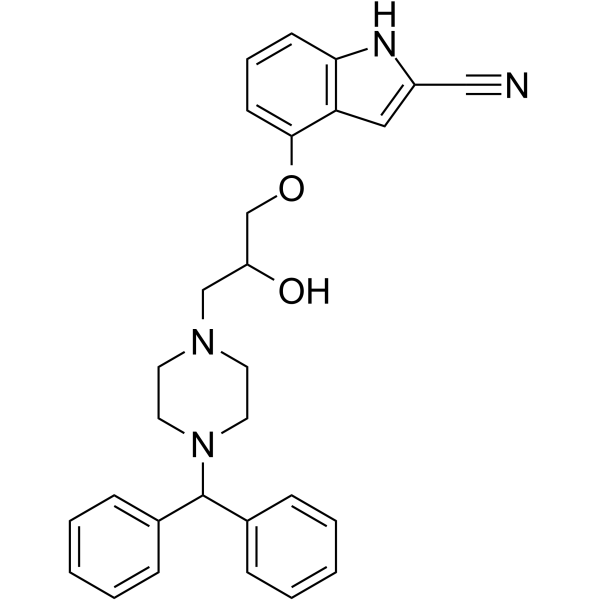
DPI 201-106 (SDZ 201106) is a cardiotonic agent with a synergistic sarcolemmal and intracellular mechanism of action. DPI 201-106 shows cardioselective modulation of voltage-gated sodium channels (VGSCs) resulting in a positive inotropic effect.
For research use only. We do not sell to patients.
- Purity : 99.49%
- CAS No.: 97730-95-5
- Formula: C29H30N4O2
- Molecular Weight:466.57
-
Storage:Powder -20°C, 3 years , 4°C, 2 years ; In solvent -80°C, 6 months , -20°C, 1 month

To place orders, for customer services and technical support, please contact: MedChemExpress USA
Tel: 609-228-6898 E-mail: [email protected] [email protected]


-
 Biological Activity
-
Chemical Information
-
Solvent & Solubility
- Purity & Documentation
- References
-
 Help & FAQs


-

HY-19666R
DPI 201-106 (Standard)Cardioactive Agent -
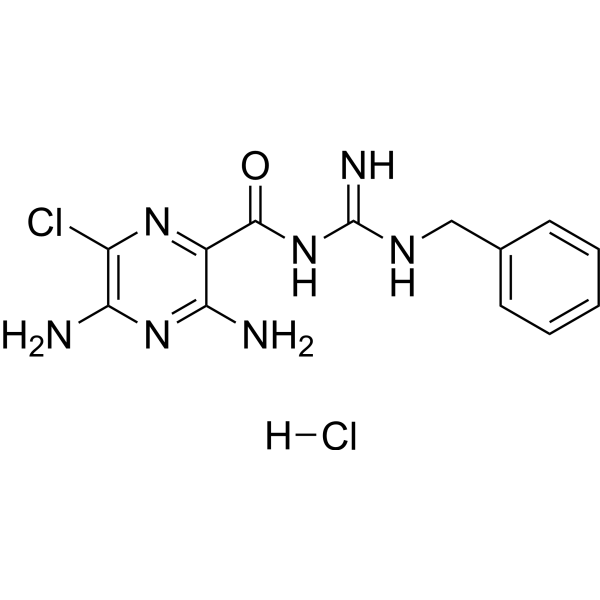
HY-B1546A
Benzamil hydrochlorideENaC Blocker -
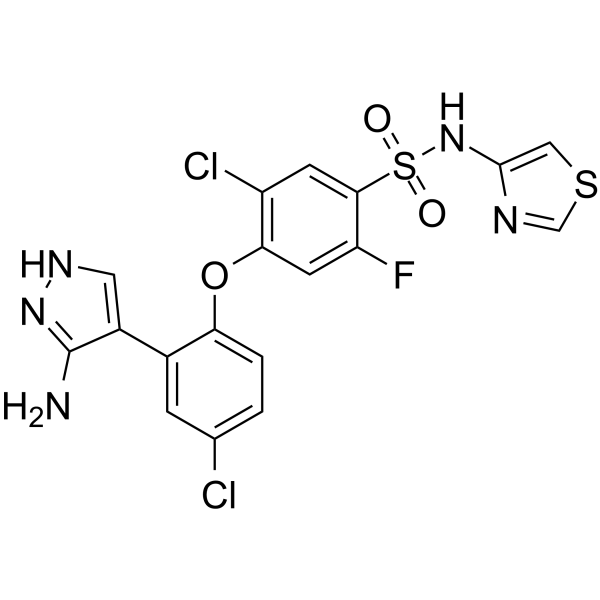
HY-12883
PF 05089771Nav1.7 Inhibitor -
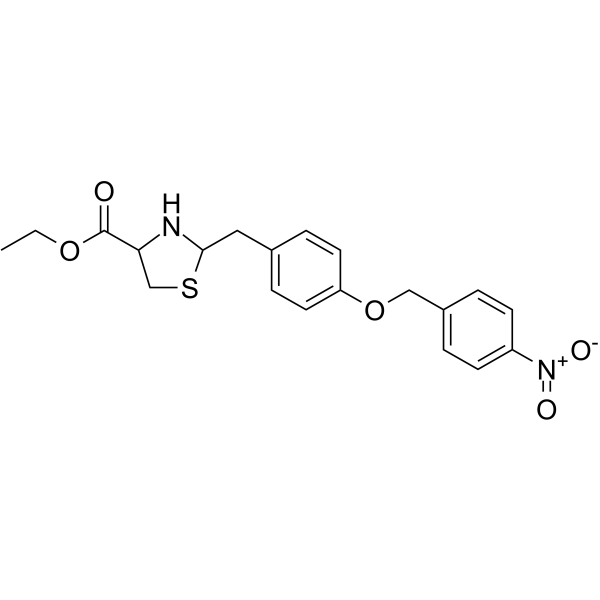
HY-107658
SN 6Na+/Ca2+ Exchanger Inhibitor -
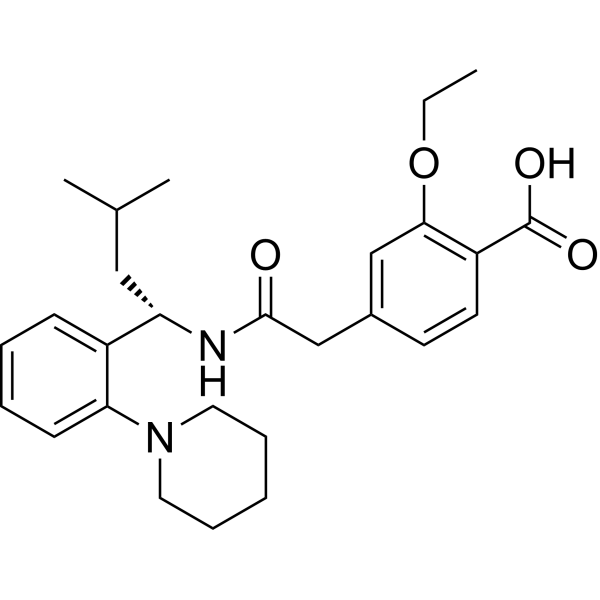
HY-15209
RepaglinideInsulin Secretagogue -
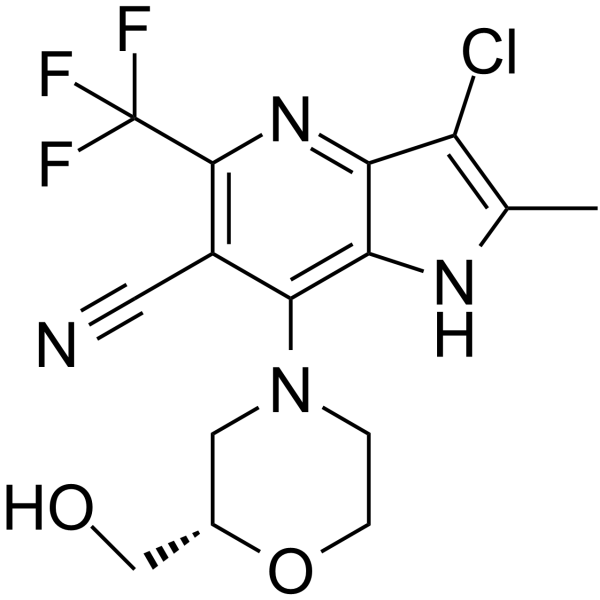
HY-112065
PF-06869206Sodium Channel Inhibitor -
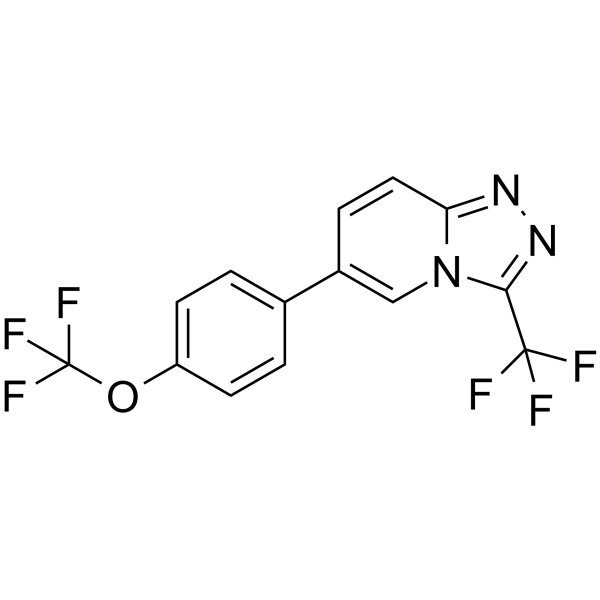
HY-12593
GS967Sodium Channel Inhibitor -
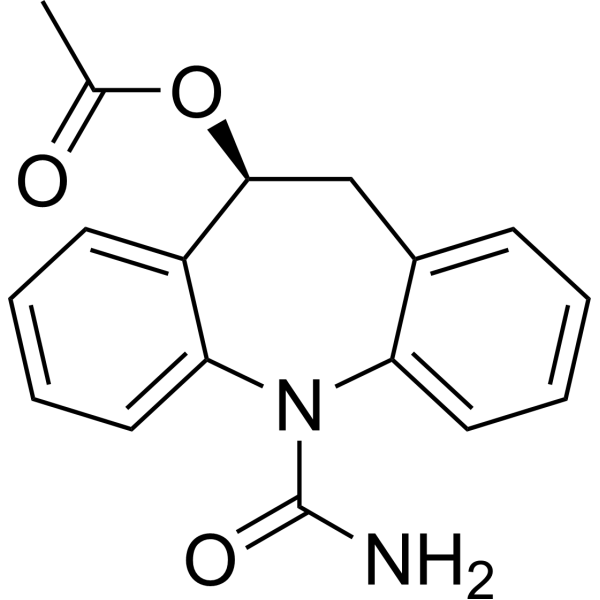
HY-B0703
Eslicarbazepine acetateBeta-secretase Inhibitor -
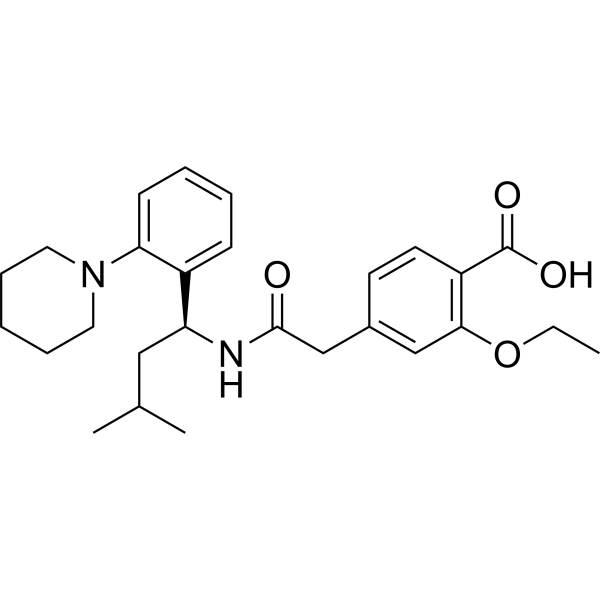
HY-15209R
Repaglinide (Standard)Insulin Secretagogue -
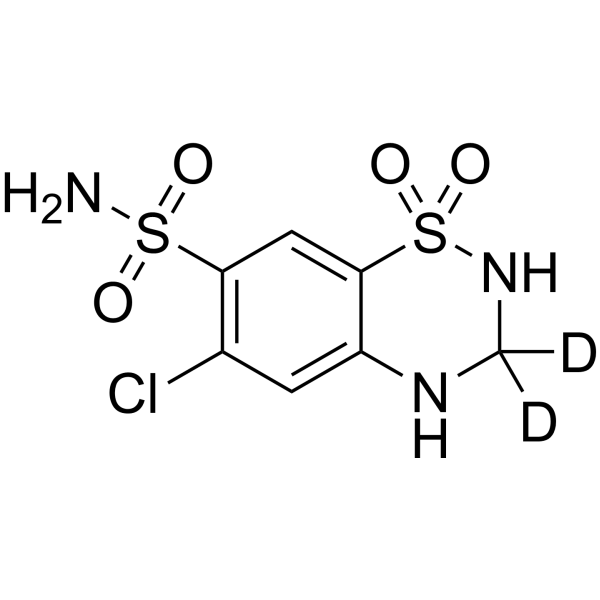
HY-B0252S
Hydrochlorothiazid-d2Stable Isotope -

HY-B1546AR
Benzamil hydrochloride (Standard)ENaC Blocker -

HY-107658R
SN 6 (Standard)Reference Standard
Publications Citing Use of MedChemExpress (MCE) DPI 201-106
More

Biological Activity
Description
IC50 & Target
Sodium Channel[3]
Cellular Effect
|
Cell Line

|
Type | Value | Description | References |
|---|---|---|---|---|
| Oocyte | EC50 |
1920 nM
Compound: 1
|
Effective concentration against Xenopus oocytes expressing guinea pig heart Na channel
Effective concentration against Xenopus oocytes expressing guinea pig heart Na channel
|
[PMID: 7629798] |
| Oocyte | EC50 |
2310 nM
Compound: 1
|
Effective concentration against Xenopus oocytes expressing human heart Na channel
Effective concentration against Xenopus oocytes expressing human heart Na channel
|
[PMID: 7629798] |
In Vitro
DPI 201-106 increases the Ca2+-sensitivity of skinned fibres from porcine trabecula septomarginalis with an EC50 of 0.2 nM[2].
DPI 201-106 produces concentration-dependent positive inotropic effects in guinea-pig and rat left atria, kitten, rabbit and guinea-pig papillary muscles and Langendorff perfused hearts of rabbits between 0.1 and 3 μM[2].
MedChemExpress (MCE) has not independently confirmed the accuracy of these methods. They are for reference only. .
In Vivo
MedChemExpress (MCE) has not independently confirmed the accuracy of these methods. They are for reference only.


Chemical Information
-
CAS No. 97730-95-5
-
Appearance Solid
-
Molecular Weight 466.57
-
Formula C29H30N4O2
-
Color White to off-white
-
SMILES
N#CC(N1)=CC2=C1C=CC=C2OCC(O)CN3CCN(C(C4=CC=CC=C4)C5=CC=CC=C5)CC3
-
Synonyms
SDZ 201106
-
Shipping
Room temperature in continental US; may vary elsewhere.
-
Storage
Powder -20°C 3 years 4°C 2 years In solvent -80°C 6 months -20°C 1 month


Publications (1)
-
Journal Impact Factor
-
Most Recent
-
Bioorg Chem
Identification of FTY720 and COH29 as novel topoisomerase I catalytic inhibitors by experimental and computational studies. [Abstract]2024 Jun:147:107412. PMID: 38696845


Solvent & Solubility
In Vitro:
DMSO : 250 mg/mL (535.83 mM; Need ultrasonic; Hygroscopic DMSO has a significant impact on the solubility of product, please use newly opened DMSO)
Please refer to the solubility information to select the appropriate solvent. Once prepared, please aliquot and store the solution to prevent product inactivation from repeated freeze-thaw cycles.
Storage method and period of stock solution: -80°C, 6 months; -20°C, 1 month. When stored at -80°C, please use it within 6 months. When stored at -20°C, please use it within 1 month.
Please refer to the solubility information to select the appropriate solvent. Once prepared, please aliquot and store the solution to prevent product inactivation from repeated freeze-thaw cycles.
Storage method and period of stock solution: -80°C, 6 months; -20°C, 1 month. When stored at -80°C, please use it within 6 months. When stored at -20°C, please use it within 1 month.
Concentration (start) × Volume (start) = Concentration (final) × Volume (final)
In Vivo:
Select the appropriate dissolution method based on your experimental animal and administration route.
- For the following dissolution methods, please ensure to first prepare a clear stock solution using an In Vitro approach and then sequentially add co-solvents:
- To ensure reliable experimental results, the clarified stock solution can be appropriately stored based on storage conditions. As for the working solution for In Vivo experiments, it is recommended to prepare freshly and use it on the same day.
- The percentages shown for the solvents indicate their volumetric ratio in the final prepared solution. If precipitation or phase separation occurs during preparation, heat and/or sonication can be used to aid dissolution.
Add each solvent one by one: 10% DMSO 40% PEG300 5% Tween-80 45% Saline
Solubility: ≥ 2.08 mg/mL (4.46 mM); Clear solution
This protocol yields a clear solution of ≥ 2.08 mg/mL (saturation unknown).
Taking 1 mL working solution as an example, add 100 μL DMSO stock solution (20.8 mg/mL) to 400 μL PEG300, and mix evenly; then add 50 μL Tween-80 and mix evenly; then add 450 μL Saline to adjust the volume to 1 mL.
Preparation of Saline: Dissolve 0.9 g sodium chloride in ddH₂O and dilute to 100 mL to obtain a clear Saline solution.
Add each solvent one by one: 10% DMSO 90% (20% SBE-β-CD in Saline)
Solubility: ≥ 2.08 mg/mL (4.46 mM); Clear solution
This protocol yields a clear solution of ≥ 2.08 mg/mL (saturation unknown).
Taking 1 mL working solution as an example, add 100 μL DMSO stock solution (20.8 mg/mL) to 900 μL 20% SBE-β-CD in Saline, and mix evenly.
Preparation of 20% SBE-β-CD in Saline (4°C, storage for one week): 2 g SBE-β-CD powder is dissolved in 10 mL Saline, completely dissolve until clear.
In Vivo Dissolution Calculator
Please enter the basic information of animal experiments:
-
-
-
-
Recommended: Prepare an additional quantity of animals to account for potential losses during experiments.
Please enter your animal formula composition:
-
%DMSO +
Recommended: Keep the proportion of DMSO in working solution below 2% if your animal is weak.
-
%+
-
+%Tween-80 + +
-
%Saline +
The co-solvents required include: DMSO, . All of co-solvents are available by MedChemExpress (MCE). , Tween 80. All of co-solvents are available by MedChemExpress (MCE).
Working solution concentration: 0.22 mg/mL
Method for preparing stock solution: mg drug dissolved in μL DMSO. Stock solution concentration: mg/mL.
1. Take μL DMSO stock solution;
2. Add μL .
μL , mix evenly;
3. Then add μL Tween 80, mix evenly;
4. Then add μL
Please ensure that the stock solution in the first step is dissolved to a clear state, and add co-solvents in sequence. You can use ultrasonic heating (ultrasonic cleaner, recommended frequency 20-40 kHz), vortexing, etc. to assist dissolution.


Purity & Documentation
-
Data Sheet (274 KB)
-
SDS (251 KB)
- English - EN (251 KB)
- Français - FR (251 KB)
- Deutsch - DE (251 KB)
- Norwegian - NO (251 KB)
- Español - ES (251 KB)
- Swedish - SV (251 KB)
- Italian - IT (251 KB)
- Korean - KR (251 KB)
- Portuguese - PT (251 KB)
-
Handling Instructions (2659 KB)
References
[1]. G Scholtysik, et al. DPI 201-106, a novel cardioactive agent. Combination of cAMP-independent positive inotropic, negative chronotropic, action potential prolonging and coronary dilatory properties. Naunyn Schmiedebergs Arch Pharmacol.1985 May;329(3):316- [Content Brief]
[2]. G Scholtysik, et al. Interaction of DPI 201-106 with cardiac glycosides. J Cardiovasc Pharmacol. 1989 Feb;13(2):342-7. [Content Brief]
[3]. M Mevissen, et al. Identification of a cardiac sodium channel insensitive to synthetic modulators. J Cardiovasc Pharmacol Ther. 2001 Apr;6(2):201-12. [Content Brief]


Complete Stock Solution Preparation Table
Please refer to the solubility information to select the appropriate solvent. Once prepared, please aliquot and store the solution to prevent product inactivation from repeated freeze-thaw cycles.
Storage method and period of stock solution: -80°C, 6 months; -20°C, 1 month. When stored at -80°C, please use it within 6 months. When stored at -20°C, please use it within 1 month.
| Optional Solvent | Concentration Solvent Mass | 1 mg | 5 mg | 10 mg | 25 mg |
|---|---|---|---|---|---|
| DMSO | 1 mM | 2.1433 mL | 10.7165 mL | 21.4330 mL | 53.5825 mL |
| 5 mM | 0.4287 mL | 2.1433 mL | 4.2866 mL | 10.7165 mL | |
| 10 mM | 0.2143 mL | 1.0717 mL | 2.1433 mL | 5.3583 mL | |
| 15 mM | 0.1429 mL | 0.7144 mL | 1.4289 mL | 3.5722 mL | |
| 20 mM | 0.1072 mL | 0.5358 mL | 1.0717 mL | 2.6791 mL | |
| 25 mM | 0.0857 mL | 0.4287 mL | 0.8573 mL | 2.1433 mL | |
| 30 mM | 0.0714 mL | 0.3572 mL | 0.7144 mL | 1.7861 mL | |
| 40 mM | 0.0536 mL | 0.2679 mL | 0.5358 mL | 1.3396 mL | |
| 50 mM | 0.0429 mL | 0.2143 mL | 0.4287 mL | 1.0717 mL | |
| 60 mM | 0.0357 mL | 0.1786 mL | 0.3572 mL | 0.8930 mL | |
| 80 mM | 0.0268 mL | 0.1340 mL | 0.2679 mL | 0.6698 mL | |
| 100 mM | 0.0214 mL | 0.1072 mL | 0.2143 mL | 0.5358 mL |


DPI 201-106 Related Classifications
HY-19666 Related Classifications
 Powered by Bioz