



Tropolone
Based on 1 publication(s) in Google Scholar
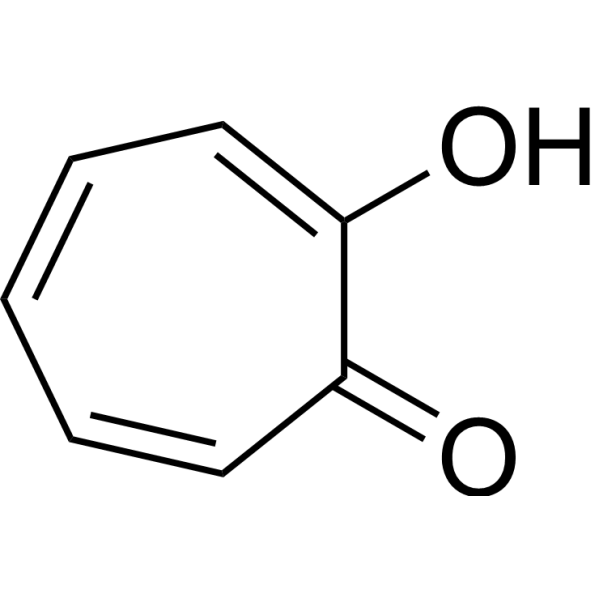
Tropolone is a seven-membered non-benzenoid aromatic compound, which is the precursor of many Azulene derivatives. Tropolone is a potent mushroom tyrosinase inhibitor with an IC50 value of 0.4 μM. Its inhibitory effect can be achieved by dialysis or excess CU2+ Reversa. Tropolone exhibits broad anti-viral and anti-fungal activity and is synergistic upon co-treatment with nucleos(t)ide analog drugs. Tropolone is a promising candidate for research in osteosarcoma.
For research use only. We do not sell to patients.
- Purity : 99.96%
- CAS No.: 533-75-5
- Formula: C7H6O2
- Molecular Weight:122.12
-
Storage:Powder -20°C, 3 years , 4°C, 2 years ; In solvent -80°C, 6 months , -20°C, 1 month

To place orders, for customer services and technical support, please contact: MedChemExpress USA
Tel: 609-228-6898 E-mail: [email protected] [email protected]


-
 Biological Activity
-
Chemical Information
-
Solvent & Solubility
- Purity & Documentation
- References
-
 Help & FAQs


-

HY-N7135R
Tropolone (Standard)Tropone Derivatives; Tyrosinase Inhibitor; Virus Inhibitor; Funga Inhibitor -
HY-N0322
Cholesterol (from animal)ERRα Agonist -
HY-N0322R
Cholesterol (Standard) -
HY-B0350A
Sodium butyrateHDAC Inhibitor -
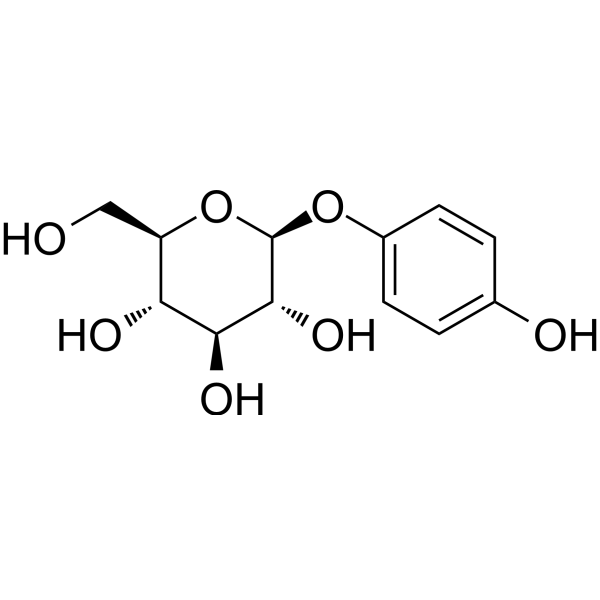
HY-N0192
ArbutinEndogenous Metabolite -

HY-N0322E
Cholesterol (synthetic)ERRα Agonist -
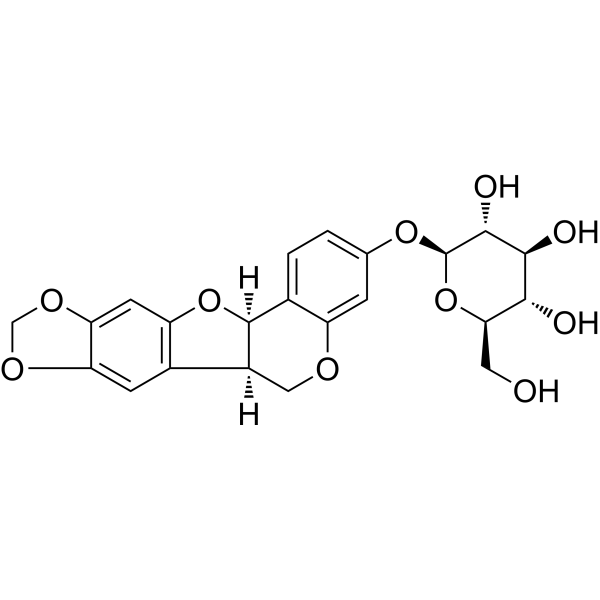
HY-N0616
TrifolirhizinPterocarpan Flavonoid -

HY-N0192R
Arbutin (Standard)Endogenous Metabolite -
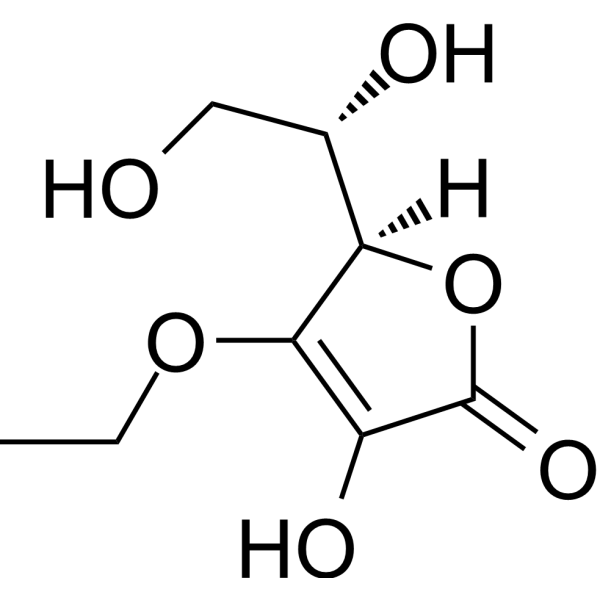
HY-W003607
3-O-Ethyl-L-ascorbic acidVitamin C Derivative -
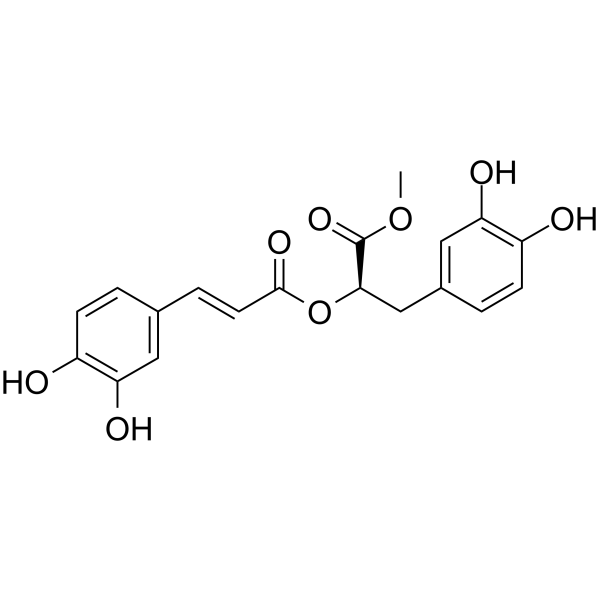
HY-N3266
Methyl rosmarinateHydroxycinnamic Acid -
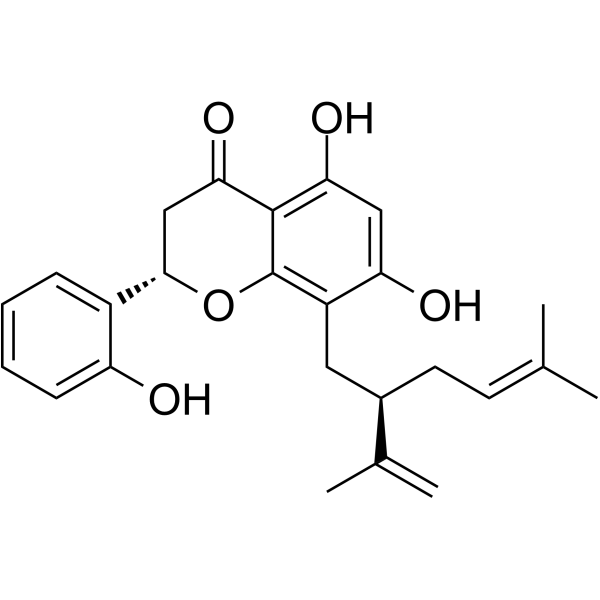
HY-N2278
Kushenol ATyrosinase Inhibitor -
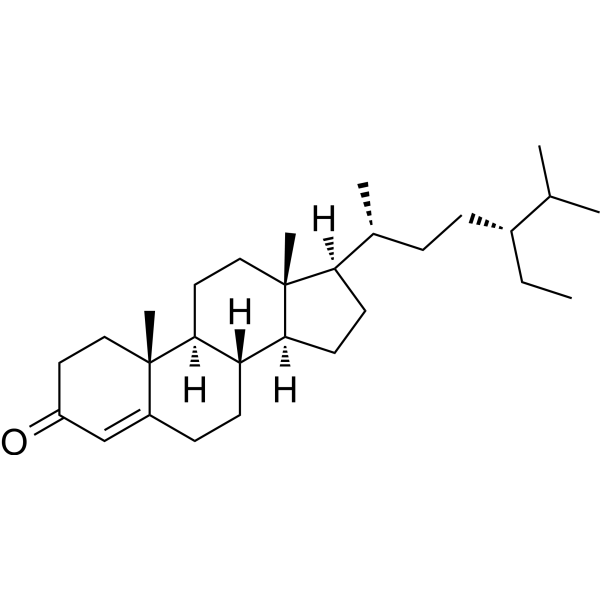
HY-N1238
β-SitostenoneTyrosinase/COX Inhibitor
Publications Citing Use of MedChemExpress (MCE) Tropolone
More

Biological Activity
Description
IC50 & Target
IC50: 0.4 μM (mushroom tyrosinase)[2]
Cellular Effect
|
Cell Line

|
Type | Value | Description | References |
|---|---|---|---|---|
| HL-60 | IC50 |
0.3 μg/mL
Compound: Tropolone
|
Cytotoxicity against Homo sapiens (human) HL60
Cytotoxicity against Homo sapiens (human) HL60
|
[PMID: 15187442] |
| HT-22 | EC50 |
>10 μM
Compound: tropolone
|
Neuroprotective activity against glutamate-mediated oxidative stress-induced cell death in mouse HT22 cells assessed as survival after 24 hrs by MTT assay
Neuroprotective activity against glutamate-mediated oxidative stress-induced cell death in mouse HT22 cells assessed as survival after 24 hrs by MTT assay
|
[PMID: 20045220] |
| K562 | IC50 |
0.3 μg/mL
Compound: Tropolone
|
Cytotoxicity against Homo sapiens (human) K562
Cytotoxicity against Homo sapiens (human) K562
|
[PMID: 15187442] |
In Vitro
Tropolone (10 μM, 72 h) perfoerms differences in toxicity between HEK293 cells and HepDES19 cells, also exerts different sensibility in HOS with an IC50 value of 0.67 μM and in SaOS-2 with an IC50 value of 5.93 μM [1][2]. Tropolone (0-10 μM, 24 h) disrupts osteosarcoma cell migration, invasion and several key metabolic pathways by altering purine and pyrimidine metabolism in a variety of human osteosarcoma cell lines[2].
MedChemExpress (MCE) has not independently confirmed the accuracy of these methods. They are for reference only.
-
Cell Line:HEK293 and HepDES19 cells
-
Concentration:10 μM
-
Incubation Time:72 h
-
Result:Was 10-fold more toxic in the kidney cell line than the liver cell line.
-
Cell Line:143B, CAL-72, HOS, MG-63, SaOS-2 cells
-
Concentration:0-10 μM
-
Incubation Time:48-72 h
-
Result:Induced apoptotic cell death in a variety of human osteosarcoma cell lines.


Chemical Information
-
CAS No. 533-75-5
-
Appearance Solid
-
Molecular Weight 122.12
-
Formula C7H6O2
-
Color Off-white to light brown
-
SMILES
O=C1C(O)=CC=CC=C1
-
Structure Classification
-
Initial Source
-
Shipping
Room temperature in continental US; may vary elsewhere.
-
Storage
Powder -20°C 3 years 4°C 2 years In solvent -80°C 6 months -20°C 1 month


Publications (1)
-
Journal Impact Factor
-
Most Recent
-
Pharmaceuticals (Basel)
2026 Jun 22;19(6):967. PMID: 42356584


Solvent & Solubility
In Vitro:
DMSO : ≥ 100 mg/mL (818.87 mM; Hygroscopic DMSO has a significant impact on the solubility of product, please use newly opened DMSO)
H2O : 25 mg/mL (204.72 mM; Need ultrasonic)
* "≥" means soluble, but saturation unknown.
Please refer to the solubility information to select the appropriate solvent. Once prepared, please aliquot and store the solution to prevent product inactivation from repeated freeze-thaw cycles.
Storage method and period of stock solution: -80°C, 6 months; -20°C, 1 month. When stored at -80°C, please use it within 6 months. When stored at -20°C, please use it within 1 month.
* Note: If you choose water as the stock solution, please dilute it to the working solution, then filter and sterilize it with a 0.22 μm filter before use.
Please refer to the solubility information to select the appropriate solvent. Once prepared, please aliquot and store the solution to prevent product inactivation from repeated freeze-thaw cycles.
Storage method and period of stock solution: -80°C, 6 months; -20°C, 1 month. When stored at -80°C, please use it within 6 months. When stored at -20°C, please use it within 1 month.
* Note: If you choose water as the stock solution, please dilute it to the working solution, then filter and sterilize it with a 0.22 μm filter before use.
Concentration (start) × Volume (start) = Concentration (final) × Volume (final)
In Vivo:
Select the appropriate dissolution method based on your experimental animal and administration route.
- For the following dissolution methods, please ensure to first prepare a clear stock solution using an In Vitro approach and then sequentially add co-solvents:
- To ensure reliable experimental results, the clarified stock solution can be appropriately stored based on storage conditions. As for the working solution for In Vivo experiments, it is recommended to prepare freshly and use it on the same day.
- The percentages shown for the solvents indicate their volumetric ratio in the final prepared solution. If precipitation or phase separation occurs during preparation, heat and/or sonication can be used to aid dissolution.
Add each solvent one by one: 10% DMSO 40% PEG300 5% Tween-80 45% Saline
Solubility: ≥ 2.5 mg/mL (20.47 mM); Clear solution
This protocol yields a clear solution of ≥ 2.5 mg/mL (saturation unknown).
Taking 1 mL working solution as an example, add 100 μL DMSO stock solution (25.0 mg/mL) to 400 μL PEG300, and mix evenly; then add 50 μL Tween-80 and mix evenly; then add 450 μL Saline to adjust the volume to 1 mL.
Preparation of Saline: Dissolve 0.9 g sodium chloride in ddH₂O and dilute to 100 mL to obtain a clear Saline solution.
Add each solvent one by one: 10% DMSO 90% (20% SBE-β-CD in Saline)
Solubility: ≥ 2.5 mg/mL (20.47 mM); Clear solution
This protocol yields a clear solution of ≥ 2.5 mg/mL (saturation unknown).
Taking 1 mL working solution as an example, add 100 μL DMSO stock solution (25.0 mg/mL) to 900 μL 20% SBE-β-CD in Saline, and mix evenly.
Preparation of 20% SBE-β-CD in Saline (4°C, storage for one week): 2 g SBE-β-CD powder is dissolved in 10 mL Saline, completely dissolve until clear.
For the following dissolution methods, please prepare the working solution directly:
It is recommended to prepare fresh solutions and use them promptly within a short period of time.
The percentages shown for the solvents indicate their volumetric ratio in the final prepared solution. If precipitation or phase separation occurs during preparation, heat and/or sonication can be used to aid dissolution.
Add each solvent one by one: PBS
Solubility: 20 mg/mL (163.77 mM); Clear solution; Need ultrasonic
In Vivo Dissolution Calculator
Please enter the basic information of animal experiments:
-
-
-
-
Recommended: Prepare an additional quantity of animals to account for potential losses during experiments.
Working solution concentration: 0.22 mg/mL
This product has good water solubility, please refer to the measured solubility data in water/PBS/Saline for details.


Purity & Documentation
-
Data Sheet (296 KB)
-
SDS (759 KB)
- English - EN (759 KB)
- Français - FR (759 KB)
- Deutsch - DE (759 KB)
- Norwegian - NO (759 KB)
- Español - ES (759 KB)
- Swedish - SV (759 KB)
- Italian - IT (759 KB)
- Korean - KR (759 KB)
- Portuguese - PT (759 KB)
-
Handling Instructions (2659 KB)
References
[1]. Woodson ME, et al. In vitro evaluation of tropolone absorption, metabolism, and clearance. Antiviral Res. 2023 Dec;220:105762. [Content Brief]
[2]. Haney SL, et al. Investigation of the activity of a novel tropolone in osteosarcoma. Drug Dev Res. 2024 Feb;85(1):e22129. [Content Brief]
[3]. Donald D Nolting,et al. Synthesis of bicyclo[5.3.0]azulene derivatives. Nat Protoc. 2009; 4(8): 1113–1117. [Content Brief]


Complete Stock Solution Preparation Table
Please refer to the solubility information to select the appropriate solvent. Once prepared, please aliquot and store the solution to prevent product inactivation from repeated freeze-thaw cycles.
Storage method and period of stock solution: -80°C, 6 months; -20°C, 1 month. When stored at -80°C, please use it within 6 months. When stored at -20°C, please use it within 1 month.
| Optional Solvent | Concentration Solvent Mass | 1 mg | 5 mg | 10 mg | 25 mg |
|---|---|---|---|---|---|
| H2O / DMSO | 1 mM | 8.1887 mL | 40.9433 mL | 81.8867 mL | 204.7167 mL |
| 5 mM | 1.6377 mL | 8.1887 mL | 16.3773 mL | 40.9433 mL | |
| 10 mM | 0.8189 mL | 4.0943 mL | 8.1887 mL | 20.4717 mL | |
| 15 mM | 0.5459 mL | 2.7296 mL | 5.4591 mL | 13.6478 mL | |
| 20 mM | 0.4094 mL | 2.0472 mL | 4.0943 mL | 10.2358 mL | |
| 25 mM | 0.3275 mL | 1.6377 mL | 3.2755 mL | 8.1887 mL | |
| 30 mM | 0.2730 mL | 1.3648 mL | 2.7296 mL | 6.8239 mL | |
| 40 mM | 0.2047 mL | 1.0236 mL | 2.0472 mL | 5.1179 mL | |
| 50 mM | 0.1638 mL | 0.8189 mL | 1.6377 mL | 4.0943 mL | |
| 60 mM | 0.1365 mL | 0.6824 mL | 1.3648 mL | 3.4119 mL | |
| 80 mM | 0.1024 mL | 0.5118 mL | 1.0236 mL | 2.5590 mL | |
| 100 mM | 0.0819 mL | 0.4094 mL | 0.8189 mL | 2.0472 mL |
* Note: If you choose water as the stock solution, please dilute it to the working solution, then filter and sterilize it with a 0.22 μm filter before use.


Tropolone Related Classifications
HY-N7135 Related Classifications
 Powered by Bioz