



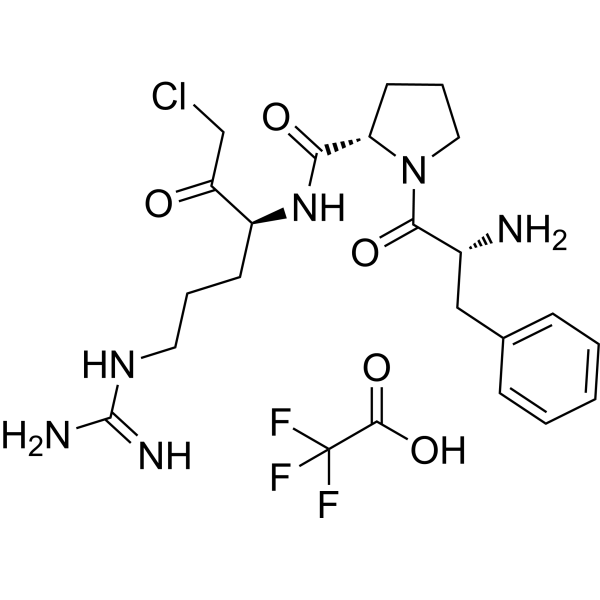
PPACK TFA
Based on 4 publication(s) in Google Scholar
PPACK TFA is a potent, peptidic inhibitor targeting thrombin and granzyme GZMK. PPACK TFA specifically blocks the activities of thrombin and GZMK, thereby inhibiting thrombin-mediated PAR-1 cleavage, as well as downstream inflammatory and procoagulant signaling pathways. Through stabilizing IκB proteins, blocking NF-κB activation and reducing systemic levels of proinflammatory/procoagulant biomarkers, PPACK TFA exerts multiple effects including anti-inflammatory, antithrombotic, barrier repair, and inhibition of atherosclerotic plaque progression. PPACK TFA binds to platelets without interference from kininogen, effectively limiting acute thrombus growth and reducing eosinophil infiltration and goblet cell hyperplasia in asthma models. PPACK TFA is an important tool molecule for investigating the mechanisms of atherosclerosis, asthma and related thromboinflammatory diseases.
For research use only. We do not sell to patients.
- Purity : 99.03%
- CAS No.: 157379-44-7
- Formula: C23H32ClF3N6O5
- Molecular Weight:564.99
-
Storage:
Sealed storage, away from moisture.
Powder -80°C, 2 years , -20°C, 1 year* In solvent : -80°C, 6 months; -20°C, 1 month (sealed storage, away from moisture)

To place orders, for customer services and technical support, please contact: MedChemExpress USA
Tel: 609-228-6898 E-mail: [email protected] [email protected]


-
 Biological Activity
-
Chemical Information
-
Solvent & Solubility
- Protocols
- Purity & Documentation
- References
-
 Help & FAQs


-
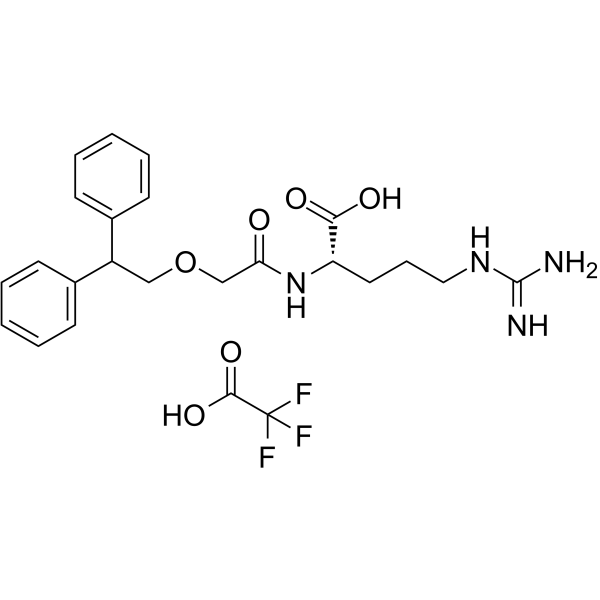
HY-101502A
SB290157 trifluoroacetateC3aR Antagonist -
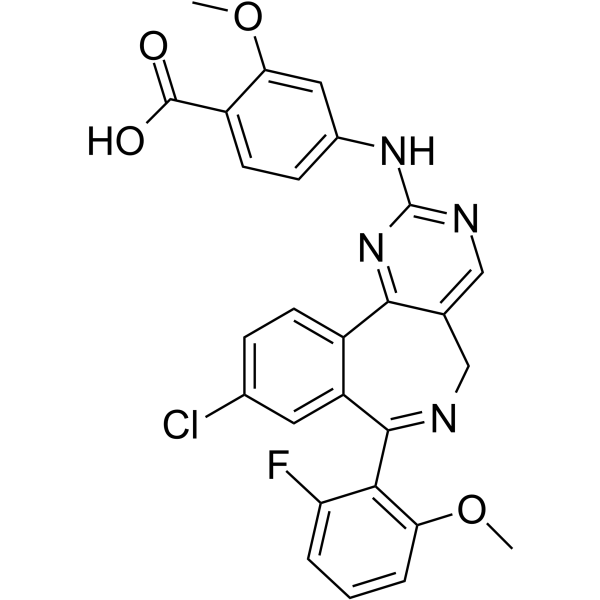
HY-10971
AlisertibAurora A Kinase Inhibitor -
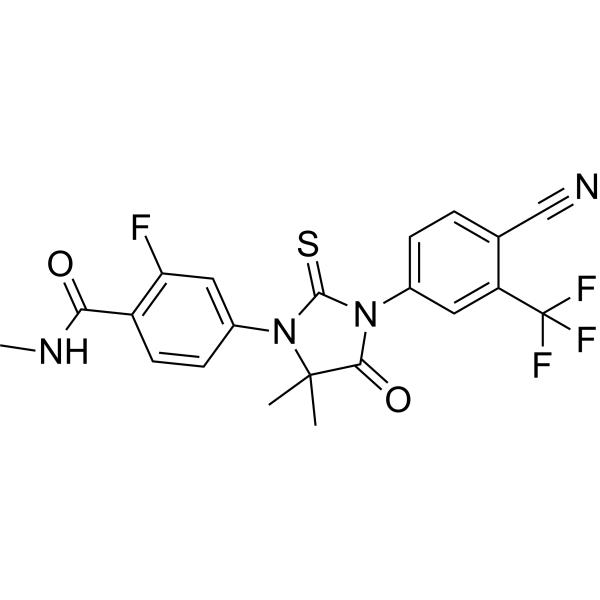
HY-70002
EnzalutamideAndrogen Receptor Antagonist -
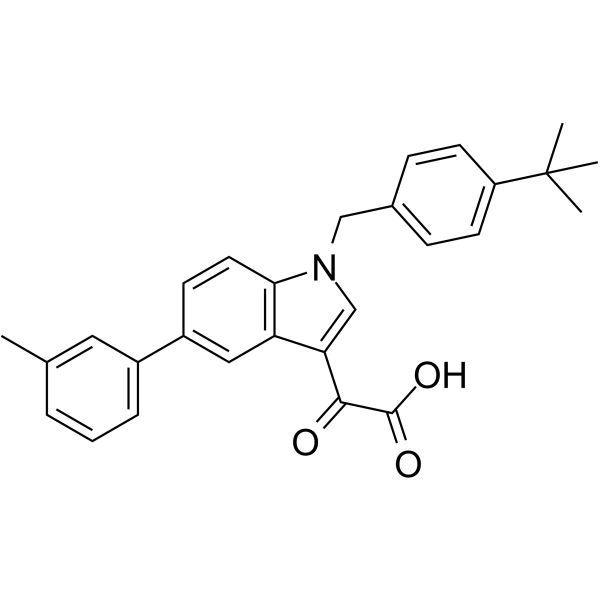
HY-14759
AleplasininPAI-1 Inhibitor -
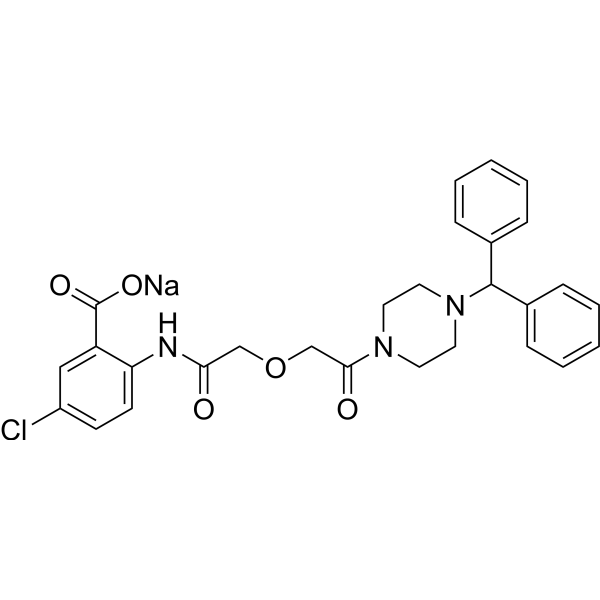
HY-100447
TM5275 sodiumPAI-1 Inhibitor -
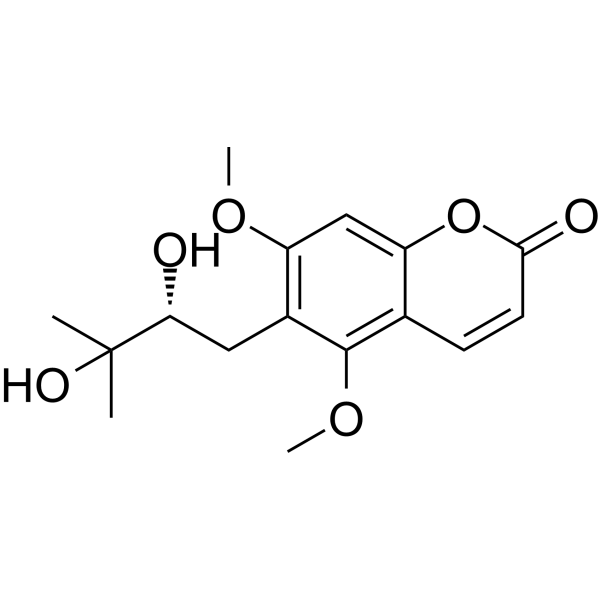
HY-N0518
ToddalolactonePAI-1 Inhibitor -
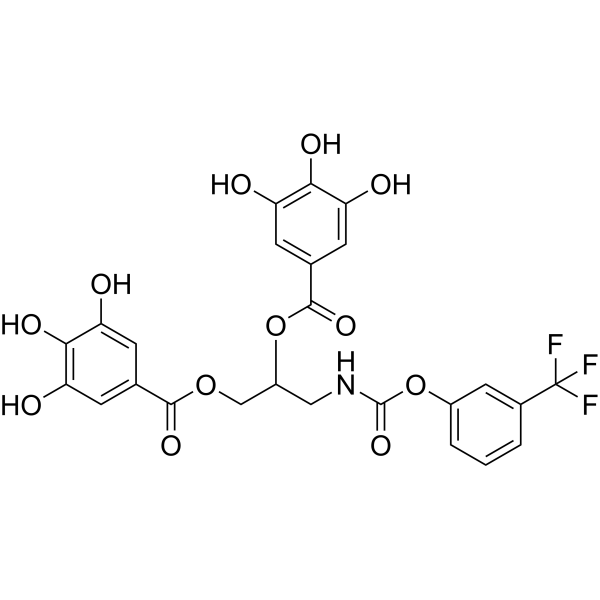
HY-120516
CDE-096PAI-1 Inhibitor -
HY-122098
DiaplasininPAI-1 Inhibitor -
HY-114330
ZK824859Ser/Thr Protease Inhibitor -

HY-N0518R
Toddalolactone (Standard)PAI-1 Inhibitor
Publications Citing Use of MedChemExpress (MCE) PPACK TFA
More Customer Validation & Images

-
Flow Cytometry
-
In Vivo Efficacy Study
-
Histological Imaging/Staining
-
Cell Imaging/Staining


Biological Activity
Description
IC50 & Target
|
PAR1 |
In Vitro
PPACK TFA nanoparticles completely inhibit thrombin-induced cleavage of the PAR-1 receptor on human aortic endothelial cells, as well as tissue factor expression on the surface of THP-1 monocytes[1].
PPACK TFA nanoparticles inhibit thrombin-induced NF-κB activation in human aortic endothelial cells and THP-1 monocytes[1].
PPACK TFA (5-fold molar excess; room temperature; 1 h) inactivates the amidolytic activity of human α-thrombin after 1 h of incubation at room temperature, generating PPACK TFA-thrombin that does not interfere with the enzymatic function of unmodified α-thrombin[4].
PPACK TFA (200 μM, 100 μM, 10 μM) exerts anticoagulant effects, and exhibits stronger anticoagulant activity on a molar basis than the factor Xa inhibitor GGACK (HY-137495) used alone at the same concentrations[5].
MedChemExpress (MCE) has not independently confirmed the accuracy of these methods. They are for reference only.
-
Cell Line:Human aortic endothelial cells and THP-1 monocytes
-
Concentration:PPACK nanoparticle
-
Incubation Time:6 h
-
Result:Inhibited thrombin-induced NF-κB activation in human aortic endothelial cells and THP-1 monocytes.
Resulted in little to no observable posi- tive staining for intracellular phospho-p65 and preservation of IkB protein.
In Vivo
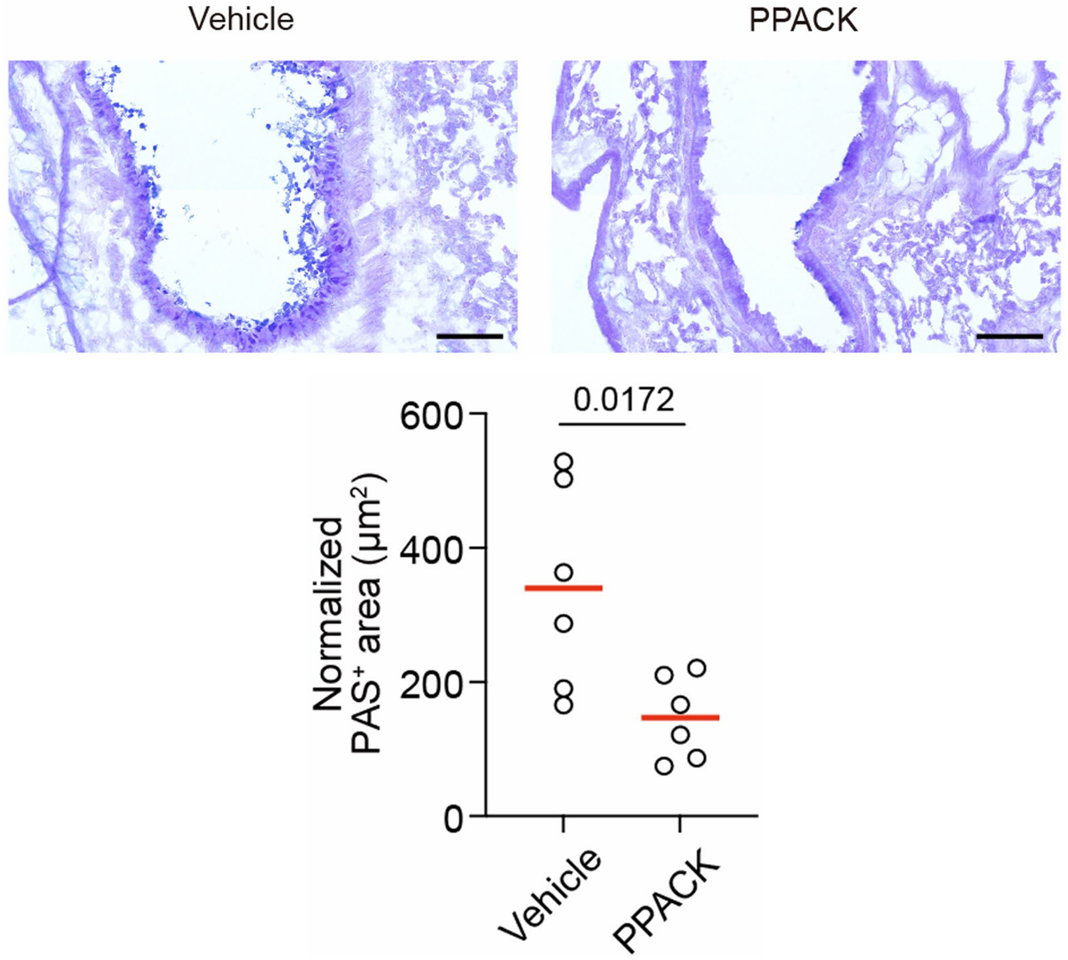
PPACK (62.5 μg; i.p.; every 2 days; 8 to 18 days post-immunization) TFA significantly attenuates airway eosinophilia, goblet cell hyperplasia and airway hyperresponsiveness in a mouse model of asthma[3].
MedChemExpress (MCE) has not independently confirmed the accuracy of these methods. They are for reference only.
-
Animal Model:C57BL/6J mice with Asthma (sex- and age-matched)[3]
-
Dosage:62.5 μg
-
Administration:i.p.; every 2 days; 8 to 18 days post-immunization
-
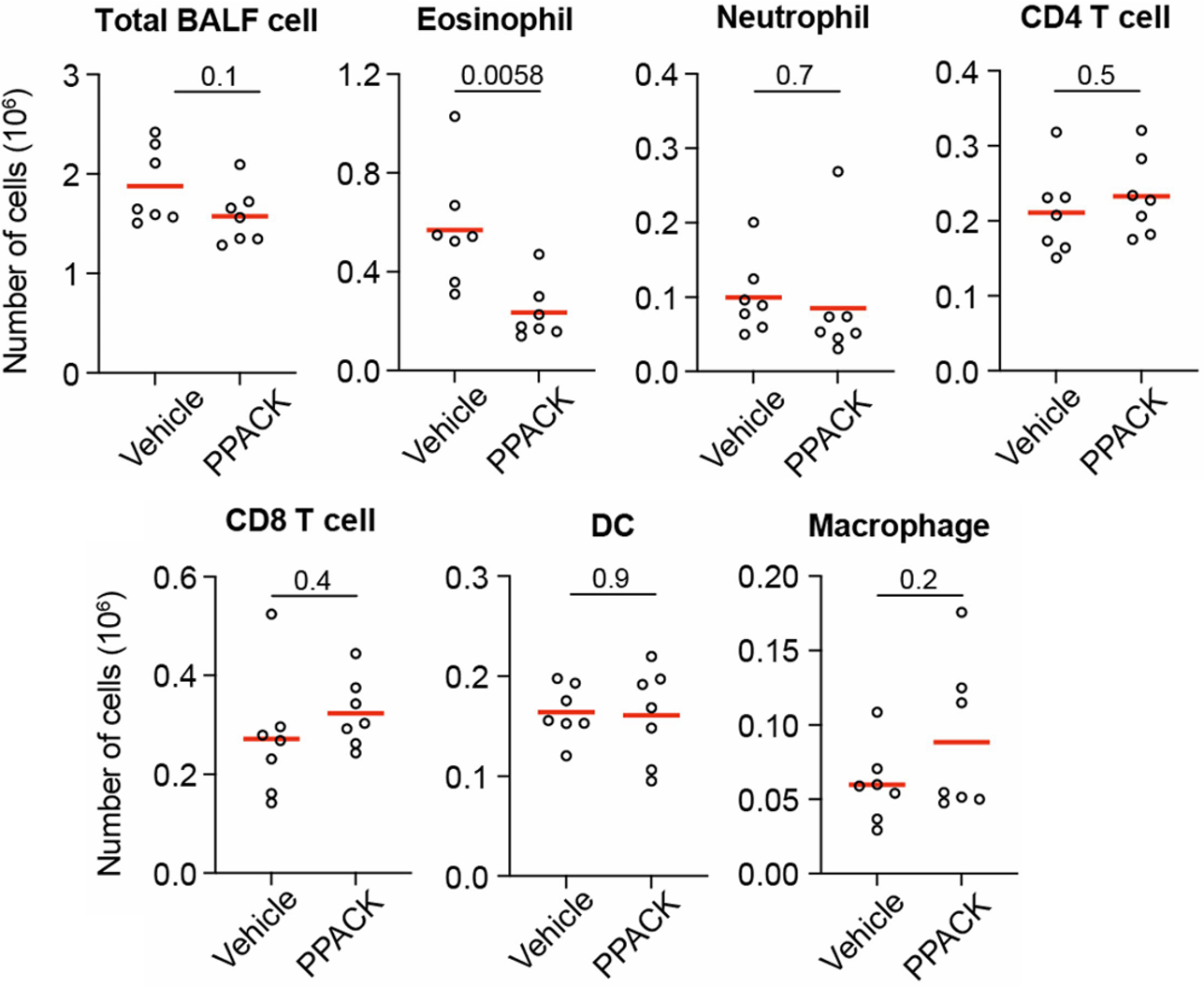
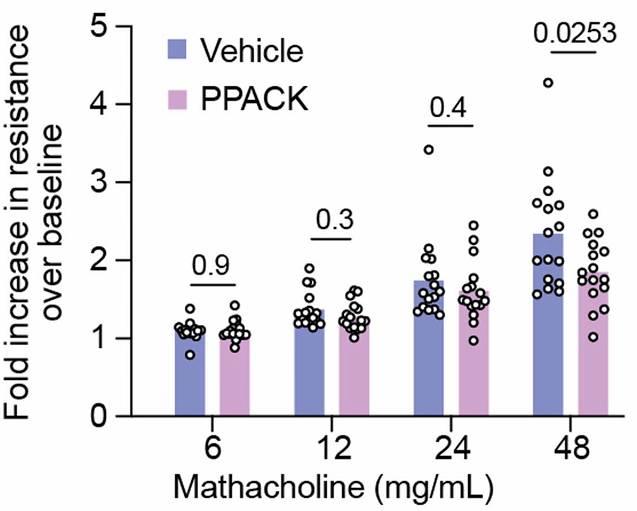
Result:Significantly reduced eosinophil counts in bronchoalveolar lavage fluid (BALF).\nSignificantly reduced goblet cell hyperplasia in lung tissue.\nSignificantly improved lung function via reduced airway resistance in response to methacholine challenge.


Chemical Information
-
CAS No. 157379-44-7
-
Appearance Solid
-
Molecular Weight 564.99
-
Formula C23H32ClF3N6O5
-
Color White to off-white
-
SMILES
O=C([C@H]1N(CCC1)C([C@H](N)CC2=CC=CC=C2)=O)N[C@@H](CCCNC(N)=N)C(CCl)=O.O=C(C(F)(F)F)O
-
Sequence
{d-Phe}-Pro-{Arg-Chloromethylketone}
-
Sequence Shortening
{d-Phe}-P-{Arg-Chloromethylketone}
-
Shipping
Room temperature in continental US; may vary elsewhere.
-
Storage
Sealed storage, away from moisture
Powder -80°C 2 years -20°C 1 year * In solvent : -80°C, 6 months; -20°C, 1 month (sealed storage, away from moisture)


Publications (4)
-
Journal Impact Factor
-
Most Recent
-
Nature
2025 Feb;638(8050):490-498. PMID: 39814882
PPACK TFA purchased from MedChemExpress. Usage Cited in: Nature. 2025 Feb;638(8050):490-498. [Abstract]
Summary statistics showing the number of different immune cells in the BALF of PPACK (PPACK TFA) (62.5 μg per mouse; i.p.; every 2 days) treated mice. Each symbol indicates one mouse, and lines denote means.
PPACK TFA purchased from MedChemExpress. Usage Cited in: Nature. 2025 Feb;638(8050):490-498. [Abstract]
Airway hypersensitivity of the vehicle or PPACK (PPACK TFA) (62.5 μg per mouse; i.p.; every 2 days) treated mice measured using the forced oscillation technique. Each symbol indicates one mouse, and bars denote means.
PPACK TFA purchased from MedChemExpress. Usage Cited in: Nature. 2025 Feb;638(8050):490-498. [Abstract]
Representative AB-PAS staining of lung tissue sections of vehicle or PPACK (PPACK TFA) (62.5 μg per mouse; i.p.; every 2 days) treated mice. Scale bar, 100 μm. Statistics summarizing the PAS+ areas in the airway of indicated mice. Each symbol indicates one mouse, and lines denote means.
-
-
-
J Thromb Thrombolysis
The inhibitory effect of antiplatelet drugs on spontaneous platelet aggregation on glass surfaces: an analysis based on microscopic three-dimensional topography. [Abstract]2025 Sep 9. PMID: 40924280
PPACK TFA purchased from MedChemExpress. Usage Cited in: J Thromb Thrombolysis. 2025 Sep 9. [Abstract]
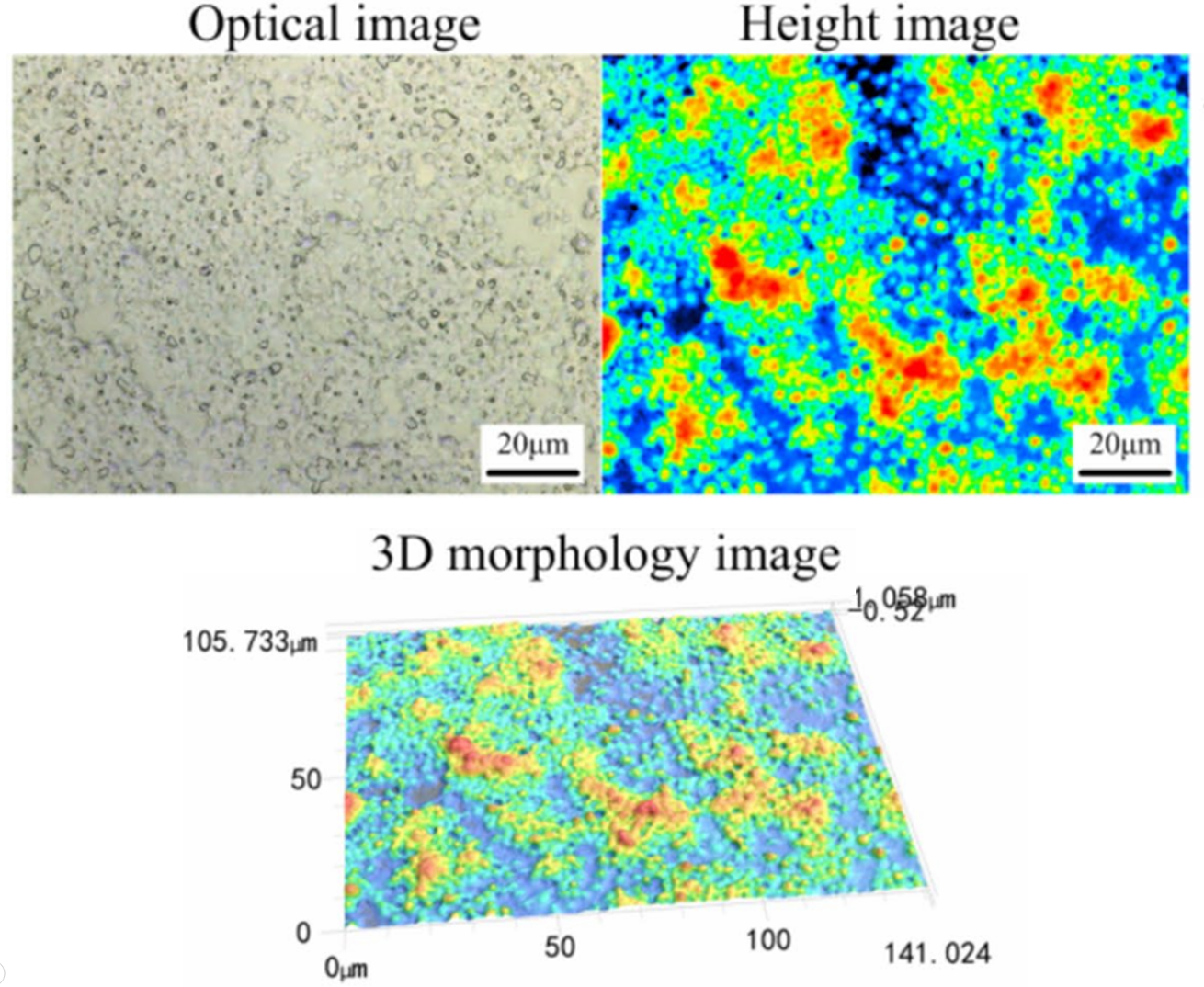
PPACK (PPACK TFA)-anticoagulated PRP droplets deposited on the glass surface. The results showed that 100 μM PPACK-anticoag-ulated PRP on the glass surface retained the ability to form platelet aggregates on the glass surface.


Solvent & Solubility
In Vitro:
DMSO : 100 mg/mL (176.99 mM; Need ultrasonic; Hygroscopic DMSO has a significant impact on the solubility of product, please use newly opened DMSO)
Please refer to the solubility information to select the appropriate solvent. Once prepared, please aliquot and store the solution to prevent product inactivation from repeated freeze-thaw cycles.
Storage method and period of stock solution: -80°C, 6 months; -20°C, 1 month (sealed storage, away from moisture). When stored at -80°C, please use it within 6 months. When stored at -20°C, please use it within 1 month.
Please refer to the solubility information to select the appropriate solvent. Once prepared, please aliquot and store the solution to prevent product inactivation from repeated freeze-thaw cycles.
Storage method and period of stock solution: -80°C, 6 months; -20°C, 1 month (sealed storage, away from moisture). When stored at -80°C, please use it within 6 months. When stored at -20°C, please use it within 1 month.
Concentration (start) × Volume (start) = Concentration (final) × Volume (final)


Purity & Documentation
-
Data Sheet (289 KB)
-
SDS (254 KB)
- English - EN (254 KB)
- Français - FR (254 KB)
- Deutsch - DE (254 KB)
- Norwegian - NO (254 KB)
- Español - ES (254 KB)
- Swedish - SV (254 KB)
- Italian - IT (254 KB)
- Korean - KR (254 KB)
- Portuguese - PT (254 KB)
-
Handling Instructions (2659 KB)
References
[1]. Palekar RU, et al. Inhibition of Thrombin With PPACK-Nanoparticles Restores Disrupted Endothelial Barriers and Attenuates Thrombotic Risk in Experimental Atherosclerosis. Arterioscler Thromb Vasc Biol. 2016;36(3):446-455. [Content Brief]
[2]. Wu Y, et al. The inhibitory effect of antiplatelet drugs on spontaneous platelet aggregation on glass surfaces: an analysis based on microscopic three-dimensional topography. J Thromb Thrombolysis. Published online September 9, 2025. [Content Brief]
[3]. Lan F, et al. GZMK-expressing CD8+ T cells promote recurrent airway inflammatory diseases. Nature. 2025;638(8050):490-498. [Content Brief]
[4]. Schmaier AH, et al. PPACK-thrombin is a noncompetitive inhibitor of alpha-thrombin binding to human platelets. Thromb Res. 1992;67(5):479-489. [Content Brief]
[5]. Lyon ME, et al. Evaluation of the thrombin inhibitor D-phenylalanyl-L-prolyl-L-arginine chloromethylketone (PPACK) with the factor Xa inhibitor 1,5-dansyl-L-glutamyl-L-glycyl-L-arginine chloromethylketone (GGACK) as anticoagulants for critical care clinical chemistry specimens. Clin Chim Acta. 1999 Feb;280(1-2):91-9. [Content Brief]


Complete Stock Solution Preparation Table
Please refer to the solubility information to select the appropriate solvent. Once prepared, please aliquot and store the solution to prevent product inactivation from repeated freeze-thaw cycles.
Storage method and period of stock solution: -80°C, 6 months; -20°C, 1 month (sealed storage, away from moisture). When stored at -80°C, please use it within 6 months. When stored at -20°C, please use it within 1 month.
| Optional Solvent | Concentration Solvent Mass | 1 mg | 5 mg | 10 mg | 25 mg |
|---|---|---|---|---|---|
| DMSO | 1 mM | 1.7699 mL | 8.8497 mL | 17.6994 mL | 44.2486 mL |
| 5 mM | 0.3540 mL | 1.7699 mL | 3.5399 mL | 8.8497 mL | |
| 10 mM | 0.1770 mL | 0.8850 mL | 1.7699 mL | 4.4249 mL | |
| 15 mM | 0.1180 mL | 0.5900 mL | 1.1800 mL | 2.9499 mL | |
| 20 mM | 0.0885 mL | 0.4425 mL | 0.8850 mL | 2.2124 mL | |
| 25 mM | 0.0708 mL | 0.3540 mL | 0.7080 mL | 1.7699 mL | |
| 30 mM | 0.0590 mL | 0.2950 mL | 0.5900 mL | 1.4750 mL | |
| 40 mM | 0.0442 mL | 0.2212 mL | 0.4425 mL | 1.1062 mL | |
| 50 mM | 0.0354 mL | 0.1770 mL | 0.3540 mL | 0.8850 mL | |
| 60 mM | 0.0295 mL | 0.1475 mL | 0.2950 mL | 0.7375 mL | |
| 80 mM | 0.0221 mL | 0.1106 mL | 0.2212 mL | 0.5531 mL | |
| 100 mM | 0.0177 mL | 0.0885 mL | 0.1770 mL | 0.4425 mL |


PPACK TFA Related Classifications
HY-122542B Related Classifications
 Powered by Bioz