



20(S)-Hydroxycholesterol
Based on 5 publication(s) in Google Scholar
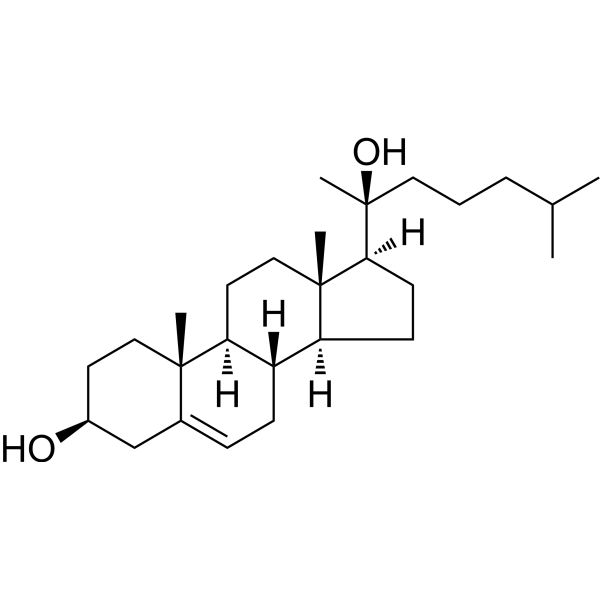
20(S)-Hydroxycholesterol (20α-Hydroxycholesterol) is an allosteric activator that selectively targets the Smoothened (Smo) of the Hedgehog pathway with an EC50 of ~30 μM (Hedgehog). 20(S)-Hydroxycholesterol binds to the extracellular cysteine-rich domain (CRD) of Smo in a stereoselective manner, activating downstream Gli transcription factors (without inducing transcription of receptor genes in the Wnt pathway). 20(S)-Hydroxycholesterol enhances osteogenic differentiation of bone marrow stromal cells and synergistically activates the Raf/MEK/ERK pathway with Simvastatin (HY-17502) to promote bone regeneration. 20(S)-Hydroxycholesterol can be used to study the mechanisms of developmental biology, oncology, bone, and angiogenesis.
For research use only. We do not sell to patients.
- Purity : 99.63%
- CAS No.: 516-72-3
- Formula: C27H46O2
- Molecular Weight:402.65
-
Storage:Powder -20°C, 3 years , 4°C, 2 years ; In solvent -80°C, 2 years , -20°C, 1 year

To place orders, for customer services and technical support, please contact: MedChemExpress USA
Tel: 609-228-6898 E-mail: [email protected] [email protected]


-
 Biological Activity
-
Chemical Information
-
Solvent & Solubility
- Protocols
- Purity & Documentation
- References
-
 Help & FAQs


-
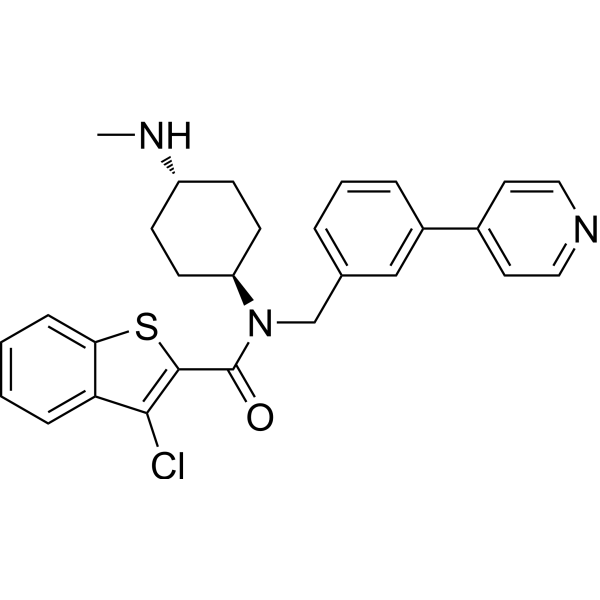
HY-12848
SAGSmoothened Agonist -
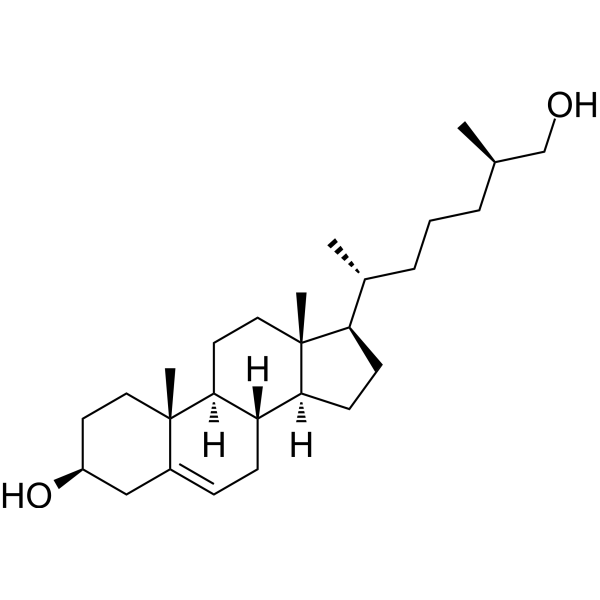
HY-N2371
27-HydroxycholesterolLXR Agonist -
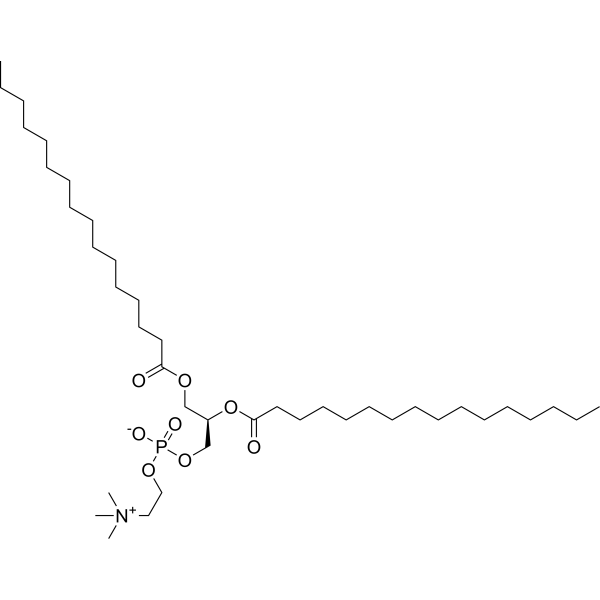
HY-109506
DPPCEndogenous Metabolite -
HY-15412
HhAntagSMO Antagonist -
HY-12316R
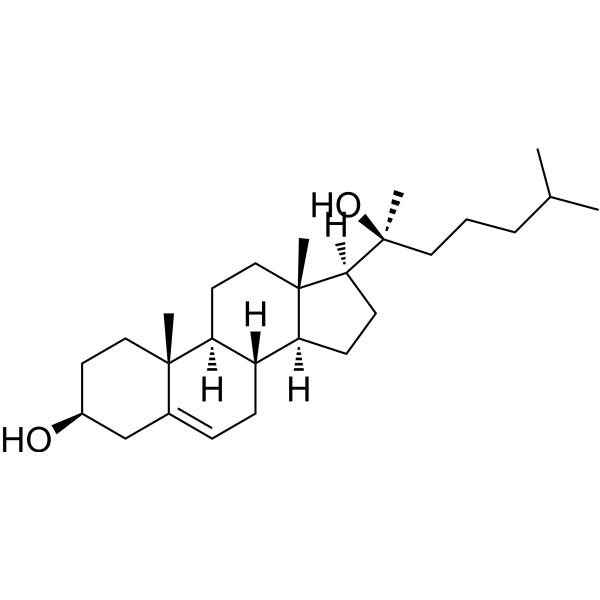
20(S)-Hydroxycholesterol (Standard) -
HY-N2370
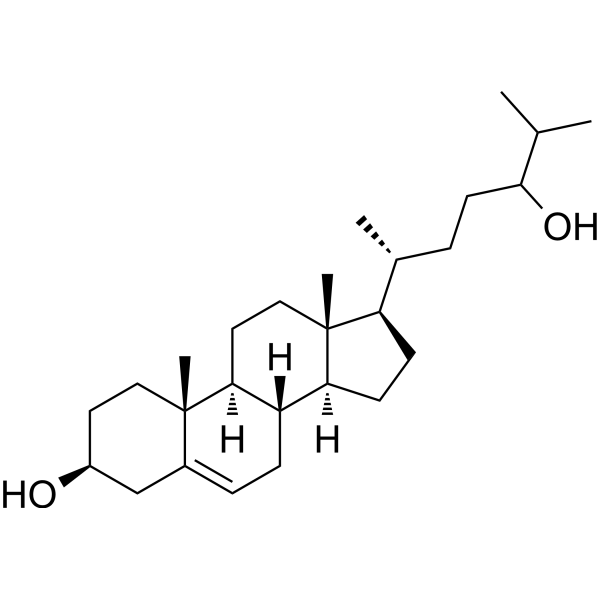
24-HydroxycholesterolLXR Activator -
HY-12323
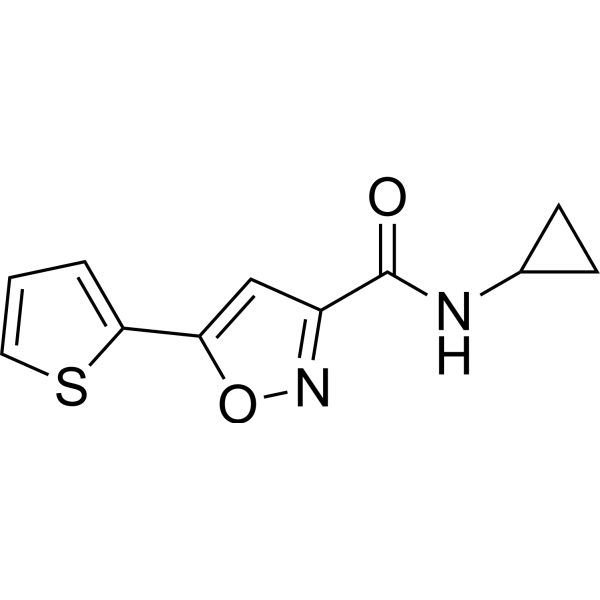
ISX-9Neural Stem Cell Differentiation Inducer -
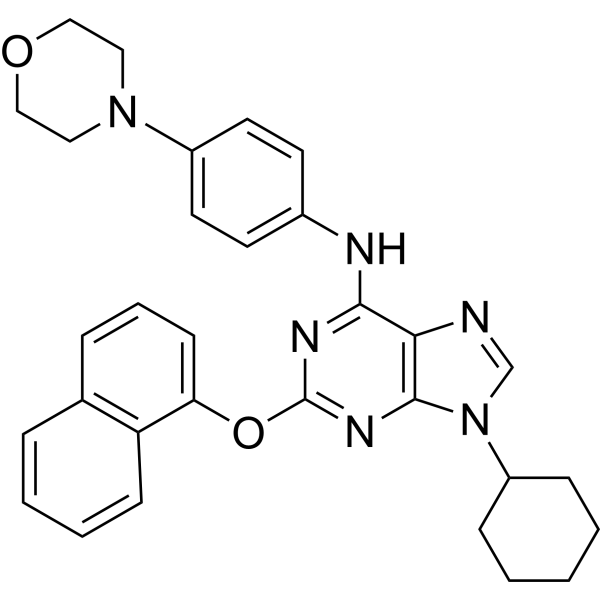
HY-15108
PurmorphamineSmoothened Receptor Agonist -
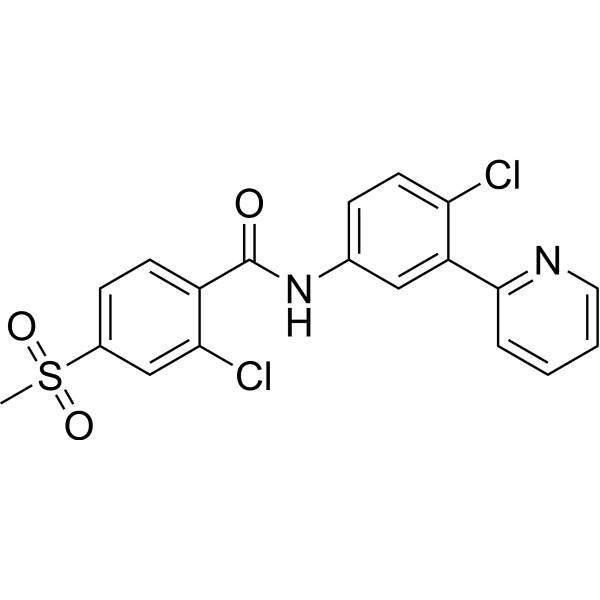
HY-10440
VismodegibHedgehog Inhibitor -
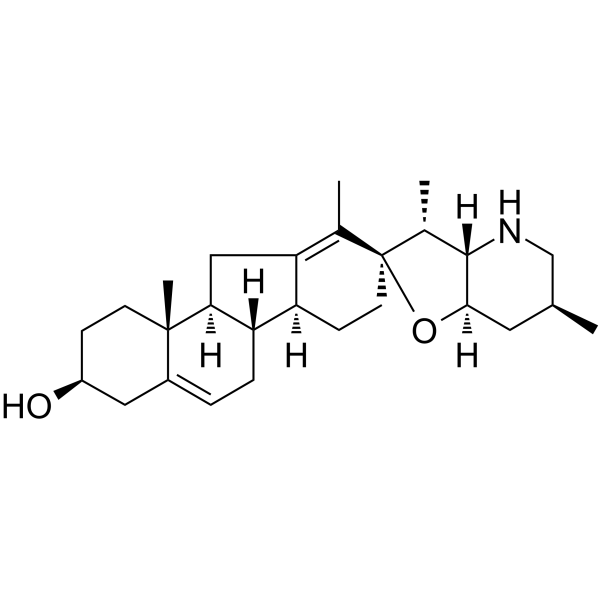
HY-17024
CyclopamineHedgehog Pathway Antagonist -
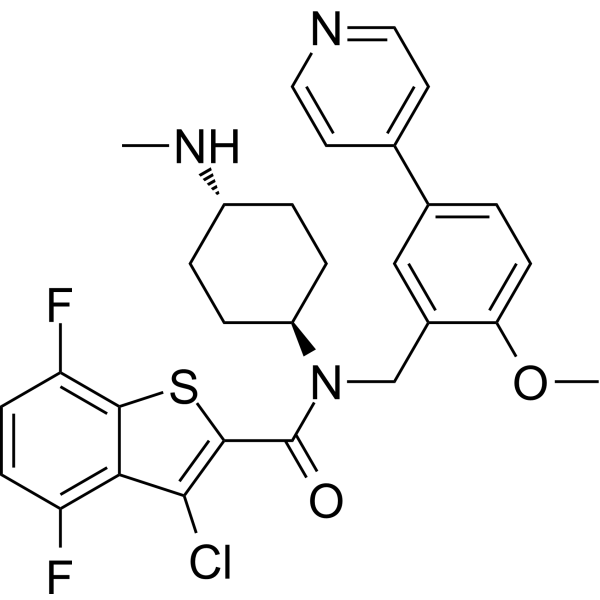
HY-111040
Hedgehog agonist 1Hedgehog Agonist -
HY-100224
SANT-1Smo Antagonist
Publications Citing Use of MedChemExpress (MCE) 20(S)-Hydroxycholesterol
MoreAll Endogenous Metabolite Isoforms
More

Biological Activity
Description
IC50 & Target
|
Human Endogenous Metabolite |
In Vitro
20(S)-Hydroxycholesterol (20(S)-OHC) exists naturally as only one isomer, nat-20(S)-OHC. nat-20(S)-OHC (0.25 μM, 0.5 μM; overnight) effectively induces Hh reporter gene transcription in NIH 3T3 cells with EC50 of 0.3 nM and 0.24 μM in the presence and absence of SAG (100 nM), respectively[1].
nat-20(S)-OHC (8 μM; overnight) activates Hh signaling by directly inhibiting Ptc1, directly activating Smo, or regulating intermediate steps[1].
20(S)-Hydroxycholesterol (5 μM; 3 d, 7 d) induces significantly higher proliferation activity in BMSCs and neutralized the inhibitory effect of Simvastatin (HY-17502) on cell viability[2].
20(S)-Hydroxycholesterol (5 μM; 3 d, 7 d) combined with Simvastatin (0.25 μM), significantly increases ALP activity and calcium deposition in BMSCs[2].
20(S)-Hydroxycholesterol (5 μM; 7 d, 14 d) combined with Simvastatin (0.25 μM), significantly increases ALP, OCN, and BMP-2 gene expressions, and significantly increases phosphorylated c-Raf, MEK, and ERK1/2 protein levels[2].
MedChemExpress (MCE) has not independently confirmed the accuracy of these methods. They are for reference only.
-
Cell Line:NIH 3T3 cells
-
Concentration:8 μM
-
Incubation Time:overnight
-
Result:Induced the expression of the endogenous target gene Gli1.
-
Cell Line:BMSCs
-
Concentration:5 μM
-
Incubation Time:3 days, 7 days
-
Result:Induced significantly higher proliferative activity, and the neutralized the inhibitory effect of Simvastatin (0.25 μM) on the viability of BMSCs.
In Vivo
MedChemExpress (MCE) has not independently confirmed the accuracy of these methods. They are for reference only.
-
Animal Model:New Zealand white rabbits (male, adult) calvarial defect model[2]
-
Dosage:1.0 μg, combined with 0.5 mg Simvastatin
-
Administration:Local application on inorganic bovine bone graft Bio-Oss (as a carrier and a bone substitute), installed into the bone defect site; observed at 4 weeks post-surgery
-
Result:Significantly enhanced bone regeneration.
Resulted plentiful new bone formation, neovascular channels, and copious collagen secretion in the defect area, with more pronounced characteristics compared to control and single-agent groups.


Chemical Information
-
CAS No. 516-72-3
-
Appearance Solid
-
Molecular Weight 402.65
-
Formula C27H46O2
-
Color White to off-white
-
SMILES
C[C@@]1([C@@]2([H])[C@@](C)(O)CCCC(C)C)[C@](CC2)([H])[C@@](CC=C3[C@@]4(CC[C@H](O)C3)C)([H])[C@]4([H])CC1
-
Synonyms
20α-Hydroxycholesterol
-
Structure Classification
-
Initial Source
-
Shipping
Room temperature in continental US; may vary elsewhere.
-
Storage
Powder -20°C 3 years 4°C 2 years In solvent -80°C 2 years -20°C 1 year


Publications (5)
-
Journal Impact Factor
-
Most Recent
-
Bioact Mater
A cell-free lipid sterosomal therapeutic enables bone regeneration via USP18-mediated noncanonical S1P signaling. [Abstract]2026 Jun 5:65:333-346. PMID: 42290977 -
Cell Chem Biol
Transient hydroxycholesterol treatment restrains TCR signaling to promote long-term immunity. [Abstract]2024 May 16;31(5):920-931.e6. PMID: 38759618 -
PLoS Biol
2026 Apr 6;24(4):e3003736. PMID: 41941438 -
Curr Res Toxicol
Characterization of the interferences of systemic azole antifungal drugs with adrenal steroid biosynthesis using H295R cells and enzyme activity assays. [Abstract]2023 Aug 14:5:100119. PMID: 37637492 -
bioRxiv
Structure-Activity Mapping of Intraperitoneal mRNA-LNPs: Decoupling Tumor and Liver Biodistribution in Pancreatic Cancer. [Abstract]2026 Mar 21:2026.03.20.712457. PMID: 41889911


Solvent & Solubility
In Vitro:
DMSO : 12.5 mg/mL (31.04 mM; Need ultrasonic; Hygroscopic DMSO has a significant impact on the solubility of product, please use newly opened DMSO)
Please refer to the solubility information to select the appropriate solvent. Once prepared, please aliquot and store the solution to prevent product inactivation from repeated freeze-thaw cycles.
Storage method and period of stock solution: -80°C, 2 years; -20°C, 1 year. When stored at -80°C, please use it within 2 years. When stored at -20°C, please use it within 1 year.
Please refer to the solubility information to select the appropriate solvent. Once prepared, please aliquot and store the solution to prevent product inactivation from repeated freeze-thaw cycles.
Storage method and period of stock solution: -80°C, 2 years; -20°C, 1 year. When stored at -80°C, please use it within 2 years. When stored at -20°C, please use it within 1 year.
Concentration (start) × Volume (start) = Concentration (final) × Volume (final)
In Vivo:
Select the appropriate dissolution method based on your experimental animal and administration route.
- For the following dissolution methods, please ensure to first prepare a clear stock solution using an In Vitro approach and then sequentially add co-solvents:
- To ensure reliable experimental results, the clarified stock solution can be appropriately stored based on storage conditions. As for the working solution for In Vivo experiments, it is recommended to prepare freshly and use it on the same day.
- The percentages shown for the solvents indicate their volumetric ratio in the final prepared solution. If precipitation or phase separation occurs during preparation, heat and/or sonication can be used to aid dissolution.
For the following dissolution methods, please prepare the working solution directly:
It is recommended to prepare fresh solutions and use them promptly within a short period of time.
The percentages shown for the solvents indicate their volumetric ratio in the final prepared solution. If precipitation or phase separation occurs during preparation, heat and/or sonication can be used to aid dissolution.
Add each solvent one by one: 20% HP-β-CD in Saline
Solubility: 14.93 mg/mL (37.08 mM); Suspended solution; Need ultrasonic
Add each solvent one by one: 15% Cremophor EL 85% Saline
Solubility: 14.93 mg/mL (37.08 mM); Suspended solution; Need ultrasonic
In Vivo Dissolution Calculator
Please enter the basic information of animal experiments:
-
-
-
-
Recommended: Prepare an additional quantity of animals to account for potential losses during experiments.
Please enter your animal formula composition:
-
%DMSO +
Recommended: Keep the proportion of DMSO in working solution below 2% if your animal is weak.
-
%+
-
+%Tween-80 + +
-
%Saline +
The co-solvents required include: DMSO, . All of co-solvents are available by MedChemExpress (MCE). , Tween 80. All of co-solvents are available by MedChemExpress (MCE).
Working solution concentration: 0.22 mg/mL
Method for preparing stock solution: mg drug dissolved in μL DMSO. Stock solution concentration: mg/mL.
1. Take μL DMSO stock solution;
2. Add μL .
μL , mix evenly;
3. Then add μL Tween 80, mix evenly;
4. Then add μL
Please ensure that the stock solution in the first step is dissolved to a clear state, and add co-solvents in sequence. You can use ultrasonic heating (ultrasonic cleaner, recommended frequency 20-40 kHz), vortexing, etc. to assist dissolution.


Purity & Documentation
-
Data Sheet (279 KB)
-
SDS (396 KB)
- English - EN (396 KB)
- Français - FR (396 KB)
- Deutsch - DE (396 KB)
- Norwegian - NO (396 KB)
- Español - ES (396 KB)
- Swedish - SV (396 KB)
- Italian - IT (396 KB)
- Korean - KR (396 KB)
- Portuguese - PT (396 KB)
-
Handling Instructions (2659 KB)
References
[1]. Nachtergaele S, et al. Oxysterols are allosteric activators of the oncoprotein Smoothened. Nat Chem Biol. 2012 Jan 8;8(2):211-20. [Content Brief]
[2]. Huang Y, et al. 20(S)-hydroxycholesterol and simvastatin synergistically enhance osteogenic differentiation of marrow stromal cells and bone regeneration by initiation of Raf/MEK/ERK signaling. J Mater Sci Mater Med. 2019 Jul 19;30(8):87. [Content Brief]
[3]. Nedelcu D, et al, Oxysterol binding to the extracellular domain of Smoothened in Hedgehog signaling. Nat Chem Biol. 2013 Sep;9(9):557-64. [Content Brief]


Complete Stock Solution Preparation Table
Please refer to the solubility information to select the appropriate solvent. Once prepared, please aliquot and store the solution to prevent product inactivation from repeated freeze-thaw cycles.
Storage method and period of stock solution: -80°C, 2 years; -20°C, 1 year. When stored at -80°C, please use it within 2 years. When stored at -20°C, please use it within 1 year.
| Optional Solvent | Concentration Solvent Mass | 1 mg | 5 mg | 10 mg | 25 mg |
|---|---|---|---|---|---|
| DMSO | 1 mM | 2.4835 mL | 12.4177 mL | 24.8355 mL | 62.0887 mL |
| 5 mM | 0.4967 mL | 2.4835 mL | 4.9671 mL | 12.4177 mL | |
| 10 mM | 0.2484 mL | 1.2418 mL | 2.4835 mL | 6.2089 mL | |
| 15 mM | 0.1656 mL | 0.8278 mL | 1.6557 mL | 4.1392 mL | |
| 20 mM | 0.1242 mL | 0.6209 mL | 1.2418 mL | 3.1044 mL | |
| 25 mM | 0.0993 mL | 0.4967 mL | 0.9934 mL | 2.4835 mL | |
| 30 mM | 0.0828 mL | 0.4139 mL | 0.8278 mL | 2.0696 mL |


20(S)-Hydroxycholesterol Related Classifications
HY-12316 Related Classifications
 Powered by Bioz