



Alpelisib hydrochloride
Based on 136 publication(s) in Google Scholar
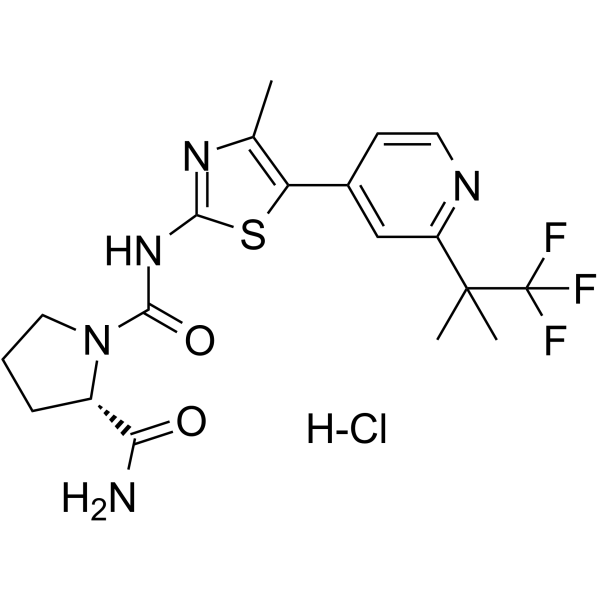
Alpelisib (BYL-719) hydrochloride is an orally active PI3Kα-selective inhibitor that blocks the conversion of PIP2 to PIP3, thereby inhibiting pathways including PI3K/AKT/mTOR, MAPK/ERK, Notch and JAK-STAT. Alpelisib hydrochloride also induces apoptosis, G0/G1 phase arrest and senescence; it significantly inhibits the proliferation, self-renewal, stemness and epithelial-mesenchymal transition (EMT) of tumor cells, reduces cancer stem cell populations and decreases the expression of stem cell markers. Alpelisib hydrochloride not only enhances the sensitivity to Eribulin (HY-13442) and exerts a synergistic effect with Paclitaxel (HY-B0015), but may also induce drug resistance by upregulating the SGK3/GSK3β/β-catenin signaling pathway. Alpelisib hydrochloride can be applied to research related to breast cancer, gastric cancer and lipomas associated with PTEN hamartoma tumor syndrome.
For research use only. We do not sell to patients.
- Purity : 99.55%
- CAS No.: 1584128-91-5
- Formula: C19H23ClF3N5O2S
- Molecular Weight:477.93
-
Storage:
4°C, sealed storage, away from moisture
* In solvent : -80°C, 6 months; -20°C, 1 month (sealed storage, away from moisture)

To place orders, for customer services and technical support, please contact: MedChemExpress USA
Tel: 609-228-6898 E-mail: [email protected] [email protected]


-
 Biological Activity
-
Chemical Information
-
Solvent & Solubility
- Purity & Documentation
- References
-
 Help & FAQs


Publications Citing Use of MedChemExpress (MCE) Alpelisib hydrochloride
More- Signal Transduct Target Ther. 2025 Nov 18;10(1):373. [Abstract]
- Signal Transduct Target Ther. 2024 Jun 17;9(1):146. [Abstract]
- Cancer Cell. 2026 May 21:S1535-6108(26)00220-5.
- Cancer Cell. 2024 Jul 8;42(7):1286-1300.e8. [Abstract]
- Cancer Cell. 2023 Jun 12;41(6):1103-1117.e12. [Abstract]
- Nature. 2018 Jun;558(7711):540-546. [Abstract]
- J Hematol Oncol. 2020 Feb 22;13(1):13. [Abstract]
- Science. 2021 Oct;374(6563):eabf3067. [Abstract]
- Science. 2017 Dec 1;358(6367):eaan4368. [Abstract]
- Cell. 2025 May 29;188(11):3065-3080.e21. [Abstract]
- Cell Metab. 2021 Nov 2;33(11):2247-2259.e6. [Abstract]
- Cancer Discov. 2023 Nov 1;13(11):2432-2447. [Abstract]
- Cancer Discov. 2020 Aug;10(8):1226-1239. [Abstract]
- Nat Cancer. 2021 Jan;2(1):34-48. [Abstract]
- Nat Biomed Eng. 2018 Aug;2(8):578-588. [Abstract]
- Nat Aging. 2026 Jul;6(7):1395-1416.
- Nat Aging. 2023 Feb;3(2):162-172. [Abstract]
- Blood. 2024 Sep 26;144(13):1399-1411. [Abstract]
- Blood. 2019 Jan 3;133(1):70-80. [Abstract]
- Cancer Res. 2021 May 1;81(9):2470-2480. [Abstract]
- Nat Commun. 2026 Feb 12;17(1):1214. [Abstract]
- Nat Commun. 2023 Jul 13;14(1):4084. [Abstract]
- Nat Commun. 2022 Jan 11;13(1):245. [Abstract]
- Nat Commun. 2020 Aug 13;11(1):4053. [Abstract]
- Sci Transl Med. 2025 Dec 17;17(829):eadp5088. [Abstract]
- Sci Transl Med. 2021 Oct 6;13(614):eabg0809. [Abstract]
- Sci Transl Med. 2018 Jul 18;10(450):eaaq1093. [Abstract]
- J Nanobiotechnology. 2026 Mar 6;24(1):345. [Abstract]
- J Clin Invest. 2021 Dec 15;131(24):e140436. [Abstract]
- Sci Adv. 2022 Dec 9;8(49):eade7823. [Abstract]
- Cell Death Differ. 2025 Apr 9. [Abstract]
- Biomaterials. 2022 Oct:289:121800. [Abstract]
- Brain. 2026 Jan 19:awag017. [Abstract]
- J Control Release. 2026 Jun 10:394:114903. [Abstract]
- Cell Death Dis. 2025 May 29;16(1):423. [Abstract]
- Cell Death Dis. 2023 Dec 14;14(12):831. [Abstract]
- Cell Death Dis. 2022 Jan 12;13(1):54. [Abstract]
- Cell Death Dis. 2020 Oct 6;11(10):831. [Abstract]
- Cancer Lett. 2024 Nov 1:604:217219. [Abstract]
- Cancer Lett. 2024 Aug 10:597:217074. [Abstract]
- Cancer Lett. 2019 Jan:440-441:54-63. [Abstract]
- J Exp Med. 2023 Nov 6;220(11):e20211743. [Abstract]
- J Exp Med. 2023 Nov 6;220(11):e20230926. [Abstract]
- Mol Psychiatry. 2021 Nov;26(11):6451-6468. [Abstract]
- NPJ Precis Oncol. 2025 Nov 7;9(1):343. [Abstract]
- J Transl Med. 2022 Jun 7;20(1):263. [Abstract]
- Proc Natl Acad Sci U S A. 2025 Jul;122(26):e2424867122. [Abstract]
- Proc Natl Acad Sci U S A. 2022 Nov 16;119(46):e2215621119. [Abstract]
- Diabetes. 2024 Dec 1;73(12):2003-2008. [Abstract]
- Oncogene. 2025 Sep;44(34):3142-3148. [Abstract]
- Oncogene. 2016 Jul 7;35(27):3607-12. [Abstract]
- Antioxidants. 2025 Jul 7;14(7):833. [Abstract]
- EMBO Mol Med. 2025 Jul;17(7):1556-1574. [Abstract]
- EMBO Mol Med. 2025 Jun;17(6):1325-1354. [Abstract]
- Br J Cancer. 2023 Jan;128(1):148-159. [Abstract]
- Aging Cell. 2026 Feb;25(2):e70389. [Abstract]
- Cell Rep. 2024 May 2;43(5):114174. [Abstract]
- Cell Rep. 2024 Apr 23;43(4):114088. [Abstract]
- Cell Rep. 2023 Dec 26;42(12):113535. [Abstract]
- Cell Rep. 2020 Sep 29;32(13):108196. [Abstract]
- Cell Syst. 2020 Jan 22;10(1):66-81.e11. [Abstract]
- Cell Syst. 2019 Jul 24;9(1):35-48.e5. [Abstract]
- Cell Syst. 2018 Apr 25;6(4):424-443.e7. [Abstract]
- J Med Chem. 2024 Sep 12;67(17):15387-15410. [Abstract]
- Int J Oncol. 2022 Apr;60(4):37. [Abstract]
- Virulence. 2025 Dec;16(1):2580104. [Abstract]
- JCI Insight. 2022 Aug 22;7(16):e155899. [Abstract]
- Cell Biosci. 2022 Dec 30;12(1):210. [Abstract]
- Breast Cancer Res. 2021 May 21;23(1):57. [Abstract]
- RSC Adv. 2024 Oct 18;14(45):32876-32882. [Abstract]
- Cells. 2022 Aug 4;11(15):2402. [Abstract]
- Cancer Metab. 2025 Feb 7;13(1):6. [Abstract]
- Cancer Nanotechnol. 2023 Mar 29.
- Mol Cancer Res. 2020 Jun;18(6):822-834. [Abstract]
- Int Immunopharmacol. 2026 Jul 1:180:116665. [Abstract]
- Int J Mol Sci. 2023 Aug 30;24(17):13418. [Abstract]
- Biomolecules. 2021 Jan 25;11(2):150. [Abstract]
- Int J Mol Sci. 2019 Jul 10;20(14):3383. [Abstract]
- Molecules. 2020 Apr 23;25(8):1980. [Abstract]
- Sci Rep. 2026 Apr 10;16(1):16876. [Abstract]
- Sci Rep. 2025 Jan 18;15(1):2415. [Abstract]
- Int J Cancer. 2024 Jul 15;155(2):324-338. [Abstract]
- Sci Rep. 2021 Jan 11;11(1):291. [Abstract]
- Neoplasia. 2026 Jun:76:101305. [Abstract]
- PNAS Nexus. 2026 May 13;5(6):pgag163. [Abstract]
- Neoplasia. 2023 Sep:43:100913. [Abstract]
- Cancers (Basel). 2022 Jul 22;14(15):3559. [Abstract]
- Cancers (Basel). 2022 Jan 2;14(1):214. [Abstract]
- Mol Cell Biochem. 2026 Jan 29. [Abstract]
- Cell Signal. 2025 Aug:132:111799. [Abstract]
- Oncol Rep. 2019 Nov;42(5):2097-2107. [Abstract]
- Gynecol Oncol. 2020 Dec;159(3):827-838. [Abstract]
- Biosci Rep. 2020 Oct 30;40(10):BSR20201128. [Abstract]
- Anal Bioanal Chem. 2025 Nov 17. [Abstract]
- Ther Adv Med Oncol. 2020 Dec 14:12:1758835920975621. [Abstract]
- Cancer Res Commun. 2026 Apr 1;6(4):976-993. [Abstract]
- Endocrinology. 2023 Aug 28;164(10):bqad135. [Abstract]
- J Proteome Res. 2021 May 7;20(5):2964-2972. [Abstract]
- Br J Haematol. 2020 May;189(4):731-744. [Abstract]
- Front Oncol. 2021 Nov 24:11:766298. [Abstract]
- Front Oncol. 2021 Jul 13:11:704042. [Abstract]
- Am J Cancer Res. 2021 Mar 1;11(3):773-792. [Abstract]
- Cell Biochem Biophys. 2025 Mar 22. [Abstract]
- PLoS One. 2025 Jul 10;20(7):e0326491. [Abstract]
- PLoS One. 2024 Aug 2;19(8):e0308051. [Abstract]
- Biochem Biophys Res Commun. 2026 Jun 24:829:154189. [Abstract]
- Biomed Rep. 2023 Oct 13;19(6):94. [Abstract]
- Biochem Biophys Res Commun. 2020 Sep 24;530(3):520-526. [Abstract]
- J Anal Sci Technol. 13, 31 (2022).
- Cancer Biomark. 2025 Oct;42(10):18758592251390145. [Abstract]
- Am J Transl Res. 2025 Jun 15;17(6):4689-4700. [Abstract]
- STAR Protoc. 2023 Nov 16;4(4):102683. [Abstract]
- bioRxiv. 2026 Jul 14.
- Université de Toulouse. 2026 Jun 3.
- bioRxiv. 2026 Apr 28.
- bioRxiv. 2026 Feb 4:2026.02.02.701385. [Abstract]
- bioRxiv. 2026 Jan 18.
- medRxiv. 2026 Jan 23:2026.01.21.26344562. [Abstract]
- Technical University of Dresden. 2025.
- bioRxiv. 2025 Dec 5.
- bioRxiv. 2025 Sep 20:2025.09.17.676669. [Abstract]
- University of Cologne. 2024.
- bioRxiv. 2024 November 03.
- bioRxiv. 2024 August 18.
- bioRxiv. 2024 July 07.
- Preprints. 2024 Feb 16.
- bioRxiv. 2023 Aug 22.
- Research Square Preprint. 2023 May 10.
- Research Square Preprint. 2023 May 9.
- bioRxiv. 2023 May 30:2023.05.28.542643. [Abstract]
- Patent. US20220313694A1.
- Patent. US20220249511A1.
- Research Square Preprint. 2022 Jan.
- Biomed Pharmacother. 2020 Sep:129:110397. [Abstract]
- Research Square Preprint. 2020 Aug.
- bioRxiv. 2020 Jan.
 Customer Validation & Images

-
Cell Proliferation/Viability Assay
-
Cell Proliferation/Viability Assay
-
In Vivo Efficacy Study
-
Cell Proliferation/Viability Assay
-
Cell Proliferation/Viability Assay


Biological Activity
Description
IC50 & Target
|
p110α 5 nM (IC50) |
p110γ 250 nM (IC50) |
p110δ 290 nM (IC50) |
p110β 1200 nM (IC50) |
p110α-H1047R 4 nM (IC50) |
p110α-E545K 4 nM (IC50) |
In Vitro
Alpelisib hydrochloride (0-5 μM; 14 d) significantly inhibits the clonal growth of MCF-7 and T47D breast cancer cells in 2D colony formation assays[1].
Alpelisib hydrochloride (5 μM; 5 d) reduces the mammosphere formation efficiency of MCF-7 and T47D breast cancer stem cell-like (BCSC-like) cells in a dose-dependent manner[1].
Alpelisib hydrochloride (0-10 μM; 10 d) significantly reduces the spheroid diameter of MCF-7 and T47D breast cancer stem cell-like (BCSC-like) cells in 3D culture systems, and inhibits their stem cell properties and drug resistance[1].
Alpelisib hydrochloride (1 μM; 24 h) significantly reduces the protein levels of the stem cell markers Nanog, Sox2, and OCT3/4 in MCF-7 and T47D breast cancer stem-like cells (BCSC-like cells)[1].
Alpelisib hydrochloride (10 μM; 10 d) inhibits adipogenesis, thereby attenuating adipocyte differentiation of primary LipPD1 lipoma cells in 2D culture systems and reducing the volume of 3D LipPD1 lipospheres[2].
Combination treatment with Alpelisib hydrochloride (10 μM; 4 d) and a 1 μM SGK3 inhibitor (VPS34-IN1 (HY-12795) or SGK3-IN) produces enhanced antiproliferative activity in Alpelisib hydrochloride GMP-resistant MCF7R and T47DR breast cancer cells, with a synergistic effect observed for the Alpelisib hydrochloride+SGK3-IN combination[3].
MedChemExpress (MCE) has not independently confirmed the accuracy of these methods. They are for reference only.
-
Cell Line:MG63, HOS, POS-1, MOS-J
-
Concentration:10, 20, 30, 40, 50 μM
-
Incubation Time:72 hours
-
Result:Inhibited the cell growth of all osteosarcoma cell lines tested in a dose-dependent manner with IC50s of 6-15 µM and with IC90s of 24-42 µM.
-
Cell Line:MG63, HOS, POS-1, MOS-J
-
Concentration:25 μM
-
Incubation Time:18 hours
-
Result:Induced a cell cycle arrest in the G0/G1 phase of human and murine osteosarcoma cell .
In Vivo
Alpelisib (50 mg/kg; i.p.; daily) hydrochloride exerts partial antitumor activity against Alpelisib hydrochloride-resistant T47DR breast cancer xenografts, with maximum efficacy achieved when combined with SGK3 knockdown[3].
Alpelisib (25 mg/kg; p.o.; daily; 4 weeks) hydrochloride significantly inhibits tumor growth, reduces tumor cell proliferation, and increases tumor cell apoptosis in a PIK3CA-mutant gastric cancer xenograft model with 100% survival of treated mice over 4 weeks[4].
MedChemExpress (MCE) has not independently confirmed the accuracy of these methods. They are for reference only.
-
Animal Model:A 5-week-old female Rj:NMRI-nude mice with human HOS-MNNG osteosarcoma cells; A 5-week-old male C57Bl/6J mice with mouse MOS-J osteosarcoma cells[3]
-
Dosage:12.5 mg/kg and 50 mg/kg for C57Bl/6J mice; 50 mg/kg for female Rj:NMRI-nude mice
-
Administration:Oral administration; daily; 22 or 29 days for C57Bl/6J mice or Rj:NMRI-nude mice
-
Result:Significantly reduced tumor volumes and simultaneously reduced tumor growth.
-
Animal Model:Female Sprague Dawley rats [1]
-
Dosage:1 mg/kg (Pharmacokinetic Analysis)
-
Administration:I.V.
-
Result:t1/2=2.9±0.2 hours.


Chemical Information
-
CAS No. 1584128-91-5
-
Appearance Solid
-
Molecular Weight 477.93
-
Formula C19H23ClF3N5O2S
-
Color Light yellow to yellow
-
SMILES
CC(N=C(S1)NC(N2CCC[C@H]2C(N)=O)=O)=C1C3=CC(C(C)(C(F)(F)F)C)=NC=C3.Cl
-
Synonyms
BYL-719 hydrochloride
-
Shipping
Room temperature in continental US; may vary elsewhere.
-
Storage
4°C, sealed storage, away from moisture
* In solvent : -80°C, 6 months; -20°C, 1 month (sealed storage, away from moisture)


Publications (136)
-
Journal Impact Factor
-
Most Recent
-
Signal Transduct Target Ther
Family with sequence similarity 114 member A1 orchestrates immune evasion in triple-negative breast cancer. [Abstract]2025 Nov 18;10(1):373. PMID: 41249116 -
Signal Transduct Target Ther
2024 Jun 17;9(1):146. PMID: 38880808
Alpelisib hydrochloride purchased from MedChemExpress. Usage Cited in: Signal Transduct Target Ther. 2024 Jun 17;9(1):146. [Abstract]
Western blot of P-AKTSer473 and P-S6RP of the skin of PIK3CAWT and PIK3CATie2-CreER mice treated with either vehicle, rapamycin, miransertib or Alpelisib (50 mg/kg; p.o.). (n = 3–4 per group).

Alpelisib hydrochloride purchased from MedChemExpress. Usage Cited in: Signal Transduct Target Ther. 2024 Jun 17;9(1):146. [Abstract]
Representative immunofluorescence staining of KI67 in the skin of PIK3CAWT and PIK3CATie2-CreER mice treated with either vehicle Alpelisib (50 mg/kg; p.o.). Scale bar: 10 μm.
-
-
Cancer Cell
Anti-tumor efficacy of HRS-4642 and its potential combination with proteasome inhibition in KRAS G12D-mutant cancer. [Abstract]2024 Jul 8;42(7):1286-1300.e8. PMID: 38942026 -
Cancer Cell
Evolutionary states and trajectories characterized by distinct pathways stratify patients with ovarian high grade serous carcinoma. [Abstract]2023 Jun 12;41(6):1103-1117.e12. PMID: 37207655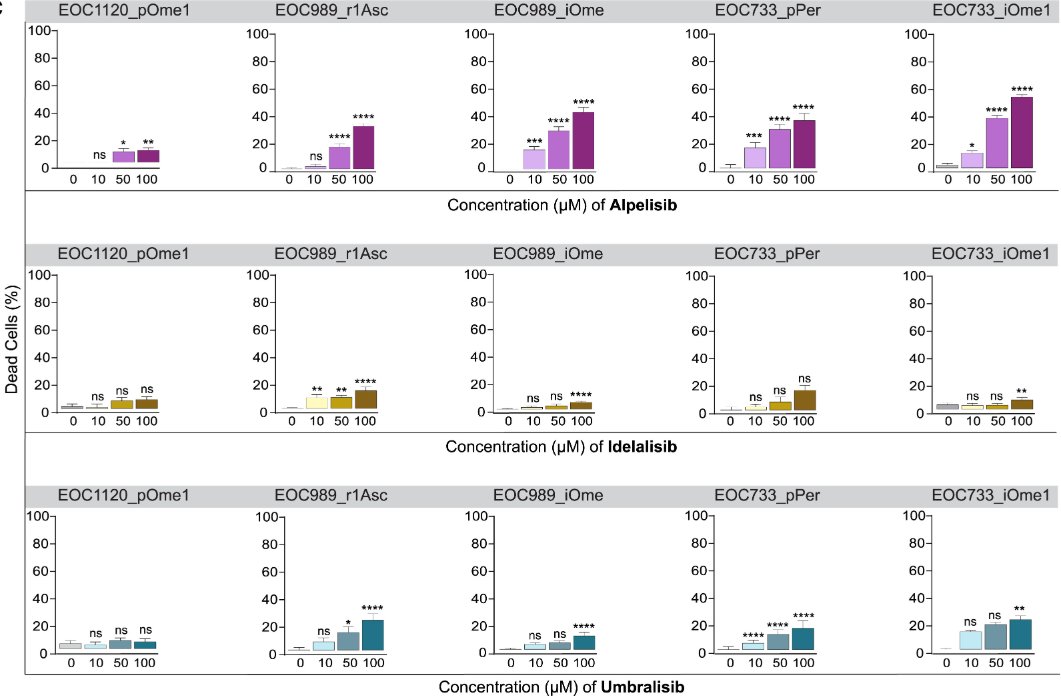
Alpelisib hydrochloride purchased from MedChemExpress. Usage Cited in: Cancer Cell. 2023 Jun 12;41(6):1103-1117.e12. [Abstract]
Quantification of image-based cell death of organoid lines after 72 h treatment with alpelisib, idelalisib, umbralisib in indicated concentrations (0 as in DMSO vehicle control, 10, 50, and 100 μM) and bortezomib (10 μM, positive control). Cell death is estimated as the percentage of PI-positive cells out of total number of Hoechst 33342-positive nuclei, followed by normalization to the DMSO vehicle control (negative control) and positive control (bortezomib) values.
-
Nature
2018 Jun;558(7711):540-546. PMID: 29899452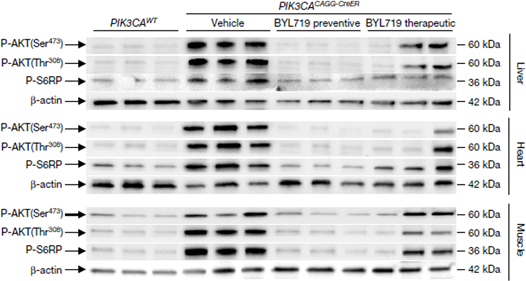
Alpelisib hydrochloride purchased from MedChemExpress. Usage Cited in: Nature. 2018 Jun;558(7711):540-546. [Abstract]
Western blot of P-AKT (Ser473), P-AKT (Thr308) and P-S6RP in liver, heart and muscles, respectively, from PIK3CAWT and PIK3CACAGG-CreER mice treated with or without BYL719 directly after Cre induction (preventive) or seven days later (therapeutic).
-
J Hematol Oncol
Combination of PI3K and MEK inhibitors yields durable remission in PDX models of PIK3CA-mutated metaplastic breast cancers. [Abstract]2020 Feb 22;13(1):13. PMID: 32087759 -
Science
2021 Oct;374(6563):eabf3067. PMID: 34591613 -
Science
2017 Dec 1;358(6367):eaan4368. PMID: 29191878 -
Cell
Microbiome metabolism of dietary phytochemicals controls the anticancer activity of PI3K inhibitors. [Abstract]2025 May 29;188(11):3065-3080.e21. PMID: 40393457 -
Cell Metab
2021 Nov 2;33(11):2247-2259.e6. PMID: 34731655 -
Cancer Discov
STX-478, a Mutant-Selective, Allosteric PI3Ka Inhibitor Spares Metabolic Dysfunction and Improves Therapeutic Response in PI3Ka-Mutant Xenografts. [Abstract]2023 Nov 1;13(11):2432-2447. PMID: 37623743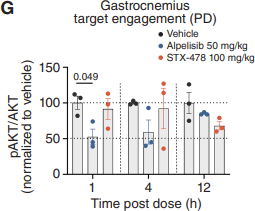
Alpelisib hydrochloride purchased from MedChemExpress. Usage Cited in: Cancer Discov. 2023 Nov 1;13(11):2432-2447. [Abstract]
Alpelisib (50 mg/kg q.d.; administered for 3 days in the PK/PD group and 28 days in the efficacy group) reduces pAKT/AKT in the skeletal muscle of mice with CAL-33 (H1047R PI3Kα-mutant) xenograft models.
Alpelisib hydrochloride purchased from MedChemExpress. Usage Cited in: Cancer Discov. 2023 Nov 1;13(11):2432-2447. [Abstract]
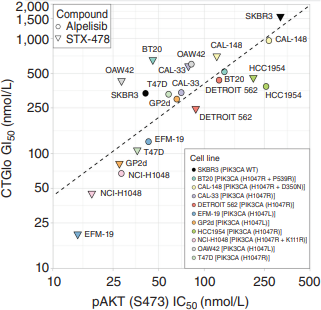
Correlation plot of alpelisib and STX-478 comparing pAKT IC50 at 1 hour and viability [CellTiter-Glo (CTGlo)] GI50 at 72 hours across the indicated panel of cell lines.
-
Cancer Discov
The INPP4B Tumor Suppressor Modulates EGFR Trafficking and Promotes Triple-Negative Breast Cancer. [Abstract]2020 Aug;10(8):1226-1239. PMID: 32513774 -
Nat Cancer
CDK4/6 inhibition reprograms the breast cancer enhancer landscape by stimulating AP-1 transcriptional activity. [Abstract]2021 Jan;2(1):34-48. PMID: 33997789 -
Nat Biomed Eng
TLR7/8-agonist-loaded nanoparticles promote the polarization of tumour-associated macrophages to enhance cancer immunotherapy. [Abstract]2018 Aug;2(8):578-588. PMID: 31015631 -
-
Nat Aging
Dietary supplementation of clinically utilized PI3K p110α inhibitor extends the lifespan of male and female mice. [Abstract]2023 Feb;3(2):162-172. PMID: 37118113 -
Blood
Single-cell genomics details the maturation block in BCP-ALL and identifies therapeutic vulnerabilities in DUX4-r cases. [Abstract]2024 Sep 26;144(13):1399-1411. PMID: 38968149 -
Blood
Targeted inhibition of PI3Kα/δ is synergistic with BCL-2 blockade in genetically defined subtypes of DLBCL. [Abstract]2019 Jan 3;133(1):70-80. PMID: 30322870 -
Cancer Res
Genomic Alterations in PIK3CA-Mutated Breast Cancer Result in mTORC1 Activation and Limit the Sensitivity to PI3Kα Inhibitors. [Abstract]2021 May 1;81(9):2470-2480. PMID: 33685991 -
Nat Commun
Human iPSC-based Modeling of Pulmonary Fibrosis Reveals p300/CBP Inhibition Suppresses Alveolar Transitional Cell State. [Abstract]2026 Feb 12;17(1):1214. PMID: 41680175 -
Nat Commun
Liver lipophagy ameliorates nonalcoholic steatohepatitis through extracellular lipid secretion. [Abstract]2023 Jul 13;14(1):4084. PMID: 37443159 -
Nat Commun
MAPK4 promotes triple negative breast cancer growth and reduces tumor sensitivity to PI3K blockade. [Abstract]2022 Jan 11;13(1):245. PMID: 35017531 -
Nat Commun
PLK1 inhibition exhibits strong anti-tumoral activity in CCND1-driven breast cancer metastases with acquired palbociclib resistance. [Abstract]2020 Aug 13;11(1):4053. PMID: 32792481 -
Sci Transl Med
Dual PI3K/mTOR inhibition is required to combat resistance to CDK4/6 inhibitor and endocrine therapy in PIK3CA-mutant breast cancer. [Abstract]2025 Dec 17;17(829):eadp5088. PMID: 41406241
Alpelisib hydrochloride purchased from MedChemExpress. Usage Cited in: Sci Transl Med. 2025 Dec 17;17(829):eadp5088. [Abstract]
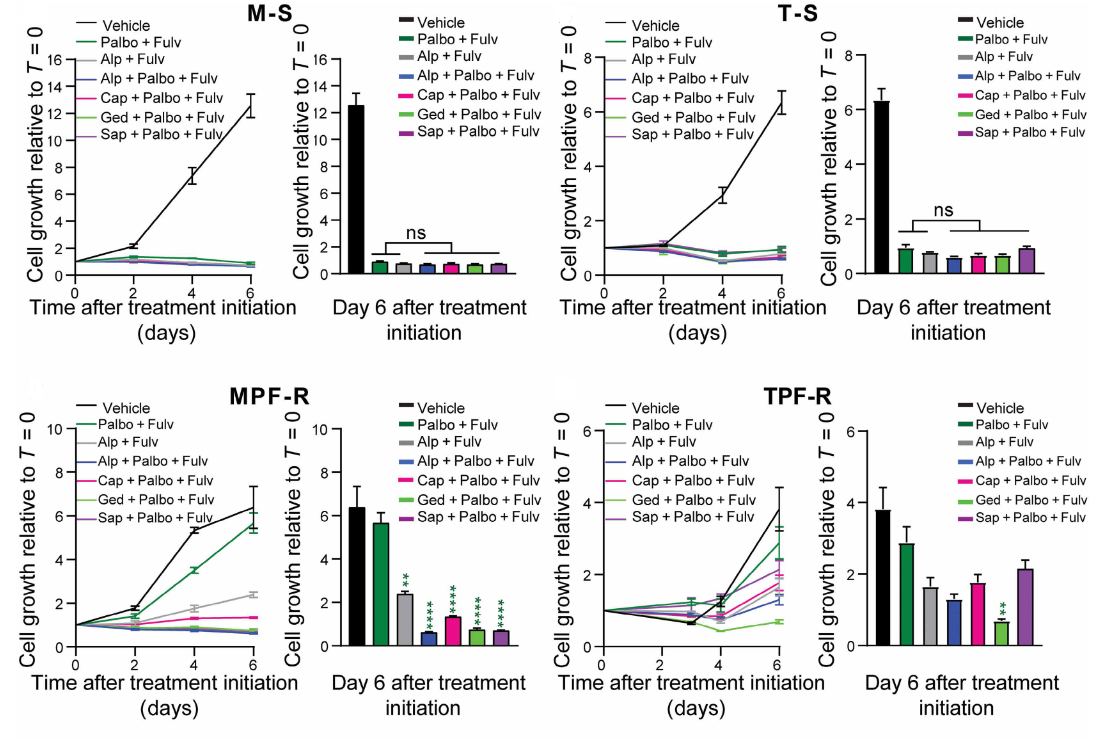
Combined Palbociclib- and Fulvestrant-resistant cells, M-S and T-S, and the corresponding resistant cells, MPF-R and TPF-R, were treated with different inhibitors of the PI3K/AKT/mTOR pathway including Alpelisib (HY-15244; Alp; 1 μM in M-S/MPF-R and 250 to 500 nM in T-S/TPF-R), Capivasertib (Cap; 250 to 500 nM in M-S/MPF-R and 100 nM in T-S/TPF-R), Sapanisertib (Sap; 10 nM in M-S/MPF-R and 5 nM in T-S/TPF-R), and Gedatolisib (HY-10681; Ged; 10 nM) in combination with Palbociclib (HY-50767; Palbo; 200 nM) and Fulvestrant (HY-13636; Fulv; 100 nM) (n = 3 independent biological replicates per group, performed in duplicates).
Alpelisib hydrochloride purchased from MedChemExpress. Usage Cited in: Sci Transl Med. 2025 Dec 17;17(829):eadp5088. [Abstract]
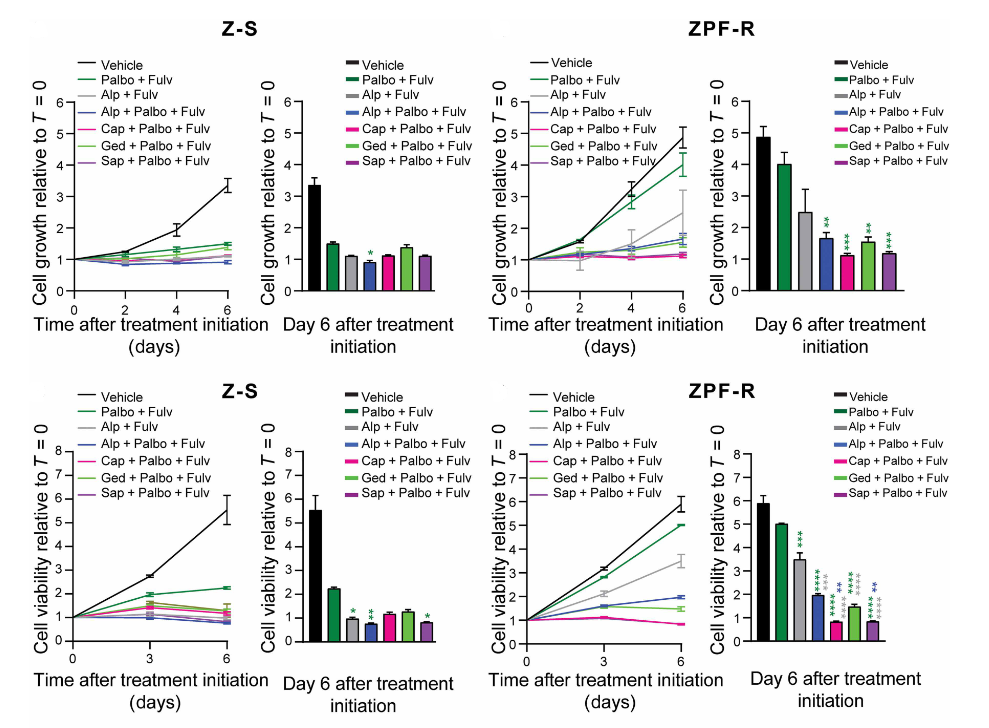
Combined Palbociclib- and Fulvestrant-resistant cells (wild type ER+ breast cancer cells), ZPF-R, and the corresponding sensitive cells, Z-S, were treated with different inhibitors of PI3K/AKT/mTOR including Alpelisib (HY-15244; 6 μM), Capivasertib (50 nM), Sapanisertib (5 nM), and Gedatolisib (HY-10681; 5 nM) in combination with Palbociclib (HY-50767; 150 nM) and Fulvestrant (HY-13636; 100 nM) (n = 3 independent biological replicates per group, performed in duplicates).
Alpelisib hydrochloride purchased from MedChemExpress. Usage Cited in: Sci Transl Med. 2025 Dec 17;17(829):eadp5088. [Abstract]
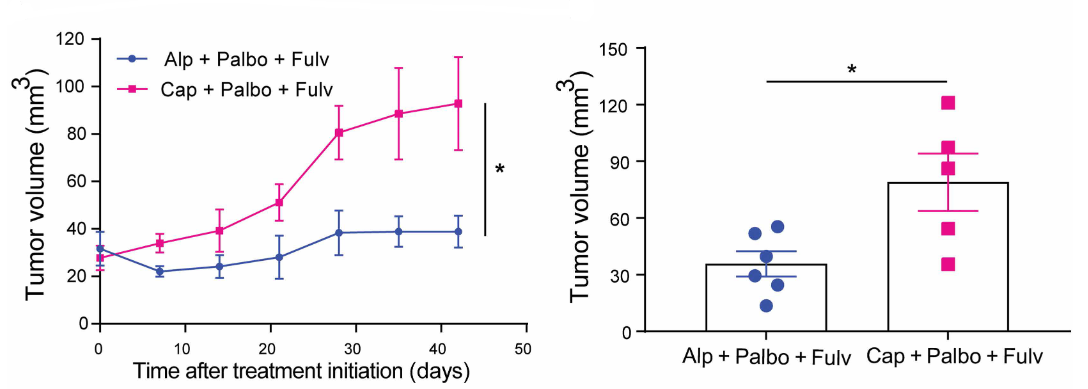
Triple combination with Gedatolisib (HY-10681), Palbociclib (HY-50767), and Fulvestrant (HY-13636) effectively inhibits growth of PIK3CA-mutant ER+ tumor xenografts resistant to combined palbociclib and fulvestrant. MPF-R cells (1 × 10⁶) resistant to combined palbociclib and fulvestrant were injected into the mammary fat pads of NOG CIEA mice, and tumors were allowed to establish for 2 weeks to a size of ≈30 mm3. Mice were then treated with the combination of Fulvestrant (100 mg/kg, sc weekly), Palbociclib (25 mg/kg, oral gavage daily), and Capivasertib (100 mg/kg, oral gavage daily; n = 6) or Alpelisib (HY-15244; 25 mg/kg, oral gavage daily; n = 5). Tumor size was measured weekly. Average tumor growth curves measured weekly and Tumor volumes measured after excision.
Alpelisib hydrochloride purchased from MedChemExpress. Usage Cited in: Sci Transl Med. 2025 Dec 17;17(829):eadp5088. [Abstract]
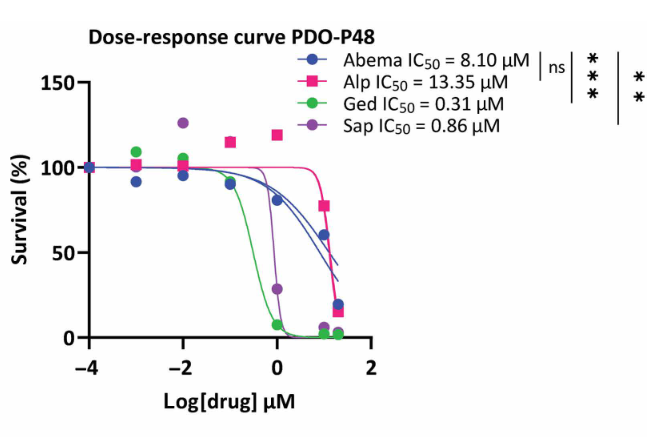
Gedatolisib efficiently reduced the viability of ER+ PIK3CA- or AKT1-mutant breast cancer PDOs resistant to Abemaciclib. Dose-effect curves of CDK4/6i Abemaciclib, dual PI3K/mTORi Gedatolisib (HY-10681), PI3Ki Alpelisib (HY-15244), and dual mTORC1/2i Sapanisertib at day 7 of treatment in three breast cancer PDOs, PDO-P40, PDO-P46, and PDO-P48 (n = 3 biological replicates per group), developed from ER+ breast tumors and selected because of their differing IC50 toward Abemaciclib.
Alpelisib hydrochloride purchased from MedChemExpress. Usage Cited in: Sci Transl Med. 2025 Dec 17;17(829):eadp5088. [Abstract]
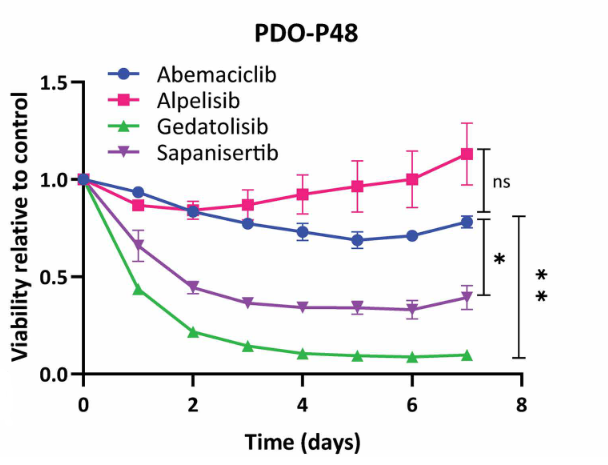
Effect of 1 μM Abemaciclib, Gedatolisib (HY-10681), Alpelisib (HY-15244), or Sapanisertib on viability of PDO-P40, PDO-P46, or PDO-P48 during 7 days of treatment. Data are presented as means ± SEM. Significant differences are calculated by one-way ANOVA test (*P < 0.05, **P < 0.01, and ***P < 0.001).
-
Sci Transl Med
Alpelisib administration reduced lymphatic malformations in a mouse model and in patients. [Abstract]2021 Oct 6;13(614):eabg0809. PMID: 34613809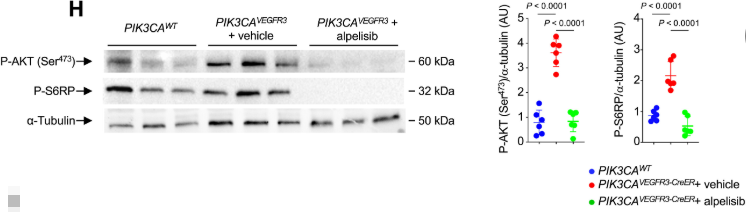
Alpelisib hydrochloride purchased from MedChemExpress. Usage Cited in: Sci Transl Med. 2021 Oct 6;13(614):eabg0809. [Abstract]
Alpelisib (50 mg/kg/day; p.o.; approximately 3 months) inhibits the PI3K/AKT/mTOR pathway in lymphatic tissues of PIK3CAVEGFR3-CreER mice, reducing phosphorylation levels of AKT and S6RP.
-
Sci Transl Med
PP2A inhibition is a druggable MEK inhibitor resistance mechanism in KRAS-mutant lung cancer cells. [Abstract]2018 Jul 18;10(450):eaaq1093. PMID: 30021885 -
J Nanobiotechnology
Matrix micro/nano-topography drives oncogenic signaling and drug response in a 3D osteosarcoma model. [Abstract]2026 Mar 6;24(1):345. PMID: 41787498 -
J Clin Invest
WWP1 inactivation enhances efficacy of PI3K inhibitors while suppressing their toxicities in breast cancer models. [Abstract]2021 Dec 15;131(24):e140436. PMID: 34907909 -
Sci Adv
PIK3CA gain-of-function mutation in adipose tissue induces metabolic reprogramming with Warburg-like effect and severe endocrine disruption. [Abstract]2022 Dec 9;8(49):eade7823. PMID: 36490341 -
Cell Death Differ
p53 transcriptionally activates DCP1B to suppress tumor progression and enhance tumor sensitivity to PI3K blockade in non-small cell lung cancer. [Abstract]2025 Apr 9. PMID: 40200093 -
Biomaterials
2022 Oct:289:121800. PMID: 36166893 -
Brain
Angiogenic switching in cerebral cavernous malformations driven by MAP3K3-PIK3CA synergy. [Abstract]2026 Jan 19:awag017. PMID: 41552909 -
J Control Release
2026 Jun 10:394:114903. PMID: 41942056 -
Cell Death Dis
Reln-Dab1 pathway mitigates retinal ganglion cell apoptosis in retinal ischemia-reperfusion injury. [Abstract]2025 May 29;16(1):423. PMID: 40442071 -
Cell Death Dis
2023 Dec 14;14(12):831. PMID: 38097548 -
Cell Death Dis
Focal adhesion kinase plays a dual role in TRAIL resistance and metastatic outgrowth of malignant melanoma. [Abstract]2022 Jan 12;13(1):54. PMID: 35022419 -
Cell Death Dis
2020 Oct 6;11(10):831. PMID: 33024087 -
Cancer Lett
Combined inhibition of CDK4/6 and AKT is highly effective against the luminal androgen receptor (LAR) subtype of triple negative breast cancer. [Abstract]2024 Nov 1:604:217219. PMID: 39244005 -
Cancer Lett
2024 Aug 10:597:217074. PMID: 38901667 -
Cancer Lett
Inhibition of BTF3 sensitizes luminal breast cancer cells to PI3Kα inhibition through the transcriptional regulation of ERα. [Abstract]2019 Jan:440-441:54-63. PMID: 30315845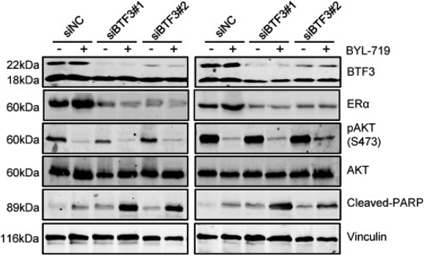
Alpelisib hydrochloride purchased from MedChemExpress. Usage Cited in: Cancer Lett. 2019 Jan:440-441:54-63. [Abstract]
The siNC- or siBTF3-transfected breast cancer cells are treated with BYL-719 and are then subjected to an immunoblotting analysis.
-
J Exp Med
2023 Nov 6;220(11):e20211743. PMID: 37642941 -
J Exp Med
Hemifacial myohyperplasia is due to somatic muscular PIK3CA gain-of-function mutations and responds to pharmacological inhibition. [Abstract]2023 Nov 6;220(11):e20230926. PMID: 37712948 -
Mol Psychiatry
CCL5 promotion of bioenergy metabolism is crucial for hippocampal synapse complex and memory formation. [Abstract]2021 Nov;26(11):6451-6468. PMID: 33931731 -
NPJ Precis Oncol
Co-clinical trial targeting ER, FGFR and CDK4/6 in resistant hormone-positive breast cancer with FGFR alterations. [Abstract]2025 Nov 7;9(1):343. PMID: 41203797 -
J Transl Med
Metformin counteracts stimulatory effects induced by insulin in primary breast cancer cells. [Abstract]2022 Jun 7;20(1):263. PMID: 35672854 -
Proc Natl Acad Sci U S A
PIK3CA gain-of-function mutation in Schwann cells leads to severe neuropathy and aerobic glycolysis through a non-cell autonomous effect. [Abstract]2025 Jul;122(26):e2424867122. PMID: 40553493 -
Proc Natl Acad Sci U S A
2022 Nov 16;119(46):e2215621119. PMID: 36343266 -
Diabetes
A Single Dose of Phosphoinositide-3-kinase Inhibitor Alpelisib Induces Insulin Resistance in Healthy Adults: A Randomized Feasibility Study. [Abstract]2024 Dec 1;73(12):2003-2008. PMID: 39264822 -
Oncogene
Identification of RAPGEF3 as the therapeutic vulnerability of basal-subtype lung squamous cell carcinoma. [Abstract]2025 Sep;44(34):3142-3148. PMID: 40781157 -
Oncogene
PI3K-p110α mediates resistance to HER2-targeted therapy in HER2+, PTEN-deficient breast cancers. [Abstract]2016 Jul 7;35(27):3607-12. PMID: 26500061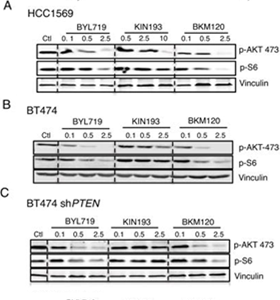
Alpelisib hydrochloride purchased from MedChemExpress. Usage Cited in: Oncogene. 2016 Jul 7;35(27):3607-12. [Abstract]
(A) Immunoblot analyses in HCC1569 cells treated with BYL719, KIN193 (MedChemexpress) or BKM120 (μM). (B, C) Immunoblot analyses in BT474 and BT474-shPTEN cells treated as indicated in (A).
-
Antioxidants
Serine-Driven Metabolic Plasticity Drives Adaptive Resilience in Pancreatic Cancer Cells. [Abstract]2025 Jul 7;14(7):833. PMID: 40722937 -
EMBO Mol Med
2025 Jul;17(7):1556-1574. PMID: 40389643 -
EMBO Mol Med
2025 Jun;17(6):1325-1354. PMID: 40295888 -
Br J Cancer
2023 Jan;128(1):148-159. PMID: 36319849 -
Aging Cell
2026 Feb;25(2):e70389. PMID: 41560320 -
Cell Rep
Methylation of the chromatin modifier KMT2D by SMYD2 contributes to therapeutic response in hormone-dependent breast cancer. [Abstract]2024 May 2;43(5):114174. PMID: 38700982 -
Cell Rep
IFNα-induced BST2+ tumor-associated macrophages facilitate immunosuppression and tumor growth in pancreatic cancer by ERK-CXCL7 signaling. [Abstract]2024 Apr 23;43(4):114088. PMID: 38602878 -
Cell Rep
2023 Dec 26;42(12):113535. PMID: 38060450 -
Cell Rep
2020 Sep 29;32(13):108196. PMID: 32997991 -
Cell Syst
Torin2 Exploits Replication and Checkpoint Vulnerabilities to Cause Death of PI3K-Activated Triple-Negative Breast Cancer Cells. [Abstract]2020 Jan 22;10(1):66-81.e11. PMID: 31812693 -
Cell Syst
A Multi-center Study on the Reproducibility of Drug-Response Assays in Mammalian Cell Lines. [Abstract]2019 Jul 24;9(1):35-48.e5. PMID: 31302153 -
Cell Syst
A Library of Phosphoproteomic and Chromatin Signatures for Characterizing Cellular Responses to Drug Perturbations. [Abstract]2018 Apr 25;6(4):424-443.e7. PMID: 29655704 -
J Med Chem
2024 Sep 12;67(17):15387-15410. PMID: 39159497 -
Int J Oncol
HepaCAM‑PIK3CA axis regulates the reprogramming of glutamine metabolism to inhibit prostate cancer cell proliferation. [Abstract]2022 Apr;60(4):37. PMID: 35191516 -
Virulence
Neutrophil extracellular trap-borne C3-driven endothelial dysfunction in Klebsiella pneumoniae liver abscess. [Abstract]2025 Dec;16(1):2580104. PMID: 41146461 -
JCI Insight
ARID1A-deficient bladder cancer is dependent on PI3K signaling and sensitive to EZH2 and PI3K inhibitors. [Abstract]2022 Aug 22;7(16):e155899. PMID: 35852858 -
Cell Biosci
Inhibition of PI3 kinase isoform p110α suppresses neuroblastoma growth and induces the reduction of Anaplastic Lymphoma Kinase. [Abstract]2022 Dec 30;12(1):210. PMID: 36585695 -
Breast Cancer Res
Analysis of genomic and non-genomic signaling of estrogen receptor in PDX models of breast cancer treated with a combination of the PI3K inhibitor alpelisib (BYL719) and fulvestrant. [Abstract]2021 May 21;23(1):57. PMID: 34020697 -
RSC Adv
Development, cross-validation and greenness assessment of capillary electrophoresis method for determination of ALP in pharmaceutical dosage forms - an alternative to liquid chromatography. [Abstract]2024 Oct 18;14(45):32876-32882. PMID: 39429931 -
Cells
The AGEs/RAGE Transduction Signaling Prompts IL-8/CXCR1/2-Mediated Interaction between Cancer-Associated Fibroblasts (CAFs) and Breast Cancer Cells. [Abstract]2022 Aug 4;11(15):2402. PMID: 35954247 -
Cancer Metab
CD36 inhibition enhances the anti-proliferative effects of PI3K inhibitors in PTEN-loss anti-HER2 resistant breast cancer cells. [Abstract]2025 Feb 7;13(1):6. PMID: 39920872 -
-
Mol Cancer Res
PIK3CA and p53 Mutations Promote 4NQO-Initated Head and Neck Tumor Progression and Metastasis in Mice. [Abstract]2020 Jun;18(6):822-834. PMID: 32152233 -
Int Immunopharmacol
Targeting NBL1/PI3K/AKT axis to enhance the chemosensitivity and radiosensitivity of esophageal squamous cell carcinoma. [Abstract]2026 Jul 1:180:116665. PMID: 42030890 -
Int J Mol Sci
An Increase in Mucin2 Expression Is Required for Colon Cancer Progression Mediated by L1. [Abstract]2023 Aug 30;24(17):13418. PMID: 37686224 -
Biomolecules
Efficacy of Providing the PI3K p110α Inhibitor BYL719 (Alpelisib) to Middle-Aged Mice in Their Diet. [Abstract]2021 Jan 25;11(2):150. PMID: 33503847 -
Int J Mol Sci
Inhibition of Phosphatidylinositol 3-kinase (PI3K) Signaling Synergistically Potentiates Antitumor Efficacy of Paclitaxel and Overcomes Paclitaxel-Mediated Resistance in Cervical Cancer. [Abstract]2019 Jul 10;20(14):3383. PMID: 31295843 -
Molecules
In Vitro and in Vivo Activity of mTOR Kinase and PI3K Inhibitors Against Leishmania donovani and Trypanosoma brucei. [Abstract]2020 Apr 23;25(8):1980. PMID: 32340370 -
Sci Rep
2026 Apr 10;16(1):16876. PMID: 41963448 -
Sci Rep
Steroid hormone receptors, exome sequencing and treatment responsiveness of breast cancer patient-derived xenografts originated in a South American country. [Abstract]2025 Jan 18;15(1):2415. PMID: 39827242 -
Int J Cancer
Establishment of patient-derived organoids for guiding personalized therapies in breast cancer patients. [Abstract]2024 Jul 15;155(2):324-338. PMID: 38533706 -
Sci Rep
2021 Jan 11;11(1):291. PMID: 33431926 -
Neoplasia
PIK3CA mutant cervical cancer is selectively suppressed by PI3Kα inhibition (Alpelisib/BYL-719 and Inavolisib/GDC-0077) and cooperates with HPV directed T cell therapy. [Abstract]2026 Jun:76:101305. PMID: 41980433 -
PNAS Nexus
Oncogenic PIK3CA mutations shape an immunoregulatory microenvironment in mosaic overgrowth disorders. [Abstract]2026 May 13;5(6):pgag163. PMID: 42222744 -
Neoplasia
P110α inhibitor alpelisib exhibits a synergistic effect with pyrotinib and reverses pyrotinib resistant in HER2+ breast cancer. [Abstract]2023 Sep:43:100913. PMID: 37348428 -
Cancers (Basel)
Designing Organoid Models to Monitor Cancer Progression, Plasticity and Resistance: The Right Set Up for the Right Question. [Abstract]2022 Jul 22;14(15):3559. PMID: 35892818 -
Cancers (Basel)
FoxO3a Inhibits Tamoxifen-Resistant Breast Cancer Progression by Inducing Integrin α5 Expression. [Abstract]2022 Jan 2;14(1):214. PMID: 35008379 -
Mol Cell Biochem
Bioelectric fields drive pulmonary epithelial proliferation through PI3K/AKT/GSK3β signaling. [Abstract]2026 Jan 29. PMID: 41609898 -
Cell Signal
2025 Aug:132:111799. PMID: 40216173 -
Oncol Rep
PI3K p110α inhibition sensitizes cervical cancer cells with aberrant PI3K signaling activation to PARP inhibitor BMN673. [Abstract]2019 Nov;42(5):2097-2107. PMID: 31545455 -
Gynecol Oncol
A first-in-class CDK4 inhibitor demonstrates in vitro, ex-vivo and in vivo efficacy against ovarian cancer. [Abstract]2020 Dec;159(3):827-838. PMID: 32958271 -
Biosci Rep
Prolonged treatment with a PI3K p110α inhibitor causes sex- and tissue-dependent changes in antioxidant content, but does not affect mitochondrial function. [Abstract]2020 Oct 30;40(10):BSR20201128. PMID: 33006363 -
Anal Bioanal Chem
Surfactant-enhanced emulsification liquid-liquid microextraction combined with sweeping micellar electrokinetic chromatography-tandem mass spectrometry for therapeutic drug monitoring of alpelisib and fulvestrant in human plasma. [Abstract]2025 Nov 17. PMID: 41249630 -
Ther Adv Med Oncol
Navitoclax combined with Alpelisib effectively inhibits Merkel cell carcinoma cell growth in vitro. [Abstract]2020 Dec 14:12:1758835920975621. PMID: 33403016 -
Cancer Res Commun
Cooperative Roles of Class IA PI3K Isoforms in Translocation-Related Sarcoma Cell Survival and Proliferation. [Abstract]2026 Apr 1;6(4):976-993. PMID: 41916029 -
Endocrinology
TRβ Agonism Induces Tumor Suppression and Enhances Drug Efficacy in Anaplastic Thyroid Cancer in Female Mice. [Abstract]2023 Aug 28;164(10):bqad135. PMID: 37702560 -
J Proteome Res
2021 May 7;20(5):2964-2972. PMID: 33900084 -
Br J Haematol
2020 May;189(4):731-744. PMID: 32004387 -
Front Oncol
Zotatifin, an eIF4A-Selective Inhibitor, Blocks Tumor Growth in Receptor Tyrosine Kinase Driven Tumors. [Abstract]2021 Nov 24:11:766298. PMID: 34900714 -
Front Oncol
Patient-Derived Xenograft Models for Intrahepatic Cholangiocarcinoma and Their Application in Guiding Personalized Medicine. [Abstract]2021 Jul 13:11:704042. PMID: 34327143 -
Am J Cancer Res
Establishment of patient-derived xenograft models of adenoid cystic carcinoma to assess pre-clinical efficacy of combination therapy of a PI3K inhibitor and retinoic acid. [Abstract]2021 Mar 1;11(3):773-792. PMID: 33791153 -
Cell Biochem Biophys
Isogarcinol Reduces MARS Levels and Deactivates the PI3K/AKT Pathway to Suppress the Malignant Properties of Breast Cancer Cells. [Abstract]2025 Mar 22. PMID: 40120049 -
PLoS One
Development of a novel PIK3CA-mutated pancreatic tumor mouse model and evaluation of the therapeutic effects of a PI3K inhibitor. [Abstract]2025 Jul 10;20(7):e0326491. PMID: 40638603 -
PLoS One
Development of an in vivo syngeneic mouse transplant model of invasive intestinal adenocarcinoma driven by endogenous expression of Pik3caH1047R and Apc loss. [Abstract]2024 Aug 2;19(8):e0308051. PMID: 39093890 -
Biochem Biophys Res Commun
Functional characterization of PIK3CA E545A mutation in MCF-7 breast cancer cells reveals enhanced proliferation and resistance to Alpelisib. [Abstract]2026 Jun 24:829:154189. PMID: 42341421 -
Biomed Rep
Inhibition of SGK1 potentiates the anticancer activity of PI3K inhibitor in NSCLC cells through modulation of mTORC1, p‑ERK and β‑catenin signaling. [Abstract]2023 Oct 13;19(6):94. PMID: 37901878 -
Biochem Biophys Res Commun
Neutralization of HSF1 in cells from PIK3CA-related overgrowth spectrum patients blocks abnormal proliferation. [Abstract]2020 Sep 24;530(3):520-526. PMID: 32620236 -
-
Cancer Biomark
TUBB3 (βIII-tubulin) drives gastric cancer progression and poor prognosis by regulating cell cycle and invadopodia formation. [Abstract]2025 Oct;42(10):18758592251390145. PMID: 41129675 -
Am J Transl Res
Undemineralized dentin matrix particles accelerate blood vessel formation in a critical-sized skull defect through activating the TGF-β/PI3K signaling pathway. [Abstract]2025 Jun 15;17(6):4689-4700. PMID: 40672621 -
STAR Protoc
Quantification of cell death and proliferation of patient-derived ovarian cancer organoids through 3D imaging and image analysis. [Abstract]2023 Nov 16;4(4):102683. PMID: 37976153 -
-
-
-
bioRxiv
Loss of PIK3CA allows in vitro growth but not in vivo progression of KRAS mutant lung adenocarcinoma in a syngeneic orthotopic implantation model. [Abstract]2026 Feb 4:2026.02.02.701385. PMID: 41676515 -
-
medRxiv
A Three-subtype Molecular model of Cervical Cancer: Multiple PI3K Pathway inhibitors suppress growth and cooperate with HPV-directed immunotherapy. [Abstract]2026 Jan 23:2026.01.21.26344562. PMID: 41646800 -
-
-
bioRxiv
Loss of the tumor suppressor PTEN activates cell-intrinsic interferon signaling to drive immune resistance. [Abstract]2025 Sep 20:2025.09.17.676669. PMID: 41000885 -
-
-
-
-
-
-
-
-
bioRxiv
FOXK2 amplification and overexpression promotes breast cancer development and chemoresistance. [Abstract]2023 May 30:2023.05.28.542643. PMID: 37398114 -
-
-
-
Biomed Pharmacother
Dual PI3K/mTOR inhibitor PKI-402 suppresses the growth of ovarian cancer cells by degradation of Mcl-1 through autophagy. [Abstract]2020 Sep:129:110397. PMID: 32585451 -
-


Solvent & Solubility
In Vitro:
DMSO : 100 mg/mL (209.24 mM; Need ultrasonic; Hygroscopic DMSO has a significant impact on the solubility of product, please use newly opened DMSO)
H2O : < 0.1 mg/mL (insoluble)
Please refer to the solubility information to select the appropriate solvent. Once prepared, please aliquot and store the solution to prevent product inactivation from repeated freeze-thaw cycles.
Storage method and period of stock solution: -80°C, 6 months; -20°C, 1 month (sealed storage, away from moisture). When stored at -80°C, please use it within 6 months. When stored at -20°C, please use it within 1 month.
Please refer to the solubility information to select the appropriate solvent. Once prepared, please aliquot and store the solution to prevent product inactivation from repeated freeze-thaw cycles.
Storage method and period of stock solution: -80°C, 6 months; -20°C, 1 month (sealed storage, away from moisture). When stored at -80°C, please use it within 6 months. When stored at -20°C, please use it within 1 month.
Concentration (start) × Volume (start) = Concentration (final) × Volume (final)
In Vivo:
Select the appropriate dissolution method based on your experimental animal and administration route.
- For the following dissolution methods, please ensure to first prepare a clear stock solution using an In Vitro approach and then sequentially add co-solvents:
- To ensure reliable experimental results, the clarified stock solution can be appropriately stored based on storage conditions. As for the working solution for In Vivo experiments, it is recommended to prepare freshly and use it on the same day.
- The percentages shown for the solvents indicate their volumetric ratio in the final prepared solution. If precipitation or phase separation occurs during preparation, heat and/or sonication can be used to aid dissolution.
Add each solvent one by one: 10% DMSO 40% PEG300 5% Tween-80 45% Saline
Solubility: ≥ 5 mg/mL (10.46 mM); Clear solution
This protocol yields a clear solution of ≥ 5 mg/mL (saturation unknown).
Taking 1 mL working solution as an example, add 100 μL DMSO stock solution (50.0 mg/mL) to 400 μL PEG300, and mix evenly; then add 50 μL Tween-80 and mix evenly; then add 450 μL Saline to adjust the volume to 1 mL.
Preparation of Saline: Dissolve 0.9 g sodium chloride in ddH₂O and dilute to 100 mL to obtain a clear Saline solution.
Add each solvent one by one: 10% DMSO 90% (20% SBE-β-CD in Saline)
Solubility: ≥ 5 mg/mL (10.46 mM); Clear solution
This protocol yields a clear solution of ≥ 5 mg/mL (saturation unknown).
Taking 1 mL working solution as an example, add 100 μL DMSO stock solution (50.0 mg/mL) to 900 μL 20% SBE-β-CD in Saline, and mix evenly.
Preparation of 20% SBE-β-CD in Saline (4°C, storage for one week): 2 g SBE-β-CD powder is dissolved in 10 mL Saline, completely dissolve until clear.
In Vivo Dissolution Calculator
Please enter the basic information of animal experiments:
-
-
-
-
Recommended: Prepare an additional quantity of animals to account for potential losses during experiments.
Please enter your animal formula composition:
-
%DMSO +
Recommended: Keep the proportion of DMSO in working solution below 2% if your animal is weak.
-
%+
-
+%Tween-80 + +
-
%Saline +
The co-solvents required include: DMSO, . All of co-solvents are available by MedChemExpress (MCE). , Tween 80. All of co-solvents are available by MedChemExpress (MCE).
Working solution concentration: 0.22 mg/mL
Method for preparing stock solution: mg drug dissolved in μL DMSO. Stock solution concentration: mg/mL. * In solvent : -80°C, 6 months; -20°C, 1 month (sealed storage, away from moisture)
1. Take μL DMSO stock solution;
2. Add μL .
μL , mix evenly;
3. Then add μL Tween 80, mix evenly;
4. Then add μL
Please ensure that the stock solution in the first step is dissolved to a clear state, and add co-solvents in sequence. You can use ultrasonic heating (ultrasonic cleaner, recommended frequency 20-40 kHz), vortexing, etc. to assist dissolution.


Purity & Documentation
-
Data Sheet (285 KB)
-
SDS (252 KB)
- English - EN (252 KB)
- Français - FR (252 KB)
- Deutsch - DE (252 KB)
- Norwegian - NO (252 KB)
- Español - ES (252 KB)
- Swedish - SV (252 KB)
- Italian - IT (252 KB)
- Korean - KR (252 KB)
- Portuguese - PT (252 KB)
-
Handling Instructions (2659 KB)
References
[1]. Yu L, et al. Effects of BYL-719 (alpelisib) on human breast cancer stem cells to overcome drug resistance in human breast cancer. Front Pharmacol. 2024;15:1443422. Published 2024 Oct 14. [Content Brief]
[2]. Kirstein AS, et al. The Novel Phosphatidylinositol-3-Kinase (PI3K) Inhibitor Alpelisib Effectively Inhibits Growth of PTEN-Haploinsufficient Lipoma Cells. Cancers (Basel). 2019;11(10):1586. Published 2019 Oct 17. [Content Brief]
[3]. Kang T, et al. The SGK3/GSK3β/β-catenin signaling promotes breast cancer stemness and confers resistance to alpelisib therapy. Int J Biol Sci. 2025;21(6):2462-2475. Published 2025 Mar 19. [Content Brief]
[4]. Kim KJ, et al. PI3K-targeting strategy using alpelisib to enhance the antitumor effect of paclitaxel in human gastric cancer. Sci Rep. 2020;10(1):12308. Published 2020 Jul 23. [Content Brief]


Complete Stock Solution Preparation Table
Please refer to the solubility information to select the appropriate solvent. Once prepared, please aliquot and store the solution to prevent product inactivation from repeated freeze-thaw cycles.
Storage method and period of stock solution: -80°C, 6 months; -20°C, 1 month (sealed storage, away from moisture). When stored at -80°C, please use it within 6 months. When stored at -20°C, please use it within 1 month.
| Optional Solvent | Concentration Solvent Mass | 1 mg | 5 mg | 10 mg | 25 mg |
|---|---|---|---|---|---|
| DMSO | 1 mM | 2.0924 mL | 10.4618 mL | 20.9236 mL | 52.3089 mL |
| 5 mM | 0.4185 mL | 2.0924 mL | 4.1847 mL | 10.4618 mL | |
| 10 mM | 0.2092 mL | 1.0462 mL | 2.0924 mL | 5.2309 mL | |
| 15 mM | 0.1395 mL | 0.6975 mL | 1.3949 mL | 3.4873 mL | |
| 20 mM | 0.1046 mL | 0.5231 mL | 1.0462 mL | 2.6154 mL | |
| 25 mM | 0.0837 mL | 0.4185 mL | 0.8369 mL | 2.0924 mL | |
| 30 mM | 0.0697 mL | 0.3487 mL | 0.6975 mL | 1.7436 mL | |
| 40 mM | 0.0523 mL | 0.2615 mL | 0.5231 mL | 1.3077 mL | |
| 50 mM | 0.0418 mL | 0.2092 mL | 0.4185 mL | 1.0462 mL | |
| 60 mM | 0.0349 mL | 0.1744 mL | 0.3487 mL | 0.8718 mL | |
| 80 mM | 0.0262 mL | 0.1308 mL | 0.2615 mL | 0.6539 mL | |
| 100 mM | 0.0209 mL | 0.1046 mL | 0.2092 mL | 0.5231 mL |


Alpelisib hydrochloride Related Classifications
HY-15244A Related Classifications
 Powered by Bioz