



Talfirastide acetate
Based on 18 publication(s) in Google Scholar
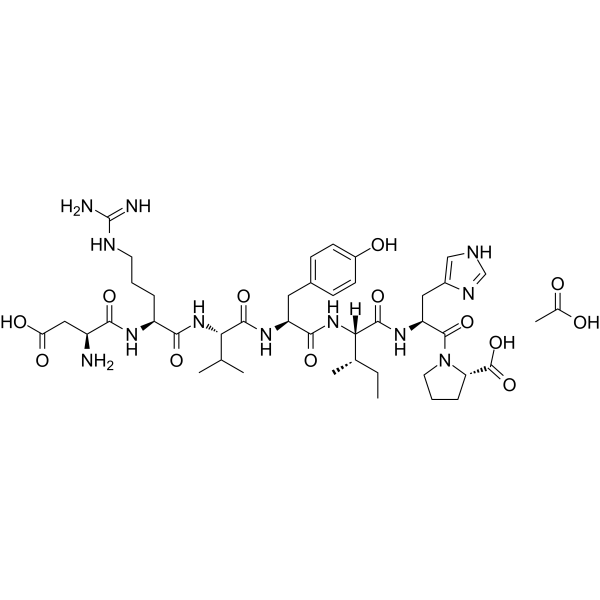
Angiotensin 1-7 (Ang-(1-7)) acetate is an endogenous heptapeptide from the renin-angiotensin system (RAS) with a cardioprotective role due to its anti-inflammatory and anti-fibrotic activities in cardiac cells. Angiotensin 1-7 acetate inhibits purified canine ACE activity (IC50=0.65 μM). Angiotensin 1-7 acetate acts as a local synergistic modulator of kinin-induced vasodilation by inhibiting ACE and releasing nitric oxide. Angiotensin 1-7 acetate blocks Ang II-induced smooth muscle cell proliferation and hypertrophy and shows antiangiogenic and growth-inhibitory effects on the endothelium.
For research use only. We do not sell to patients.
- Purity : 99.76%
- CAS No.: 2855063-75-9
- Formula: C43H66N12O13
- Molecular Weight:959.06
-
Storage:
Sealed storage, away from moisture.
Powder -80°C, 2 years , -20°C, 1 year* In solvent : -80°C, 6 months; -20°C, 1 month (sealed storage, away from moisture)

To place orders, for customer services and technical support, please contact: MedChemExpress USA
Tel: 609-228-6898 E-mail: [email protected] [email protected]


-
 Biological Activity
-
Chemical Information
-
Solvent & Solubility
- Purity & Documentation
- References
-
 Help & FAQs


-
HY-13948A
Angiotensin II human acetate -
HY-P3108
Alamandine -
HY-12403
Talfirastide -
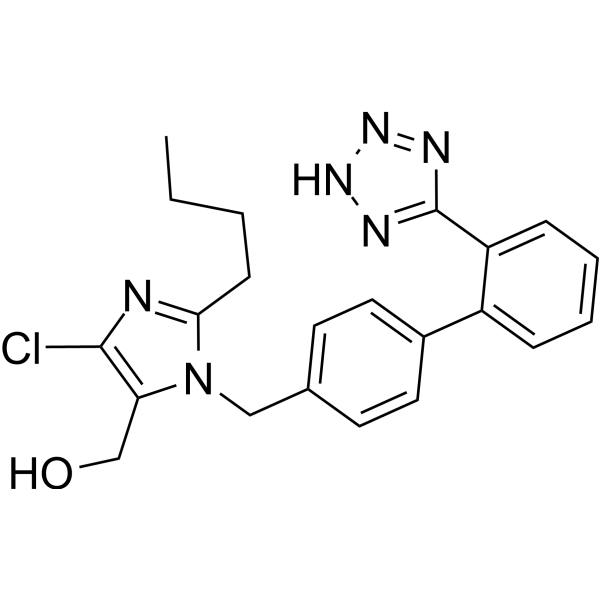
HY-17512
Losartan -
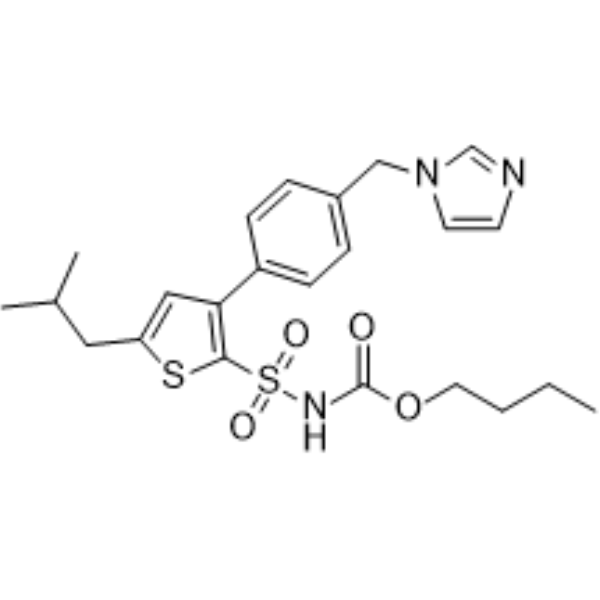
HY-100113
Buloxibutid -

HY-P1237
C-Type Natriuretic Peptide (CNP) (1-22), human -
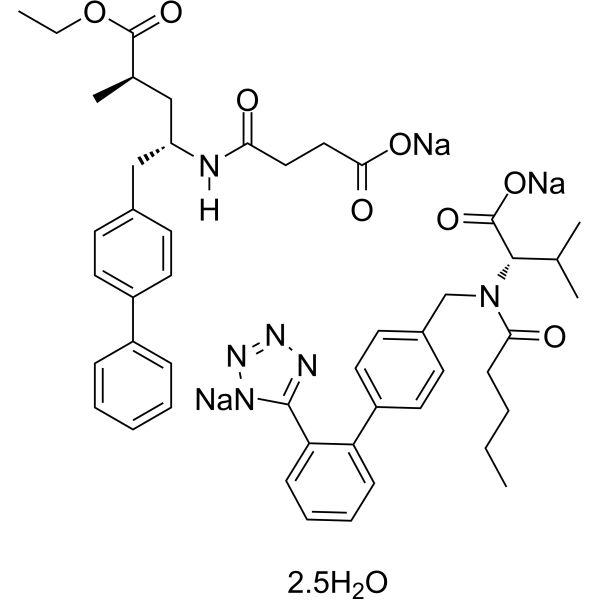
HY-18204A
Sacubitril/Valsartan -
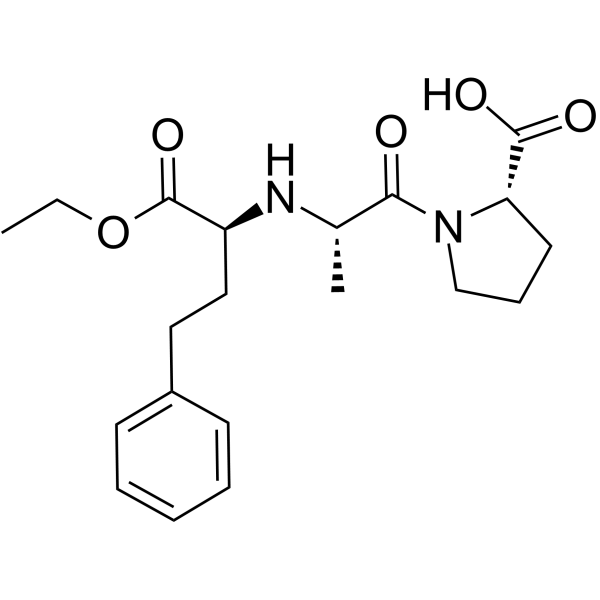
HY-B0331
Enalapril -
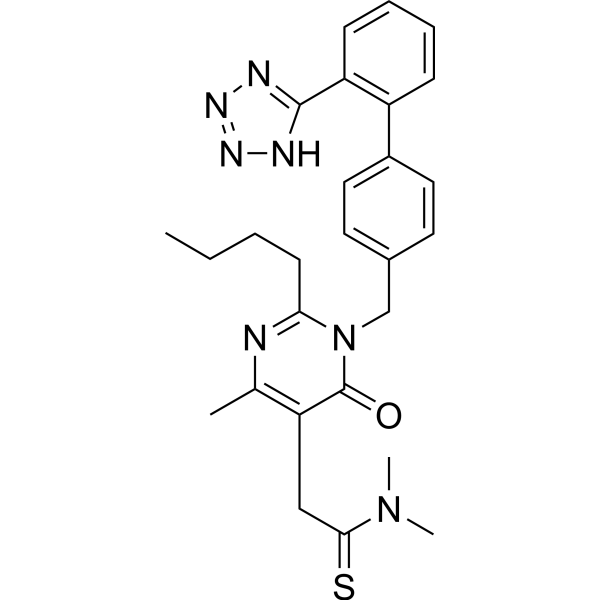
HY-B0780
Fimasartan -
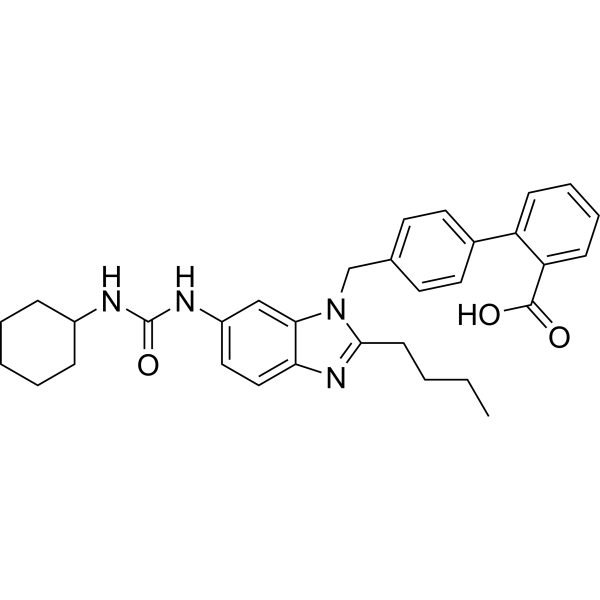
HY-19732
BIBS 39 -
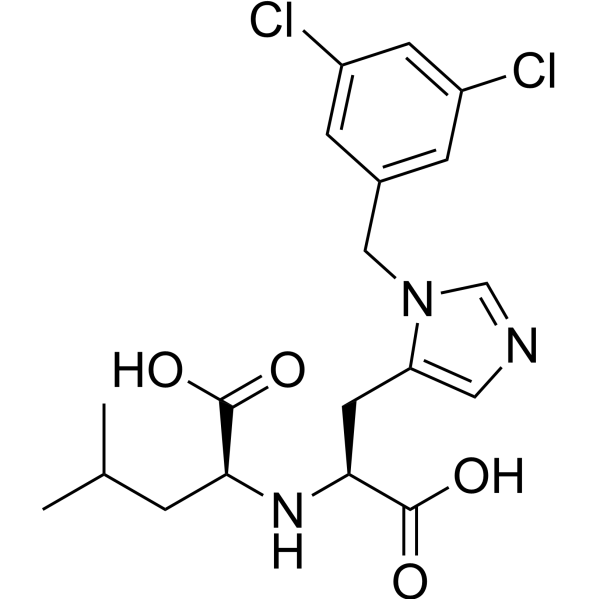
HY-19414
MLN-4760 -
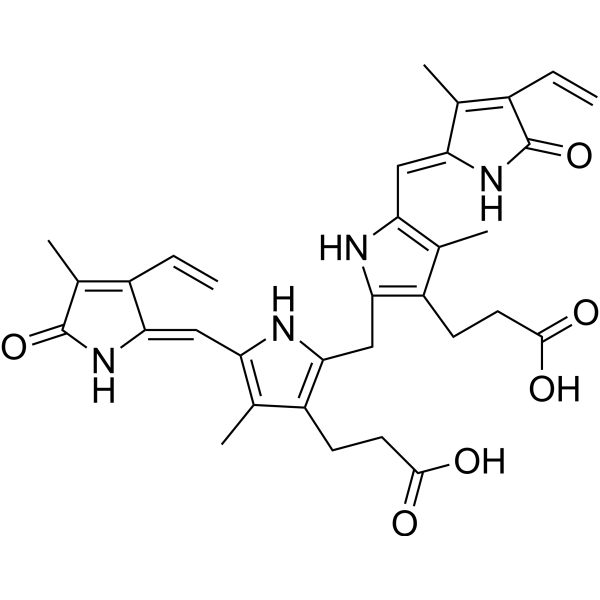
HY-N0323
Bilirubin
Publications Citing Use of MedChemExpress (MCE) Talfirastide acetate
More- Phytomedicine. 2025 Nov 25:148:157371. [Abstract]
- J Renin Angiotensin Aldosterone Syst. 2026 Apr 7.
- Proc Natl Acad Sci U S A. 2025 Dec 9;122(49):e2515641122. [Abstract]
- Chin Chem Lett. 2023 Mar;34(3):107522. [Abstract]
- Cell Biosci. 2023 Feb 4;13(1):23. [Abstract]
- Acta Physiol. 2026 Apr;242(4):e70200. [Abstract]
- Front Cell Dev Biol. 2021 Jun 11:9:659809. [Abstract]
- Chem Biol Interact. 2025 Sep 5:418:111596. [Abstract]
- Sci Rep. 2025 Nov 25. [Abstract]
- Biol Proced Online. 2022 Oct 25;24(1):15. [Abstract]
- J Inflamm Res. 2024 Jan 24:17:469-485. [Abstract]
- Front Biosci (Landmark Ed). 2024 Sep 24;29(9):334. [Abstract]
- BMC Pulm Med. 2023 Nov 2;23(1):422. [Abstract]
- Endokrynol Pol. 2023;74(5):544-552. [Abstract]
- Int J Clin Exp Med. 2019;12(5):4773-4780.
- bioRxiv. 2026 Mar 25.
- SSRN. 2025 Feb 28.
- Research Square Preprint. 2024 Feb 19.
 Customer Validation & Images

-
Cell Imaging/Staining
-
WB
-
Flow Cytometry
-
Flow Cytometry
-
RT-PCR
All Angiotensin Receptor Isoforms
MoreAll Endogenous Metabolite Isoforms
More

Biological Activity
Description
IC50 & Target
|
AT1 Receptor |
In Vitro
Angiotensin 1-7 (Ang-(1-7)) inhibits cultured vascular smooth muscle cell growth, whereas equal molar concentration of Ang II stimulates cell growth[2].
Angiotensin 1-7 (Ang 1-7) abrogates the methylglyoxal-modified albumin (MGA)-stimulated myofibroblast phenotype by inhibiting the chronic stimulation of the TGF-β-ERK pathway in NRK-52E cells[4].
Angiotensin 1-7 signals through the Mas receptor ( MasR) in opposition to Ang II/angiotensin II type 1 receptor (AT1R), promoting anti-inflammatory,vasodilatory, and neuroprotective effects[5].
MedChemExpress (MCE) has not independently confirmed the accuracy of these methods. They are for reference only.
In Vivo
MedChemExpress (MCE) has not independently confirmed the accuracy of these methods. They are for reference only.


Chemical Information
-
CAS No. 2855063-75-9
-
Appearance Solid
-
Molecular Weight 959.06
-
Formula C43H66N12O13
-
Color White to off-white
-
Synonyms
TXA127 acetate; Angiotensin (1-7) acetate; Ang-(1-7) acetate
-
Sequence
Asp-Arg-Val-Tyr-Ile-His-Pro
-
Sequence Shortening
DRVYIHP
-
Structure Classification
-
Initial Source
-
Shipping
Room temperature in continental US; may vary elsewhere.
-
Storage
Sealed storage, away from moisture
Powder -80°C 2 years -20°C 1 year * In solvent : -80°C, 6 months; -20°C, 1 month (sealed storage, away from moisture)


Publications (18)
-
Journal Impact Factor
-
Most Recent
-
Phytomedicine
Baicalin and ginsenoside Rb1 suppress the activation of cardiac fibroblasts via regulating the GRK2/AT1R/MasR network. [Abstract]2025 Nov 25:148:157371. PMID: 41110355 -
-
Proc Natl Acad Sci U S A
Ace2 safeguards embryonic hematopoietic stem and progenitor cell production by restraining Nlrp3-mediated pyroptosis. [Abstract]2025 Dec 9;122(49):e2515641122. PMID: 41348733 -
Chin Chem Lett
Nanokit coupled electrospray ionization mass spectrometry for analysis of angiotensin converting enzyme 2 activity in single living cell. [Abstract]2023 Mar;34(3):107522. PMID: 35602918 -
Cell Biosci
Ang-(1-7)/MasR axis promotes functional recovery after spinal cord injury by regulating microglia/macrophage polarization. [Abstract]2023 Feb 4;13(1):23. PMID: 36739421
Talfirastide acetate purchased from MedChemExpress. Usage Cited in: Cell Biosci. 2023 Feb 4;13(1):23. [Abstract]
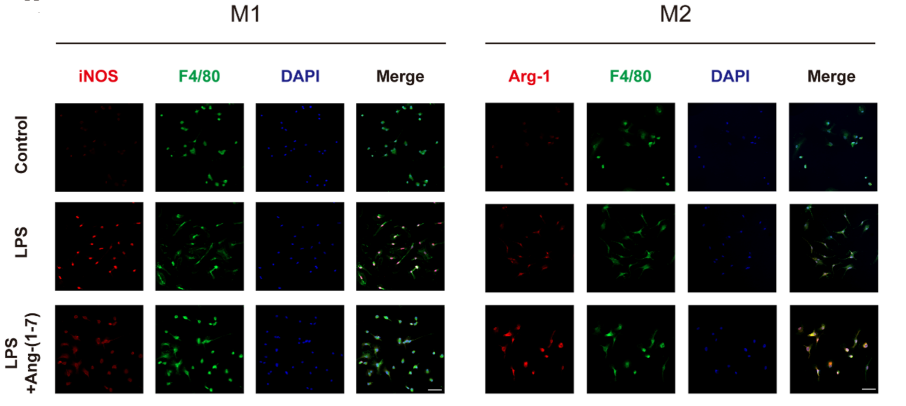
Ang-(1–7) (Talfirastide, 10−6 mol/L, 24 h) regulates the polarization of macrophages towards the M2 phenotype. Double-staining for F4/80 (green)/iNOS (red) or F4/80 (green)/Arg-1 (red) in each group of macrophages (scale bar: 50 μm, n = 5).
Talfirastide acetate purchased from MedChemExpress. Usage Cited in: Cell Biosci. 2023 Feb 4;13(1):23. [Abstract]
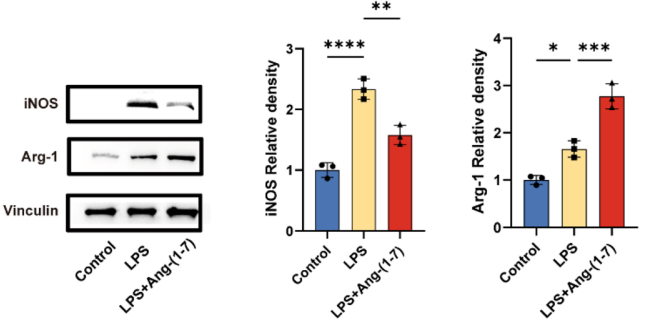
(Talfirastide, 10−6 mol/L). Representative immunoblots and quantification of macrophages in each group showing the expression of iNOS and Arg-1 after treatment for 24 h (n = 3).
Talfirastide acetate purchased from MedChemExpress. Usage Cited in: Cell Biosci. 2023 Feb 4;13(1):23. [Abstract]
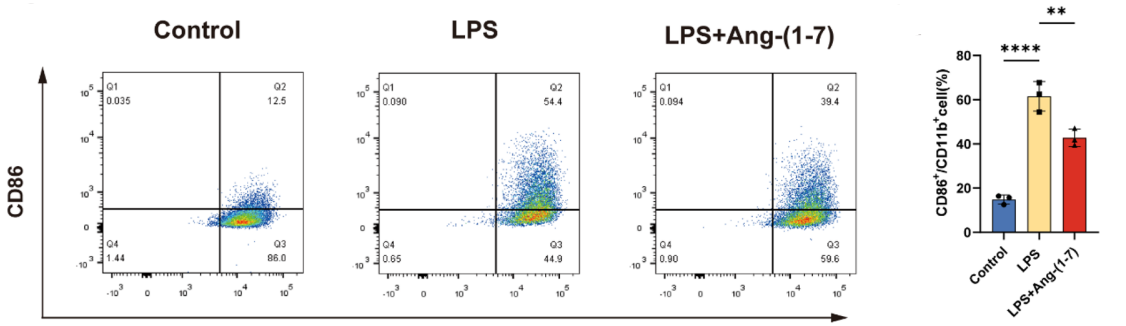
Talfirastide (10−6 mol/L, 24h). The ratio of M1 macrophage phenotype-related surface markers, CD86/CD11b, were determined by flow cytometry for each group (n = 3).
Talfirastide acetate purchased from MedChemExpress. Usage Cited in: Cell Biosci. 2023 Feb 4;13(1):23. [Abstract]
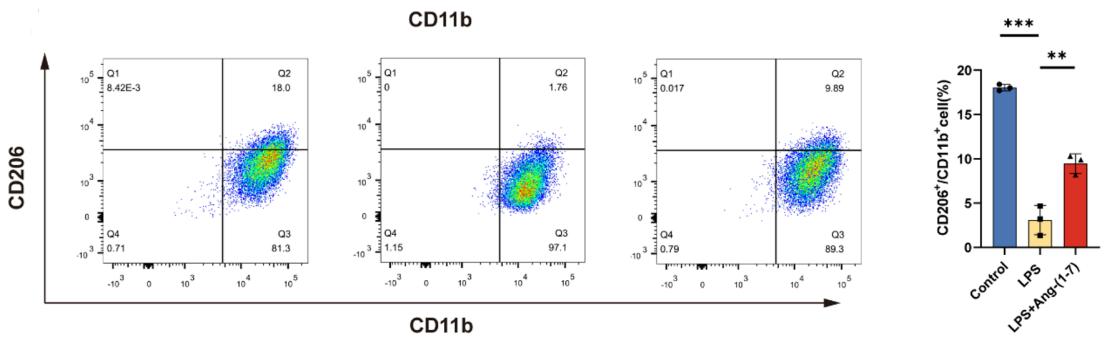
Talfirastide (10−6 mol/L, 24h). The ratio of M2 macrophage phenotype-related surface markers, CD206/ CD11b, were determined by flow cytometry for each group (n = 3).
Talfirastide acetate purchased from MedChemExpress. Usage Cited in: Cell Biosci. 2023 Feb 4;13(1):23. [Abstract]
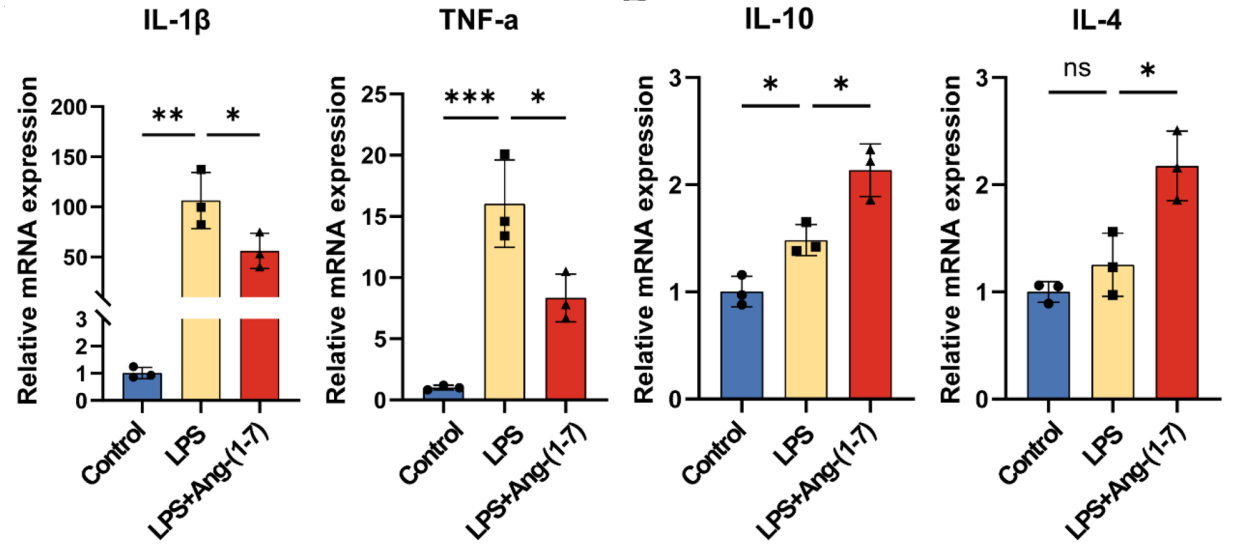
Ang-(1–7) (Talfirastide, 10−6 mol/L, 24h) inhibits inflammation response by modulating the expression of inflammatory cytokines in BMDMs. Quantitative RT-qPCR analysis of macrophages showing mRNA expression of IL-1β, TNF-α, IL-10, IL-4 after treatment for 24 h. GAPDH: loading control. Data are expressed as fold change compared to the control group (n = 3).
Talfirastide acetate purchased from MedChemExpress. Usage Cited in: Cell Biosci. 2023 Feb 4;13(1):23. [Abstract]
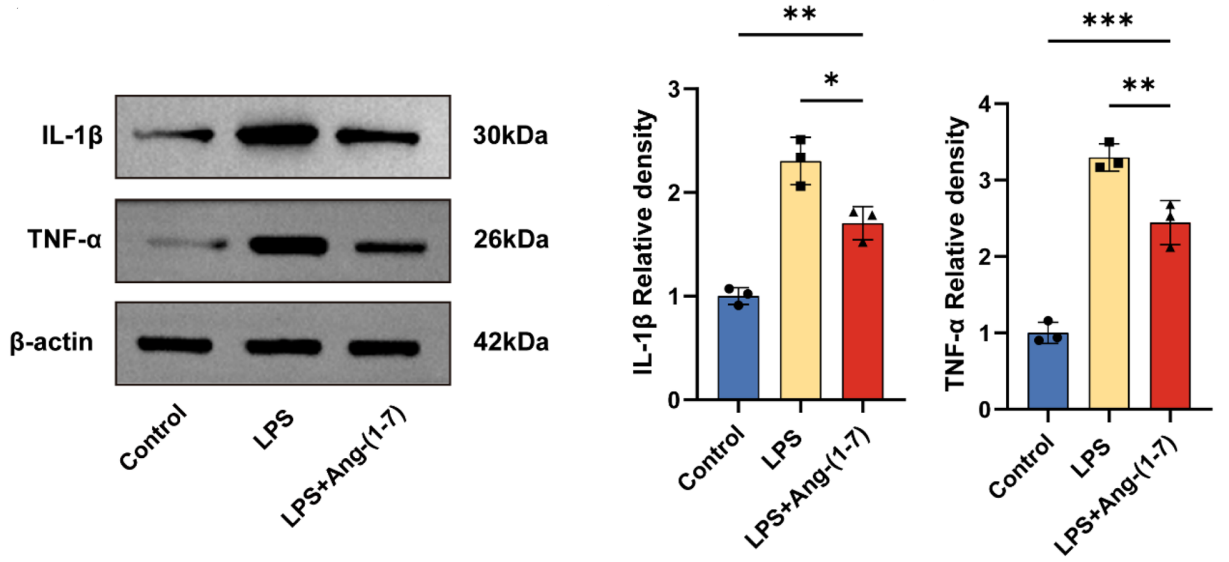
Ang-(1–7)(Talfirastide, 10−6 mol/L, 24h) inhibits inflammation response by modulating the expression of inflammatory cytokines. Representative immunoblots and quantification showing protein expression of IL-1β and TNF-α in the macrophages after treatment for 24 h.
Talfirastide acetate purchased from MedChemExpress. Usage Cited in: Cell Biosci. 2023 Feb 4;13(1):23. [Abstract]
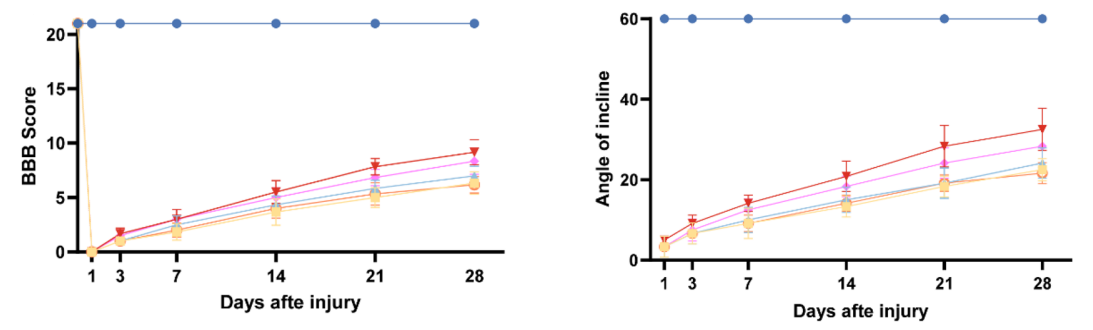
Ang-(1–7) (Talfirastide; administered immediately by intrathecal injection; 10 μL; 500 ng) improved the motor function of rats after SCI. a Basso, Beattie and Bresnahan (BBB) scores (n = 6) and Inclined plane test scores (n = 6).
Talfirastide acetate purchased from MedChemExpress. Usage Cited in: Cell Biosci. 2023 Feb 4;13(1):23. [Abstract]
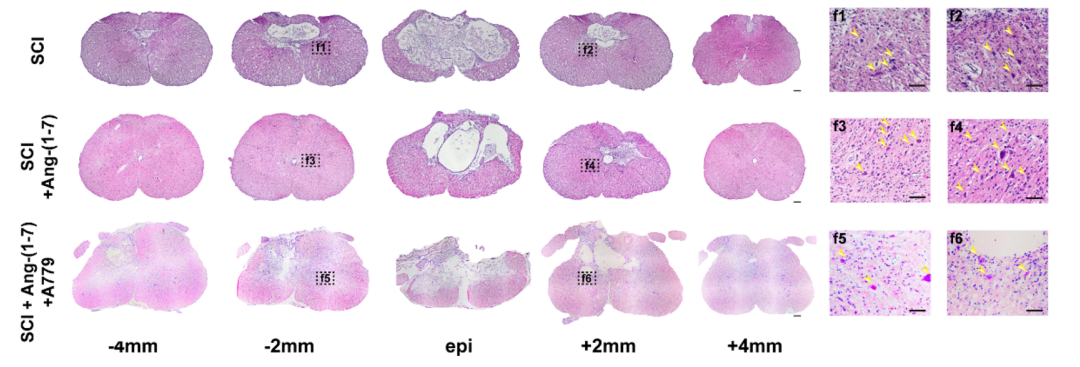
Continuous sections of the spinal cord by HE staining were obtained on the 28th day post-surgery, and the remaining neurons in the SCI group, SCI + Ang-(1–7) groups, and SCI + Ang-(1–7) + A779 groups at the same distance from the epicenter were displayed. (scale bar: 100 μm and 40 μm, n = 3).
-
Acta Physiol
Angiotensin-(1-7) Alleviates Isoproterenol-Induced Cardiac Hypertrophy by Suppressing Autophagy and Apoptosis Through the Synergistic Action of Mas Receptor and Angiotensin II Type 2 Receptor. [Abstract]2026 Apr;242(4):e70200. PMID: 41886752 -
Front Cell Dev Biol
2021 Jun 11:9:659809. PMID: 34178985 -
Chem Biol Interact
Mechanism of ferroptosis in hypoxia-induced pulmonary vascular remodeling in hypoxia pulmonary hypertension: a study based on the ACE2-Ang-(1-7)-Mas axis. [Abstract]2025 Sep 5:418:111596. PMID: 40466901 -
Sci Rep
Ginsenoside Rg1 alleviates HG-induced autophagy of retinal microvascular endothelial cells by activating ACE2/Ang1-7/Mas in vitro. [Abstract]2025 Nov 25. PMID: 41290961 -
Biol Proced Online
Angiotensin-converting enzyme 2 identifies immuno-hot tumors suggesting angiotensin-(1-7) as a sensitizer for chemotherapy and immunotherapy in breast cancer. [Abstract]2022 Oct 25;24(1):15. PMID: 36284262 -
J Inflamm Res
Angiotensin-(1-7) Modulates the Warburg Effect to Alleviate Inflammation in LPS-Induced Macrophages and Septic Mice. [Abstract]2024 Jan 24:17:469-485. PMID: 38282712 -
Front Biosci (Landmark Ed)
ACE2 Alleviates Endoplasmic Reticulum Stress and Protects against Pyroptosis by Regulating Ang1-7/Mas in Ventilator-Induced Lung Injury. [Abstract]2024 Sep 24;29(9):334. PMID: 39344337 -
BMC Pulm Med
Angiotensin-(1-7) suppresses airway inflammation and airway remodeling via inhibiting ATG5 in allergic asthma. [Abstract]2023 Nov 2;23(1):422. PMID: 37919667 -
Endokrynol Pol
Angiotensin (1-7) reverses glucose-induced islet β cell dedifferentiation by Wnt/β-catenin/FoxO1 signalling pathway. [Abstract]2023;74(5):544-552. PMID: 37779373 -
-
-
-


Solvent & Solubility
In Vitro:
H2O : 62.5 mg/mL (65.17 mM; Need ultrasonic)
Please refer to the solubility information to select the appropriate solvent. Once prepared, please aliquot and store the solution to prevent product inactivation from repeated freeze-thaw cycles.
Storage method and period of stock solution: -80°C, 6 months; -20°C, 1 month (sealed storage, away from moisture). When stored at -80°C, please use it within 6 months. When stored at -20°C, please use it within 1 month.
* Note: If you choose water as the stock solution, please dilute it to the working solution, then filter and sterilize it with a 0.22 μm filter before use.
Please refer to the solubility information to select the appropriate solvent. Once prepared, please aliquot and store the solution to prevent product inactivation from repeated freeze-thaw cycles.
Storage method and period of stock solution: -80°C, 6 months; -20°C, 1 month (sealed storage, away from moisture). When stored at -80°C, please use it within 6 months. When stored at -20°C, please use it within 1 month.
* Note: If you choose water as the stock solution, please dilute it to the working solution, then filter and sterilize it with a 0.22 μm filter before use.
Concentration (start) × Volume (start) = Concentration (final) × Volume (final)
In Vivo:
For the following dissolution methods, please prepare the working solution directly:
It is recommended to prepare fresh solutions and use them promptly within a short period of time.
The percentages shown for the solvents indicate their volumetric ratio in the final prepared solution. If precipitation or phase separation occurs during preparation, heat and/or sonication can be used to aid dissolution.
Add each solvent one by one: PBS
Solubility: 100 mg/mL (104.27 mM); Clear solution; Need ultrasonic


Purity & Documentation
-
Data Sheet (276 KB)
-
SDS (252 KB)
- English - EN (252 KB)
- Français - FR (252 KB)
- Deutsch - DE (252 KB)
- Norwegian - NO (252 KB)
- Español - ES (252 KB)
- Swedish - SV (252 KB)
- Italian - IT (252 KB)
- Korean - KR (252 KB)
- Portuguese - PT (252 KB)
-
Handling Instructions (2659 KB)
References
[1]. Gómez-Mendoza DP, et al. Angiotensin-(1-7) oral treatment after experimental myocardial infarction leads to downregulation of CXCR4. J Proteomics. 2019;208:103486. [Content Brief]
[2]. Li P, et al. Angiotensin-(1-7) augments bradykinin-induced vasodilation by competing with ACE and releasing nitric oxide. Hypertension. 1997 Jan;29(1 Pt 2):394-400. [Content Brief]
[3]. Khajah MA, et al. Anti-Inflammatory Action of Angiotensin 1-7 in Experimental Colitis. PLoS One. 2016 Mar 10;11(3):e0150861. [Content Brief]
[4]. Alzayadneh EM, et al. Angiotensin-(1-7) abolishes AGE-induced cellular hypertrophy and myofibroblast transformation via inhibition of ERK1/2. Cell Signal. 2014 Sep 19. pii: S0898-6568(14)00314-3. [Content Brief]
[5]. Janatpour ZC, et al. Subcutaneous Administration of Angiotensin-(1-7) Improves Recovery after Traumatic Brain Injury in Mice. J Neurotrauma. 2019;36(22):3115-3131. [Content Brief]


Complete Stock Solution Preparation Table
Please refer to the solubility information to select the appropriate solvent. Once prepared, please aliquot and store the solution to prevent product inactivation from repeated freeze-thaw cycles.
Storage method and period of stock solution: -80°C, 6 months; -20°C, 1 month (sealed storage, away from moisture). When stored at -80°C, please use it within 6 months. When stored at -20°C, please use it within 1 month.
| Optional Solvent | Concentration Solvent Mass | 1 mg | 5 mg | 10 mg | 25 mg |
|---|---|---|---|---|---|
| H2O | 1 mM | 1.0427 mL | 5.2134 mL | 10.4269 mL | 26.0672 mL |
| 5 mM | 0.2085 mL | 1.0427 mL | 2.0854 mL | 5.2134 mL | |
| 10 mM | 0.1043 mL | 0.5213 mL | 1.0427 mL | 2.6067 mL | |
| 15 mM | 0.0695 mL | 0.3476 mL | 0.6951 mL | 1.7378 mL | |
| 20 mM | 0.0521 mL | 0.2607 mL | 0.5213 mL | 1.3034 mL | |
| 25 mM | 0.0417 mL | 0.2085 mL | 0.4171 mL | 1.0427 mL | |
| 30 mM | 0.0348 mL | 0.1738 mL | 0.3476 mL | 0.8689 mL | |
| 40 mM | 0.0261 mL | 0.1303 mL | 0.2607 mL | 0.6517 mL | |
| 50 mM | 0.0209 mL | 0.1043 mL | 0.2085 mL | 0.5213 mL | |
| 60 mM | 0.0174 mL | 0.0869 mL | 0.1738 mL | 0.4345 mL |
* Note: If you choose water as the stock solution, please dilute it to the working solution, then filter and sterilize it with a 0.22 μm filter before use.


Talfirastide acetate Related Classifications
HY-12403A Related Classifications
 Powered by Bioz