



RETRA

Based on 1 Customer Validation
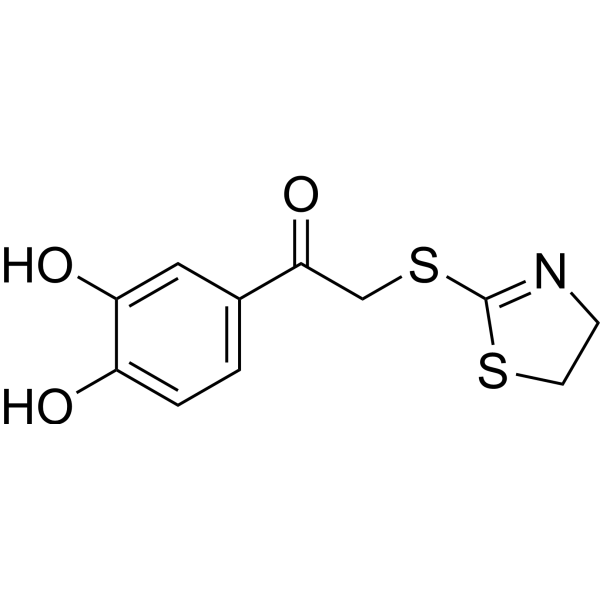
RETRA is a RIPK1/RIPK3/MLKL and p73 activator. RETRA mediates plasma membrane disruption, induces ROS accumulation, triggers early mitochondrial hyperpolarization, and synergistically drives necroptosis. RETRA inhibits cancer cells carrying mutant p53 via a p73-dependent salvage pathway. RETRA can be used in research related to cervical cancer and cancers with mutant p53.
Nur für Forschungszwecke. Wir verkaufen nicht an Patienten.
- Reinheit : 98.83%
- CAS. Nr.: 1036069-26-7
- Formel: C11H11NO3S2
- Molecular Weight:269.34
-
Speicherung:
-20°C, protect from light
* In solvent : -80°C, 6 months; -20°C, 1 month (protect from light)

To place orders, for customer services and technical support, please contact: MedChemExpress USA
Tel: 609-228-6898 E-mail: [email protected] [email protected]


-
 Biologische Aktivität
-
Chemical Information
-
Lösungsmittel & Löslichkeit
- Protokoll
- Reinheit & Dokumentation
- Verweise
-
 Help & FAQs


-
HY-19726
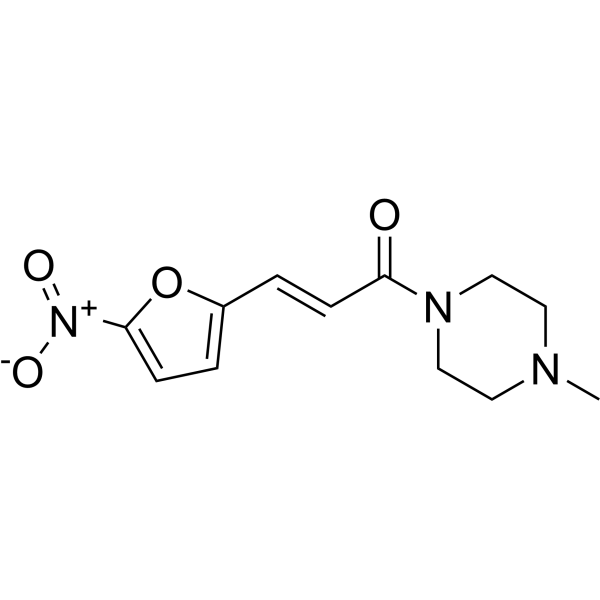
NSC59984MDM-2/p53 p53 Activator -
HY-18634
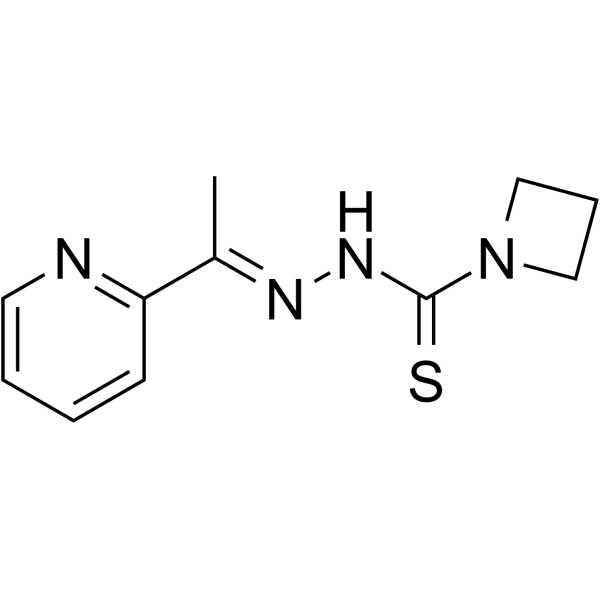
NSC319726MDM-2/p53 p53 Activator -
HY-108637
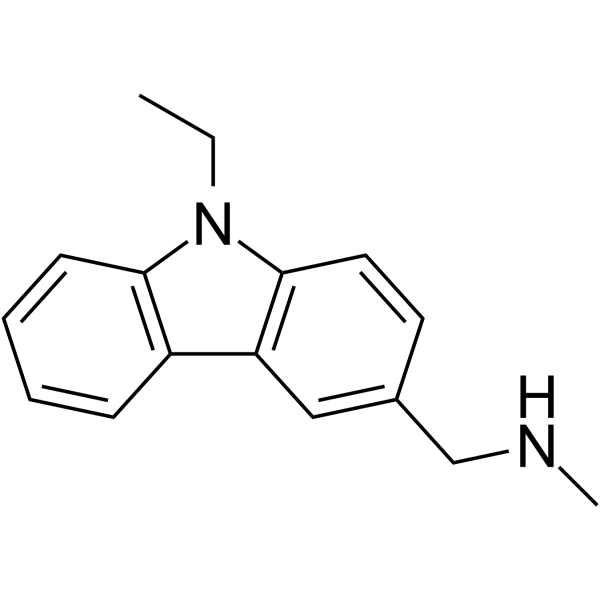
PhiKan 083MDM-2/p53 p53 Activator -
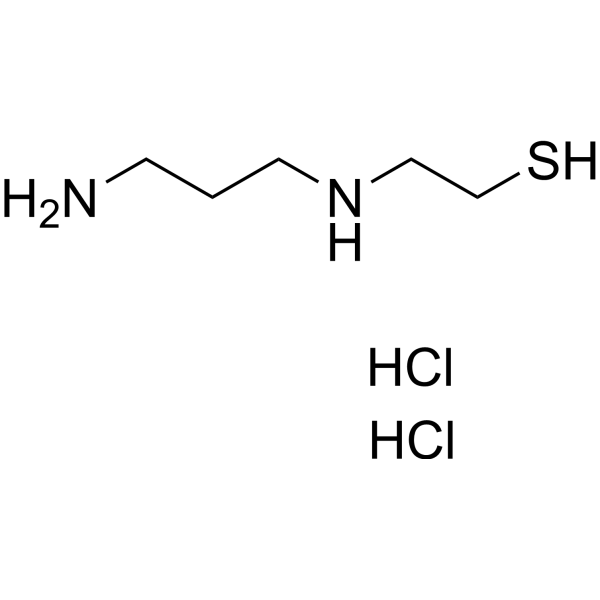
HY-103640
Amifostine thiol dihydrochloridep53 Activator -
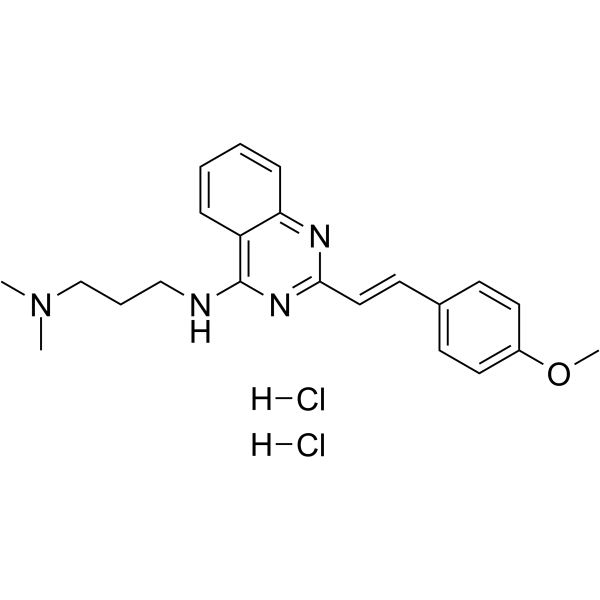
HY-18343A
CP-31398 dihydrochloridep53 Stabilizer -
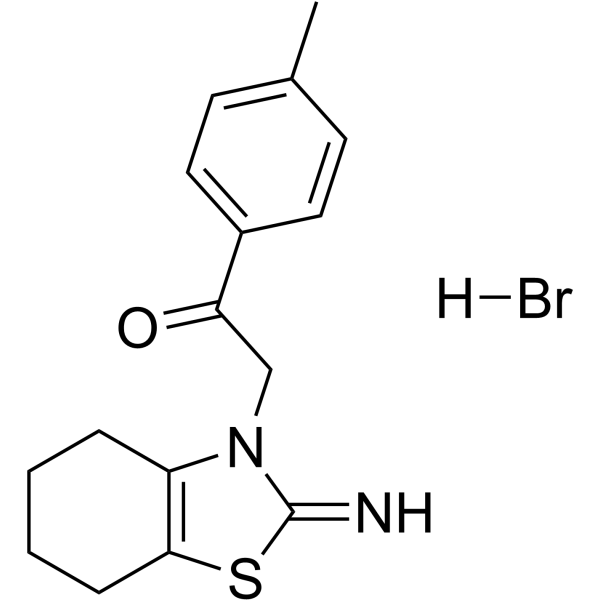
HY-15484
Pifithrin-α hydrobromidep53 Inhibitor -

HY-15676
IdasanutlinMDM2 Inhibitor -
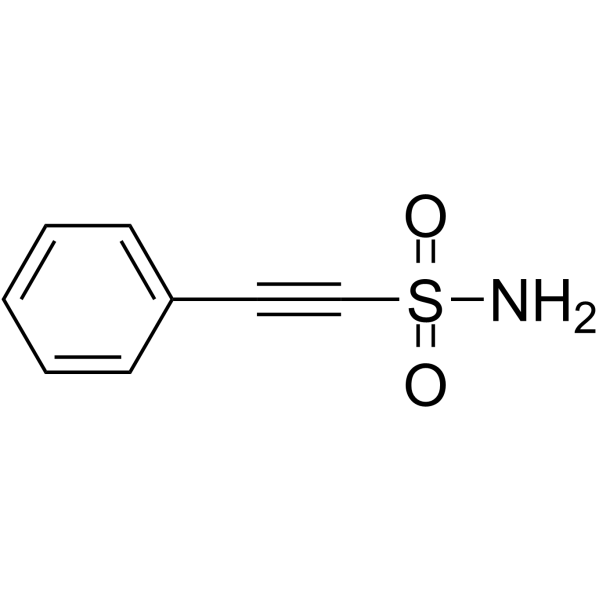
HY-10940
Pifithrin-μp53 and HSP70 Inhibitor -
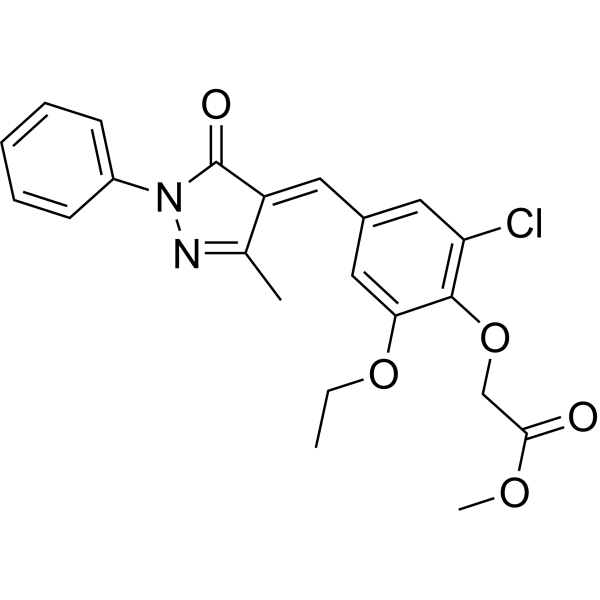
HY-16664
SJ-172550MDM-2/p53 MDM2 Inhibitor -
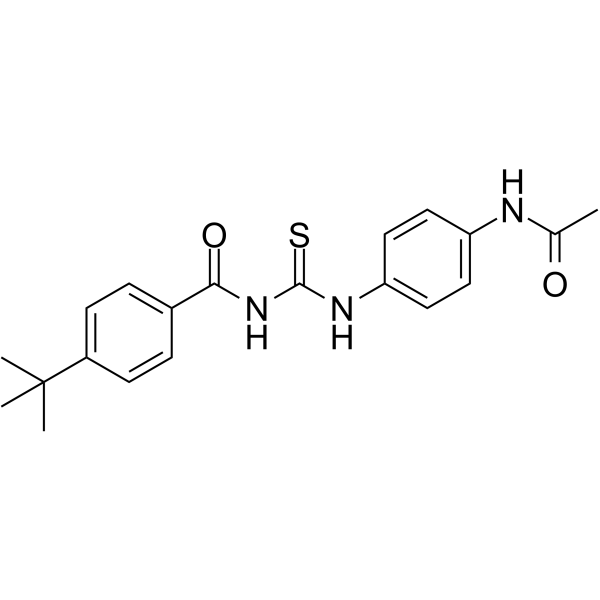
HY-13423
Tenovin-1p53 Activator -
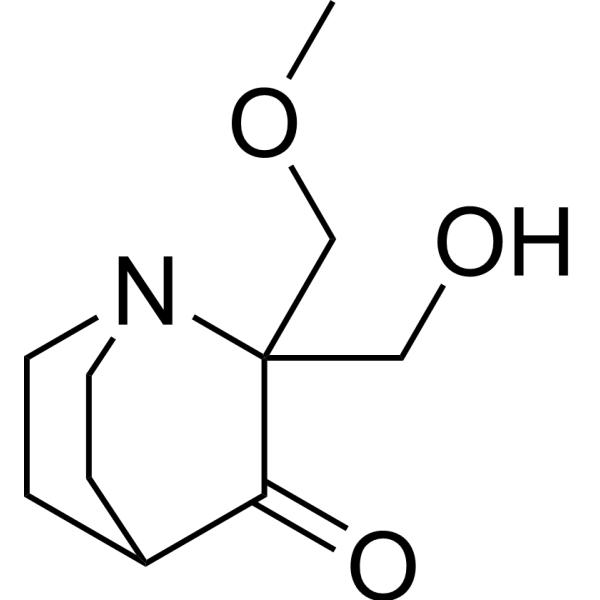
HY-19980
Eprenetapoptp53 Activator -
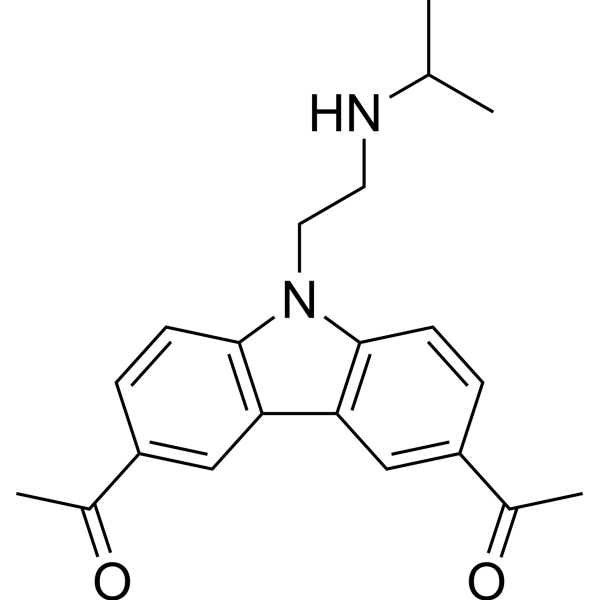
HY-18935
CBL0137FACT Inhibitor


Biologische Aktivität
Beschreibung
In Vitro
RETRA (10-100 μM; 24-96 h) inhibits the viability of SiHa and C-33A cervical cancer cells in a concentration- and time-dependent manner[1].
RETRA (25-100 μM; 24-72 h) inhibits the proliferation of SiHa and C-33A cervical cancer cells in a concentration-dependent manner[1].
RETRA (25-100 μM; 48 h) induces S-phase cell cycle arrest in SiHa and C-33A cervical cancer cells by regulating cell cycle regulatory proteins, including upregulating p21 and downregulating cyclin D3[1].
RETRA (25-100 μM; 24, 48, 72 h) selectively induces non-apoptotic cell death in SiHa and C-33A cervical cancer cells, and exhibits no cytotoxicity against normal human peripheral blood mononuclear cells (PBMCs)[1].
RETRA (50-100 μM; 48 h) induces necroptosis in SiHa, C-33A and CaSki cervical cancer cells via phosphorylation of RIPK1, RIPK3 and MLKL; this cell death is reversible by the necroptosis inhibitor Nec-1 (HY-15760)[1].
RETRA (25-100 μM; 24, 48 h) induces mitochondrial hyperpolarization in SiHa and C-33A cervical cancer cells in a concentration- and time-dependent manner[1].
RETRA (25-100 μM; 48 h) induces concentration-dependent ROS accumulation in SiHa and C-33A cervical cancer cells, and this accumulation is attenuated by the necroptosis inhibitor Nec-1[1].
RETRA (1-10 μM; 14 h) specifically activates p53-dependent transcription reporter gene activity in human cancer cell lines expressing mutant p53 (including A431, SW480 and MDA-MB-231) as well as p53-deficient cell lines reconstituted with mutant p53, but exerts no effect on cells expressing wild-type p53 or p53-deficient cells[2].
RETRA (1.5 μg/mL; 14 h) selectively induces transcriptional activation of the p53-dependent genes CDKN1A and BBC3 in A431 cells expressing mutant p53[2].
RETRA (2 μg/mL; 20 h) increases TA/p73 protein levels in A431 cells expressing mutant p53 and releases TA/p73 from the inhibitory complex formed with mutant p53; whereas after treatment at 2 μg/mL for 20 h[2].
RETRA (0.1-10 μM; 48 h) induces dose-dependent inhibition of cell viability in A431 cells expressing mutant p53, and exhibits enhanced activity in p53-knockdown A431/sh-p53 cells[2].
RETRA (4 μM; 24 h) specifically inhibits colony formation of A431 and SW480 cells expressing mutant p53, and this effect is partially dependent on the expression of p73; while after treatment with 4 μM for 24 h[2].
RETRA (1-10 μM) induces dose-dependent activation of caspase 3 and caspase 7 in A431 cells expressing mutant p53, and the activity is enhanced in p53-knockdown A431/sh-p53 cells[2].
MedChemExpress (MCE) has not independently confirmed the accuracy of these methods. They are for reference only.
-
Cell Line:SiHa (wild-type p53 cervical cancer), C-33A (mutant p53 cervical cancer) cells
-
Concentration:10, 20, 30, 40, 50, 60, 70, 80, 90 and 100 μM
-
Incubation Time:24, 48, 72, 96 h
-
Result:Elicited a concentration- and time-dependent decrease in cell viability in both SiHa and C-33A cells, with significant reductions observed at higher concentrations and longer incubation times.
-
Cell Line:SiHa (wild-type p53 cervical cancer), C-33A (mutant p53 cervical cancer) cells
-
Concentration:25, 50, 75 and 100 μM
-
Incubation Time:24, 48, 72 h
-
Result:Resulted in significantly higher residual CFSE fluorescence compared to untreated cells, indicating reduced cell proliferation in a concentration-dependent manner.
Showed a dramatic reduction in cell numbers and altered morphology at 72 h of treatment via phase-contrast microscopy.
-
Cell Line:SiHa (wild-type p53 cervical cancer), C-33A (mutant p53 cervical cancer) cells
-
Concentration:25, 50, 75 and 100 μM
-
Incubation Time:48 h; 96 h (sub-G1 analysis)
-
Result:Caused a substantial accumulation of cells in the S-phase (approximately 47%) after 48 h of treatment, along with a concentration-dependent increase in sub-G1 phase cells (up to 33% in C-33A at 96 h).
Decreased cyclin D3 levels, increased p21 and CDK4 levels, and increased p73 levels in SiHa cells, with no change in p53 levels via Western blot analysis.
-
Cell Line:SiHa (wild-type p53 cervical cancer), C-33A (mutant p53 cervical cancer) cells, normal human peripheral blood mononuclear cells (PBMCs)
-
Concentration:25, 50, 75 and 100 μM
-
Incubation Time:24, 48, 72 h (cancer cells); 24, 48, 72 h (PBMCs)
-
Result:Caused a concentration- and time-dependent increase in Annexin V-/PI+ (necrotic/necroptotic) cells in SiHa and C-33A cells, with no significant increase in apoptotic cell populations and no change in cleaved PARP-1 levels.
Showed no significant increase in apoptotic or necrotic cell populations in PBMCs even at the highest concentration and longest incubation time.
-
Cell Line:A431, H1299, A549
-
Concentration:2 μg/mL
-
Incubation Time:20 h
-
Result:Induced a 4- to 5-fold increase in TA/p73 protein levels in A431 cells.
Caused no increase in TA/p73 levels in p53-null H1299 or wild-type p53-expressing A549 cells.
Reduced the fraction of TA/p73 co-immunoprecipitated with mutant p53 by 2- to 3-fold in A431 cells, leading to an ~10-fold increase in free TA/p73 compared to untreated controls.
-
Cell Line:A431, A431/sh-p53, A431/sh-p73
-
Concentration:0.1, 1 and 10 μM
-
Incubation Time:48 h
-
Result:Caused dose-dependent inhibition of cell viability in A431 cells.
Showed enhanced inhibition of cell viability in A431/sh-p53 cells.
Had significantly reduced viability-inhibiting effect in A431/sh-p73 cells at all tested concentrations.
-
Cell Line:A431, A431/sh-p73, SW480, A549, H1299, PC3
-
Concentration:4 μM
-
Incubation Time:24 h
-
Result:Dramatically reduced colony formation in A431 and SW480 cells.
Had a much milder effect on colony formation in A431/sh-p73 cells.
Showed almost no effect on colony formation in A549, H1299, or PC3 cells.
In Vivo
MedChemExpress (MCE) has not independently confirmed the accuracy of these methods. They are for reference only.
-
Animal Model:athymic nu/nu mice[2]
-
Dosage:0.4 mg/mouse
-
Administration:i.p.; daily; 6 days
-
Result:Delayed tumor formation time.
Reduced the final percentage of tumor-forming injection sites to ~40%.


Chemical Information
-
CAS. Nr. 1036069-26-7
-
Appearance Solid
-
Molecular Weight 269.34
-
Formel C11H11NO3S2
-
Color Off-white to gray
-
SMILES
OC1=CC=C(C(CSC2=NCCS2)=O)C=C1O
-
Versand
Room temperature in continental US; may vary elsewhere.
-
Speicherung
-20°C, protect from light
* In solvent : -80°C, 6 months; -20°C, 1 month (protect from light)


Lösungsmittel & Löslichkeit
In Vitro:
DMSO : 125 mg/mL (464.10 mM; Need ultrasonic; Hygroscopic DMSO has a significant impact on the solubility of product, please use newly opened DMSO)
Please refer to the solubility information to select the appropriate solvent. Once prepared, please aliquot and store the solution to prevent product inactivation from repeated freeze-thaw cycles.
Storage method and period of stock solution: -80°C, 6 months; -20°C, 1 month (protect from light). When stored at -80°C, please use it within 6 months. When stored at -20°C, please use it within 1 month.
Please refer to the solubility information to select the appropriate solvent. Once prepared, please aliquot and store the solution to prevent product inactivation from repeated freeze-thaw cycles.
Storage method and period of stock solution: -80°C, 6 months; -20°C, 1 month (protect from light). When stored at -80°C, please use it within 6 months. When stored at -20°C, please use it within 1 month.
Konzentration (Stammlösung) × Volumen (Stammlösung) = Konzentration (Ziellösung) × Volumen (Ziellösung)


Reinheit & Dokumentation
-
Data Sheet (283 KB)
-
SDS (393 KB)
- English - EN (393 KB)
- Français - FR (393 KB)
- Deutsch - DE (393 KB)
- Norwegian - NO (393 KB)
- Español - ES (393 KB)
- Swedish - SV (393 KB)
- Italian - IT (393 KB)
- Korean - KR (393 KB)
- Portuguese - PT (393 KB)
-
Handling Instructions (2659 KB)
Verweise
[1]. Mohanty S, et al. RETRA induces necroptosis in cervical cancer cells through RIPK1, RIPK3, MLKL and increased ROS production. Eur J Pharmacol. 2022;920:174840. [Content Brief]
[2]. Kravchenko JE, et al. Small-molecule RETRA suppresses mutant p53-bearing cancer cells through a p73-dependent salvage pathway. Proc Natl Acad Sci U S A. 2008;105(17):6302-6307. [Content Brief]


Complete Stock Solution Preparation Table
Please refer to the solubility information to select the appropriate solvent. Once prepared, please aliquot and store the solution to prevent product inactivation from repeated freeze-thaw cycles.
Storage method and period of stock solution: -80°C, 6 months; -20°C, 1 month (protect from light). When stored at -80°C, please use it within 6 months. When stored at -20°C, please use it within 1 month.
| Optional Solvent | Concentration Solvent Mass | 1 mg | 5 mg | 10 mg | 25 mg |
|---|---|---|---|---|---|
| DMSO | 1 mM | 3.7128 mL | 18.5639 mL | 37.1278 mL | 92.8195 mL |
| 5 mM | 0.7426 mL | 3.7128 mL | 7.4256 mL | 18.5639 mL | |
| 10 mM | 0.3713 mL | 1.8564 mL | 3.7128 mL | 9.2819 mL | |
| 15 mM | 0.2475 mL | 1.2376 mL | 2.4752 mL | 6.1880 mL | |
| 20 mM | 0.1856 mL | 0.9282 mL | 1.8564 mL | 4.6410 mL | |
| 25 mM | 0.1485 mL | 0.7426 mL | 1.4851 mL | 3.7128 mL | |
| 30 mM | 0.1238 mL | 0.6188 mL | 1.2376 mL | 3.0940 mL | |
| 40 mM | 0.0928 mL | 0.4641 mL | 0.9282 mL | 2.3205 mL | |
| 50 mM | 0.0743 mL | 0.3713 mL | 0.7426 mL | 1.8564 mL | |
| 60 mM | 0.0619 mL | 0.3094 mL | 0.6188 mL | 1.5470 mL | |
| 80 mM | 0.0464 mL | 0.2320 mL | 0.4641 mL | 1.1602 mL | |
| 100 mM | 0.0371 mL | 0.1856 mL | 0.3713 mL | 0.9282 mL |


RETRA Related Classifications
HY-108636 Related Classifications
 Powered by Bioz