1. Search Result
Search Result
Results for "

PK/ADME Profile

" in MedChemExpress (MCE) Product Catalog:

513

Inhibitors & Agonists

15

Screening Libraries

3

Fluorescent Dyes

10

Biochemical Assay Reagents

18

Peptides

14

Inhibitory Antibodies

42

Natural
Products

13

Isotope-Labeled Compounds

9

Click Chemistry

46

Oligonucleotides

Targets Recommended:
Cat. No. Product Name Target Research Areas Chemical Structure
  • HY-12341
    ML355
    5+ Cited Publications

    Lipoxygenase Inflammation/Immunology
    ML355 is a potent and selective inhibitor of 12-Lipoxygenase (12-LOX) with an IC50 of 0.34 μM, shows excellent selectivity over related lipoxygenases and cyclooxygenases, and possesses favorable ADME properties.
    ML355
  • HY-156654
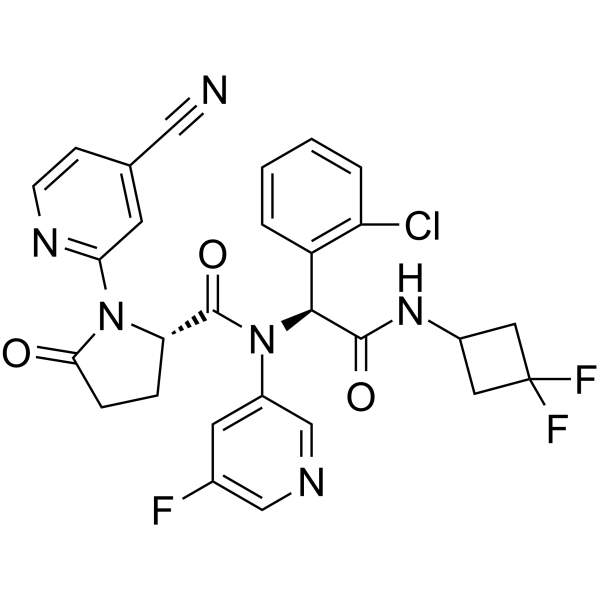
    Ibuzatrelvir
    1 Publications Verification

    PF-07817883

    SARS-CoV Virus Protease Infection
    Ibuzatrelvir (PF-07817883), a second-generation, orally bioavailable, is SARS-CoV-2 main protease (M pro and 3CL pro) inhibitor with improved metabolic stability. Ibuzatrelvir has demonstrated pan-human coronavirus antiviral activity and off-target selectivity profile in vitro and in preclinical animal studies. Ibuzatrelvir is well tolerated with a safety profile similar to placebo and prevents viral infection and transmission. Ibuzatrelvir can be used to inhibit COVID-19 .
    Ibuzatrelvir
  • HY-12522

    Aur0101; Auristatin-0101

    Microtubule/Tubulin ADC Payload Cancer
    PF-06380101 (Aur0101), an auristatin microtubule inhibitor, is a cytotoxic Dolastatin 10 analogue. PF-06380101 (Aur0101) shows excellent potencies in tumor cell proliferation assays and differential ADME properties when compared to other synthetic auristatin analogues that are used in the preparation of ADCs.
    PF-06380101
  • HY-103112B

    5-HT Receptor Neurological Disease
    SB 243213 is an orally active, selective and high-affinity 5-HT2C receptor antagonist with a pKi of 9.37 and a pKb of 9.8 for human 5-HT2C receptor. SB 243213 shows greater than a 100-fold selectivity over a wide range of neurotransmitter receptors, enzymes and ion channels. SB 243213 has improved anxiolytic profile and has the potential for schizophrenia and motor disorders .
    SB 243213
  • HY-148865
    Puromycin-bis(PEG2-amide)-Biotin
    1 Publications Verification

    Biochemical Assay Reagents Others
    Puromycin-bis (PEG2-amide)-Biotin (Compound 3P) is a binding molecule. Puromycin-bis (PEG2-amide)-Biotin binds to ribosome-RNA complexes within single cells. Puromycin-bis (PEG2-amide)-Biotin is used for single-cell translatome sequencing .
    Puromycin-bis(PEG2-amide)-Biotin
  • HY-101447A

    EPH 116 hydrochloride

    Estrogen Receptor/ERR Cancer
    SI-2 (EPH 116 hydrochloride) is a highly promising SRC-3 inhibitor (PPI). SI-2 (EPH 116 hydrochloride) has a much improved toxicity and pharmacokinetic profile, with acceptable oral availability .
    SI-2 hydrochloride
  • HY-114301

    Sodium Channel Neurological Disease
    PF-06305591 is a potent and highly selective voltage gated sodium channel NaV1.8 blocker, with an IC50 of 15 nM. An excellent preclinical in vitro ADME and safety profile .
    PF-06305591
  • HY-B1817A

    Zinc(II) acetate, 99.99% trace metals basis

    CDK Heme Oxygenase (HO) Apoptosis Others
    Zinc (Zinc (II)) acetate, 99.99% trace metals basis is a heme oxygenase 1 (HO-1) activator and apoptosis inducer with cytotoxic and anticancer activities. Zinc acetate, 99.99% trace metals basis enhances HO-1 expression, alters the microRNA profile, and increases the level of caspase-cleaved cytokeratin 18. Zinc acetate, 99.99% trace metals basis also regulates the expression of Cdk2/cyclin E and interferes with cell cycle progression. Zinc acetate, 99.99% trace metals basis effectively inhibits cancer cell proliferation and induces their rapid death, with no significant cytotoxicity to non-tumor tissues. Zinc acetate, 99.99% trace metals basis has been widely used in studies related to hepatocellular carcinoma, prostate cancer, and other conditions .
    Zinc acetate, 99.99% trace metals basis
  • HY-117690

    PROTACs Epigenetic Reader Domain Cancer
    dBRD9,a PROTAC, can selective degrades BRD9. dBRD9 improves the bromine domain binding profile and reduces the binding activity of the whole BET family .
    dBRD9
  • HY-154631
    Peanut Oil
    1 Publications Verification

    Biochemical Assay Reagents Others
    Peanut Oil can be used as an excipient. Pharmaceutical excipients, or pharmaceutical auxiliaries, refer to other chemical substances used in the pharmaceutical process other than pharmaceutical ingredients. Pharmaceutical excipients generally refer to inactive ingredients in pharmaceutical preparations, which can improve the stability, solubility and processability of pharmaceutical preparations. Pharmaceutical excipients also affect the absorption, distribution, metabolism, and elimination (ADME) processes of co-administered drugs .
    Peanut Oil
  • HY-W422419

    Cetostearyl alcohol

    Biochemical Assay Reagents Others
    Cetearyl alcohol can be used as an excipient. Pharmaceutical excipients, or pharmaceutical auxiliaries, refer to other chemical substances used in the pharmaceutical process other than pharmaceutical ingredients. Pharmaceutical excipients generally refer to inactive ingredients in pharmaceutical preparations, which can improve the stability, solubility and processability of pharmaceutical preparations. Pharmaceutical excipients also affect the absorption, distribution, metabolism, and elimination (ADME) processes of co-administered drugs .
    Cetearyl alcohol
  • HY-12410

    Itk Inflammation/Immunology
    GNE-9822 is a potent, orally active and selective ITK inhibitor with a Ki value of 0.7 nM, and an EC50 value of 354.5 nM. GNE-9822 has good ADME properties. GNE-9822 can be used in research of asthma .
    GNE-9822
  • HY-119926

    Hydroxylupanine

    Integrin Cardiovascular Disease Neurological Disease
    13-Hydroxylupanine (Hydroxylupanine) is the typical alkaloid profile of sweet lupins.13-Hydroxylupanine blocks ganglionic transmission, decreases cardiac contractility and contracts uterine smooth muscle .
    13-Hydroxylupanine
  • HY-178317

    PARP Apoptosis Infection Inflammation/Immunology Cancer
    OUL312 is a potent PARP10 inhibitor (IC50 = 20 nM), showing more than 75-fold greater selectivity for PARP15 (IC50 = 1500 nM). OUL312 is also at least 18-fold higher than all other human enzymes in the family. OUL312 has a good ADME profile, is able to enter cells, is not toxic, and effectively rescues human cells from PARP10-induced apoptosis at sub-micromolar concentrations. OUL312 can be used for the study of cervical cancer .
    OUL312
  • HY-W075766

    Nickel difluoride

    Biochemical Assay Reagents Others
    Nickel(II) fluoride (Nickel difluoride) is a fluorinating agent and catalyst suitable for surface treatment of aluminum profiles and the production of inks, fluorescent lamps, and organic synthesis. Nickel(II) fluoride is a kind of biological materials or organic compounds that are widely used in life science research .
    Nickel(II) fluoride
  • HY-135893

    SGK Cardiovascular Disease Metabolic Disease Inflammation/Immunology Cancer
    SGK1-IN-2 (Compound 14h) is a selective, ATP-competitive SGK1 inhibitor, with an IC50 of 0.005 μM at 10 μM ATP and an IC50 of 0.025 μM at 500 μM ATP. SGK1-IN-2 can be used in studies of cancer, hypertension and diabetes .
    SGK1-IN-2
  • HY-148254

    Deubiquitinase Cancer
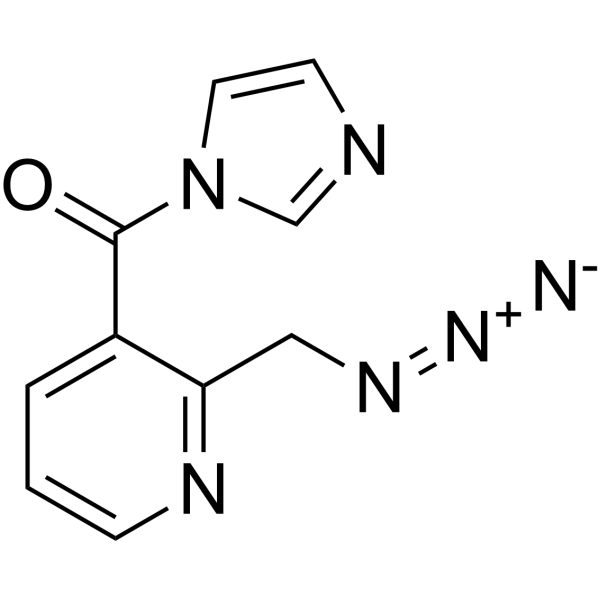
    8RK64, a chemical probe, is a covalent UCHL1 inhibitor (IC50: 0.32 μM) . 8RK64 is a click chemistry reagent, it contains an Azide group and can undergo copper-catalyzed azide-alkyne cycloaddition reaction (CuAAc) with molecules containing Alkyne groups. It can also undergo strain-promoted alkyne-azide cycloaddition (SPAAC) reactions with molecules containing DBCO or BCN groups.
    8RK64
  • HY-W011215
    Dihexyl phthalate
    1 Publications Verification

    Apoptosis Reactive Oxygen Species (ROS) Inflammation/Immunology
    Dihexyl phthalate is one of the commonly used phthalate esters in various plastics and consumer products. Dihexyl phthalate is classified as a priority pollutant and an endocrine disruptor. Dihexyl phthalate can induce reactive oxygen species (ROS) accumulation, promote inflammation, and lead to significant increases in apoptosis and inflammation-related gene expression levels. Dihexyl phthalate can cause testicular atrophy and is a reproductive toxicant .
    Dihexyl phthalate
  • HY-108609

    Phospholipase Inflammation/Immunology
    YM-26734 is a competitive inhibitor of secretory phospholipase A 2 (PLA 2) that exhibits a broad inhibitory profile to several PLA2s .
    YM-26734
  • HY-16421

    (-)-DRF 2725; NNC 61-0029

    PPAR Metabolic Disease
    Ragaglitazar is a PPARα and PPARγ agonist with potent lipid-lowering and insulin-sensitizing efficacy in animal models. Ragaglitazar improves glycemic control and lipid profile in type 2 diabetic.
    Ragaglitazar
  • HY-10096

    GSK-3 Neurological Disease
    TCS2002 (Compound 9b) is a highly selective, orally bioavailable and potent GSK-3β inhibitor with the IC50 of 35 nM. TCS2002 shows good pharmacokinetic profiles including favorable BBB penetration. TCS2002 can be used for the research of Alzheimer’s disease .
    TCS2002
  • HY-18172

    Potassium Channel Neurological Disease
    KCC2 blocker 1 is an orally active and selective K +-Cl - cotransporter KCC2 blocker with an IC50 of 1 μM. KCC2 blocker 1 is a benzyl prolinate .
    KCC2 blocker 1
  • HY-W250743

    Biochemical Assay Reagents Others
    Cresyl diphenyl phosphate is a compound that disrupts lipid homeostasis in zebrafish embryos, causing alterations in lipid content and lipidomic profiles, as well as affecting gene expression and energy homeostasis. |
    Cresyl diphenyl phosphate
  • HY-135737
    Dicaprylyl carbonate
    1 Publications Verification

    Dioctyl carbonate

    Others Others
    Dicaprylyl carbonate, a solid, plant-derived fat, is a dry emollient. Dicaprylyl carbonate has excellent dermatological compatibility and a comprehensive performance profile, such as solubilizing and dispersing ability for sun-care filters .
    Dicaprylyl carbonate
  • HY-14305A
    BMS-582949 hydrochloride
    2 Publications Verification

    p38 MAPK Autophagy Inflammation/Immunology
    BMS-582949 hydrochloride is an orally active and highly selective p38α MAPK inhibitor, with an IC50 of 13 nM. BMS-582949 hydrochloride displays a significantly improved pharmacokinetic profile and is effective in inflammatory disease .
    BMS-582949 hydrochloride
  • HY-110131

    nAChR Neurological Disease
    A 85380 hydrochloride is a novel, high affinity neuronal nicotinic acetylcholine receptor (nAChR) agonist. A 85380 hydrochloride exhibits selectivity for the α4β2 nAChR subtypes. A 85380 hydrochloride has a broad-spectrum analgesic profile .
    A 85380 hydrochloride
  • HY-W052051

    N-Acetylbenzylamine

    Endogenous Metabolite Others
    N-Benzylacetamide (N-Acetylbenzylamine), as an endogenous metabolite, is the major component of the plasma metabolic profile of Benznidazole (HY-B1548) .
    N-Benzylacetamide
  • HY-149767

    SARS-CoV Infection
    CMX990 is a SARS-CoV-2 3CL protease inhibitor. The EC90s for inhibiting SARS-CoV-2 were 9.6 nM and 101 nM in human bronchial epithelial cells (HBECs) and HeLa-ACE2 cells, respectively. CMX990 has good ADME and pharmacokinetic properties .
    CMX990
  • HY-N1798
    Quercetin 3,7-dimethyl ether
    2 Publications Verification

    Endogenous Metabolite Cardiovascular Disease
    Quercetin 3,7-dimethyl ether, isolated from Croton schiedeanus Schlecht, has a NO/cGMP pathway-related profile, with increased vasorelaxant activity .
    Quercetin 3,7-dimethyl ether
  • HY-120802

    AZD-8871; LAS191351

    mAChR Adrenergic Receptor Inflammation/Immunology
    Navafenterol (AZD-8871) is an inhaled dual-acting, potent, selective, and long-lasting M3-antagonist/β2-agonist (MABA) with long-lasting effects and favorable safety profile. The pIC50 is 9.5 for human M3 receptor, and the pEC50 is 9.5 for β2-adrenoceptor. Navafenterol can be used for the research of chronic obstructive pulmonary disease (COPD). Bronchoprotective and antisialagogue effects. Favorable cardiovascular profile .
    Navafenterol
  • HY-12883A

    Sodium Channel Neurological Disease
    PF-05198007 is a potent, orally active and selective arylsulfonamide Nav1.7 inhibitor. PF-05198007 is a compound with a similar pharmacodynamic profile to PF-05089771 .
    PF-05198007
  • HY-12352A
    HJC0416 hydrochloride
    1 Publications Verification

    STAT Apoptosis Cancer
    HJC0416 hydrochloride is a potent and orally active STAT3 inhibitor with an enhanced anticancer profile than Stattic (HY-13818). HJC0416 hydrochloride is a promising anti-cancer agent for breast cancer study .
    HJC0416 hydrochloride
  • HY-W020027

    2-Methylacrylamide

    Environmental Pollutants Biochemical Assay Reagents Others
    Methacrylamide can be used as an excipient. Pharmaceutical excipients, or pharmaceutical auxiliaries, refer to other chemical substances used in the pharmaceutical process other than pharmaceutical ingredients. Pharmaceutical excipients generally refer to inactive ingredients in pharmaceutical preparations, which can improve the stability, solubility and processability of pharmaceutical preparations. Pharmaceutical excipients also affect the absorption, distribution, metabolism, and elimination (ADME) processes of co-administered drugs .
    Methacrylamide
  • HY-W395779
    EBOV-IN-1
    1 Publications Verification

    Filovirus Infection
    EBOV-IN-1 (com 3.47) is an adamantane dipeptide piperazine and an inhibitor of Ebola virus (EBOV). EBOV-IN-1 targets Niemann-Pick C1 (NPC1) and inhibits its binding to the EBOV glycoprotein (GP) that activates and mediates viral penetration into host cells, thereby inhibiting EBOV infection. EBOV-IN-1 inhibits pseudotyped EBOV infection with an IC50 of 13 nM .
    EBOV-IN-1
  • HY-114301A

    Sodium Channel Neurological Disease
    PF-06305591 dihydrate is a potent and highly selective voltage gated sodium channel NaV1.8 blocker, with an IC50 of 15 nM. An excellent preclinical in vitro ADME and safety profile .
    PF-06305591 dihydrate
  • HY-123353

    Neladenoson bialanate; BAY-1067197

    Adenosine Receptor Cardiovascular Disease
    Neladenoson dalanate (Neladenoson bialanate; BAY-1067197) is a orally active agonist precursor of partial Adenosine A1 Receptor. Neladenoson dalanate has a good pharmacokinetic and safety profile, can be used for the chronic heart diseases .
    Neladenoson dalanate
  • HY-103112

    5-HT Receptor Neurological Disease
    SB 243213 hydrochloride is an orally active, selective and high-affinity 5-HT2C receptor antagonist with a pKi of 9.37 and a pKb of 9.8 for human 5-HT2C receptor. SB 243213 hydrochloride shows greater than a 100-fold selectivity over a wide range of neurotransmitter receptors, enzymes and ion channels. SB 243213 hydrochloride has improved anxiolytic profile and has the potential for schizophrenia and motor disorders .
    SB 243213 hydrochloride
  • HY-176287

    Dopamine Receptor GSK-3 PKA P-glycoprotein Neurological Disease
    ARN25657 is a dual-acting D3R/GSK-3β modulator. ARN25657 has both partial D3R agonist activity (EC50 = 15.2 nM, Ki =1.5 nM) and potent GSK-3β inhibitor activity (IC50 = 19.3 nM). ARN25657 exhibits excellent GSK-3β selectivity over FYN, PKA, and CDK5/p35. ARN25657 inhibits P-glycoprotein (P-gP)-mediated acetoxymethyl calcein efflux and improves in vitro ADME properties while maintaining a balanced dual-target profile. ARN25657 is useful for studying bipolar disorder and related neuropsychiatric disorders .
    ARN25657
  • HY-47822

    Sirtuin Neurological Disease
    WAY-354574 is an active molecule targeting deacetylase (Sirtuin) for the study of Huntington's disease (HD) .
    WAY-354574
  • HY-148353

    LRRK2 Neurological Disease
    PF-06455943 is a leucine rich repeat kinase 2 (LRRK2) inhibitor with IC50 value of 3 nM. PF-06455943 also is a PET radioligand. PF-06455943 can be used for the research of ADME/neuro PK characterization and Parkinson disease (PD) .
    PF-06455943
  • HY-144291

    Dopamine Receptor Neurological Disease
    LY3154885 is an orally active dopamine D1 receptor positive allosteric modulator (PAM). LY3154885 has an improved agent-agent interactions (DDI) risk profile .
    LY3154885
  • HY-118179

    mGluR Neurological Disease
    VU0486321 is a compound in a class of mGlu1 positive allosteric modulators (PAMs). VU0486321 maintains acceptable mGlu1 PAM potency, DMPK profile, CNS permeability, and mGluR selectivity.
    VU0486321
  • HY-161178

    Bacterial Infection
    LK-60 is a potent DprE1 inhibitor. LK-60 effectively inhibits the proliferation of Mycobacterium tuberculosis. LK-60 has good safety profiles to gut microbiota and human cells .
    LK-60
  • HY-101530A

    PEG 8 stearate

    Biochemical Assay Reagents Others
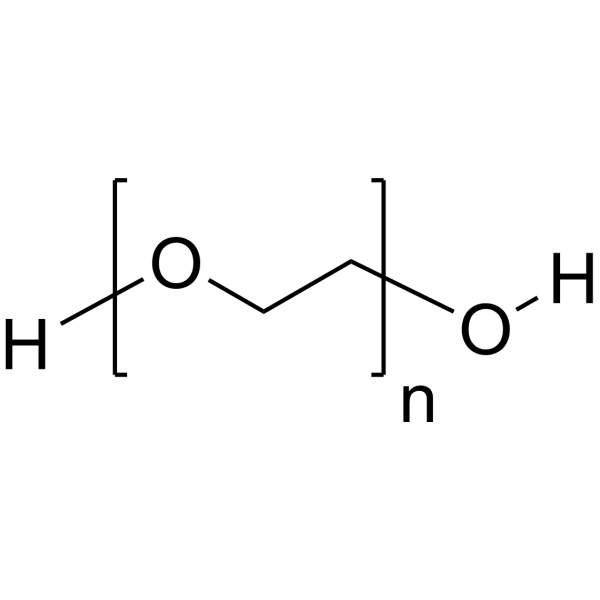
    Polyoxyl 8 stearate can be used as an excipient. Pharmaceutical excipients, or pharmaceutical auxiliaries, refer to other chemical substances used in the pharmaceutical process other than pharmaceutical ingredients. Pharmaceutical excipients generally refer to inactive ingredients in pharmaceutical preparations, which can improve the stability, solubility and processability of pharmaceutical preparations. Pharmaceutical excipients also affect the absorption, distribution, metabolism, and elimination (ADME) processes of co-administered drugs .
    Polyoxyl 8 stearate
  • HY-146380

    Histone Demethylase Cancer
    S1427 is a tranylcypromine-derived LSD1 inhibitor with the IC50 of 390 nM and Ki of 80 nM. S1427 exhibits desirable hERG channel inhibition and microsomal stability profiles. Inhibition of LSD1 partially reduces the proliferation of cancer cells .
    S1427
  • HY-103112A

    5-HT Receptor Neurological Disease
    SB 243213 dihydrochloride is an orally active, selective and high-affinity 5-HT2C receptor antagonist with a pKi of 9.37 and a pKb of 9.8 for human 5-HT2C receptor. SB 243213 dihydrochloride shows greater than a 100-fold selectivity over a wide range of neurotransmitter receptors, enzymes and ion channels. SB 243213 dihydrochloride has improved anxiolytic profile and has the potential for schizophrenia and motor disorders .
    SB 243213 dihydrochloride
  • HY-132867

    Pim Cancer
    MNK/PIM-IN-1 represents an innovative dual MNK/PIM inhibitor with a good pharmacokinetic profile.
    MNK/PIM-IN-1
  • HY-18172A

    Potassium Channel Neurological Disease
    (+)-KCC2 blocker 1 is a selective K +-Cl - cotransporter KCC2 blocker with an IC50 of 0.4 μM. (+)-KCC2 blocker 1 is a benzyl prolinate and a enantiomer of KCC2 blocker 1 .
    (+)-KCC2 blocker 1
  • HY-13829

    HIV Infection
    BMS-585248 is a potent, third-generation HIV-1 attachment inhibitor with a promising initial in vitro and in vivo pharmacokinetic profile .
    BMS-585248
  • HY-145285

    Apelin Receptor (APJ) Cardiovascular Disease
    APJ receptor agonist 5 (compound 3) is a potent and orally active agonist of apelin receptor (APJ) with an EC50 of 0.4 nM. APJ receptor agonist 5 displays excellent pharmacokinetic profiles in the rodent heart failure (HF) model. APJ receptor agonist 5 also shows an acceptable safety profile in preclinical toxicology studies. APJ receptor agonist 5 leads to improved cardiac function and can be used for researching the HF disease .
    APJ receptor agonist 5

Inquiry Online

Your information is safe with us. * Required Fields.

Salutation


Country or Region *

Applicant Name *


Organization Name *

Department *


Email Address *


Product Name *

Cat. No.


Requested quantity *

Phone Number *


Remarks

Inquiry Online

Inquiry Information

Product Name:
Cat. No.:
Quantity:
MCE Japan Authorized Agent:

