



Sodium benzoate
Based on 3 publication(s) in Google Scholar
Sodium benzoate is an orally active pharmaceutical excipient, such as an antibacterial agent, preservative, lubricant, etc. Pharmaceutical excipients, or pharmaceutical auxiliaries, refer to other chemical substances used in the pharmaceutical process other than pharmaceutical ingredients. Pharmaceutical excipients generally refer to inactive ingredients in pharmaceutical preparations, which can improve the stability, solubility and processability of pharmaceutical preparations. Pharmaceutical excipients also affect the absorption, distribution, metabolism, and elimination (ADME) processes of co-administered drugs.Sodium benzoate activates NF-κB and induces Apoptosis. Sodium benzoate induces immune suppression and produces reproductively toxic. Sodium benzoate can be used for colon cancer and immune disease research.
Nos produits utilisent uniquement pour la recherche. Nous ne vendons pas aux patients.
- Pureté : 99.87%
- CAS No.: 532-32-1
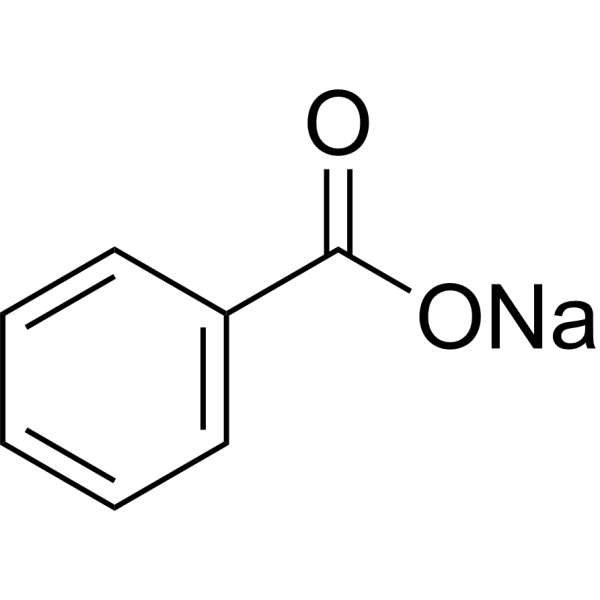
- Formule: C7H5NaO2
- Masse moléculaire:144.10
-
Stockage:
Store at room temperature 3 years.
In solvent -80°C, 2 years , -20°C, 1 year

To place orders, for customer services and technical support, please contact: MedChemExpress USA
Tel: 609-228-6898 E-mail: [email protected] [email protected]


-
 Activité biologique
-
Chemical Information
-
Solvant et solubilité
- Protocole
- Pureté et documentation
- Références
-
 Help & FAQs


-
HY-N0626A
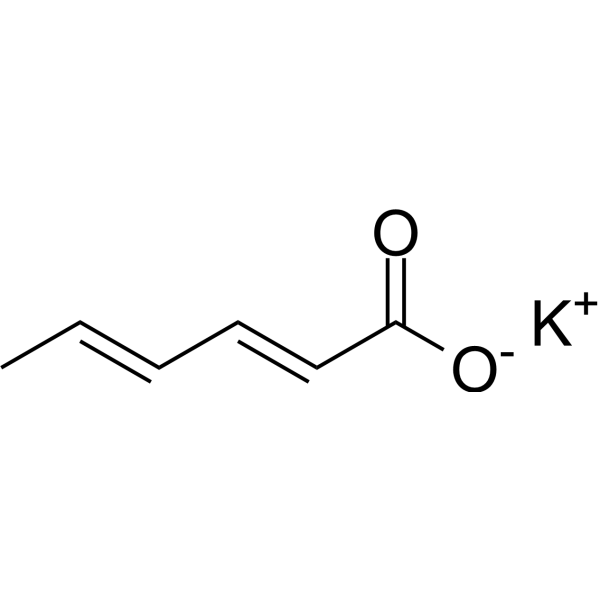
Potassium sorbateAntibacterial Preservative -
HY-N0216
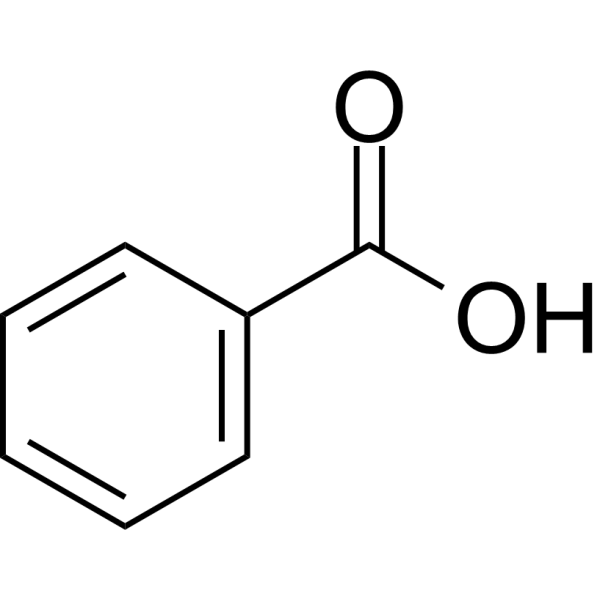
Benzoic acidBacterial Inhibitor -
HY-D0915
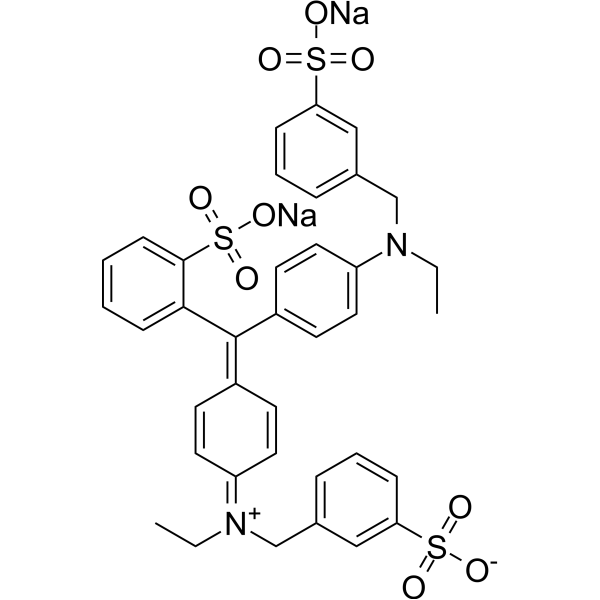
Brilliant Blue FCFColorant -

HY-Y1316R
Sodium benzoate (Standard)Pharmaceutical Excipient -
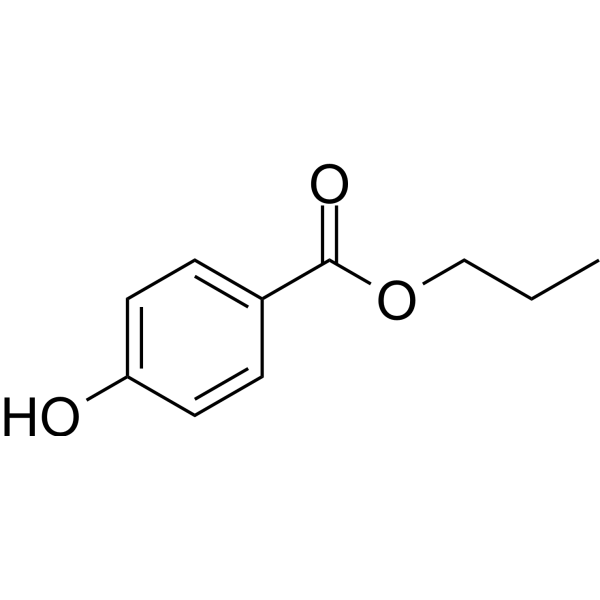
HY-N2026
PropylparabenBacterial Inhibitor -
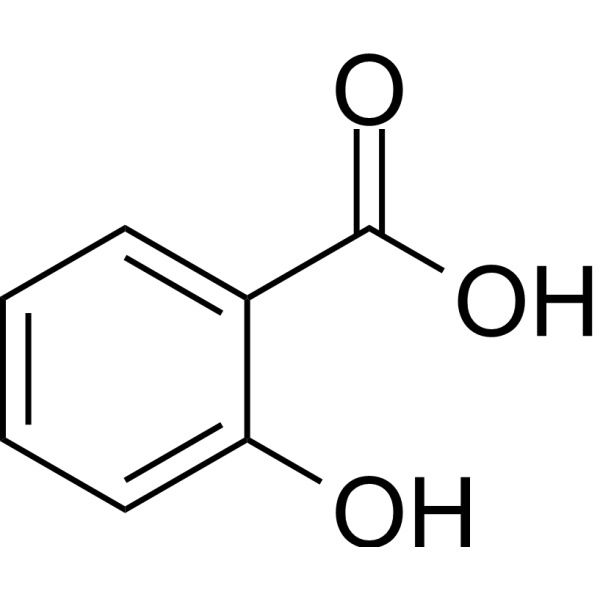
HY-B0167
Salicylic acidCOX-2 Inhibitor -

HY-N2026R
Propylparaben (Standard)Bacterial Inhibitor -
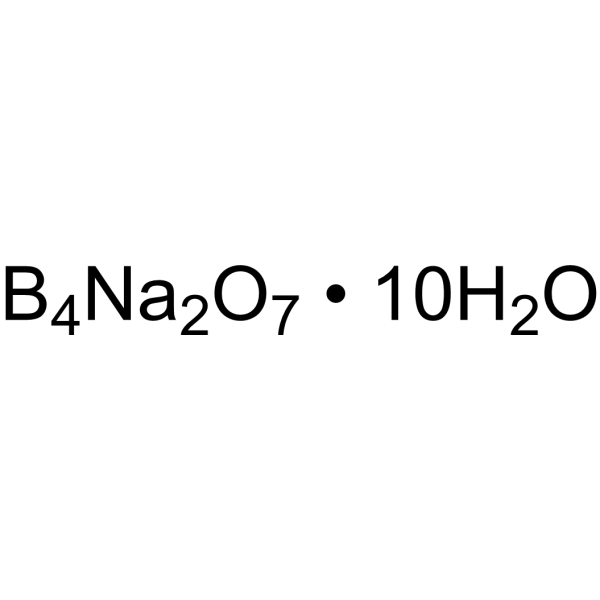
HY-Y1282
Sodium tetraborate decahydrateBiochemical Reagent -
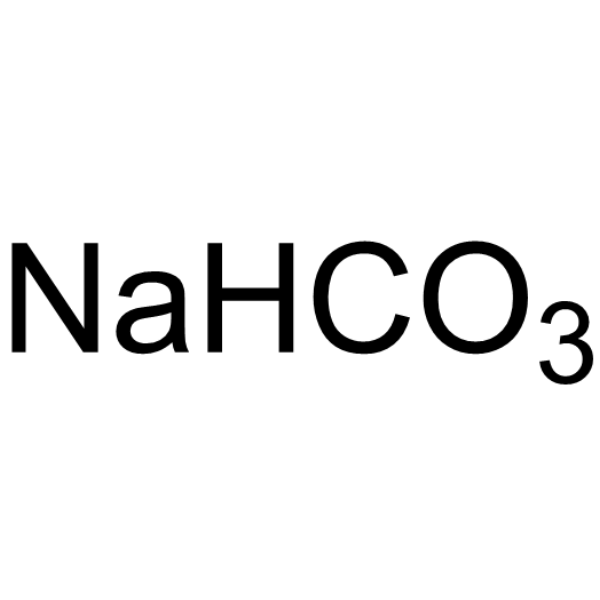
HY-Y0756
Sodium bicarbonateInorganic Salt -
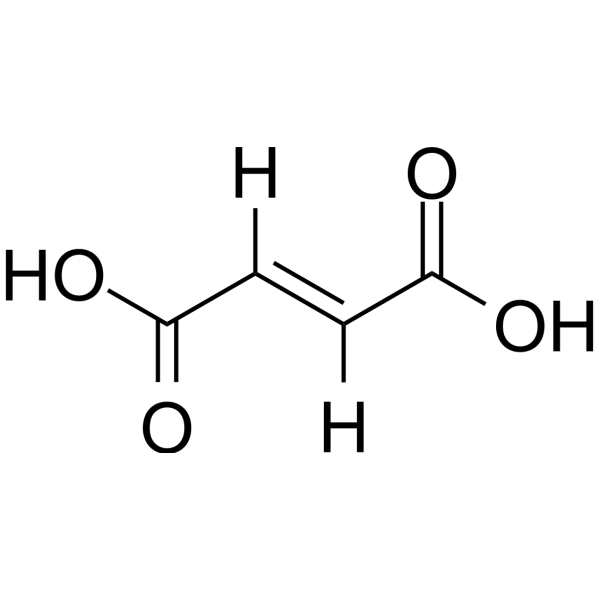
HY-W015883
Fumaric acidAnti-inflammatory agent -
HY-W251598C
Sodium bicarbonate, for cell cultureInorganic Salt
Publications Citing Use of MedChemExpress (MCE) Sodium benzoate
More

Activité biologique
Description
In Vitro
Sodium benzoate (0.125-3 mg/mL, 48 h) does not completely protect the PC12 cells to aluminum-induced free radicals toxicity[4].
Sodium benzoate (0-2500 mg/mL, 72 h) affects the functional and activation status of splenocytes at non cytotoxic dose, with inducing immune suppression[5].
Sodium benzoate (0.39-200 mM, 24 h) activates NF-κB and induces apoptosis in HCT116 cells[6].
MedChemExpress (MCE) has not independently confirmed the accuracy of these methods. They are for reference only.
In Vivo
Sodium benzoate (0-1000 mg/kg, p.o., 90 consecutive days) is dose-dependently reproductively toxic to male rats, with reducing sperm parameters, alters plasma levels of sex hormones[3].
MedChemExpress (MCE) has not independently confirmed the accuracy of these methods. They are for reference only.


Chemical Information
-
CAS No. 532-32-1
-
Appearance Solid
-
Masse moléculaire 144.10
-
Formule C7H5NaO2
-
Color White to off-white
-
SMILES
O=C(O[Na])C1=CC=CC=C1
-
Livraison
Room temperature in continental US; may vary elsewhere.
-
Stockage
Store at room temperature 3 years
In solvent -80°C 2 years -20°C 1 year


Publications (3)
-
Journal Impact Factor
-
Most Recent
-
Nat Chem Biol
2025 Jun 2. PMID: 40456963 -
Mol Pharmacol
Comparative evaluation of the biological characteristics of a novel retinoid X receptor agonist and bexarotene. [Abstract]2025 Jun 24;107(8):100057. PMID: 40701035 -


Solvant et solubilité
In Vitro:
H2O : ≥ 100 mg/mL (693.96 mM)
DMSO : 5 mg/mL (34.70 mM; ultrasonic and warming and heat to 60°C; Hygroscopic DMSO has a significant impact on the solubility of product, please use newly opened DMSO)
* "≥" means soluble, but saturation unknown.
Please refer to the solubility information to select the appropriate solvent. Once prepared, please aliquot and store the solution to prevent product inactivation from repeated freeze-thaw cycles.
Storage method and period of stock solution: -80°C, 2 years; -20°C, 1 year. When stored at -80°C, please use it within 2 years. When stored at -20°C, please use it within 1 year.
* Note: If you choose water as the stock solution, please dilute it to the working solution, then filter and sterilize it with a 0.22 μm filter before use.
Please refer to the solubility information to select the appropriate solvent. Once prepared, please aliquot and store the solution to prevent product inactivation from repeated freeze-thaw cycles.
Storage method and period of stock solution: -80°C, 2 years; -20°C, 1 year. When stored at -80°C, please use it within 2 years. When stored at -20°C, please use it within 1 year.
* Note: If you choose water as the stock solution, please dilute it to the working solution, then filter and sterilize it with a 0.22 μm filter before use.
Concentration (start) × Volume (start) = Concentration (final) × Volume (final)


Pureté et documentation
-
Fiche technique (278 KB)
-
SDS (393 KB)
- English - EN (393 KB)
- Français - FR (393 KB)
- Deutsch - DE (393 KB)
- Norwegian - NO (393 KB)
- Español - ES (393 KB)
- Swedish - SV (393 KB)
- Italian - IT (393 KB)
- Korean - KR (393 KB)
- Portuguese - PT (393 KB)
-
Instruction de manipulation (2659 KB)
Références
[1]. Elder DP, et al. Pharmaceutical excipients - quality, regulatory and biopharmaceutical considerations. Eur J Pharm Sci. 2016 May 25;87:88-99. [Content Brief]
[2]. Olofinnade AT, et al. The potential toxicity of food-added sodium benzoate in mice is concentration-dependent. Toxicol Res (Camb). 2021 May 17;10(3):561-569. [Content Brief]
[3]. El-Shennawy L, et al. Dose-dependent reproductive toxicity of sodium benzoate in male rats: Inflammation, oxidative stress and apoptosis. Reprod Toxicol. 2020 Dec;98:92-98. [Content Brief]
[4]. Arabsolghar R, et al. The protective effect of sodium benzoate on aluminum toxicity in PC12 cell line. Res Pharm Sci. 2017 Oct;12(5):391-400. [Content Brief]
[5]. Yadav A, et al. Sodium benzoate, a food preservative, affects the functional and activation status of splenocytes at non cytotoxic dose. Food Chem Toxicol. 2016 Feb;88:40-7. [Content Brief]
[6]. Yilmaz B, et al. Food Additive Sodium Benzoate (NaB) Activates NFκB and Induces Apoptosis in HCT116 Cells. Molecules. 2018 Mar 22;23(4):723. [Content Brief]


Complete Stock Solution Preparation Table
Please refer to the solubility information to select the appropriate solvent. Once prepared, please aliquot and store the solution to prevent product inactivation from repeated freeze-thaw cycles.
Storage method and period of stock solution: -80°C, 2 years; -20°C, 1 year. When stored at -80°C, please use it within 2 years. When stored at -20°C, please use it within 1 year.
| Optional Solvent | Concentration Solvent Mass | 1 mg | 5 mg | 10 mg | 25 mg |
|---|---|---|---|---|---|
| DMSO / H2O | 1 mM | 6.9396 mL | 34.6981 mL | 69.3962 mL | 173.4906 mL |
| 5 mM | 1.3879 mL | 6.9396 mL | 13.8792 mL | 34.6981 mL | |
| 10 mM | 0.6940 mL | 3.4698 mL | 6.9396 mL | 17.3491 mL | |
| 15 mM | 0.4626 mL | 2.3132 mL | 4.6264 mL | 11.5660 mL | |
| 20 mM | 0.3470 mL | 1.7349 mL | 3.4698 mL | 8.6745 mL | |
| 25 mM | 0.2776 mL | 1.3879 mL | 2.7758 mL | 6.9396 mL | |
| 30 mM | 0.2313 mL | 1.1566 mL | 2.3132 mL | 5.7830 mL | |
| H2O | 40 mM | 0.1735 mL | 0.8675 mL | 1.7349 mL | 4.3373 mL |
| 50 mM | 0.1388 mL | 0.6940 mL | 1.3879 mL | 3.4698 mL | |
| 60 mM | 0.1157 mL | 0.5783 mL | 1.1566 mL | 2.8915 mL | |
| 80 mM | 0.0867 mL | 0.4337 mL | 0.8675 mL | 2.1686 mL | |
| 100 mM | 0.0694 mL | 0.3470 mL | 0.6940 mL | 1.7349 mL |
* Note: If you choose water as the stock solution, please dilute it to the working solution, then filter and sterilize it with a 0.22 μm filter before use.


Sodium benzoate Related Classifications
HY-Y1316 Related Classifications
 Powered by Bioz