



Hydroxocobalamin monohydrochloride
Based on 3 publication(s) in Google Scholar
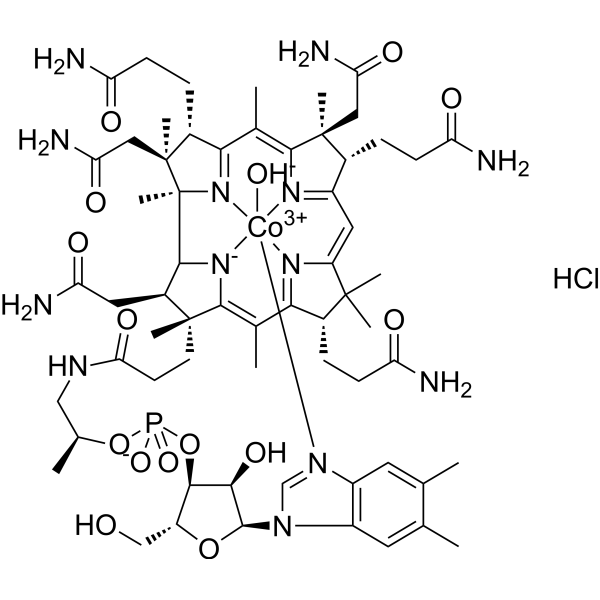
Hydroxocobalamin monohydrochloride (Vitamin B12a monohydrochloride) is an injectable naturally occurring form of vitamin B12 with a favorable adverse effect profile, used as a dietary supplement in the treatment of vitamin B12 deficiency including pernicious anemia.
For research use only. We do not sell to patients.
- Purity : 99.57%
- CAS No.: 59461-30-2
- Formula: C62H90ClCoN13O15P
- Molecular Weight:1382.82
-
Storage:
4°C, sealed storage, away from moisture and light
* In solvent : -80°C, 6 months; -20°C, 1 month (sealed storage, away from moisture and light)

To place orders, for customer services and technical support, please contact: MedChemExpress USA
Tel: 609-228-6898 E-mail: [email protected] [email protected]


-
 Biological Activity
-
Chemical Information
-
Solvent & Solubility
- Purity & Documentation
- References
-
 Help & FAQs


-
HY-B0166
L-Ascorbic acidAntioxidant -
HY-15398
Vitamin D3Vitamin -
HY-B0143
NiacinB3 vitamin -
HY-B0586
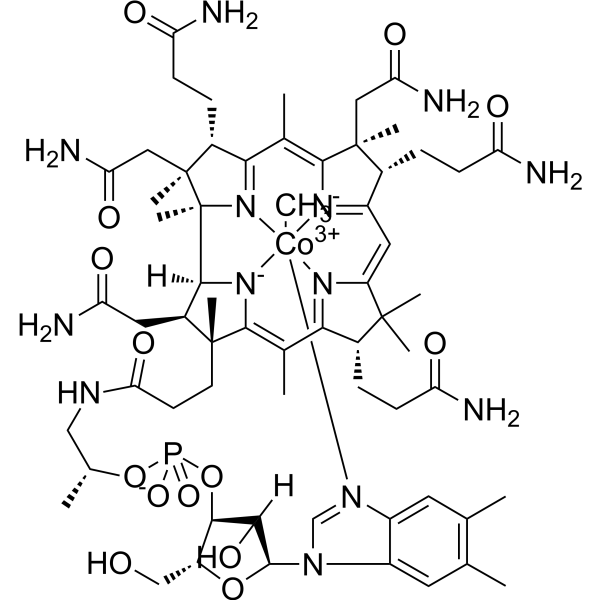
MethylcobalaminVitamin B12 -
HY-B1744
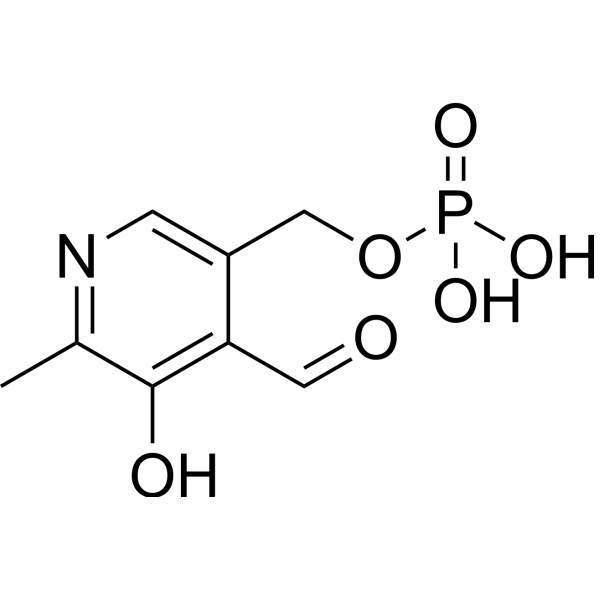
Pyridoxal phosphateEndogenous Metabolite -

HY-B0143R
Niacin (standard)B3 vitamin -
HY-B0166G
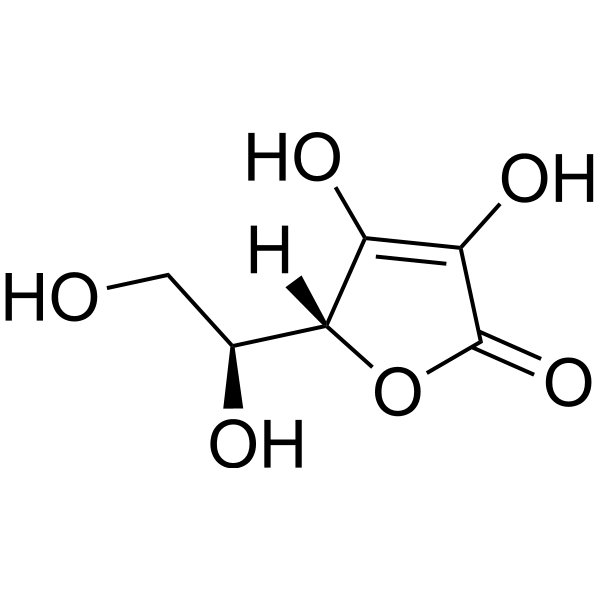
L-Ascorbic acid (GMP)Antioxidant -

HY-B0166R
L-Ascorbic acid (Standard)Antioxidant -
HY-N0680
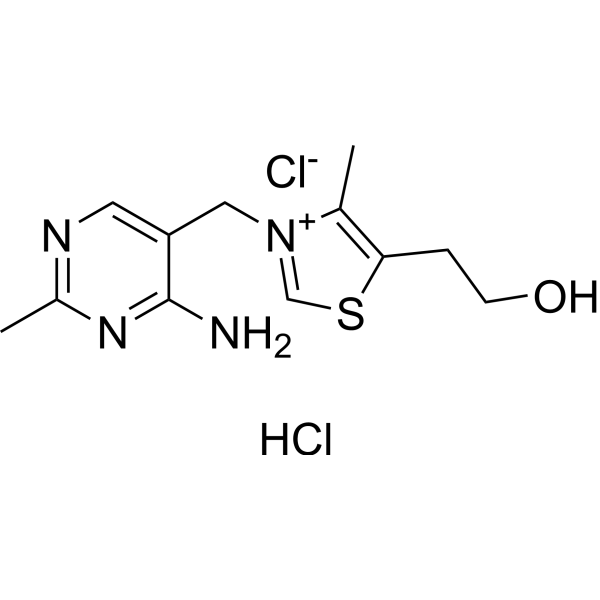
Thiamine hydrochlorideVitamin B1 -
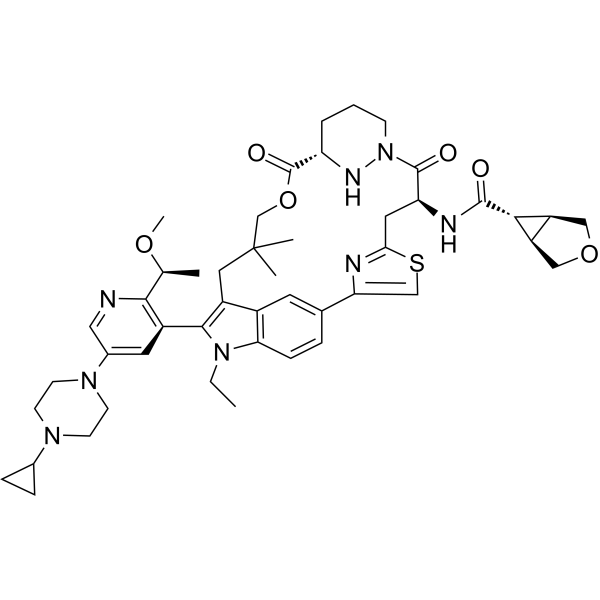
HY-156498
RMC-7977RAS inhibitor -

HY-15398R
Vitamin D3 (Standard)Vitamin -
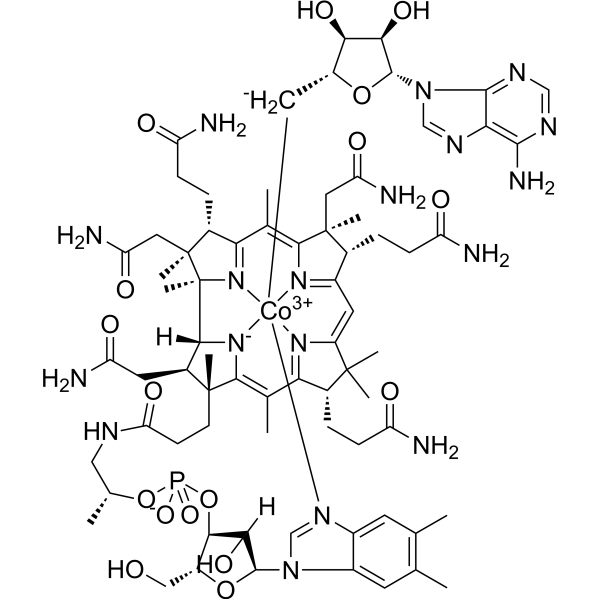
HY-112790
AdenosylcobalaminCoenzyme
Publications Citing Use of MedChemExpress (MCE) Hydroxocobalamin monohydrochloride
MoreAll Endogenous Metabolite Isoforms
More

Biological Activity
Description
IC50 & Target
|
Human Endogenous Metabolite |
In Vitro
The cobalt atom of hydroxocobalamin binds cyanide and nitric oxide and hydroxocobalamin attenuates vascular responses to NO in vitro[3].
MedChemExpress (MCE) has not independently confirmed the accuracy of these methods. They are for reference only. .
In Vivo
More than 60% of the mice administered 35 mg/kg (0.63 mmol/kg) of NaSH (LD90) survive (at 24 h) when hydroxocobalamin (0.25 mmol/kg) is given after NaSH administration whereas less than 15% of the mice survive without hydroxocobalamin. Hydroxocobalamin (50–100 μM) or cobalt (50–100 μM) also preventes hepatocyte cytotoxicity induced by NaSH (500 μM). Furthermore, adding hydroxocobalamin 60 min later than NaSH still shows some protective activity[4].
MedChemExpress (MCE) has not independently confirmed the accuracy of these methods. They are for reference only.


Chemical Information
-
CAS No. 59461-30-2
-
Appearance Solid
-
Molecular Weight 1382.82
-
Formula C62H90ClCoN13O15P
-
Color Reddish brown to black
-
SMILES
C[C@@]12[N]([Co+3]34([N]5=C[N@@]([C@@H](O[C@H](CO)[C@H]6OP7([O-])=O)[C@@H]6O)C8=C5C=C(C)C(C)=C8)([OH-])[N-]9C2[C@H](CC(N)=O)[C@@](C)(CCC(NC[C@H](C)O7)=O)C9=C(C)C([C@@H](CCC(N)=O)C%10(C)C)=[N]3C%10=CC%11=[N]4C([C@](CC(N)=O)(C)[C@@H]%11CCC(N)=O)=C%12C)=C%12[C@@H](CCC(N)=O)[C@]1(C)CC(N)=O.Cl
-
Synonyms
Vitamin B12a monohydrochloride
-
Structure Classification
-
Initial Source
-
Shipping
Room temperature in continental US; may vary elsewhere.
-
Storage
4°C, sealed storage, away from moisture and light
* In solvent : -80°C, 6 months; -20°C, 1 month (sealed storage, away from moisture and light)


Publications (3)
-
Journal Impact Factor
-
Most Recent
-
Nat Commun
2025 Jan 31;16(1):1233. PMID: 39890804 -
Nat Commun
Design of modular autoproteolytic gene switches responsive to anti-coronavirus drug candidates. [Abstract]2021 Nov 22;12(1):6786. PMID: 34811361 -
J Clin Transl Hepatol
Hydrogen Sulfide Promotes Platelet Autophagy via PDGFR-α/PI3K/Akt Signaling in Cirrhotic Thrombocytopenia. [Abstract]2024 Jul 28;12(7):625-633. PMID: 38993511


Solvent & Solubility
In Vitro:
DMSO : 100 mg/mL (72.32 mM; Need ultrasonic; Hygroscopic DMSO has a significant impact on the solubility of product, please use newly opened DMSO)
H2O : 25 mg/mL (18.08 mM; Need ultrasonic)
Please refer to the solubility information to select the appropriate solvent. Once prepared, please aliquot and store the solution to prevent product inactivation from repeated freeze-thaw cycles.
Storage method and period of stock solution: -80°C, 6 months; -20°C, 1 month (sealed storage, away from moisture and light). When stored at -80°C, please use it within 6 months. When stored at -20°C, please use it within 1 month.
* Note: If you choose water as the stock solution, please dilute it to the working solution, then filter and sterilize it with a 0.22 μm filter before use.
Please refer to the solubility information to select the appropriate solvent. Once prepared, please aliquot and store the solution to prevent product inactivation from repeated freeze-thaw cycles.
Storage method and period of stock solution: -80°C, 6 months; -20°C, 1 month (sealed storage, away from moisture and light). When stored at -80°C, please use it within 6 months. When stored at -20°C, please use it within 1 month.
* Note: If you choose water as the stock solution, please dilute it to the working solution, then filter and sterilize it with a 0.22 μm filter before use.
Concentration (start) × Volume (start) = Concentration (final) × Volume (final)
In Vivo:
Select the appropriate dissolution method based on your experimental animal and administration route.
- For the following dissolution methods, please ensure to first prepare a clear stock solution using an In Vitro approach and then sequentially add co-solvents:
- To ensure reliable experimental results, the clarified stock solution can be appropriately stored based on storage conditions. As for the working solution for In Vivo experiments, it is recommended to prepare freshly and use it on the same day.
- The percentages shown for the solvents indicate their volumetric ratio in the final prepared solution. If precipitation or phase separation occurs during preparation, heat and/or sonication can be used to aid dissolution.
Add each solvent one by one: 10% DMSO 40% PEG300 5% Tween-80 45% Saline
Solubility: ≥ 2.5 mg/mL (1.81 mM); Clear solution
This protocol yields a clear solution of ≥ 2.5 mg/mL (saturation unknown).
Taking 1 mL working solution as an example, add 100 μL DMSO stock solution (25.0 mg/mL) to 400 μL PEG300, and mix evenly; then add 50 μL Tween-80 and mix evenly; then add 450 μL Saline to adjust the volume to 1 mL.
Preparation of Saline: Dissolve 0.9 g sodium chloride in ddH₂O and dilute to 100 mL to obtain a clear Saline solution.
Add each solvent one by one: 10% DMSO 90% (20% SBE-β-CD in Saline)
Solubility: ≥ 2.5 mg/mL (1.81 mM); Clear solution
This protocol yields a clear solution of ≥ 2.5 mg/mL (saturation unknown).
Taking 1 mL working solution as an example, add 100 μL DMSO stock solution (25.0 mg/mL) to 900 μL 20% SBE-β-CD in Saline, and mix evenly.
Preparation of 20% SBE-β-CD in Saline (4°C, storage for one week): 2 g SBE-β-CD powder is dissolved in 10 mL Saline, completely dissolve until clear.
For the following dissolution methods, please prepare the working solution directly:
It is recommended to prepare fresh solutions and use them promptly within a short period of time.
The percentages shown for the solvents indicate their volumetric ratio in the final prepared solution. If precipitation or phase separation occurs during preparation, heat and/or sonication can be used to aid dissolution.
Add each solvent one by one: PBS
Solubility: 50 mg/mL (36.16 mM); Clear solution; Need ultrasonic
In Vivo Dissolution Calculator
Please enter the basic information of animal experiments:
-
-
-
-
Recommended: Prepare an additional quantity of animals to account for potential losses during experiments.
Working solution concentration: 0.22 mg/mL
This product has good water solubility, please refer to the measured solubility data in water/PBS/Saline for details.


Purity & Documentation
-
Data Sheet (294 KB)
-
SDS (420 KB)
- English - EN (420 KB)
- Français - FR (420 KB)
- Deutsch - DE (420 KB)
- Norwegian - NO (420 KB)
- Español - ES (420 KB)
- Swedish - SV (420 KB)
- Italian - IT (420 KB)
- Korean - KR (420 KB)
- Portuguese - PT (420 KB)
-
Handling Instructions (2659 KB)
References
[1]. Cheungpasitporn W, et al. High-dose hydroxocobalamin for vasoplegic syndrome causing false blood leak alarm. Clin Kidney J. 2017 Jun;10(3):357-362. [Content Brief]
[2]. Wang H, et al. Oral vitamin B12 versus intramuscular vitamin B12 for vitamin B12 deficiency. Cochrane Database Syst Rev. 2018 Mar 15;3:CD004655. [Content Brief]
[3]. Greenberg SS, et al. Hydroxocobalamin (vitamin B12a) prevents and reverses endotoxin-induced hypotension and mortality in rodents: role of nitric oxide. J Pharmacol Exp Ther. 1995 Apr;273(1):257-65. [Content Brief]
[4]. Truong DH, et al. Prevention of hydrogen sulfide (H2S)-induced mouse lethality and cytotoxicity by hydroxocobalamin (vitamin B(12a)). Toxicology. 2007 Dec 5;242(1-3):16-22. [Content Brief]


Complete Stock Solution Preparation Table
Please refer to the solubility information to select the appropriate solvent. Once prepared, please aliquot and store the solution to prevent product inactivation from repeated freeze-thaw cycles.
Storage method and period of stock solution: -80°C, 6 months; -20°C, 1 month (sealed storage, away from moisture and light). When stored at -80°C, please use it within 6 months. When stored at -20°C, please use it within 1 month.
| Optional Solvent | Concentration Solvent Mass | 1 mg | 5 mg | 10 mg | 25 mg |
|---|---|---|---|---|---|
| H2O / DMSO | 1 mM | 0.7232 mL | 3.6158 mL | 7.2316 mL | 18.0790 mL |
| 5 mM | 0.1446 mL | 0.7232 mL | 1.4463 mL | 3.6158 mL | |
| 10 mM | 0.0723 mL | 0.3616 mL | 0.7232 mL | 1.8079 mL | |
| 15 mM | 0.0482 mL | 0.2411 mL | 0.4821 mL | 1.2053 mL | |
| DMSO | 20 mM | 0.0362 mL | 0.1808 mL | 0.3616 mL | 0.9039 mL |
| 25 mM | 0.0289 mL | 0.1446 mL | 0.2893 mL | 0.7232 mL | |
| 30 mM | 0.0241 mL | 0.1205 mL | 0.2411 mL | 0.6026 mL | |
| 40 mM | 0.0181 mL | 0.0904 mL | 0.1808 mL | 0.4520 mL | |
| 50 mM | 0.0145 mL | 0.0723 mL | 0.1446 mL | 0.3616 mL | |
| 60 mM | 0.0121 mL | 0.0603 mL | 0.1205 mL | 0.3013 mL |
* Note: If you choose water as the stock solution, please dilute it to the working solution, then filter and sterilize it with a 0.22 μm filter before use.


Hydroxocobalamin monohydrochloride Related Classifications
HY-B2209A Related Classifications
 Powered by Bioz