1. Search Result
Search Result
Results for "

Prostaglandins

" in MedChemExpress (MCE) Product Catalog:

782

Inhibitors & Agonists

1

Screening Libraries

9

Fluorescent Dyes

7

Biochemical Assay Reagents

15

Peptides

89

Natural
Products

72

Isotope-Labeled Compounds

2

GMP Molecules

Cat. No. Product Name Target Research Areas Chemical Structure
  • HY-16968
    SW033291
    5+ Cited Publications

    15-PGDH Others
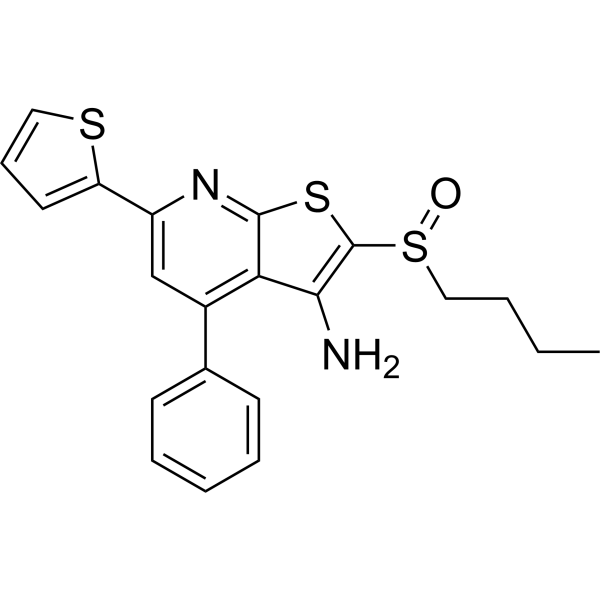
    SW033291 is a potent and high-affinity inhibitor of 15-PGDH with a Ki of 0.1 nM. SW033291 increases prostaglandin PGE2 levels in bone marrow and other tissues. SW033291 also promotes tissue regeneration .
    SW033291
  • HY-13988
    AT-56
    1 Publications Verification

    PGE synthase Inflammation/Immunology
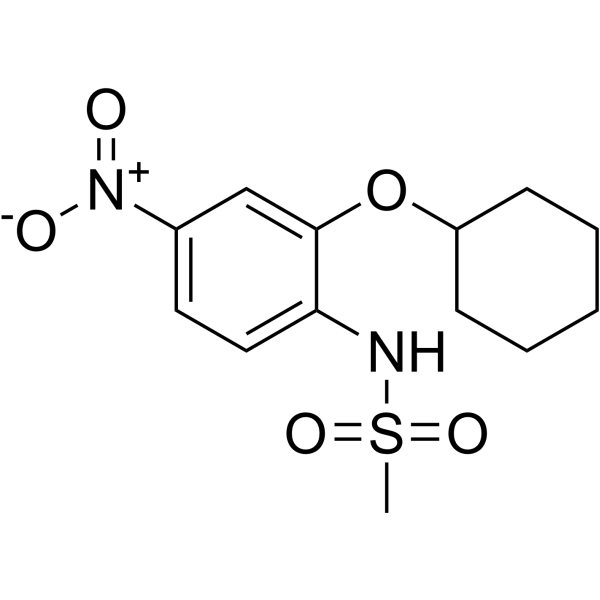
    AT-56 is a potent, selective and orally active inhibitor of lipocalin-type prostaglandin D synthase (L-PGDS), with an IC50 of 95 μM and Ki of 75 μM. AT-56 could selectively suppress the drowsiness or pain reaction mediated by L-PGDS-catalyzed PGD2 .
    AT-56
  • HY-108568
    15-Deoxy-Δ-12,14-prostaglandin J2
    2 Publications Verification

    15d-PGJ2; 15-Deoxy-Δ12,14-PGJ2

    PPAR Endogenous Metabolite Neurological Disease Inflammation/Immunology Cancer
    15-Deoxy-Δ-12,14-prostaglandin J2 (15d-PGJ2) is a cyclopentenone prostaglandin and a metabolite of PGD2. 15-Deoxy-Δ-12,14-prostaglandin J2 is a selective PPARγ (EC50 of 2 µM) and a covalent PPARδ agonist. 15-Deoxy-Δ-12,14-prostaglandin J2 promotes efficient differentiation of C3H10T1/2 fibroblasts to adipocytes with an EC50 of 7 μM .
    15-Deoxy-Δ-12,14-prostaglandin J2
  • HY-174990

    15-PGDH Metabolic Disease Inflammation/Immunology
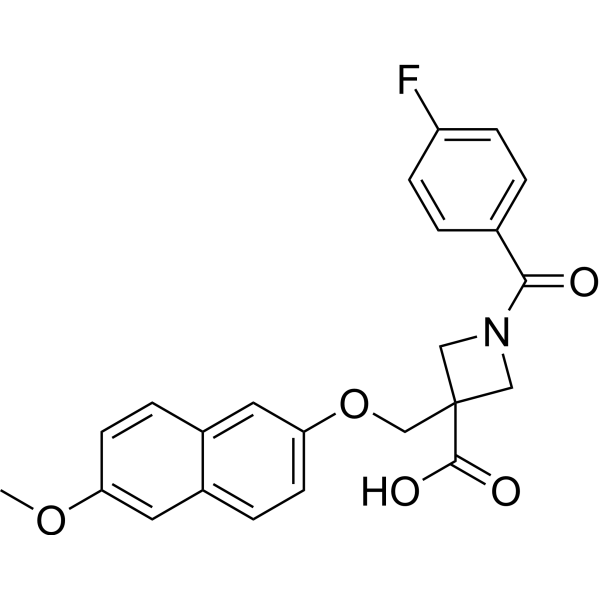
    HW201877 is a potent and orally active 15-prostaglandin dehydrogenase (15-PGDH) inhibitor with an IC50 of 3.6 nM. HW201877 demonstrates robust cellular efficacy in elevating PGE2 levels in A549 cells and exhibits remarkable efficacy in animal models of tissue injury and fibrosis. HW201877 can be used for the study of inflammatory bowel disease (IBD), idiopathic pulmonary fibrosis (IPF) and Crohn’s disease (CD) .
    HW201877
  • HY-B1074

    Etamsylate

    Prostaglandin Receptor Cardiovascular Disease Endocrinology
    Ethamsylate (Etamsylate) is an orally active anti-hemorrhagic compound. Ethamsylate inhibits biosynthesis and action of prostaglandins. Ethamsylate has the potential to maintain early hemostasis as well as restores capillary resistance. Ethamsylate acts as an antiangiogenic factor, inhibiting wound healing and matrigel tubulogenesis. .
    Ethamsylate
  • HY-113366

    PGJ2

    Prostaglandin Receptor Endogenous Metabolite Neurological Disease
    Prostaglandin J2 (PGJ2), an endogenous metabolite of Prostaglandin D2 (PGD2; HY-101988), is a potent PGD2 receptor (DP) agonist with Kis of 0.9 nM and 6.6 nM for hDP and hCRTH2, respectively. Prostaglandin J2 stimulates intracellular cyclic AMP production with an EC50 value of 1.2 nM. Prostaglandin J2 induces oxidative stress and neuronal apoptosis. Prostaglandin J2 induces the accumulation/aggregation of ubiquitinated (Ub) proteins. Prostaglandin J2 is highly neurotoxic and potentially contributes to many neurodegenerative conditions, including Alzheimer's (AD) and Parkinson's diseases (PD) .
    Prostaglandin J2
  • HY-147416

    BI 1029539; GS-248; OX-MPI

    PGE synthase Infection Cancer
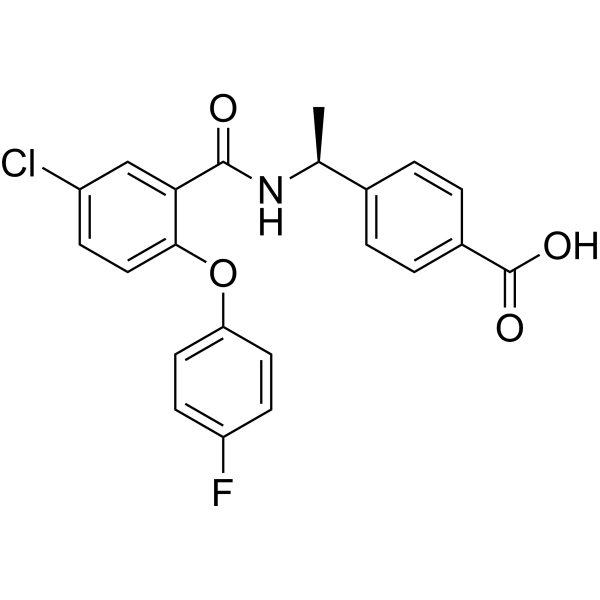
    Vipoglanstat (BI 1029539), a carboxamide, is a potent and selective, non-peptide and orally active small molecular inhibitor of human prostaglandin E synthase 1 (mPGES-1). Vipoglanstat also has anti-inflammatory activity .
    Vipoglanstat
  • HY-B0336
    Pranoprofen
    2 Publications Verification

    COX Apoptosis PGE synthase Inflammation/Immunology Cancer
    Pranoprofen is a non-steroidal anti-inflammatory agent (NSAID) for the research of keratitis or other ophthalmology diseases. Pranoprofen inhibit COX-1 and COX-2 enzymes, thus blocking arachidonic acid converted to eicosanoids and reducing prostaglandins synthesis .
    Pranoprofen
  • HY-B0230
    Phenylbutazone
    3 Publications Verification

    COX Inflammation/Immunology
    Phenylbutazone is an efficient reducing cofactor for the peroxidase activity of prostaglandin H synthase (PHS). Phenylbutazone, a hepatotoxin, is a nonsteroidal anti-inflammatory agent (NSAID). Phenylbutazone induces muscle blind-like protein 1 (MBNL1) expression and has the potential for ankylosing spondylitis research .
    Phenylbutazone
  • HY-113459

    Prostaglandin Receptor Cardiovascular Disease Endocrinology
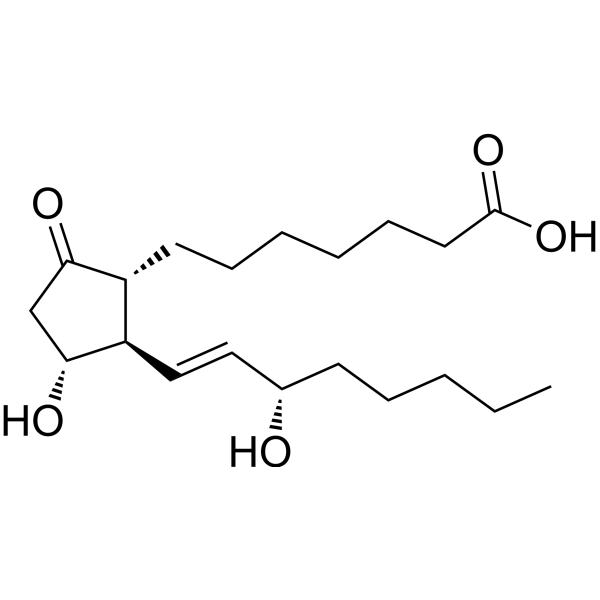
    Prostaglandin F1a is a compound that has the effect of contracting smooth muscle and lowering blood pressure .
    Prostaglandin F1a
  • HY-118388

    Prostaglandin Receptor Endocrinology
    AS604872 is an orally active, potent and selective prostaglandin F2α receptor (FP) antagonist with a Ki of 35 nM in humans, 158 nM in rats and 323 nM in mice. AS604872 inhibits contractions and delays labour .
    AS604872
  • HY-B0890

    McN-2783-21-98

    PGE synthase Neurological Disease Inflammation/Immunology
    Zomepirac sodium salt (McN-2783-21-98) is an orally active prostaglandin synthetase inhibitor. Zomepirac sodium salt blocks prostaglandin synthesis and inhibits Collagen (HY-P72147)- or Epinephrine (HY-B0447)-induced platelet aggregation. Zomepirac sodium salt can be used for the research of postoperative pain and osteoarthritis .
    Zomepirac sodium salt
  • HY-128428

    15(S)-15-Methyl Prostaglandin F2α; 15-Methyl-PGF2α

    Prostaglandin Receptor Endocrinology
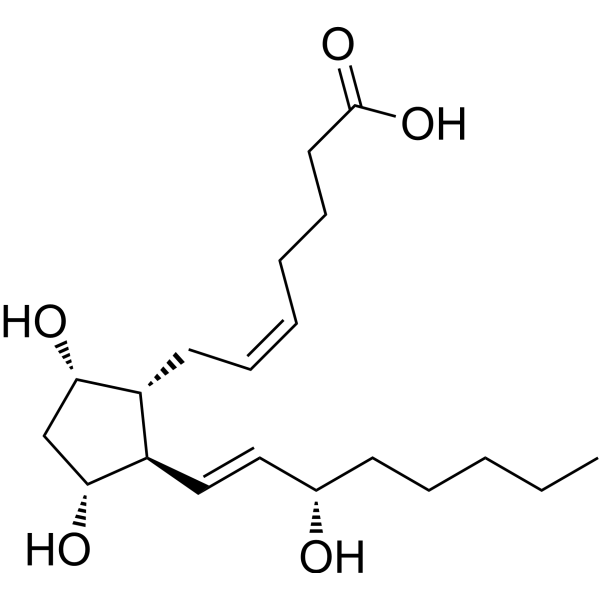
    Carboprost (15(S)-15-Methyl Prostaglandin F2α) is a metabolically stable synthetic analog of prostaglandin F2α. Carboprost stimulates uterine contractions and induces abortion. Carboprost is used for postpartum hemorrhage due to uterine atony and for the termination of pregnancy in the second trimester .
    Carboprost
  • HY-19360

    SHB 286; CP-34089; ZK-57671

    Prostaglandin Receptor Cardiovascular Disease Inflammation/Immunology
    Sulprostone (SHB 286) is a potent and selective EP3 receptor agonist. Sulprostone (SHB 286) is a prostaglandin E2 (PGE2) analogue and has antiulcer and nonsteroidal abortifacient effects. Sulprostone has potential for the research of pregnancy termination and hemorrhages during delivery .
    Sulprostone
  • HY-136500

    PGH2

    Endogenous Metabolite Amyloid-β Neurological Disease Inflammation/Immunology
    Prostaglandin H2 (PGH2) is an endothelium-derived contracting factor. Prostaglandin H2 can cause vasoconstriction. Prostaglandin H2 is the common precursor of all PGs and is produced by several cells that express cyclooxygen-ases. Prostaglandin H2 can activate PGD2 receptors CRTH2 and DP via interacting directly with the receptors and/or by giving rise to PGD2 after catalytic conversion by plasma proteins. Prostaglandin H2 can induce eosinophils migration and inhibit platelet aggregation. Prostaglandin H2 can accelerate the formation of dimers and higher oligomers of amyloid β1-42. Prostaglandin H2 can be used for the researches of inflammation and neurological disease, such as Alzheimer disease .
    Prostaglandin H2
  • HY-N10225

    Prostaglandin Receptor Cardiovascular Disease Endocrinology
    Thielavin A is an inhibitor of prostaglandin biosynthesis produced by Thielavia terricola. Thielavin A specifically inhibits the conversion of arachidonic acid into prostaglandin H2. Thielavin A has no anti-inflammatory activity on intravenous injection or on oral administration .
    Thielavin A
  • HY-E70229

    COX-1

    Endogenous Metabolite Metabolic Disease
    Cyclooxygenase 1, sheep (COX-1) is a 71 kDa membrane bound protein predominantly present in endoplasmic reticulum. Cyclooxygenase 1 has three domains, the epidermal growth factor (EGF) like domain, enzymatic and membrane binding domain. Cyclooxygenase 1 mediates prostaglandin synthesis and is modulated by anti-inflammatory nonsteroidal drugs .
    Cyclooxygenase 1, sheep
  • HY-108562

    Prostaglandin Receptor Neurological Disease
    SC-51322 is a potent and selective antagonist of prostaglandin E2 (PGE2) receptor (EP 1), with a pA2 of 8.1. SC-51322 has the pain-relieving effect .
    SC-51322
  • HY-N4237
    Saikogenin D
    1 Publications Verification

    Prostaglandin Receptor Potassium Channel Inflammation/Immunology
    Saikogenin D is isolated from?Bupleurum chinense, has anti-inflammatory effects. Saikogenin D activates epoxygenases that converts arachidonic acid to epoxyeicosanoids and dihydroxyeicosatrienoic acids, and the metabolites secondarily inhibit prostaglandin E2 (PGE2) production. Saikogenin D results in an elevation of [Ca 2+]i due to Ca 2+ release from intracellular stores .
    Saikogenin D
  • HY-105024

    Lipoxygenase COX Inflammation/Immunology
    FPL 62064 is a potent 5-lipoxygenase (5-LOX) and COX dual inhibitor, with IC50 values of 3.5 μM and 3.1 μM for RBL-1 cytosolic 5-lipoxygenase and prostaglandin synthetase (cyclooxygenase), respectively. FPL 62064 has potent anti-inflammatory activity .
    FPL 62064
  • HY-122168

    Prostaglandin Receptor Inflammation/Immunology Cancer
    AAT-008 is a potent, selective, and orally active prostaglandin EP4 receptor antagonist with Kis of 0.97 and 6.1 nM for recombinant human EP4 and recombinant rat EP4, respectively. AAT-008 exerts tumor growth delay in mice bearing CT26WT colon tumors when combined with radiotherapy. AAT-008 can be used for the study of acute and chronic inflammatory pain and cancer .
    AAT-008
  • HY-19622

    PGE synthase Inflammation/Immunology
    PF-9184 is a potent and highly selective inhibitor of human microsomal prostaglandin E synthase-1 (mPGES-1), with an IC50 of 16.5 nM. PF-9184 inhibits IL-1β-induced PGE2 synthesis in vitro .
    PF-9184
  • HY-109545

    Unoprostone isopropyl ester; UF-021

    Potassium Channel Others
    Isopropyl unoprostone (Unoprostone isopropyl ester), an analogue of a prostaglandin metabolite, is a potent large conductance Ca 2+-activated K + (BK) channels activator. Isopropyl unoprostone has antiglaucoma effects, lowering intraocular pressure (IOP) by increasing aqueous humour outflow. Isopropyl unoprostone can improve retinal sensitivity and the protection of central retinal sensitivity .
    Isopropyl unoprostone
  • HY-P4406
    Abz-AGLA-Nba
    1 Publications Verification

    Fluorescent Dye Others
    Abz-AGLA-Nba is a fluorogenic substrate for the determination of protease activity. Abz-AGLA-Nba is hydrolyzed to release aminoacyl benzimide (Abz-AGLA) and 2-naphthylaminoacyl (Nba). The product Abz-AGLA produced by this hydrolysis reaction is fluorescent under ultraviolet light and can emit a fluorescent signal .
    Abz-AGLA-Nba
  • HY-120665

    PGB1

    Prostaglandin Receptor Endocrinology
    Prostaglandin B1 (PGB1) is a metabolite of Prostaglandin E1 (HY-B0131). Prostaglandin E1 is a prostanoid receptor ligand .
    Prostaglandin B1
  • HY-113505

    Δ12-PGJ2

    Endogenous Metabolite Apoptosis Cancer
    Delta-12-Prostaglandin J2 (Δ12-PGJ2) is a cyclopentenone prostaglandin (PG) with anti-proliferative effect on various tumor cell growth. Delta-12-Prostaglandin J2, a naturally occurring dehydration product of prostaglandin D2, is able to induce apoptosis in HeLa cells via caspase activation .
    Delta-12-Prostaglandin J2
  • HY-113053

    Endogenous Metabolite Apoptosis Neurological Disease Inflammation/Immunology Endocrinology Cancer
    Prostaglandin A1 is a dehydration derivate of Prostaglandin E1. Prostaglandin A1 exhibits inhibitory activities against tumor growth, inflammation, virus replication, platelet aggregation and excitotoxin-induced neurons apoptosis .
    Prostaglandin A1
  • HY-138665

    Prostaglandin Receptor Endocrinology
    HHS-0701, a sulfur-triazole exchange (SuTEx) ligand, is a potent tyrosine-reactive prostaglandin reductase 2 (PTGR2) inhibitor. HHS-0701 blocks PTGR2 metabolism of the lipid substrate 15-Keto-PGE2 .
    HHS-0701
  • HY-125150

    11-Deoxy-16-fluoro PGF2α

    Prostaglandin Receptor Endogenous Metabolite Endocrinology
    AL-3138 (11-Deoxy-16-fluoro PGF2α) is a prostaglandin F2 alpha (PGF2alpha) analogue that antagonises FP prostaglandin receptor-mediated inositol phosphate production .
    AL-3138
  • HY-W173220

    PGE synthase Inflammation/Immunology
    Clopirac is a potent and orally active inhibitor of prostaglandin synthetase. Clopirac is an anti-inflammatory agent .
    Clopirac
  • HY-137584

    1a,1b-Dihomo PGE1

    Prostaglandin Receptor Cardiovascular Disease
    1a,1b-Dihomo prostaglandin E1 (1a,1b-Dihomo PGE1) is an E1-type prostaglandin. 1a,1b-Dihomo prostaglandin E1 can be used for research on platelet aggregation .
    1a,1b-Dihomo prostaglandin E1
  • HY-139972

    Molecular Glues Prostaglandin Receptor Cardiovascular Disease
    PROTAC(H-PGDS)-7 is a Hematopoietic prostaglandin D synthase (H-PGDS) molecular glue degrader, with a DC50 of 17.3 pM .
    PROTAC(H-PGDS)-7
  • HY-116015

    Endogenous Metabolite Inflammation/Immunology
    Dihomo-γ-Linolenic acid methyl ester is the methyl ester form of Dihomo-γ-Linolenic Acid (DGLA) (HY-A0143). Dihomo-γ-Linolenic acid is an n-6 polyunsaturated fatty acid that is metabolized mainly through the cyclooxygenase (COX) pathway to the anti-inflammatory eicosanoid prostaglandin (PG) E1. Dihomo-γ-Linolenic acid has anti-inflammatory and antiproliferation effects .
    Dihomo-γ-Linolenic acid methyl ester
  • HY-106054

    Prostaglandin Receptor Metabolic Disease Inflammation/Immunology
    Nocloprost, a prostaglandin E2 (PGE2) analog, is an orally active EP1- and EP3-receptor agonist. Nocloprost inhibits evoked [ 3H]ACh release. Nocloprost has gastroprotective and ulcer-healing properties. Nocloprost accelerates the healing of chronic gastric ulcerations and enhances mucosal growth in rats .
    Nocloprost
  • HY-P4406A

    Fluorescent Dye Others
    Abz-AGLA-Nba TFA is a fluorogenic substrate for the determination of protease activity. Abz-AGLA-Nba TFA is hydrolyzed to release aminoacyl benzimide (Abz-AGLA) and 2-naphthylaminoacyl (Nba). The product Abz-AGLA produced by this hydrolysis reaction is fluorescent under ultraviolet light and can emit a fluorescent signal .
    Abz-AGLA-Nba TFA
  • HY-13988R

    PGE synthase Reference Standards Inflammation/Immunology
    AT-56 (Standard) is the analytical standard of AT-56. This product is intended for research and analytical applications. AT-56 is a potent, selective and orally active inhibitor of lipocalin-type prostaglandin D synthase (L-PGDS), with an IC50 of 95 μM and Ki of 75 μM. AT-56 could selectively suppress the drowsiness or pain reaction mediated by L-PGDS-catalyzed PGD2 .
    AT-56 (Standard)
  • HY-P10457

    15-PGDH (92-105)

    15-PGDH Others
    5-Hydroxy prostaglandin dehydrogenase blocking peptide (15-PGDH (92-105)) is a blocking peptide that corresponds to the amino acids (AGVNNEKNWEKTLQ) located at positions 92-105 of the 15-hydroxy prostaglandin dehydrogenase (15-PGDH) sequence. 5-Hydroxy prostaglandin dehydrogenase blocking peptide can block the formation of protein-antibody complexes during immunohistochemical analysis of 15-PGDH .
    15-Hydroxy prostaglandin dehydrogenase blocking peptide
  • HY-117431

    PGB3

    PPAR Endogenous Metabolite Metabolic Disease
    Prostaglandin B3 (PGB3) is a member of the class of prostaglandins B and a secondary alcohol. PGB3 exhibits a rather low affinity to human PPARγ with a Ki value greater than 1 mM compared with Ki values of 26.28 ± 8.7 μM for PGB1 and 77 ± 37.7 μM for PGB2 .
    Prostaglandin B3
  • HY-N3535

    Prostaglandin Receptor Lipoxygenase Inflammation/Immunology
    Canniprene, an isoprenylated bibenzyl unique to Cannabis sativa, is a potent inhibitor of 5-lipoxygenase (5-LO) activity (IC50=0.4 μM) and cyclooxygenase/microsomal prostaglandin E2 synthase (PGE2; IC50=10 μM). Canniprene inhibits the production of inflammatory eicosanoids and affects the generation of prostaglandins .
    Canniprene
  • HY-114867

    15(R)-17-phenyl trinor PGF2α ethyl amide

    Prostaglandin Receptor Endocrinology
    (15R)-Bimatoprost (15(R)-17-phenyl trinor PGF2α ethyl amide) is a prostaglandin analog used to study glaucoma and ocular hypertension. (15R)-Bimatoprost is an isomer of Bimatoprost with an inverted (β) hydroxyl group on C-15 .
    (15R)-Bimatoprost
  • HY-178792

    Prostaglandin Receptor Inflammation/Immunology Endocrinology
    TGI-15 is a highly selective prostaglandin F receptor antagonist. TGI-15 inhibits downstream signaling pathways by blocking the binding of PGF2 α to FP receptors. TGI-15 can be used for research on fibrotic and inflammatory conditions .
    TGI-15
  • HY-110167

    PGE synthase Ligands for Target Protein for PROTAC Cancer
    TFC-007, a selective hematopoietic prostaglandin D synthase (H-PGDS) inhibitor, show high inhibitory activity against H-PGDS enzyme (IC50 value of 83 nM). TFC-007 can be used for composing H-PGDS degradation inducer PROTAC(H-PGDS)-1 (TFC-007 binds to H-PGDS, and Pomalidomide binds to cereblon) .
    TFC 007
  • HY-106550

    RS 84135

    Prostaglandin Receptor Endocrinology
    Enprostil (RS 84135) is a prostaglandin E2 derivative. Enprostil can inhibit amogastrin-stimulated gastric acid secretion, as well as reducing the secretion of pepsin. Enprostil can also serve as an antiulcer agent, used for research of duodenal or gastric ulcers .
    Enprostil
  • HY-B0230R

    Reference Standards COX Inflammation/Immunology
    Phenylbutazone (Standard) is the analytical standard of Phenylbutazone. This product is intended for research and analytical applications. Phenylbutazone is an efficient reducing cofactor for the peroxidase activity of prostaglandin H synthase (PHS). Phenylbutazone, a hepatotoxin, is a nonsteroidal anti-inflammatory agent (NSAID). Phenylbutazone induces muscle blind-like protein 1 (MBNL1) expression and has the potential for ankylosing spondylitis research .
    Phenylbutazone (Standard)
  • HY-127110

    Phospholipase Others Neurological Disease Inflammation/Immunology
    AK106-001616 is a potent and selective inhibitor of cytosolic phospholipase A2 (cPLA2) (IC50=3.8 nmol/L). AK106-001616 is able to reduce the production of prostaglandins (PG) E2 and leukotrienes (LT) B4 by stimulated cells. AK106-001616 can be used in the study of inflammatory diseases, neuropathic pain and pulmonary fibrosis .
    AK106-001616
  • HY-113481A

    Prostaglandin Receptor Inflammation/Immunology Cancer
    17-trans Prostaglandin E3 is a prostaglandin analog, and stimulates Nurr1-dependent transcriptional activity. 17-trans Prostaglandin E3 can be used for research of condition associated with Nurr1,such as cancer and autoimmune disease .
    17-trans Prostaglandin E3
  • HY-118772

    Prostaglandin Receptor Endogenous Metabolite Endocrinology
    17-Phenyl trinor prostaglandin A2 is a synthetic prostaglandin analog .
    17-Phenyl trinor prostaglandin A2
  • HY-135077

    Drug Intermediate Others
    Prostaglandin A1 ethyl ester is a prodrug form of Prostaglandin A1. Prostaglandin A1 inhibits the activation of platelets .
    Prostaglandin A1 ethyl ester
  • HY-131617

    PGF2α 1,11-lactone

    Prostaglandin Receptor Others
    Prostaglandin F2α 1,11-lactone is a prostaglandin. Prostaglandin F2α 1,11-lactone is absorbed by the eye. Prostaglandin F2α 1,11-Lactone has metabolic stability on the corneal surface and conjunctiva. Prostaglandin F2α 1,11-lactone can be used in the treatment of glaucoma .
    Prostaglandin F2α 1,11-lactone
  • HY-176011

    17-Phenyl trinor PGF2α glycinamide methyl ester

    Prostaglandin Receptor Endocrinology
    17-Phenyl trinor prostaglandin F2α glycinamide methyl ester is a derivative of Bimatoprost (HY-B0191) and a prostaglandin analog. 17-Phenyl trinor prostaglandin F2α glycinamide methyl ester is a human prostaglandin FP receptor agonist. 17-Phenyl trinor prostaglandin F2α glycinamide methyl ester has an ocular hypotensive effect and can be used in the study of ocular hypertension and glaucoma .
    17-Phenyl trinor prostaglandin F2α glycinamide methyl ester

Inquiry Online

Your information is safe with us. * Required Fields.

Salutation


Country or Region *

Applicant Name *


Organization Name *

Department *


Email Address *


Product Name *

Cat. No.


Requested quantity *

Phone Number *


Remarks

Inquiry Online

Inquiry Information

Product Name:
Cat. No.:
Quantity:
MCE Japan Authorized Agent:

