



Dehydroevodiamine (Standard)
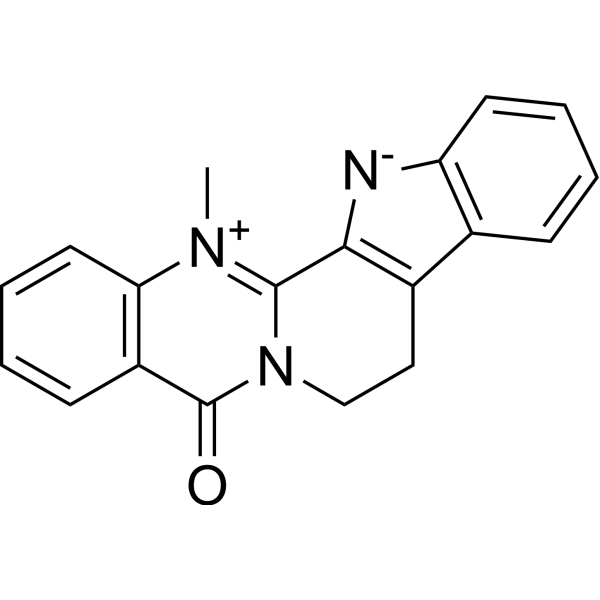
Dehydroevodiamine Standard is the analytical standard of Dehydroevodiamine (HY-N2106). This product is intended for research and analytical applications. Dehydroevodiamine is a blood-brain barrier-permeable, orally effective AChE and BACE1 inhibitor (IC50 = 40.96 μM). Dehydroevodiamine is isolated and extracted from Evodia rutaecarpa. Dehydroevodiamine attenuates neurotoxicity through multiple targets by inhibiting BACE1 to block Aβ production, inhibiting AChE activity, scavenging ROS, and suppressing calcium influx. Dehydroevodiamine can be used for research on Alzheimer's disease, cerebral ischemia, vascular dementia, and other cognitive disorder-related diseases.
商品は「研究用試薬」です。人や動物の医療用・臨床診断用・食品用の製品ではありません。
研究用途以外に使用した場合、当社は一切の責任を負いかねます。
- CAS 番号: 67909-49-3
- 分子式: C19H15N3O
- 分子量:301.34
-
保管条件:
Please store the product under the recommended conditions in the Certificate of Analysis.


To place orders, for customer services and technical support, please contact: MedChemExpress USA
Tel: 609-228-6898 E-mail: [email protected] [email protected]


-
 Product Information
-
化学情報
- 純度とドキュメンテーション
-
 Help & FAQs


-
HY-N2106
DehydroevodiamineAChE/BACE1 Inhibitor -
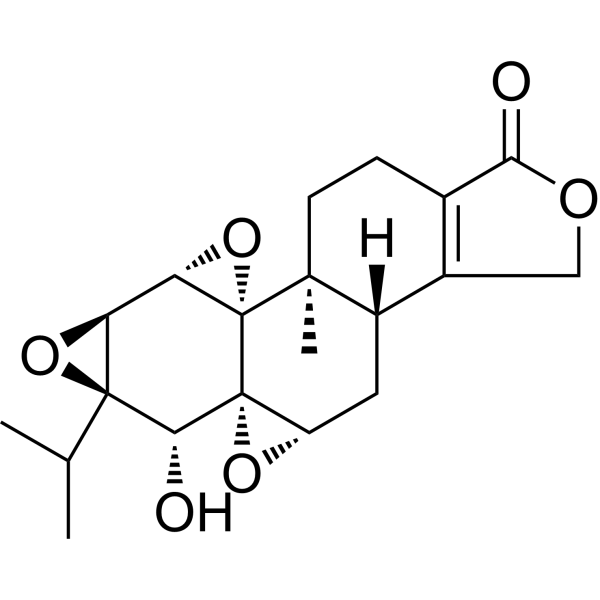
HY-32735
TriptolideImmunosuppressive Agent -
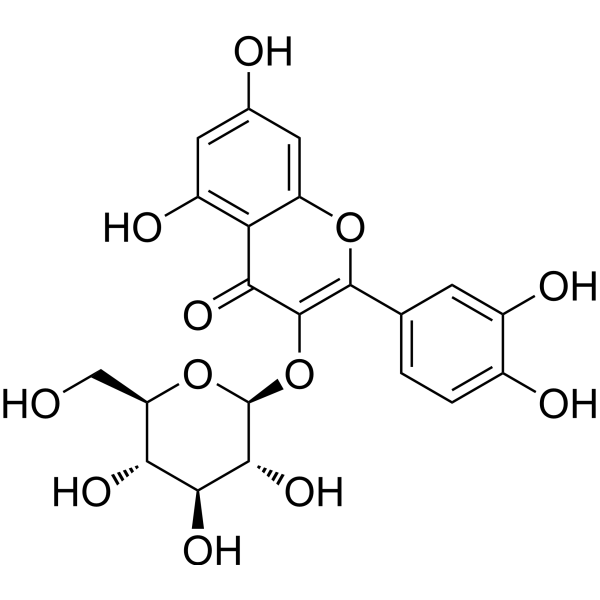
HY-N1445
IsoquercitrinNO Synthase Inhibitor -
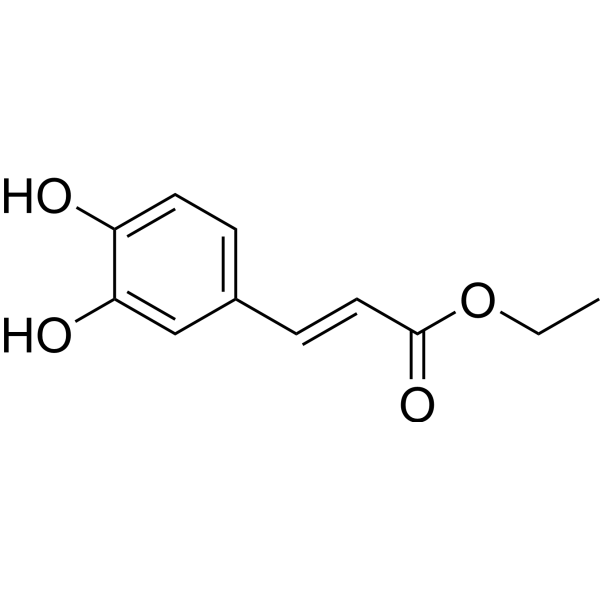
HY-N6966
Ethyl CaffeateCOX Inhibitor -
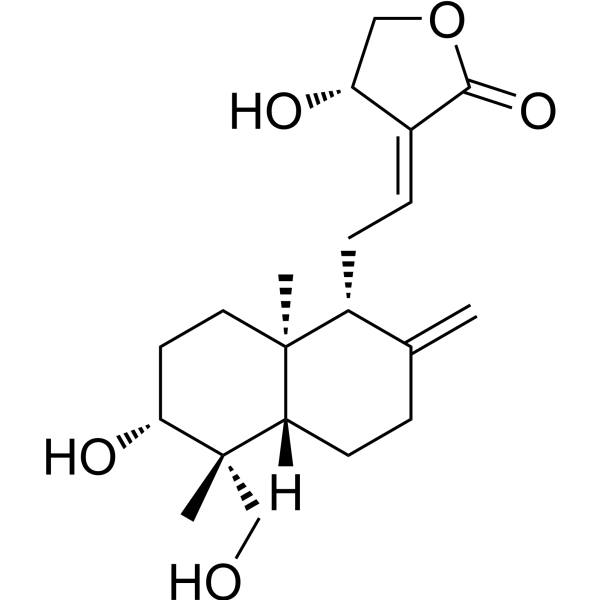
HY-N0191
AndrographolideNF-κB Inhibitor -
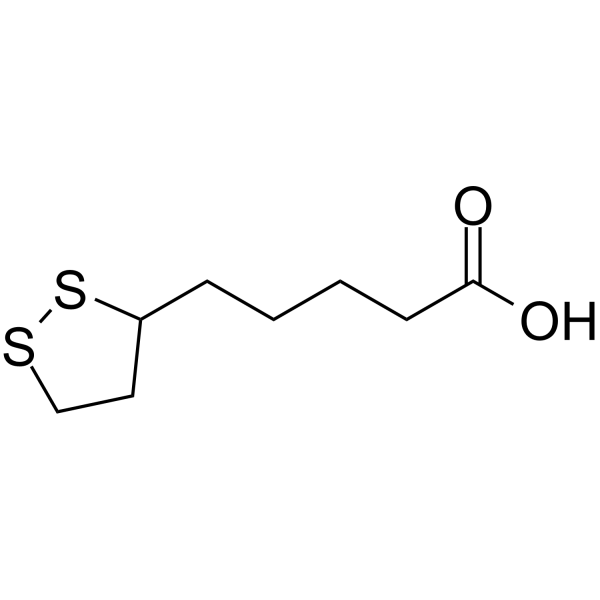
HY-N0492
α-Lipoic AcidAntioxidant -
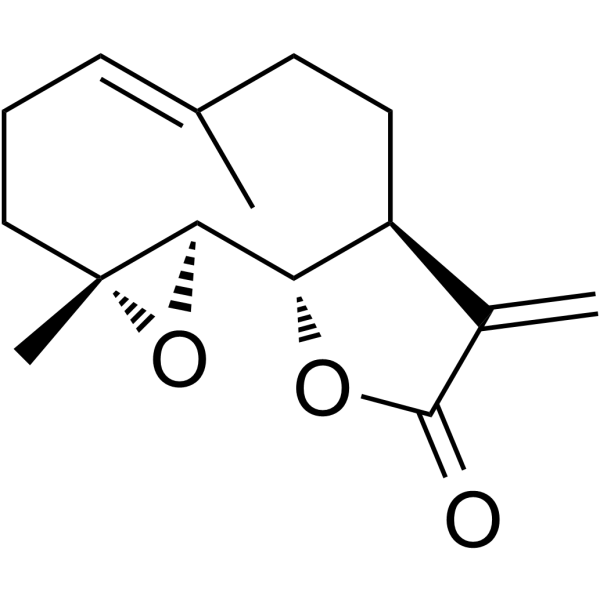
HY-N0141
ParthenolideNF-κB Inhibitor -
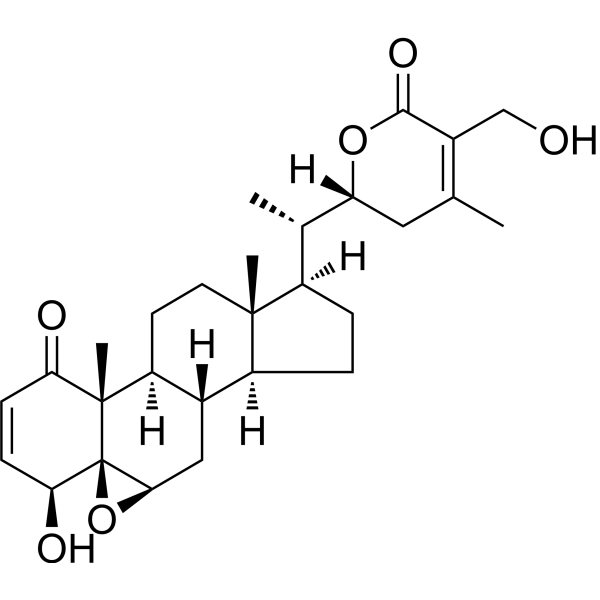
HY-N2065
Withaferin ANF-κB Inhibitor -
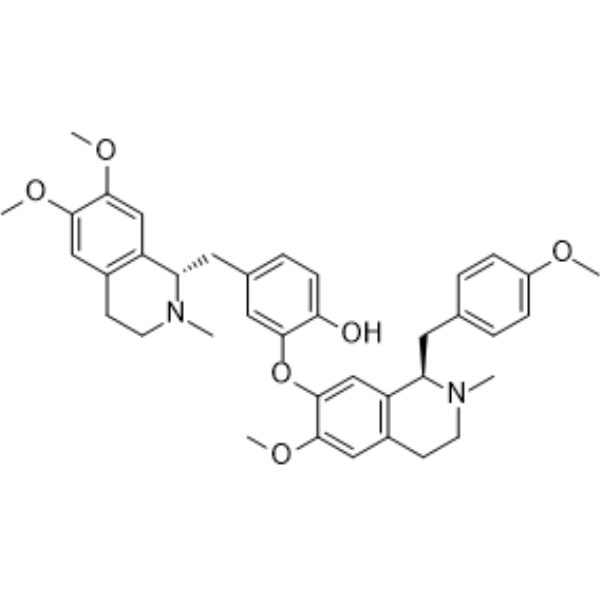
HY-N0441
NeferineAutophagy Modulator -
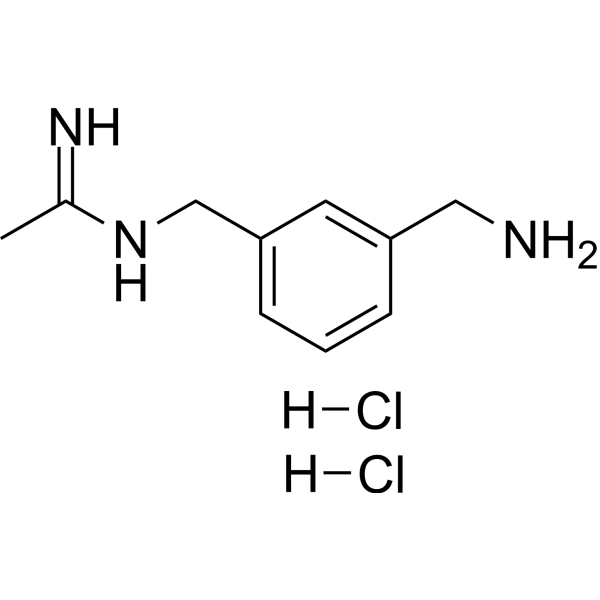
HY-18731
1400W DihydrochlorideNO Synthase Inhibitor -
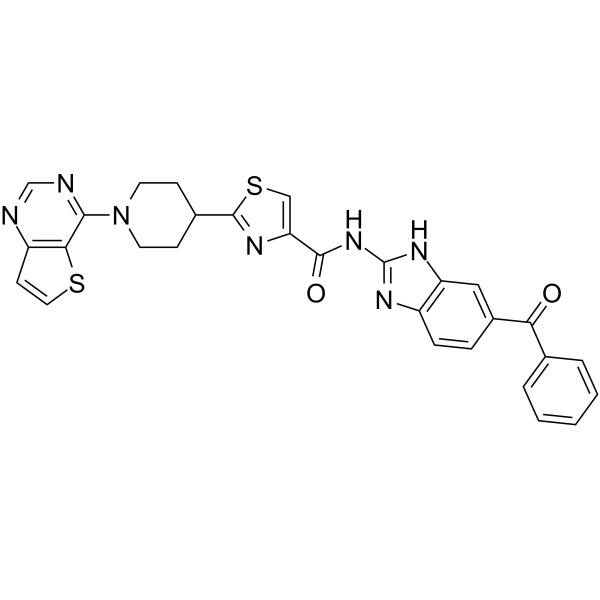
HY-10496
SC75741NF-κB Inhibitor -
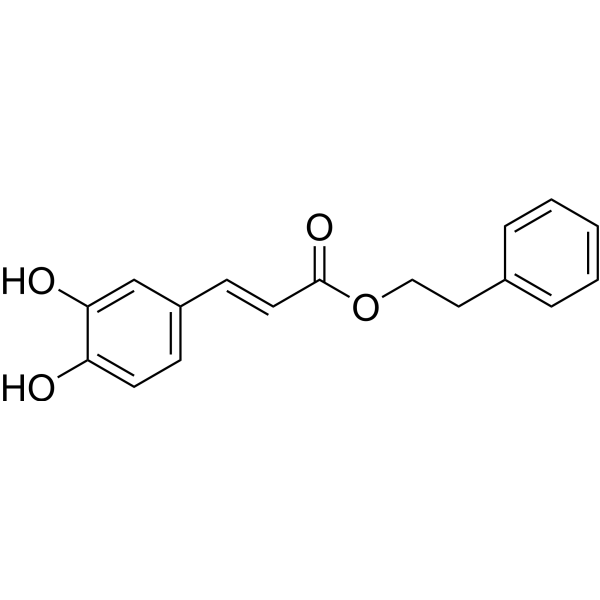
HY-N0274
Caffeic acid phenethyl esterApoptosis Inducer


Product Information
説明
アプリケーション
The compound is the grade of analytical standard, which is the reference standard supplied assay. It is commonly used in qualitative, quantitative and methodological research experiments in HPLC, GC and MS.


化学情報
-
CAS 番号 67909-49-3
-
分子量 301.34
-
分子式 C19H15N3O
-
SMILES
O=C1N2C(C([N-]C3=C4C=CC=C3)=C4CC2)=[N+](C)C5=C1C=CC=C5
-
Structure Classification
-
Initial Source
-
輸送条件
Room temperature in continental US; may vary elsewhere.
-
保管条件
Please store the product under the recommended conditions in the Certificate of Analysis.


純度とドキュメンテーション
参考文献
[1]. Haji A, et al. Increased feline cerebral blood flow induced by dehydroevodiamine hydrochloride from Evodia rutaecarpa. Journal of natural products. 1994 Mar;57(3):387-9. [Content Brief]
[3]. Shin KY, et al. Dehydroevodiamine·HCl enhances cognitive function in memory-impaired rat models. The Korean journal of physiology & pharmacology : official journal of the Korean Physiological Society and the Korean Society of Pharmacology. 2017 Jan;21(1):55-64. [Content Brief]

Calculators
濃度 (開始) × 体積 (開始) = 濃度 (終了) × 体積 (終了)


Dehydroevodiamine (Standard) 関連分類
HY-N2106R 関連分類
 Powered by Bioz