



Arachidonic acid sodium salt
Based on 61 publication(s) in Google Scholar
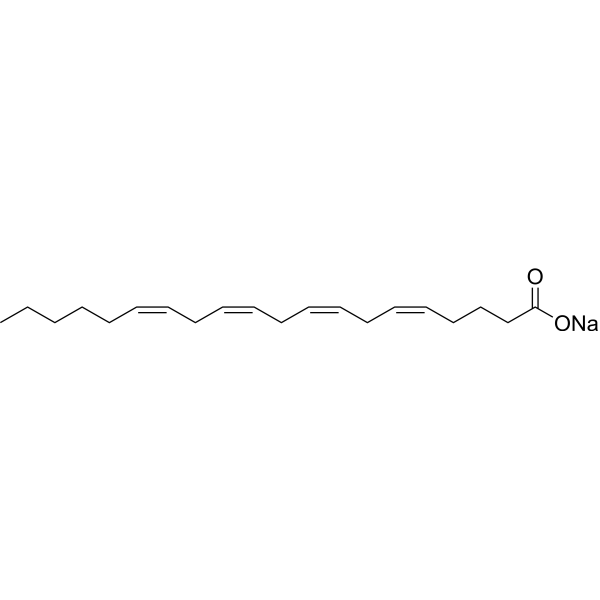
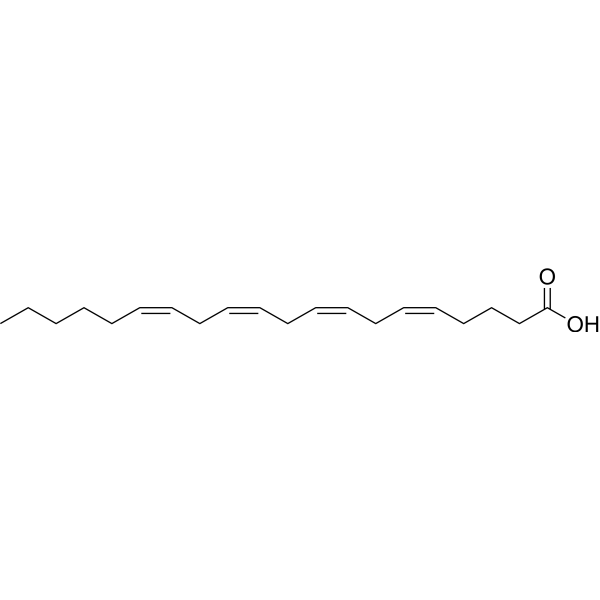
Arachidonic acid (Immunocytophyt) sodium salt is a polyunsaturated omega-6 fatty acid and a major constituent of biomembranes. Arachidonic acid sodium salt also acts as the substrate for various lipid mediators, such as prostaglandins (PGs). Arachidonic acid sodium salt improves cognitive response and cardiovascular function.
For research use only. We do not sell to patients.
- Purity : 98.99%
- CAS No.: 6610-25-9
- Formula: C20H31NaO2
- Molecular Weight:326.45
-
Storage:
-20°C, protect from light, stored under nitrogen
* In solvent : -80°C, 6 months; -20°C, 1 month (protect from light, stored under nitrogen)

To place orders, for customer services and technical support, please contact: MedChemExpress USA
Tel: 609-228-6898 E-mail: [email protected] [email protected]


-
 Biological Activity
-
Chemical Information
-
Solvent & Solubility
- Purity & Documentation
- References
-
 Help & FAQs


Publications Citing Use of MedChemExpress (MCE) Arachidonic acid sodium salt
More- Signal Transduct Target Ther. 2024 Dec 30;9(1):367. [Abstract]
- Nature. 2025 Jul;643(8070):192-200. [Abstract]
- Science. 2025 Mar 14;387(6739):eadm9805. [Abstract]
- Nat Nanotechnol. 2025 Oct 31. [Abstract]
- Immunity. 2024 Sep 10;57(9):2122-2139.e9. [Abstract]
- Cancer Discov. 2026 Apr 8. [Abstract]
- Nat Cancer. 2025 May;6(5):768-785. [Abstract]
- Ann Rheum Dis. 2025 Oct 28:S0003-4967(25)04428-0. [Abstract]
- Cell Stem Cell. 2026 Aug 6;33(8):1363-1378.e9.
- Nat Commun. 2025 Sep 29;16(1):8541. [Abstract]
- Nat Commun. 2025 Jun 5;16(1):5209. [Abstract]
- Nat Commun. 2024 Sep 10;15(1):7914. [Abstract]
- Redox Biol. 2025 Mar:80:103528. [Abstract]
- Redox Biol. 2023 Oct:66:102857. [Abstract]
- Redox Biol. 2021 Nov:47:102168. [Abstract]
- Gut Microbes. 2023 Dec;15(2):2265578. [Abstract]
- Genes Dis. 2026 Mar 19.
- Adv Sci (Weinh). 2026 May 25:e75818. [Abstract]
- Adv Sci (Weinh). 2026 Apr;13(20):e02239. [Abstract]
- Cell Death Differ. 2025 Nov 27. [Abstract]
- Cell Death Dis. 2023 Jun 13;14(6):359. [Abstract]
- Cell Death Dis. 2020 Sep 15;11(9):756. [Abstract]
- Phytomedicine. 2025 Nov 25:148:157450. [Abstract]
- Acta Pharmacol Sin. 2025 Jun 23. [Abstract]
- J Anal Test. 2024 Dec.
- Dev Cell. 2025 Apr 18:S1534-5807(25)00206-0. [Abstract]
- Cell Mol Gastroenterol Hepatol. 2022;13(6):1805-1827. [Abstract]
- Free Radic Biol Med. 2023 Jun:202:110-120. [Abstract]
- Clin Transl Med. 2026 Feb;16(2):e70607. [Abstract]
- Clin Nutr. 2023 Dec 30;43(2):453-467. [Abstract]
- Cell Rep. 2025 Nov 25;44(11):116496. [Abstract]
- Cell Rep. 2025 Apr 16;44(5):115572. [Abstract]
- Cell Rep. 2024 Jul 9;43(7):114477. [Abstract]
- Cell Rep. 2022 Sep 20;40(12):111381. [Abstract]
- J Ethnopharmacol. 2026 Feb 28:357:120892. [Abstract]
- Biochem Pharmacol. 2024 Dec;230(Pt 1):116574. [Abstract]
- Food Funct. 2024 Sep 30;15(19):9916-9927. [Abstract]
- Nat Prod Bioprospect. 2026 Jan 10;16(1):11. [Abstract]
- Eur J Pharmacol. 2023 Apr 15:945:175618. [Abstract]
- Int Immunopharmacol. 2024 Oct 7;143(Pt 1):113320. [Abstract]
- Front Pharmacol. 2022 Jan 10;12:792263. [Abstract]
- PLoS Pathog. 2026 Apr 24;22(4):e1014170. [Abstract]
- Cell Signal. 2026 Jun:142:112407. [Abstract]
- iScience. 2025 Dec 31.
- FASEB J. 2024 Dec 15;38(23):e70226. [Abstract]
- J Biol Chem. 2024 Apr;300(4):107168. [Abstract]
- J Biol Chem. 2022 May;298(5):101847. [Abstract]
- ACS Pharmacol Transl Sci. 2025 Oct 4;8(11):4095-4106. [Abstract]
- J Sep Sci. 2025 Nov;48(11):e70312. [Abstract]
- Int J Parasitol Drugs Drug Resist. 2024 Aug:25:100551. [Abstract]
- Integr Cancer Ther. 2026 Jan-Dec:25:15347354261450966. [Abstract]
- Thromb J. 2025 May 7;23(1):44. [Abstract]
- Clin Exp Pharmacol Physiol. 2024 Oct;51(10):e13918. [Abstract]
- Rev Bras Farmacogn. 2023 May 20.
- Xenobiotica. 2022 Jul;52(7):669-675. [Abstract]
- Translational Dental Research. 2026 Apr 15.
- bioRxiv. 2025 Jun 16.
- bioRxiv. 2024 November 26.
- SSRN. 2024 Sep 20.
- bioRxiv. 2024 May 19.
- Biomed Pharmacother. 2023 Nov:167:115531. [Abstract]
 Customer Validation & Images

-
ELISA
-
WB
-
Cell Proliferation/Viability Assay
-
ELISA
-
Cell Imaging/Staining
All Endogenous Metabolite Isoforms
More

Biological Activity
Description
IC50 & Target
|
Human Endogenous Metabolite |
In Vivo
-
Animal Model:Male Lew rats (4-week-old) induced arthritis[1]
-
Dosage:0.07%, 0.15% or 0.32% in diet (w/w)
-
Administration:4 weeks
-
Result:The Arachidonic acid content of phospholipids in the paw was significantly elevated in a dose-dependent manner.
Induced Disease Models
Please do not refer to only one article to determine the experimental conditions. It is recommended to determine the optimal experimental conditions (animal strain, age, dosage, frequency and cycle, detection time and indicators, etc.) through preliminary experiments before the formal experiment.
Arachidonic acid sodium salt can be used to induce paw edema models[2].
Administration: 0.5% • s.c. • single dose
MedChemExpress (MCE) has not independently confirmed the accuracy of these methods. They are for reference only.


Chemical Information
-
CAS No. 6610-25-9
-
Appearance Solid-Liquid Mixture
-
Molecular Weight 326.45
-
Formula C20H31NaO2
-
Color White to yellow
-
SMILES
CCCCC/C=C\C/C=C\C/C=C\C/C=C\CCCC(O[Na])=O
-
Synonyms
Immunocytophyt sodium salt
-
Structure Classification
-
Initial Source
mammalian cell
-
Shipping
Room temperature in continental US; may vary elsewhere.
-
Storage
-20°C, protect from light, stored under nitrogen
* In solvent : -80°C, 6 months; -20°C, 1 month (protect from light, stored under nitrogen)


Publications (61)
-
Journal Impact Factor
-
Most Recent
-
Signal Transduct Target Ther
2024 Dec 30;9(1):367. PMID: 39737965 -
Nature
2025 Jul;643(8070):192-200. PMID: 39695227 -
Science
2025 Mar 14;387(6739):eadm9805. PMID: 40080571
Arachidonic acid sodium salt purchased from MedChemExpress. Usage Cited in: Science. 2025 Mar 14;387(6739):eadm9805. [Abstract]
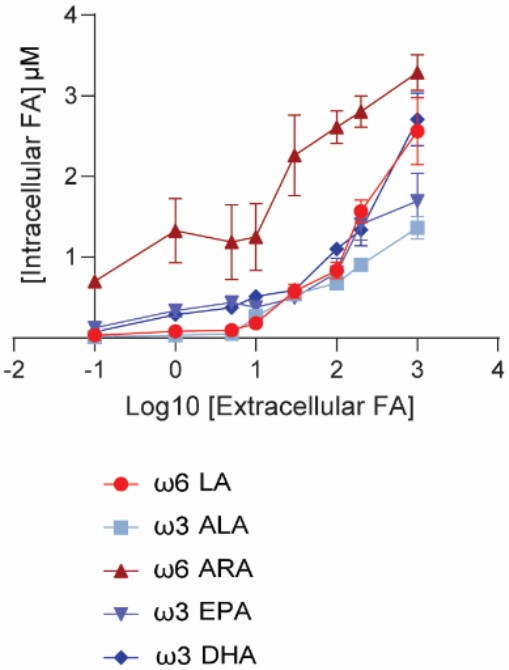
HCC1806 cells were serum starved for 16 hours and subsequently restimulated for 30 minutes with 1μM, 5μM, 10μM, 30μM, 100μM, 200μM, 1000μM of ω-6 LA, ω-6 ARA, ω-3 ALA, ω-3 EPA and ω-3 DHA for 30 minutes. Intracellular concentrations of each PUFA were quantified by ELISA from lysates obtained from 5 x 10⁶ cells.
Arachidonic acid sodium salt purchased from MedChemExpress. Usage Cited in: Science. 2025 Mar 14;387(6739):eadm9805. [Abstract]
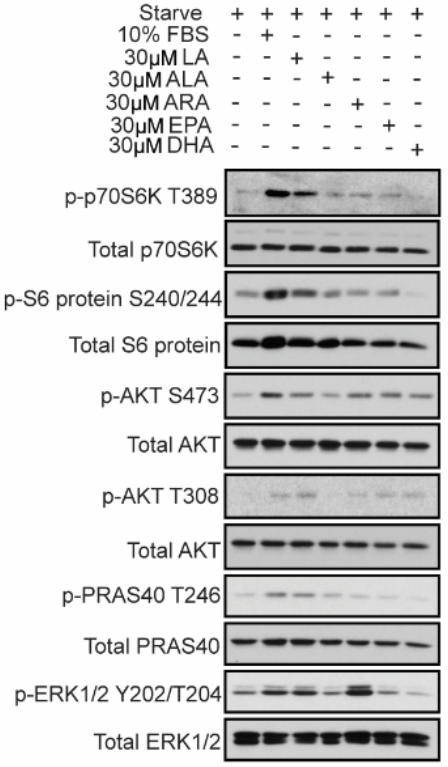
lmmunoblot analysis of HCC1806 cells following 16 hour serum starvation and subsequent stimulation with 10% FBS or 30 μM ω-6 LA or Arachidonic acid (AA), or ω-3 ALA, Eicosapentaenoic acid (EPA) or Docosahexaenoic acid (DHA) for 30 minutes.
-
Nat Nanotechnol
2025 Oct 31. PMID: 41174280 -
Immunity
PD-1 signaling limits expression of phospholipid phosphatase 1 and promotes intratumoral CD8+ T cell ferroptosis. [Abstract]2024 Sep 10;57(9):2122-2139.e9. PMID: 39208806 -
Cancer Discov
Arachidonic Acid Metabolism in PMN-MDSCs Suppresses Antitumor Capacity of T cells in KRAS-Mutant Cholangiocarcinoma. [Abstract]2026 Apr 8. PMID: 41949259 -
Nat Cancer
Palmitoylation of GPX4 via the targetable ZDHHC8 determines ferroptosis sensitivity and antitumor immunity. [Abstract]2025 May;6(5):768-785. PMID: 40108413
Arachidonic acid sodium salt purchased from MedChemExpress. Usage Cited in: Nat Cancer. 2025 May;6(5):768-785. [Abstract]
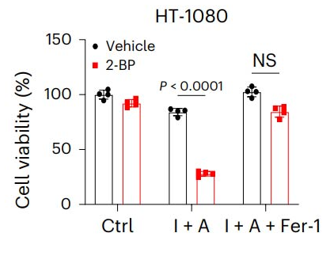
The cell viability of HT-1080 cells treated with IFNγ (20 ng/mL) plus Arachidonic acid (AA, 20 μM) in conjunction with or without 2-BP (10 μM) and Fer-1 (2 μM) for 48 h.
-
Ann Rheum Dis
2025 Oct 28:S0003-4967(25)04428-0. PMID: 41162285
Arachidonic acid sodium salt purchased from MedChemExpress. Usage Cited in: Ann Rheum Dis. 2025 Oct 28:S0003-4967(25)04428-0. [Abstract]
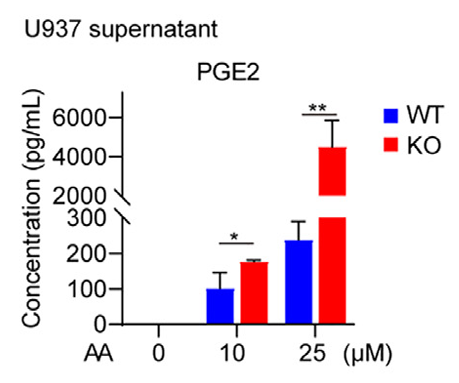
ELISA analysis of PGE2 concentrations in the supernatants of wild-type (WT) and TBXAS1-knockout (KO) U937 cell lines treated with indicated doses of Arachidonic acid (0-25 μM).
-
-
Nat Commun
Biomimetic organo-hydrogels reveal the adipose tissue local mechanical anisotropy regulates ovarian cancer invasion. [Abstract]2025 Sep 29;16(1):8541. PMID: 41022685
Arachidonic acid sodium salt purchased from MedChemExpress. Usage Cited in: Nat Commun. 2025 Sep 29;16(1):8541. [Abstract]
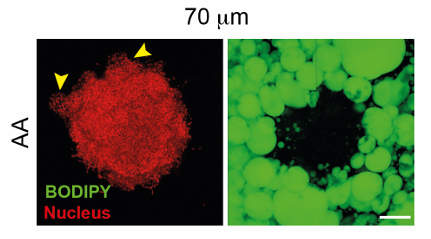
BODIPY (green) and nuclei (red) staining of OVCAR8 cells treated with Arachidonic acid (70 μM) and embedded in 70 µm OHG for 7 d. Arrowheads indicate collectively-invading cells.
-
Nat Commun
Lysosomal TMEM165 controls cellular ion homeostasis and survival by mediating lysosomal Ca2+ import and H+ efflux. [Abstract]2025 Jun 5;16(1):5209. PMID: 40473625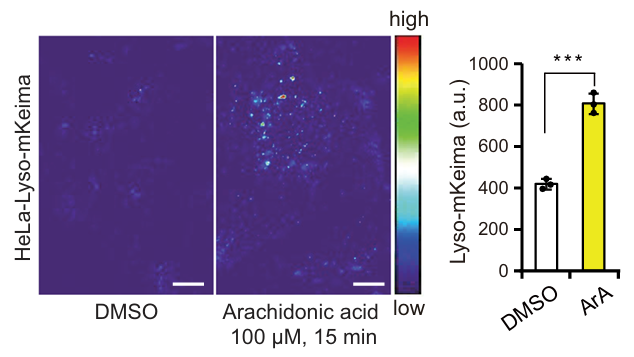
Arachidonic acid sodium salt purchased from MedChemExpress. Usage Cited in: Nat Commun. 2025 Jun 5;16(1):5209. [Abstract]
Representative images of live HeLa-Lyso-mKeima cells treated with DMSO or 100 μM Arachidonic acid for 15 min (left) and corresponding mKeima FLIs (right).
-
Nat Commun
A mouse protozoan boosts antigen-specific mucosal IgA responses in a specific lipid metabolism- and signaling-dependent manner. [Abstract]2024 Sep 10;15(1):7914. PMID: 39256385 -
Redox Biol
Niraparib restricts intraperitoneal metastases of ovarian cancer by eliciting CD36-dependent ferroptosis. [Abstract]2025 Mar:80:103528. PMID: 39922130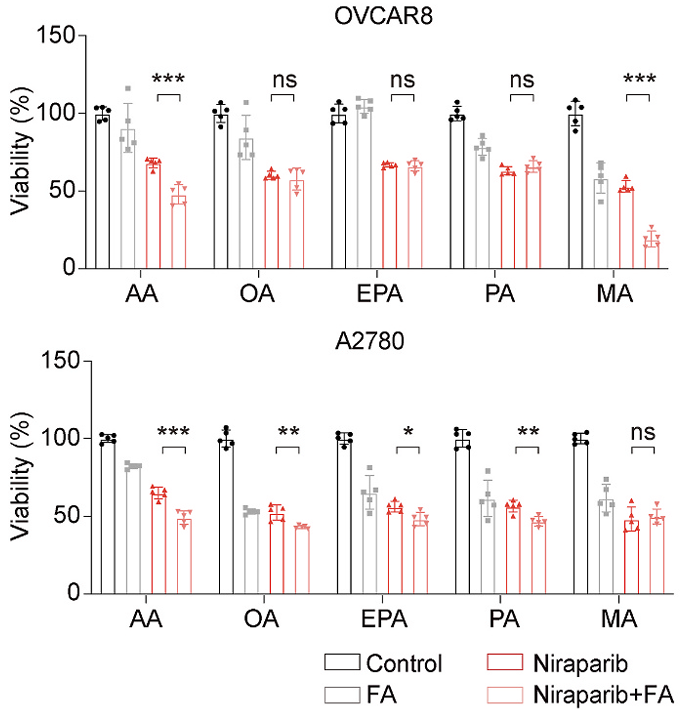
Arachidonic acid sodium salt purchased from MedChemExpress. Usage Cited in: Redox Biol. 2025 Mar:80:103528. [Abstract]
OVCAR8 and A2780 cells were cultured in fatty acid-free media supplemented with 50 μM AA (arachidonic acid), 50 μM OA (oleic acid), 50 μM EPA (eicosapentaenoic acid), 50 μM PA (Palmitic acid), and 50 μM MA (myristic acid) with the treatment of 10 μM niraparib for 72 h, and the cell viability was determined.
-
Redox Biol
Ferroptosis triggered by STAT1- IRF1-ACSL4 pathway was involved in radiation-induced intestinal injury. [Abstract]2023 Oct:66:102857. PMID: 37611494 -
Redox Biol
Kir6.2 is essential to maintain neurite features by modulating PM20D1-reduced mitochondrial ATP generation. [Abstract]2021 Nov:47:102168. PMID: 34673451 -
Gut Microbes
PUFAs add fuel to Crohn's disease-associated AIEC-induced enteritis by exacerbating intestinal epithelial lipid peroxidation. [Abstract]2023 Dec;15(2):2265578. PMID: 37800577 -
-
Adv Sci (Weinh)
Mitochondrial Carrier SLC25A13 Drives Ferroptosis Resistance and Immune Evasion via a STAT3-IFI6 Circuit in Breast Cancer. [Abstract]2026 May 25:e75818. PMID: 42183833 -
Adv Sci (Weinh)
CypD Dependent mPTP Opening Is Crucial for Oxidized Mitochondrial DNA Release in Ferroptosis. [Abstract]2026 Apr;13(20):e02239. PMID: 41700459 -
Cell Death Differ
Epigenetic regulation of ACSL4 via H2A monoubiquitylation connects lipid metabolism to BAP1-mediated ferroptosis. [Abstract]2025 Nov 27. PMID: 41310183 -
Cell Death Dis
Downregulation of N6-methyladenosine-modified LINC00641 promotes EMT, but provides a ferroptotic vulnerability in lung cancer. [Abstract]2023 Jun 13;14(6):359. PMID: 37311754 -
Cell Death Dis
Acyl-CoA thioesterase 1 prevents cardiomyocytes from Doxorubicin-induced ferroptosis via shaping the lipid composition. [Abstract]2020 Sep 15;11(9):756. PMID: 32934217 -
Phytomedicine
Arachidonic acid induces ferroptosis in hepatocellular carcinoma via the SIRT5-ACSL4/LPCAT3/ALOX15 axis, leading to lipid peroxidation and mitochondrial dysfunction. [Abstract]2025 Nov 25:148:157450. PMID: 41175589 -
Acta Pharmacol Sin
Ginsenoside (20)S-APPT induces ferroptosis in hepatocellular carcinoma and cholangiocarcinoma by targeting FSP1. [Abstract]2025 Jun 23. PMID: 40550962 -
-
Dev Cell
2025 Apr 18:S1534-5807(25)00206-0. PMID: 40280135 -
Cell Mol Gastroenterol Hepatol
The Critical and Diverse Roles of CD4-CD8- Double Negative T Cells in Nonalcoholic Fatty Liver Disease. [Abstract]2022;13(6):1805-1827. PMID: 35247631 -
Free Radic Biol Med
Ferroptosis signaling promotes the release of misfolded proteins via exosomes to rescue ER stress in hepatocellular carcinoma. [Abstract]2023 Jun:202:110-120. PMID: 36997100 -
Clin Transl Med
Adipocyte fatty acid-binding protein as a cerebrospinal fluid-accessible biomarker and druggable target in subarachnoid haemorrhage: Linking fatty acid dysregulation to microglial neuroinflammation. [Abstract]2026 Feb;16(2):e70607. PMID: 41612866 -
Clin Nutr
2023 Dec 30;43(2):453-467. PMID: 38181523 -
Cell Rep
A generalized strategy to kill leukemic cells by targeting the regulatory systems governing mitochondrial membrane potential. [Abstract]2025 Nov 25;44(11):116496. PMID: 41166305 -
Cell Rep
2025 Apr 16;44(5):115572. PMID: 40249703 -
Cell Rep
Synthetic lethal CRISPR screen identifies a cancer cell-intrinsic role of PD-L1 in regulation of vulnerability to ferroptosis. [Abstract]2024 Jul 9;43(7):114477. PMID: 38985676 -
Cell Rep
Early-life vitamin B12 orchestrates lipid peroxidation to ensure reproductive success via SBP-1/SREBP1 in Caenorhabditis elegans. [Abstract]2022 Sep 20;40(12):111381. PMID: 36130518 -
J Ethnopharmacol
Integrated multi-omics, network pharmacology, and experimental validation reveal that Yinmeikuijie decoction alleviates ulcerative colitis by inhibiting arachidonic acid metabolism. [Abstract]2026 Feb 28:357:120892. PMID: 41241212 -
Biochem Pharmacol
Ursodeoxycholic acid alleviates fat embolism syndrome-induced acute lung injury by inhibiting the p38 MAPK/NF-κB signalling pathway through FXR. [Abstract]2024 Dec;230(Pt 1):116574. PMID: 39396648 -
Food Funct
Arachidonic acid enhances hepatocyte bile acid uptake and alleviates cholestatic liver disease by upregulating OATP1 expression. [Abstract]2024 Sep 30;15(19):9916-9927. PMID: 39258405 -
Nat Prod Bioprospect
2026 Jan 10;16(1):11. PMID: 41518459 -
Eur J Pharmacol
Polyunsaturated fatty acids drive neutrophil extracellular trap formation in nonalcoholic steatohepatitis. [Abstract]2023 Apr 15:945:175618. PMID: 36841284 -
Int Immunopharmacol
Palmitic acid inhibits macrophage-mediated chemotherapy resistance in multiple myeloma via ALOX12 signaling. [Abstract]2024 Oct 7;143(Pt 1):113320. PMID: 39378653 -
Front Pharmacol
Hsp47 Inhibitor Col003 Attenuates Collagen-Induced Platelet Activation and Cerebral Ischemic-Reperfusion Injury in Rats. [Abstract]2022 Jan 10;12:792263. PMID: 35082674 -
PLoS Pathog
MCL1 promotes porcine epidemic diarrhea virus replication by modulating arachidonic acid metabolic pathway. [Abstract]2026 Apr 24;22(4):e1014170. PMID: 42030333 -
Cell Signal
Exploring the role and potential mechanisms of SIK1 in cartilage damage in osteoarthritis based on metabolomics. [Abstract]2026 Jun:142:112407. PMID: 41651173 -
-
FASEB J
Mechano-induced arachidonic acid metabolism promotes keratinocyte proliferation through cPLA2 activity regulation. [Abstract]2024 Dec 15;38(23):e70226. PMID: 39636236 -
J Biol Chem
Neuroinvasive virus facilitates viral replication by employing lipid droplets to reduce arachidonic acid-induced ferroptosis. [Abstract]2024 Apr;300(4):107168. PMID: 38490434 -
J Biol Chem
Capsaicin inhibits intestinal Cl- secretion and promotes Na+ absorption by blocking TRPV4 channels in healthy and colitic mice. [Abstract]2022 May;298(5):101847. PMID: 35314195 -
ACS Pharmacol Transl Sci
Ultrasensitive Profiling of Arachidonic Acid Metabolites Based on 5‑(Diisopropylamino)amylamine Derivatization-Ultraperformance Liquid Chromatography-Tandem Mass Spectrometry. [Abstract]2025 Oct 4;8(11):4095-4106. PMID: 41262585 -
J Sep Sci
Cell Metabolomics Reveals the Hepatotoxic Mechanism of Copper in Normal Rat Liver Cells Using Reversed-Phase and Hydrophilic Interaction Liquid Chromatography-Quadrupole-Time-of-Flight Mass Spectrometry. [Abstract]2025 Nov;48(11):e70312. PMID: 41172059 -
Int J Parasitol Drugs Drug Resist
Lower micromolar activity of the antifungal imidazoles on the bacterial-type bifunctional aldehyde/alcohol dehydrogenase (AdhE) in Cryptosporidium parvum and in vitro efficacy against the zoonotic parasite. [Abstract]2024 Aug:25:100551. PMID: 38875756 -
Integr Cancer Ther
Scutellaria Barbata Water Extract Suppresses Breast Cancer Growth and Lung Metastasis by Inducing Ferroptosis. [Abstract]2026 Jan-Dec:25:15347354261450966. PMID: 42244109 -
Thromb J
Endoplasmic reticulum protein 29 negatively regulates platelet functions and thrombosis in mice. [Abstract]2025 May 7;23(1):44. PMID: 40336049 -
Clin Exp Pharmacol Physiol
Ellagic acid improves osteoarthritis by inhibiting PGE2 production in M1 macrophages via targeting PTGS2. [Abstract]2024 Oct;51(10):e13918. PMID: 39188023 -
-
Xenobiotica
2022 Jul;52(7):669-675. PMID: 36251932 -
-
-
-
-
-
Biomed Pharmacother
2023 Nov:167:115531. PMID: 37741252


Solvent & Solubility
In Vitro:
Ethanol : 1 mg/mL (3.06 mM; Need ultrasonic and warming)
Please refer to the solubility information to select the appropriate solvent. Once prepared, please aliquot and store the solution to prevent product inactivation from repeated freeze-thaw cycles.
Storage method and period of stock solution: -80°C, 6 months; -20°C, 1 month (protect from light, stored under nitrogen). When stored at -80°C, please use it within 6 months. When stored at -20°C, please use it within 1 month.
Please refer to the solubility information to select the appropriate solvent. Once prepared, please aliquot and store the solution to prevent product inactivation from repeated freeze-thaw cycles.
Storage method and period of stock solution: -80°C, 6 months; -20°C, 1 month (protect from light, stored under nitrogen). When stored at -80°C, please use it within 6 months. When stored at -20°C, please use it within 1 month.
Concentration (start) × Volume (start) = Concentration (final) × Volume (final)


Purity & Documentation
-
Data Sheet (273 KB)
-
SDS (394 KB)
- English - EN (394 KB)
- Français - FR (394 KB)
- Deutsch - DE (394 KB)
- Norwegian - NO (394 KB)
- Español - ES (394 KB)
- Swedish - SV (394 KB)
- Italian - IT (394 KB)
- Korean - KR (394 KB)
- Portuguese - PT (394 KB)
-
Handling Instructions (2659 KB)
References


Complete Stock Solution Preparation Table
Please refer to the solubility information to select the appropriate solvent. Once prepared, please aliquot and store the solution to prevent product inactivation from repeated freeze-thaw cycles.
Storage method and period of stock solution: -80°C, 6 months; -20°C, 1 month (protect from light, stored under nitrogen). When stored at -80°C, please use it within 6 months. When stored at -20°C, please use it within 1 month.
| Optional Solvent | Concentration Solvent Mass | 1 mg | 5 mg | 10 mg | 25 mg |
|---|---|---|---|---|---|
| Ethanol | 1 mM | 3.0633 mL | 15.3163 mL | 30.6326 mL | 76.5814 mL |


Arachidonic acid sodium salt Related Classifications
HY-109590A Related Classifications
 Powered by Bioz