



SC 51089
Based on 3 publication(s) in Google Scholar
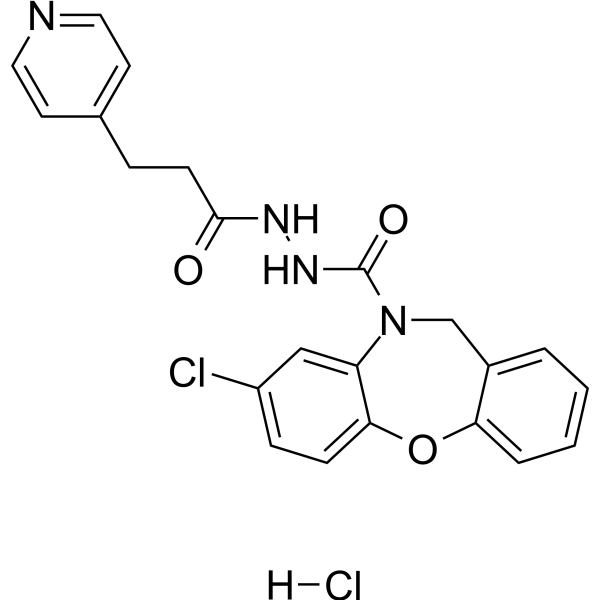
SC 51089 is a selective antagonist of prostaglandin E2 EP1 receptor, with Kis of 1.3, 11.2, 17.5, and 61.1 μM for EP1, TP, EP3, and FP receptors, respectively. SC 51089 exhibits neuroprotective activity.
For research use only. We do not sell to patients.
- Purity : 98.64%
- CAS No.: 146033-02-5
- Formula: C22H20Cl2N4O3
- Molecular Weight:459.33
-
Storage:Pure form -20°C, 3 years , 4°C, 2 years ; In solvent -80°C, 6 months , -20°C, 1 month

To place orders, for customer services and technical support, please contact: MedChemExpress USA
Tel: 609-228-6898 E-mail: [email protected] [email protected]


-
 Biological Activity
-
Chemical Information
-
Solvent & Solubility
- Purity & Documentation
- References
-
 Help & FAQs


-
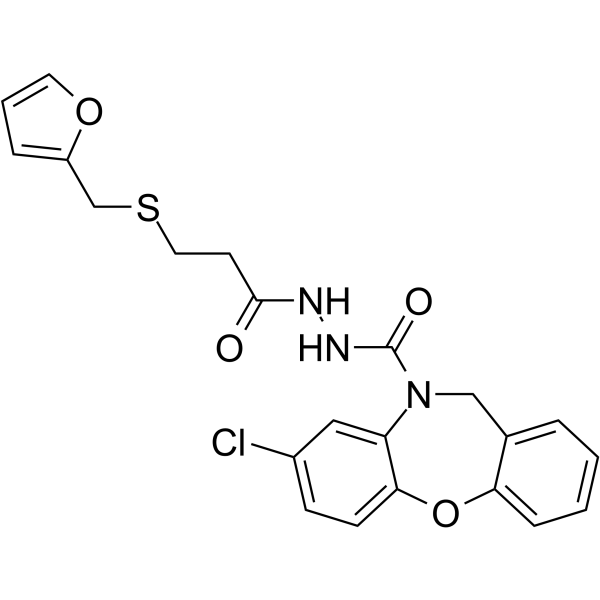
HY-108562
SC-51322EP1 Antagonist -
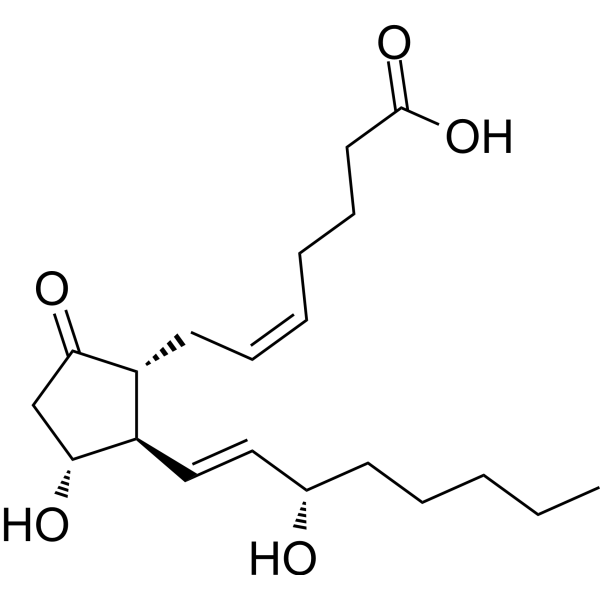
HY-101952
Prostaglandin E2Prostaglandin Receptor Agonist -
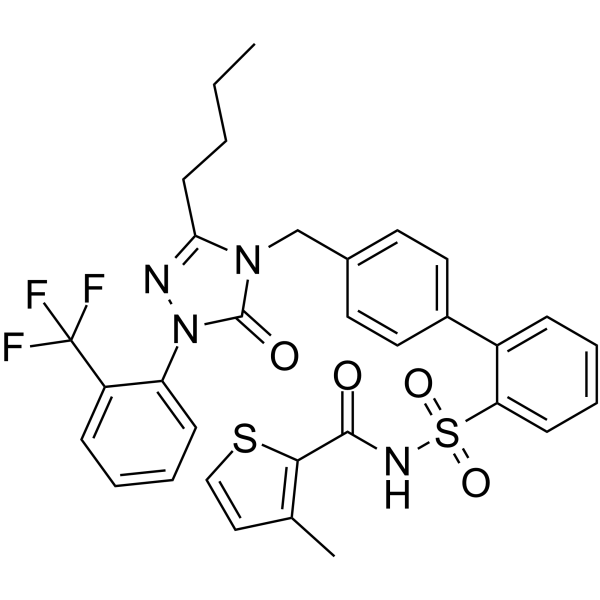
HY-108559
L-161982EP4 Receptor Antagonist -
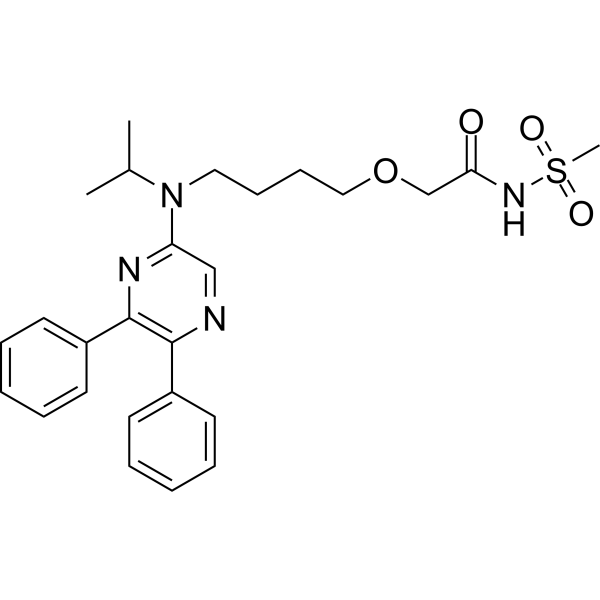
HY-14870
SelexipagProstaglandin Receptor Agonist -
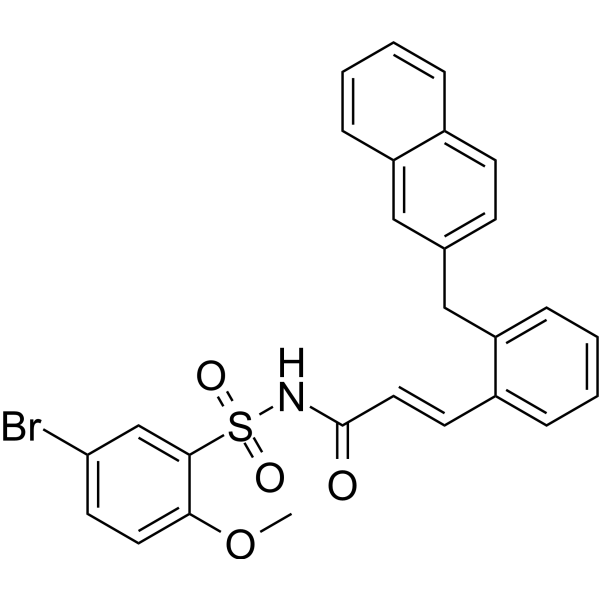
HY-15274
L-798106EP3 Receptor Antagonist -
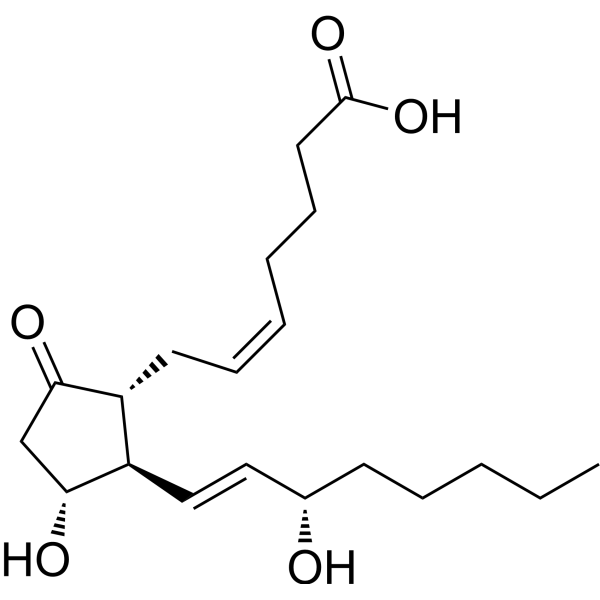
HY-101952R
Prostaglandin E2 (Standard) -
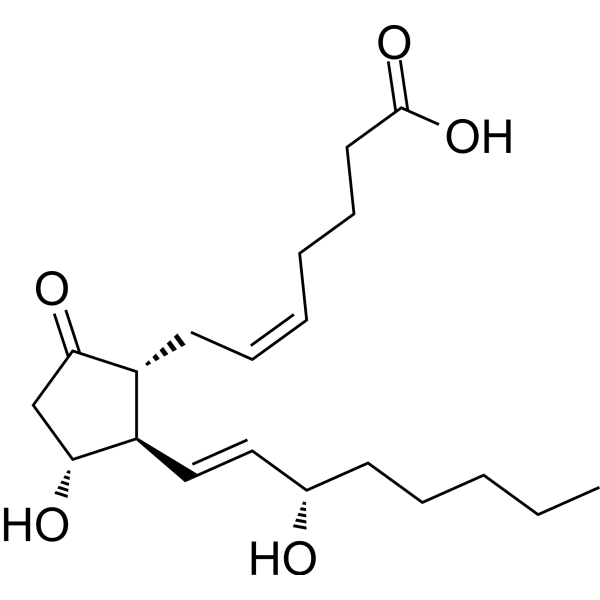
HY-101952G
Prostaglandin E2 (GMP)Inflammatory Mediator (GMP) -
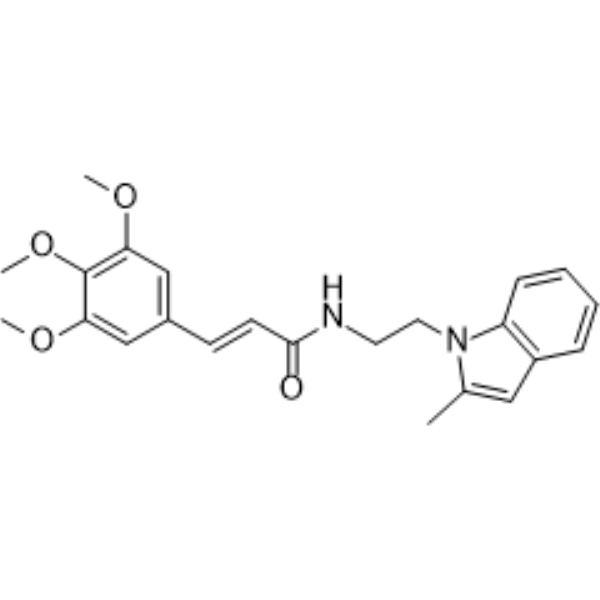
HY-18971
TG4-155EP2 Receptor Antagonist -
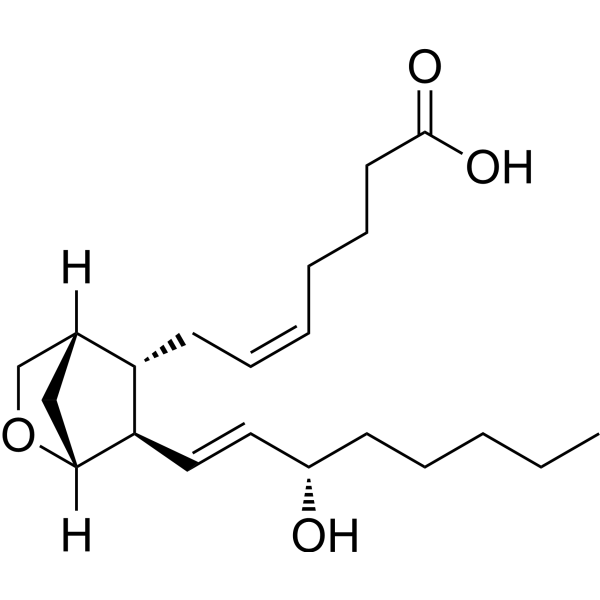
HY-108566
U-46619TXA2 Agonist -
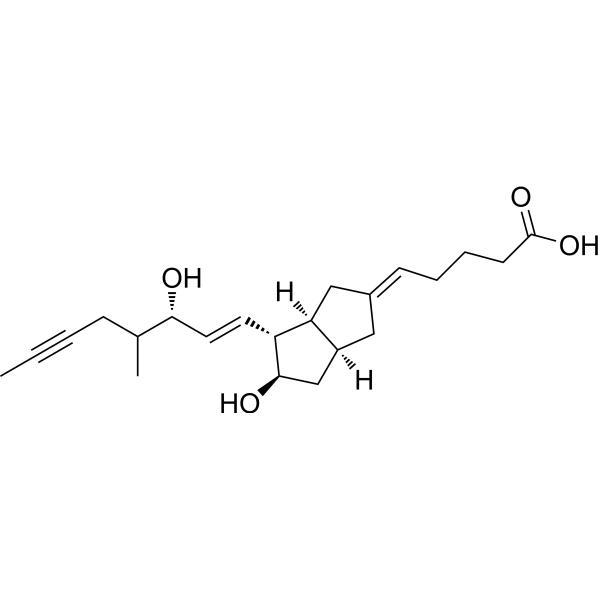
HY-A0096
IloprostPGI2 Analogue -
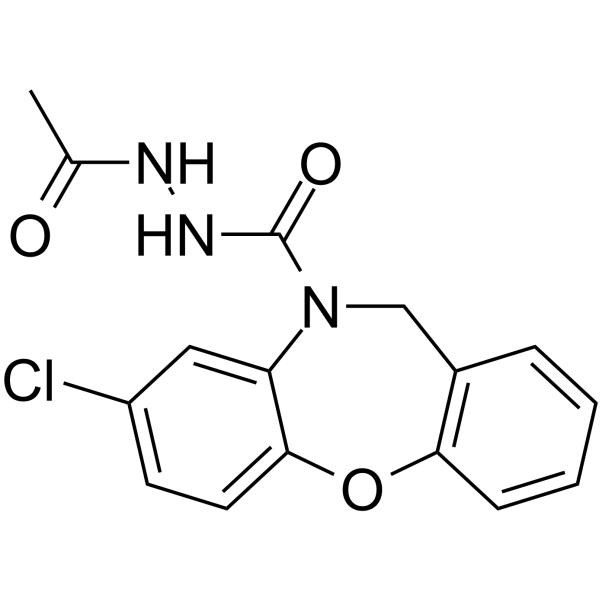
HY-102065
SC-19220EP1 Antagonist -
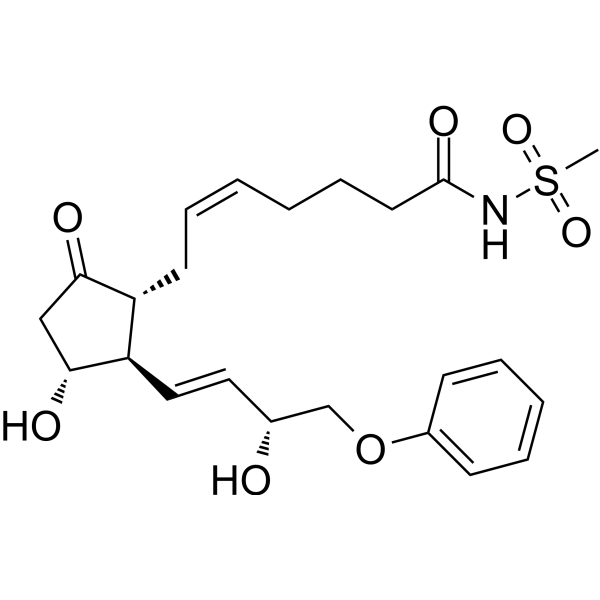
HY-19360
SulprostoneEP3 Receptor Agonist
Publications Citing Use of MedChemExpress (MCE) SC 51089
More

Biological Activity
Description
IC50 & Target
[1]|
EP1 |
EP1 1.3 μM (Ki) |
TP 11.2 μM (Ki) |
EP3 17.5 μM (Ki) |
FP 61.1 μM (Ki) |
In Vitro
SC 51089 (5 μM; 24 h) attenuates prostaglandin E2 (PGE2)-induced the death of neuronal cells exposed to t-BuOOH[2].
MedChemExpress (MCE) has not independently confirmed the accuracy of these methods. They are for reference only.
In Vivo
MedChemExpress (MCE) has not independently confirmed the accuracy of these methods. They are for reference only.
-
Animal Model:R6/1 mouse model of Huntington's disease (HD), from 13 to 18 weeks of age[3]
-
Dosage:40 μg/kg/day
-
Administration:Infused i.p. at a rate of 0.11 μL/h during 28 days by osmotic mini-pump system
-
Result:Ameliorated motor coordination and balance dysfunction.
Rescued long-term memory deficit.
Improved the expression of specific synaptic markers.
Reduced the number of huntingtin nuclear inclusions in the striatum and hippocampus.


Chemical Information
-
CAS No. 146033-02-5
-
Appearance Oil
-
Molecular Weight 459.33
-
Formula C22H20Cl2N4O3
-
Color Off-white to light yellow
-
SMILES
O=C(N1C2=CC(Cl)=CC=C2OC3=CC=CC=C3C1)NNC(CCC4=CC=NC=C4)=O.[H]Cl
-
Shipping
Room temperature in continental US; may vary elsewhere.
-
Storage
Pure form -20°C 3 years 4°C 2 years In solvent -80°C 6 months -20°C 1 month


Publications (3)
-
Journal Impact Factor
-
Most Recent
-
-
Aging Cell
2026 Jul;25(7):e70609. PMID: 42347750 -
PLoS One
Impact of Bone Morphogenetic Protein 7 and Prostaglandin receptors on osteoblast healing and organization of collagen. [Abstract]2024 May 16;19(5):e0303202. PMID: 38753641


Solvent & Solubility
In Vitro:
DMSO : 50 mg/mL (108.85 mM; Need ultrasonic; Hygroscopic DMSO has a significant impact on the solubility of product, please use newly opened DMSO)
Please refer to the solubility information to select the appropriate solvent. Once prepared, please aliquot and store the solution to prevent product inactivation from repeated freeze-thaw cycles.
Storage method and period of stock solution: -80°C, 6 months; -20°C, 1 month. When stored at -80°C, please use it within 6 months. When stored at -20°C, please use it within 1 month.
Please refer to the solubility information to select the appropriate solvent. Once prepared, please aliquot and store the solution to prevent product inactivation from repeated freeze-thaw cycles.
Storage method and period of stock solution: -80°C, 6 months; -20°C, 1 month. When stored at -80°C, please use it within 6 months. When stored at -20°C, please use it within 1 month.
Concentration (start) × Volume (start) = Concentration (final) × Volume (final)
In Vivo:
Select the appropriate dissolution method based on your experimental animal and administration route.
- For the following dissolution methods, please ensure to first prepare a clear stock solution using an In Vitro approach and then sequentially add co-solvents:
- To ensure reliable experimental results, the clarified stock solution can be appropriately stored based on storage conditions. As for the working solution for In Vivo experiments, it is recommended to prepare freshly and use it on the same day.
- The percentages shown for the solvents indicate their volumetric ratio in the final prepared solution. If precipitation or phase separation occurs during preparation, heat and/or sonication can be used to aid dissolution.
Add each solvent one by one: 10% DMSO 40% PEG300 5% Tween-80 45% Saline
Solubility: ≥ 2.5 mg/mL (5.44 mM); Clear solution
This protocol yields a clear solution of ≥ 2.5 mg/mL (saturation unknown).
Taking 1 mL working solution as an example, add 100 μL DMSO stock solution (25.0 mg/mL) to 400 μL PEG300, and mix evenly; then add 50 μL Tween-80 and mix evenly; then add 450 μL Saline to adjust the volume to 1 mL.
Preparation of Saline: Dissolve 0.9 g sodium chloride in ddH₂O and dilute to 100 mL to obtain a clear Saline solution.
Add each solvent one by one: 10% DMSO 90% (20% SBE-β-CD in Saline)
Solubility: ≥ 2.5 mg/mL (5.44 mM); Clear solution
This protocol yields a clear solution of ≥ 2.5 mg/mL (saturation unknown).
Taking 1 mL working solution as an example, add 100 μL DMSO stock solution (25.0 mg/mL) to 900 μL 20% SBE-β-CD in Saline, and mix evenly.
Preparation of 20% SBE-β-CD in Saline (4°C, storage for one week): 2 g SBE-β-CD powder is dissolved in 10 mL Saline, completely dissolve until clear.
In Vivo Dissolution Calculator
Please enter the basic information of animal experiments:
-
-
-
-
Recommended: Prepare an additional quantity of animals to account for potential losses during experiments.
Please enter your animal formula composition:
-
%DMSO +
Recommended: Keep the proportion of DMSO in working solution below 2% if your animal is weak.
-
%+
-
+%Tween-80 + +
-
%Saline +
The co-solvents required include: DMSO, . All of co-solvents are available by MedChemExpress (MCE). , Tween 80. All of co-solvents are available by MedChemExpress (MCE).
Working solution concentration: 0.22 mg/mL
Method for preparing stock solution: mg drug dissolved in μL DMSO. Stock solution concentration: mg/mL.
1. Take μL DMSO stock solution;
2. Add μL .
μL , mix evenly;
3. Then add μL Tween 80, mix evenly;
4. Then add μL
Please ensure that the stock solution in the first step is dissolved to a clear state, and add co-solvents in sequence. You can use ultrasonic heating (ultrasonic cleaner, recommended frequency 20-40 kHz), vortexing, etc. to assist dissolution.


Purity & Documentation
-
Data Sheet (279 KB)
-
SDS (480 KB)
- English - EN (480 KB)
- Français - FR (480 KB)
- Deutsch - DE (480 KB)
- Norwegian - NO (480 KB)
- Español - ES (480 KB)
- Swedish - SV (480 KB)
- Italian - IT (480 KB)
- Korean - KR (480 KB)
- Portuguese - PT (480 KB)
-
Handling Instructions (2659 KB)
References
[1]. Abramovitz M, et, al. The utilization of recombinant prostanoid receptors to determine the affinities and selectivities of prostaglandins and related analogs. Biochim Biophys Acta. 2000 Jan 17;1483(2):285-93. [Content Brief]
[2]. Saleem S, et, al. Effects of EP1 receptor on cerebral blood flow in the middle cerebral artery occlusion model of stroke in mice. J Neurosci Res. 2007 Aug 15;85(11):2433-40. [Content Brief]
[3]. Anglada-Huguet M, et, al. Prostaglandin E2 EP1 receptor antagonist improves motor deficits and rescues memory decline in R6/1 mouse model of Huntington's disease. Mol Neurobiol. 2014 Apr;49(2):784-95. [Content Brief]


Complete Stock Solution Preparation Table
Please refer to the solubility information to select the appropriate solvent. Once prepared, please aliquot and store the solution to prevent product inactivation from repeated freeze-thaw cycles.
Storage method and period of stock solution: -80°C, 6 months; -20°C, 1 month. When stored at -80°C, please use it within 6 months. When stored at -20°C, please use it within 1 month.
| Optional Solvent | Concentration Solvent Mass | 1 mg | 5 mg | 10 mg | 25 mg |
|---|---|---|---|---|---|
| DMSO | 1 mM | 2.1771 mL | 10.8854 mL | 21.7708 mL | 54.4271 mL |
| 5 mM | 0.4354 mL | 2.1771 mL | 4.3542 mL | 10.8854 mL | |
| 10 mM | 0.2177 mL | 1.0885 mL | 2.1771 mL | 5.4427 mL | |
| 15 mM | 0.1451 mL | 0.7257 mL | 1.4514 mL | 3.6285 mL | |
| 20 mM | 0.1089 mL | 0.5443 mL | 1.0885 mL | 2.7214 mL | |
| 25 mM | 0.0871 mL | 0.4354 mL | 0.8708 mL | 2.1771 mL | |
| 30 mM | 0.0726 mL | 0.3628 mL | 0.7257 mL | 1.8142 mL | |
| 40 mM | 0.0544 mL | 0.2721 mL | 0.5443 mL | 1.3607 mL | |
| 50 mM | 0.0435 mL | 0.2177 mL | 0.4354 mL | 1.0885 mL | |
| 60 mM | 0.0363 mL | 0.1814 mL | 0.3628 mL | 0.9071 mL | |
| 80 mM | 0.0272 mL | 0.1361 mL | 0.2721 mL | 0.6803 mL | |
| 100 mM | 0.0218 mL | 0.1089 mL | 0.2177 mL | 0.5443 mL |


SC 51089 Related Classifications
HY-108563 Related Classifications
 Powered by Bioz