



Ethyl Caffeate
Based on 4 publication(s) in Google Scholar
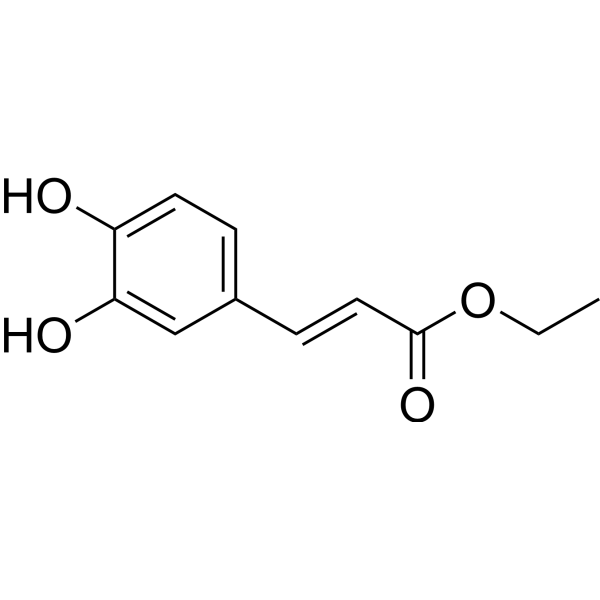
Ethyl Caffeate is a natural phenolic compound isolated from Bidens pilosa. Ethyl caffeate suppresses NF-κB activation and its downstream inflammatory mediators, inducible nitric oxide synthase (iNOS), cyclooxygenase-2 (COX-2), and prostaglandin E2 (PGE2) in vitro or in mouse skin.
For research use only. We do not sell to patients.
- Purity : 99.34%
- CAS No.: 102-37-4
- Formula: C11H12O4
- Molecular Weight:208.21
-
Storage:
4°C, protect from light
* In solvent : -80°C, 6 months; -20°C, 1 month (protect from light)

To place orders, for customer services and technical support, please contact: MedChemExpress USA
Tel: 609-228-6898 E-mail: [email protected] [email protected]


-
 Biological Activity
-
Chemical Information
-
Solvent & Solubility
- Protocols
- Purity & Documentation
- References
-
 Help & FAQs


-
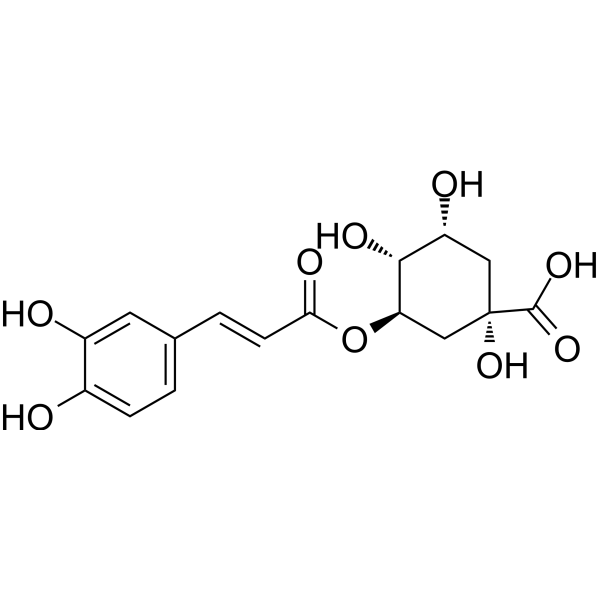
HY-N0055
Chlorogenic acidAntioxidant -
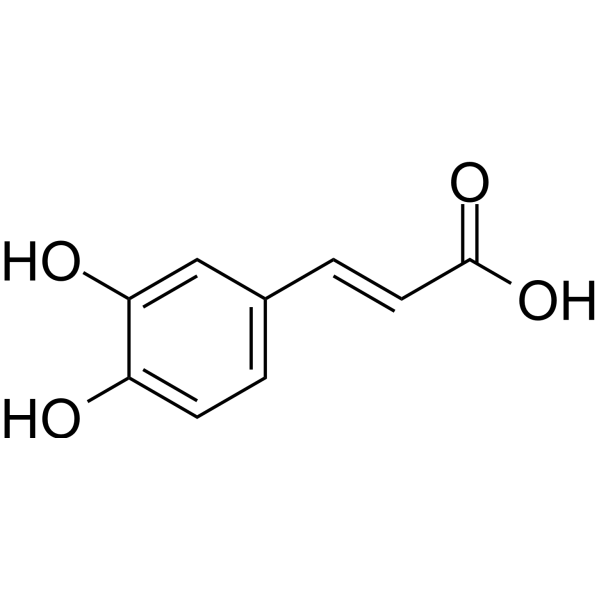
HY-N0172
Caffeic acidEndogenous Metabolite -
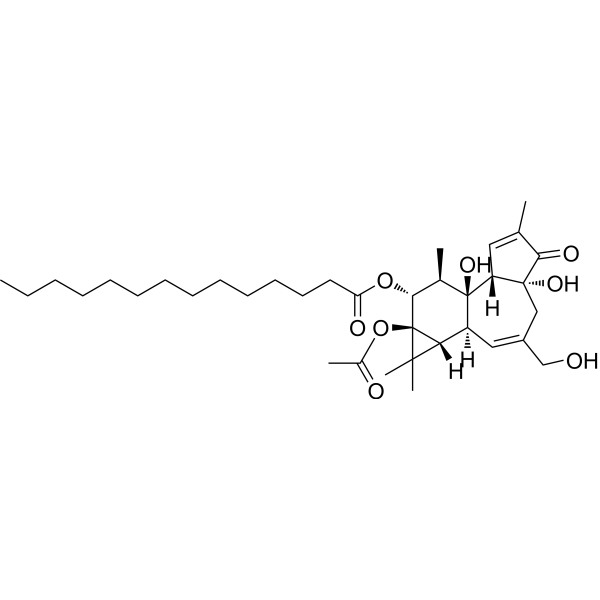
HY-18739
Phorbol 12-myristate 13-acetatePKC Activator -
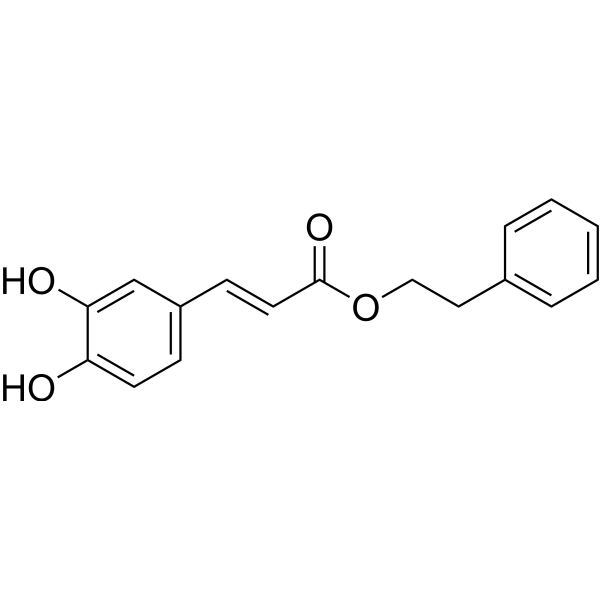
HY-N0274
Caffeic acid phenethyl esterApoptosis Inducer -
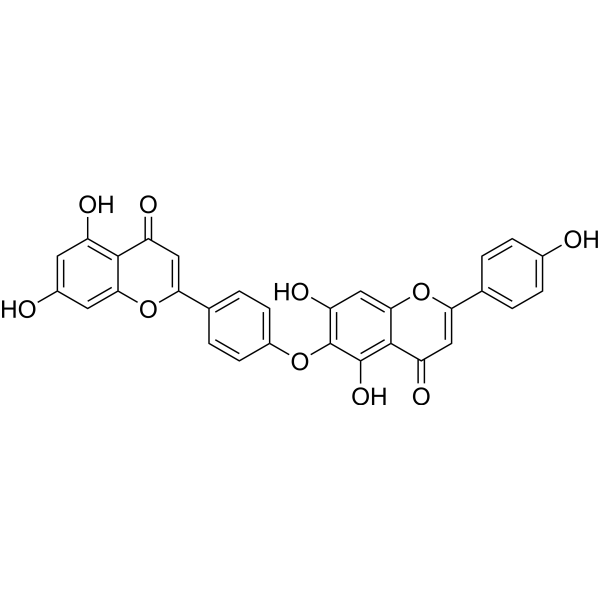
HY-N2360
HinokiflavonePre-mRNA Splicing Activity Modulator, Matrix Metalloproteinases Inhibitor, SUMO Protease Inhibitor -
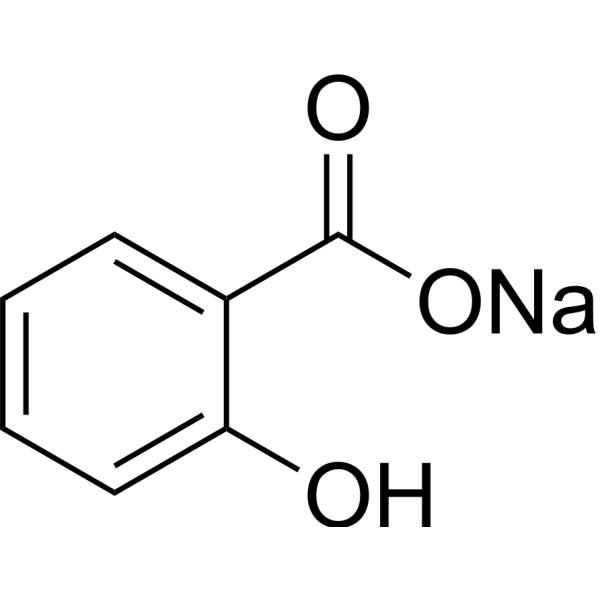
HY-B0167A
Sodium SalicylateCOX Inhibitor -
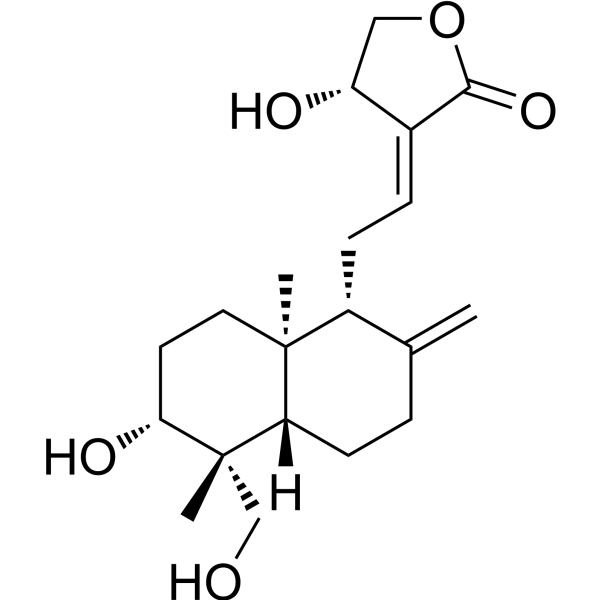
HY-N0191
AndrographolideNF-κB Inhibitor -
HY-N2065
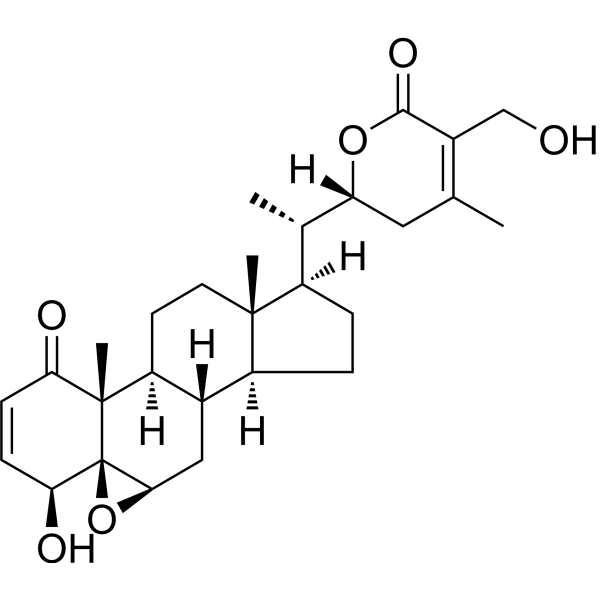
Withaferin ANF-κB Inhibitor -

HY-N6966R
Ethyl Caffeate (Standard)COX Inhibitor -
HY-126307
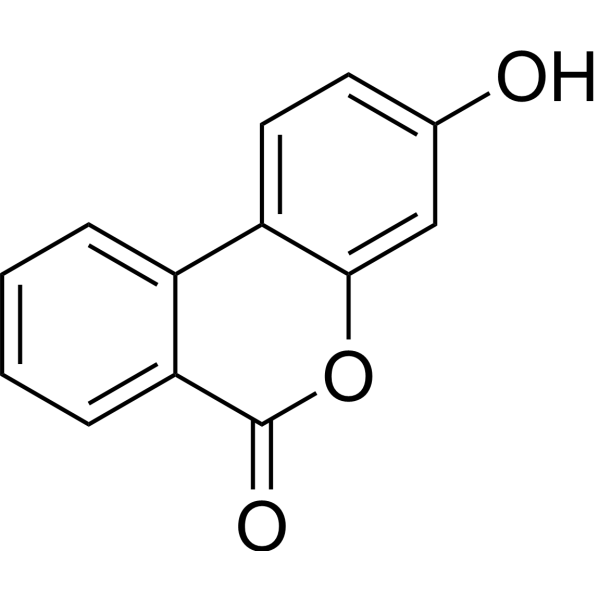
Urolithin BNF-κB Inhibitor -
HY-13812
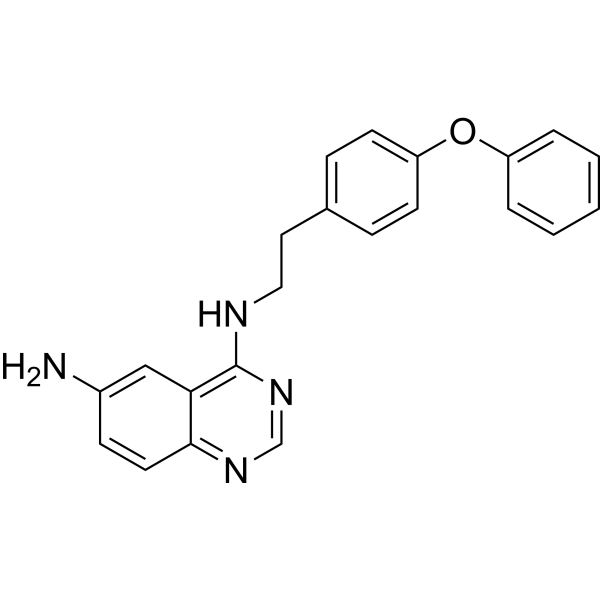
QNZTNF Receptor Inhibitor -
HY-10496
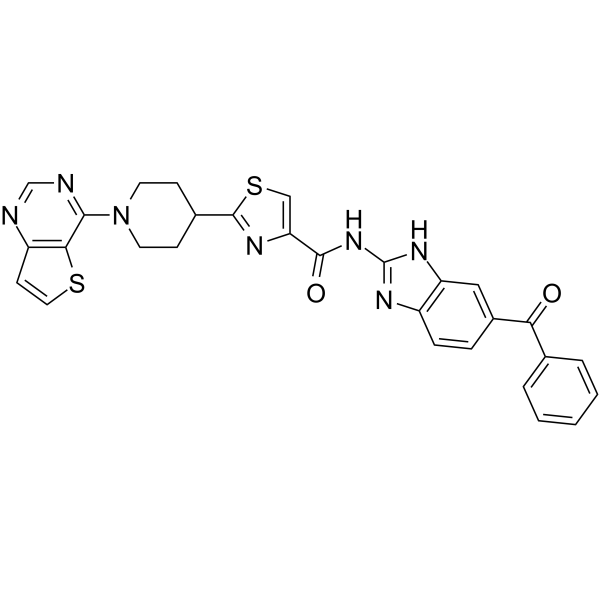
SC75741NF-κB Inhibitor
Publications Citing Use of MedChemExpress (MCE) Ethyl Caffeate
More

Biological Activity
Description
IC50 & Target
[1]|
iNOS |
NF-κB |
COX-2 |
Cellular Effect
|
Cell Line

|
Type | Value | Description | References |
|---|---|---|---|---|
| A-431 | IC50 |
1.81 μg/mL
Compound: 4b
|
Inhibitory concentration required against A 431 human epidermoid carcinoma cell line
Inhibitory concentration required against A 431 human epidermoid carcinoma cell line
|
[PMID: 11354370] |
| A549 | IC50 |
7.22 μM
Compound: 2b
|
Cytotoxicity against human A549 cells after 72 hrs by alamar blue assay
Cytotoxicity against human A549 cells after 72 hrs by alamar blue assay
|
[PMID: 22954735] |
| B16 | IC50 |
1.75 μg/mL
Compound: 4b
|
Inhibitory concentration against B16 murine melanoma cell line
Inhibitory concentration against B16 murine melanoma cell line
|
[PMID: 11354370] |
| BeWo | IC50 |
6.2 μM
Compound: I-2
|
Antitumor activity against human Bewo cells assessed as inhibition of cell growth by MTT assay
Antitumor activity against human Bewo cells assessed as inhibition of cell growth by MTT assay
|
[PMID: 25160837] |
| BV-2 | IC50 |
2.5 μM
Compound: 24
|
Antiinflammatory activity in C57BL6/J mouse BV2 cells assessed as inhibition of LPS-induced nitric oxide production after 24 hrs by Griess assay
Antiinflammatory activity in C57BL6/J mouse BV2 cells assessed as inhibition of LPS-induced nitric oxide production after 24 hrs by Griess assay
|
[PMID: 26110443] |
| Calu-1 | IC50 |
17.2 μM
Compound: 2b
|
Cytotoxicity against human Calu1 cells after 72 hrs by alamar blue assay
Cytotoxicity against human Calu1 cells after 72 hrs by alamar blue assay
|
[PMID: 22954735] |
| EA.hy 926 | EC50 |
11.6 μM
Compound: Ethyl caffeate
|
Cytoprotective activity against H2O2-induced cytotoxicity in human EAhy926 cells pre-incubated for 24 hrs before H2O2 challenge for 12 hrs by MTT assay
Cytoprotective activity against H2O2-induced cytotoxicity in human EAhy926 cells pre-incubated for 24 hrs before H2O2 challenge for 12 hrs by MTT assay
|
10.1039/C4MD00022F |
| HCT-116 | IC50 |
1.99 μg/mL
Compound: 4b
|
Inhibitory concentration against HCT 116 human colon cancer cell line
Inhibitory concentration against HCT 116 human colon cancer cell line
|
[PMID: 11354370] |
| HeLa | IC50 |
1.96 μM
Compound: 2b
|
Cytotoxicity against human HeLa cells after 72 hrs by alamar blue assay
Cytotoxicity against human HeLa cells after 72 hrs by alamar blue assay
|
[PMID: 22954735] |
| HeLa | IC50 |
23.27 μM
Compound: I-2
|
Antitumor activity against human HeLa cells assessed as inhibition of cell growth by MTT assay
Antitumor activity against human HeLa cells assessed as inhibition of cell growth by MTT assay
|
[PMID: 25160837] |
| HepG2 | GI50 |
17.21 μM
Compound: 27
|
Cytotoxicity against human HepG2 cells by SRB assay
Cytotoxicity against human HepG2 cells by SRB assay
|
[PMID: 19476336] |
| HepG2 | IC50 |
63.95 μM
Compound: I-2
|
Antitumor activity against human HepG2 cells assessed as inhibition of cell growth by MTT assay
Antitumor activity against human HepG2 cells assessed as inhibition of cell growth by MTT assay
|
[PMID: 25160837] |
| HL-60 | IC50 |
8.94 μM
Compound: I-2
|
Antitumor activity against human HL60 cells assessed as inhibition of cell growth by MTT assay
Antitumor activity against human HL60 cells assessed as inhibition of cell growth by MTT assay
|
[PMID: 25160837] |
| HOP-62 | IC50 |
12.5 μM
Compound: 2b
|
Cytotoxicity against human HOP62 cells after 72 hrs by alamar blue assay
Cytotoxicity against human HOP62 cells after 72 hrs by alamar blue assay
|
[PMID: 22954735] |
| HT-22 | EC50 |
1.9 μM
Compound: 28
|
Neuroprotective activity against glutamate-induced cell death in mouse HT-22 cells assessed as increase in cell viability after 24 hrs by EZ-Cytox assay
Neuroprotective activity against glutamate-induced cell death in mouse HT-22 cells assessed as increase in cell viability after 24 hrs by EZ-Cytox assay
|
[PMID: 32991171] |
| LNCaP | IC50 |
>100 μM
Compound: 4
|
Cytotoxicity against human LNCAP cells assessed as reduction in cell viability after 24 hrs by WST-1 assay
Cytotoxicity against human LNCAP cells assessed as reduction in cell viability after 24 hrs by WST-1 assay
|
[PMID: 24080105] |
| LOX IMVI | IC50 |
6.21 μM
Compound: 2b
|
Cytotoxicity against human LOXIMVI cells after 72 hrs by alamar blue assay
Cytotoxicity against human LOXIMVI cells after 72 hrs by alamar blue assay
|
[PMID: 22954735] |
| M14 | IC50 |
9.82 μM
Compound: 2b
|
Cytotoxicity against human M14 cells after 72 hrs by alamar blue assay
Cytotoxicity against human M14 cells after 72 hrs by alamar blue assay
|
[PMID: 22954735] |
| MDCK | IC50 |
3.7 μM
Compound: 24
|
Antiviral activity against Influenza A virus (A/FM/1/47(H1N1)) infected in MDCK cells assessed as inhibition of virus-induced cytopathic effect
Antiviral activity against Influenza A virus (A/FM/1/47(H1N1)) infected in MDCK cells assessed as inhibition of virus-induced cytopathic effect
|
[PMID: 26110443] |
| NCI-H1299 | IC50 |
4.93 μM
Compound: 2b
|
Cytotoxicity against human NCI-H1299 cells after 72 hrs by alamar blue assay
Cytotoxicity against human NCI-H1299 cells after 72 hrs by alamar blue assay
|
[PMID: 22954735] |
| NCI-H157 | IC50 |
7.62 μM
Compound: 2b
|
Cytotoxicity against human NCI-H157 cells after 72 hrs by alamar blue assay
Cytotoxicity against human NCI-H157 cells after 72 hrs by alamar blue assay
|
[PMID: 22954735] |
| NCI-H1792 | IC50 |
18.4 μM
Compound: 2b
|
Cytotoxicity against human NCI-H1792 cells after 72 hrs by alamar blue assay
Cytotoxicity against human NCI-H1792 cells after 72 hrs by alamar blue assay
|
[PMID: 22954735] |
| NCI-H460 | IC50 |
13.1 μM
Compound: 2b
|
Cytotoxicity against human H460 cells after 72 hrs by alamar blue assay
Cytotoxicity against human H460 cells after 72 hrs by alamar blue assay
|
[PMID: 22954735] |
| Oocyte | IC50 |
246 μM
Compound: Caf-COOEt
|
Antagonist activity at Gloeobacter violaceus ligand-gated ion channel expressed in Xenopus oocytes assessed as inhibition of MES buffer pH 5.5 -induced currents after 30 secs by voltage clamp technique
Antagonist activity at Gloeobacter violaceus ligand-gated ion channel expressed in Xenopus oocytes assessed as inhibition of MES buffer pH 5.5 -induced currents after 30 secs by voltage clamp technique
|
[PMID: 23682762] |
| RAW264.7 | EC50 |
121.7 μM
Compound: 3, ethyl caffeate
|
Cytotoxicity against mouse RAW264.7 cells assessed as cell survival after 24 hrs by MTT assay
Cytotoxicity against mouse RAW264.7 cells assessed as cell survival after 24 hrs by MTT assay
|
[PMID: 18667320] |
| RAW264.7 | EC50 |
3.183 μM
Compound: 3, ethyl caffeate
|
Inhibition of LPS-induced nitric oxide production in mouse RAW264.7 cells assessed as nitrite accumulation administered 1 hr before LPS challenge and measured after 24 hrs by Griess reagent assay
Inhibition of LPS-induced nitric oxide production in mouse RAW264.7 cells assessed as nitrite accumulation administered 1 hr before LPS challenge and measured after 24 hrs by Griess reagent assay
|
[PMID: 18667320] |
| RAW264.7 | IC50 |
2 μM
Compound: 30
|
Antiinflammatory activity against LPS-stimulated mouse RAW264.7 cells assessed as decrease in PGE2 production preincubated for 1 hr followed by LPS stimulation and measured after 24 hrs by ELISA
Antiinflammatory activity against LPS-stimulated mouse RAW264.7 cells assessed as decrease in PGE2 production preincubated for 1 hr followed by LPS stimulation and measured after 24 hrs by ELISA
|
[PMID: 31747281] |
| RBL-1 | IC50 |
1.15 μM
Compound: ethyl caffeate
|
Inhibition of 5-lipoxygenase of rat basophilic leukemia (RBL) cell cytosolic enzymes
Inhibition of 5-lipoxygenase of rat basophilic leukemia (RBL) cell cytosolic enzymes
|
10.1016/0960-894X(94)00449-P |
| SGC-7901 | IC50 |
>100 μM
Compound: I-2
|
Antitumor activity against human SGC7901 cells assessed as inhibition of cell growth by MTT assay
Antitumor activity against human SGC7901 cells assessed as inhibition of cell growth by MTT assay
|
[PMID: 25160837] |
| SiHa | IC50 |
34.09 μM
Compound: I-2
|
Antitumor activity against human SiHa cells assessed as inhibition of cell growth by MTT assay
Antitumor activity against human SiHa cells assessed as inhibition of cell growth by MTT assay
|
[PMID: 25160837] |
| Vero | IC50 |
>35 μM
Compound: 24
|
Antiviral activity against Coxsackievirus B3 infected in African green monkey Vero cells assessed as inhibition of virus-induced cytopathic effect
Antiviral activity against Coxsackievirus B3 infected in African green monkey Vero cells assessed as inhibition of virus-induced cytopathic effect
|
[PMID: 26110443] |
In Vitro
Ethyl Caffeate markedly suppresses the lipopolysaccharide (LPS)-induced nitric oxide (NO) production with IC50 of 5.5?μg/ml[1].
MedChemExpress (MCE) has not independently confirmed the accuracy of these methods. They are for reference only.


Chemical Information
-
CAS No. 102-37-4
-
Appearance Solid
-
Molecular Weight 208.21
-
Formula C11H12O4
-
Color Light yellow to yellow
-
SMILES
O=C(OCC)/C=C/C1=CC=C(O)C(O)=C1
-
Structure Classification
-
Shipping
Room temperature in continental US; may vary elsewhere.
-
Storage
4°C, protect from light
* In solvent : -80°C, 6 months; -20°C, 1 month (protect from light)


Publications (4)
-
Journal Impact Factor
-
Most Recent
-
Pharmacol Res
Suppression of ZEB1 by Ethyl caffeate attenuates renal fibrosis via switching glycolytic reprogramming. [Abstract]2024 Nov:209:107407. PMID: 39270946 -
-
Pharmacology
Sappanone A Targets Transcription Factor EB to Promote Lysosomal Autophagy and Attenuate High Glucose-Induced Myocardial Injury. [Abstract]2026 May 8:1-15. PMID: 42102042 -
Folia Histochem Cytobiol
Tectochrysin alleviates high-glucose-induced retinal pigment epithelial cell injury through Nrf2/HO-1 activation. [Abstract]2025;63(3):134-141. PMID: 41084772


Solvent & Solubility
In Vitro:
DMSO : 200 mg/mL (960.57 mM; Need ultrasonic; Hygroscopic DMSO has a significant impact on the solubility of product, please use newly opened DMSO)
Please refer to the solubility information to select the appropriate solvent. Once prepared, please aliquot and store the solution to prevent product inactivation from repeated freeze-thaw cycles.
Storage method and period of stock solution: -80°C, 6 months; -20°C, 1 month (protect from light). When stored at -80°C, please use it within 6 months. When stored at -20°C, please use it within 1 month.
Please refer to the solubility information to select the appropriate solvent. Once prepared, please aliquot and store the solution to prevent product inactivation from repeated freeze-thaw cycles.
Storage method and period of stock solution: -80°C, 6 months; -20°C, 1 month (protect from light). When stored at -80°C, please use it within 6 months. When stored at -20°C, please use it within 1 month.
Concentration (start) × Volume (start) = Concentration (final) × Volume (final)
In Vivo:
Select the appropriate dissolution method based on your experimental animal and administration route.
- For the following dissolution methods, please ensure to first prepare a clear stock solution using an In Vitro approach and then sequentially add co-solvents:
- To ensure reliable experimental results, the clarified stock solution can be appropriately stored based on storage conditions. As for the working solution for In Vivo experiments, it is recommended to prepare freshly and use it on the same day.
- The percentages shown for the solvents indicate their volumetric ratio in the final prepared solution. If precipitation or phase separation occurs during preparation, heat and/or sonication can be used to aid dissolution.
Add each solvent one by one: 10% DMSO 40% PEG300 5% Tween-80 45% Saline
Solubility: ≥ 2.08 mg/mL (9.99 mM); Clear solution
This protocol yields a clear solution of ≥ 2.08 mg/mL (saturation unknown).
Taking 1 mL working solution as an example, add 100 μL DMSO stock solution (20.8 mg/mL) to 400 μL PEG300, and mix evenly; then add 50 μL Tween-80 and mix evenly; then add 450 μL Saline to adjust the volume to 1 mL.
Preparation of Saline: Dissolve 0.9 g sodium chloride in ddH₂O and dilute to 100 mL to obtain a clear Saline solution.
Add each solvent one by one: 10% DMSO 90% (20% SBE-β-CD in Saline)
Solubility: ≥ 2.08 mg/mL (9.99 mM); Clear solution
This protocol yields a clear solution of ≥ 2.08 mg/mL (saturation unknown).
Taking 1 mL working solution as an example, add 100 μL DMSO stock solution (20.8 mg/mL) to 900 μL 20% SBE-β-CD in Saline, and mix evenly.
Preparation of 20% SBE-β-CD in Saline (4°C, storage for one week): 2 g SBE-β-CD powder is dissolved in 10 mL Saline, completely dissolve until clear.
In Vivo Dissolution Calculator
Please enter the basic information of animal experiments:
-
-
-
-
Recommended: Prepare an additional quantity of animals to account for potential losses during experiments.
Please enter your animal formula composition:
-
%DMSO +
Recommended: Keep the proportion of DMSO in working solution below 2% if your animal is weak.
-
%+
-
+%Tween-80 + +
-
%Saline +
The co-solvents required include: DMSO, . All of co-solvents are available by MedChemExpress (MCE). , Tween 80. All of co-solvents are available by MedChemExpress (MCE).
Working solution concentration: 0.22 mg/mL
Method for preparing stock solution: mg drug dissolved in μL DMSO. Stock solution concentration: mg/mL. * In solvent : -80°C, 6 months; -20°C, 1 month (protect from light)
1. Take μL DMSO stock solution;
2. Add μL .
μL , mix evenly;
3. Then add μL Tween 80, mix evenly;
4. Then add μL
Please ensure that the stock solution in the first step is dissolved to a clear state, and add co-solvents in sequence. You can use ultrasonic heating (ultrasonic cleaner, recommended frequency 20-40 kHz), vortexing, etc. to assist dissolution.


Purity & Documentation
-
Data Sheet (272 KB)
-
SDS (394 KB)
- English - EN (394 KB)
- Français - FR (394 KB)
- Deutsch - DE (394 KB)
- Norwegian - NO (394 KB)
- Español - ES (394 KB)
- Swedish - SV (394 KB)
- Italian - IT (394 KB)
- Korean - KR (394 KB)
- Portuguese - PT (394 KB)
-
Handling Instructions (2659 KB)
References


Complete Stock Solution Preparation Table
Please refer to the solubility information to select the appropriate solvent. Once prepared, please aliquot and store the solution to prevent product inactivation from repeated freeze-thaw cycles.
Storage method and period of stock solution: -80°C, 6 months; -20°C, 1 month (protect from light). When stored at -80°C, please use it within 6 months. When stored at -20°C, please use it within 1 month.
| Optional Solvent | Concentration Solvent Mass | 1 mg | 5 mg | 10 mg | 25 mg |
|---|---|---|---|---|---|
| DMSO | 1 mM | 4.8028 mL | 24.0142 mL | 48.0284 mL | 120.0711 mL |
| 5 mM | 0.9606 mL | 4.8028 mL | 9.6057 mL | 24.0142 mL | |
| 10 mM | 0.4803 mL | 2.4014 mL | 4.8028 mL | 12.0071 mL | |
| 15 mM | 0.3202 mL | 1.6009 mL | 3.2019 mL | 8.0047 mL | |
| 20 mM | 0.2401 mL | 1.2007 mL | 2.4014 mL | 6.0036 mL | |
| 25 mM | 0.1921 mL | 0.9606 mL | 1.9211 mL | 4.8028 mL | |
| 30 mM | 0.1601 mL | 0.8005 mL | 1.6009 mL | 4.0024 mL | |
| 40 mM | 0.1201 mL | 0.6004 mL | 1.2007 mL | 3.0018 mL | |
| 50 mM | 0.0961 mL | 0.4803 mL | 0.9606 mL | 2.4014 mL | |
| 60 mM | 0.0800 mL | 0.4002 mL | 0.8005 mL | 2.0012 mL | |
| 80 mM | 0.0600 mL | 0.3002 mL | 0.6004 mL | 1.5009 mL | |
| 100 mM | 0.0480 mL | 0.2401 mL | 0.4803 mL | 1.2007 mL |


Ethyl Caffeate Related Classifications
HY-N6966 Related Classifications
 Powered by Bioz