



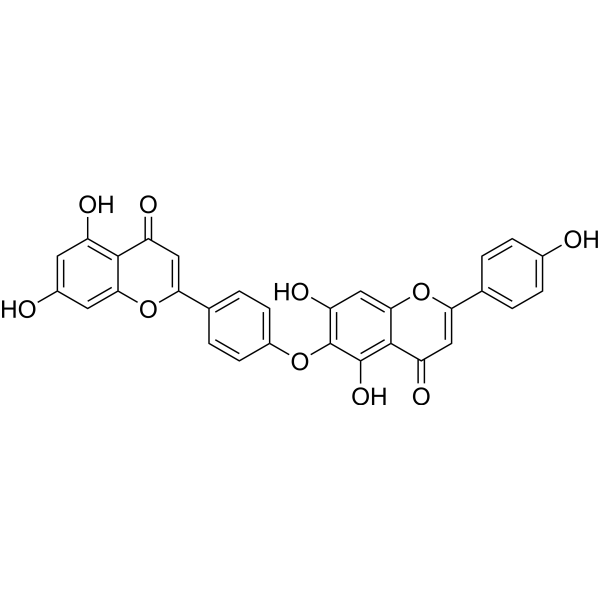
Hinokiflavone
Based on 7 publication(s) in Google Scholar
Hinokiflavone is a novel modulator of pre-mRNA splicing activity extracted from plants with anti-inflammatory, anti-tumor and antiviral activities. Hinokiflavone is also a potent inhibitor for matrix metalloproteinases (MMPs). Hinokiflavone attenuates the virulence of Methicillin (HY-121544)-resistant staphylococcus aureus by inhibiting caseinolytic protease P (ClpP) with an IC50 value of 34.36 mg/mL. Hinokiflavone induces apoptosis via the reactive oxygen species-mitochondria-mediated apoptotic pathway and inhibits tumor cell migration and invasion. Hinokiflavone is a SUMO protease inhibitor against sentrin-specific protease 1 (SENP1) activity.
For research use only. We do not sell to patients.
- Purity : 99.81%
- CAS No.: 19202-36-9
- Formula: C30H18O10
- Molecular Weight:538.46
-
Storage:
4°C, protect from light
* In solvent : -80°C, 6 months; -20°C, 1 month (protect from light)

To place orders, for customer services and technical support, please contact: MedChemExpress USA
Tel: 609-228-6898 E-mail: [email protected] [email protected]


-
 Biological Activity
-
Chemical Information
-
Solvent & Solubility
- Protocols
- Purity & Documentation
- References
-
 Help & FAQs


-
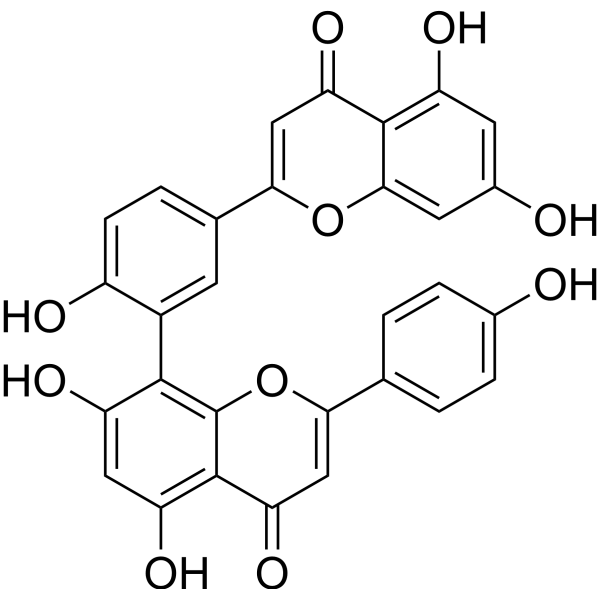
HY-N0662
AmentoflavoneGABA(A) Negative Modulator -
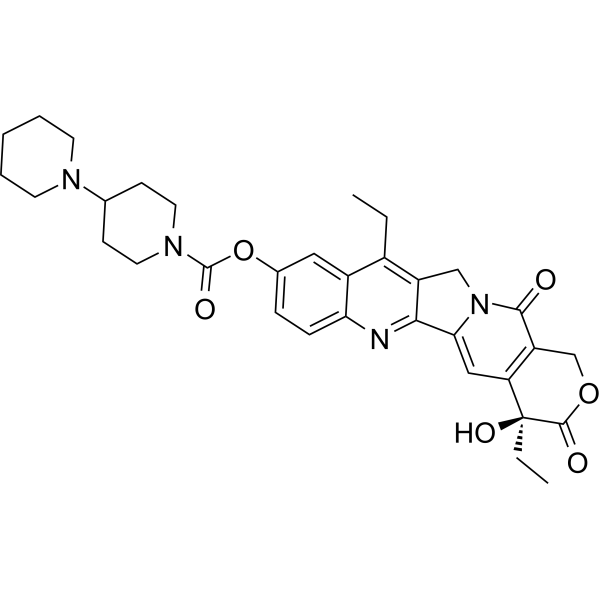
HY-16562
IrinotecanTopoisomerase I Inhibitor -
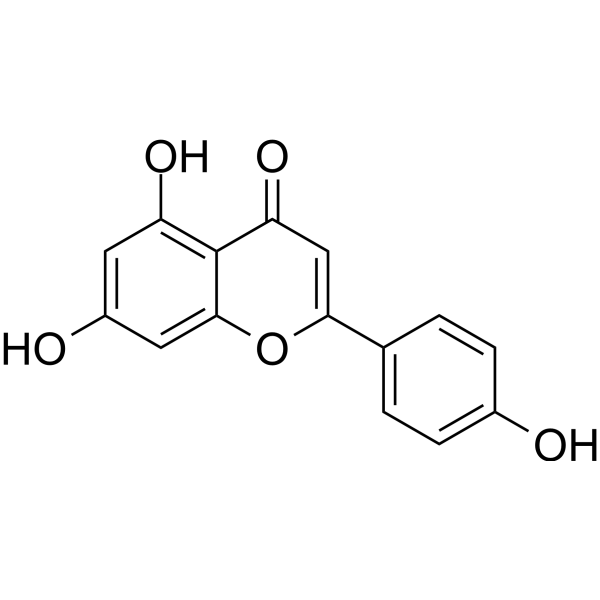
HY-N1201
ApigeninCytochrome P450 Inhibitor -
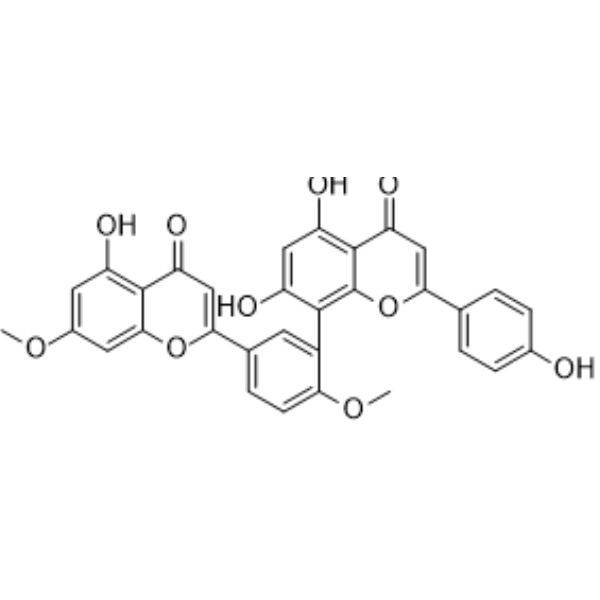
HY-N0889
GinkgetinAutophagy Inducer -
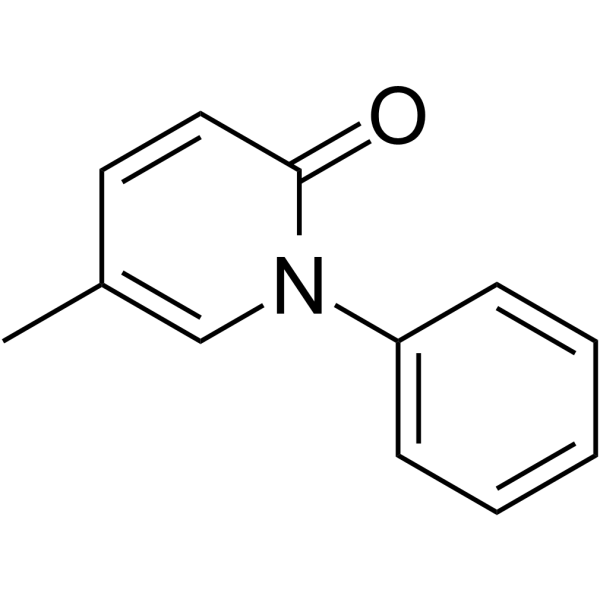
HY-B0673
PirfenidoneAntifibrotic Agent -
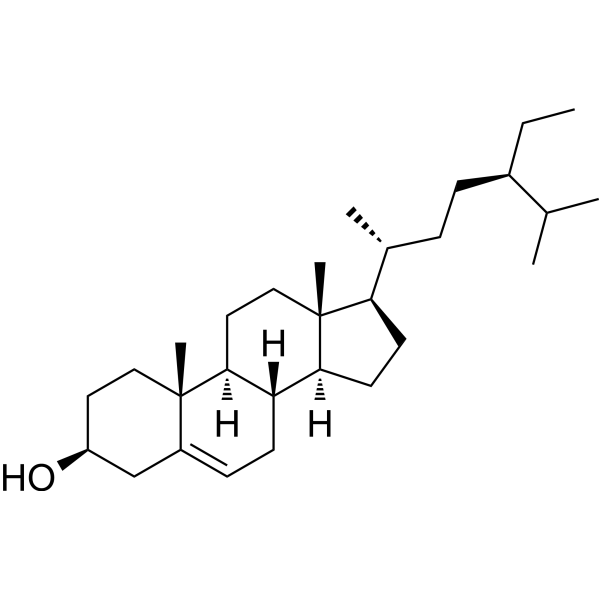
HY-N0171A
Beta-Sitosterol (purity>98%)Dietary Plant Sterols -
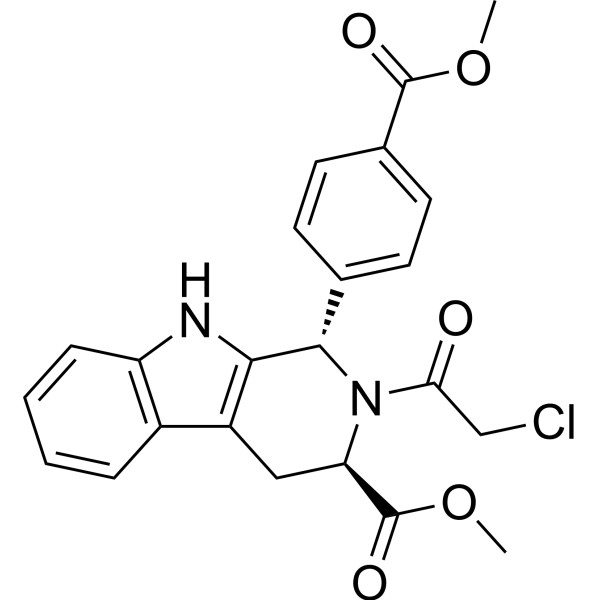
HY-100218A
RSL3GPX4 Inhibitor -
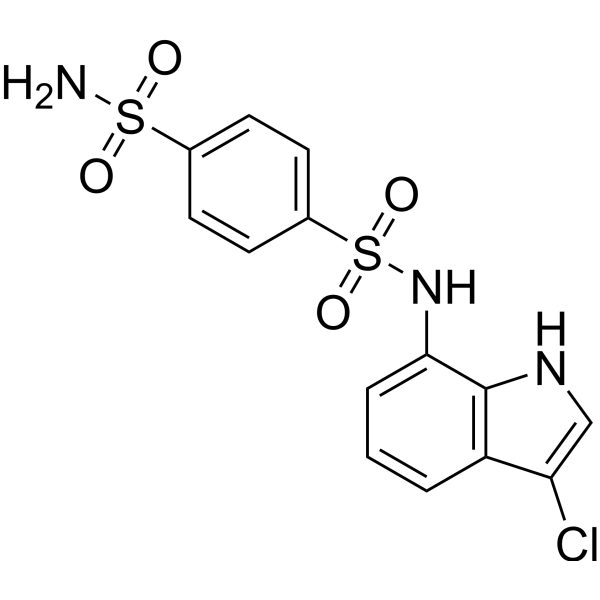
HY-13650
IndisulamCarbonic Anhydrase Inhibitor/RBM39 Molecular Glue Degrader -
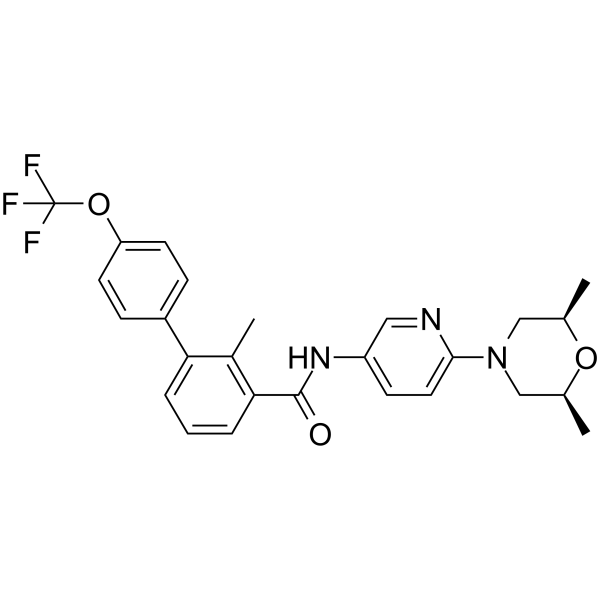
HY-16582A
SonidegibSmo Antagonist -
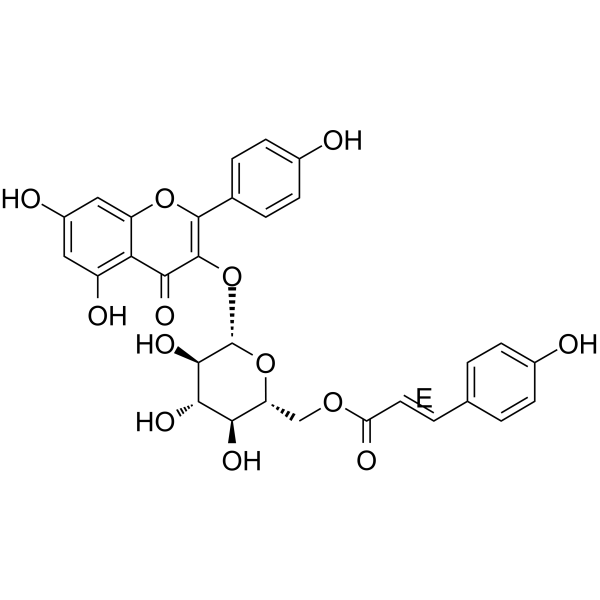
HY-N1425
Tilirosideα-amylase Inhibitor -

HY-N2360R
Hinokiflavone (Standard)Pre-mRNA Splicing Activity Modulator, Matrix Metalloproteinases Inhibitor, SUMO Protease Inhibitor -
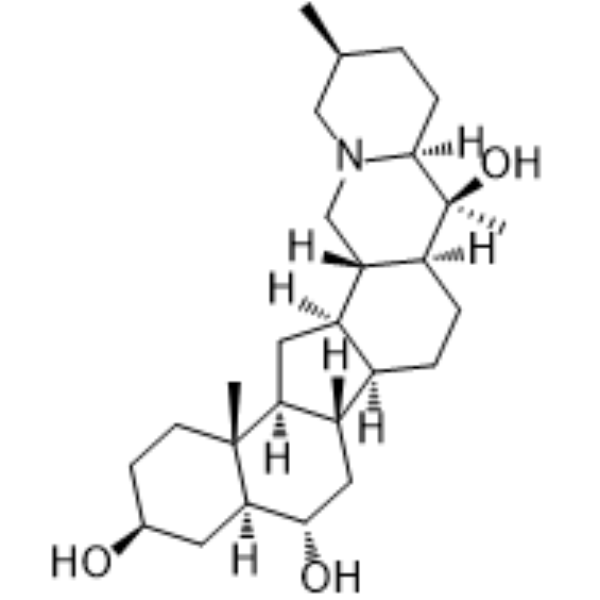
HY-N0212
PeimineAnti-Inflammatory Agent
Publications Citing Use of MedChemExpress (MCE) Hinokiflavone
More Customer Validation & Images

-
Cell Proliferation/Viability Assay

-
Flow Cytometry

-
WB

-
IF

-
IHC


Biological Activity
Description
Cellular Effect
|
Cell Line

|
Type | Value | Description | References |
|---|---|---|---|---|
| HCT-116 | IC50 |
14.2 μM
Compound: Hnk
|
Antiproliferative activity against human HCT-116 cells assessed as reduction in cell viability incubated for 24 hrs by Celltiter-Glo assay
Antiproliferative activity against human HCT-116 cells assessed as reduction in cell viability incubated for 24 hrs by Celltiter-Glo assay
|
[PMID: 39185935] |
| HL-60 | IC50 |
11 μM
Compound: Hnk
|
Antiproliferative activity against human HL-60 cells assessed as reduction in cell viability incubated for 24 hrs by Celltiter-Glo assay
Antiproliferative activity against human HL-60 cells assessed as reduction in cell viability incubated for 24 hrs by Celltiter-Glo assay
|
[PMID: 39185935] |
| MCF7 | IC50 |
16.3 μM
Compound: Hnk
|
Antiproliferative activity against human MCF7 cells assessed as reduction in cell viability incubated for 24 hrs by Celltiter-Glo assay
Antiproliferative activity against human MCF7 cells assessed as reduction in cell viability incubated for 24 hrs by Celltiter-Glo assay
|
[PMID: 39185935] |
| Monocyte | IC50 |
18 nM
Compound: Hinokiflavone
|
Inhibition of procoagulant activity in monocyte from human blood assessed as counteraction of endotoxin-induced tissue factor expression after 18 hrs
Inhibition of procoagulant activity in monocyte from human blood assessed as counteraction of endotoxin-induced tissue factor expression after 18 hrs
|
[PMID: 8882428] |
| Monocyte | IC50 |
48 nM
Compound: Hinokiflavone
|
Inhibition of procoagulant activity in monocyte from human blood assessed as counteraction of IL1-induced tissue factor expression after 18 hrs
Inhibition of procoagulant activity in monocyte from human blood assessed as counteraction of IL1-induced tissue factor expression after 18 hrs
|
[PMID: 8882428] |
| OCI-AML2 | IC50 |
4.9 μM
Compound: Hnk
|
Antiproliferative activity against human OCI-AML2 cells assessed as reduction in cell viability incubated for 24 hrs by Celltiter-Glo assay
Antiproliferative activity against human OCI-AML2 cells assessed as reduction in cell viability incubated for 24 hrs by Celltiter-Glo assay
|
[PMID: 39185935] |
| PBMC | IC50 |
9 μM
Compound: 4
|
Cytotoxicity against uninfected PHA-stimulated human PBMC assessed as thymidine incorporation after 24 hrs by trypan blue exclusion method
Cytotoxicity against uninfected PHA-stimulated human PBMC assessed as thymidine incorporation after 24 hrs by trypan blue exclusion method
|
[PMID: 9322359] |
In Vitro
Hinokiflavone (500 μM, 90 min) inhibits splicing of the adenovirus and the HPV18E6 pre-mRNAs, showed a stronger effect on pre-mRNA splicing than Isoginkgetin (HY-N2117) in vitro[1].
Hinokiflavone (0-30 μM, 24 h) induces either cell cycle arrest or eventual cell death and increases levels of SUMOylated proteins by inhibiting sentrin-specific protease 1 (SENP1) activity in HEK 293 cells[1].
Hinokiflavone (0-40 μM, 24 h) suppresses colorectal tumor cell proliferation, cell migration and invasion ability but promotes cell Apoptosis via the mitochondria-mediated apoptotic pathway[2].
Hinokiflavone (0-128 μg/mL, 24 h) reduces the expression of virulence factors in staphylococcus aureus by directly interacting with caseinolytic protease P (ClpP)[3].
MedChemExpress (MCE) has not independently confirmed the accuracy of these methods. They are for reference only.
-
Cell Line:HEK293 cells
-
Concentration:20-100 μM
-
Incubation Time:24 h
-
Result:Induced changes in alternative splicing patterns and modulated splicing in HEK293 cells.
-
Cell Line:HEK293 cells, HeLa, NB4 cells
-
Concentration:0-30 μM
-
Incubation Time:24 h
-
Result:Showed either cell cycle arrest or eventual cell death, dependent upon concentrations in HEK293 cells, HeLa, NB4 cells.
-
Cell Line:Colorectal tumor cells
-
Concentration:0-40 μM
-
Incubation Time:24 h
-
Result:Reduced and shrinked tumor cells with nuclear fragmentation and condensed nuclei formation, decreased the expression of Bcl-2, but increased the expression of Bax and cleaved caspase-3.
-
Cell Line:Colorectal tumor cells
-
Concentration:0-40 μM
-
Incubation Time:24 h
-
Result:Inhibited the expression of MMP2 and MMP9 and increased the expression of TIMP2 in colorectal tumor cells.
-
Cell Line:HEK 293T cells
-
Concentration:0-256 μg/mL
-
Incubation Time:24 h
-
Result:Did not affect HEK293T cells viability.
In Vivo
Hinokiflavone (100 mg/kg, s.c., every 12 h for 96 h) shows a protective effect on pneumonia infection by Improving survival rate in mice[3].
MedChemExpress (MCE) has not independently confirmed the accuracy of these methods. They are for reference only.
-
Animal Model:CT26 tumor-bearing mice model[2]
-
Dosage:25 or 50 mg/kg
-
Administration:i.p., daily for 24 days
-
Result:Resulted in retarded tumor progression and reduction of tumor weight without affecting body weight of mice, suppressed tumor proliferation and invasion ability by staining nuclear Ki-67 and MMP9, induced the apoptosis by staining cleaved caspase-3.
- RNA extraction experimental
- Research Protocol for Infectious Diseases
- Scratch/Wound-Healing Migration Assay
- Annexin V plus membrane-impermeant dye apoptosis staining
- ROS/oxidative-stress fluorescent staining
- Cell migration
- Neural Crest/Neuronal Cell Migration Explant Assay
- Research Protocol for Inflammation-related Diseases
- Detection of Apoptosis
- TUNEL staining for apoptotic DNA fragmentation
- Chemotaxis Gradient Chamber Assay 1
- Under-Agarose Cell Migration Assay
- Transwell/Boyden Chamber Migration Assay
- Apoptosis Solutions
- 3D Collagen/Hydrogel Matrix Migration Assay
- Cell invasion
- Cell-Exclusion Zone Migration Assay
- Chemotaxis Gradient Chamber Assay 2


Chemical Information
-
CAS No. 19202-36-9
-
Appearance Solid
-
Molecular Weight 538.46
-
Formula C30H18O10
-
Color Light yellow to yellow
-
SMILES
O=C1C=C(C2=CC=C(O)C=C2)OC3=CC(O)=C(OC4=CC=C(C5=CC(C6=C(O)C=C(O)C=C6O5)=O)C=C4)C(O)=C13
-
Structure Classification
-
Shipping
Room temperature in continental US; may vary elsewhere.
-
Storage
4°C, protect from light
* In solvent : -80°C, 6 months; -20°C, 1 month (protect from light)


Publications (7)
-
Journal Impact Factor
-
Most Recent
-
Phytother Res
Activation of MTCH2 by Momordin Ic Prevents Colitis and Colitis-Associated Colorectal Cancer Through Rescuing the Mitochondrial Dysfunction of Macrophage. [Abstract]2026 Jul;40(7):3936-3954. PMID: 42007543 -
Sci Rep
Hinokiflavone is a novel CK2 inhibitor promoting apoptosis and synergizing with chemotherapeutic agents in cisplatin resistant bladder cancer cells. [Abstract]2025 Jul 1;15(1):20922. PMID: 40594996
Hinokiflavone purchased from MedChemExpress. Usage Cited in: Sci Rep. 2025 Jul 1;15(1):20922. [Abstract]
Hinokiflavone (0.625, 1.25, 2.5, 5 μM) exhibits selective anti-proliferative activity in Cisplatin-resistant N/P(14) and J82R cells compared to normal uroepithelial SV-HUC-1 cells following 48 h of treatment.
Hinokiflavone purchased from MedChemExpress. Usage Cited in: Sci Rep. 2025 Jul 1;15(1):20922. [Abstract]
N/P(14) cells were treated with varying concentrations of Hinokiflavone (1.25, 2.5, 5, 10 μM) for 48 h, stained with Annexin V/7-AAD, and analyzed via flow cytometry.
Hinokiflavone purchased from MedChemExpress. Usage Cited in: Sci Rep. 2025 Jul 1;15(1):20922. [Abstract]
The effects of Hinokiflavone (HNK) (1.25, 2.5, 5, 10 μM) on the levels of BER-related proteins in N/P(14) cells were analyzed by western blotting.
-
J Photochem Photobiol B
Selaginella Tamariscina extract reduces UVA-induced skin photodamage via regulating apoptosis and autophagy by AKT phosphorylation. [Abstract]2026 Jan:274:113343. PMID: 41421059 -
Sex Med
Hinokiflavone alleviates high-fat diet-induced erectile dysfunction via the EGFR/PI3K/Akt/eNOS signaling pathway. [Abstract]2025 Aug 6;13(4):qfaf059. PMID: 40808867
Hinokiflavone purchased from MedChemExpress. Usage Cited in: Sex Med. 2025 Aug 6;13(4):qfaf059. [Abstract]
Representative images of EdU assays in RCCECs treated with PA (0.3 mM, 24 h) and Hinokiflavone (HINO) (5 μM, 24 h).
Hinokiflavone purchased from MedChemExpress. Usage Cited in: Sex Med. 2025 Aug 6;13(4):qfaf059. [Abstract]
Immunohistochemical staining and semi-qualification of Ki67 and SOD1 in the penile tissue of rats treated with Hinokiflavone (HINO) (2.5 mg/kg/day, p.o.).
-
Reprod Domest Anim
2023 Oct;58(10):1456-1467. PMID: 37667420 -
-


Solvent & Solubility
In Vitro:
DMSO : 50 mg/mL (92.86 mM; Need ultrasonic; Hygroscopic DMSO has a significant impact on the solubility of product, please use newly opened DMSO)
Ethanol : 2 mg/mL (3.71 mM; Need ultrasonic)
Please refer to the solubility information to select the appropriate solvent. Once prepared, please aliquot and store the solution to prevent product inactivation from repeated freeze-thaw cycles.
Storage method and period of stock solution: -80°C, 6 months; -20°C, 1 month (protect from light). When stored at -80°C, please use it within 6 months. When stored at -20°C, please use it within 1 month.
Please refer to the solubility information to select the appropriate solvent. Once prepared, please aliquot and store the solution to prevent product inactivation from repeated freeze-thaw cycles.
Storage method and period of stock solution: -80°C, 6 months; -20°C, 1 month (protect from light). When stored at -80°C, please use it within 6 months. When stored at -20°C, please use it within 1 month.
Concentration (start) × Volume (start) = Concentration (final) × Volume (final)
In Vivo:
Select the appropriate dissolution method based on your experimental animal and administration route.
- For the following dissolution methods, please ensure to first prepare a clear stock solution using an In Vitro approach and then sequentially add co-solvents:
- To ensure reliable experimental results, the clarified stock solution can be appropriately stored based on storage conditions. As for the working solution for In Vivo experiments, it is recommended to prepare freshly and use it on the same day.
- The percentages shown for the solvents indicate their volumetric ratio in the final prepared solution. If precipitation or phase separation occurs during preparation, heat and/or sonication can be used to aid dissolution.
Add each solvent one by one: 10% DMSO 40% PEG300 5% Tween-80 45% Saline
Solubility: ≥ 0.83 mg/mL (1.54 mM); Clear solution
This protocol yields a clear solution of ≥ 0.83 mg/mL (saturation unknown).
Taking 1 mL working solution as an example, add 100 μL DMSO stock solution (8.3 mg/mL) to 400 μL PEG300, and mix evenly; then add 50 μL Tween-80 and mix evenly; then add 450 μL Saline to adjust the volume to 1 mL.
Preparation of Saline: Dissolve 0.9 g sodium chloride in ddH₂O and dilute to 100 mL to obtain a clear Saline solution.
For the following dissolution methods, please prepare the working solution directly:
It is recommended to prepare fresh solutions and use them promptly within a short period of time.
The percentages shown for the solvents indicate their volumetric ratio in the final prepared solution. If precipitation or phase separation occurs during preparation, heat and/or sonication can be used to aid dissolution.
Add each solvent one by one: 50% PEG300 50% Saline
Solubility: 10 mg/mL (18.57 mM); Suspended solution; Need ultrasonic
In Vivo Dissolution Calculator
Please enter the basic information of animal experiments:
-
-
-
-
Recommended: Prepare an additional quantity of animals to account for potential losses during experiments.
Please enter your animal formula composition:
-
%DMSO +
Recommended: Keep the proportion of DMSO in working solution below 2% if your animal is weak.
-
%+
-
+%Tween-80 + +
-
%Saline +
The co-solvents required include: DMSO, . All of co-solvents are available by MedChemExpress (MCE). , Tween 80. All of co-solvents are available by MedChemExpress (MCE).
Working solution concentration: 0.22 mg/mL
Method for preparing stock solution: mg drug dissolved in μL DMSO. Stock solution concentration: mg/mL. * In solvent : -80°C, 6 months; -20°C, 1 month (protect from light)
1. Take μL DMSO stock solution;
2. Add μL .
μL , mix evenly;
3. Then add μL Tween 80, mix evenly;
4. Then add μL
Please ensure that the stock solution in the first step is dissolved to a clear state, and add co-solvents in sequence. You can use ultrasonic heating (ultrasonic cleaner, recommended frequency 20-40 kHz), vortexing, etc. to assist dissolution.


Purity & Documentation
-
Data Sheet (278 KB)
-
SDS (393 KB)
- English - EN (393 KB)
- Français - FR (393 KB)
- Deutsch - DE (393 KB)
- Norwegian - NO (393 KB)
- Español - ES (393 KB)
- Swedish - SV (393 KB)
- Italian - IT (393 KB)
- Korean - KR (393 KB)
- Portuguese - PT (393 KB)
-
Handling Instructions (2659 KB)
References
[1]. Pawellek A, et al. Characterisation of the biflavonoid hinokiflavone as a pre-mRNA splicing modulator that inhibits SENP. Elife. 2017 Sep 8;6. pii: e27402. [Content Brief]
[2]. Zhou J, et al. Antitumor activity in colorectal cancer induced by hinokiflavone. J Gastroenterol Hepatol. 2019 Sep;34(9):1571-1580. [Content Brief]
[3]. Kong X, et al. Hinokiflavone Attenuates the Virulence of Methicillin-Resistant Staphylococcus aureus by Targeting Caseinolytic Protease P. Antimicrob Agents Chemother. 2022 Aug 16;66(8):e0024022. [Content Brief]


Complete Stock Solution Preparation Table
Please refer to the solubility information to select the appropriate solvent. Once prepared, please aliquot and store the solution to prevent product inactivation from repeated freeze-thaw cycles.
Storage method and period of stock solution: -80°C, 6 months; -20°C, 1 month (protect from light). When stored at -80°C, please use it within 6 months. When stored at -20°C, please use it within 1 month.
| Optional Solvent | Concentration Solvent Mass | 1 mg | 5 mg | 10 mg | 25 mg |
|---|---|---|---|---|---|
| Ethanol / DMSO | 1 mM | 1.8571 mL | 9.2857 mL | 18.5715 mL | 46.4287 mL |
| DMSO | 5 mM | 0.3714 mL | 1.8571 mL | 3.7143 mL | 9.2857 mL |
| 10 mM | 0.1857 mL | 0.9286 mL | 1.8571 mL | 4.6429 mL | |
| 15 mM | 0.1238 mL | 0.6190 mL | 1.2381 mL | 3.0952 mL | |
| 20 mM | 0.0929 mL | 0.4643 mL | 0.9286 mL | 2.3214 mL | |
| 25 mM | 0.0743 mL | 0.3714 mL | 0.7429 mL | 1.8571 mL | |
| 30 mM | 0.0619 mL | 0.3095 mL | 0.6190 mL | 1.5476 mL | |
| 40 mM | 0.0464 mL | 0.2321 mL | 0.4643 mL | 1.1607 mL | |
| 50 mM | 0.0371 mL | 0.1857 mL | 0.3714 mL | 0.9286 mL | |
| 60 mM | 0.0310 mL | 0.1548 mL | 0.3095 mL | 0.7738 mL | |
| 80 mM | 0.0232 mL | 0.1161 mL | 0.2321 mL | 0.5804 mL |


Hinokiflavone Related Classifications
HY-N2360 Related Classifications
 Powered by Bioz