



Ricinoleic acid (Standard)
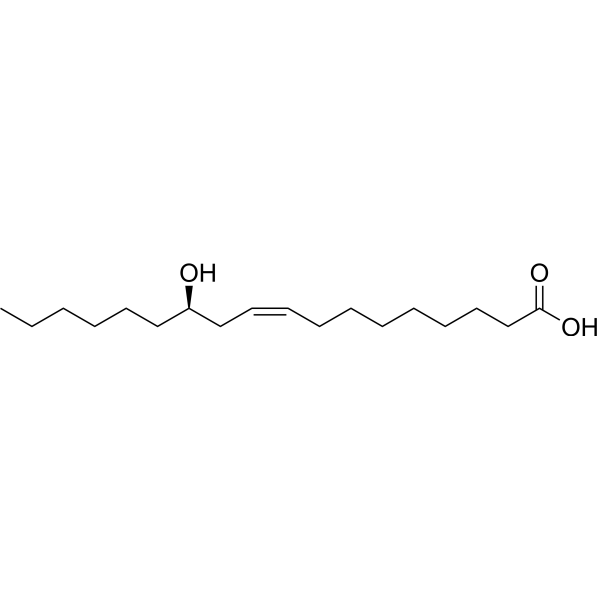
Ricinoleic acid (Standard) is the analytical standard of Ricinoleic acid. This product is intended for research and analytical applications. Ricinoleic acid, a hydroxy fatty acid, is an attractive feedstock for the production of high-performance lubricants, cosmetics, polymers, surfactants, and coatings. Ricinoleic acid is the main active ingredient of Castor oil (HY-107799). Ricinoleic acid is the agonist for prostaglandin EP3 receptor (EP3 receptor) (EC50 in MEG-01 is 0.5 μM), that causes laxative effects and uterine contraction. Ricinoleic acid exhibits antianxiety-like, anti-inflammatory and pro-inflammatory properties.
For research use only. We do not sell to patients.
- CAS No.: 141-22-0
- Formula: C18H34O3
- Molecular Weight:298.46
-
Storage:
Please store the product under the recommended conditions in the Certificate of Analysis.

To place orders, for customer services and technical support, please contact: MedChemExpress USA
Tel: 609-228-6898 E-mail: [email protected] [email protected]


-
 Product Information
-
Chemical Information
- Purity & Documentation
-
 Help & FAQs


-
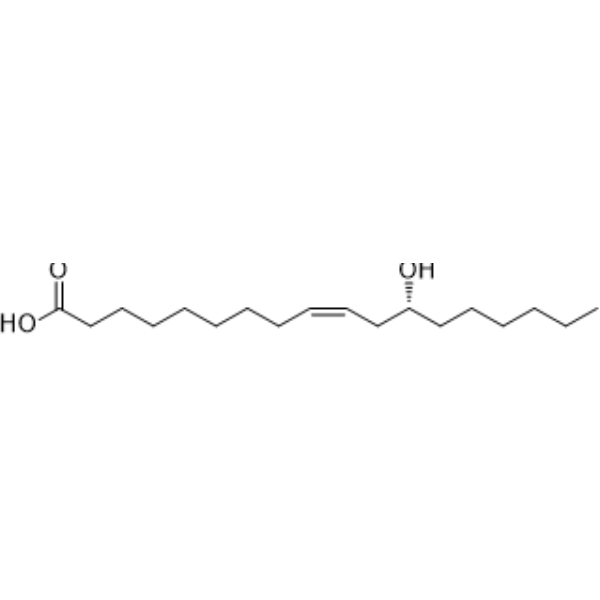
HY-N6070A
Ricinoleic acid (purity≥99%) -
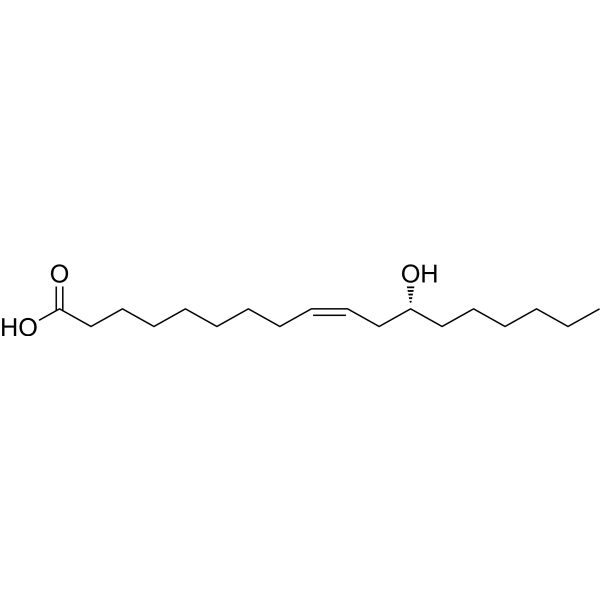
HY-N6070
Ricinoleic acid (purity≥85%) -
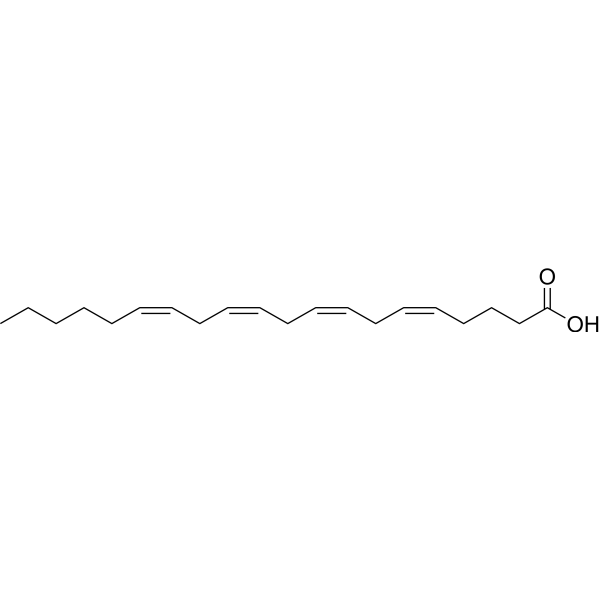
HY-109590
Arachidonic acid -
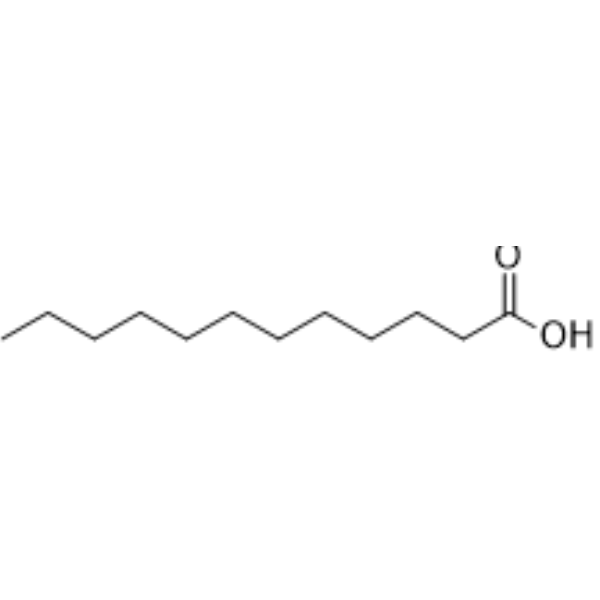
HY-Y0366
Lauric acid -
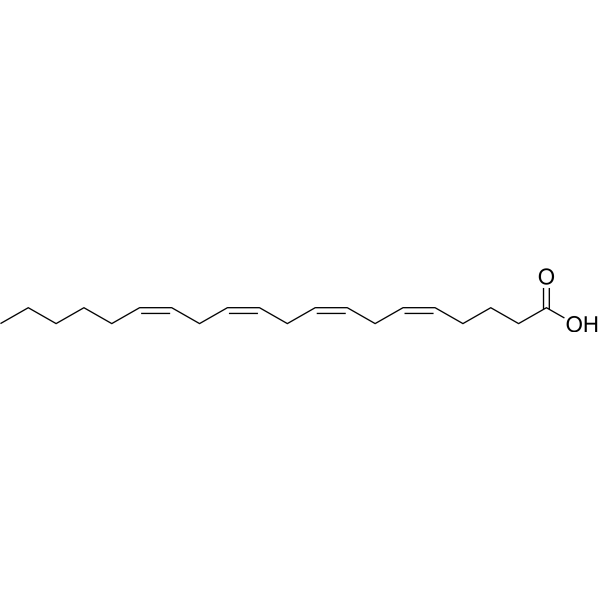
HY-109590R
Arachidonic acid (Standard) -

HY-W068212
16-Hydroxyhexadecanoic acid -
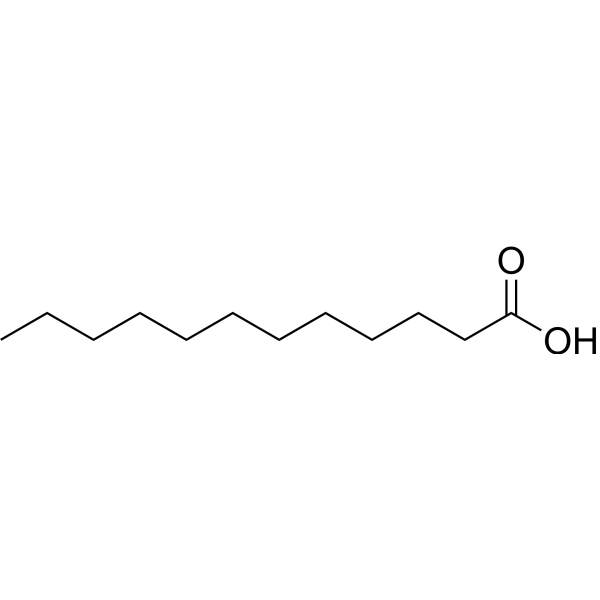
HY-Y0366R
Lauric acid (Standard) -
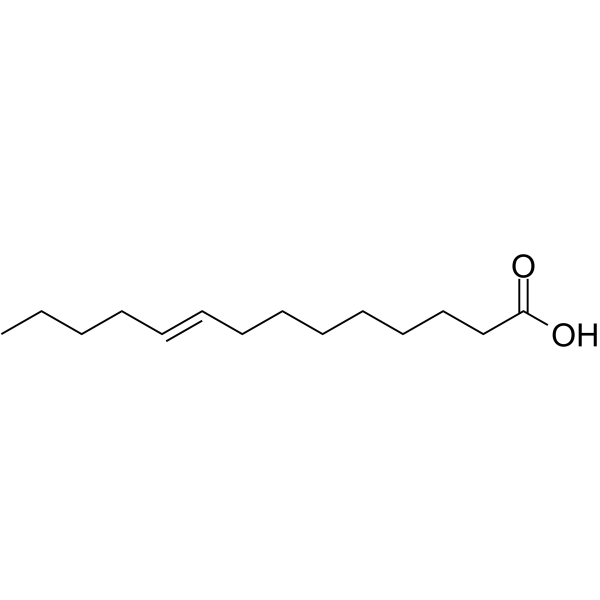
HY-124141
Myristelaidic acid -
HY-W068214
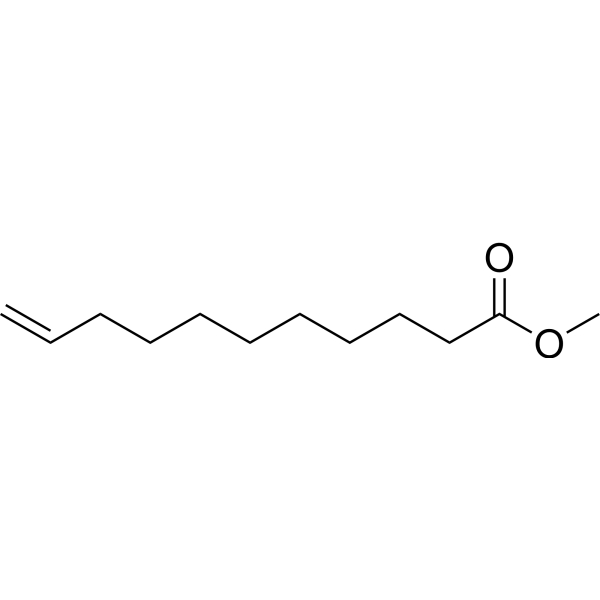
Methyl undec-10-enoate -

HY-W068212R
16-Hydroxyhexadecanoic acid (Standard)


Product Information
Information
Application
The compound is the grade of analytical standard, which is the reference standard supplied assay. It is commonly used in qualitative, quantitative and methodological research experiments in HPLC, GC and MS.


Chemical Information
-
CAS No. 141-22-0
-
Molecular Weight 298.46
-
Formula C18H34O3
-
SMILES
OC(CCCCCCC/C=C\C[C@H](O)CCCCCC)=O
-
Shipping
Room temperature in continental US; may vary elsewhere.
-
Storage
Please store the product under the recommended conditions in the Certificate of Analysis.


Purity & Documentation
References
[1]. Tian B, et al. Identification of genes associated with ricinoleic acid accumulation in Hiptage benghalensis via transcriptome analysis. Biotechnol Biofuels. 2019 Jan 21;12:16. [Content Brief]
[2]. Yoshida J, et al. Inhibition of Calcineurin and Glycogen Synthase Kinase-3β by Ricinoleic Acid Derived from Castor Oil. Lipids. 2020 Mar;55(2):89-99. [Content Brief]
[3]. Nisbett KE, et al., Indulging Curiosity: Preliminary Evidence of an Anxiolytic-like Effect of Castor Oil and Ricinoleic Acid. Nutrients. 2024 May 18;16(10):1527. [Content Brief]
[4]. Tunaru S, et al., Castor oil induces laxation and uterus contraction via ricinoleic acid activating prostaglandin EP3 receptors. Proc Natl Acad Sci U S A. 2012 Jun 5;109(23):9179-84. [Content Brief]
[5]. Vieira C, et al., Pro- and anti-inflammatory actions of ricinoleic acid: similarities and differences with capsaicin. Naunyn Schmiedebergs Arch Pharmacol. 2001 Aug;364(2):87-95. [Content Brief]

Calculators
Concentration (start) × Volume (start) = Concentration (final) × Volume (final)


Ricinoleic acid (Standard) Related Classifications
HY-N6070AR Related Classifications
 Powered by Bioz