



16-Epiestriol
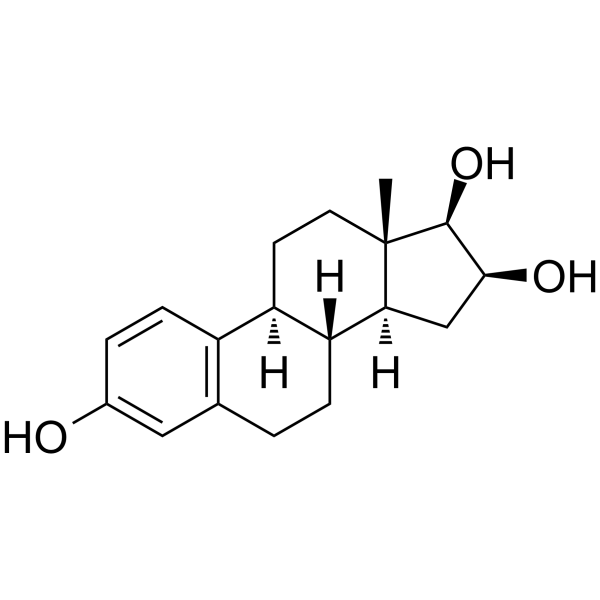
16-Epiestriol (16-epi-Estriol; 16β,17β-Estriol) is a natural stereoisomer of estriol and an anti-inflammatory agent that targets UGT. The Ki values of 16-Epiestriol against human UGT1A10 and UGT2B7 are 98.1 μM and 162 μM, respectively. As a glucuronidation substrate, 16-Epiestriol can be modified at the 3-OH, 16-OH and 17-OH sites by various UGT enzymes; in liver microsomes, the modification mainly occurs at the 16-OH and 17-OH sites, while reactions take place at all three sites in intestinal microsomes. 16-Epiestriol acts on the phase II inflammatory process by blocking edema mediated by prostaglandins and leukocyte infiltration. It lacks glycogenic activity or any effect on blood glucose levels, and serves as an important candidate molecule in the research of inflammatory diseases.
For research use only. We do not sell to patients.
- CAS No.: 547-81-9
- Formula: C18H24O3
- Molecular Weight:288.38
-
Storage:Powder -20°C, 3 years , 4°C, 2 years ; In solvent -80°C, 6 months , -20°C, 1 month

To place orders, for customer services and technical support, please contact: MedChemExpress USA
Tel: 609-228-6898 E-mail: [email protected] [email protected]


-
 Biological Activity
-
Chemical Information
- Protocols
- Purity & Documentation
- References
-
 Help & FAQs


-

HY-130046R
16-Epiestriol (Standard)Bacterial Inhibitor -
HY-14648A
Dexamethasone acetateCorticosteroid Ester -
HY-13681
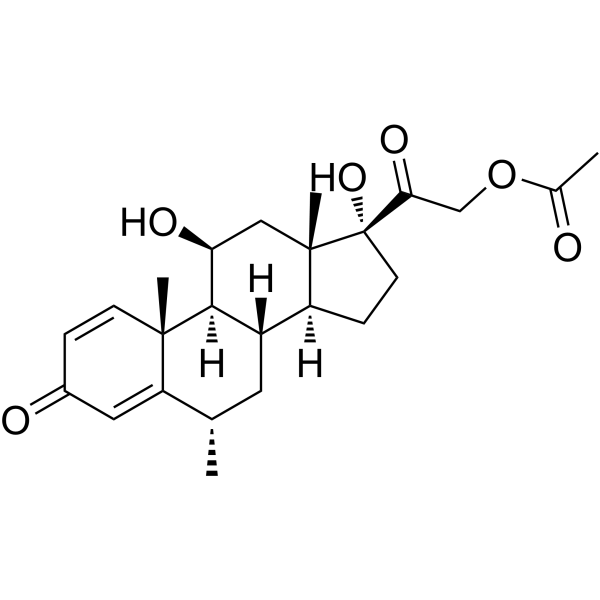
Methylprednisolone acetateCorticosteroid Hormone -
HY-14648AR
Dexamethasone acetate (Standard)Analytical Standard -
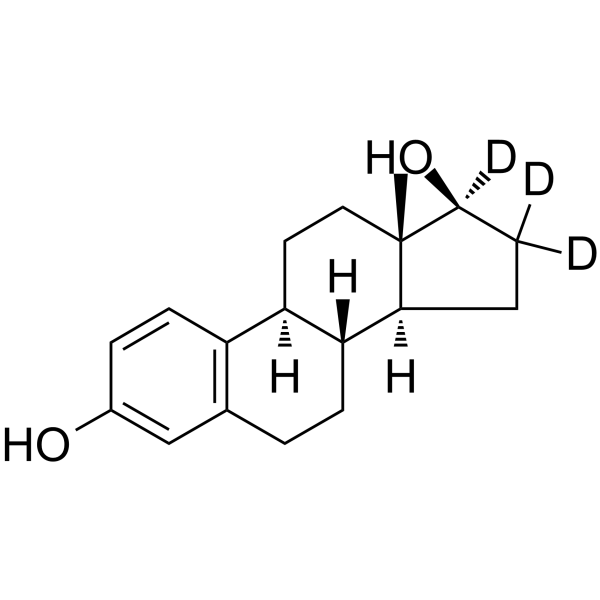
HY-B0141S
Estradiol-d3Stable Isotope -
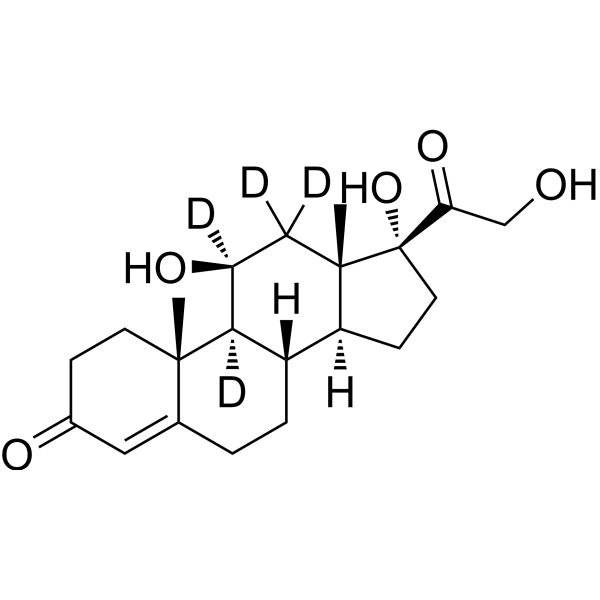
HY-N0583S2
Hydrocortisone-d4Stable Isotope -
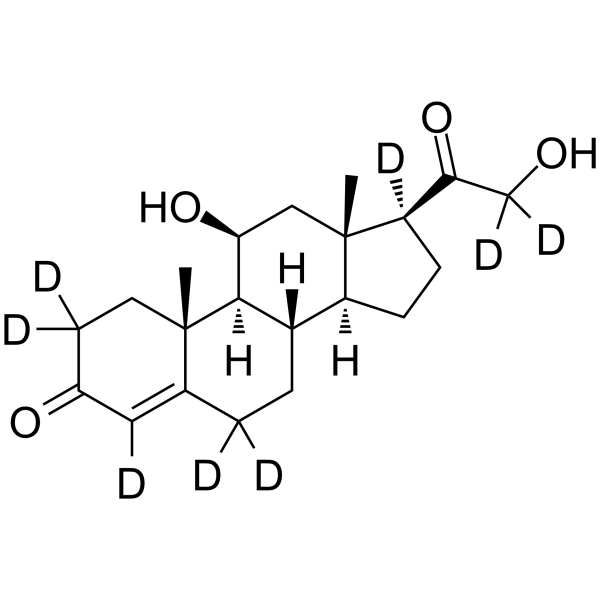
HY-B1618S
Corticosterone-d8Stable Isotope -
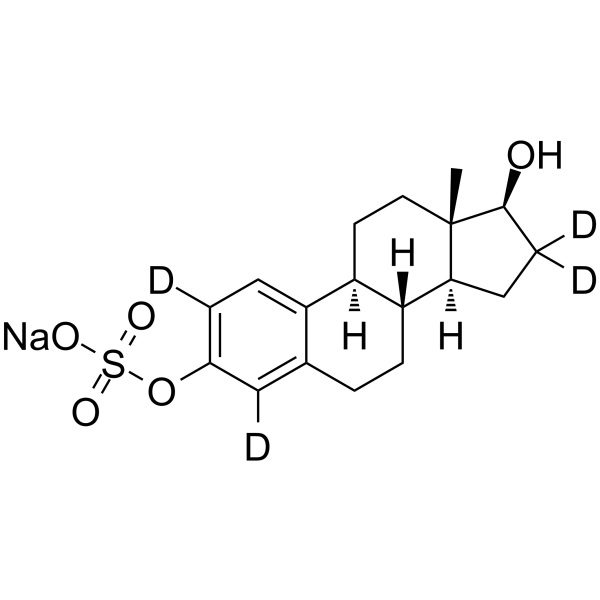
HY-141672S1
17β-Estradiol sulfate-d4 sodiumStable Isotope -
HY-13681R
Methylprednisolone acetate (Standard)


Biological Activity
Description
IC50 & Target
|
Human Endogenous Metabolite |
In Vitro
16-Epiestriol (200 μM; 15-60 min) is targeted by recombinant human UGT1A1, UGT1A7, UGT1A8, UGT2B15, UGT1A3, UGT2A1, UGT2B4, and UGT2B17 which exhibit low-level glucuronidation activity towards it, with regioselectivity for the 3-OH or 16-OH[1].
16-Epiestriol (0.2-300 μM; 15-60 min) is targeted by pooled human intestine microsomes which preferentially catalyze its 3-OH glucuronidation with a Vmax of 4111 ± 94 pmol/min/mg and Km of 50 ± 3 μM, with secondary activity at the 16-OH and 17-OH[1].
16-Epiestriol (200 μM, 0.2-300 μM; 15-60 min) is targeted by recombinant human UGT2B7 which exhibits high activity towards it, catalyzing 16-OH glucuronidation with a Vmax of 3866 ± 788 pmol/min/mg, Km of 38.4 ± 11.4 μM, and substrate inhibition with a Ki of 162 ± 86.4 μM[1].
16-Epiestriol (0.2-300 μM; 15-60 min) is targeted by recombinant human UGT1A10-F93G which catalyzes its 3-OH glucuronidation with a Vmax of 2249 ± 201 pmol/min/mg and Km of 186 ± 28.0 μM, exhibiting lower turnover and higher Km than wild-type UGT1A10[1].
16-Epiestriol (0.2-300 μM; 15-60 min) is targeted by pooled human liver microsomes which preferentially catalyze its 16-OH glucuronidation with a Vmax of 8011 ± 106 pmol/min/mg and Km of 33 ± 1 μM, with far lower activity at the 3-OH and 17-OH[1].
MedChemExpress (MCE) has not independently confirmed the accuracy of these methods. They are for reference only. Further protocols information, click here.
In Vivo
16-Epiestriol (60 μg/rat; s.c.; administered at 0, 2, 4, and 6 h) exhibits no significant glycogenic activity in adrenalectomized rats, as it does not alter plasma or hepatic glucose concentrations compared with untreated control groups[2].
MedChemExpress (MCE) has not independently confirmed the accuracy of these methods. They are for reference only.
-
Animal Model:Sprague-Dawley (male, mean body weight ~200 g)[2]
-
Dosage:10 mg/kg; 20 mg/kg
-
Administration:i.p.; single dose
-
Result:Reduced paw volume change to 0.22 mL (±0.05 SEM) at 1 h, 0.59 mL (±0.05 SEM) at 2 h, 0.71 mL (±0.05 SEM) at 3 h, and 0.50 mL (±0.06 SEM) at 5 h at 10 mg/kg.
Reduced paw volume change to 0.17 mL (±0.03 SEM) at 1 h, 0.44 mL (±0.05 SEM) at 2 h, 0.65 mL (±0.04 SEM) at 3 h, and 0.48 mL (±0.05 SEM) at 5 h at 20 mg/kg.
Reduced edema by 58% at 5 h compared to untreated controls at 20 mg/kg.
Reduced edema by 56% at 5 h on an equimolar basis, which is more than twice the efficacy of hydrocortisone.
Showed statistically significantly less edema at 5 h compared to untreated and hydrocortisone-treated groups (p < 0.001 by Student’s t-test) at 20 mg/kg.
-
Animal Model:Sprague-Dawley (adrenalectomized male, average body weight 185 g)[2]
-
Dosage:60 μg/rat per dose; total cumulative dose 240 μg/rat (0.832 μmol/rat)
-
Administration:s.c.; four doses at 0, 2, 4, and 6 h
-
Result:Resulted in median plasma glucose concentration of 79.0 mg/dL and median liver glucose concentration of 93.9 μg/g of liver.
Showed no statistically significant differences in median plasma or liver glucose concentrations relative to untreated control groups.


Chemical Information
-
CAS No. 547-81-9
-
Appearance Solid
-
Molecular Weight 288.38
-
Formula C18H24O3
-
Color White to off-white
-
SMILES
C[C@@]12[C@@H](O)[C@@H](O)C[C@@]1([H])[C@]3([H])CCC4=C(C=CC(O)=C4)[C@@]3([H])CC2
-
Synonyms
16-epi-Estriol; 16β,17β-Estriol
-
Shipping
Room temperature in continental US; may vary elsewhere.
-
Storage
Powder -20°C 3 years 4°C 2 years In solvent -80°C 6 months -20°C 1 month

Protocols
-
Research Protocol for Inflammation-related Diseases
The NLRP3 inflammasome is a cytosolic innate immune signaling platform that integrates priming signals and danger-signal activation to promote caspase-1 activation, maturation of IL-1β and IL-18, and gasdermin D-mediated pyroptotic cell death. The core experimental logic is to determine whether inflammatory disease phenotypes are driven by increased NLRP3 expression, ASC-containing inflammasome assembly, caspase-1 cleavage, GSDMD cleavage, and extracellular release of IL-1β/IL-18 rather than by nonspecific cell injury alone. The pathway is strongly linked to inflammation-related disease phenotypes because monosodium urate crystals activate NALP3/NLRP3 inflammasome signaling in gout-like crystal inflammation, cholesterol crystals activate NLRP3 inflammasomes in atherogenesis models, and DSS-induced intestinal inflammation has been reported to involve NLRP3 inflammasome activity. However, experimental colitis studies also show context-dependent protective effects of NLRP3 inflammasome co


Purity & Documentation
-
Data Sheet (275 KB)
-
SDS (419 KB)
- English - EN (419 KB)
- Français - FR (419 KB)
- Deutsch - DE (419 KB)
- Norwegian - NO (419 KB)
- Español - ES (419 KB)
- Swedish - SV (419 KB)
- Italian - IT (419 KB)
- Korean - KR (419 KB)
- Portuguese - PT (419 KB)
-
Handling Instructions (2659 KB)
References
[1]. Sneitz N, et al. Regiospecificity and stereospecificity of human UDP-glucuronosyltransferases in the glucuronidation of estriol, 16-epiestriol, 17-epiestriol, and 13-epiestradiol. Drug Metab Dispos. 2013;41(3):582-591. [Content Brief]
[2]. Latman NS, et al. 16-epiestriol: an anti-inflammatory steroid without glycogenic activity. J Pharm Sci. 1994;83(6):874-877. [Content Brief]

Calculators
Concentration (start) × Volume (start) = Concentration (final) × Volume (final)


16-Epiestriol Related Classifications
HY-130046 Related Classifications
 Powered by Bioz