

1. Search Result
Search Result
Results for "

blood-brain barrier-permeable

" in MedChemExpress (MCE) Product Catalog:

464

Inhibitors & Agonists

15

Fluorescent Dyes

6

Biochemical Assay Reagents

15

Peptides

5

Inhibitory Antibodies

49

Natural
Products

25

Isotope-Labeled Compounds

5

Click Chemistry

1

Oligonucleotides

2

GMP Molecules

Cat. No. Product Name Target Research Areas Chemical Structure
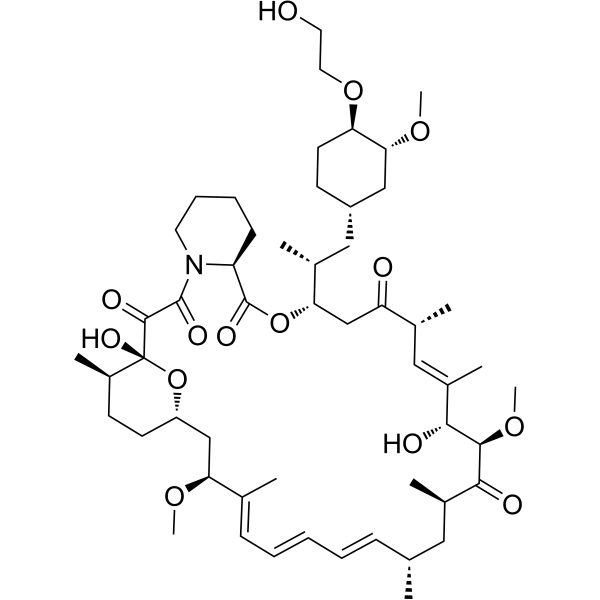
  • HY-10218
    Everolimus
    110+ Cited Publications

    RAD001; SDZ-RAD

    mTOR FKBP Autophagy Apoptosis Bacterial Infection Neurological Disease Metabolic Disease Inflammation/Immunology Cancer
    Everolimus (RAD001) is a Rapamycin (HY-10219) derivative and a potent, selective, orally active, blood-brain barrier-permeable mTOR1 inhibitor. Everolimus binds to FKBP-12 to generate an immunosuppressive complex. Everolimus inhibits tumor cells proliferation and induces cell apoptosis and autophagy. Everolimus has potent immunosuppressive and anticancer activities .
    Everolimus
  • HY-B1473
    Serotonin hydrochloride
    Maximum Cited Publications
    31 Publications Verification

    5-Hydroxytryptamine hydrochloride; 5-HT hydrochloride

    5-HT Receptor COMT Endogenous Metabolite Neurological Disease
    Serotonin (5-Hydroxytryptamine) hydrochloride is a monoamine neurotransmitter in the CNS and an endogenous 5-HT receptor agonist, with blood-brain barrier permeability. Serotonin hydrochloride is also a catechol O-methyltransferase (COMT) inhibitor with a Ki of 44 μM.
    Serotonin hydrochloride
  • HY-112906
    C-176
    105+ Cited Publications

    STING Inflammation/Immunology
    C-176 is a selective and blood-brain barrier permeable STING inhibitor. C-176 covalently targets transmembrane cysteine residue 91 and thereby blocking activation-induced palmitoylation of STING .
    C-176
  • HY-B0167
    Salicylic acid
    10+ Cited Publications

    2-Hydroxybenzoic acid

    Environmental Pollutants Endogenous Metabolite COX Autophagy Apoptosis Mitophagy Infection Neurological Disease Inflammation/Immunology Cancer
    Salicylic acid (2-Hydroxybenzoic acid) inhibits cyclo-oxygenase-2 (COX-2) activity independently of transcription factor (NF-κB) activation. Salicylic acid has blood-brain barrier permeability .
    Salicylic acid
  • HY-Y0669
    Pipecolic acid
    2 Publications Verification

    Endogenous Metabolite YAP Glutathione Peroxidase Ferroptosis Neurological Disease Metabolic Disease Inflammation/Immunology
    Pipecolic acid is an orally bioavailable, blood-brain barrier-permeable metabolite of lysine with antioxidant, inhibitor, and inducer activity. Pipecolic acid modulates the YAP-GPX4 signaling pathway, reduces retinal vascular tube formation, and mitigates ferroptosis. Pipecolic acid potentiates voltage-sensitive Ca 2+ channel currents and induces neuronal apoptosis. Pipecolic acid can be used for the research of diabetic retinopathy .
    Pipecolic acid
  • HY-111653
    CycLuc1
    2 Publications Verification

    Reactive Oxygen Species (ROS) Others
    CycLuc1 is a blood-brain barrier permeable luciferase substrate that displays near-infrared (NIR) emission with a peak luminescence wavelength of 599 nm. CycLuc1 can be used for in vivo bioluminescence imaging .
    CycLuc1
  • HY-100347A
    SRI-011381 hydrochloride
    55+ Cited Publications

    TGF-beta/Smad Neurological Disease
    SRI-011381 hydrochloride is an orally active TGF-β signaling agonist, exhibits neuroprotective effects, with blood-brain barrier permeability .
    SRI-011381 hydrochloride
  • HY-136964

    Biochemical Assay Reagents Neurological Disease
    Sulfo-NHS-Biotin sodium is a low-molecular-weight (MW 443.4 Da) tracer. Sulfo-NHS-Biotin sodium can used to assess blood-brain barrier permeability .
    Sulfo-NHS-Biotin sodium
  • HY-17020A
    Miglustat hydrochloride
    5+ Cited Publications

    N-Butyldeoxynojirimycin hydrochloride; NB-DNJ hydrochloride; OGT 918 hydrochloride

    Glucosylceramide Synthase (GCS) Neurological Disease Inflammation/Immunology
    Miglustat (N-Butyldeoxynojirimycin) hydrochloride is an orally active and reversible ceramide glucosyltransferase inhibitor, with blood-brain barrier permeability. Miglustat hydrochloride can be used for the research of type I gaucher disease .
    Miglustat hydrochloride
  • HY-P991220

    TREM receptor Neurological Disease
    AL002 is a humanized monoclonal IgG1 antibody and a blood-brain barrier-permeable TREM2 modulator. AL002 binds to TREM2 on the surface of microglia, promotes TREM2 clustering and the formation of the TREM2-DAP12 complex, activates the TREM2 signaling pathway and PI3K cascade, and induces TREM2 internalization and degradation. AL002 is applicable to research related to Alzheimer's disease .
    AL002
  • HY-102020
    RG3039
    3 Publications Verification

    PF-06687859

    DNA/RNA Synthesis Neurological Disease
    RG3039 (PF-06687859) is an orally active, blood-brain barrier-permeable DcpS inhibitor with an IC50 of 4.2 nM against hDcpS. RG3039 inhibits the decapping activity of DcpS and maintains DcpS in a catalytically inactive conformation in the central nervous system and other tissues. RG3039 extends survival and improves function in spinal muscular atrophy mice. RG3039 is applicable to research related to spinal muscular atrophy .
    RG3039
  • HY-B0616

    Antibiotic Bacterial GABA Receptor Infection
    Cefepime (BMY-28142) Dihydrochloride Monohydrate is a broad-spectrum, blood-brain barrier-permeable cephalosporin antibiotic with hPON1 inhibitory activity, with an IC50 of 21.115 mM and a Ki of 35.092 mM. Cefepime Dihydrochloride Monohydrate inhibits hPON1 via a non-competitive mechanism and blocks GABAA receptors. Cefepime Dihydrochloride Monohydrate penetrates the outer membrane of Gram-negative bacteria, inhibits the growth of Gram-positive and Gram-negative bacteria, and does not induce the production of β-lactamase .
    Cefepime Dihydrochloride Monohydrate
  • HY-W176557

    Aquaporin Amyloid-β Neurological Disease
    TGN-073 is an orally active, blood-brain barrier-permeable aquaporin 4 (AQP4) modulator. TGN-073 increases the uptake and distribution of brain MRI tracers in the brain parenchyma and reduces the levels of insoluble amyloid β-40 and β-42. TGN-073 can be used in research related to Alzheimer's disease, dementia, traumatic brain injury and pain .
    TGN-073
  • HY-117632
    Elcubragistat
    2 Publications Verification

    ABX-1431

    MAGL Neurological Disease
    Elcubragistat (ABX-1431) is a highly effective, selective, orally active, and blood-brain barrier-permeable monoacylglycerol lipase (MAGL) inhibitor, with an IC50 value of 14 nM .
    Elcubragistat
  • HY-172412

    ALKS 2680

    Orexin Receptor (OX Receptor) Neurological Disease
    Alixorexton (ALKS 2680) is an orally bioavailable, blood-brain barrier-permeable OX2R-selective activator and wake-promoting agent. Alixorexton can be used for the research of narcolepsy and idiopathic hypersomnia .
    Alixorexton
  • HY-113413
    Imidazoleacetic acid
    2 Publications Verification

    Imidazolyl-4-acetic acid

    Endogenous Metabolite GABA Receptor Cardiovascular Disease Neurological Disease Metabolic Disease
    Imidazoleacetic acid (Imidazolyl-4-acetic acid) is a blood-brain barrier-permeable full agonist of the GABAA receptor. Imidazoleacetic acid forms via histamine oxidation in the mouse brain. Imidazoleacetic acid exerts multiple neurochemical and behavioral effects. Imidazoleacetic acid induces a range of centrally mediated effects, including analgesia, sedation, hypnosis, as well as reductions in blood pressure, body temperature, isolation-induced aggression and motor activity .
    Imidazoleacetic acid
  • HY-16969
    Dihexa
    5+ Cited Publications

    PNB-0408; N-hexanoic-Try-Ile-(6)-amino hexanoic amide; Hexanoyl-Tyr-Ile-Ahx-NH2

    c-Met/HGFR Neurological Disease
    Dihexa, an oligopeptide drug, is an orally active and blood-brain barrier-permeable angiotensin IV analog. Dihexa binds to hepatocyte growth factor (HGF) with high affinity (Kd=65 pM) and potentiates its activity at its receptor, c-Met. Dihexa exhibits excellent antidementia activity and improves cognitive function in animal models. Dihexa may have therapeutic potential as a treatment Alzheimer’s disease .
    Dihexa
  • HY-111751
    JNJ-61432059
    1 Publications Verification

    iGluR Neurological Disease
    JNJ-61432059 is a blood-brain barrier-permeable, orally active TARP γ-8-associated AMPAR modulator with anticonvulsant activity. JNJ-61432059 negatively regulates GluA1 and positively modulates GluA2-containing AMPARs. JNJ-61432059 exerts potent protective effects in rodent epilepsy models. JNJ-61432059 is applicable for epilepsy-related research .
    JNJ-61432059
  • HY-19763

    BEBT-908

    PI3K Ferroptosis c-Myc Akt Reactive Oxygen Species (ROS) Histone Acetyltransferase mTOR Neurological Disease Metabolic Disease Inflammation/Immunology Cancer
    Ifupinostat (BEBT-908) is a blood-brain barrier-permeable PI3K/HDAC inhibitor. Ifupinostat exerts anticancer activity against hematologic malignancies, lung cancer, colon cancer, brain cancer and other cancers. Ifupinostat inhibits the PI3K/AKT/mTOR signaling pathway, suppresses c-Myc expression and induces ferroptosis. Ifupinostat can be used in tumor research .
    Ifupinostat
  • HY-154959

    Ras Cancer
    AZD4747 is a selective, blood-brain barrier-permeable mutant GTPase KRAS G12C inhibitor. AZD4747 has the potential to study cancer .
    AZD4747
  • HY-W275295

    PFDoA

    Reactive Oxygen Species (ROS) Caspase Mitochondrial Metabolism Neurological Disease Metabolic Disease
    Perfluorododecanoic acid (PFDoA) is an orally active, blood-brain barrier-permeable perfluorinated compound. Perfluorododecanoic acid increases Caspase 3 activity, disrupts mitochondrial membrane potential, and elevates ROS levels. Perfluorododecanoic acid induces cognitive deficits. Perfluorododecanoic acid exhibits hepatotoxicity .
    Perfluorododecanoic acid
  • HY-W404916
    Probenecid sodium
    40+ Cited Publications

    Influenza Virus Interleukin Related Cardiovascular Disease Infection Neurological Disease Inflammation/Immunology
    Probenecid sodium is an orally active, blood-brain barrier-permeable Pannexin 1 channel inhibitor. Probenecid sodium exhibits anti-inflammatory, antiviral, and neuroprotective activities. Probenecid sodium can be used in research related to multiple sclerosis, focal cerebral ischemic injury, influenza virus infection, and nephropathy .
    Probenecid sodium
  • HY-N0592

    NF-κB AMPK Reactive Oxygen Species (ROS) p38 MAPK Infection Metabolic Disease Inflammation/Immunology Cancer
    Demethyleneberberine is a blood-brain barrier-permeable antioxidant. Demethyleneberberine exerts antioxidant effects by targeting mitochondria, activates the AMPK signaling pathway to regulate lipid metabolism, and inhibits inflammation-related pathways such as NF-κB and MAPK. Demethyleneberberine can be used in the research of inflammatory and other diseases .
    Demethyleneberberine
  • HY-B0416

    mAChR Adrenergic Receptor Neurological Disease
    Gallamine Triethiodide is a blood-brain barrier-permeable skeletal muscle relaxant. Gallamine Triethiodide induces skeletal muscle paralysis by blocking acetylcholine. Gallamine Triethiodide directly stimulates intracardiac β receptors. Gallamine Triethiodide prolongs the duration of afterdischarge in the cat cerebral cortex. Gallamine Triethiodide can be used in studies related to convulsive disorders .
    Gallamine Triethiodide
  • HY-P5623
    RVG
    1 Publications Verification

    RVG29; RDP; Rabies Virus Glycoprotein-29

    nAChR Interleukin Related Neurological Disease Inflammation/Immunology
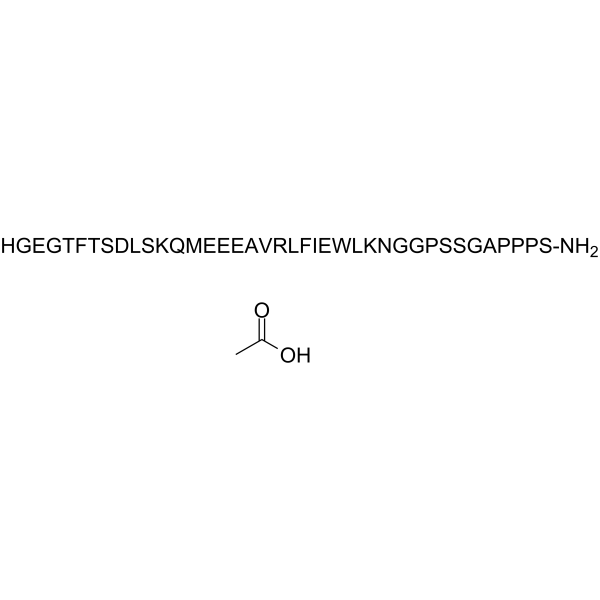
    RVG (RVG29) is a blood-brain barrier-permeable peptide derived from rabies virus glycoprotein, which binds to the α-7 subunit of neuronal nicotinic acetylcholine receptor (AchR). RVG efficiently delivers drugs to nerve cells and antigen-presenting cells in a targeted manner, and enhances the efficiency of antigen presentation and drug delivery .
    RVG
  • HY-19907

    BMS-820836

    Dopamine Transporter Monoamine Transporter Serotonin Transporter Neurological Disease
    Liafensine (BMS-820836) is an orally active, blood-brain barrier-permeable monoamine reuptake inhibitor, with an IC50 of 5.67 nM against DAT, 1.08 nM against SERT, and 7.99 nM against NET. Liafensine binds to DAT to block dopamine reuptake. Liafensine binds to SERT to block serotonin reuptake. Liafensine binds to NET to block norepinephrine reuptake. Liafensine can be used in studies related to depression .
    Liafensine
  • HY-169841

    5-HT Receptor Arrestin Neurological Disease
    IHCH-7086 is a blood-brain barrier-permeable, partial β-arrestin-biased agonist of 5-HT2AR with a Ki of 12.59 nM. IHCH-7086 blocks D-lysergic acid diethylamide-induced head-twitch response in mice and alleviates depression-like behaviors in mice subjected to acute restraint stress or injected with Corticosterone (HY-B1618). IHCH-7086 is applicable to research related to depression .
    IHCH-7086
  • HY-139300

    HMPL-813

    EGFR Cancer
    Epitinib (HMPL-813) is a selective, orally active, blood-brain barrier-permeable EGFR tyrosine kinase inhibitor. Epitinib is applicable to research on EGFR T790M-positive non-small cell lung cancer with brain metastasis and advanced solid tumors .
    Epitinib
  • HY-164795A

    Neurotensin Receptor Arrestin iGluR ERK Sodium Channel Neurological Disease
    SBI-810 hydrochloride is a blood-brain barrier-permeable NTSR1 modulator. SBI-810 hydrochloride promotes the recruitment of β-arrestin-2 to NTSR1 and antagonizes NTSR1-mediated Gq activation. SBI-810 hydrochloride inhibits excitatory synaptic transmission, NMDA receptor and extracellular signal-regulated kinase (ERK) signaling in spinal nociceptive neurons, reduces surface expression of Nav1.7 and action potential firing in primary sensory neurons, and attenuates C-fiber responses. SBI-810 hydrochloride effectively alleviates acute and chronic pain in various rodent models through peripheral and central modulation. SBI-810 hydrochloride is applicable to research related to multiple pain disorders .
    SBI-810 hydrochloride
  • HY-164795

    Neurotensin Receptor Arrestin iGluR ERK Sodium Channel Neurological Disease
    SBI-810 is a blood-brain barrier-permeable NTSR1 modulator. SBI-810 promotes the recruitment of β-arrestin-2 to NTSR1 and antagonizes NTSR1-mediated Gq activation. SBI-810 inhibits excitatory synaptic transmission, NMDA receptor and extracellular signal-regulated kinase (ERK) signaling in spinal nociceptive neurons, reduces surface expression of Nav1.7 and action potential firing in primary sensory neurons, and attenuates C-fiber responses. SBI-810 effectively alleviates acute and chronic pain in various rodent models through peripheral and central modulation. SBI-810 is applicable to research related to multiple pain disorders .
    SBI-810
  • HY-120332

    KH176 hydrochloride

    Reactive Oxygen Species (ROS) Metabolic Disease
    Sonlicromanol (KH176) hydrochloride, a chemical entity derivative of Trolox, is a blood-brain barrier permeable ROS-redox modulator. Sonlicromanol (KH176) hydrochloride is used in the study for mitochondrial disorders .
    Sonlicromanol hydrochloride
  • HY-N2129
    N-Nornuciferine
    1 Publications Verification

    Cytochrome P450 Cholinesterase (ChE) Cardiovascular Disease Metabolic Disease
    N-Nornuciferine is an orally active, blood-brain barrier-permeable CYP2D6 inhibitor, with an IC50 of 3.76 μM and a Ki of 2.34 μM against human CYP2D6. N-Nornuciferine also acts as a BChE inhibitor, showing an IC50 of 5.6 μM in mice . N-Nornuciferine can be used in the research of neurological-related diseases .
    N-Nornuciferine
  • HY-160791

    Phosphatase Infection Cancer
    Claramine is a steroid polyamine with blood-brain barrier permeability. Claramine can regulate the properties of lipid membranes and protect cells from various biological toxins, including misfolded protein oligomers and biological protein-based toxins .
    Claramine
  • HY-126899

    Microtubule/Tubulin Cancer
    TPI-287, a blood-brain barrier-permeable microtubule stabilizer, can significantly reduce metastatic colonization of breast cancer in the brain .
    TPI-287
  • HY-N0592A
    Demethyleneberberine chloride
    3 Publications Verification

    NF-κB AMPK Reactive Oxygen Species (ROS) p38 MAPK Infection Neurological Disease Metabolic Disease Inflammation/Immunology Cancer
    Demethyleneberberine chloride is a blood-brain barrier-permeable antioxidant. Demethyleneberberine chloride exerts antioxidant effects by targeting mitochondria, activates the AMPK signaling pathway to regulate lipid metabolism, and inhibits inflammation-related pathways such as NF-κB and MAPK. Demethyleneberberine chloride can be used in the research of inflammatory and other diseases .
    Demethyleneberberine chloride
  • HY-139178

    Phosphodiesterase (PDE) Neurological Disease
    KVA-D-88 is a blood-brain barrier-permeable PDE4 inhibitor with IC50 values of 140 and 880 nM for PDE4B and PDE4D, respectively. KVA-D-88 induces cAMP accumulation and inhibits neuroactive substance-mediated hyperlocomotion, locomotor sensitization. KVA-D-88 can be used for the research of drug addiction .
    KVA-D-88
  • HY-132845

    PTC857

    α-synuclein Cytochrome P450 Ferroptosis Lipoxygenase Neurological Disease
    Utreloxastat (PTC857) is an orally active and blood-brain barrier-permeable 15-lipooxygenase inhibitor. Utreloxastat is a weak inhibitor of CYP1A2 and 2B6 with an IC50 of >5.3 μM. Utreloxastat reduces oxidative stress and inhibits the consumption of reduced glutathione and ferroptosis. Utreloxastat can be used in the study of neurodegenerative diseases characterized by high levels of oxidative stress and mitochondrial pathology, such as amyotrophic lateral sclerosisc .
    Utreloxastat
  • HY-149202

    PGE synthase Neurological Disease Inflammation/Immunology
    UT-11 is a potent and blood-brain barrier-permeable microsomal prostaglandin E synthase-1 (mPGES-1) inhibitor with IC50s of 0.10 μM and 2.00 μM for inhibiting PGE2 production in human (SK-N-AS) and murine (BV2) cells, respectively .
    UT-11
  • HY-N15001

    GABA Receptor Neurological Disease
    Gabaculine is an amino acid neurotoxin and blood-brain barrier-permeable GABA transaminase inhibitor, with an IC50 of 1 μM in beef and Pseudomonas ovalis. Gabaculine elevates endogenous synaptic and brain GABA levels and enhances GABA activity. Gabaculine induces sedation, hypothermia, loss of righting reflex, and prevents convulsions in mice. Gabaculine is applicable to research related to neurological disorders .
    Gabaculine
  • HY-W074537

    Phosphodiesterase (PDE) Neurological Disease
    P7-2104 is a blood-brain barrier-permeable, selective PDE7A inhibitor with an IC50 of 31 nM. P7-2104 shows selectivity for hERG channels and most CYP450 subtypes. P7-2104 can be used for PDE7-targeted PET neuroimaging studies and research related to neurodegenerative diseases, when labeled with 11C or 18F .
    P7-2104
  • HY-P11315

    Biochemical Assay Reagents Cardiovascular Disease Neurological Disease
    MG1 peptide is an M1 microglia-targeting peptide with blood-brain barrier permeability. MG1 peptide can be used in studies related to ischemic stroke and cerebral ischemia-reperfusion injury .
    MG1 peptide
  • HY-160791B

    Phosphatase Infection Cancer
    Claramine hydrochloride is a steroid polyamine with blood-brain barrier permeability. Claramine hydrochloride can regulate the properties of lipid membranes and protect cells from various biological toxins, including misfolded protein oligomers and biological protein-based toxins .
    Claramine hydrochloride
  • HY-162712

    Orexin Receptor (OX Receptor) Tau Protein Neurological Disease
    OX-201 is an orally active, blood-brain barrier-permeable OX2R agonist with an EC50 of 8.0 nM. OX-201 activates OX2R to induce wakefulness and neuronal activation. OX-201 promotes the release of neuron activity-dependent tau protein from neurons into the interstitial fluid of hippocampal tissues. OX-201 is applicable to research related to Alzheimer's disease and tauopathies .
    OX-201
  • HY-Q66655

    DNA/RNA Synthesis Reactive Oxygen Species (ROS) Neurological Disease Cancer
    YRDC-IN-1 is a blood-brain barrier-permeable YRDC inhibitor. YRDC is a key enzyme that catalyzes the formation of N 6-threonylcarbamoyladenosine at position 37 of tRNA (t 6A37). YRDC-IN-1 selectively inhibits the translation of ANN codon-enriched FABP7, thereby reducing lipid droplet formation, increasing ROS, and reversing the acquired resistance of GBM to Temozolomide (TMZ) (HY-17364). YRDC-IN-1 can be used for the research of glioblastoma .
    YRDC-IN-1
  • HY-108877

    BMY-28142 hydrochloride

    Antibiotic Bacterial GABA Receptor Infection
    Cefepime (BMY-28142) hydrochloride is a broad-spectrum, blood-brain barrier-permeable cephalosporin antibiotic with hPON1 inhibitory activity, with an IC50 of 21.115 mM and a Ki of 35.092 mM. Cefepime hydrochloride inhibits hPON1 via a non-competitive mechanism and blocks GABAA receptors. Cefepime hydrochloride penetrates the outer membrane of Gram-negative bacteria, inhibits the growth of Gram-positive and Gram-negative bacteria, and does not induce the production of β-lactamase .
    Cefepime hydrochloride
  • HY-11054

    meso-GS 164

    Amyloid-β Neurological Disease
    TH-237A(meso-GS 164) is a neuroprotective agent with good blood-brain barrier permeability.
    TH-237A
  • HY-165600A

    TMB-4

    Cholinesterase (ChE) Others
    Trimedoxime (TMB-4) is a blood-brain barrier-permeable cholinesterase reactivator . Trimedoxime reactivates cholinesterase inhibited by paraoxon, sarin, tabun and other agents, restricts the breakdown of acetylcholine and alleviates excessive cholinergic stimulation. Trimedoxime reduces mortality and prolongs survival time. Trimedoxime exhibits reactivation efficacy against AChE in rat tissues. Trimedoxime can be used in research related to organophosphate (paraoxon) poisoning and tabun poisoning .
    Trimedoxime
  • HY-12936

    DNA/RNA Synthesis Parasite Infection
    DDD100097 is a potent acyltransferase (TbNMT) inhibitor with an IC50 value of 2 nM. DDD100097 can significantly improve blood-brain barrier permeability. DDD100097 can be used in the study of African trypanosomiasis .
    DDD100097
  • HY-162920

    Aminopeptidase Cardiovascular Disease
    QGC583 is an effective selective Aminopeptidase A (APA) inhibitor with oral activity and blood-brain barrier permeability, boasting an IC50 value of 4 nM. QGC583 can inhibit APA activity in the brain, kidneys, and heart of rats .
    QGC583
  • HY-155086

    Cholinesterase (ChE) Neurological Disease
    hAChE-IN-4 (Compd 5d) is a potent, blood-brain barrier-permeable hAChE inhibitor with IC50 of 0.25 μM. hAChE-IN-4 can be used in Alzheimer's disease research .
    hAChE-IN-4

Inquiry Online

Your information is safe with us. * Required Fields.

Salutation


Country or Region *

Applicant Name *


Organization Name *

Department *


Email Address *


Product Name *

Cat. No.


Requested quantity *

Phone Number *


Remarks

Inquiry Online

Inquiry Information

Product Name:
Cat. No.:
Quantity:
MCE Japan Authorized Agent:

