



PANK
Pantothenate Kinase
Pantothenate kinase (PanK) catalyzes the reaction between pantothenate (vitamin B5) and ATP to produce 4'-phosphopantothenate, the first step in the synthesis of coenzyme A (CoA). CoA plays a critical role in numerous metabolic processes, such as the synthesis and oxidation of fatty acids, complex lipid synthesis, and the oxidation of pyruvate in the citric acid cycle.In mammals, there are four active isoforms of pantothenate kinase: PanK1α, PanK1β, PanK2, and PanK3, encoded by three different genes. Each isoform has distinct sensitivities to feedback inhibition by acetyl-CoA and is localized in different cellular compartments. For instance, PanK1α is primarily located in the nucleus, while PanK2 is mainly found in the intermembrane space of mitochondria. This specific subcellular localization allows pantothenate kinase to sense and regulate CoA levels in various cellular environments, thereby influencing critical energy metabolic pathways such as fatty acid oxidation and gluconeogenesis.The expression and activity of pantothenate kinase are closely linked to CoA levels, affecting the body's metabolic regulation capabilities. Dysfunctions in pantothenate kinase can lead to metabolic diseases and neurodegenerative disorders. For example, Pank1 knockout mice exhibit impaired gluconeogenesis during fasting, and Pank2 knockout mice show infertility and motor dysfunctions. Additionally, PanK2 is associated with functional deficits in neurodegeneration and brain iron accumulation disease (NBIA)[1].
PANK Isoform Specific Products
All Product Categories
-
PANK Related Products (8)
Related Products (8)

-
PANK Isoform Comparison
-
HOPan
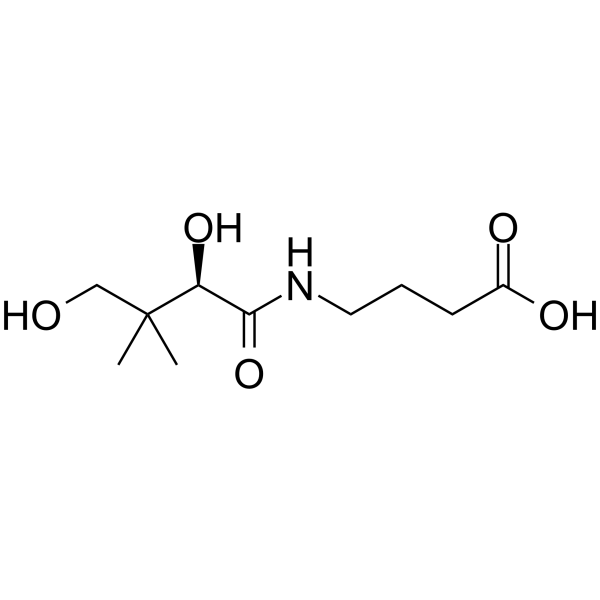 0 ImagesCat. No.: HY-139729CAS No.: 18679-90-8
-
Pantothenate kinase-IN-2
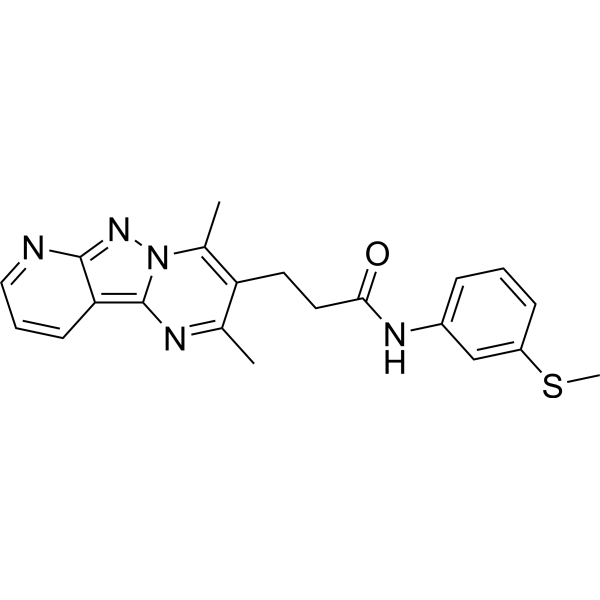 0 ImagesPantothenate kinase-IN-2 is a pantothenate kinase inhibitor with IC50 values of 92 nM for PanK2, 70 nM for PanK1β, and 25 nM for PanK3. Pantothenate kinase-IN-2 can bind specifically to the ATP-PanK3 complex and block CoA biosynthesis. Pantothenate kinase-IN-2 can be used for the research of pank-associated neurodegeneration and type 2 diabetes.
-
PZ-2891
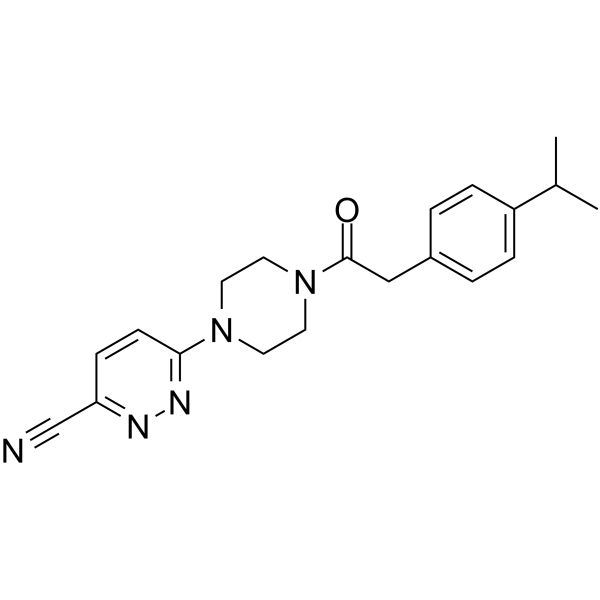 0 ImagesPZ-2891 is an orally bioavailable, brain penetrant pantothenate kinase (PANK) modulator. PZ-2891 act as an orthosteric inhibitor at high concentrations and an allosteric activator at lower sub-saturating concentrations. PZ-2891 inhibits human pantothenate kinases PANK1β, PANK2, and PANK3 with IC50s of 40.2 nM, 0.7 nM and 1.3 nM, respectively.
-
Claziprotamidum
 0 ImagesSynonyms: Claziprotamide; BBP-671Claziprotamidum (Claziprotamide; BBP-671) is a panthothenate kinase (PANK) activator with oral activity and blood-brain barrier permeability. Claziprotamidum binds to and activates all PANK isoforms, with the highest affinity for PANK3 (KD = 97 pM; IC50 = 1.39 nM). Claziprotamidum increases the intracellular biosynthesis of Coenzyme A (HY-128851) and restores mitochondrial function. Claziprotamidum can be used in the research of pantothenate kinase-associated neurodegeneration and propionic acidemia.
-
Pantothenate kinase-IN-1
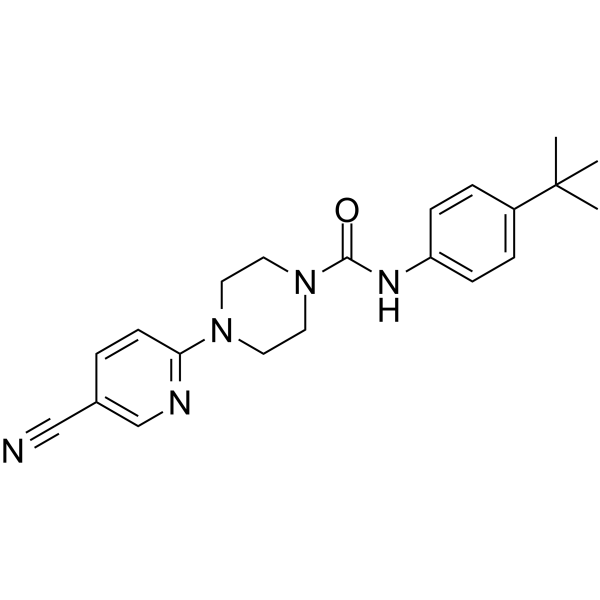 0 ImagesPantothenate kinase-IN-1 is a PANK3 inhibitor with an IC50 of 0.51 μM. Pantothenate kinase-IN-1 acts as a pantothenate-competitive inhibitor, which occupies the pantothenate-binding site of PANK3 and binds to both protomers in the PANK3 dimer. Pantothenate kinase-IN-1 exhibits metabolic stability in mouse and rat plasma. Pantothenate kinase-IN-1 can be used in the research of pantothenate kinase-associated neurodegenerative diseases and metabolic diseases.
-
Pantothenate kinase-IN-3
 0 ImagesCat. No.: HY-181917Pantothenate kinase-IN-3 is an orally active PANK3-selective binder and CoA biosynthesis activator with a human PANK3 Ki of 9.1 nM, human PANK3 Ka of 1.8 nM, human PANK1β Ki of 113 nM, human PANK1β Ka of 23.4 nM, and oral effectiveness.Pantothenate kinase-IN-3 binds PANK3 via a water-mediated interaction between its sulfonamide NH and Gly193, elevates cellular, hepatic, and forebrain CoA levels, and shows improved metabolic stability in mouse and human microsomes.Pantothenate kinase-IN-3 has solubility properties favorable at pH 7.Pantothenate kinase-IN-3 can be used for the research of hepatic metabolic CoA deficiencies (acidemias).
-
PZ-3022
 0 ImagesCat. No.: HY-164909CAS No.: 2170608-85-0PZ-3022 is an orally active allosteric agonist of pantothenate kinase (PanK) with an EC50 of 5.3 nM against PanK3. PZ-3022 antagonizes the inhibitory effect of C3-CoA. PZ-3022 increases CoA levels in cells and the liver, upregulates CoASH and C2-CoA, downregulates C3-CoA, and restores impaired TCA cycle and mitochondrial function. PZ-3022 can be used for the research of propionic acidemia and metabolic CoA deficiency.
-
PANK1/3 activator 1
 0 ImagesCat. No.: HY-181256CAS No.: 3113822-26-4PANK1/3 activator 1 (Compound 134) is a PANK1/3 activator with EC50 values of 0.011 and 0.065 μM. PANK1/3 activator 1 can be used for the research on diseases related to coenzyme A levels, such as CASTOR disease and organic acidemia.



