



D-Pantothenic acid
Based on 7 publication(s) in Google Scholar
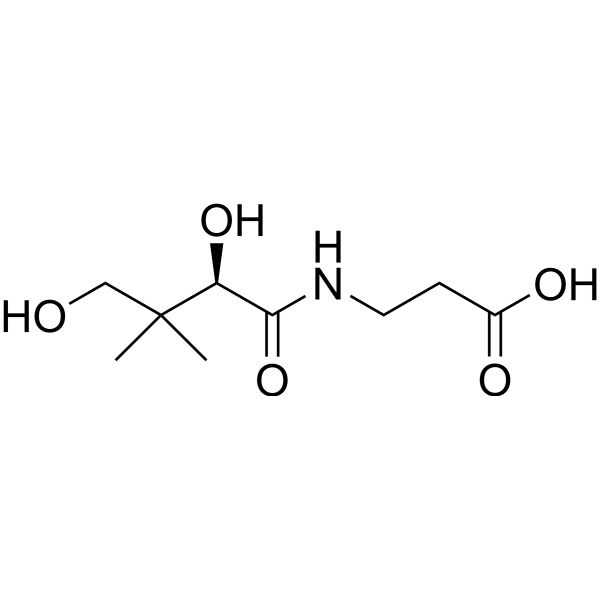
D-Pantothenic acid (Pantothenate) is an essential trace nutrient that functions as the obligate precursor of coenzyme A (CoA). D-Pantothenic acid plays key roles in myriad biological processes, including many that regulate carbohydrate, lipid, protein, and nucleic acid metabolism.
For research use only. We do not sell to patients.
- Purity : 98.0%
- CAS No.: 79-83-4
- Formula: C9H17NO5
- Molecular Weight:219.24
-
Storage:Powder -20°C, 3 years , 4°C, 2 years ; In solvent -80°C, 6 months , -20°C, 1 month

To place orders, for customer services and technical support, please contact: MedChemExpress USA
Tel: 609-228-6898 E-mail: [email protected] [email protected]


-
 Biological Activity
-
Chemical Information
-
Solvent & Solubility
- Purity & Documentation
- References
-
 Help & FAQs


-
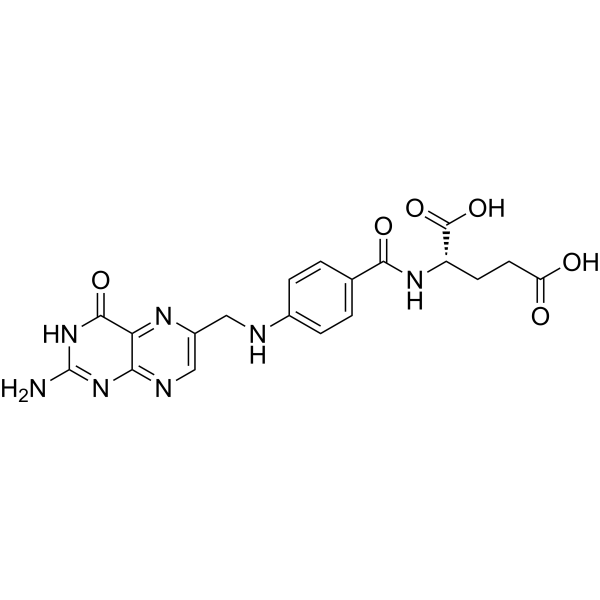
HY-16637
Folic acidB complex -
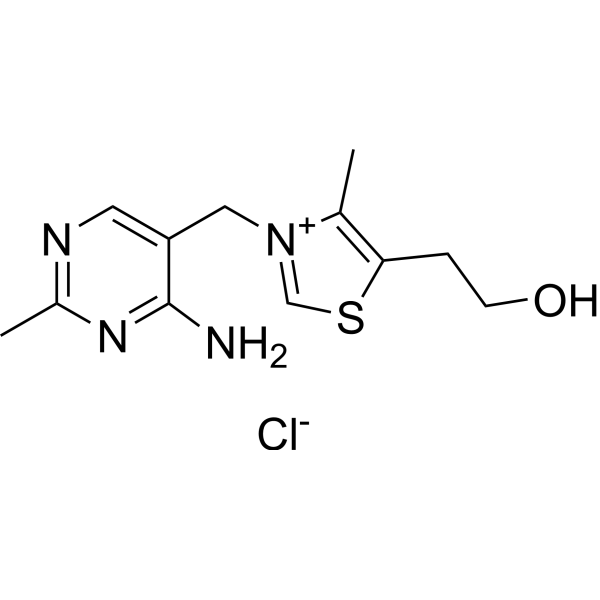
HY-A0100
Thiamine monochlorideNeuronal Effect Enhancer -
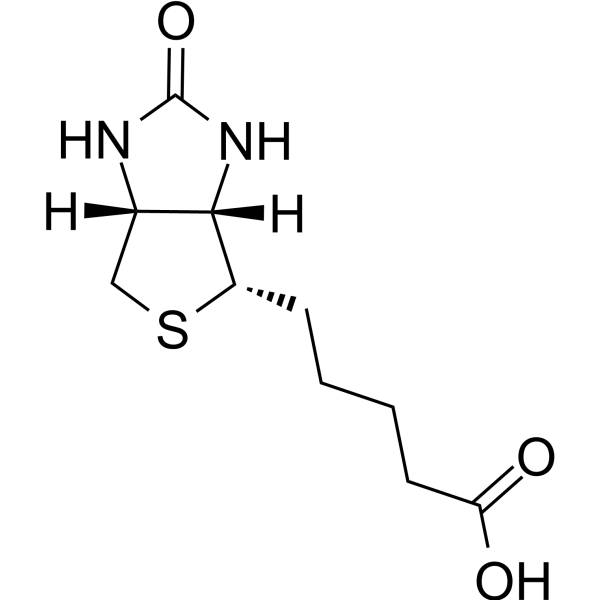
HY-B0511
BiotinVitamin B7 -
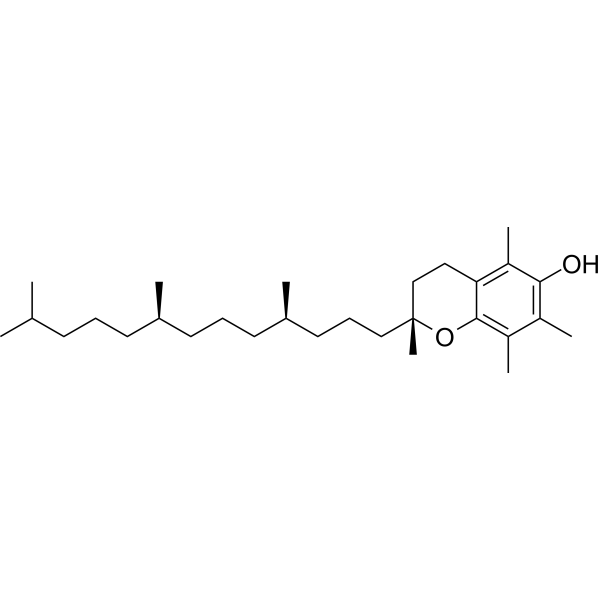
HY-N0683
α-Vitamin EAntioxidant -
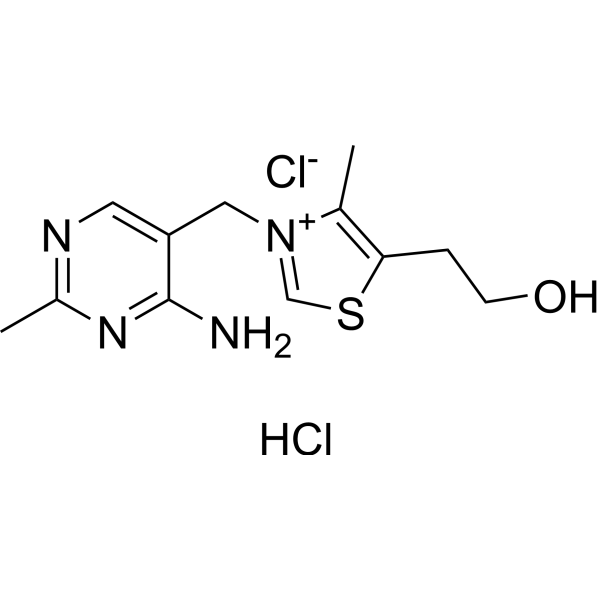
HY-N0680
Thiamine hydrochlorideVitamin B1 -
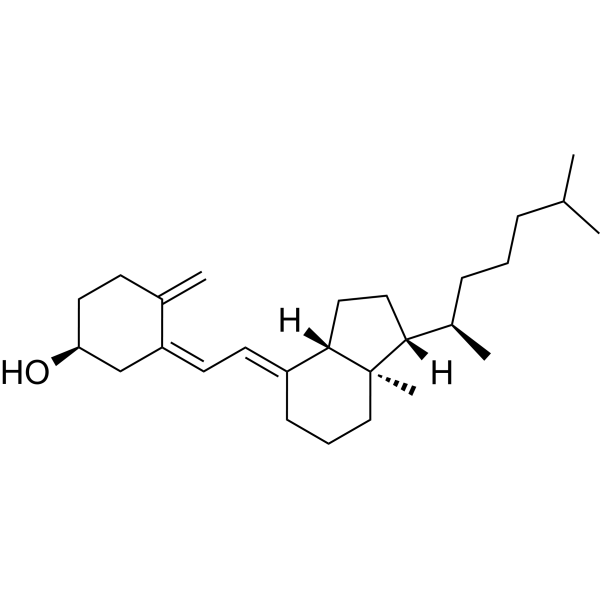
HY-15398
Vitamin D3Vitamin -

HY-B1342
Vitamin A -
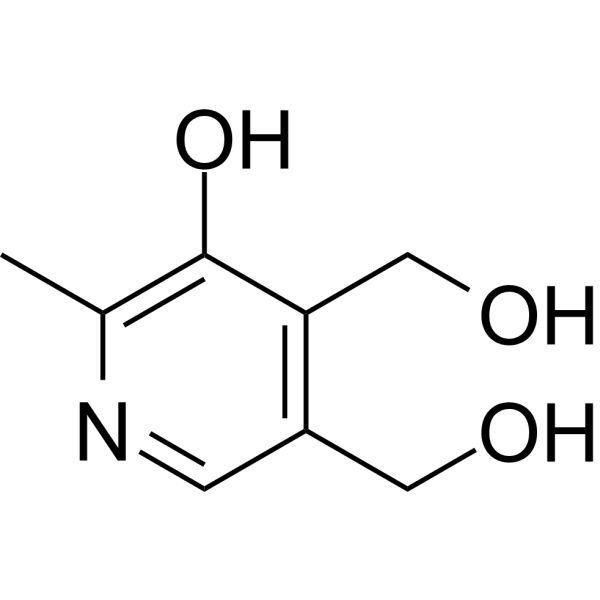
HY-B1328
PyridoxinePyridine Derivative -
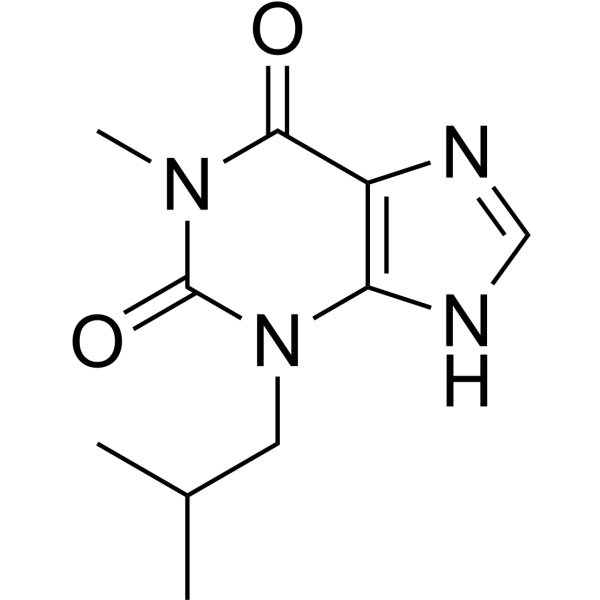
HY-12318
IBMXPDE Inhibitor -
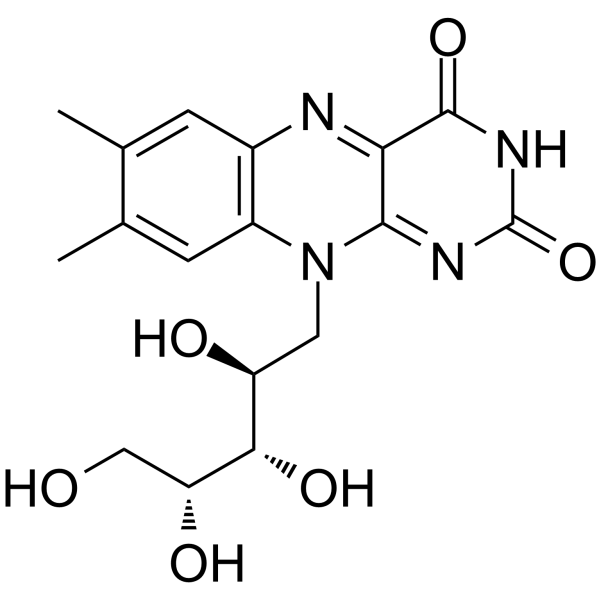
HY-B0456
RiboflavinVitamin B2 -
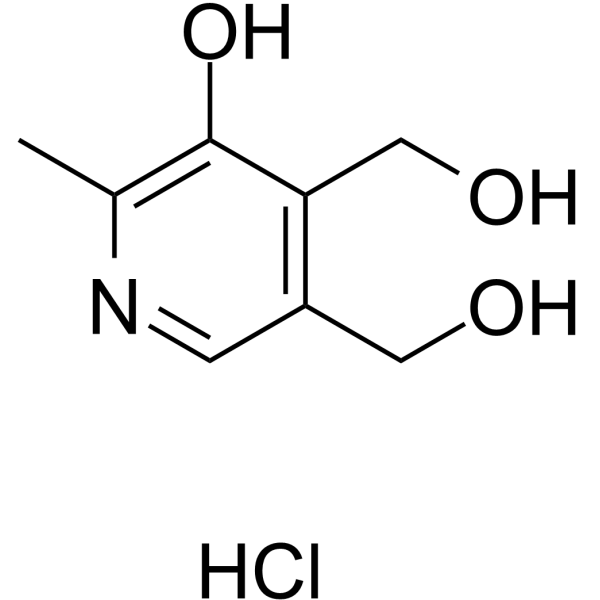
HY-N0682
Pyridoxine hydrochloridePyridine Derivative -
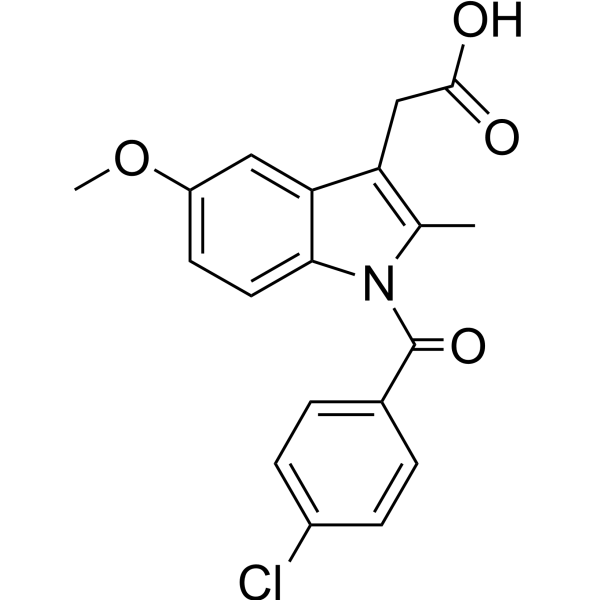
HY-14397
IndomethacinCOX1/2 Inhibitor
Publications Citing Use of MedChemExpress (MCE) D-Pantothenic acid
More- Nature. 2025 Jul;643(8070):192-200. [Abstract]
- Immunity. 2026 Jul 13:S1074-7613(26)00261-X. [Abstract]
- Commun Biol. 2025 Jul 29;8(1):1127. [Abstract]
- Int J Mol Sci. 2023 Dec 21;25(1):168. [Abstract]
- BMC Biol. 2025 Apr 24;23(1):107. [Abstract]
- Norwegian University of Science and Technology. 2021 Oct.
- Environ Sci Pollut Res Int. 2018 Feb;25(4):3765-3774. [Abstract]
 Customer Validation & Images

-
RT-PCR
-
WB
-
IP
-
In Vivo Efficacy Study
-
Histological Imaging/Staining
All Endogenous Metabolite Isoforms
More

Biological Activity
Description
IC50 & Target
|
Human Endogenous Metabolite |
In Vitro
D-Pantothenic acid sodium is a precursor to coenzyme A and is primarily involved in energy production and lipid metabolism through the TCA cycle and the β-oxidation pathway, respectively[1].
MedChemExpress (MCE) has not independently confirmed the accuracy of these methods. They are for reference only. .
In Vivo
MedChemExpress (MCE) has not independently confirmed the accuracy of these methods. They are for reference only.
-
Animal Model:Female ICR mice weighing 29-35 g[2]
-
Dosage:3x10, 3x100, and 3x300 mg/kg (10 mL/kg, volume administered)
-
Administration:Injected intraperitoneally (i.p.) on day 8.5 of gestation
-
Result:Significantly reduced VPA (300, 400, and 500 mg/kg, s.c.)-induced exencephaly, while none of the other external malformations such as open eyelid or skeletal malformations such as fused, absent, or bifurcated ribs and fused thoracic vertebrae and fused sternebrae were reduced.
Clinical Trial
| NCT Number | Sponsor | Condition | Start Date |
Phase

|
|---|---|---|---|---|
| NCT01329991 | Plexxikon| | 2011-05 | PHASE1 |


Chemical Information
-
CAS No. 79-83-4
-
Appearance Solid
-
Molecular Weight 219.24
-
Formula C9H17NO5
-
Color White to off-white
-
SMILES
OCC(C)(C)[C@@H](O)C(NCCC(O)=O)=O
-
Synonyms
Pantothenate; Vitamin B5
-
Initial Source
widespread
-
Shipping
Room temperature in continental US; may vary elsewhere.
-
Storage
Powder -20°C 3 years 4°C 2 years In solvent -80°C 6 months -20°C 1 month


Publications (7)
-
Journal Impact Factor
-
Most Recent
-
Nature
2025 Jul;643(8070):192-200. PMID: 39695227 -
Immunity
Flavin adenine dinucleotide is an endogenous suppressor for cytosolic DNA and RNA sensors to modulate innate immunity. [Abstract]2026 Jul 13:S1074-7613(26)00261-X. PMID: 42442359 -
Commun Biol
Pantothenic acid ameliorates hepatic fibrosis by targeting IGFBP6 to regulate the TGF-β/SMADs pathway. [Abstract]2025 Jul 29;8(1):1127. PMID: 40730679
D-Pantothenic acid purchased from MedChemExpress. Usage Cited in: Commun Biol. 2025 Jul 29;8(1):1127. [Abstract]
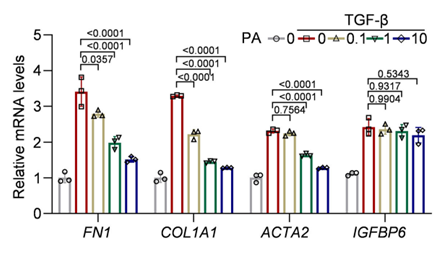
The effect of concentration gradients (0 μM, 0.1 μM, 1 μM, and10μM) of PA (D-Pantothenic acid) against FN, COL1A1, ACTA2, and IGFBP6 in TGF-β (10 ng/mL) -stimulated LX2 cells was examined using qRT-PCR for mRNA levels (n = 3).
D-Pantothenic acid purchased from MedChemExpress. Usage Cited in: Commun Biol. 2025 Jul 29;8(1):1127. [Abstract]
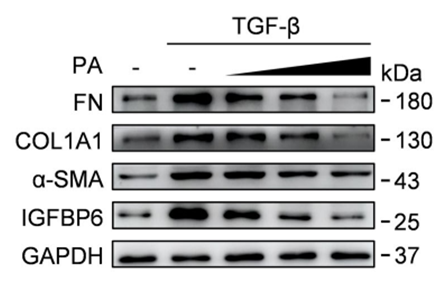
The effect of concentration gradients (0 μM, 0.1 μM, 1 μM, and10μM) of PA (D-Pantothenic acid) against FN, COL1A1, ACTA2, and IGFBP6 in TGF-β (10 ng/mL) -stimulated LX2 cells was examined using Western blotting for protein levels (n = 3).
D-Pantothenic acid purchased from MedChemExpress. Usage Cited in: Commun Biol. 2025 Jul 29;8(1):1127. [Abstract]
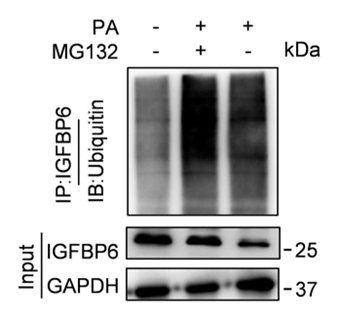
LX2 cells were treated with 1 μM PA (D-Pantothenic acid) in the presence or absence of MG132 for 12 h. IP detection was performed with anti-IGFBP6 antibody, and expression of ubiquitin-coupled IGFBP6 was detected with anti-UB antibody (n = 3).
D-Pantothenic acid purchased from MedChemExpress. Usage Cited in: Commun Biol. 2025 Jul 29;8(1):1127. [Abstract]
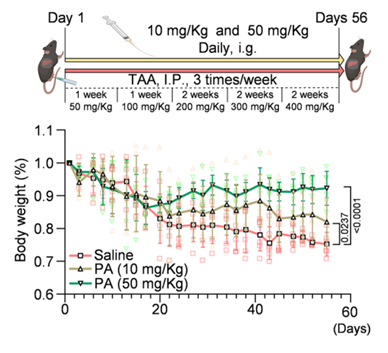
Weight loss in mice with hepatic fibrosis. Mice received intraperitoneal injections with gradually increasing concentrations of TAA and were simultaneously treated with PA (D-Pantothenic acid) by gavage (n = 6).
D-Pantothenic acid purchased from MedChemExpress. Usage Cited in: Commun Biol. 2025 Jul 29;8(1):1127. [Abstract]
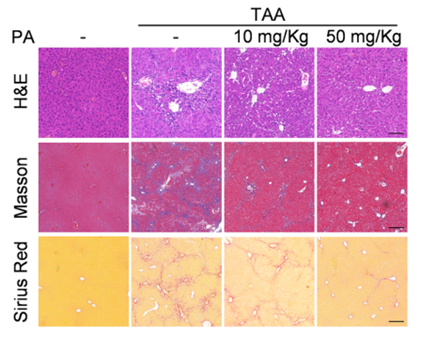
H&E staining, Masson’s trichrome staining, and Sirius red staining of hepatic sections (scale bar: H&E staining, 100 μm; Masson’s trichrome staining and Sirius red staining, 200 μm). Mice received intraperitoneal injections with gradually increasing concentrations of TAA and were simultaneously treated with PA (D-Pantothenic acid) by gavage (n = 6).
D-Pantothenic acid purchased from MedChemExpress. Usage Cited in: Commun Biol. 2025 Jul 29;8(1):1127. [Abstract]
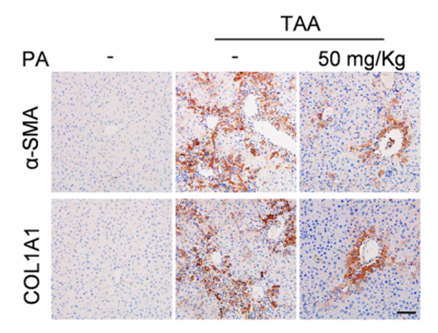
IHC was performed to detect the expression of α-SMA and COL1A1 in hepatic sections (scale bar: 50 μm) (n = 6). Mice received intraperitoneal injections with gradually increasing concentrations of TAA and were simultaneously treated with PA (D-Pantothenic acid) by gavage (n = 6).
-
Int J Mol Sci
Metabolomics and Transcriptomics Analyses of Curcumin Alleviation of Ochratoxin A-Induced Hepatotoxicity. [Abstract]2023 Dec 21;25(1):168. PMID: 38203339 -
BMC Biol
Single-nucleus RNA sequencing defines adipose tissue subpopulations that contribute to Tibetan pig cold adaptation. [Abstract]2025 Apr 24;23(1):107. PMID: 40275312 -
-
Environ Sci Pollut Res Int
2018 Feb;25(4):3765-3774. PMID: 29168138


Solvent & Solubility
In Vitro:
DMSO : 50 mg/mL (228.06 mM; ultrasonic and warming and heat to 60°C; Hygroscopic DMSO has a significant impact on the solubility of product, please use newly opened DMSO)
Please refer to the solubility information to select the appropriate solvent. Once prepared, please aliquot and store the solution to prevent product inactivation from repeated freeze-thaw cycles.
Storage method and period of stock solution: -80°C, 6 months; -20°C, 1 month. When stored at -80°C, please use it within 6 months. When stored at -20°C, please use it within 1 month.
Please refer to the solubility information to select the appropriate solvent. Once prepared, please aliquot and store the solution to prevent product inactivation from repeated freeze-thaw cycles.
Storage method and period of stock solution: -80°C, 6 months; -20°C, 1 month. When stored at -80°C, please use it within 6 months. When stored at -20°C, please use it within 1 month.
Concentration (start) × Volume (start) = Concentration (final) × Volume (final)
In Vivo:
Select the appropriate dissolution method based on your experimental animal and administration route.
- For the following dissolution methods, please ensure to first prepare a clear stock solution using an In Vitro approach and then sequentially add co-solvents:
- To ensure reliable experimental results, the clarified stock solution can be appropriately stored based on storage conditions. As for the working solution for In Vivo experiments, it is recommended to prepare freshly and use it on the same day.
- The percentages shown for the solvents indicate their volumetric ratio in the final prepared solution. If precipitation or phase separation occurs during preparation, heat and/or sonication can be used to aid dissolution.
Add each solvent one by one: 10% DMSO 40% PEG300 5% Tween-80 45% Saline
Solubility: ≥ 2.5 mg/mL (11.40 mM); Clear solution
This protocol yields a clear solution of ≥ 2.5 mg/mL (saturation unknown).
Taking 1 mL working solution as an example, add 100 μL DMSO stock solution (25.0 mg/mL) to 400 μL PEG300, and mix evenly; then add 50 μL Tween-80 and mix evenly; then add 450 μL Saline to adjust the volume to 1 mL.
Preparation of Saline: Dissolve 0.9 g sodium chloride in ddH₂O and dilute to 100 mL to obtain a clear Saline solution.
Add each solvent one by one: 10% DMSO 90% (20% SBE-β-CD in Saline)
Solubility: ≥ 2.5 mg/mL (11.40 mM); Clear solution
This protocol yields a clear solution of ≥ 2.5 mg/mL (saturation unknown).
Taking 1 mL working solution as an example, add 100 μL DMSO stock solution (25.0 mg/mL) to 900 μL 20% SBE-β-CD in Saline, and mix evenly.
Preparation of 20% SBE-β-CD in Saline (4°C, storage for one week): 2 g SBE-β-CD powder is dissolved in 10 mL Saline, completely dissolve until clear.
For the following dissolution methods, please prepare the working solution directly:
It is recommended to prepare fresh solutions and use them promptly within a short period of time.
The percentages shown for the solvents indicate their volumetric ratio in the final prepared solution. If precipitation or phase separation occurs during preparation, heat and/or sonication can be used to aid dissolution.
Add each solvent one by one: 0.5% CMC-Na/saline water
Solubility: 100 mg/mL (456.12 mM); Clear solution; Need ultrasonic
In Vivo Dissolution Calculator
Please enter the basic information of animal experiments:
-
-
-
-
Recommended: Prepare an additional quantity of animals to account for potential losses during experiments.
Please enter your animal formula composition:
-
%DMSO +
Recommended: Keep the proportion of DMSO in working solution below 2% if your animal is weak.
-
%+
-
+%Tween-80 + +
-
%Saline +
The co-solvents required include: DMSO, . All of co-solvents are available by MedChemExpress (MCE). , Tween 80. All of co-solvents are available by MedChemExpress (MCE).
Working solution concentration: 0.22 mg/mL
Method for preparing stock solution: mg drug dissolved in μL DMSO. Stock solution concentration: mg/mL.
1. Take μL DMSO stock solution;
2. Add μL .
μL , mix evenly;
3. Then add μL Tween 80, mix evenly;
4. Then add μL
Please ensure that the stock solution in the first step is dissolved to a clear state, and add co-solvents in sequence. You can use ultrasonic heating (ultrasonic cleaner, recommended frequency 20-40 kHz), vortexing, etc. to assist dissolution.


Purity & Documentation
-
Data Sheet (271 KB)
-
SDS (393 KB)
- English - EN (393 KB)
- Français - FR (393 KB)
- Deutsch - DE (393 KB)
- Norwegian - NO (393 KB)
- Español - ES (393 KB)
- Swedish - SV (393 KB)
- Italian - IT (393 KB)
- Korean - KR (393 KB)
- Portuguese - PT (393 KB)
-
Handling Instructions (2659 KB)
References
[1]. Shuai Chen, et al. Metabolomic analysis of the toxic effect of chronic exposure of cadmium on rat urine. Environ Sci Pollut Res Int. 2018 Feb;25(4):3765-3774. [Content Brief]
[2]. M Sato, et al. Pantothenic acid decreases valproic acid-induced neural tube defects in mice (I). Teratology. 1995 Sep;52(3):143-8. [Content Brief]


Complete Stock Solution Preparation Table
Please refer to the solubility information to select the appropriate solvent. Once prepared, please aliquot and store the solution to prevent product inactivation from repeated freeze-thaw cycles.
Storage method and period of stock solution: -80°C, 6 months; -20°C, 1 month. When stored at -80°C, please use it within 6 months. When stored at -20°C, please use it within 1 month.
| Optional Solvent | Concentration Solvent Mass | 1 mg | 5 mg | 10 mg | 25 mg |
|---|---|---|---|---|---|
| DMSO | 1 mM | 4.5612 mL | 22.8061 mL | 45.6121 mL | 114.0303 mL |
| 5 mM | 0.9122 mL | 4.5612 mL | 9.1224 mL | 22.8061 mL | |
| 10 mM | 0.4561 mL | 2.2806 mL | 4.5612 mL | 11.4030 mL | |
| 15 mM | 0.3041 mL | 1.5204 mL | 3.0408 mL | 7.6020 mL | |
| 20 mM | 0.2281 mL | 1.1403 mL | 2.2806 mL | 5.7015 mL | |
| 25 mM | 0.1824 mL | 0.9122 mL | 1.8245 mL | 4.5612 mL | |
| 30 mM | 0.1520 mL | 0.7602 mL | 1.5204 mL | 3.8010 mL | |
| 40 mM | 0.1140 mL | 0.5702 mL | 1.1403 mL | 2.8508 mL | |
| 50 mM | 0.0912 mL | 0.4561 mL | 0.9122 mL | 2.2806 mL | |
| 60 mM | 0.0760 mL | 0.3801 mL | 0.7602 mL | 1.9005 mL | |
| 80 mM | 0.0570 mL | 0.2851 mL | 0.5702 mL | 1.4254 mL | |
| 100 mM | 0.0456 mL | 0.2281 mL | 0.4561 mL | 1.1403 mL |


D-Pantothenic acid Related Classifications
HY-B0430 Related Classifications
 Powered by Bioz