



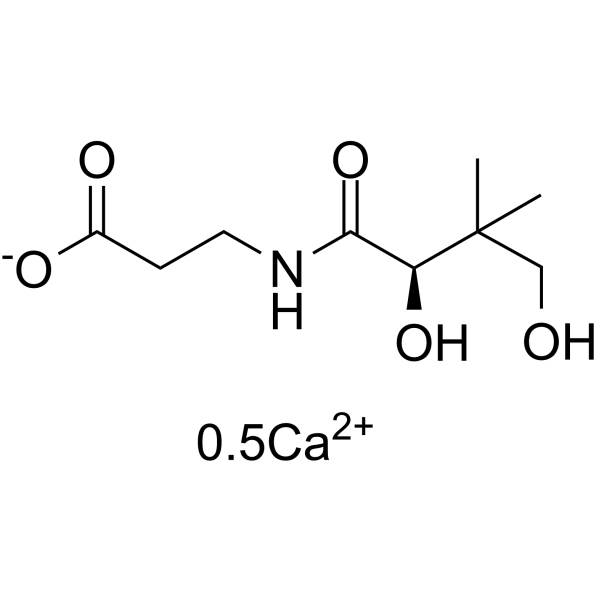
D-Pantothenic acid hemicalcium salt
Based on 7 publication(s) in Google Scholar
D-Pantothenic acid hemicalcium salt is an orally active vitamin that reduces patulin in apple juice. D-Pantothenic acid hemicalcium salt removes ROS. D-Pantothenic acid hemicalcium salt has antibacterial and immunomodulatory activities. D-Pantothenic acid hemicalcium salt also has the effect of improving osteoporosis and obesity.
For research use only. We do not sell to patients.
- Purity : 99.80%
- CAS No.: 137-08-6
- Formula: C9H16NO5.1/2Ca
- Molecular Weight:238.27
-
Storage:
4°C, sealed storage, away from moisture
* In solvent : -80°C, 6 months; -20°C, 1 month (sealed storage, away from moisture)

To place orders, for customer services and technical support, please contact: MedChemExpress USA
Tel: 609-228-6898 E-mail: [email protected] [email protected]


-
 Biological Activity
-
Chemical Information
-
Solvent & Solubility
- Purity & Documentation
- References
-
 Help & FAQs



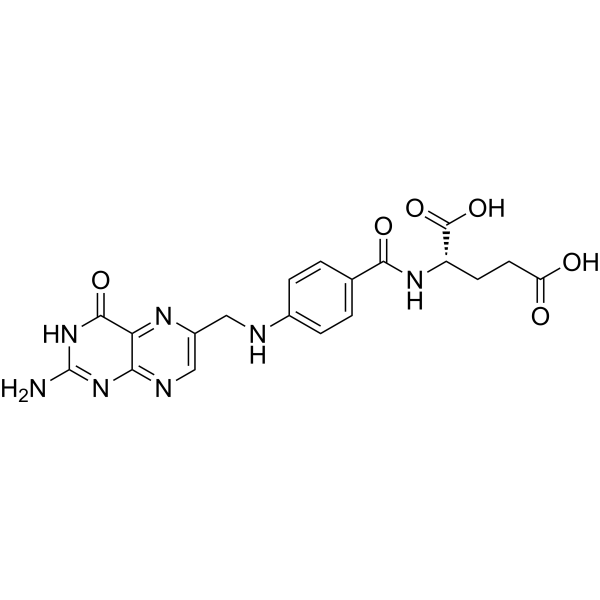
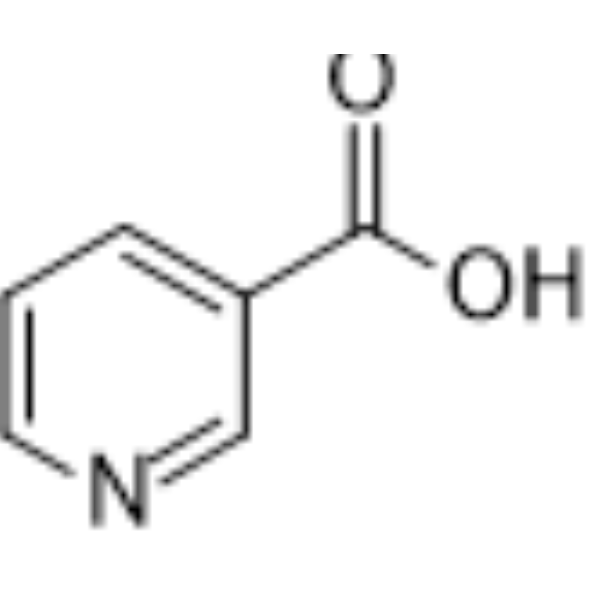
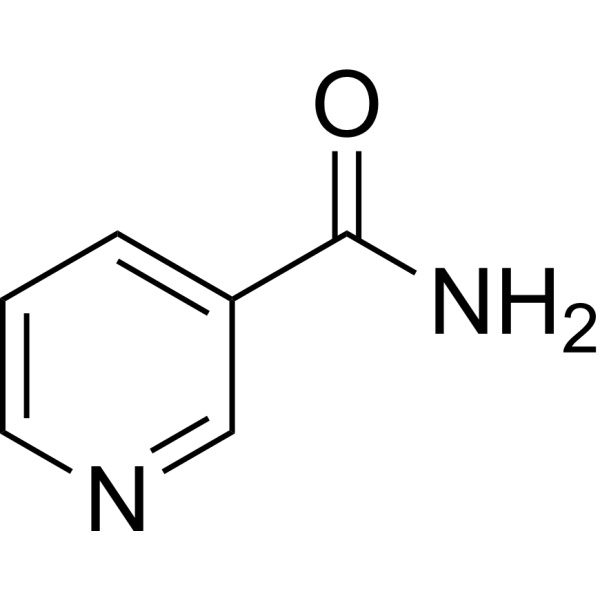
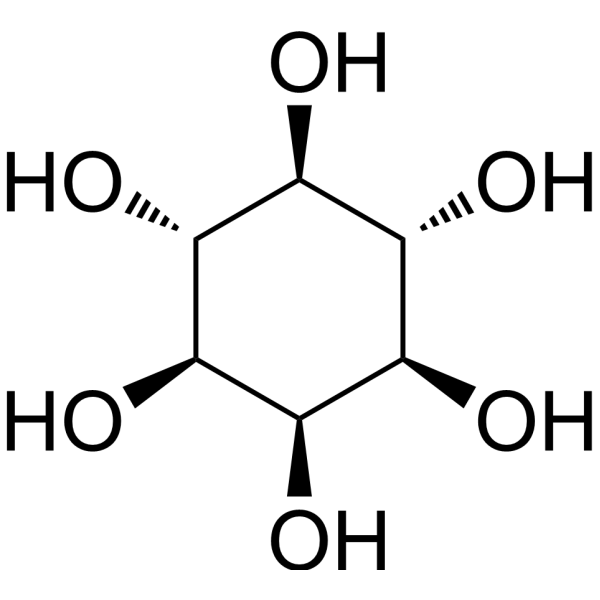
Publications Citing Use of MedChemExpress (MCE) D-Pantothenic acid hemicalcium salt
More- Nature. 2025 Jul;643(8070):192-200. [Abstract]
- Immunity. 2026 Jul 13:S1074-7613(26)00261-X. [Abstract]
- Commun Biol. 2025 Jul 29;8(1):1127. [Abstract]
- Int J Mol Sci. 2023 Dec 21;25(1):168. [Abstract]
- BMC Biol. 2025 Apr 24;23(1):107. [Abstract]
- Norwegian University of Science and Technology. 2021 Oct.
- Environ Sci Pollut Res Int. 2018 Feb;25(4):3765-3774. [Abstract]
 Customer Validation & Images

-
RT-PCR
-
WB
-
IP
-
In Vivo Efficacy Study
-
Histological Imaging/Staining
All Endogenous Metabolite Isoforms
More

Biological Activity
Description
IC50 & Target
|
Human Endogenous Metabolite |
In Vitro
D-Pantothenic acid (Vitamin B5, 1-2.5 mM) hemicalcium salt restrains Th17 cell differentiation through CoA in a PANK-dependent manner[3].
D-Pantothenic acid (50-1000 µM, 3 days) hemicalcium salt inhibits RANKL induced osteoclastogenesis by scavenging ROS generation in BMMs cells[5].
D-Pantothenic acid (2 mM, 4 days) hemicalcium salt rescues a membrane trafficking defect in human fibroblasts devoid of TANGO2[8].
MedChemExpress (MCE) has not independently confirmed the accuracy of these methods. They are for reference only.
In Vivo
D-Pantothenic acid (Vitamin B5, 50mg/kg/day, drinking water, 2 weeks) hemicalcium salt alleviates experimental autoimmune encephalomyelitis in C57BL/6 mice[3].
D-Pantothenic acid (pantothenic acid rich dietary, feed, four weeks) hemicalcium salt alleviates bone loss in an osteoporotic model of OVX mice[5].
D-Pantothenic acid (0.1 mg/kg, p.o., starts from the day after infection and performs every day until the end of 4 weeks) hemicalcium salt reduces bacterial growth via regulating innate immunity and adaptive immunity in mice infected with mycobacterium tuberculosis[6].
D-Pantothenic acid (50 ppm, diet, 28 days) hemicalcium salt enhances intestinal development and alters microbes in weaned piglets, with enhancing the morphological structure, cell proliferation and differentiation of the ileum, cecum and colon[7].
MedChemExpress (MCE) has not independently confirmed the accuracy of these methods. They are for reference only.


Chemical Information
-
CAS No. 137-08-6
-
Appearance Solid
-
Molecular Weight 238.27
-
Formula C9H16NO5.1/2Ca
-
Color White to off-white
-
SMILES
O[C@@H](C(NCCC([O-])=O)=O)C(C)(C)CO.[0.5Ca2+]
-
Synonyms
Calcium pantothenate; Calcium D-pantothenate; Vitamin B5 calcium salt
-
Structure Classification
-
Initial Source
-
Shipping
Room temperature in continental US; may vary elsewhere.
-
Storage
4°C, sealed storage, away from moisture
* In solvent : -80°C, 6 months; -20°C, 1 month (sealed storage, away from moisture)


Publications (7)
-
Journal Impact Factor
-
Most Recent
-
Nature
2025 Jul;643(8070):192-200. PMID: 39695227 -
Immunity
Flavin adenine dinucleotide is an endogenous suppressor for cytosolic DNA and RNA sensors to modulate innate immunity. [Abstract]2026 Jul 13:S1074-7613(26)00261-X. PMID: 42442359 -
Commun Biol
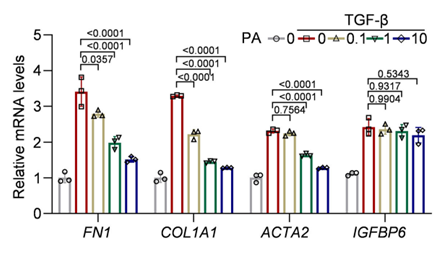
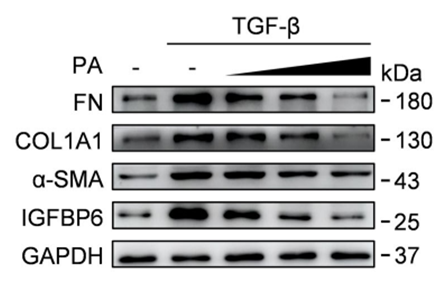
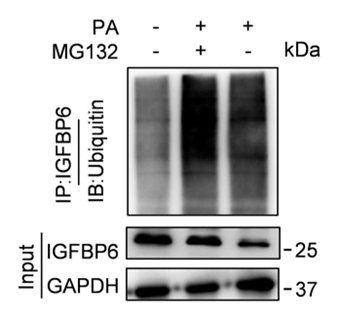
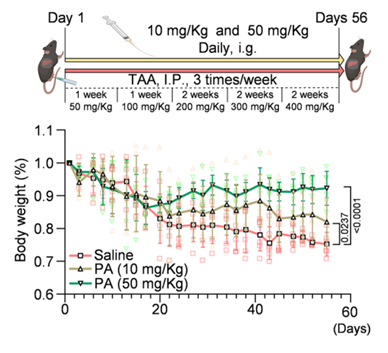
Pantothenic acid ameliorates hepatic fibrosis by targeting IGFBP6 to regulate the TGF-β/SMADs pathway. [Abstract]2025 Jul 29;8(1):1127. PMID: 40730679
D-Pantothenic acid hemicalcium salt purchased from MedChemExpress. Usage Cited in: Commun Biol. 2025 Jul 29;8(1):1127. [Abstract]
The effect of concentration gradients (0 μM, 0.1 μM, 1 μM, and10μM) of PA (D-Pantothenic acid) against FN, COL1A1, ACTA2, and IGFBP6 in TGF-β (10 ng/mL) -stimulated LX2 cells was examined using qRT-PCR for mRNA levels (n = 3).
D-Pantothenic acid hemicalcium salt purchased from MedChemExpress. Usage Cited in: Commun Biol. 2025 Jul 29;8(1):1127. [Abstract]
The effect of concentration gradients (0 μM, 0.1 μM, 1 μM, and10μM) of PA (D-Pantothenic acid) against FN, COL1A1, ACTA2, and IGFBP6 in TGF-β (10 ng/mL) -stimulated LX2 cells was examined using Western blotting for protein levels (n = 3).
D-Pantothenic acid hemicalcium salt purchased from MedChemExpress. Usage Cited in: Commun Biol. 2025 Jul 29;8(1):1127. [Abstract]
LX2 cells were treated with 1 μM PA (D-Pantothenic acid) in the presence or absence of MG132 for 12 h. IP detection was performed with anti-IGFBP6 antibody, and expression of ubiquitin-coupled IGFBP6 was detected with anti-UB antibody (n = 3).
D-Pantothenic acid hemicalcium salt purchased from MedChemExpress. Usage Cited in: Commun Biol. 2025 Jul 29;8(1):1127. [Abstract]
Weight loss in mice with hepatic fibrosis. Mice received intraperitoneal injections with gradually increasing concentrations of TAA and were simultaneously treated with PA (D-Pantothenic acid) by gavage (n = 6).
D-Pantothenic acid hemicalcium salt purchased from MedChemExpress. Usage Cited in: Commun Biol. 2025 Jul 29;8(1):1127. [Abstract]
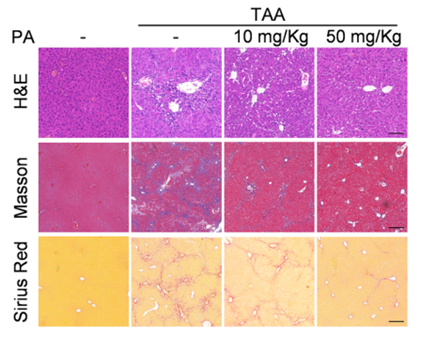
H&E staining, Masson’s trichrome staining, and Sirius red staining of hepatic sections (scale bar: H&E staining, 100 μm; Masson’s trichrome staining and Sirius red staining, 200 μm). Mice received intraperitoneal injections with gradually increasing concentrations of TAA and were simultaneously treated with PA (D-Pantothenic acid) by gavage (n = 6).
D-Pantothenic acid hemicalcium salt purchased from MedChemExpress. Usage Cited in: Commun Biol. 2025 Jul 29;8(1):1127. [Abstract]
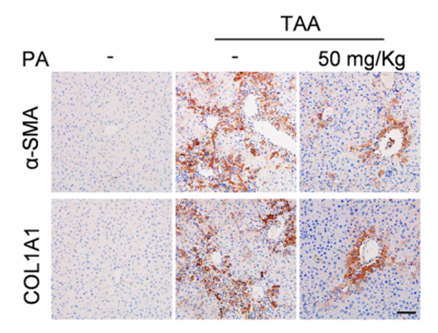
IHC was performed to detect the expression of α-SMA and COL1A1 in hepatic sections (scale bar: 50 μm) (n = 6). Mice received intraperitoneal injections with gradually increasing concentrations of TAA and were simultaneously treated with PA (D-Pantothenic acid) by gavage (n = 6).
-
Int J Mol Sci
Metabolomics and Transcriptomics Analyses of Curcumin Alleviation of Ochratoxin A-Induced Hepatotoxicity. [Abstract]2023 Dec 21;25(1):168. PMID: 38203339 -
BMC Biol
Single-nucleus RNA sequencing defines adipose tissue subpopulations that contribute to Tibetan pig cold adaptation. [Abstract]2025 Apr 24;23(1):107. PMID: 40275312 -
-
Environ Sci Pollut Res Int
2018 Feb;25(4):3765-3774. PMID: 29168138


Solvent & Solubility
In Vitro:
H2O : 100 mg/mL (419.69 mM; Need ultrasonic)
DMSO : ≥ 100 mg/mL (419.69 mM; Hygroscopic DMSO has a significant impact on the solubility of product, please use newly opened DMSO)
* "≥" means soluble, but saturation unknown.
Please refer to the solubility information to select the appropriate solvent. Once prepared, please aliquot and store the solution to prevent product inactivation from repeated freeze-thaw cycles.
Storage method and period of stock solution: -80°C, 6 months; -20°C, 1 month (sealed storage, away from moisture). When stored at -80°C, please use it within 6 months. When stored at -20°C, please use it within 1 month.
* Note: If you choose water as the stock solution, please dilute it to the working solution, then filter and sterilize it with a 0.22 μm filter before use.
Please refer to the solubility information to select the appropriate solvent. Once prepared, please aliquot and store the solution to prevent product inactivation from repeated freeze-thaw cycles.
Storage method and period of stock solution: -80°C, 6 months; -20°C, 1 month (sealed storage, away from moisture). When stored at -80°C, please use it within 6 months. When stored at -20°C, please use it within 1 month.
* Note: If you choose water as the stock solution, please dilute it to the working solution, then filter and sterilize it with a 0.22 μm filter before use.
Concentration (start) × Volume (start) = Concentration (final) × Volume (final)
In Vivo:
Select the appropriate dissolution method based on your experimental animal and administration route.
- For the following dissolution methods, please ensure to first prepare a clear stock solution using an In Vitro approach and then sequentially add co-solvents:
- To ensure reliable experimental results, the clarified stock solution can be appropriately stored based on storage conditions. As for the working solution for In Vivo experiments, it is recommended to prepare freshly and use it on the same day.
- The percentages shown for the solvents indicate their volumetric ratio in the final prepared solution. If precipitation or phase separation occurs during preparation, heat and/or sonication can be used to aid dissolution.
Add each solvent one by one: 10% DMSO 40% PEG300 5% Tween-80 45% Saline
Solubility: ≥ 2.5 mg/mL (10.49 mM); Clear solution
This protocol yields a clear solution of ≥ 2.5 mg/mL (saturation unknown).
Taking 1 mL working solution as an example, add 100 μL DMSO stock solution (25.0 mg/mL) to 400 μL PEG300, and mix evenly; then add 50 μL Tween-80 and mix evenly; then add 450 μL Saline to adjust the volume to 1 mL.
Preparation of Saline: Dissolve 0.9 g sodium chloride in ddH₂O and dilute to 100 mL to obtain a clear Saline solution.
Add each solvent one by one: 10% DMSO 90% (20% SBE-β-CD in Saline)
Solubility: ≥ 2.5 mg/mL (10.49 mM); Clear solution
This protocol yields a clear solution of ≥ 2.5 mg/mL (saturation unknown).
Taking 1 mL working solution as an example, add 100 μL DMSO stock solution (25.0 mg/mL) to 900 μL 20% SBE-β-CD in Saline, and mix evenly.
Preparation of 20% SBE-β-CD in Saline (4°C, storage for one week): 2 g SBE-β-CD powder is dissolved in 10 mL Saline, completely dissolve until clear.
For the following dissolution methods, please prepare the working solution directly:
It is recommended to prepare fresh solutions and use them promptly within a short period of time.
The percentages shown for the solvents indicate their volumetric ratio in the final prepared solution. If precipitation or phase separation occurs during preparation, heat and/or sonication can be used to aid dissolution.
Add each solvent one by one: PBS
Solubility: 100 mg/mL (419.69 mM); Clear solution; Need ultrasonic
In Vivo Dissolution Calculator
Please enter the basic information of animal experiments:
-
-
-
-
Recommended: Prepare an additional quantity of animals to account for potential losses during experiments.
Working solution concentration: 0.22 mg/mL
This product has good water solubility, please refer to the measured solubility data in water/PBS/Saline for details.


Purity & Documentation
-
Data Sheet (280 KB)
-
SDS (396 KB)
- English - EN (396 KB)
- Français - FR (396 KB)
- Deutsch - DE (396 KB)
- Norwegian - NO (396 KB)
- Español - ES (396 KB)
- Swedish - SV (396 KB)
- Italian - IT (396 KB)
- Korean - KR (396 KB)
- Portuguese - PT (396 KB)
-
Handling Instructions (2659 KB)
References
[1]. Weimann BI, et al. Studies on wound healing: effects of calcium D-pantothenate on the migration, proliferation and protein synthesis of human dermal fibroblasts in culture. Int J Vitam Nutr Res. 1999 Mar;69(2):113-9. [Content Brief]
[3]. Chen C, et al. Vitamin B5 rewires Th17 cell metabolism via impeding PKM2 nuclear translocation. Cell Rep. 2022 Nov 29;41(9):111741. [Content Brief]
[4]. Zhou H, et al. Pantothenate protects against obesity via brown adipose tissue activation. Am J Physiol Endocrinol Metab. 2022 Jul 1;323(1):E69-E79. [Content Brief]
[5]. Ma Q, et al. Vitamin B5 inhibit RANKL induced osteoclastogenesis and ovariectomy induced osteoporosis by scavenging ROS generation. Am J Transl Res. 2019 Aug 15;11(8):5008-5018. [Content Brief]
[6]. He W, et al. Vitamin B5 Reduces Bacterial Growth via Regulating Innate Immunity and Adaptive Immunity in Mice Infected with Mycobacterium tuberculosis. Front Immunol. 2018 Feb 26;9:365. [Content Brief]
[7]. Wang X, et al. Vitamin B5 supplementation enhances intestinal development and alters microbes in weaned piglets. Anim Biotechnol. 2024 Nov;35(1):2335340. [Content Brief]
[8]. Asadi P, et al. Vitamin B5, a coenzyme A precursor, rescues TANGO2 deficiency disease-associated defects in Drosophila and human cells. J Inherit Metab Dis. 2023 Mar;46(2):358-368. [Content Brief]


Complete Stock Solution Preparation Table
Please refer to the solubility information to select the appropriate solvent. Once prepared, please aliquot and store the solution to prevent product inactivation from repeated freeze-thaw cycles.
Storage method and period of stock solution: -80°C, 6 months; -20°C, 1 month (sealed storage, away from moisture). When stored at -80°C, please use it within 6 months. When stored at -20°C, please use it within 1 month.
| Optional Solvent | Concentration Solvent Mass | 1 mg | 5 mg | 10 mg | 25 mg |
|---|---|---|---|---|---|
| H2O / DMSO | 1 mM | 4.1969 mL | 20.9846 mL | 41.9692 mL | 104.9230 mL |
| 5 mM | 0.8394 mL | 4.1969 mL | 8.3938 mL | 20.9846 mL | |
| 10 mM | 0.4197 mL | 2.0985 mL | 4.1969 mL | 10.4923 mL | |
| 15 mM | 0.2798 mL | 1.3990 mL | 2.7979 mL | 6.9949 mL | |
| 20 mM | 0.2098 mL | 1.0492 mL | 2.0985 mL | 5.2461 mL | |
| 25 mM | 0.1679 mL | 0.8394 mL | 1.6788 mL | 4.1969 mL | |
| 30 mM | 0.1399 mL | 0.6995 mL | 1.3990 mL | 3.4974 mL | |
| 40 mM | 0.1049 mL | 0.5246 mL | 1.0492 mL | 2.6231 mL | |
| 50 mM | 0.0839 mL | 0.4197 mL | 0.8394 mL | 2.0985 mL | |
| 60 mM | 0.0699 mL | 0.3497 mL | 0.6995 mL | 1.7487 mL | |
| 80 mM | 0.0525 mL | 0.2623 mL | 0.5246 mL | 1.3115 mL | |
| 100 mM | 0.0420 mL | 0.2098 mL | 0.4197 mL | 1.0492 mL |
* Note: If you choose water as the stock solution, please dilute it to the working solution, then filter and sterilize it with a 0.22 μm filter before use.


D-Pantothenic acid hemicalcium salt Related Classifications
HY-N0681 Related Classifications
 Powered by Bioz