



PanK3
PANK3 (pantothenate kinase 3) is a cytosolic member of the mammalian pantothenate kinase family that catalyzes the phosphorylation of pantothenate, the first committed and rate-limiting step in coenzyme A (CoA) biosynthesis, thereby contributing to cellular CoA homeostasis and metabolic regulation[1][2]. Mechanistically, PANK3 integrates metabolic signals through feedback control by CoA thioesters, and structural studies have shown that acetyl-CoA binding stabilizes an inactive conformation that regulates substrate access and enzymatic activity[2][3]. Because CoA is required for central carbon metabolism, fatty acid metabolism, and numerous acyl-transfer reactions, PANK3 functions within a key metabolic control pathway that links nutrient status to intracellular biosynthetic capacity[1][2]. In disease research, dysregulation of the pantothenate kinase pathway has been associated with metabolic and neurodegenerative disorders, and the broader PANK family has therefore emerged as an important target for investigating CoA-dependent pathophysiology[4]. Compared with related isoforms, PANK3 shares a highly conserved catalytic core with PANK1 and PANK2 but displays distinct regulatory and tissue-expression characteristics, supporting nonredundant roles in mammalian CoA metabolism[3][4]. For experimental applications, small-molecule modulators that interact with the substrate/allosteric regulatory domain of PANK3 have been shown to alter enzyme activity, providing useful tools for mechanistic studies of CoA biosynthesis and isoform-selective metabolic regulation[2].
References:
- [1]. PanK3 gene information from NCBI.
- [2]. Leonardi R, et al. Modulation of pantothenate kinase 3 activity by small molecules that interact with the substrate/allosteric regulatory domain. Chem Biol. 2010;17(8):892-902. [Content Brief]
- [3]. Storch KF, et al. Intrinsic circadian clock of the mammalian retina: importance for retinal processing of visual information. Cell. 2007;130(4):730-741. [Content Brief]
- [4]. Kuroiwa Y, et al. Gene signatures associated with brain-topical proliferative activity in breast cancer. Biochem Biophys Res Commun. 2025 Aug 15;775:152127. [Content Brief]
-
PanK3 Related Products (4)
Related Products (4)

-
Pantothenate kinase-IN-2
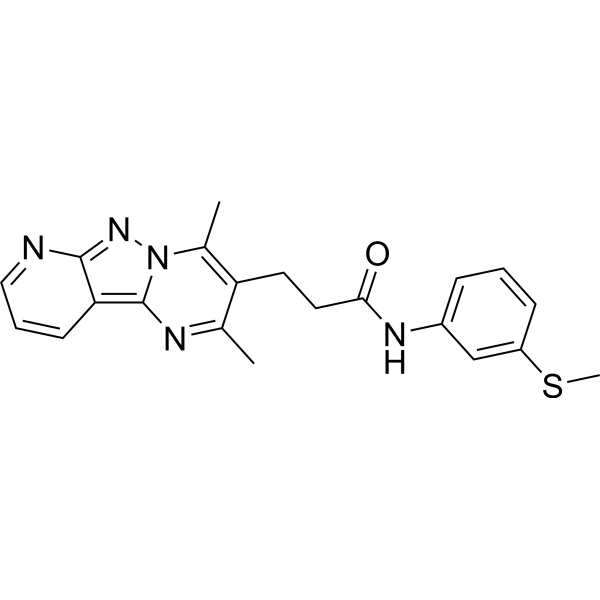 0 ImagesPantothenate kinase-IN-2 is a pantothenate kinase inhibitor with IC50 values of 92 nM for PanK2, 70 nM for PanK1β, and 25 nM for PanK3. Pantothenate kinase-IN-2 can bind specifically to the ATP-PanK3 complex and block CoA biosynthesis. Pantothenate kinase-IN-2 can be used for the research of pank-associated neurodegeneration and type 2 diabetes.
-
Claziprotamidum
 0 ImagesSynonyms: Claziprotamide; BBP-671Claziprotamidum (Claziprotamide; BBP-671) is a panthothenate kinase (PANK) activator with oral activity and blood-brain barrier permeability. Claziprotamidum binds to and activates all PANK isoforms, with the highest affinity for PANK3 (KD = 97 pM; IC50 = 1.39 nM). Claziprotamidum increases the intracellular biosynthesis of Coenzyme A (HY-128851) and restores mitochondrial function. Claziprotamidum can be used in the research of pantothenate kinase-associated neurodegeneration and propionic acidemia.
-
Pantothenate kinase-IN-3
 0 ImagesCat. No.: HY-181917Pantothenate kinase-IN-3 is an orally active PANK3-selective binder and CoA biosynthesis activator with a human PANK3 Ki of 9.1 nM, human PANK3 Ka of 1.8 nM, human PANK1β Ki of 113 nM, human PANK1β Ka of 23.4 nM, and oral effectiveness.Pantothenate kinase-IN-3 binds PANK3 via a water-mediated interaction between its sulfonamide NH and Gly193, elevates cellular, hepatic, and forebrain CoA levels, and shows improved metabolic stability in mouse and human microsomes.Pantothenate kinase-IN-3 has solubility properties favorable at pH 7.Pantothenate kinase-IN-3 can be used for the research of hepatic metabolic CoA deficiencies (acidemias).
-
PANK1/3 activator 1
 0 ImagesCat. No.: HY-181256CAS No.: 3113822-26-4PANK1/3 activator 1 (Compound 134) is a PANK1/3 activator with EC50 values of 0.011 and 0.065 μM. PANK1/3 activator 1 can be used for the research on diseases related to coenzyme A levels, such as CASTOR disease and organic acidemia.



