



PanK1
PanK1 catalyzes the first committed, rate-controlling step of coenzyme A (CoA) biosynthesis and helps determine intracellular CoA content[1]. Mechanistically, PPARα activation increases PANK1α expression in hepatocyte models, raising PanK activity, CoA biosynthetic flux, and steady-state CoA levels[2]. Compared with related isoforms, PANK1 encodes PanK1α and PanK1β, which share a catalytic domain but differ in regulatory regions and expression control[3]. In liver, PanK1 deficiency lowers CoA availability during fasting, reduces fatty acid oxidation, impairs gluconeogenesis, and causes hypoglycemia in Pank1−/− mice[1]. In hepatocellular carcinoma models, PANK1 suppresses Wnt/β-catenin signaling by cooperating with CK1α to phosphorylate β-catenin and promote its degradation[4]. For experimental applications, high-throughput screening identified small-molecule PanK activators and inhibitors, and later pantazine optimization produced PZ-2891, an allosteric PANK modulator used to elevate tissue CoA in mouse models[5][6].
References:
- [1]. Leonardi R, et al. Pantothenate kinase 1 is required to support the metabolic transition from the fed to the fasted state. PLoS One. 2010 Jun 14;5(6):e11107. [Content Brief]
- [2]. Ramaswamy G, et al. PPARalpha controls the intracellular coenzyme A concentration via regulation of PANK1alpha gene expression. J Lipid Res. 2004 Jan;45(1):17-31. [Content Brief]
- [3]. Rock CO, et al. The murine pantothenate kinase (Pank1) gene encodes two differentially regulated pantothenate kinase isozymes. Gene. 2002 May 29;291(1-2):35-43. [Content Brief]
- [4]. Zi Y, et al. Pantothenate Kinase 1 Inhibits the Progression of Hepatocellular Carcinoma by Negatively Regulating Wnt/β-catenin Signaling. Int J Biol Sci. 2022 Jan 24;18(4):1539-1554. [Content Brief]
- [5]. Sharma LK, et al. A high-throughput screen reveals new small-molecule activators and inhibitors of pantothenate kinases. J Med Chem. 2015 Feb 12;58(3):1563-8. [Content Brief]
- [6]. Sharma LK, et al. A therapeutic approach to pantothenate kinase associated neurodegeneration. Nat Commun. 2018 Oct 23;9(1):4399. [Content Brief]
-
PanK1 Related Products (4)
Related Products (4)

-
Pantothenate kinase-IN-2
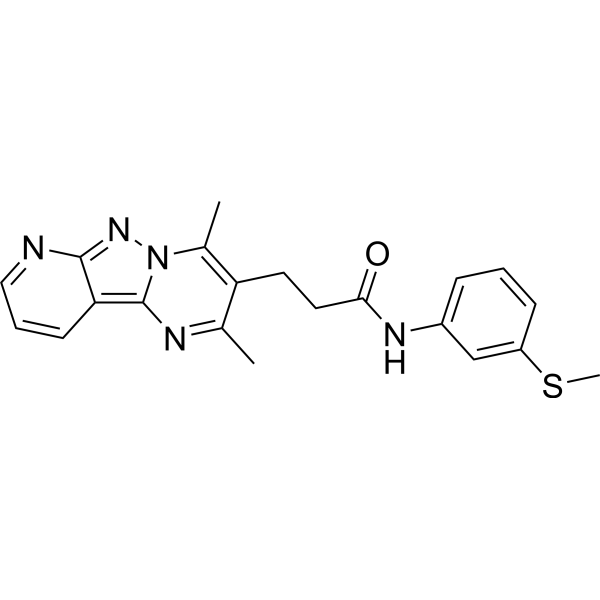 0 ImagesPantothenate kinase-IN-2 is a pantothenate kinase inhibitor with IC50 values of 92 nM for PanK2, 70 nM for PanK1β, and 25 nM for PanK3. Pantothenate kinase-IN-2 can bind specifically to the ATP-PanK3 complex and block CoA biosynthesis. Pantothenate kinase-IN-2 can be used for the research of pank-associated neurodegeneration and type 2 diabetes.
-
Claziprotamidum
 0 ImagesSynonyms: Claziprotamide; BBP-671Claziprotamidum (Claziprotamide; BBP-671) is a panthothenate kinase (PANK) activator with oral activity and blood-brain barrier permeability. Claziprotamidum binds to and activates all PANK isoforms, with the highest affinity for PANK3 (KD = 97 pM; IC50 = 1.39 nM). Claziprotamidum increases the intracellular biosynthesis of Coenzyme A (HY-128851) and restores mitochondrial function. Claziprotamidum can be used in the research of pantothenate kinase-associated neurodegeneration and propionic acidemia.
-
Pantothenate kinase-IN-3
 0 ImagesCat. No.: HY-181917Pantothenate kinase-IN-3 is an orally active PANK3-selective binder and CoA biosynthesis activator with a human PANK3 Ki of 9.1 nM, human PANK3 Ka of 1.8 nM, human PANK1β Ki of 113 nM, human PANK1β Ka of 23.4 nM, and oral effectiveness.Pantothenate kinase-IN-3 binds PANK3 via a water-mediated interaction between its sulfonamide NH and Gly193, elevates cellular, hepatic, and forebrain CoA levels, and shows improved metabolic stability in mouse and human microsomes.Pantothenate kinase-IN-3 has solubility properties favorable at pH 7.Pantothenate kinase-IN-3 can be used for the research of hepatic metabolic CoA deficiencies (acidemias).
-
PANK1/3 activator 1
 0 ImagesCat. No.: HY-181256CAS No.: 3113822-26-4PANK1/3 activator 1 (Compound 134) is a PANK1/3 activator with EC50 values of 0.011 and 0.065 μM. PANK1/3 activator 1 can be used for the research on diseases related to coenzyme A levels, such as CASTOR disease and organic acidemia.



