



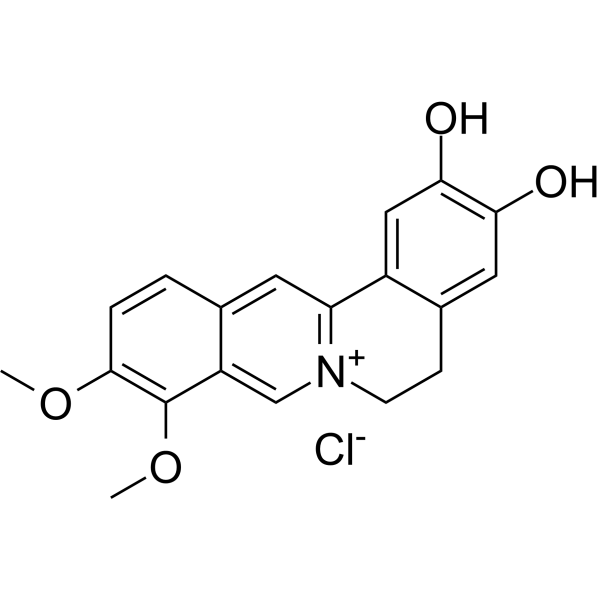
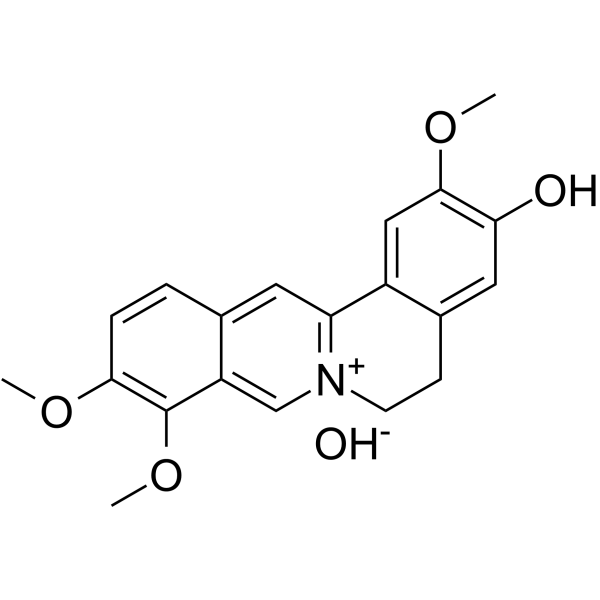
Demethyleneberberine chloride
Based on 3 publication(s) in Google Scholar
Demethyleneberberine chloride is a blood-brain barrier-permeable antioxidant. Demethyleneberberine chloride exerts antioxidant effects by targeting mitochondria, activates the AMPK signaling pathway to regulate lipid metabolism, and inhibits inflammation-related pathways such as NF-κB and MAPK. Demethyleneberberine chloride can be used in the research of inflammatory and other diseases.
For research use only. We do not sell to patients.
- Purity : 98.90%
- CAS No.: 16705-03-6
- Formula: C19H18ClNO4
- Molecular Weight:359.80
-
Storage:
4°C, sealed storage, away from moisture and light
* In solvent : -80°C, 6 months; -20°C, 1 month (sealed storage, away from moisture and light)

To place orders, for customer services and technical support, please contact: MedChemExpress USA
Tel: 609-228-6898 E-mail: [email protected] [email protected]


-
 Biological Activity
-
Chemical Information
-
Solvent & Solubility
- Purity & Documentation
- References
-
 Help & FAQs


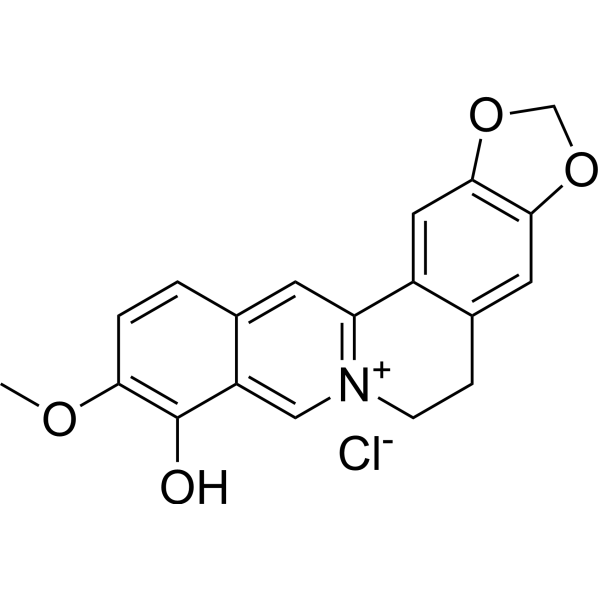
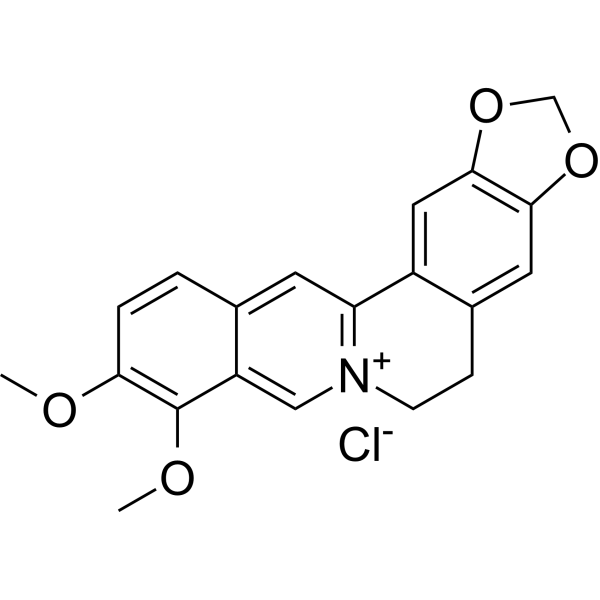
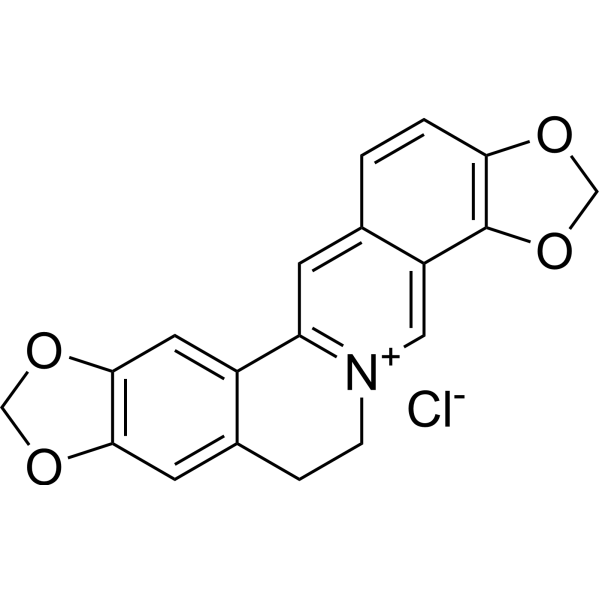
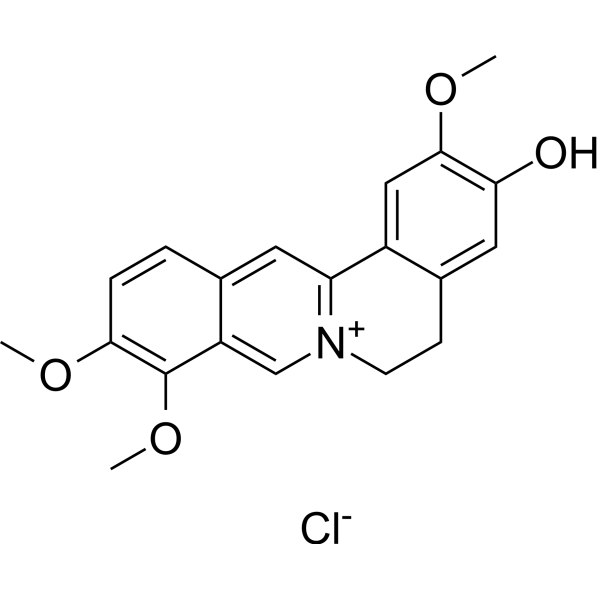
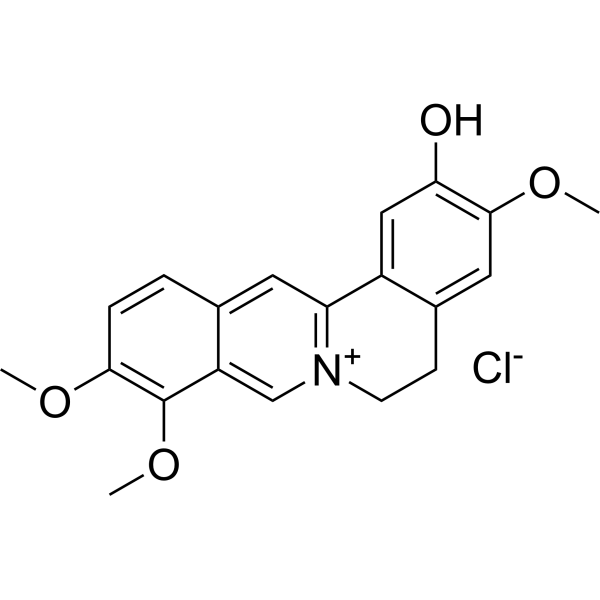
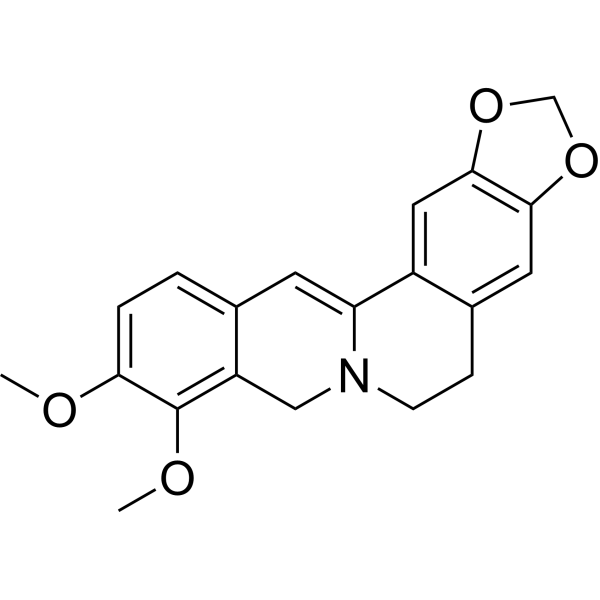
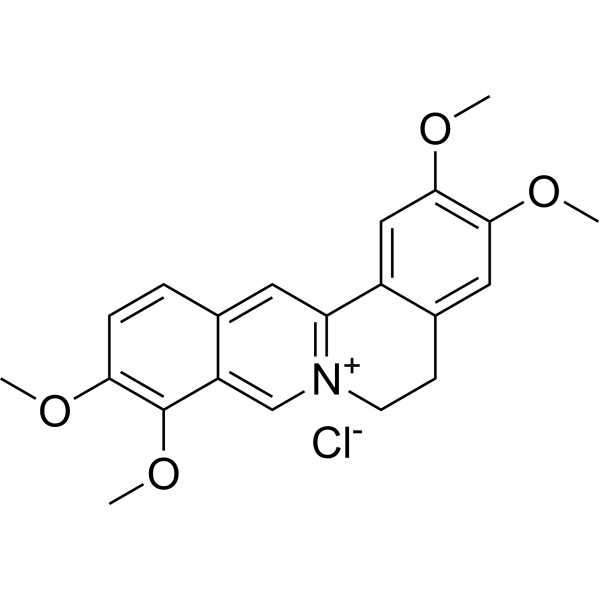
Publications Citing Use of MedChemExpress (MCE) Demethyleneberberine chloride
MoreAll AMPK Isoforms
More

Biological Activity
Description
Cellular Effect
|
Cell Line

|
Type | Value | Description | References |
|---|---|---|---|---|
| PC-12 | CC50 |
>150 μM
Compound: 12
|
Cytotoxicity against rat PC12 cells assessed as reduction in cell viability incubated for 24 hrs by WST-8 assay
Cytotoxicity against rat PC12 cells assessed as reduction in cell viability incubated for 24 hrs by WST-8 assay
|
[PMID: 33611188] |
In Vitro
Demethyleneberine (50 μM; 2 h) chloride neutralizes 55% of H2O2-induced ROS in HepG2 cells[1].
Demethyleneberberine (50 μM; 1 week) chloride reverses ethanol-induced mitochondrial membrane potential depolarization in ethanol-exposed HepG2 cells[1].
Demethyleneberberine (0-50 μM; 0-24 h) chloride shows no toxicity to HepG2 cells at concentrations up to 50 μM, reduces cellular lipid accumulation by 25% at 10 μM, and activates the AMPK pathway in a dose- and time-dependent manner[2].
MedChemExpress (MCE) has not independently confirmed the accuracy of these methods. They are for reference only.
In Vivo
Demethyleneberberine (40 mg/kg per day; i.p.; daily; 5 weeks) chloride prevents chronic alcohol intake-induced liver injury and steatosis in ICR mice by inhibiting oxidative stress pathways and restoring fatty acid oxidation[1].
Demethyleneberberine (20-40 mg/kg; i.p.; daily administration; for 4 consecutive weeks) chloride alleviates MCD-induced non-alcoholic fatty liver disease (NAFLD) in ICR mice and spontaneous NAFLD in db/db mice[2].
MedChemExpress (MCE) has not independently confirmed the accuracy of these methods. They are for reference only.
-
Animal Model:ICR mice (male, 8 weeks old, 24-26 g, acute alcoholic liver injury model)[1]
-
Dosage:40 mg/kg
-
Administration:i.p.; 1 hour after each ethanol exposure; 3 exposures total
-
Result:Attenuated ethanol-induced microsteatosis, swelling, and apoptosis in liver cells.
Blunted elevated serum ALT levels.
Blocked ethanol-induced 33% decline in mitochondrial GSH and GPx activity and 250% elevation in mitochondrial TBARS formation.
Alleviated ethanol-mediated mitochondrial swelling.
Significantly recovered ethanol-reduced mitochondrial AST activity by 50%.
Ameliorated ethanol-induced mitochondrial ultrastructural damages and reduced lipid droplet accumulation.
-
Animal Model:C57BLKS/J-Leprdb/Leprdb (db/db) mice (8-week-old male; spontaneous NAFLD model due to leptin deficiency)[2]
-
Dosage:20 mg/kg
-
Administration:i.p.; daily; 4 weeks
-
Result:Reduced liver/body index.
Decreased hepatic TG and TC levels and improved liver function (reduced serum ALT).
Decreased hepatic MDA.
Reduced lipid droplet accumulation.
Activated AMPK phosphorylation and increased phosphorylation of ACC.
Reduced expression of lipogenic genes and inflammatory genes (IL-1β, TNFα).
Increased expression of fatty acid β-oxidation genes (ACO, MCAD, CPT1A) and lipid transport genes (MTTP, ApoB).


Chemical Information
-
CAS No. 16705-03-6
-
Appearance Solid
-
Molecular Weight 359.80
-
Formula C19H18ClNO4
-
Color Light yellow to yellow
-
SMILES
COC1=C(OC)C2=C[N+]3=C(C4=CC(O)=C(O)C=C4CC3)C=C2C=C1.[Cl-]
-
Structure Classification
-
Initial Source
-
Shipping
Room temperature in continental US; may vary elsewhere.
-
Storage
4°C, sealed storage, away from moisture and light
* In solvent : -80°C, 6 months; -20°C, 1 month (sealed storage, away from moisture and light)


Publications (3)
-
Journal Impact Factor
-
Most Recent
-
Phytomedicine
Huaier-derived arnicolide D induces ferroptosis in gastric cancer via SRC/TNF-mediated GPX4 inactivation. [Abstract]2026 May:154:158029. PMID: 41818944 -
Molecules
Discovery of Nine Dipeptidyl Peptidase-4 Inhibitors from Coptis chinensis Using Virtual Screening, Bioactivity Evaluation, and Binding Studies. [Abstract]2024 May 14;29(10):2304. PMID: 38792165 -
Chem Biol Drug Des
CD163 and TYROBP Are Two Therapeutic Targets for Hyperglycemia-Induced Mesangial Cell Stress. [Abstract]2025 Dec;106(6):e70213. PMID: 41329505


Solvent & Solubility
In Vitro:
DMSO : 1.92 mg/mL (5.34 mM; ultrasonic and warming and adjust pH to 2 with 1 M HCl and heat to 60°C; Hygroscopic DMSO has a significant impact on the solubility of product, please use newly opened DMSO)
Please refer to the solubility information to select the appropriate solvent. Once prepared, please aliquot and store the solution to prevent product inactivation from repeated freeze-thaw cycles.
Storage method and period of stock solution: -80°C, 6 months; -20°C, 1 month (sealed storage, away from moisture and light). When stored at -80°C, please use it within 6 months. When stored at -20°C, please use it within 1 month.
Please refer to the solubility information to select the appropriate solvent. Once prepared, please aliquot and store the solution to prevent product inactivation from repeated freeze-thaw cycles.
Storage method and period of stock solution: -80°C, 6 months; -20°C, 1 month (sealed storage, away from moisture and light). When stored at -80°C, please use it within 6 months. When stored at -20°C, please use it within 1 month.
Concentration (start) × Volume (start) = Concentration (final) × Volume (final)


Purity & Documentation
-
Data Sheet (280 KB)
-
SDS (252 KB)
- English - EN (252 KB)
- Français - FR (252 KB)
- Deutsch - DE (252 KB)
- Norwegian - NO (252 KB)
- Español - ES (252 KB)
- Swedish - SV (252 KB)
- Italian - IT (252 KB)
- Korean - KR (252 KB)
- Portuguese - PT (252 KB)
-
Handling Instructions (2659 KB)
References
[1]. Zhang P, et al. Demethyleneberberine, a natural mitochondria-targeted antioxidant, inhibits mitochondrial dysfunction, oxidative stress, and steatosis in alcoholic liver disease mouse model. J Pharmacol Exp Ther. 2015 Jan;352(1):139-47. [Content Brief]
[2]. Qiang X, et al. Demethyleneberberine attenuates non-alcoholic fatty liver disease with activation of AMPK and inhibition of oxidative stress. Biochem Biophys Res Commun. 2016 Apr 15;472(4):603-9. [Content Brief]
[3]. Li J, et al. Pharmacokinetics, Tissue Distribution and Excretion of Demethyleneberberine, a Metabolite of Berberine, in Rats and Mice. Molecules. 2023;28(23):7725. Published 2023 Nov 23. [Content Brief]
[4]. Saklani P, et al. Demethyleneberberine, a potential therapeutic agent in neurodegenerative disorders: a proposed mechanistic insight. Mol Biol Rep. 2022;49(10):10101-10113. [Content Brief]


Complete Stock Solution Preparation Table
Please refer to the solubility information to select the appropriate solvent. Once prepared, please aliquot and store the solution to prevent product inactivation from repeated freeze-thaw cycles.
Storage method and period of stock solution: -80°C, 6 months; -20°C, 1 month (sealed storage, away from moisture and light). When stored at -80°C, please use it within 6 months. When stored at -20°C, please use it within 1 month.
| Optional Solvent | Concentration Solvent Mass | 1 mg | 5 mg | 10 mg | 25 mg |
|---|---|---|---|---|---|
| DMSO | 1 mM | 2.7793 mL | 13.8966 mL | 27.7932 mL | 69.4830 mL |
| 5 mM | 0.5559 mL | 2.7793 mL | 5.5586 mL | 13.8966 mL |


Demethyleneberberine chloride Related Classifications
HY-N0592A Related Classifications
 Powered by Bioz