



NCT-501
Based on 6 publication(s) in Google Scholar
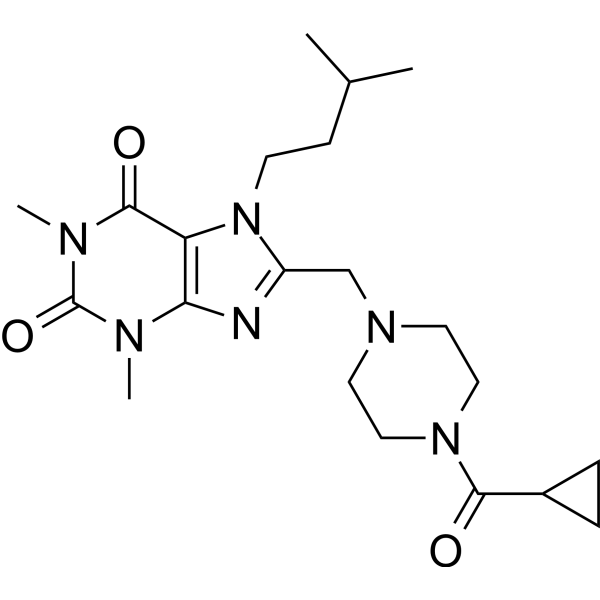
NCT-501 is a reversible, non-competitive, selective, blood-brain barrier-permeable ALDH1A1 inhibitor with an IC50 of 40 nM. NCT-501 inhibits the AKT-β-catenin signaling pathway, induces necroptosis in nasopharyngeal carcinoma cells, suppresses their proliferation and inhibits stem cell spheroid formation. NCT-501 can be used in research related to nasopharyngeal carcinoma, esophageal squamous cell carcinoma and malignant tumors.
Nur für Forschungszwecke. Wir verkaufen nicht an Patienten.
- Reinheit : 99.59%
- CAS. Nr.: 1802088-50-1
- Formel: C21H32N6O3
- Molecular Weight:416.52
-
Speicherung:Powder -20°C, 3 years , 4°C, 2 years ; In solvent -80°C, 2 years , -20°C, 1 year

To place orders, for customer services and technical support, please contact: MedChemExpress USA
Tel: 609-228-6898 E-mail: [email protected] [email protected]


-
 Biologische Aktivität
-
Chemical Information
-
Lösungsmittel & Löslichkeit
- Protokoll
- Reinheit & Dokumentation
- Verweise
-
 Help & FAQs


-
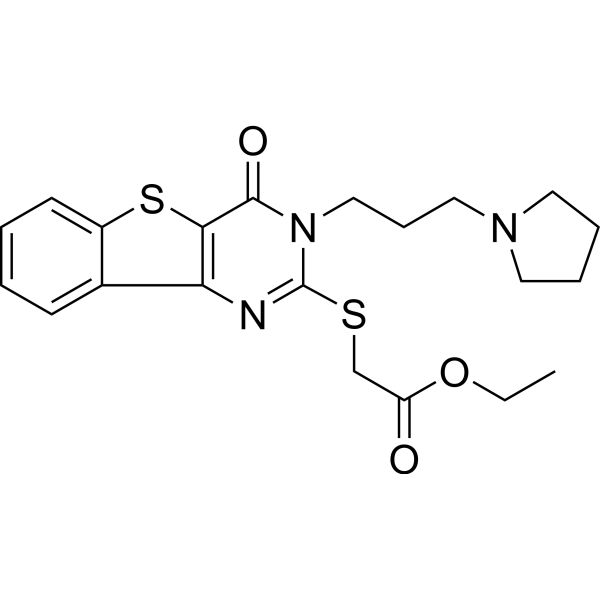
HY-110294
CM037ALDH1A1 Inhibitor -
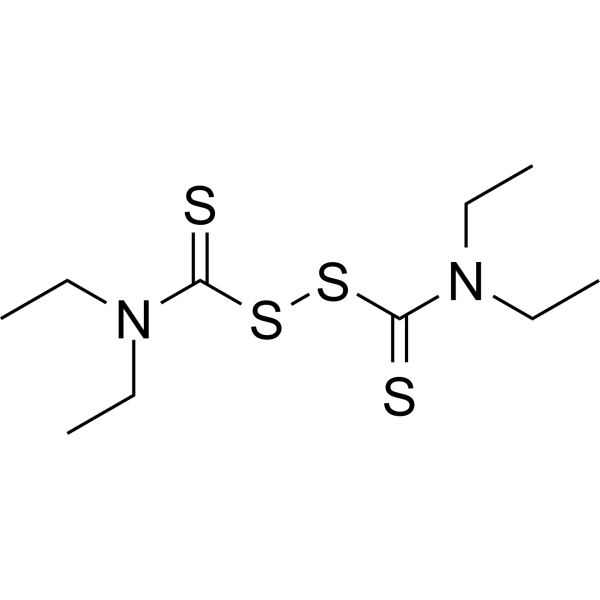
HY-B0240
DisulfiramALDH1 Inhibitor -
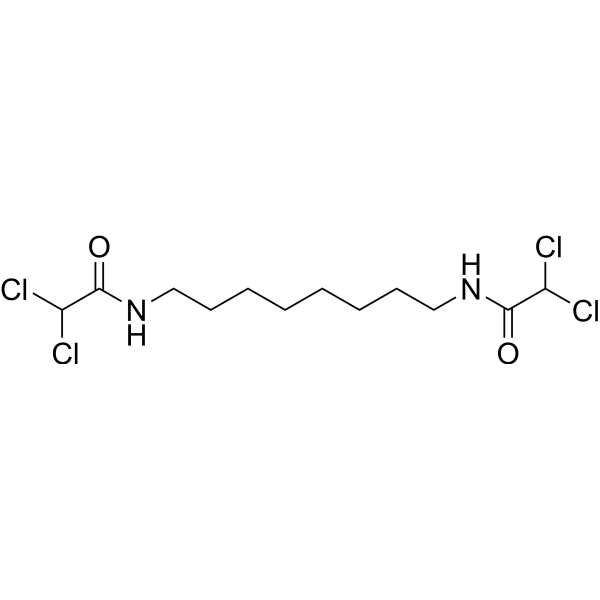
HY-W011094
Win 18446ALDH1a2 Inhibitor -
HY-W016645
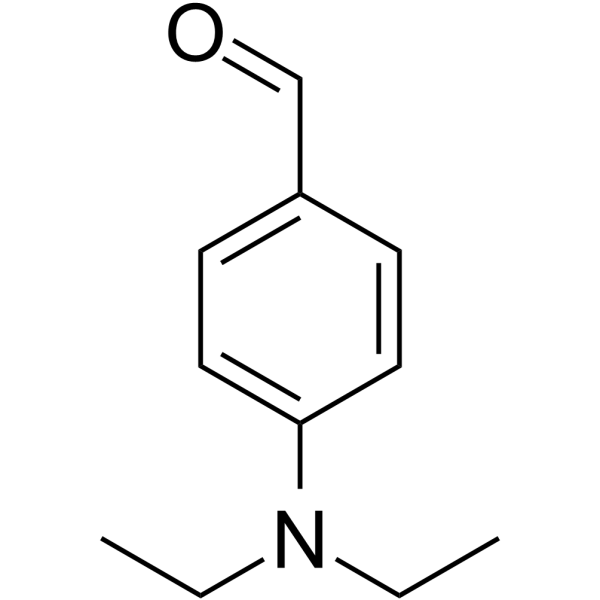
4-DiethylaminobenzaldehydeALDH Inhibitor -
HY-19801
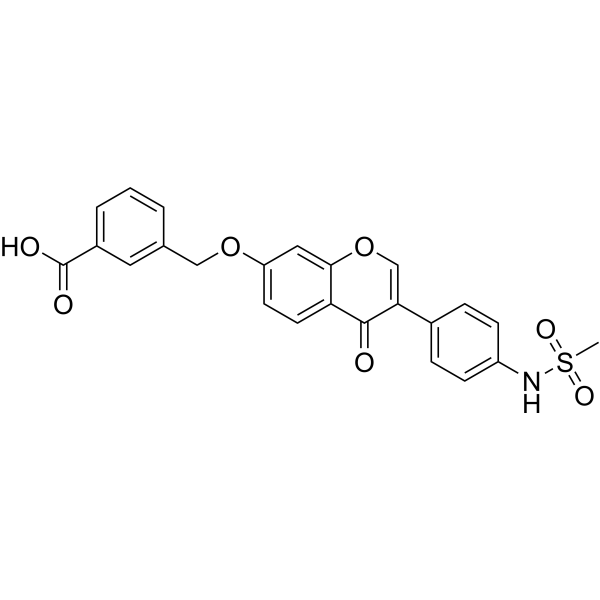
CVT-10216ALDH-2 Inhibitor -
HY-14649
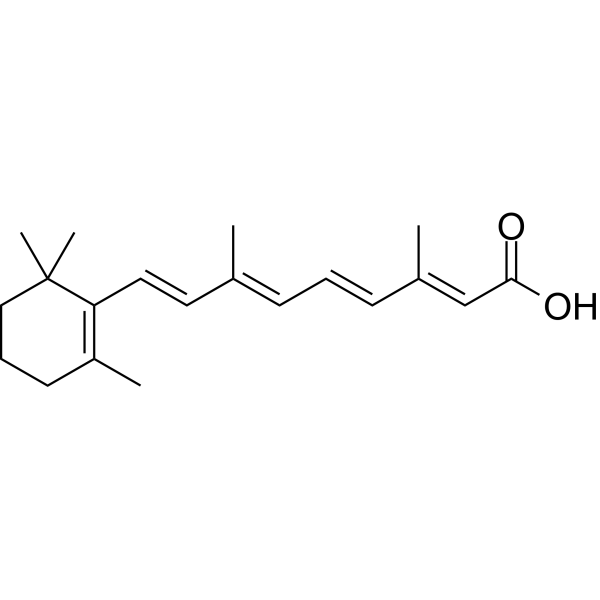
Retinoic acidRAR Agonist -
HY-18936
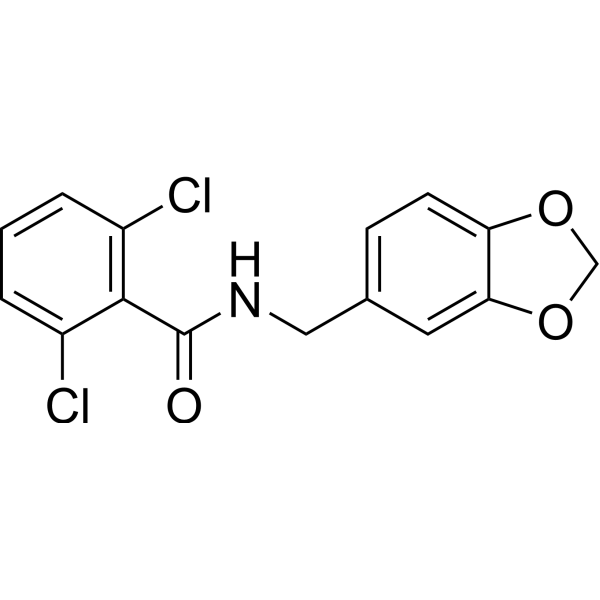
Alda-1ALDH2 Agonist -
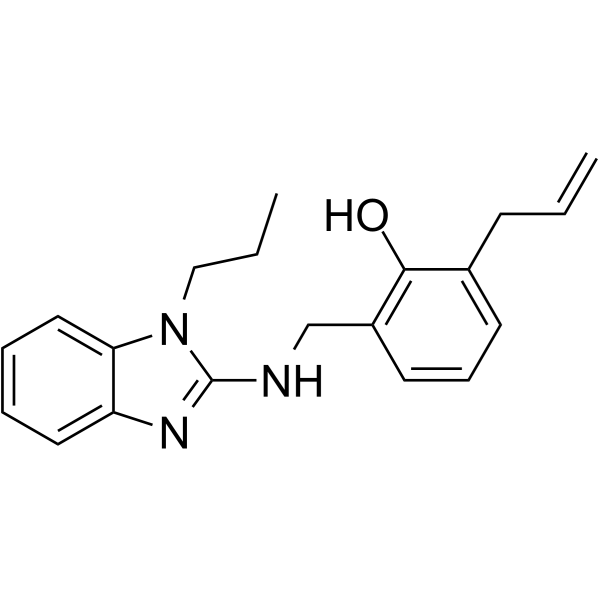
HY-135841
CM010ALDH1A Inhibitor -
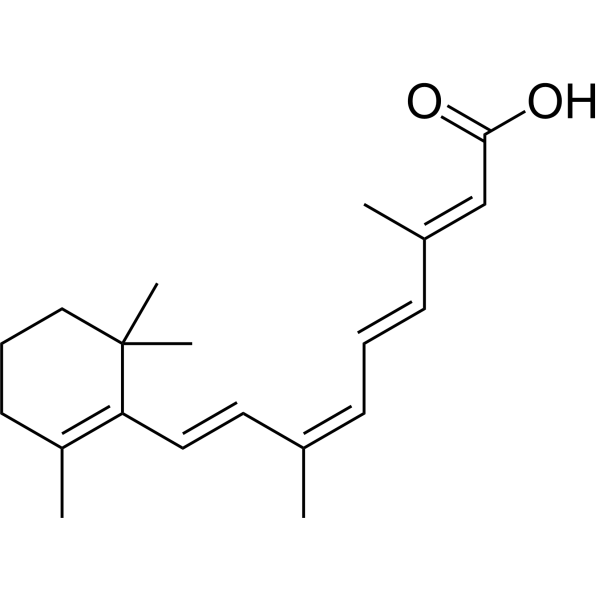
HY-15128
9-cis-Retinoic acidRAR/RXR Agonist -
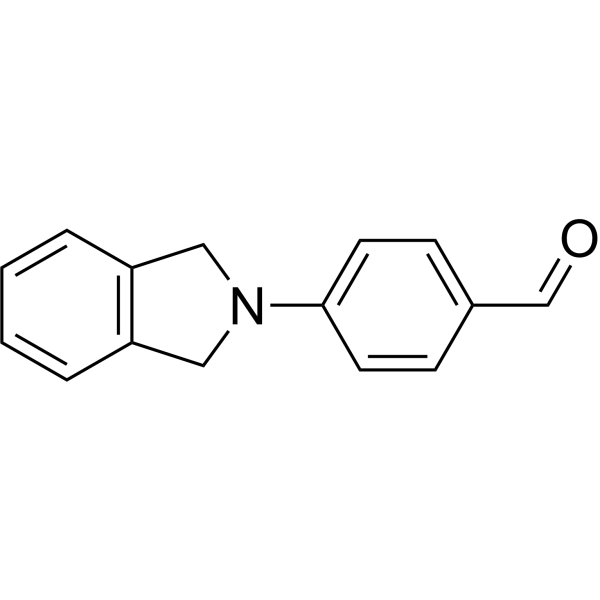
HY-122912
ALDH1A inhibitor 673AALDH1A Inhibitor -

HY-B0240R
Disulfiram (Standard)ALDH1 Inhibitor -
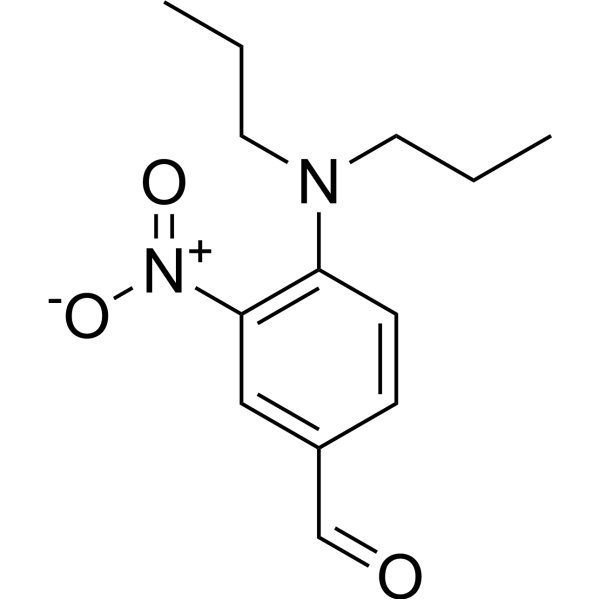
HY-144670
ALDH3A1-IN-1ALDH3A1 Inhibitor
Publications Citing Use of MedChemExpress (MCE) NCT-501
More Customer Validation & Images

-
Cell Proliferation/Viability Assay
-
In Vivo Efficacy Study
-
In Vivo Imaging


Biologische Aktivität
Beschreibung
IC50 & Target
|
ALDH1 |
Cellular Effect
|
Cell Line

|
Type | Value | Description | References |
|---|---|---|---|---|
| OV-90 | EC50 |
43.9 μM
Compound: 4
|
Cytotoxicity against 3D culture of human OV90 cells assessed as decrease in cell viability after 6 days by CellTiter-Glo assay
Cytotoxicity against 3D culture of human OV90 cells assessed as decrease in cell viability after 6 days by CellTiter-Glo assay
|
[PMID: 29767973] |
In Vitro
NCT-501 inhibits stem cell spheroid formation in human nasopharyngeal carcinoma SUNE1 cells[1].
NCT-501 (5 days) reduces cell viability in human nasopharyngeal carcinoma 5-8F, 6-10B, SUNE1, and HK1 cells with IC50 values of 96.91 μM, 64.15 μM, 27.84 μM, and 67.97 μM respectively, with greater sensitivity in cells with higher ALDH1A1 expression[1].
NCT-501 (14 days) inhibits colony formation in human nasopharyngeal carcinoma 6-10B and SUNE1 cells[1].
NCT-501 induces necroptosis in human nasopharyngeal carcinoma SUNE1 cells, as evidenced by caspase-independent cell death, characteristic nuclear and ultrastructural changes, and HMGB1 translocation[1].
NCT-501 downregulates ALDH1A1 expression and inhibits components of the AKT-β-catenin signaling pathway in TE-1 esophageal squamous cell carcinoma cells, with significant reductions in ALDH1A1 and AKT1 protein levels to ~0.4 relative to β-actin[2].
MedChemExpress (MCE) has not independently confirmed the accuracy of these methods. They are for reference only.
Parmacokinetics
| Species | Dose | Route | Cmax | T1/2 (Plasma) | AUC0-24 | Bioavailability | Cmax (Brain) | T1/2 (Brain) | T1/2 | Vss | CL |
|---|---|---|---|---|---|---|---|---|---|---|---|
| Mice[3] | 2 mg/kg | i.v. | 2070 ng/mL | / | 332 ng·h/mL | / | / | / | 0.5 h | 1.8 L/kg | 98 mL/min/kg |
| Mice[3] | 30 mg/kg | i.p. | 8080 ng/mL | / | 5670 ng·h/mL | 100 % | / | / | 0.7 h | / | / |
| Mice[3] | 10 mg/kg | p.o. | 696 ng/mL | 0.4 h | 484 ng·h/mL | 29 % | 1130 ng/mL | 0.4 h | / | / | / |
In Vivo
-
Animal Model:5-6 weeks old male Hsd: Athymic Nude-Foxn1nu (immuno-deficient-mice bearing Cal-27 CisR cells)[1]
-
Dosage:100µg/animal
-
Administration:Intra-tumorally (i.t); every alternate day for 20 days
-
Result:Showed a 78% inhibition in tumor growth in Cal-27 CisR derived xenografts.


Chemical Information
-
CAS. Nr. 1802088-50-1
-
Appearance Solid
-
Molecular Weight 416.52
-
Formel C21H32N6O3
-
Color White to off-white
-
SMILES
O=C(N1C)N(C)C2=C(N(CCC(C)C)C(CN3CCN(C(C4CC4)=O)CC3)=N2)C1=O
-
Versand
Room temperature in continental US; may vary elsewhere.
-
Speicherung
Powder -20°C 3 years 4°C 2 years In solvent -80°C 2 years -20°C 1 year


Publications (6)
-
Journal Impact Factor
-
Most Recent
-
-
Free Radic Biol Med
Disulfiram suppresses NLRP3 inflammasome activation to treat peritoneal and gouty inflammation. [Abstract]2020 May 20:152:8-17. PMID: 32151746 -
Mol Cancer Ther
ALDH1A1 Contributes to PARP Inhibitor Resistance via Enhancing DNA Repair in BRCA2-/- Ovarian Cancer Cells. [Abstract]2020 Jan;19(1):199-210. PMID: 31534014
NCT-501 purchased from MedChemExpress. Usage Cited in: Mol Cancer Ther. 2020 Jan;19(1):199-210. [Abstract]
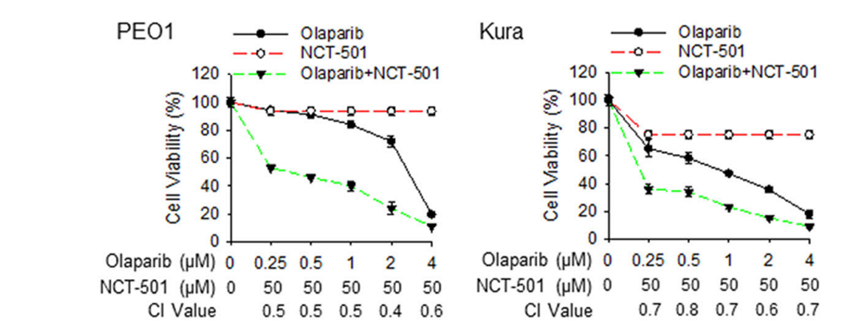
The ALDH1A1 inhibitor NCT-501 synergistically augments the cytotoxicity of olaparib in BRCA2-deficient EOC cell lines. PEO1 and Kuramochi cells were treated with olaparib, NCT-501, or olaparib+NCT-501 for 7 days, cell viability was determined using the methylene blue assay.
NCT-501 purchased from MedChemExpress. Usage Cited in: Mol Cancer Ther. 2020 Jan;19(1):199-210. [Abstract]
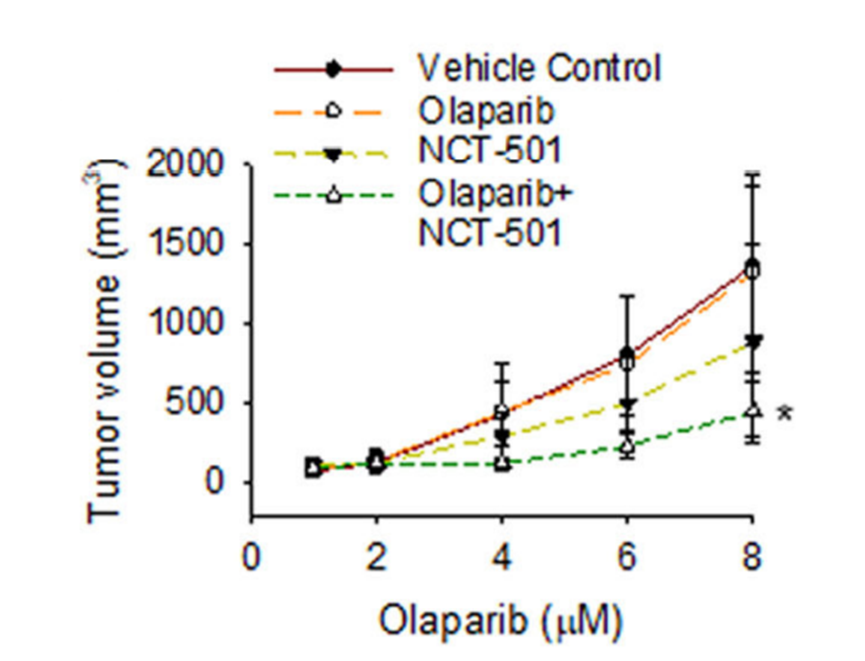
PEO1-R cells (2 × 10⁶) were injected into nude mice subcutaneously to generate xenografts, treated with olaparib (50 mg/kg, once a day) or/and NCT-501 (10 mg/kg, once a day) intraperitoneally for 8 days. Tumor volumes were determined using caliber every other day.
NCT-501 purchased from MedChemExpress. Usage Cited in: Mol Cancer Ther. 2020 Jan;19(1):199-210. [Abstract]
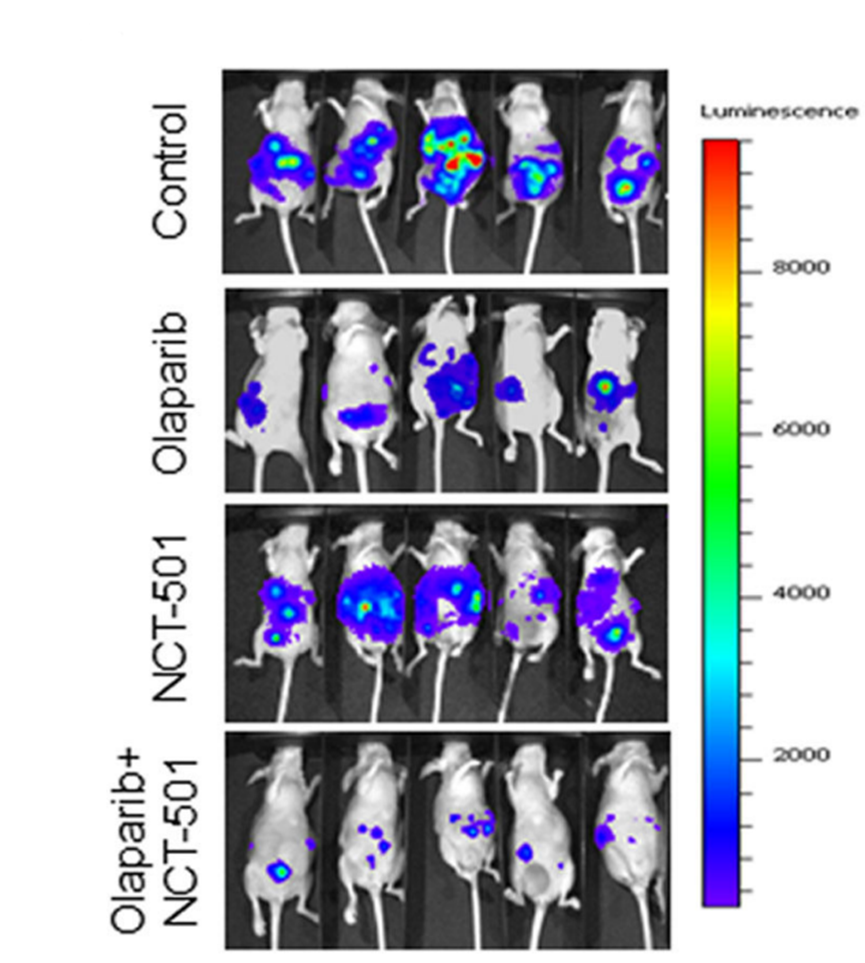
PEO1 cells containing luciferase expression vector (2 × 10⁶) were injected into nude mice intraperitoneally to generate xenografts, treated with olaparib (50 mg/kg, once a day) or/and NCT-501 (10 mg/kg, once a day) intraperitoneally for 10 days. Tumor volumes were determined using BLI.
-
iScience
Development of retinoid nuclear receptor pathway antagonists through targeting aldehyde dehydrogenase 1A3. [Abstract]2025 Oct 3;28(11):113675. PMID: 41210994 -
Mol Carcinog
Cancer stem cell mediated acquired chemoresistance in head and neck cancer can be abrogated by aldehyde dehydrogenase 1 A1 inhibition. [Abstract]2017 Feb;56(2):694-711. PMID: 27380877 -


Lösungsmittel & Löslichkeit
In Vitro:
DMSO : 3.57 mg/mL (8.57 mM; ultrasonic and warming and heat to 60°C; Hygroscopic DMSO has a significant impact on the solubility of product, please use newly opened DMSO)
Please refer to the solubility information to select the appropriate solvent. Once prepared, please aliquot and store the solution to prevent product inactivation from repeated freeze-thaw cycles.
Storage method and period of stock solution: -80°C, 2 years; -20°C, 1 year. When stored at -80°C, please use it within 2 years. When stored at -20°C, please use it within 1 year.
Please refer to the solubility information to select the appropriate solvent. Once prepared, please aliquot and store the solution to prevent product inactivation from repeated freeze-thaw cycles.
Storage method and period of stock solution: -80°C, 2 years; -20°C, 1 year. When stored at -80°C, please use it within 2 years. When stored at -20°C, please use it within 1 year.
Konzentration (Stammlösung) × Volumen (Stammlösung) = Konzentration (Ziellösung) × Volumen (Ziellösung)
In Vivo:
Select the appropriate dissolution method based on your experimental animal and administration route.
- For the following dissolution methods, please ensure to first prepare a clear stock solution using an In Vitro approach and then sequentially add co-solvents:
- To ensure reliable experimental results, the clarified stock solution can be appropriately stored based on storage conditions. As for the working solution for In Vivo experiments, it is recommended to prepare freshly and use it on the same day.
- The percentages shown for the solvents indicate their volumetric ratio in the final prepared solution. If precipitation or phase separation occurs during preparation, heat and/or sonication can be used to aid dissolution.
Add each solvent one by one: 10% DMSO 90% (20% SBE-β-CD in Saline)
Solubility: ≥ 1.25 mg/mL (3.00 mM); Clear solution
This protocol yields a clear solution of ≥ 1.25 mg/mL (saturation unknown).
Taking 1 mL working solution as an example, add 100 μL DMSO stock solution (12.5 mg/mL) to 900 μL 20% SBE-β-CD in Saline, and mix evenly.
Preparation of 20% SBE-β-CD in Saline (4°C, storage for one week): 2 g SBE-β-CD powder is dissolved in 10 mL Saline, completely dissolve until clear.
In Vivo Dissolution Calculator
Please enter the basic information of animal experiments:
-
-
-
-
Recommended: Prepare an additional quantity of animals to account for potential losses during experiments.
Please enter your animal formula composition:
-
%DMSO +
Recommended: Keep the proportion of DMSO in working solution below 2% if your animal is weak.
-
%+
-
+%Tween-80 + +
-
%Saline +
The co-solvents required include: DMSO, . All of co-solvents are available by MedChemExpress (MCE). , Tween 80. All of co-solvents are available by MedChemExpress (MCE).
Working solution concentration: 0.22 mg/mL
Method for preparing stock solution: mg drug dissolved in μL DMSO. Stock solution concentration: mg/mL.
1. Take μL DMSO stock solution;
2. Add μL .
μL , mix evenly;
3. Then add μL Tween 80, mix evenly;
4. Then add μL
Please ensure that the stock solution in the first step is dissolved to a clear state, and add co-solvents in sequence. You can use ultrasonic heating (ultrasonic cleaner, recommended frequency 20-40 kHz), vortexing, etc. to assist dissolution.


Reinheit & Dokumentation
-
Data Sheet (278 KB)
-
SDS (254 KB)
- English - EN (254 KB)
- Français - FR (254 KB)
- Deutsch - DE (254 KB)
- Norwegian - NO (254 KB)
- Español - ES (254 KB)
- Swedish - SV (254 KB)
- Italian - IT (254 KB)
- Korean - KR (254 KB)
- Portuguese - PT (254 KB)
-
Handling Instructions (2659 KB)
Verweise
[1]. Wang H, et al. Targeting ALDH1A1 to induce Necroptosis in Nasopharyngeal Carcinoma. J Cancer. 2022;13(14):3515-3525. Published 2022 Oct 24. [Content Brief]
[2]. Wang W, et al. ALDH1A1 maintains the cancer stem-like cells properties of esophageal squamous cell carcinoma by activating the AKT signal pathway and interacting with β-catenin. Biomed Pharmacother. 2020;125:109940. [Content Brief]
[3].
Yang SM, et al. Discovery of NCT-501, a Potent and Selective Theophylline-Based Inhibitor of Aldehyde Dehydrogenase 1A1 (ALDH1A1). J Med Chem. 2015 Aug 13;58(15):5967-78.
[Content Brief]


Complete Stock Solution Preparation Table
Please refer to the solubility information to select the appropriate solvent. Once prepared, please aliquot and store the solution to prevent product inactivation from repeated freeze-thaw cycles.
Storage method and period of stock solution: -80°C, 2 years; -20°C, 1 year. When stored at -80°C, please use it within 2 years. When stored at -20°C, please use it within 1 year.
| Optional Solvent | Concentration Solvent Mass | 1 mg | 5 mg | 10 mg | 25 mg |
|---|---|---|---|---|---|
| DMSO | 1 mM | 2.4008 mL | 12.0042 mL | 24.0085 mL | 60.0211 mL |
| 5 mM | 0.4802 mL | 2.4008 mL | 4.8017 mL | 12.0042 mL |


NCT-501 Related Classifications
HY-18768 Related Classifications
 Powered by Bioz