



RMC-5127

Based on 1 Customer Validation
RMC-5127 is a small molecule inhibitor that binds to GTP-targeted KRASG12V, with oral bioavailability and blood-brain barrier permeability. RMC-5127 inhibits the activities of the RAS and MAPK pathways, suppresses the proliferation of KRASG12V-mutant cancer cells and induces their apoptosis. RMC-5127 can be used for the research of KRASG12V-mutant non-small cell lung cancer, pancreatic ductal adenocarcinoma, colorectal cancer and intracranial KRASG12V tumors.
For research use only. We do not sell to patients.
- Purity : 99.96%
- CAS No.: 3082166-76-2
- Formula: C57H75N9O9S
- Molecular Weight:1062.33
-
Storage:Powder -20°C, 3 years , 4°C, 2 years ; In solvent -80°C, 6 months , -20°C, 1 month


To place orders, for customer services and technical support, please contact: MedChemExpress USA
Tel: 609-228-6898 E-mail: [email protected] [email protected]


-
 Biological Activity
-
Chemical Information
-
Solvent & Solubility
- Protocols
- Purity & Documentation
- References
-
 Help & FAQs


-
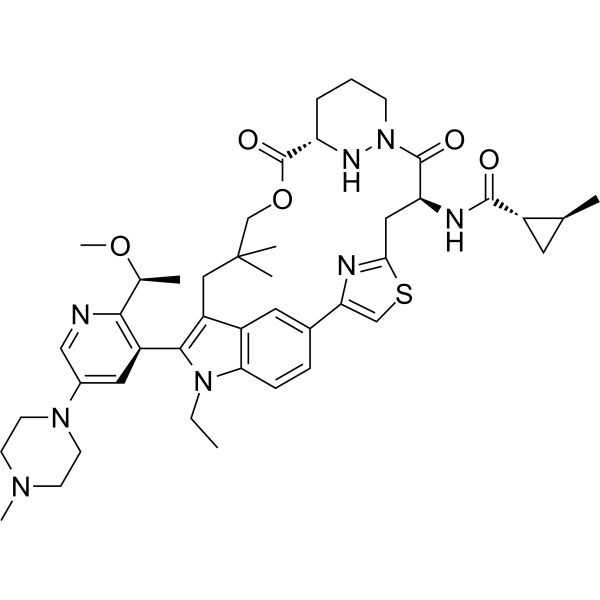
HY-148439
DaraxonrasibRAS(ON) Inhibitor -
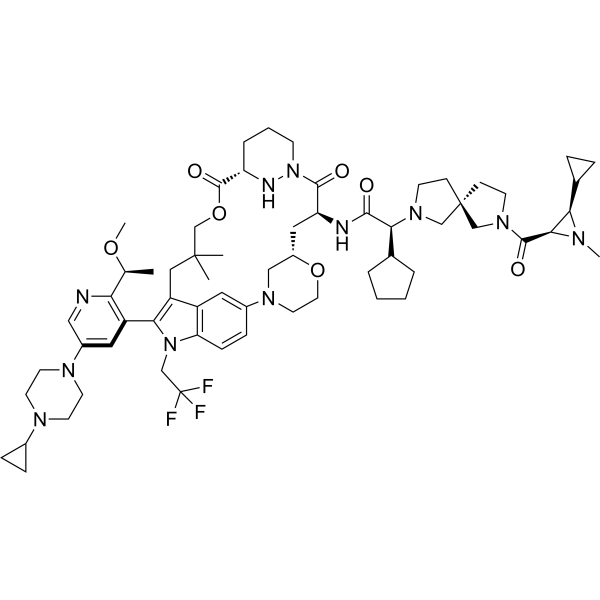
HY-156819
ZoldonrasibKRAS G12D Inhibitor -
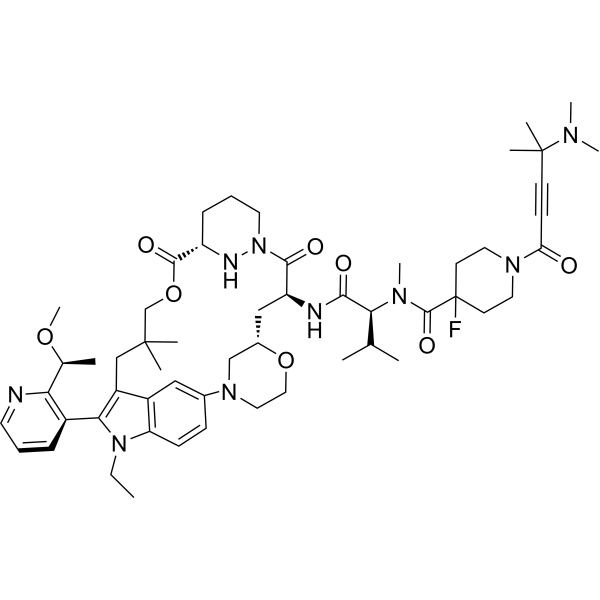
HY-153346
ElironrasibKRAS-G12C(ON) Inhibitor -
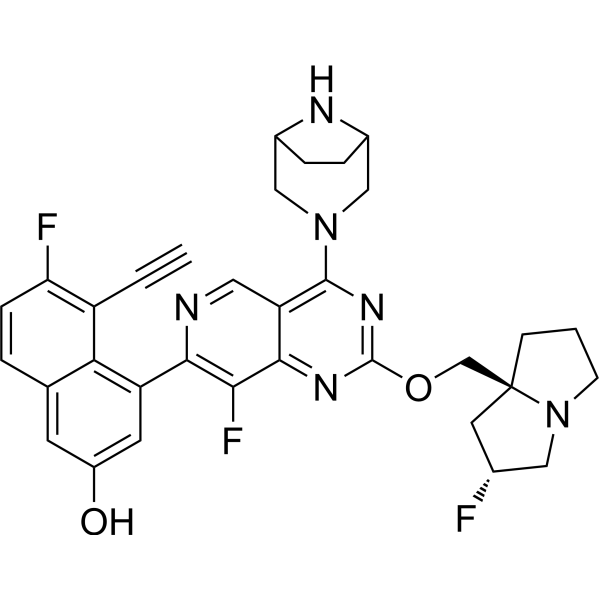
HY-134813
MRTX1133KRAS G12D Inhibitor -
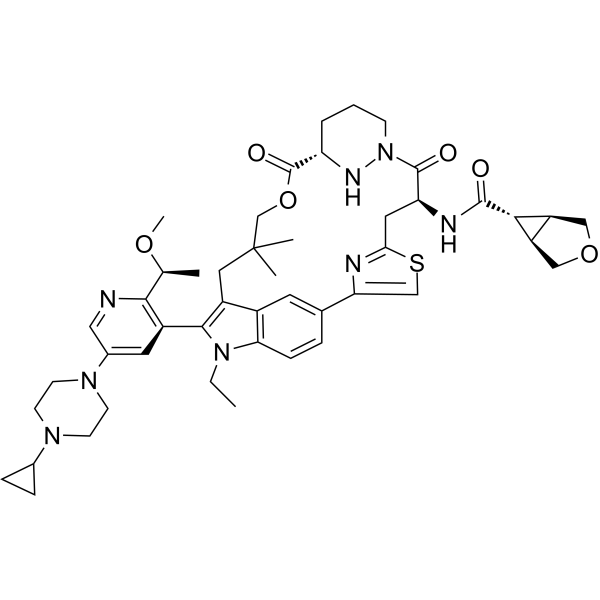
HY-156498
RMC-7977RAS inhibitor -
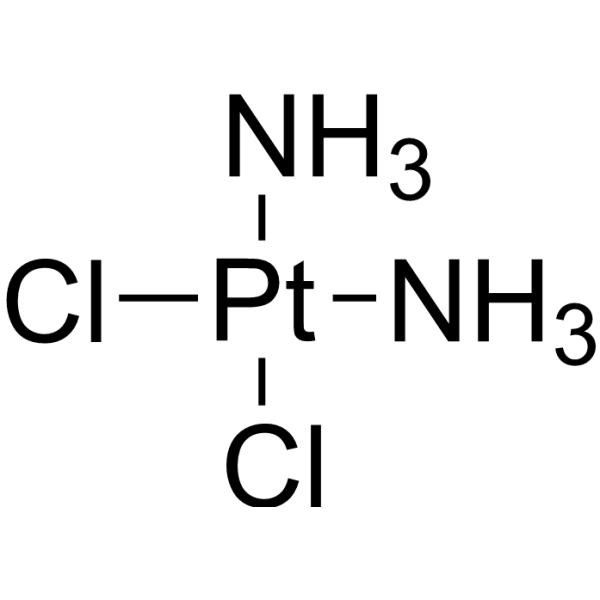
HY-17394
CisplatinDNA Alkylator -
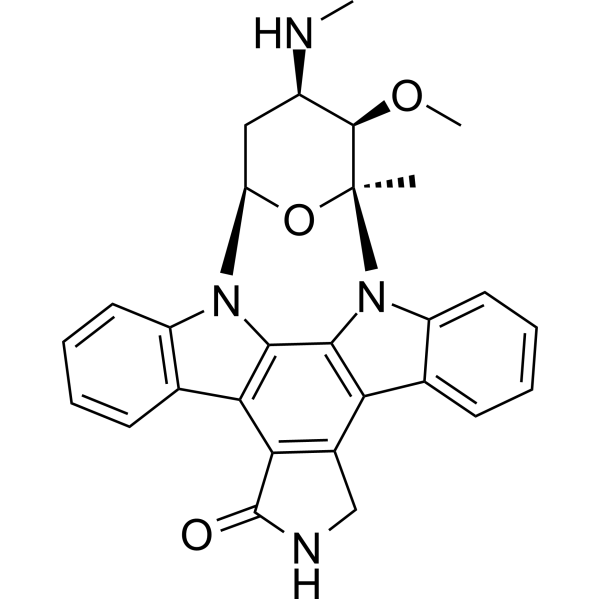
HY-15141
StaurosporinePKC/PKA Inhibitor -
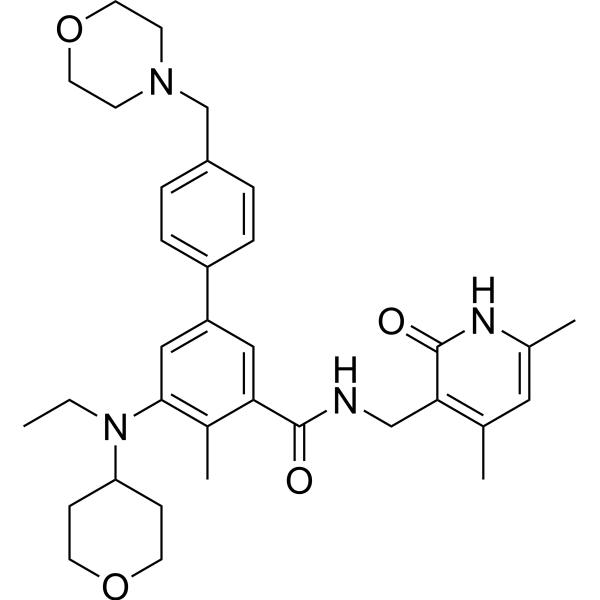
HY-13803
TazemetostatEZH2 Inhibitor -
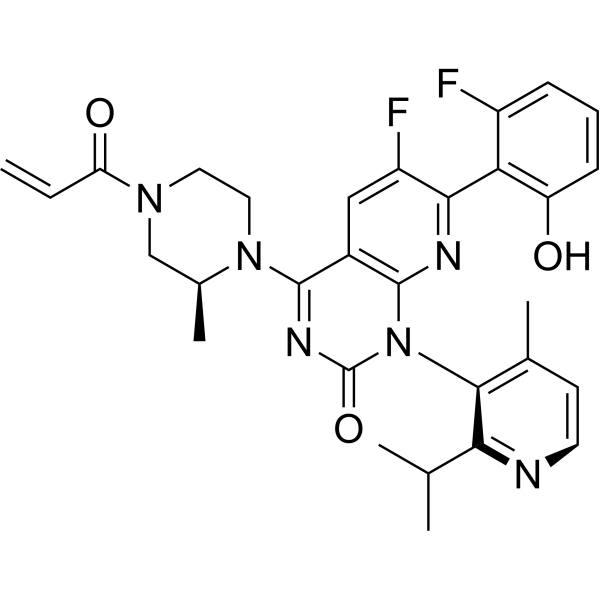
HY-114277
SotorasibKRAS G12C Inhibitor -
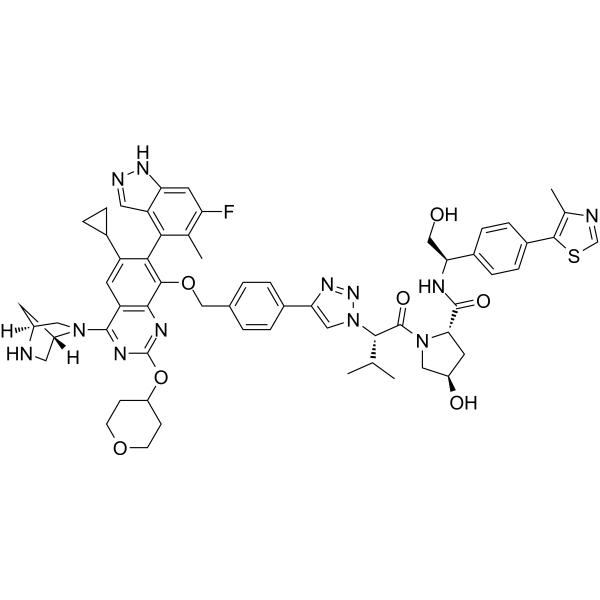
HY-148273
SetidegrasibKRAS G12D PROTAC Degrader -

HY-173632
AMG410KRAS Inhibitor -
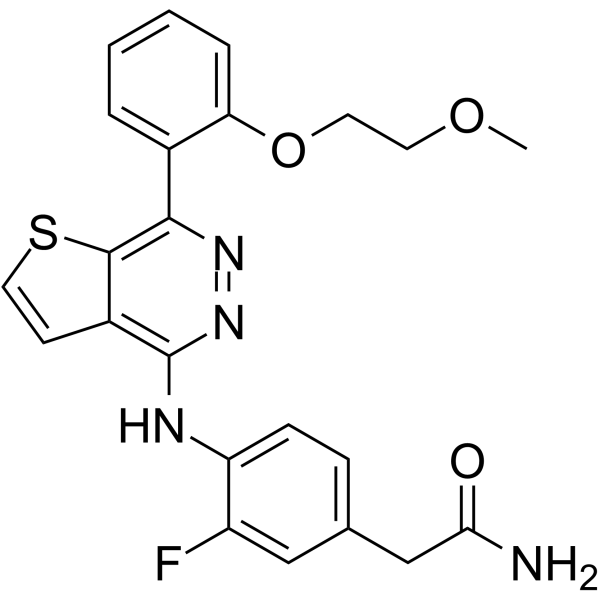
HY-128574
D927GLUT4 Translocation Activator


Biological Activity
Description
IC50 & Target
|
KRas G12V |
In Vitro
RMC-5127 (10-11 M to 10-6 M) potently disrupts KRASG12V-RAF binding in a cellular NanoBRET assay with a median EC50 of 2.1 nM and 93% median maximum inhibition, demonstrating 26-fold selectivity over K/N/HRAS wildtype[1].
RMC-5127 (10-12 M to 10-6 M) potently inhibits MAPK pathway activity in CAPAN-1 (KRASG12V) cells with an IC50 of 0.6 nM for pERK inhibition[1].
RMC-5127 suppresses RAS pathway activity, inhibits proliferation, and induces apoptosis in a panel of KRASG12V mutant human cancer cells, with a median maximum proliferation inhibition of 93%, while only causing submaximal inhibition in K/N/HRAS wildtype cancer cells[1].
MedChemExpress (MCE) has not independently confirmed the accuracy of these methods. They are for reference only.
Parmacokinetics
| Species | Dose | Route | Brain Concentration |
|---|---|---|---|
| Mice[1] | 100 mg/kg | p.o. | 568 nM |
In Vivo
RMC-5127 (3-200 mg/kg; p.o.; single dose) achieves dose-dependent exposure in blood and NCI-H441 KRASG12V/WT tumors, with MAPK pathway inhibition (measured by DUSP6 mRNA suppression) having an EC50 of 157 nM[1].
RMC-5127 (100 mg/kg; p.o.; once daily; 7 days) achieves measurable brain exposure in naive BALB/c mice, with a brain-to-blood concentration ratio of 0.14 at 4 hours post-last dose[1].
RMC-5127 (100-200 mg/kg; p.o.; once daily; up to 70 days) drives durable anti-tumor activity in intracranial NCI-H441-Luc KRASG12V/WT NSCLC xenografts, with profound tumor regression achieved at a dose of 200 mg/kg once daily[1].
MedChemExpress (MCE) has not independently confirmed the accuracy of these methods. They are for reference only.
-
Animal Model:Immunodeficient mice (n=3 per time point)[1]
-
Dosage:3 mg/kg; 10 mg/kg; 30 mg/kg; 100 mg/kg; 200 mg/kg
-
Administration:p.o.; single dose
-
Result:Demonstrated dose-dependent exposure in both blood and tumor, with compound elimination slower in tumors than in blood.\nInduced dose-dependent inhibition of DUSP6 mRNA expression in tumors, with an EC50 of 157 nM interpolated from the PK/PD relationship curve.
-
Animal Model:BALB/c mice (naive, n=3 per time point)[1]
-
Dosage:100 mg/kg
-
Administration:p.o.; once daily; 7 days
-
Result:Achieved total brain concentration of 568 nM, with a brain-to-blood concentration ratio of 0.14 at 4 hours post-last dose.\nMaintained measurable brain exposure at 24 hours post-last dose, with concentration levels similar to those seen at 4 hours post-last dose in tumor-bearing mice given a single 100 mg/kg dose.
Clinical Trial
| NCT Number | Sponsor | Condition | Start Date |
Phase

|
|---|---|---|---|---|
| NCT01329991 | Plexxikon| | 2011-05 | PHASE1 |


Chemical Information
-
CAS No. 3082166-76-2
-
Appearance Solid
-
Molecular Weight 1062.33
-
Formula C57H75N9O9S
-
Color White to off-white
-
SMILES
C[C@H](OC)C1=[C@@]([C@@]2=C(CC(C)(C)COC([C@H]3NN(C([C@@H](NC([C@H]4OC[C@@H]4C)=O)[C@@H]5N6CC7(COC7)C6)=O)C8CC3C8)=O)C9=C(C=CC(C%10=CSC5=N%10)=C9)N2CCOC%11CCOCC%11)C=C(N%12CCN(C%13CC%13)CC%12)C=N1
-
Shipping
Room temperature in continental US; may vary elsewhere.
-
Storage
Powder -20°C 3 years 4°C 2 years In solvent -80°C 6 months -20°C 1 month


Solvent & Solubility
In Vitro:
DMSO : 100 mg/mL (94.13 mM; Need ultrasonic; Hygroscopic DMSO has a significant impact on the solubility of product, please use newly opened DMSO)
Please refer to the solubility information to select the appropriate solvent. Once prepared, please aliquot and store the solution to prevent product inactivation from repeated freeze-thaw cycles.
Storage method and period of stock solution: -80°C, 6 months; -20°C, 1 month. When stored at -80°C, please use it within 6 months. When stored at -20°C, please use it within 1 month.
Please refer to the solubility information to select the appropriate solvent. Once prepared, please aliquot and store the solution to prevent product inactivation from repeated freeze-thaw cycles.
Storage method and period of stock solution: -80°C, 6 months; -20°C, 1 month. When stored at -80°C, please use it within 6 months. When stored at -20°C, please use it within 1 month.
Concentration (start) × Volume (start) = Concentration (final) × Volume (final)
In Vivo:
Select the appropriate dissolution method based on your experimental animal and administration route.
- For the following dissolution methods, please ensure to first prepare a clear stock solution using an In Vitro approach and then sequentially add co-solvents:
- To ensure reliable experimental results, the clarified stock solution can be appropriately stored based on storage conditions. As for the working solution for In Vivo experiments, it is recommended to prepare freshly and use it on the same day.
- The percentages shown for the solvents indicate their volumetric ratio in the final prepared solution. If precipitation or phase separation occurs during preparation, heat and/or sonication can be used to aid dissolution.
Add each solvent one by one: 10% DMSO 40% PEG300 5% Tween-80 45% Saline
Solubility: ≥ 2.5 mg/mL (2.35 mM); Clear solution
This protocol yields a clear solution of ≥ 2.5 mg/mL (saturation unknown).
Taking 1 mL working solution as an example, add 100 μL DMSO stock solution (25.0 mg/mL) to 400 μL PEG300, and mix evenly; then add 50 μL Tween-80 and mix evenly; then add 450 μL Saline to adjust the volume to 1 mL.
Preparation of Saline: Dissolve 0.9 g sodium chloride in ddH₂O and dilute to 100 mL to obtain a clear Saline solution.
In Vivo Dissolution Calculator
Please enter the basic information of animal experiments:
-
-
-
-
Recommended: Prepare an additional quantity of animals to account for potential losses during experiments.
Please enter your animal formula composition:
-
%DMSO +
Recommended: Keep the proportion of DMSO in working solution below 2% if your animal is weak.
-
%+
-
+%Tween-80 + +
-
%Saline +
The co-solvents required include: DMSO, . All of co-solvents are available by MedChemExpress (MCE). , Tween 80. All of co-solvents are available by MedChemExpress (MCE).
Working solution concentration: 0.22 mg/mL
Method for preparing stock solution: mg drug dissolved in μL DMSO. Stock solution concentration: mg/mL.
1. Take μL DMSO stock solution;
2. Add μL .
μL , mix evenly;
3. Then add μL Tween 80, mix evenly;
4. Then add μL
Please ensure that the stock solution in the first step is dissolved to a clear state, and add co-solvents in sequence. You can use ultrasonic heating (ultrasonic cleaner, recommended frequency 20-40 kHz), vortexing, etc. to assist dissolution.


Purity & Documentation
-
Data Sheet (284 KB)
-
SDS (251 KB)
- English - EN (251 KB)
- Français - FR (251 KB)
- Deutsch - DE (251 KB)
- Norwegian - NO (251 KB)
- Español - ES (251 KB)
- Swedish - SV (251 KB)
- Italian - IT (251 KB)
- Korean - KR (251 KB)
- Portuguese - PT (251 KB)
-
Handling Instructions (2659 KB)
References


Complete Stock Solution Preparation Table
Please refer to the solubility information to select the appropriate solvent. Once prepared, please aliquot and store the solution to prevent product inactivation from repeated freeze-thaw cycles.
Storage method and period of stock solution: -80°C, 6 months; -20°C, 1 month. When stored at -80°C, please use it within 6 months. When stored at -20°C, please use it within 1 month.
| Optional Solvent | Concentration Solvent Mass | 1 mg | 5 mg | 10 mg | 25 mg |
|---|---|---|---|---|---|
| DMSO | 1 mM | 0.9413 mL | 4.7066 mL | 9.4133 mL | 23.5332 mL |
| 5 mM | 0.1883 mL | 0.9413 mL | 1.8827 mL | 4.7066 mL | |
| 10 mM | 0.0941 mL | 0.4707 mL | 0.9413 mL | 2.3533 mL | |
| 15 mM | 0.0628 mL | 0.3138 mL | 0.6276 mL | 1.5689 mL | |
| 20 mM | 0.0471 mL | 0.2353 mL | 0.4707 mL | 1.1767 mL | |
| 25 mM | 0.0377 mL | 0.1883 mL | 0.3765 mL | 0.9413 mL | |
| 30 mM | 0.0314 mL | 0.1569 mL | 0.3138 mL | 0.7844 mL | |
| 40 mM | 0.0235 mL | 0.1177 mL | 0.2353 mL | 0.5883 mL | |
| 50 mM | 0.0188 mL | 0.0941 mL | 0.1883 mL | 0.4707 mL | |
| 60 mM | 0.0157 mL | 0.0784 mL | 0.1569 mL | 0.3922 mL | |
| 80 mM | 0.0118 mL | 0.0588 mL | 0.1177 mL | 0.2942 mL |


RMC-5127 Related Classifications
HY-173629 Related Classifications
 Powered by Bioz