



Isradipine
Based on 1 publication(s) in Google Scholar
Isradipine (PN 200-110) is an orally active and blood-brain barrier permeability L-type calcium channel blocker. Isradipine, as a powerful peripheral vasodilator, is a dihydropyridine calcium antagonist with selective actions on the heart as well as the peripheral circulation. Isradipine is a potentially viable neuroprotective agent for Parkinson's disease.
Nur für Forschungszwecke. Wir verkaufen nicht an Patienten.
- Reinheit : 99.97%
- CAS. Nr.: 75695-93-1
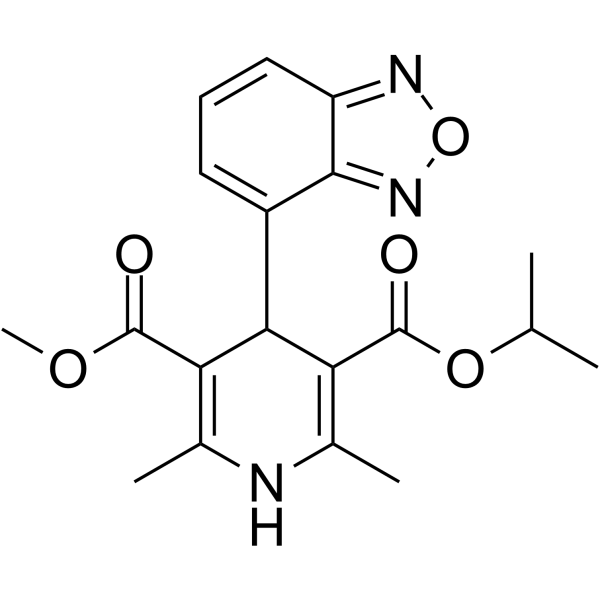
- Formel: C19H21N3O5
- Molecular Weight:371.39
-
Speicherung:Powder -20°C, 3 years , 4°C, 2 years ; In solvent -80°C, 2 years , -20°C, 1 year

To place orders, for customer services and technical support, please contact: MedChemExpress USA
Tel: 609-228-6898 E-mail: [email protected] [email protected]


-
 Biologische Aktivität
-
Chemical Information
-
Lösungsmittel & Löslichkeit
- Protokoll
- Reinheit & Dokumentation
- Verweise
-
 Help & FAQs


-
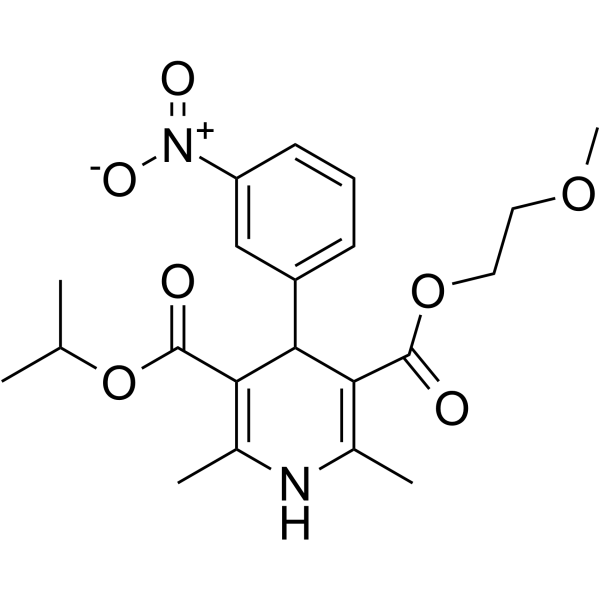
HY-B0265
NimodipineDihydropyridine Calcium Antagonist -
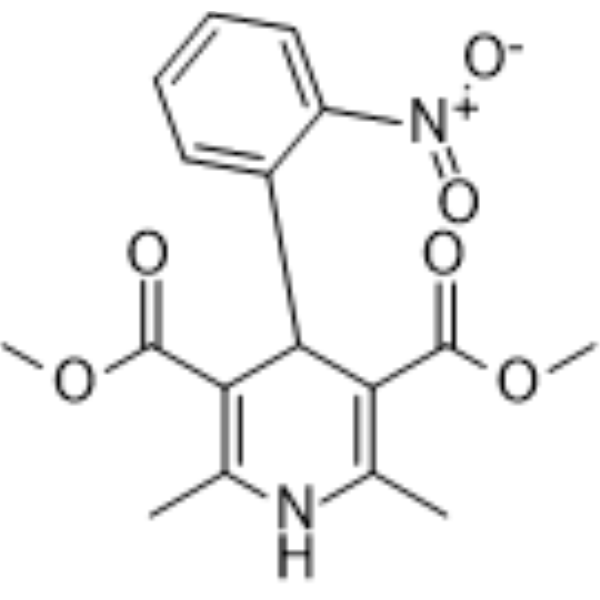
HY-B0284
NifedipineCalcium Channel Antagonist -
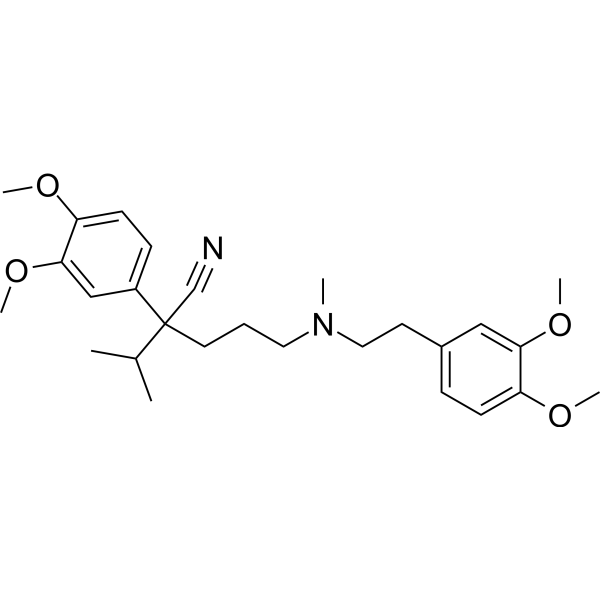
HY-14275
VerapamilCalcium Channel Blocker -
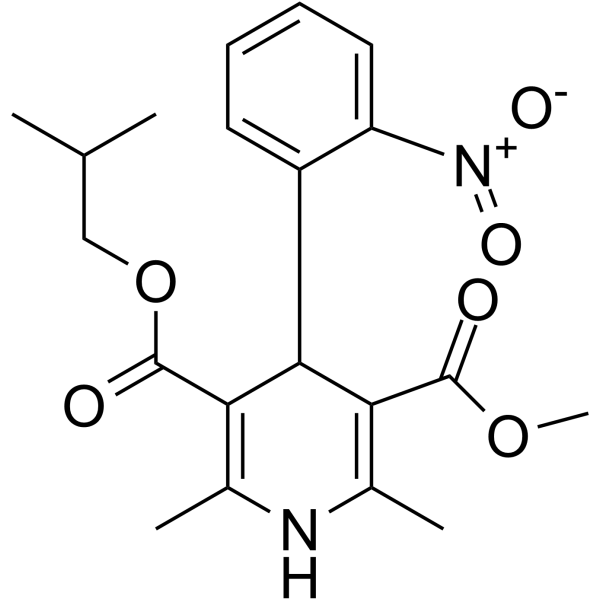
HY-17402
NisoldipineCalcium Channel Blocker -
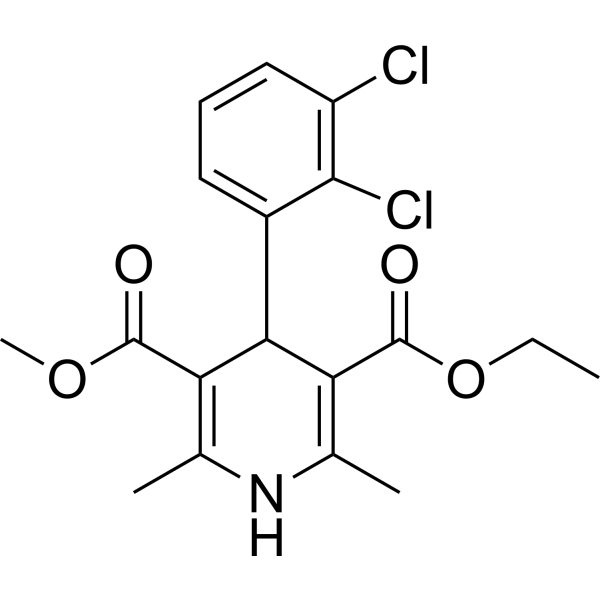
HY-B0309
FelodipineCalcium Channel Antagonist -
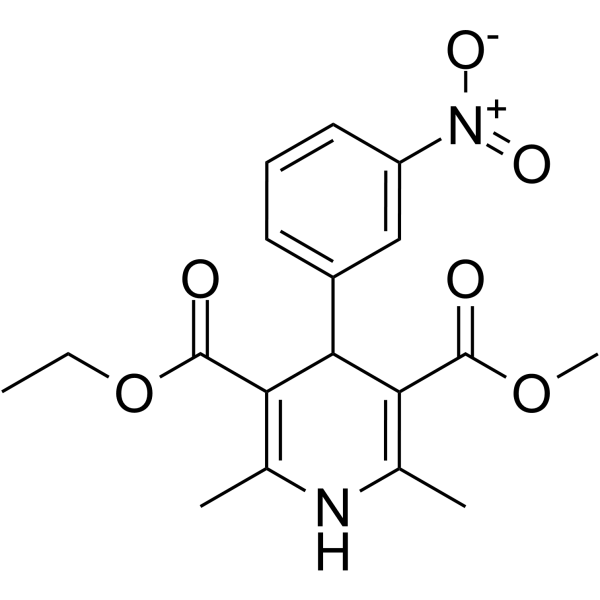
HY-B0424
NitrendipineCalcium Channel Blocker -
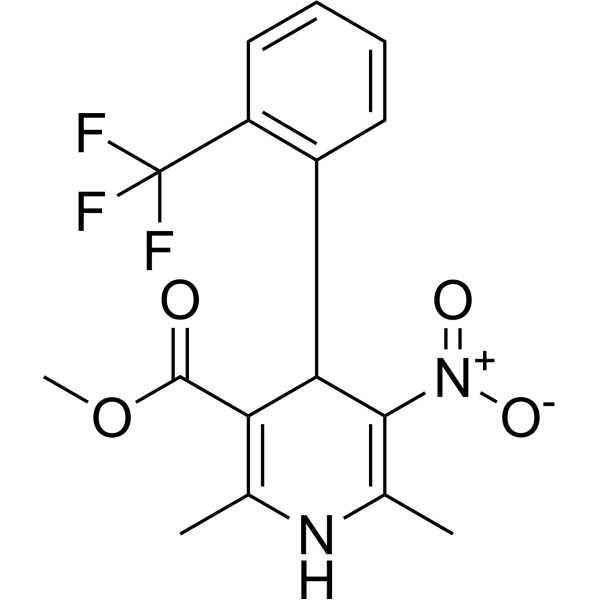
HY-10588
Bay K 8644L-type Ca2+ Channel Agonist -
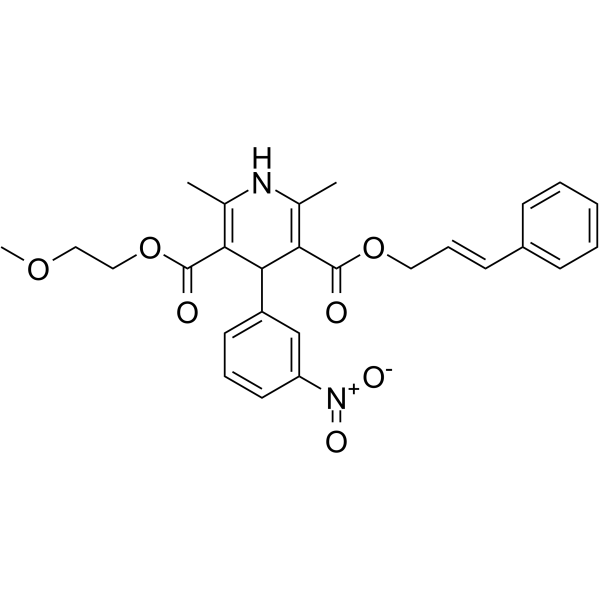
HY-17404
CilnidipineCa Channel Blocker -
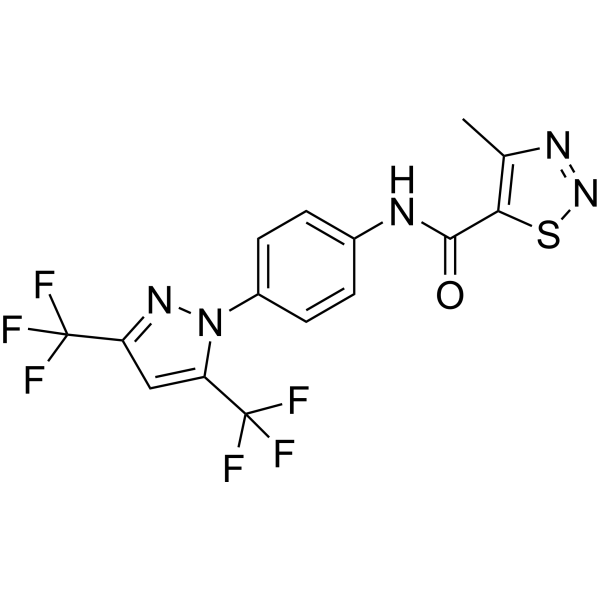
HY-100831
YM-58483CRAC Channel/SOCE Blocker -
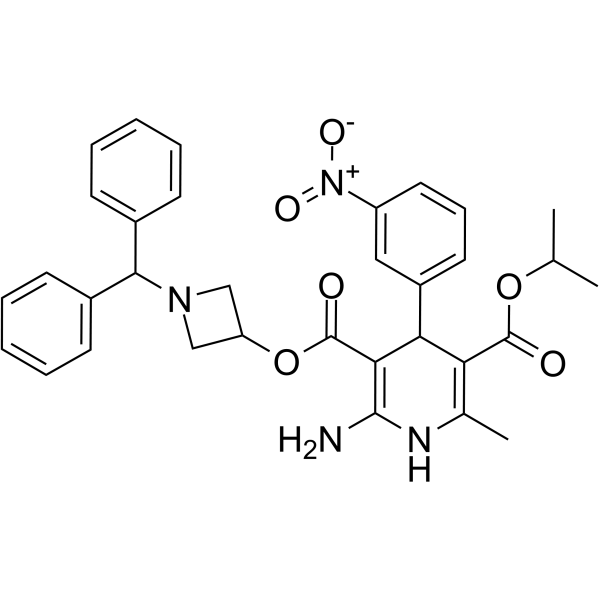
HY-B0023
AzelnidipineCalcium Channel Blocker -
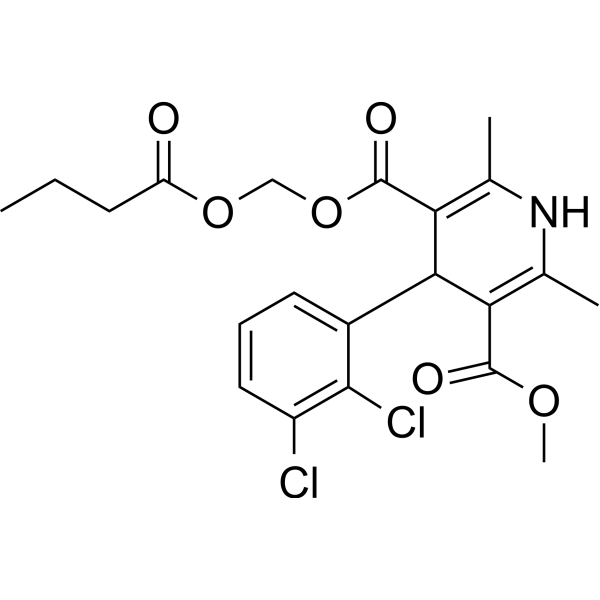
HY-17436
ClevidipineCalcium Channel Antagonist -
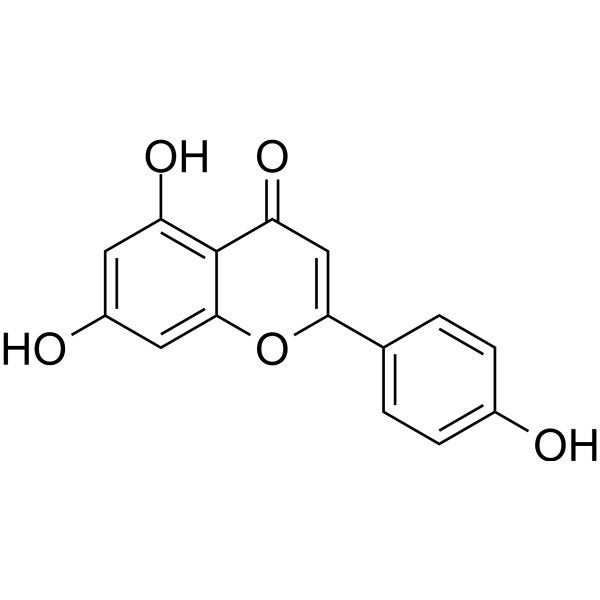
HY-N1201
ApigeninCytochrome P450 Inhibitor
Publications Citing Use of MedChemExpress (MCE) Isradipine
MoreAlle Calcium Channel Isoform-spezifische Produkte anzeigen
More

Biologische Aktivität
Beschreibung
IC50 & Target
|
L-type calcium channel |
Cellular Effect
|
Cell Line

|
Type | Value | Description | References |
|---|---|---|---|---|
| HEK293 | IC50 |
0.0022 μM
Compound: Isradipine
|
Inhibition of L-type calcium channel measured using 2-electrode voltage-clamp in human embryonic kidney cells heterologically expressing alpha-1C subunit
Inhibition of L-type calcium channel measured using 2-electrode voltage-clamp in human embryonic kidney cells heterologically expressing alpha-1C subunit
|
[PMID: 22761000] |
| HEK293 | IC50 |
0.107 μM
Compound: Isradipine
|
Antagonist activity at rabbit voltage-dependent L-type calcium channel Cav1.2alpha-1C expressed in HEK293 cells by FLIPR assay
Antagonist activity at rabbit voltage-dependent L-type calcium channel Cav1.2alpha-1C expressed in HEK293 cells by FLIPR assay
|
[PMID: 23688558] |
| HEK293 | IC50 |
0.221 μM
Compound: Isradipine
|
Antagonist activity at rat voltage-dependent L-type calcium channel Cav1.3alpha-1D expressed in HEK293 cells by FLIPR assay
Antagonist activity at rat voltage-dependent L-type calcium channel Cav1.3alpha-1D expressed in HEK293 cells by FLIPR assay
|
[PMID: 23688558] |
In Vitro
Isradipine has much higher (>40 fold) affinity for Cav1.3 channels as well as good brain bioavailability. Isradipine has nearly equal potency at Cav1.2 and Cav1.3 channels[1].
MedChemExpress (MCE) has not independently confirmed the accuracy of these methods. They are for reference only. Further protocols information, click here.
In Vivo
Isradipine pre-treatment reduces 6-hydroxydopamine induced neurotoxicity at the striatal level. Protective effect of isradipine at the striatal level is dose-dependent as shown from 6 mice. Isradipine pre-treatment increases the number of surviving SNc DA cells after 6-hydroxydopamine induced degeneration. Isradipine is capable of protecting striatal dopaminergic terminals and SNc dopaminergic cell bodies against a slow, progressive insult created by intrastriatal injection of 6-hydroxydopamine[1].
MedChemExpress (MCE) has not independently confirmed the accuracy of these methods. They are for reference only.
-
Animal Model:Rats[3]
-
Dosage:0.1~3 mg/kg
-
Administration:P.o.
-
Result:Sodium excretion increased in a dose-dependent manner.
Clinical Trial
| NCT Number | Sponsor | Condition | Start Date |
Phase
|
|---|---|---|---|---|
| NCT01329991 | Plexxikon| | 2011-05 | PHASE1 |


Chemical Information
-
CAS. Nr. 75695-93-1
-
Appearance Solid
-
Molecular Weight 371.39
-
Formel C19H21N3O5
-
Color Light yellow to yellow
-
SMILES
O=C(C1=C(C)NC(C)=C(C(OC(C)C)=O)C1C2=CC=CC3=NON=C23)OC
-
Synonyms
PN 200-110
-
Versand
Room temperature in continental US; may vary elsewhere.
-
Speicherung
Powder -20°C 3 years 4°C 2 years In solvent -80°C 2 years -20°C 1 year


Publications (1)
-
Journal Impact Factor
-
Most Recent


Lösungsmittel & Löslichkeit
In Vitro:
DMSO : ≥ 100 mg/mL (269.26 mM; Hygroscopic DMSO has a significant impact on the solubility of product, please use newly opened DMSO)
* "≥" means soluble, but saturation unknown.
Please refer to the solubility information to select the appropriate solvent. Once prepared, please aliquot and store the solution to prevent product inactivation from repeated freeze-thaw cycles.
Storage method and period of stock solution: -80°C, 2 years; -20°C, 1 year. When stored at -80°C, please use it within 2 years. When stored at -20°C, please use it within 1 year.
Please refer to the solubility information to select the appropriate solvent. Once prepared, please aliquot and store the solution to prevent product inactivation from repeated freeze-thaw cycles.
Storage method and period of stock solution: -80°C, 2 years; -20°C, 1 year. When stored at -80°C, please use it within 2 years. When stored at -20°C, please use it within 1 year.
Konzentration (Stammlösung) × Volumen (Stammlösung) = Konzentration (Ziellösung) × Volumen (Ziellösung)
In Vivo:
Select the appropriate dissolution method based on your experimental animal and administration route.
- For the following dissolution methods, please ensure to first prepare a clear stock solution using an In Vitro approach and then sequentially add co-solvents:
- To ensure reliable experimental results, the clarified stock solution can be appropriately stored based on storage conditions. As for the working solution for In Vivo experiments, it is recommended to prepare freshly and use it on the same day.
- The percentages shown for the solvents indicate their volumetric ratio in the final prepared solution. If precipitation or phase separation occurs during preparation, heat and/or sonication can be used to aid dissolution.
Add each solvent one by one: 10% DMSO 40% PEG300 5% Tween-80 45% Saline
Solubility: ≥ 2.5 mg/mL (6.73 mM); Clear solution
This protocol yields a clear solution of ≥ 2.5 mg/mL (saturation unknown).
Taking 1 mL working solution as an example, add 100 μL DMSO stock solution (25.0 mg/mL) to 400 μL PEG300, and mix evenly; then add 50 μL Tween-80 and mix evenly; then add 450 μL Saline to adjust the volume to 1 mL.
Preparation of Saline: Dissolve 0.9 g sodium chloride in ddH₂O and dilute to 100 mL to obtain a clear Saline solution.
Add each solvent one by one: 10% DMSO 90% (20% SBE-β-CD in Saline)
Solubility: ≥ 2.5 mg/mL (6.73 mM); Clear solution
This protocol yields a clear solution of ≥ 2.5 mg/mL (saturation unknown).
Taking 1 mL working solution as an example, add 100 μL DMSO stock solution (25.0 mg/mL) to 900 μL 20% SBE-β-CD in Saline, and mix evenly.
Preparation of 20% SBE-β-CD in Saline (4°C, storage for one week): 2 g SBE-β-CD powder is dissolved in 10 mL Saline, completely dissolve until clear.
In Vivo Dissolution Calculator
Please enter the basic information of animal experiments:
-
-
-
-
Recommended: Prepare an additional quantity of animals to account for potential losses during experiments.
Please enter your animal formula composition:
-
%DMSO +
Recommended: Keep the proportion of DMSO in working solution below 2% if your animal is weak.
-
%+
-
+%Tween-80 + +
-
%Saline +
The co-solvents required include: DMSO, . All of co-solvents are available by MedChemExpress (MCE). , Tween 80. All of co-solvents are available by MedChemExpress (MCE).
Working solution concentration: 0.22 mg/mL
Method for preparing stock solution: mg drug dissolved in μL DMSO. Stock solution concentration: mg/mL.
1. Take μL DMSO stock solution;
2. Add μL .
μL , mix evenly;
3. Then add μL Tween 80, mix evenly;
4. Then add μL
Please ensure that the stock solution in the first step is dissolved to a clear state, and add co-solvents in sequence. You can use ultrasonic heating (ultrasonic cleaner, recommended frequency 20-40 kHz), vortexing, etc. to assist dissolution.

Protokoll
-
Human pluripotent stem cell midbrain dopaminergic neuron differentiation
Human pluripotent stem cells are directed toward midbrain dopaminergic neurons by first inducing a neural floor-plate-like progenitor state, then patterning cells with ventralizing SHH signaling and midbrain/WNT-FGF cues, and finally maturing progenitors into neurons expressing dopaminergic markers such as TH, NURR1/NR4A2, PITX3, DAT/SLC6A3, VMAT2/SLC18A2, GIRK2/KCNJ6, FOXA2, LMX1A, and EN1. The main readouts are loss of pluripotency, acquisition of FOXA2+/LMX1A+ midbrain floor-plate progenitors, emergence of βIII-tubulin+/MAP2+ neurons, and production of TH+ dopaminergic neurons with molecular, dopamine-release, and electrophysiological features of midbrain dopaminergic identity.
-
Transepithelial/transendothelial electrical resistance assay
TEER measures electrical resistance across epithelial or endothelial monolayers cultured on permeable supports, and the readout reflects ionic conductance through the cell barrier, especially the paracellular pathway regulated by junctional integrity. TEER can be measured without destroying the monolayer and is commonly used before or during transport, permeability, barrier-disruption, and barrier-maturation experiments. TEER values are influenced by biological maturation and technical conditions; reported factors include temperature, medium formulation, passage number, electrode geometry, membrane properties, and junctional length during early monolayer maturation. Therefore, TEER should be interpreted with blank-insert subtraction, area normalization, repeated readings, and, when possible, orthogonal barrier readouts such as FITC-dextran flux or tight-junction staining.


Reinheit & Dokumentation
-
Data Sheet (278 KB)
-
SDS (393 KB)
- English - EN (393 KB)
- Français - FR (393 KB)
- Deutsch - DE (393 KB)
- Norwegian - NO (393 KB)
- Español - ES (393 KB)
- Swedish - SV (393 KB)
- Italian - IT (393 KB)
- Korean - KR (393 KB)
- Portuguese - PT (393 KB)
-
Handling Instructions (2659 KB)
Verweise
[1]. Ilijic E, et al. The L-type channel antagonist isradipine is neuroprotective in a mouse model of Parkinson's disease. Neurobiol Dis. 2011;43(2):364-371. [Content Brief]
[2]. Campbell CA, et al. Effects of isradipine, an L-type calcium channel blocker on permanent and transient focal cerebral ischemia in spontaneously hypertensive rats. Exp Neurol. 1997;148(1):45-50. [Content Brief]
[3]. Hof RP, et al. Selective effects of PN 200-110 (isradipine) on the peripheral circulation and the heart. Am J Cardiol. 1987;59(3):30B-36B. [Content Brief]


Complete Stock Solution Preparation Table
Please refer to the solubility information to select the appropriate solvent. Once prepared, please aliquot and store the solution to prevent product inactivation from repeated freeze-thaw cycles.
Storage method and period of stock solution: -80°C, 2 years; -20°C, 1 year. When stored at -80°C, please use it within 2 years. When stored at -20°C, please use it within 1 year.
| Optional Solvent | Concentration Solvent Mass | 1 mg | 5 mg | 10 mg | 25 mg |
|---|---|---|---|---|---|
| DMSO | 1 mM | 2.6926 mL | 13.4629 mL | 26.9259 mL | 67.3147 mL |
| 5 mM | 0.5385 mL | 2.6926 mL | 5.3852 mL | 13.4629 mL | |
| 10 mM | 0.2693 mL | 1.3463 mL | 2.6926 mL | 6.7315 mL | |
| 15 mM | 0.1795 mL | 0.8975 mL | 1.7951 mL | 4.4876 mL | |
| 20 mM | 0.1346 mL | 0.6731 mL | 1.3463 mL | 3.3657 mL | |
| 25 mM | 0.1077 mL | 0.5385 mL | 1.0770 mL | 2.6926 mL | |
| 30 mM | 0.0898 mL | 0.4488 mL | 0.8975 mL | 2.2438 mL | |
| 40 mM | 0.0673 mL | 0.3366 mL | 0.6731 mL | 1.6829 mL | |
| 50 mM | 0.0539 mL | 0.2693 mL | 0.5385 mL | 1.3463 mL | |
| 60 mM | 0.0449 mL | 0.2244 mL | 0.4488 mL | 1.1219 mL | |
| 80 mM | 0.0337 mL | 0.1683 mL | 0.3366 mL | 0.8414 mL | |
| 100 mM | 0.0269 mL | 0.1346 mL | 0.2693 mL | 0.6731 mL |


Isradipine Related Classifications
HY-B0233 Related Classifications
 Powered by Bioz