



Clorgyline
Based on 8 publication(s) in Google Scholar
Clorgyline (M&B 9302) is a selective, irreversible monoamine oxidase A (MAO-A) inhibitor that can cross the blood-brain barrier and exhibits activity against the 5-HT Receptor at very high doses. Clorgyline regulates monoamine neurotransmitter levels, the release of dopamine and acetylcholine, the uptake and effects of Tyramine (HY-W007606), noradrenergic function, circadian locomotor activity rhythms, feeding behavior, and body weight. Clorgyline induces tumor-suppressive transcriptional programs, secretory differentiation, androgen signaling regulation, Bcl-2 expression, and radioprotective effects in non-malignant cells. Clorgyline is used in the research of high-grade prostate cancer, Huntington's disease, major affective disorder, radiation-induced normal tissue toxicity, and obesity.
Nur für Forschungszwecke. Wir verkaufen nicht an Patienten.
- Reinheit : 99.76%
- CAS. Nr.: 17780-72-2
- Formel: C13H15Cl2NO
- Molecular Weight:272.17
-
Speicherung:Pure form -20°C, 3 years ; In solvent -80°C, 6 months , -20°C, 1 month


To place orders, for customer services and technical support, please contact: MedChemExpress USA
Tel: 609-228-6898 E-mail: [email protected] [email protected]


-
 Biologische Aktivität
-
Chemical Information
-
Lösungsmittel & Löslichkeit
- Protokoll
- Reinheit & Dokumentation
- Verweise
-
 Help & FAQs


-
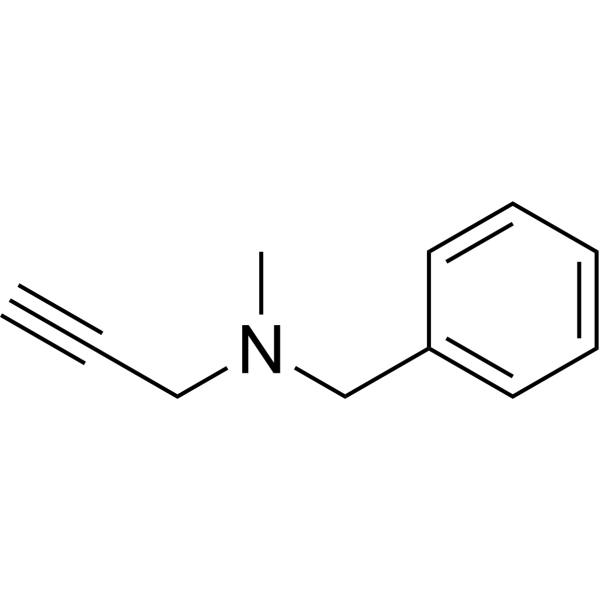
HY-A0091A
PargylineMonoamine Oxidase Inhibitor -
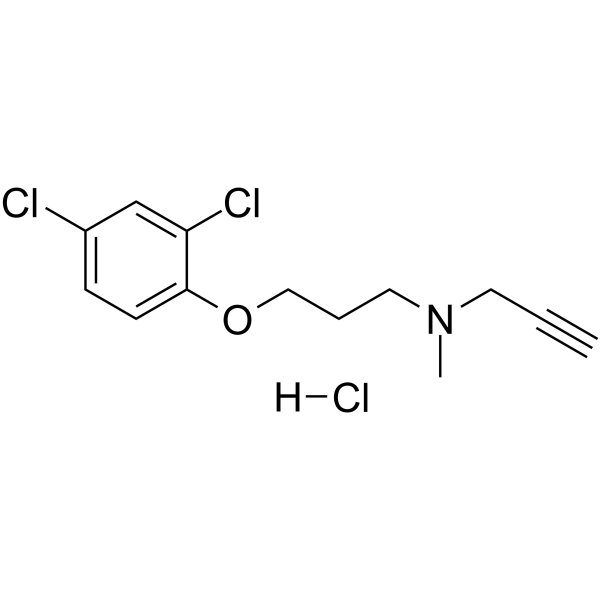
HY-14197A
Clorgyline hydrochlorideMAO-A Inhibitor -
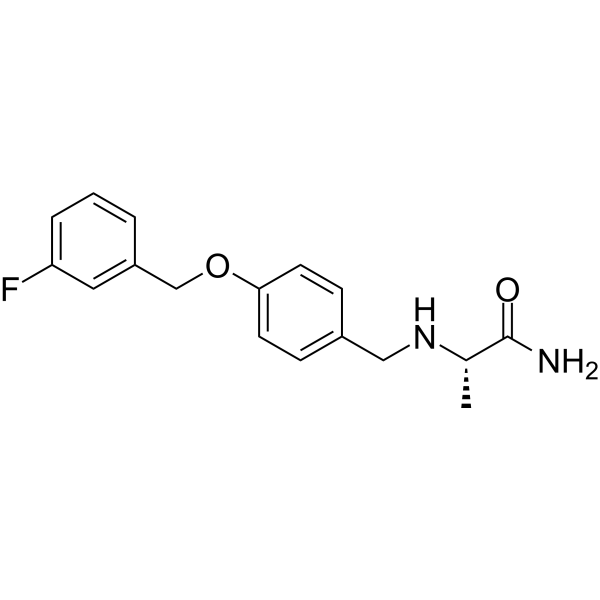
HY-70057
SafinamideMAO-B Inhibitor -
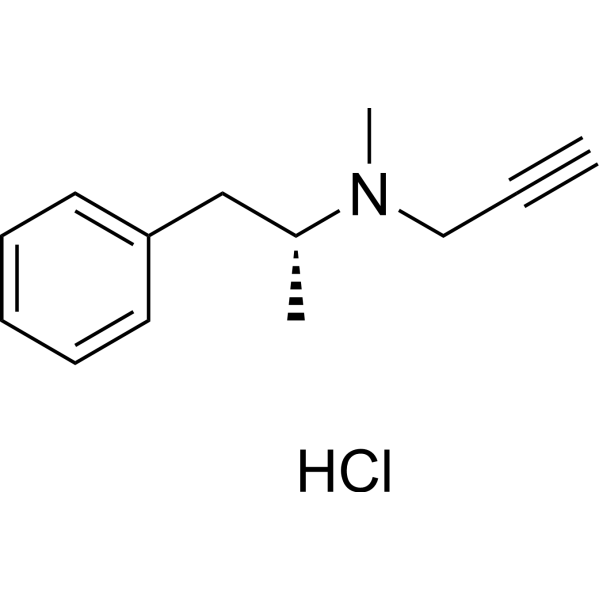
HY-14199
Selegiline hydrochlorideMAO-B Inhibitor -
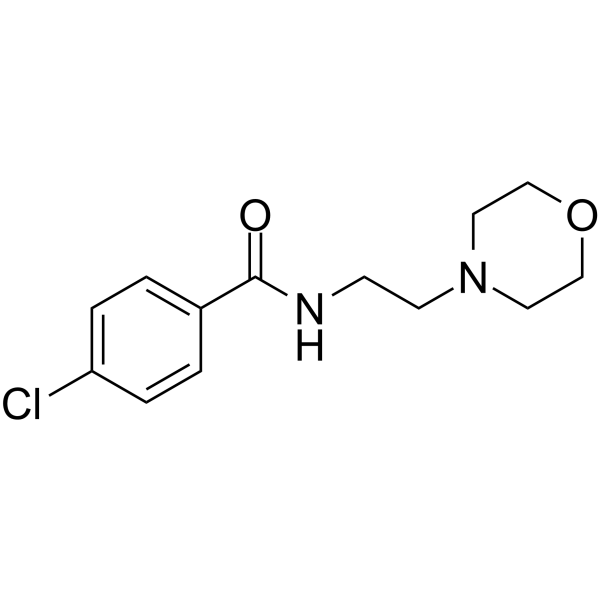
HY-B0534
MoclobemideMAOI Antidepressant -
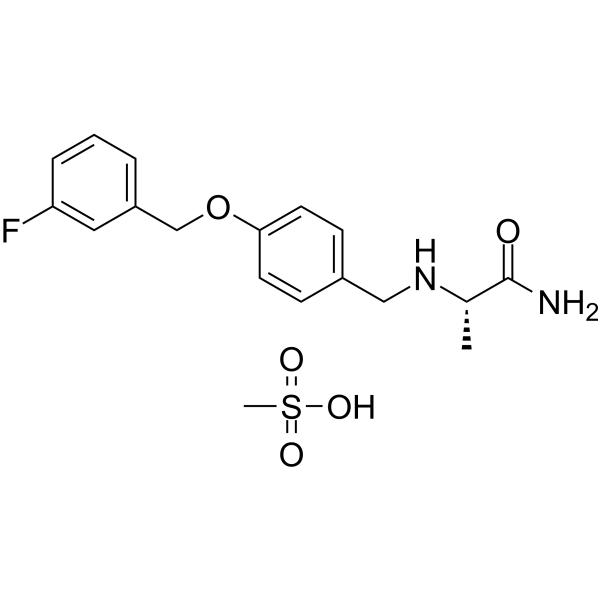
HY-70057A
Safinamide mesylateMAO-B Inhibitor -

HY-B0451
DopamineCatecholamine Neurotransmitter
Publications Citing Use of MedChemExpress (MCE) Clorgyline
More- J Immunother Cancer. 2025 Mar 22;13(3):e010555. [Abstract]
- Free Radic Biol Med. 2026 Mar 16:246:316-333. [Abstract]
- Cell Rep. 2022 Dec 13;41(11):111827. [Abstract]
- FASEB J. 2021 Jun;35(6):e21652. [Abstract]
- Chembiochem. 2025 Oct 28:e202500462. [Abstract]
- Biochem Biophys Res Commun. 2022 May 28;606:135-141. [Abstract]
- Sci Total Environ. 2023 Dec 15:904:166688. [Abstract]
- Immunomedicine. 2022 Dec;2(2):e1041. [Abstract]
 Customer Validation & Images

-
In Vivo Efficacy Study

-
Flow Cytometry

-
ELISA

-
Cell Imaging/Staining

-
Bio/Physico-chemical Assay

Alle 5-HT Receptor Isoform-spezifische Produkte anzeigen
More

Biologische Aktivität
Beschreibung
|
MAO-A |
Bcl-2 |
Cellular Effect
|
Cell Line

|
Type | Value | Description | References |
|---|---|---|---|---|
| BTI-TN-5B1-4 | IC50 |
0.004 μM
Compound: clorgyline
|
Inhibition of human recombinant MAOA expressed in BTI-TN-5B1-4 cells assessed as effect on H2O2 production from para-tyramine by fluorimetric method
Inhibition of human recombinant MAOA expressed in BTI-TN-5B1-4 cells assessed as effect on H2O2 production from para-tyramine by fluorimetric method
|
[PMID: 19267475] |
| BTI-TN-5B1-4 | IC50 |
61.35 μM
Compound: clorgyline
|
Inhibition of human recombinant MAOB expressed in BTI-TN-5B1-4 cells assessed as effect on H2O2 production from para-tyramine by fluorimetric method
Inhibition of human recombinant MAOB expressed in BTI-TN-5B1-4 cells assessed as effect on H2O2 production from para-tyramine by fluorimetric method
|
[PMID: 19267475] |
| BTI-TN-5B1-4 | IC50 |
0.004 μM
Compound: clorgyline
|
Inhibition of human recombinant MAOA expressed in BTI-TN-5B1-4 cells by para-tyramine oxidation assay
Inhibition of human recombinant MAOA expressed in BTI-TN-5B1-4 cells by para-tyramine oxidation assay
|
[PMID: 20045650] |
| BTI-TN-5B1-4 | IC50 |
61.35 μM
Compound: clorgyline
|
Inhibition of human recombinant MAOB expressed in BTI-TN-5B1-4 cells by para-tyramine oxidation assay
Inhibition of human recombinant MAOB expressed in BTI-TN-5B1-4 cells by para-tyramine oxidation assay
|
[PMID: 20045650] |
| BTI-TN-5B1-4 | IC50 |
5 nM
Compound: clorgyline
|
Inhibition of human recombinant MAOA expressed in baculovirus infected BTI-TN-5B1-4 insect cells assessed as hydrogen peroxide production from p-tyramine by amplex red assay
Inhibition of human recombinant MAOA expressed in baculovirus infected BTI-TN-5B1-4 insect cells assessed as hydrogen peroxide production from p-tyramine by amplex red assay
|
[PMID: 20579890] |
| BTI-TN-5B1-4 | IC50 |
61356 nM
Compound: clorgyline
|
Inhibition of human recombinant MAOB expressed in baculovirus infected BTI-TN-5B1-4 insect cells assessed as hydrogen peroxide production from p-tyramine by amplex red assay
Inhibition of human recombinant MAOB expressed in baculovirus infected BTI-TN-5B1-4 insect cells assessed as hydrogen peroxide production from p-tyramine by amplex red assay
|
[PMID: 20579890] |
| BTI-TN-5B1-4 | IC50 |
0.00446 μM
Compound: clorgyline
|
Inhibition of human recombinant MAOA expressed in baculovirus infected insect BTI-TN-5B1-4 cells assessed as production of hydrogen peroxide from p-tyramine by amplex red assay
Inhibition of human recombinant MAOA expressed in baculovirus infected insect BTI-TN-5B1-4 cells assessed as production of hydrogen peroxide from p-tyramine by amplex red assay
|
[PMID: 20715818] |
| BTI-TN-5B1-4 | IC50 |
61.35 μM
Compound: clorgyline
|
Inhibition of human recombinant MAOB expressed in baculovirus infected insect BTI-TN-5B1-4 cells assessed as production of hydrogen peroxide from p-tyramine by amplex red assay
Inhibition of human recombinant MAOB expressed in baculovirus infected insect BTI-TN-5B1-4 cells assessed as production of hydrogen peroxide from p-tyramine by amplex red assay
|
[PMID: 20715818] |
| BTI-TN-5B1-4 | IC50 |
4.46 nM
Compound: Clorgyline
|
Inhibition of human recombinant MAO-A expressed in baculovirus infected BTI-TN-5B1-4 insect sells assessed as hydrogen peroxide production by fluorimetric method
Inhibition of human recombinant MAO-A expressed in baculovirus infected BTI-TN-5B1-4 insect sells assessed as hydrogen peroxide production by fluorimetric method
|
[PMID: 21405131] |
| BTI-TN-5B1-4 | IC50 |
61.35 μM
Compound: Clorgyline
|
Inhibition of human recombinant MAO-B expressed in baculovirus infected BTI-TN-5B1-4 insect sells assessed as hydrogen peroxide production by fluorimetric method
Inhibition of human recombinant MAO-B expressed in baculovirus infected BTI-TN-5B1-4 insect sells assessed as hydrogen peroxide production by fluorimetric method
|
[PMID: 21405131] |
| BTI-TN-5B1-4 | IC50 |
4.46 μM
Compound: Clorgyline
|
Inhibition of human recombinant MAO-A expressed in baculovirus infected BTI-TN-5B1-4 cells assessed as production of hydrogen peroxide from p-tyramine after 15 mins by microplate fluorescence assay
Inhibition of human recombinant MAO-A expressed in baculovirus infected BTI-TN-5B1-4 cells assessed as production of hydrogen peroxide from p-tyramine after 15 mins by microplate fluorescence assay
|
[PMID: 21872365] |
| BTI-TN-5B1-4 | IC50 |
61.35 μM
Compound: Clorgyline
|
Inhibition of human recombinant MAO-B expressed in baculovirus infected BTI-TN-5B1-4 cells assessed as production of hydrogen peroxide from p-tyramine after 15 mins by microplate fluorescence assay
Inhibition of human recombinant MAO-B expressed in baculovirus infected BTI-TN-5B1-4 cells assessed as production of hydrogen peroxide from p-tyramine after 15 mins by microplate fluorescence assay
|
[PMID: 21872365] |
| BTI-TN-5B1-4 | IC50 |
0.004 μM
Compound: Clorgyline
|
Inhibition of human recombinant MAOA expressed in baculovirus infected BTI-TN-5B1-4 insect cells assessed as hydrogen peroxide production from p-tyramine after 15 mins by amplex red assay
Inhibition of human recombinant MAOA expressed in baculovirus infected BTI-TN-5B1-4 insect cells assessed as hydrogen peroxide production from p-tyramine after 15 mins by amplex red assay
|
[PMID: 22005185] |
| BTI-TN-5B1-4 | IC50 |
63.41 μM
Compound: Clorgyline
|
Inhibition of human recombinant MAOB expressed in baculovirus infected BTI-TN-5B1-4 insect cells assessed as hydrogen peroxide production from p-tyramine after 15 mins by amplex red assay
Inhibition of human recombinant MAOB expressed in baculovirus infected BTI-TN-5B1-4 insect cells assessed as hydrogen peroxide production from p-tyramine after 15 mins by amplex red assay
|
[PMID: 22005185] |
| BTI-TN-5B1-4 | IC50 |
0.0046 μM
Compound: Clorgyline
|
Inhibition of human recombinant MAO-A expressed in baculovirus infected BTI-TN-5B1-4 insect cells assessed as inhibition of hydrogen peroxide production from p-tryptamine after 15 mins by fluorimetric method
Inhibition of human recombinant MAO-A expressed in baculovirus infected BTI-TN-5B1-4 insect cells assessed as inhibition of hydrogen peroxide production from p-tryptamine after 15 mins by fluorimetric method
|
[PMID: 22222137] |
| BTI-TN-5B1-4 | IC50 |
61.35 μM
Compound: Clorgyline
|
Inhibition of human recombinant MAO-B expressed in baculovirus infected BTI-TN-5B1-4 insect cells assessed as inhibition of hydrogen peroxide production from p-tryptamine after 15 mins by fluorimetric method
Inhibition of human recombinant MAO-B expressed in baculovirus infected BTI-TN-5B1-4 insect cells assessed as inhibition of hydrogen peroxide production from p-tryptamine after 15 mins by fluorimetric method
|
[PMID: 22222137] |
| BTI-TN-5B1-4 | IC50 |
4.46 nM
Compound: C
|
Inhibition of human MAO-A expressed in baculovirus infected BTI-TN-5B1-4 cells using p-tyramine as substrate incubated for 15 mins prior to substrate addition measured for 15 mins by Amplex red assay
Inhibition of human MAO-A expressed in baculovirus infected BTI-TN-5B1-4 cells using p-tyramine as substrate incubated for 15 mins prior to substrate addition measured for 15 mins by Amplex red assay
|
[PMID: 23153812] |
| BTI-TN-5B1-4 | IC50 |
61.35 μM
Compound: C
|
Inhibition of human MAO-B expressed in baculovirus infected BTI-TN-5B1-4 cells using p-tyramine as substrate incubated for 15 mins prior to substrate addition measured for 15 mins by Amplex red assay
Inhibition of human MAO-B expressed in baculovirus infected BTI-TN-5B1-4 cells using p-tyramine as substrate incubated for 15 mins prior to substrate addition measured for 15 mins by Amplex red assay
|
[PMID: 23153812] |
| BTI-TN-5B1-4 | IC50 |
0.0045 μM
Compound: Clorgyline
|
Inhibition of human recombinant microsomal MAO-A expressed in baculovirus-infected insect BTI-TN-5B1-4 cells assessed as p-tyramine conversion to H2O2 by fluorescence assay
Inhibition of human recombinant microsomal MAO-A expressed in baculovirus-infected insect BTI-TN-5B1-4 cells assessed as p-tyramine conversion to H2O2 by fluorescence assay
|
[PMID: 23927971] |
| BTI-TN-5B1-4 | IC50 |
61.35 μM
Compound: Clorgyline
|
Inhibition of human recombinant microsomal MAO-B expressed in baculovirus-infected insect BTI-TN-5B1-4 cells assessed as p-tyramine conversion to H2O2 by fluorescence assay
Inhibition of human recombinant microsomal MAO-B expressed in baculovirus-infected insect BTI-TN-5B1-4 cells assessed as p-tyramine conversion to H2O2 by fluorescence assay
|
[PMID: 23927971] |
| BTI-TN-5B1-4 | IC50 |
4.46 nM
Compound: Clorgyline
|
Inhibition of human recombinant MAO-A expressed in baculovirus-infected BTI-TN-5B1-4 cell microsomes assessed as decrease in H2O2 production using p-tyramine as substrate preincubated for 15 mins by Amplex Red reagent based fluorimetric method
Inhibition of human recombinant MAO-A expressed in baculovirus-infected BTI-TN-5B1-4 cell microsomes assessed as decrease in H2O2 production using p-tyramine as substrate preincubated for 15 mins by Amplex Red reagent based fluorimetric method
|
[PMID: 24746464] |
| BTI-TN-5B1-4 | IC50 |
61.35 μM
Compound: Clorgyline
|
Inhibition of human recombinant MAO-B expressed in baculovirus-infected BTI-TN-5B1-4 cell microsomes assessed as decrease in H2O2 production using p-tyramine as substrate preincubated for 15 mins by Amplex Red reagent based fluorimetric method
Inhibition of human recombinant MAO-B expressed in baculovirus-infected BTI-TN-5B1-4 cell microsomes assessed as decrease in H2O2 production using p-tyramine as substrate preincubated for 15 mins by Amplex Red reagent based fluorimetric method
|
[PMID: 24746464] |
| BTI-TN-5B1-4 | IC50 |
61.35 μM
Compound: Clorgyline
|
Inhibition of human recombinant microsomal MAO-B expressed in baculovirus infected BTI-TN-5B1-4 cells using p-tyramine as substrate assessed as reduction in H2O2 production preincubated for 15 mins followed by substrate addition measured for 15 mins Ample
Inhibition of human recombinant microsomal MAO-B expressed in baculovirus infected BTI-TN-5B1-4 cells using p-tyramine as substrate assessed as reduction in H2O2 production preincubated for 15 mins followed by substrate addition measured for 15 mins Ample
|
[PMID: 27135371] |
| BTI-TN-5B1-4 | IC50 |
4.46 x 10⁻³ μM
Compound: Clorgyline
|
Inhibition of human recombinant microsomal MAO-A expressed in baculovirus infected BTI-TN-5B1-4 cells using p-tyramine as substrate assessed as reduction in H2O2 production preincubated for 15 mins followed by substrate addition measured for 15 mins Ample
Inhibition of human recombinant microsomal MAO-A expressed in baculovirus infected BTI-TN-5B1-4 cells using p-tyramine as substrate assessed as reduction in H2O2 production preincubated for 15 mins followed by substrate addition measured for 15 mins Ample
|
[PMID: 27135371] |
| BTI-TN-5B1-4 | IC50 |
4.46 nM
Compound: Clorgyline
|
Inhibition of human microsomal MAO-A expressed in recombinant baculovirus infected insect BTI-TN-5B1-4 cells assessed as reduction in H2O2 production using p-tyramine as substrate after 15 mins by fluorescence assay
Inhibition of human microsomal MAO-A expressed in recombinant baculovirus infected insect BTI-TN-5B1-4 cells assessed as reduction in H2O2 production using p-tyramine as substrate after 15 mins by fluorescence assay
|
[PMID: 27244485] |
| BTI-TN-5B1-4 | IC50 |
63410 nM
Compound: Clorgyline
|
Inhibition of human microsomal MAO-B expressed in recombinant baculovirus infected insect BTI-TN-5B1-4 cells assessed as reduction in H2O2 production using p-tyramine as substrate after 15 mins by fluorescence assay
Inhibition of human microsomal MAO-B expressed in recombinant baculovirus infected insect BTI-TN-5B1-4 cells assessed as reduction in H2O2 production using p-tyramine as substrate after 15 mins by fluorescence assay
|
[PMID: 27244485] |
| BTI-TN-5B1-4 | IC50 |
4.39 nM
Compound: Clorgyline
|
Inhibition of human recombinant microsomal MAO-A expressed in baculovirus infected BTI-TN-5B1-4 cells assessed as reduction in production of H202 using p-tyramine as substrate incubated for 30 mins followed by substrate addition by horse radish peroxidase
Inhibition of human recombinant microsomal MAO-A expressed in baculovirus infected BTI-TN-5B1-4 cells assessed as reduction in production of H202 using p-tyramine as substrate incubated for 30 mins followed by substrate addition by horse radish peroxidase
|
[PMID: 31151057] |
| BTI-TN-5B1-4 | IC50 |
0.00274 μM
Compound: Clorgyline
|
Inhibition of human microsomal MAO-A expressed in baculovirus infected BTI-TN-5B1-4 cells assessed as reduction in 4-hydroxyquinoline formation using kynuramine as substrate preincubated with substrate for 10 mins followed by enzyme addition by spectropho
Inhibition of human microsomal MAO-A expressed in baculovirus infected BTI-TN-5B1-4 cells assessed as reduction in 4-hydroxyquinoline formation using kynuramine as substrate preincubated with substrate for 10 mins followed by enzyme addition by spectropho
|
[PMID: 31711793] |
| BTI-TN-5B1-4 | IC50 |
2.21 μM
Compound: Clorgyline
|
Inhibition of human microsomal MAO-B expressed in baculovirus infected BTI-TN-5B1-4 cells assessed as reduction in 4-hydroxyquinoline formation using kynuramine as substrate preincubated with substrate for 10 mins followed by enzyme addition by spectropho
Inhibition of human microsomal MAO-B expressed in baculovirus infected BTI-TN-5B1-4 cells assessed as reduction in 4-hydroxyquinoline formation using kynuramine as substrate preincubated with substrate for 10 mins followed by enzyme addition by spectropho
|
[PMID: 31711793] |
| BTI-TN-5B1-4 | IC50 |
4.46 μM
Compound: C
|
Inhibition of human MAO-A expressed in baculovirus infected BTI-TN-5B1-4 insect cells using p-tyramine as substrate assessed as hydrogen peroxide production by fluorimetric method
Inhibition of human MAO-A expressed in baculovirus infected BTI-TN-5B1-4 insect cells using p-tyramine as substrate assessed as hydrogen peroxide production by fluorimetric method
|
10.1039/C0MD00014K |
| BTI-TN-5B1-4 | IC50 |
61.35 μM
Compound: C
|
Inhibition of human MAO-B expressed in baculovirus infected BTI-TN-5B1-4 insect cells using p-tyramine as substrate assessed as hydrogen peroxide production by fluorimetric method
Inhibition of human MAO-B expressed in baculovirus infected BTI-TN-5B1-4 insect cells using p-tyramine as substrate assessed as hydrogen peroxide production by fluorimetric method
|
10.1039/C0MD00014K |
| HEK293 | IC50 |
>500 μM
Compound: Clorgyline
|
Inhibition of human recombinant AChE expressed in HEK293 cells using acetylthiocholine iodide as substrate preincubated for 30 mins followed by substrate addition measured after 30 mins by Ellman's method
Inhibition of human recombinant AChE expressed in HEK293 cells using acetylthiocholine iodide as substrate preincubated for 30 mins followed by substrate addition measured after 30 mins by Ellman's method
|
[PMID: 26471320] |
| HEK293 | IC50 |
>500 μM
Compound: Clorgyline
|
Inhibition of human recombinant BuChE expressed in HEK293 cells using S-butyrylthiocholine iodide as substrate preincubated for 30 mins followed by substrate addition measured after 30 mins by Ellman's method
Inhibition of human recombinant BuChE expressed in HEK293 cells using S-butyrylthiocholine iodide as substrate preincubated for 30 mins followed by substrate addition measured after 30 mins by Ellman's method
|
[PMID: 26471320] |
| LNCaP | CC50 |
51.5 μM
Compound: Clorgyline
|
Cytotoxicity against human LNCaP cells incubated for 3 days by Cell-Titer Glo assay
Cytotoxicity against human LNCaP cells incubated for 3 days by Cell-Titer Glo assay
|
[PMID: 37544256] |
| LNCaP C4-2B | CC50 |
53.5 μM
Compound: Clorgyline
|
Cytotoxicity against human LNCaP C4-2B cells incubated for 3 days by Cell-Titer Glo assay
Cytotoxicity against human LNCaP C4-2B cells incubated for 3 days by Cell-Titer Glo assay
|
[PMID: 37544256] |
| U-251 | IC50 |
136 μM
Compound: 5; Clorgyline
|
Cytotoxicity against human TMZ-resistant U251 cells assessed as inhibition of cell growth incubated for 48 hrs by MTT assay
Cytotoxicity against human TMZ-resistant U251 cells assessed as inhibition of cell growth incubated for 48 hrs by MTT assay
|
[PMID: 35005974] |
| U-251 | IC50 |
175 μM
Compound: 5; Clorgyline
|
Cytotoxicity against human TMZ-sensitive U251 cells assessed as inhibition of cell growth incubated for 48 hrs by MTT assay
Cytotoxicity against human TMZ-sensitive U251 cells assessed as inhibition of cell growth incubated for 48 hrs by MTT assay
|
[PMID: 35005974] |
| U-251 | IC50 |
136 μM
Compound: Clorgyline
|
Antiproliferative activity against human Temozolomide-resistant U-251 cells assessed as inhibition of cell growth measured after 48 hrs by MTT assay
Antiproliferative activity against human Temozolomide-resistant U-251 cells assessed as inhibition of cell growth measured after 48 hrs by MTT assay
|
[PMID: 37172473] |
| U-251 | IC50 |
175 μM
Compound: Clorgyline
|
Antiproliferative activity against human Temozolomide-sensitive U-251 cells assessed as inhibition of cell growth measured after 48 hrs by MTT assay
Antiproliferative activity against human Temozolomide-sensitive U-251 cells assessed as inhibition of cell growth measured after 48 hrs by MTT assay
|
[PMID: 37172473] |
In Vitro
Treatment with Clorgyline (1 μM; 6-96 hr) reduces the clonogenic proliferative capacity of two high-grade prostate cancer cell lines, E-CA-88 and E-CA-90, which is consistent with a pro-differentiation effect[2].
Clorgyline (1 μM; 24-96 hr) upregulates oncogenic pathway suppressors, secretory differentiation markers, and Polycomb-repressed genes, while downregulating EZH2 in E-CA-90 high-grade prostate cancer cells. This confirms that the effects observed in E-CA-88 cells are reproducible in independent primary high-grade prostate cancer cultures[2].
Clorgyline (1 nM; 6 h before irradiation) protects the progeny of irradiated non-malignant HaCaT cells from delayed reproductive death, while its protective effect on the tumorigenic HaCaT-ras and HPV-G cell lines is much weaker, and it reduces the survival rate of the progeny of unirradiated tumor cells[5].
Clorgyline (1 nM; 6 h before irradiation) increases Bcl-2 protein expression in primary normal human urothelial explants[5].
The inhibitory effect of Clorgyline on acetylcholine release from isolated rat striatal brain slices is irreversible after washout[1].
Clorgyline (5 min) enhances dopamine release from striatal synaptosomes in CFY rats within 5 minutes[1].
Clorgyline (5 min pre-incubation) inhibits monoamine oxidase activity in the mouse cerebral cortex in vitro, and the combined use of Clorgyline and Pargyline (HY-A0091A) produces a stronger inhibitory effect than Clorgyline alone[7].
MedChemExpress (MCE) has not independently confirmed the accuracy of these methods. They are for reference only.
-
Cell Line:E-CA-88 primary human high-grade prostate cancer epithelial cells
-
Concentration:1 μM
-
Incubation Time:6, 24, and 96 hr
-
Result:Showed increased expression of all 10 top SAM-selected genes (SAMD9, SLITRK6, RB1CC1, GOLGA4, PHF3, ZNF292, CEP70, CEP290, BRWD1, CHD9) across all time points measured, with average qPCR fold changes of 3.5, 6.5, 5.1, 6.3, 5.1, 6.3, 3.5, 4.6, 3.3, and 4.6, respectively.
Induced secretory epithelial cell markers including AR, PSA, and PSMA as measured by qRT-PCR.
-
Cell Line:E-CA-90 primary human high-grade prostate cancer epithelial cells
-
Concentration:1 μM
-
Incubation Time:24 and 96 hr
-
Result:Significantly upregulated all 10 top SAM genes from the E-CA-88 analysis after 24 hr of treatment, and 7 of the 10 were significantly upregulated at 96 hr.
Significantly upregulated APC and FAS at both 24 and 96 hr.
Induced secretory cell markers AR, PSA, and PSMA at both time points.
Significantly upregulated three of four tested Polycomb signature genes (MYO6, SOCS2, SATB2) by 3.6-, 3.7-, and 2.6-fold, respectively, while EZH2 was downregulated by 40% at 24 hr.
-
Cell Line:HaCaT cells
-
Concentration:1 nM
-
Incubation Time:6 h prior to irradiation; 48 h (microcolony data); 7-9 days (clone data)
-
Result:Resulted in 56% of cells being Bcl-2 positive in unirradiated HaCaT cells, compared with 0% in untreated controls.
Increased Bcl-2 positivity to 69% after 0.5 Gy irradiation, compared with 12% in irradiated-only cells.
Resulted in 100% Bcl-2 positivity after 5 Gy irradiation, compared with 58% in irradiated-only cells.
In Vivo
Clorgyline (0.5-3 mg/kg; i.p.; once daily; for 28 days) inhibits cortical MAO-A activity by approximately 80% in wild-type FVB/N mice, elevates the levels of 5-hydroxytryptamine and norepinephrine in the striatum, and reduces DOPAC levels; the 3 mg/kg dose causes body weight loss and decreases the immobility time of mice in the tail suspension test[3].
Clorgyline (1.5 mg/kg; i.p.; once daily; for 26 days) inhibits approximately 90% of cortical MAO-A, restores striatal monoamine neurotransmitter levels, and alleviates anxiety-like and depression-like behaviors in YAC128 Huntington's disease mice[3].
Administration of Clorgyline (0.5-8 mg/kg/day; subcutaneous injection; via osmotic minipump; 14 days to 7 weeks) dose-dependently delays the onset of running wheel activity in Syrian hamsters under LD 14:10 conditions, with a 1.5-hour delay observed at a dose of 2 mg/kg/day after 7 days[6].
Clorgyline (2 mg/kg/day; subcutaneous injection; via osmotic minipump; 6 weeks) slows the rate of re-entrainment of wheel-running activity rhythms to short photoperiods in Syrian hamsters, but does not prevent short photoperiod-induced testicular regression[6].
The phase delay of spontaneous locomotor activity induced by Clorgyline (2 mg/kg/day; subcutaneous injection; via osmotic minipump; administration initiated 3 days before exposure to constant darkness) persists under constant darkness conditions, with both the onset and offset of activity delayed, indicating an effect on the central circadian pacemaker[6].
Acute administration of Clorgyline (12-96 mg/kg; single injection; in combination with Pargyline) produces transient, dose-dependent anorectic effects and MAO inhibition in normal mice, whereas chronic administration (24 mg/kg; once-weekly injection; for 12 weeks) does not alter long-term food intake or body weight[7].
Clorgyline (24 mg/kg; weekly injection; for 12 weeks; in combination with Pargyline) produces a sustained 12% reduction in food intake and body weight in ob/ob obese mice, and this effect persists after treatment discontinuation. In contrast, a single administration (24-96 mg/kg; single injection) potently inhibits MAO and elevates monoamine levels but does not affect food intake[7].
Clorgyline (single injection; used in combination with Pargyline) reduces food intake and body weight in normal rats[7].
Clorgyline (single injection; used in combination with Pargyline) reduces food intake, water intake, and body weight in normal golden hamsters[7].
Clorgyline (single injection; used in combination with Pargyline) reduces food intake and body weight in normal Chinese hamsters[7].
Clorgyline (0.5-1 mg/kg; i.p.; once daily; for 1-21 days) exerts a potent, sustained, and selective inhibitory effect on MAO-A in the brain (on day 21, at a dose of 1.0 mg/kg/day, MAO-A activity decreases to 0% of the control level, while MAO-B activity remains at ~78-95% of the control level). This effect is accompanied by a sustained elevation of norepinephrine levels in the brain, transient 2-fold increases in serotonin and dopamine levels, and no changes in tryptophan or tyrosine hydroxylase activity after 21 days[8].
Clorgyline (1-10 mg/kg; i.p.; single dose), when administered as a single agent, almost completely inhibits brain monoamine oxidase-mediated serotonin oxidation at doses of 5 mg/kg and above. However, even after subsequent administration of L-tryptophan (HY-N0623), it does not induce hyperactivity or produce maximal brain serotonin accumulation[9].
When Clorgyline (1-2.5 mg/kg; i.p.; single dose) is co-administered with Deprenil at 2.5 mg/kg each, type A and type B brain monoamine oxidase are almost completely inhibited, resulting in massive accumulation of 5-hydroxytryptamine in the brain and the occurrence of hyperactivity following L-tryptophan challenge[9].
MedChemExpress (MCE) has not independently confirmed the accuracy of these methods. They are for reference only.
-
Animal Model:strain not specified[1]
-
Dosage:0.25 mg/kg (ID50 for intestinal MAO inhibition)
-
Administration:s.c.; single dose
-
Result:Showed an in vivo ID50 of 0.25 mg/kg s.c. for inhibition of rat intestinal MAO using 14C-tyramine as substrate.
Exhibited a relative potency 60 times greater than (-)deprenyl.
-
Animal Model:FVB/N (male; 3 months old; wild-type)[3]
-
Dosage:0.5 mg/kg; 1.5 mg/kg; 3 mg/kg
-
Administration:i.p.; daily; 28 days
-
Result:Reduced cortical MAO-A enzymatic activity by approximately 80% relative to vehicle at all tested doses, with no significant difference in inhibition between doses.
Elevated striatal serotonin and norepinephrine levels significantly at all tested doses compared with vehicle.
Did not change striatal dopamine levels at all tested doses.
Decreased striatal DOPAC levels significantly at all tested doses.
Caused no significant difference in body weight at 0.5 mg/kg or 1.5 mg/kg.
Caused a significant loss of body weight compared with vehicle at 3 mg/kg.
Had no effect on anxiety-like behaviour in the open field or elevated plus maze tests at any dose.
Decreased immobility significantly in the tail suspension test compared with vehicle at 3 mg/kg.
Had no effect on performance in the forced swim test at any tested dose.
-
Animal Model:FVB/N (male; 4 months old; YAC128 transgenic and littermate wild-type; Huntington disease model via expression of full-length human mutant huntingtin transgene)[3]
-
Dosage:1.5 mg/kg
-
Administration:i.p.; daily; 26 days
-
Result:Inhibited cortical MAO-A enzymatic activity in YAC128 HD mice by approximately 90% relative to vehicle-treated YAC128 mice.
Elevated striatal levels of serotonin, norepinephrine, and dopamine significantly in YAC128 HD mice compared with vehicle-treated YAC128 HD mice.
Did not alter striatal phenylethylamine levels in YAC128 mice compared with vehicle-treated YAC128 mice.
Caused no significant difference in body weight in YAC128 HD mice after 21 days of administration.
Increased time spent in the centre of the open field arena and time spent in the open arms of the elevated plus maze significantly in YAC128 mice compared with vehicle-treated YAC128 mice.
Reduced immobility time significantly in the tail suspension test in YAC128 mice.
Did not significantly alter immobility in the forced swim test.
-
Animal Model:Syrian hamster (LAK:LVG; male)[6]
-
Dosage:2 mg/kg/day (7-week experiment); 0.5 mg/kg/day (dose-response); 1 mg/kg/day (dose-response); 2 mg/kg/day (dose-response); 4 mg/kg/day (dose-response); 8 mg/kg/day (dose-response)
-
Administration:s.c.; via osmotic minipump; 7 wk (initial experiment), 14 days (dose-response experiment)
-
Result:Delayed wheel-running onset by 1.5 h on the 7th night of treatment at 2 mg/kg/day.
Showed 48 min later mean activity onset compared with controls after 7 wk of treatment at 2 mg/kg/day.
Resulted in whole-brain MAO activity of 4 nmol/mg of protein per hour after 7 wk of treatment.
Produced greater delays in running onset with higher doses (0.5, 1, 2, 4 mg/kg/day) after 2 wk of treatment.
Failed to regain pretreatment onset times after minipump removal, with greater delays persisting after higher doses.
-
Animal Model:Syrian hamster (LAK:LVG; male)[6]
-
Dosage:2 mg/kg/day
-
Administration:s.c.; via osmotic minipump; 6 wk (three sequential implants)
-
Result:Markedly slowed the rate of advance in activity onset following the photoperiod shift.
Maintained the same onset time as before the lighting shift in most animals after 7 days.
Gradually advanced activity onset over 6 wk but not to the same extent as sham-implanted controls.
Resulted in mean testes weight of 0.68 g/pair after 6 wk of LD 10:14 exposure.
-
Animal Model:Syrian hamster (LAK:LVG; male)[6]
-
Dosage:2 mg/kg/day
-
Administration:s.c.; via osmotic minipump; initiated 3 days before DD exposure
-
Result:Delayed wheel-running onset under LD 14:10 by the 4th day of treatment, with activity offset remaining at lights on.
Exhibited further delay in activity onset and clear delay in activity offset compared with LD 14:10 baseline when exposed to constant darkness.
-
Animal Model:C57BL/6J (female; 7 weeks old at start of chronic study; 23-26 g for acute studies; normal weight ob/+ or +/+ genotype)[7]
-
Dosage:12 mg/kg (acute, with Pargyline); 24 mg/kg (chronic weekly, with Pargyline; acute, with Pargyline); 48 mg/kg (acute, with Pargyline; acute, alone); 96 mg/kg (acute, with Pargyline)
-
Administration:single injection (acute); weekly injection (chronic, 12 weeks from 7 to 19 weeks of age)
-
Result:Produced a dose-dependent decrease in food intake with the inhibitory effect persisting for only 24 h after injection even at the highest 48 mg/kg each dose when administered in combination with Pargyline acutely.
Decreased food intake more than clorgyline alone at a comparable total dose of 48 mg/kg when administered in combination with Pargyline acutely.
Reduced food intake from 3.2 g/day to 2.2 g/day on day 1 after injection, with intake returning to baseline by day 2 at a single 24 mg/kg each dose in combination with Pargyline.
Did not alter mean weekly food intake or body weight of normal mice at any time point when administered chronically at 24 mg/kg each in combination with Pargyline from 7 to 19 weeks of age.
Showed no differences in body weight (25.1 g vs 25.3 g control), parametrial fat pad weight, anterior pituitary weight, plasma glucose, plasma insulin, pancreatic insulin content, or pancreatic islet diameter between treated and control normal mice at sacrifice (31-40 weeks of age) after chronic administration.
Increased spontaneous ambulatory movements of normal mice by 73% during the 19.00-07.00 h dark period after acute 24 mg/kg each injection in combination with Pargyline.
Inhibited cerebral cortex MAO activity to 109 pmol/mg/min 4 days after a 24 mg/kg each injection in combination with pPargyline, compared to 690 pmol/mg/min in saline controls; clorgyline alone at 48 mg/kg resulted in 255 pmol/mg/min.
Suppressed cerebral cortex MAO to 29 pmol/mg/min on day 1 and 131 pmol/mg/min on day 2, returning to 432 pmol/mg/min by day 6 after a single 24 mg/kg each dose in combination with Pargyline.
Suppressed liver MAO to 313 pmol/mg/min on day 1 and 646 pmol/mg/min on day 2, returning to 2170 pmol/mg/min by day 6 after a single 24 mg/kg each dose in combination with Pargyline.
Increased cerebral cortex serotonin from 0.6 pmol/mg to 3.3 pmol/mg and norepinephrine from 0.6 pmol/mg to 1.8 pmol/mg one day after a 24 mg/kg each injection in combination with Pargyline; dopamine levels were not significantly changed.
Increased hypothalamic serotonin from 1.7 pmol/mg to 7.9 pmol/mg and norepinephrine from 2.7 pmol/mg to 7.4 pmol/mg on day 1 after a 24 mg/kg each injection in combination with Pargyline.
-
Animal Model:C57BL/6J (female; 7 weeks old at start of chronic study; obese ob/ob genotype)[7]
-
Dosage:24 mg/kg (chronic weekly, with Pargyline; acute, with Pargyline); 48 mg/kg (acute, with Pargyline); 96 mg/kg (acute, with Pargyline)
-
Administration:single injection (acute); weekly injection (chronic, 12 weeks from 7 to 19 weeks of age; dose based on normal mouse body weight)
-
Result:Did not alter the food intake of obese mice on the day following injection at 24 mg/kg each in combination with Pargyline, and 48 mg/kg each also produced no change in food intake when administered acutely.
Caused death in 3 of 5 obese mice 2-4 days after receiving 96 mg/kg each in combination with Pargyline acutely.
Produced no weight difference in the first 4 weeks, but by 11 weeks of age treated obese mice weighed significantly less than saline controls when administered chronically at 24 mg/kg each in combination with Pargyline.
Reduced food intake at 15 weeks and produced a 12% decrease in both food intake and body weight at treatment discontinuation (19 weeks); this reduction persisted after treatment cessation until sacrifice at 31-35 weeks when administered chronically at 24 mg/kg each in combination with Pargyline.
Confirmed a 10-19% decrease in food intake at 6 weeks of treatment and an 8-9% decrease in weight gain at 8 weeks, with effects persisting after treatment ended at 21 weeks through study termination at 25 weeks in a repeat chronic experiment.
Resulted in 18% lower food intake, a body weight of 55.2 g vs 66.0 g in controls, and parametrial fat pad weight of 2850 mg vs 3900 mg in controls at sacrifice (31-40 weeks) after chronic administration.
Increased pancreatic islet diameter (269 μm vs 190 μm control), while anterior pituitary weight, plasma glucose, plasma insulin, and pancreatic insulin content were not significantly changed at sacrifice after chronic administration.
Did not alter spontaneous ambulatory movements of obese mice at 24 mg/kg each, while 48 mg/kg each increased mean dark-period activity from 40 to 200 movements per mouse per hour when administered acutely in combination with Pargyline.
Inhibited cerebral cortex MAO activity to 96 pmol/mg/min on day 1 and 78 pmol/mg/min on day 2, remaining suppressed at 154 pmol/mg/min on day 6 after a single 24 mg/kg each dose in combination with Pargyline.
Suppressed liver MAO to 509 pmol/mg/min on day 1 and 616 pmol/mg/min on day 2, remaining at 1066 pmol/mg/min on day 6 after a single 24 mg/kg each dose in combination with Pargyline.
Increased cerebral cortex serotonin from 1.5 pmol/mg to 4.4 pmol/mg and norepinephrine from 1.0 pmol/mg to 2.0 pmol/mg one day after injection at 24 mg/kg each in combination with Pargyline.
Increased hypothalamic serotonin from 1.7 pmol/mg to 20.5 pmol/mg on day 1, remaining elevated at 20.6 pmol/mg on day 2 and 4.6 pmol/mg on day 6; hypothalamic norepinephrine increased from 6.7 pmol/mg to 16.6 pmol/mg on day 1 after a 24 mg/kg each injection in combination with Pargyline.
-
Animal Model:Sprague-Dawley (male; 6-12 weeks old)[8]
-
Dosage:0.5 mg/kg; 1.0 mg/kg
-
Administration:i.p.; once daily; 1, 7, 14, or 21 days
-
Result:Reduced MAO-A activity to 46.8% of control on day 1, 33.0% on day 7, 8.5% on day 14, and 2.7% on day 21 at 0.5 mg/kg, and to 20.0% on day 1, 10.7% on day 7, 0.3% on day 14, and 0% on day 21 at 1.0 mg/kg.
Maintained MAO-B activity at 95.7% of control on day 1, 94.9% on day 7, 82.3% on day 14, and 72.4% on day 21 at 0.5 mg/kg, and at 104.0% on day 1, 91.8% on day 7, and 78.5% on day 21 at 1.0 mg/kg.
Increased brain 5-HT by 26% after a single 1.0 mg/kg dose, and produced approximately 2-fold increases in 5-HT after 14 days at both 0.5 mg/kg and 1.0 mg/kg, with levels returning to control values by day 21.
Caused less than 20% change in brain 5-HIAA relative to control at all time points, with no significant difference.
Increased brain norepinephrine by a maximum of 25% after a single dose, by 42% at 0.5 mg/kg and 100% at 1.0 mg/kg on day 7, with the 0.5 mg/kg effect unchanged and the 1.0 mg/kg effect decreased by 20% by day 21.
Did not produce significant increases in brain dopamine after a single dose, but induced a 110% increase at 1.0 mg/kg on day 14, with no significant increase observed after 21 days.
Resulted in striatal tyrosine hydroxylase activity of 115.4% of control and tegmental tryptophan hydroxylase activity of 106.1% of control at 0.5 mg/kg on day 21, and 108.9% and 96.9% respectively at 1.0 mg/kg, with no significant changes in either enzyme.
-
Animal Model:Sprague-Dawley (male; 160-200 g)[9]
-
Dosage:1.0 mg/kg; 2.5 mg/kg; 5.0 mg/kg; 10.0 mg/kg
-
Administration:i.p.; single dose
-
Result:Produced brain 5-hydroxytryptamine concentrations of 0.60 μg/g at 1.0 mg/kg, 0.67 μg/g at 2.5 mg/kg, 0.65 μg/g at 5.0 mg/kg, and 0.69 μg/g at 10.0 mg/kg when administered alone.
Produced brain 5-hydroxytryptamine concentrations of 0.90 μg/g at 1.0 mg/kg, 0.96 μg/g at 2.5 mg/kg, 0.91 μg/g at 5.0 mg/kg, and 0.90 μg/g at 10.0 mg/kg when followed by L-tryptophan (100 mg/kg).
Inhibited monoamine oxidase activity towards 5-hydroxytryptamine by 61% at 1.0 mg/kg, 88% at 2.5 mg/kg, 98% at 5.0 mg/kg, and 99% at 10.0 mg/kg.
Inhibited dopamine oxidation by 51% at 1.0 mg/kg, 71% at 2.5 mg/kg, 87% at 5.0 mg/kg, and 96% at 10.0 mg/kg.
Inhibited phenylethylamine oxidation by 19% at 1.0 mg/kg, 24% at 2.5 mg/kg, 29% at 5.0 mg/kg, and 67% at 10.0 mg/kg.
Did not produce the hyperactivity syndrome at any dose, either alone or followed by L-tryptophan.
-
Animal Model:Sprague-Dawley (male; 160-200 g)[9]
-
Dosage:1.0 mg/kg (co-administered with 1.0 mg/kg deprenil); 2.5 mg/kg (co-administered with 2.5 mg/kg deprenil)
-
Administration:i.p.; single dose
-
Result:Produced a brain 5-hydroxytryptamine concentration of 0.68 μg/g at 1.0 mg/kg when followed by saline.
Produced a brain 5-hydroxytryptamine concentration of 0.80 μg/g at 1.0 mg/kg when followed by L-tryptophan (100 mg/kg).
Produced a brain 5-hydroxytryptamine concentration of 0.76 μg/g at 2.5 mg/kg when followed by saline.
Produced a brain 5-hydroxytryptamine concentration of 1.04 μg/g at 2.5 mg/kg when followed by L-tryptophan.
Inhibited monoamine oxidase activity towards 5-hydroxytryptamine by 84%, dopamine by 83%, and phenylethylamine by 76% at 1.0 mg/kg.
Inhibited monoamine oxidase activity towards 5-hydroxytryptamine by 97%, dopamine by 99%, and phenylethylamine by 87% at 2.5 mg/kg.
Did not induce hyperactivity at 1.0 mg/kg.
Induced the hyperactivity syndrome at 2.5 mg/kg after subsequent L-tryptophan administration.


Chemical Information
-
CAS. Nr. 17780-72-2
-
Appearance Liquid (Density: 1.197±0.06 g/cm3)
-
Molecular Weight 272.17
-
Formel C13H15Cl2NO
-
Color Colorless to light yellow
-
SMILES
ClC1=CC=C(C(Cl)=C1)OCCCN(CC#C)C
-
Synonyms
M&B 9302
-
Versand
Room temperature in continental US; may vary elsewhere.
-
Speicherung
Pure form -20°C 3 years In solvent -80°C 6 months -20°C 1 month


Publications (8)
-
Journal Impact Factor
-
Most Recent
-
J Immunother Cancer
Inhibition of stromal MAOA leading activation of WNT5A enhance prostate cancer immunotherapy by involving the transition of cancer-associated fibroblasts. [Abstract]2025 Mar 22;13(3):e010555. PMID: 40121032
Clorgyline purchased from MedChemExpress. Usage Cited in: J Immunother Cancer. 2025 Mar 22;13(3):e010555. [Abstract]
Tumor growth curves of mice in different treatment groups. The findings demonstrated that the tumor growth rate in the Clorgyline hydrochloride (Clo; 15 mg/kg; i.p.; three times weekly for 7 doses) group was significantly reduced compared with the control group.
Clorgyline purchased from MedChemExpress. Usage Cited in: J Immunother Cancer. 2025 Mar 22;13(3):e010555. [Abstract]
Clorgyline hydrochloride (Clo; 15 mg/kg; i.p.; three times weekly for 7 doses). FACS analysis of the proportion of CD8+CD45+ T cells in tumor tissues from different treatment groups, showing a marked increase in the proportion of CD8+CD45+ T cells in the treatment group.
Clorgyline purchased from MedChemExpress. Usage Cited in: J Immunother Cancer. 2025 Mar 22;13(3):e010555. [Abstract]
Clorgyline hydrochloride (Clo; 15 mg/kg; i.p.; three times weekly for 7 doses). ELISA experiments to detect the content of IFN-γ in tumor tissues from different treatment groups.
-
Free Radic Biol Med
Chronic stress-induced steroids mediate mitochondrial fission and fibrosis in the trabecular meshwork via the MIEF1-MAOA complex. [Abstract]2026 Mar 16:246:316-333. PMID: 41579974 -
Cell Rep
EGFR-phosphorylated GDH1 harmonizes with RSK2 to drive CREB activation and tumor metastasis in EGFR-activated lung cancer. [Abstract]2022 Dec 13;41(11):111827. PMID: 36516759
Clorgyline purchased from MedChemExpress. Usage Cited in: Cell Rep. 2022 Dec 13;41(11):111827. [Abstract]
Clorgyline hydrochloride (1 μM). Cancer-related metabolic inhibitors and RSK inhibitor treatment effect on cancer cell invasion. Cell invasion assay of A549 cells treated with fmk and inhibitors targeting cancer-inducing metabolic enzymes. Cells were pretreated with mitomycin C (10 μg/mL) for 2 h followed by fmk (5 μM) and/or metabolic inhibitor treatment in Matrigel-coated transwell chambers for 24 h to assess invasive potential.

Clorgyline purchased from MedChemExpress. Usage Cited in: Cell Rep. 2022 Dec 13;41(11):111827. [Abstract]
Clorgyline hydrochloride (1 μM). Cancer-related metabolic inhibitors and RSK inhibitor treatment effect on cancer cell anoikis induction. Anoikisassay of A549 cells treated with fmk and inhibitors targeting cancer-inducing metabolic enzymes. Cells were seeded on 1% agarose-treated plates and treated with the inhibitors for 48 h, and detachment-induced cell death was assessed by annexin V staining.
-
FASEB J
Activation of GCN2 in macrophages promotes white adipose tissue browning and lipolysis under leucine deprivation. [Abstract]2021 Jun;35(6):e21652. PMID: 34004054 -
Chembiochem
A Water-Soluble Near-Infrared Ratiometric Fluorescent Probe for Selective Detection of Monoamine Oxidase A Activity. [Abstract]2025 Oct 28:e202500462. PMID: 41147122 -
Biochem Biophys Res Commun
2022 May 28;606:135-141. PMID: 35349822 -
Sci Total Environ
Triphenyl phosphate disrupts placental tryptophan metabolism by activating MAOA/ROS/NFκB. [Abstract]2023 Dec 15:904:166688. PMID: 37659542
Clorgyline purchased from MedChemExpress. Usage Cited in: Sci Total Environ. 2023 Dec 15:904:166688. [Abstract]
Levels of ROS in cells treated with 0.1 % DMSO and 33 μM TPhP or co-treated with 20 μM of the MAOA inhibitor Clorgyline (Clorgyline hydrochloride, CGL) and 33 μM TPhP for 48 h. The results showed that the MAOA inhibitor Clorgyline can reduced ROS levels.
Clorgyline purchased from MedChemExpress. Usage Cited in: Sci Total Environ. 2023 Dec 15:904:166688. [Abstract]
Levels of GSH, MDA, and SOD in cells treated with 0.1 % DMSO and 33 μM TPhP or co-treated with 20 μM of the MAOA inhibitor Clorgyline (Clorgyline hydrochloride, CGL) and 33 μM TPhP for 48 h. These parameters that represent oxidative stress would back to normal by the MAOA inhibitor, Clorgyline.
-
Immunomedicine
Metabolic inhibitor screening identifies dihydrofolate reductase as an inducer of the tumor immune escape mediator CD24. [Abstract]2022 Dec;2(2):e1041. PMID: 36816458


Lösungsmittel & Löslichkeit
In Vitro:
DMSO : 100 mg/mL (367.42 mM; Need ultrasonic; Hygroscopic DMSO has a significant impact on the solubility of product, please use newly opened DMSO)
Please refer to the solubility information to select the appropriate solvent. Once prepared, please aliquot and store the solution to prevent product inactivation from repeated freeze-thaw cycles.
Storage method and period of stock solution: -80°C, 6 months; -20°C, 1 month. When stored at -80°C, please use it within 6 months. When stored at -20°C, please use it within 1 month.
Please refer to the solubility information to select the appropriate solvent. Once prepared, please aliquot and store the solution to prevent product inactivation from repeated freeze-thaw cycles.
Storage method and period of stock solution: -80°C, 6 months; -20°C, 1 month. When stored at -80°C, please use it within 6 months. When stored at -20°C, please use it within 1 month.
Konzentration (Stammlösung) × Volumen (Stammlösung) = Konzentration (Ziellösung) × Volumen (Ziellösung)
In Vivo:
Select the appropriate dissolution method based on your experimental animal and administration route.
- For the following dissolution methods, please ensure to first prepare a clear stock solution using an In Vitro approach and then sequentially add co-solvents:
- To ensure reliable experimental results, the clarified stock solution can be appropriately stored based on storage conditions. As for the working solution for In Vivo experiments, it is recommended to prepare freshly and use it on the same day.
- The percentages shown for the solvents indicate their volumetric ratio in the final prepared solution. If precipitation or phase separation occurs during preparation, heat and/or sonication can be used to aid dissolution.
In Vivo Dissolution Calculator
Please enter the basic information of animal experiments:
-
-
-
-
Recommended: Prepare an additional quantity of animals to account for potential losses during experiments.
Please enter your animal formula composition:
-
%DMSO +
Recommended: Keep the proportion of DMSO in working solution below 2% if your animal is weak.
-
%+
-
+%Tween-80 + +
-
%Saline +
The co-solvents required include: DMSO, . All of co-solvents are available by MedChemExpress (MCE). , Tween 80. All of co-solvents are available by MedChemExpress (MCE).
Working solution concentration: 0.22 mg/mL
Method for preparing stock solution: mg drug dissolved in μL DMSO. Stock solution concentration: mg/mL.
1. Take μL DMSO stock solution;
2. Add μL .
μL , mix evenly;
3. Then add μL Tween 80, mix evenly;
4. Then add μL
Please ensure that the stock solution in the first step is dissolved to a clear state, and add co-solvents in sequence. You can use ultrasonic heating (ultrasonic cleaner, recommended frequency 20-40 kHz), vortexing, etc. to assist dissolution.


Reinheit & Dokumentation
-
Data Sheet (312 KB)
-
SDS (252 KB)
- English - EN (252 KB)
- Français - FR (252 KB)
- Deutsch - DE (252 KB)
- Norwegian - NO (252 KB)
- Español - ES (252 KB)
- Swedish - SV (252 KB)
- Italian - IT (252 KB)
- Korean - KR (252 KB)
- Portuguese - PT (252 KB)
-
Handling Instructions (2659 KB)
Verweise
[1]. Knoll J. The possible mechanisms of action of (-)deprenyl in Parkinson's disease. J Neural Transm. 1978;43(3-4):177-98. [Content Brief]
[5]. Seymour CB, et al. Monoamine oxidase inhibitors l-deprenyl and clorgyline protect nonmalignant human cells from ionising radiation and chemotherapy toxicity. British journal of cancer. 2003 Nov 17;89(10):1979-86. [Content Brief]
[7]. Feldman JM, et al. Effect of the monoamine oxidase inhibitors clorgyline and pargyline on the hyperphagia of obese mice. Behavioural brain research. 1988 Jul;29(1-2):147-58. [Content Brief]
[8]. Campbell IC, et al. The effects of chronic regimens of clorgyline and pargyline on monoamine metabolism in the rat brain. J Neurochem. 1979 Jan;32(1):49-55. [Content Brief]
[9]. Green AR, et al. Effects of monoamine oxidase inhibition by clorgyline, deprenil or tranylcypromine on 5-hydroxytryptamine concentrations in rat brain and hyperactivity following subsequent tryptophan administration. British journal of pharmacology. 1975 Nov;55(3):415-22. [Content Brief]


Complete Stock Solution Preparation Table
Please refer to the solubility information to select the appropriate solvent. Once prepared, please aliquot and store the solution to prevent product inactivation from repeated freeze-thaw cycles.
Storage method and period of stock solution: -80°C, 6 months; -20°C, 1 month. When stored at -80°C, please use it within 6 months. When stored at -20°C, please use it within 1 month.
| Optional Solvent | Concentration Solvent Mass | 1 mg | 5 mg | 10 mg | 25 mg |
|---|---|---|---|---|---|
| DMSO | 1 mM | 3.6742 mL | 18.3709 mL | 36.7417 mL | 91.8544 mL |
| 5 mM | 0.7348 mL | 3.6742 mL | 7.3483 mL | 18.3709 mL | |
| 10 mM | 0.3674 mL | 1.8371 mL | 3.6742 mL | 9.1854 mL | |
| 15 mM | 0.2449 mL | 1.2247 mL | 2.4494 mL | 6.1236 mL | |
| 20 mM | 0.1837 mL | 0.9185 mL | 1.8371 mL | 4.5927 mL | |
| 25 mM | 0.1470 mL | 0.7348 mL | 1.4697 mL | 3.6742 mL | |
| 30 mM | 0.1225 mL | 0.6124 mL | 1.2247 mL | 3.0618 mL | |
| 40 mM | 0.0919 mL | 0.4593 mL | 0.9185 mL | 2.2964 mL | |
| 50 mM | 0.0735 mL | 0.3674 mL | 0.7348 mL | 1.8371 mL | |
| 60 mM | 0.0612 mL | 0.3062 mL | 0.6124 mL | 1.5309 mL | |
| 80 mM | 0.0459 mL | 0.2296 mL | 0.4593 mL | 1.1482 mL | |
| 100 mM | 0.0367 mL | 0.1837 mL | 0.3674 mL | 0.9185 mL |


Clorgyline Related Classifications
HY-14197 Related Classifications
 Powered by Bioz