



Bacoside A
Based on 1 publication(s) in Google Scholar
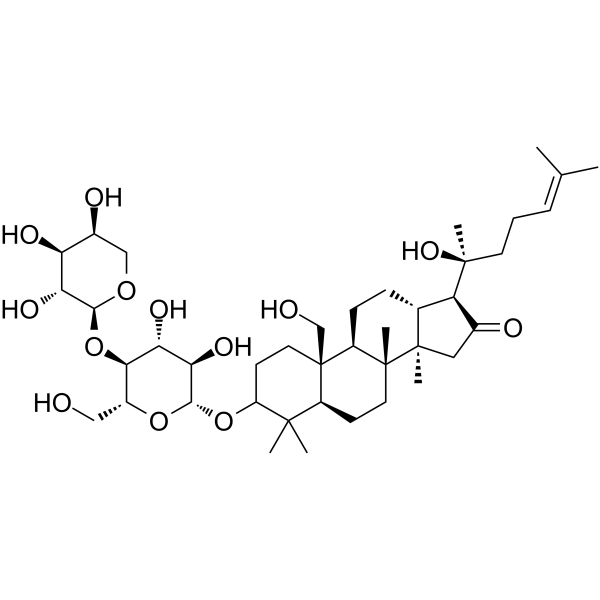
Bacoside A is an orally active, blood-brain barrier-permeable triterpenoid saponin that modulates the activities of ATPases, AChE, CaMK2A and iNOS. Derived from Bacopa monniera. Bacoside A exerts significant antioxidant, anti-inflammatory and anti-apoptotic effects by maintaining ion balance, scavenging reactive oxygen species, stabilizing cell membranes, and regulating the expression of NF-κB and apoptosis-related proteins. Bacoside A counteracts morphine-induced reductions in Na+/K+-ATPase, Ca2+-ATPase and Mg2+-ATPase activities, increases mitochondrial membrane potential, and decreases intracellular reactive oxygen species levels. Bacoside A specifically binds to calcium/calmodulin-dependent protein kinase IIA to trigger endoplasmic reticulum calcium release. Bacoside A exhibits non-apoptotic cytotoxicity against glioblastoma cells while protecting normal nerve cells from stress-induced damage. Bacoside A is applicable to the research of Parkinson's disease and glioblastoma multiforme.
For research use only. We do not sell to patients.
- CAS No.: 11028-00-5
- Formula: C41H68O13
- Molecular Weight:768.97
-
Storage:
Please store the product under the recommended conditions in the Certificate of Analysis.

To place orders, for customer services and technical support, please contact: MedChemExpress USA
Tel: 609-228-6898 E-mail: [email protected] [email protected]


-
 Biological Activity
-
Chemical Information
- Protocols
- Purity & Documentation
- References
-
 Help & FAQs


Publications Citing Use of MedChemExpress (MCE) Bacoside A
More

Biological Activity
Description
IC50 & Target
|
AChE |
CaMK IIα |
iNOS |
In Vitro
Bacoside A (8 μg/mL) induces non-apoptotic, macropinocytosis-driven cell death in LN229, U87MG and U251 glioblastoma cells, but exerts no cytotoxic effects on normal HaCaT or SVG cells[3].
Bacoside A (8 μg/mL) induces the formation of lysosome-precursor and caveolin-1-positive macropinosomes in LN229 and U87MG glioblastoma cells, thereby driving fluid accumulation and cell swelling[3].
Bacoside A (8 μg/mL; 24 h) specifically enhances the phosphorylation level of T286 in CaMK2A in LN229, U87MG and U251 glioblastoma cells, but exerts no effect on normal HaCaT or SVG cells[3].
Bacoside A (8 μg/mL; 24 h) induces CaMK2A phosphorylation in a calmodulin- and calcium-independent manner, whereas subsequent intracellular calcium release is required for macropinocytosis, cytoskeleton damage and cytotoxicity in LN229 and U87MG glioblastoma cells[3].
Bacoside A (0.2-1.0 mg/mL; 3 h) does not significantly reduce the viability of N2a neuroblastoma cells at concentrations up to 0.4 mg/mL, but decreases cell viability at higher concentrations; the cell viability remains above 100% at 0.6 mg/mL[4].
Bacoside A (0.4 mg/mL; 1 h) maintains nuclear integrity, reduces ROS production, and restores mitochondrial membrane potential in N2a neuroblastoma cells subjected to H2O2 (0.42 mM; 3 h) stress[4].
Bacoside A (0.4 mg/mL; 1 h) exhibits anti-apoptotic activity in N2a neuroblastoma cells stressed by H2O2 (0.42 mM; 3 h), but its effect is weaker than that of its monomeric components Bacoside A3 (HY-N5064), Bacopaside II (HY-N6016) and Bacopasaponin C (HY-N6015)[4].
MedChemExpress (MCE) has not independently confirmed the accuracy of these methods. They are for reference only.
-
Cell Line:LN229, U87MG, U251 (human glioblastoma cell lines); HaCaT (normal human epidermal keratinocytes), SVG (normal human subventricular radial glial progenitors)
-
Concentration:2, 4, 6, 8 μg/mL (12 h); 8 μg/mL (12-24 h, 24-48 h, 24 h, 48 h)
-
Incubation Time:12 h (2, 4, 6, 8 μg/mL); 12-24 h, 24-48 h, 24 h, 48 h (8 μg/mL)
-
Result:Induced phase-lucent macropinosome-like vacuoles in LN229, U87MG, and U251 glioblastoma cells by 12-24 h at 8 μg/mL, which fused to occupy the entire cell space, causing cellular hypertrophy, swelling, rounding, and necrotic morphology by 24-48 h.
Caused near-complete cell death in treated glioblastoma cultures, while normal HaCaT and SVG cells showed no morphological changes or cytotoxicity at 8 μg/mL.
Resulted in negative TUNEL assay for apoptotic DNA fragmentation in treated LN229 and U87MG cells, confirming non-apoptotic cell death.
-
Cell Line:LN229, U87MG, U251 (human glioblastoma cell lines); HaCaT (normal human epidermal keratinocytes), SVG (normal human subventricular radial glial progenitors)
-
Concentration:8 μg/mL
-
Incubation Time:24 h
-
Result:Increased the ratio of phospho-CaMK2A (T286) to non-phospho CaMK2A significantly in LN229, U87MG, and U251 glioblastoma cells compared to untreated controls.
Caused no significant increase in phospho-CaMK2A levels in treated normal HaCaT or SVG cells.
-
Cell Line:H2O2-stressed N2a neuroblastoma cells
-
Concentration:0.4 mg/mL (post 3 h 0.42 mM H2O2 treatment)
-
Incubation Time:1 h (post 3 h 0.42 mM H2O2 treatment)
-
Result:Reduced Annexin V-FITC green fluorescence intensity in H2O2-stressed N2a cells, indicating decreased phosphatidylserine exposure.
Showed insignificant red fluorescence via PI staining, indicating minimal necrotic cell death.
Was less effective at alleviating apoptosis compared to individual bacoside A components bacoside A3, bacopaside II, and bacopasaponin C.
In Vivo
Bacoside A (5-20 mg/kg; i.p.; single administration 24 h prior to modeling) exerts a dose-dependent protective effect against Parkinson's disease-induced oxidative damage and neuronal degeneration in male Wistar rats. Among these doses, 20 mg/kg completely eliminates PD-induced changes in rotational behavior and restores multiple pathological markers to the levels observed in the sham-operated group[2].
Bacoside A exhibits chemopreventive efficacy against N-Nitrosodiethylamine (HY-N7434)-induced hepatocellular carcinoma in rats[3].
Bacoside A exerts anti-tumorigenic effects in mouse models of breast cancer, prostate cancer, and lung cancer[3].
Bacoside A has a good safety profile and does not impair the learning and memory abilities of mouse models with learning and memory impairment[3].
MedChemExpress (MCE) has not independently confirmed the accuracy of these methods. They are for reference only.
-
Animal Model:albino Wistar (adult male, 150-200 g, morphine-induced oxidative stress model)[1]
-
Dosage:10 mg/kg b.w./day
-
Administration:p.o.; daily; 21 days
-
Result:Restored superoxide dismutase (SOD), catalase (CAT), and glutathione peroxidase (GPx) activities to near normal, with significant increases relative to morphine-only treated rats.
Normalized reduced glutathione (GSH) levels relative to morphine-only treated rats.
Significantly decreased basal, FeSO4-induced, ascorbate-induced, and H2O2-induced lipid peroxide levels relative to morphine-only treated rats.
Reduced protein carbonyl content to 2.09 n mole/mg protein, a significant decrease relative to morphine-only treated rats.
Restored Na+/K+-ATPase activity to 0.54±0.03 mmol of phosphorous liberated/min/mg protein, Ca2+-ATPase activity to 0.53 mmol of phosphorous liberated/min/mg protein, and Mg2+-ATPase activity to 0.64 mmol of phosphorous liberated/min/mg protein, all significant increases relative to morphine-only treated rats.
Caused no significant changes in antioxidant enzyme activities, GSH levels, lipid peroxide levels, protein carbonyl content, or membrane-bound ATPase activities relative to control rats when administered alone.
-
Animal Model:Wistar rats (male, 8-10 weeks old, 295-340 g; Parkinson's disease model induced by 6-hydroxydopamine injection)[2]
-
Dosage:5 mg/kg; 10 mg/kg; 20 mg/kg
-
Administration:i.p.; single dose 24 hours pre-PD induction
-
Result:Reduced PD-induced elevated turning values in a dose-dependent manner; the 20 mg/kg dose completely eliminated the PD-induced increase in turning values.
Reversed PD-mediated suppression of serum CAT and GSH-Px activities in a dose-dependent manner; the 20 mg/kg dose effectively restored these enzyme activities to near sham levels.
Dose-dependently suppressed PD-induced elevated hippocampal AChE and iNOS activities; the 20 mg/kg dose reduced these activities to levels close to the sham group.
Dose-dependently reduced PD-induced elevated serum levels of IL-1β, IL-6, TNF-α, and NF-κB p65; the 20 mg/kg dose effectively reversed PD-mediated elevations of IL-1β and IL-6.
Dose-dependently reduced PD-induced elevated hippocampal levels of COX-2, p53, Bax, caspase-3, caspase-9, and cytochrome c; the 20 mg/kg dose reduced COX-2, p53, and cytochrome c levels to near sham group values.
- RNA extraction experimental
- Mitochondrial membrane-potential fluorescent assay
- Mammalian live/dead viability and cytotoxicity staining
- Annexin V plus membrane-impermeant dye apoptosis staining
- ROS/oxidative-stress fluorescent staining
- Research Protocol for Inflammation-related Diseases
- Ca2+ Staining Technique
- Cell Viability Determination by MTT Colorimetric Assay
- Detection of Apoptosis
- TUNEL staining for apoptotic DNA fragmentation
- Cell Cytotoxicity Assay
- Human pluripotent stem cell midbrain dopaminergic neuron differentiation
- Fluorescent plasma-membrane potential dye assay
- Mitochondrial membrane-potential and mitochondrial mass staining
- Apoptosis Solutions
- Calcium Spark Assay


Chemical Information
-
CAS No. 11028-00-5
-
Molecular Weight 768.97
-
Formula C41H68O13
-
SMILES
C/C(C)=C\CC[C@@]([C@@H]1[C@H]2CC[C@H]3[C@](CC[C@@H]4[C@]3(CO)CCC(O[C@H]5[C@H](O)[C@@H](O)[C@H](O[C@H]6[C@H](O)[C@@H](O)[C@@H](O)CO6)[C@@H](CO)O5)C4(C)C)(C)[C@]2(C)CC1=O)(O)C
-
Structure Classification
-
Initial Source
-
Shipping
Room temperature in continental US; may vary elsewhere.
-
Storage
Please store the product under the recommended conditions in the Certificate of Analysis.


Publications (1)
-
Journal Impact Factor
-
Most Recent
-
Naunyn Schmiedebergs Arch Pharmacol
Integrating GEO, network pharmacology, and in vitro assays to explore the pharmacological mechanism of Bruceae Fructus against laryngeal cancer. [Abstract]2024 Jun;397(6):4165-4181. PMID: 38032489


Purity & Documentation
-
Data Sheet (288 KB)
-
SDS (252 KB)
- Français - FR (252 KB)
- Deutsch - DE (252 KB)
- Norwegian - NO (252 KB)
- Español - ES (252 KB)
- Swedish - SV (252 KB)
- Italian - IT (252 KB)
- Korean - KR (252 KB)
- Portuguese - PT (252 KB)
-
Handling Instructions (2659 KB)
References
[1]. Sumathi T, et al. Protective Effect of Bacoside-A against Morphine-Induced Oxidative Stress in Rats. Indian J Pharm Sci. 2011;73(4):409-415. [Content Brief]
[3]. John S, et al. Bacoside A Induces Tumor Cell Death in Human Glioblastoma Cell Lines through Catastrophic Macropinocytosis. Front Mol Neurosci. 2017;10:171. Published 2017 Jun 15. [Content Brief]
[4]. Bhardwaj P, et al. Comparative evaluation of four triterpenoid glycoside saponins of bacoside A in alleviating sub-cellular oxidative stress of N2a neuroblastoma cells. J Pharm Pharmacol. 2018;70(11):1531-1540. [Content Brief]

Calculators
Concentration (start) × Volume (start) = Concentration (final) × Volume (final)


Bacoside A Related Classifications
HY-N1989 Related Classifications
 Powered by Bioz