



9''-Methyl salvianolate B
Based on 1 publication(s) in Google Scholar
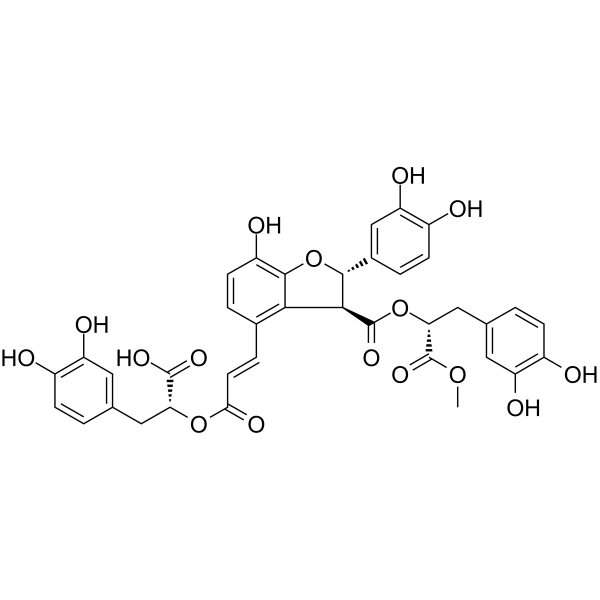
9''-Methyl salvianolate B (MSB) is a blood-brain barrier-permeable inhibitor with high affinity for g5Rp, with a Kd value of 117 nM against African swine fever virus (ASFV) g5Rp. 9''-Methyl salvianolate B also acts as a ZBP1 inhibitor. It exhibits strong binding affinity to key proteins in the PPARγ/NF-κB pathway. 9''-Methyl salvianolate B blocks the interaction between ASFV g5Rp and host proteins eIF5A or RPS15. It restores hypusination modification of eIF5A, promotes autophagy (Autophagy), and inhibits ASFV replication. 9''-Methyl salvianolate B effectively disrupts ZBP1-mediated PANoptosome assembly. It effectively alleviates myocardial ischemia/reperfusion injury. 9''-Methyl salvianolate B can be used in studies related to African swine fever.
For research use only. We do not sell to patients.
- Purity : 99.54%
- CAS No.: 1167424-31-8
- Formula: C37H32O16
- Molecular Weight:732.64
-
Storage:
4°C, sealed storage, away from moisture and light
* In solvent : -80°C, 6 months; -20°C, 1 month (sealed storage, away from moisture and light)

To place orders, for customer services and technical support, please contact: MedChemExpress USA
Tel: 609-228-6898 E-mail: [email protected] [email protected]


-
 Biological Activity
-
Chemical Information
-
Solvent & Solubility
- Protocols
- Purity & Documentation
- References
-
 Help & FAQs


-
HY-147295
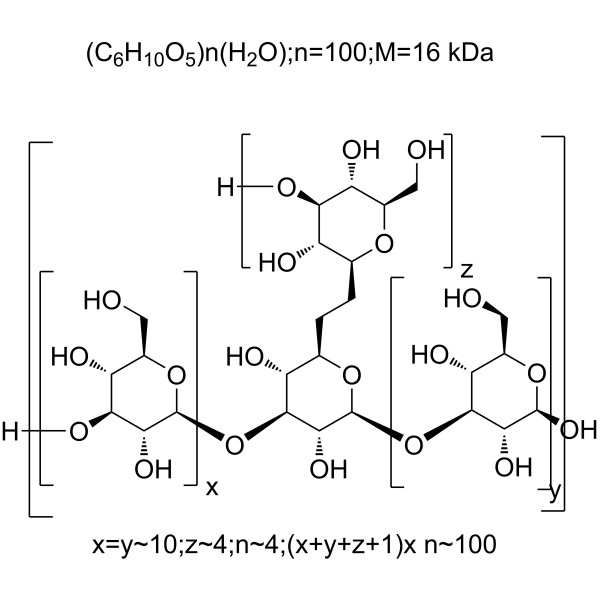
OdetiglucanImmunostimulant -
HY-N0029
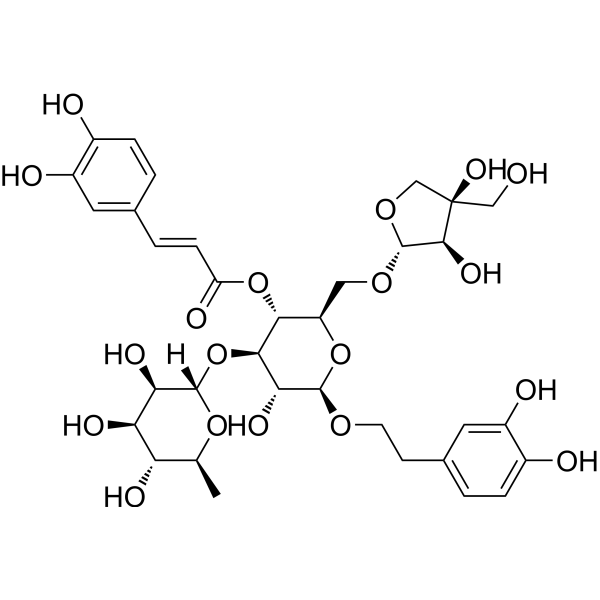
Forsythoside BTNF Inhibitor -

HY-Y0320C
Dimethyl sulfoxideAprotic Solvent -
HY-N1362
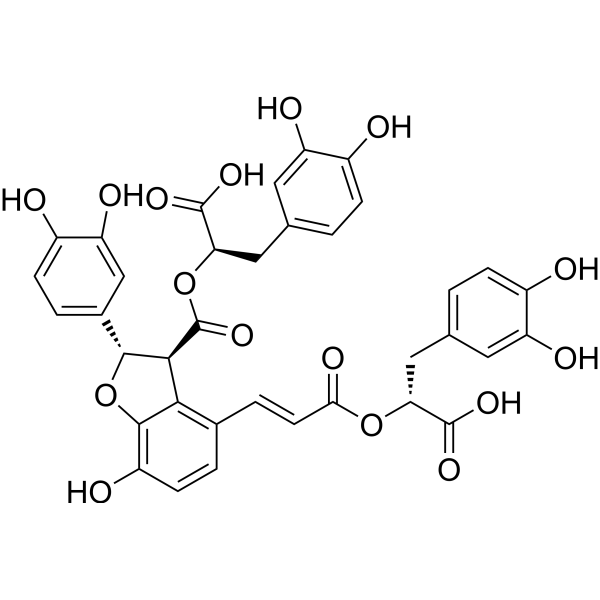
Salvianolic acid BAntioxidant -
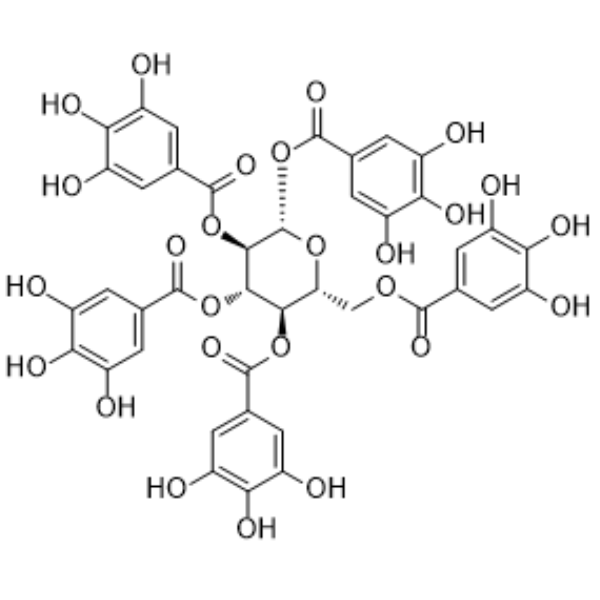
HY-N0527
PentagalloylglucoseAntioxidant -

HY-P7118
TGF beta 1/TGFB1 Protein, Human (CHO) -
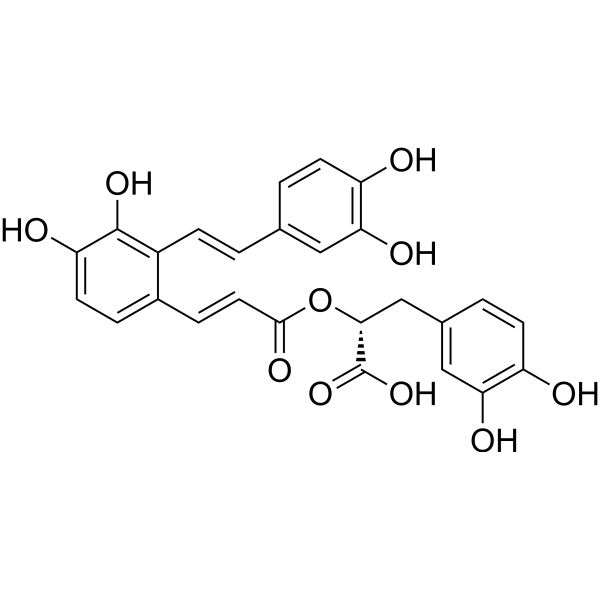
HY-N0318
Salvianolic acid AMMP-9 Inhibitor -
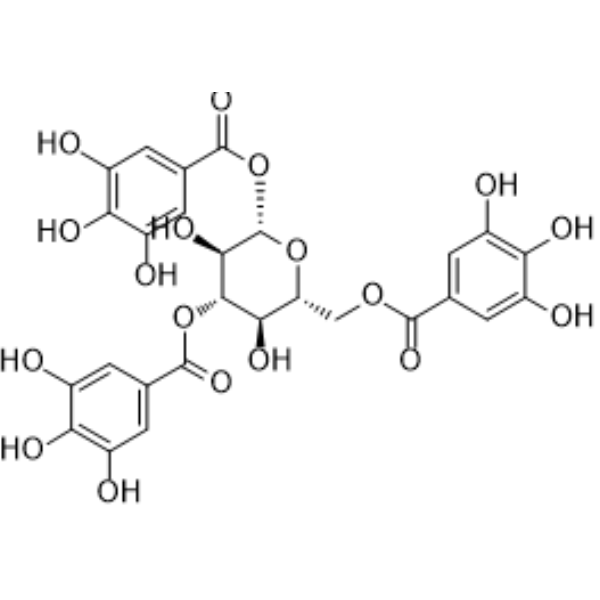
HY-N6006
1,3,6-Tri-O-galloyl-beta-D-glucosePhenolic Compound -
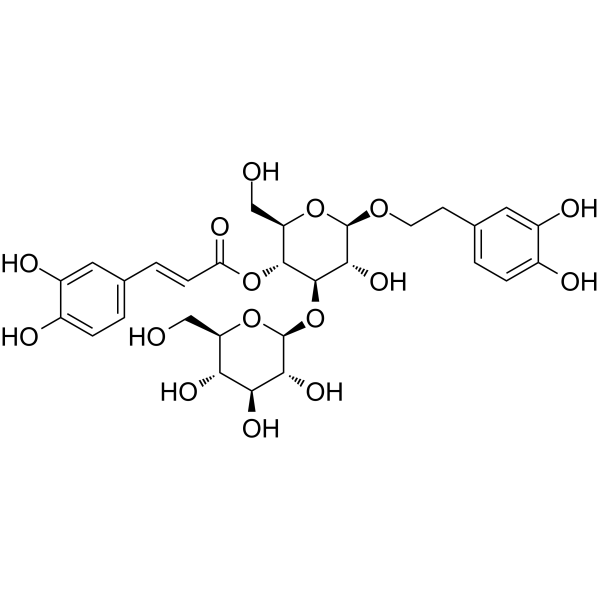
HY-N0031
PlantamajosideNF-κB Inhibitor -
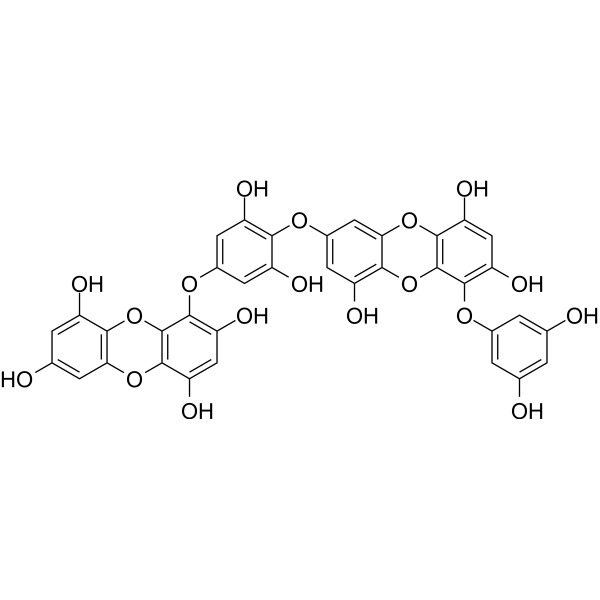
HY-147059
DieckolPhlorotannin Compound -
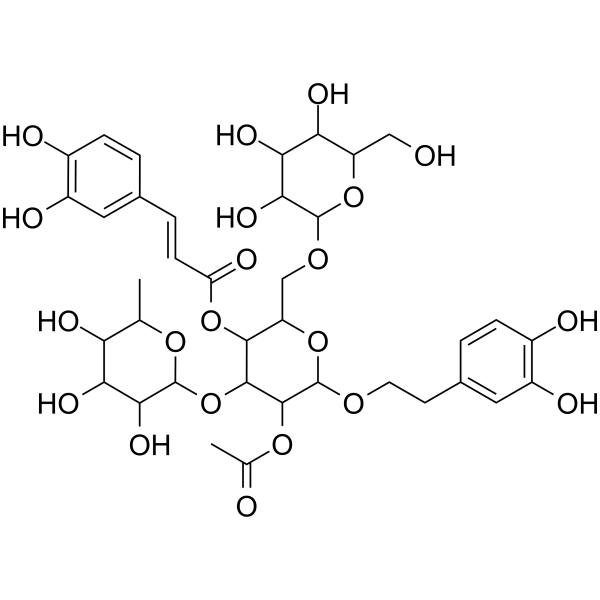
HY-N2155
Tubuloside AHepatoprotective Agent -
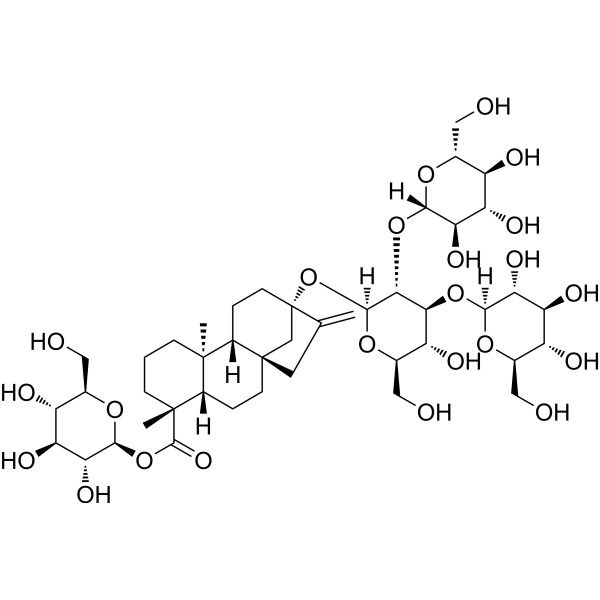
HY-N0466
Rebaudioside Aα-Glucosidase Inhibitor
Publications Citing Use of MedChemExpress (MCE) 9''-Methyl salvianolate B
MoreAll DNA/RNA Synthesis Isoforms
More

Biological Activity
Description
IC50 & Target
[1]|
PPARγ |
In Vitro
9''-Methyl salvianolate B (0.156-10 μM) binds to purified ASFV g5Rp protein with high affinity, with a Kd value of 117 nM determined by SPR[2].
9''-Methyl salvianolate B (10 μM) exhibits low cytotoxicity in 3D4/21 cells, with a CC50 of 16.22 μM, and the cell survival rate exceeds 80% at 10 μM[2].
MedChemExpress (MCE) has not independently confirmed the accuracy of these methods. They are for reference only.
In Vivo
MedChemExpress (MCE) has not independently confirmed the accuracy of these methods. They are for reference only.
Clinical Trial
| NCT Number | Sponsor | Condition | Start Date |
Phase

|
|---|---|---|---|---|
| NCT01329991 | Plexxikon| | 2011-05 | PHASE1 |


Chemical Information
-
CAS No. 1167424-31-8
-
Appearance Solid
-
Molecular Weight 732.64
-
Formula C37H32O16
-
Color White to light yellow
-
SMILES
OC1=C(O)C=CC(C[C@H](C(OC)=O)OC([C@H]2C3=C(/C=C/C(O[C@@H](C(O)=O)CC4=CC(O)=C(O)C=C4)=O)C=CC(O)=C3O[C@@H]2C5=CC(O)=C(O)C=C5)=O)=C1
-
Synonyms
MSB
-
Structure Classification
-
Shipping
Room temperature in continental US; may vary elsewhere.
-
Storage
4°C, sealed storage, away from moisture and light
* In solvent : -80°C, 6 months; -20°C, 1 month (sealed storage, away from moisture and light)


Publications (1)
-
Journal Impact Factor
-
Most Recent
-
Adv Sci (Weinh)
Cerium Nanoparticle-Mediated Inhibition of the NSUN2/m5C Axis Suppresses Synovial Aggression in Rheumatoid Arthritis. [Abstract]2026 Jul 3:e76401. PMID: 42397077


Solvent & Solubility
In Vitro:
DMSO : 100 mg/mL (136.49 mM; Need ultrasonic; Hygroscopic DMSO has a significant impact on the solubility of product, please use newly opened DMSO)
Please refer to the solubility information to select the appropriate solvent. Once prepared, please aliquot and store the solution to prevent product inactivation from repeated freeze-thaw cycles.
Storage method and period of stock solution: -80°C, 6 months; -20°C, 1 month (sealed storage, away from moisture and light). When stored at -80°C, please use it within 6 months. When stored at -20°C, please use it within 1 month.
Please refer to the solubility information to select the appropriate solvent. Once prepared, please aliquot and store the solution to prevent product inactivation from repeated freeze-thaw cycles.
Storage method and period of stock solution: -80°C, 6 months; -20°C, 1 month (sealed storage, away from moisture and light). When stored at -80°C, please use it within 6 months. When stored at -20°C, please use it within 1 month.
Concentration (start) × Volume (start) = Concentration (final) × Volume (final)
In Vivo:
Select the appropriate dissolution method based on your experimental animal and administration route.
- For the following dissolution methods, please ensure to first prepare a clear stock solution using an In Vitro approach and then sequentially add co-solvents:
- To ensure reliable experimental results, the clarified stock solution can be appropriately stored based on storage conditions. As for the working solution for In Vivo experiments, it is recommended to prepare freshly and use it on the same day.
- The percentages shown for the solvents indicate their volumetric ratio in the final prepared solution. If precipitation or phase separation occurs during preparation, heat and/or sonication can be used to aid dissolution.
Add each solvent one by one: 10% DMSO 40% PEG300 5% Tween-80 45% Saline
Solubility: ≥ 2.5 mg/mL (3.41 mM); Clear solution
This protocol yields a clear solution of ≥ 2.5 mg/mL (saturation unknown).
Taking 1 mL working solution as an example, add 100 μL DMSO stock solution (25.0 mg/mL) to 400 μL PEG300, and mix evenly; then add 50 μL Tween-80 and mix evenly; then add 450 μL Saline to adjust the volume to 1 mL.
Preparation of Saline: Dissolve 0.9 g sodium chloride in ddH₂O and dilute to 100 mL to obtain a clear Saline solution.
Add each solvent one by one: 10% DMSO 90% (20% SBE-β-CD in Saline)
Solubility: ≥ 2.5 mg/mL (3.41 mM); Clear solution
This protocol yields a clear solution of ≥ 2.5 mg/mL (saturation unknown).
Taking 1 mL working solution as an example, add 100 μL DMSO stock solution (25.0 mg/mL) to 900 μL 20% SBE-β-CD in Saline, and mix evenly.
Preparation of 20% SBE-β-CD in Saline (4°C, storage for one week): 2 g SBE-β-CD powder is dissolved in 10 mL Saline, completely dissolve until clear.
In Vivo Dissolution Calculator
Please enter the basic information of animal experiments:
-
-
-
-
Recommended: Prepare an additional quantity of animals to account for potential losses during experiments.
Please enter your animal formula composition:
-
%DMSO +
Recommended: Keep the proportion of DMSO in working solution below 2% if your animal is weak.
-
%+
-
+%Tween-80 + +
-
%Saline +
The co-solvents required include: DMSO, . All of co-solvents are available by MedChemExpress (MCE). , Tween 80. All of co-solvents are available by MedChemExpress (MCE).
Working solution concentration: 0.22 mg/mL
Method for preparing stock solution: mg drug dissolved in μL DMSO. Stock solution concentration: mg/mL. * In solvent : -80°C, 6 months; -20°C, 1 month (sealed storage, away from moisture and light)
1. Take μL DMSO stock solution;
2. Add μL .
μL , mix evenly;
3. Then add μL Tween 80, mix evenly;
4. Then add μL
Please ensure that the stock solution in the first step is dissolved to a clear state, and add co-solvents in sequence. You can use ultrasonic heating (ultrasonic cleaner, recommended frequency 20-40 kHz), vortexing, etc. to assist dissolution.


Purity & Documentation
-
Data Sheet (277 KB)
-
SDS (396 KB)
- English - EN (396 KB)
- Français - FR (396 KB)
- Deutsch - DE (396 KB)
- Norwegian - NO (396 KB)
- Español - ES (396 KB)
- Swedish - SV (396 KB)
- Italian - IT (396 KB)
- Korean - KR (396 KB)
- Portuguese - PT (396 KB)
-
Handling Instructions (2659 KB)
References
[2]. Zhou S, et al. Salvia miltiorrhiza Bge. processed with porcine cardiac blood alleviates cerebral ischemia reperfusion injury through activating PPARγ/NF-κB pathway via suppressing arachidonic acid metabolism. J Ethnopharmacol. 2026;362:121385. [Content Brief]
[3]. Xu C, et al. Role of g5Rp in African swine fever virus replication: disruption of host translation and autophagy. J Virol. 2026;100(1):e0125225. [Content Brief]


Complete Stock Solution Preparation Table
Please refer to the solubility information to select the appropriate solvent. Once prepared, please aliquot and store the solution to prevent product inactivation from repeated freeze-thaw cycles.
Storage method and period of stock solution: -80°C, 6 months; -20°C, 1 month (sealed storage, away from moisture and light). When stored at -80°C, please use it within 6 months. When stored at -20°C, please use it within 1 month.
| Optional Solvent | Concentration Solvent Mass | 1 mg | 5 mg | 10 mg | 25 mg |
|---|---|---|---|---|---|
| DMSO | 1 mM | 1.3649 mL | 6.8246 mL | 13.6493 mL | 34.1232 mL |
| 5 mM | 0.2730 mL | 1.3649 mL | 2.7299 mL | 6.8246 mL | |
| 10 mM | 0.1365 mL | 0.6825 mL | 1.3649 mL | 3.4123 mL | |
| 15 mM | 0.0910 mL | 0.4550 mL | 0.9100 mL | 2.2749 mL | |
| 20 mM | 0.0682 mL | 0.3412 mL | 0.6825 mL | 1.7062 mL | |
| 25 mM | 0.0546 mL | 0.2730 mL | 0.5460 mL | 1.3649 mL | |
| 30 mM | 0.0455 mL | 0.2275 mL | 0.4550 mL | 1.1374 mL | |
| 40 mM | 0.0341 mL | 0.1706 mL | 0.3412 mL | 0.8531 mL | |
| 50 mM | 0.0273 mL | 0.1365 mL | 0.2730 mL | 0.6825 mL | |
| 60 mM | 0.0227 mL | 0.1137 mL | 0.2275 mL | 0.5687 mL | |
| 80 mM | 0.0171 mL | 0.0853 mL | 0.1706 mL | 0.4265 mL | |
| 100 mM | 0.0136 mL | 0.0682 mL | 0.1365 mL | 0.3412 mL |


9''-Methyl salvianolate B Related Classifications
HY-N2397 Related Classifications
 Powered by Bioz