1. Search Result
Search Result
Results for "

proliferation and migration

" in MedChemExpress (MCE) Product Catalog:

473

Inhibitors & Agonists

1

Screening Libraries

5

Fluorescent Dyes

13

Biochemical Assay Reagents

23

Peptides

13

Inhibitory Antibodies

83

Natural
Products

15

Isotope-Labeled Compounds

2

Click Chemistry

15

Oligonucleotides

1

GMP Molecules

Cat. No. Product Name Target Research Areas Chemical Structure
  • HY-B0094
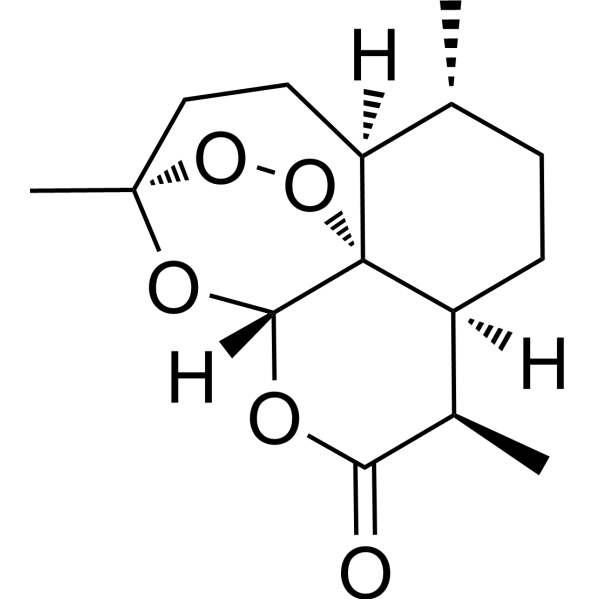
    Artemisinin
    Maximum Cited Publications
    32 Publications Verification

    Qinghaosu; NSC 369397

    HCV Parasite Akt Ferroptosis Infection Neurological Disease Metabolic Disease Inflammation/Immunology Cancer
    Artemisinin (Qinghaosu), a sesquiterpene lactone, is an anti-malarial agent isolated from the aerial parts of Artemisia annua L. plants . Artemisinin inhibits AKT signaling pathway by decreasing pAKT in a dose-dependent manner. Artemisinin reduces cancer cell proliferation, migration, invasion, tumorigenesis and metastasis and has neuroprotective effects .
    Artemisinin
  • HY-13442A
    Eribulin mesylate
    5+ Cited Publications

    B1939 mesylate; E7389 mesylate; ER-086526 mesylate

    Microtubule/Tubulin Apoptosis Cancer
    Eribulin mesylate is an inhibitor for microtubule. Eribulin mesylate inhibits the proliferation of cancer cell LM8 and Dunn, inhibits the cell migration of LM8, arrests the cell cycle at G2/M phase, and induces apoptosis in LM8. Eribulin mesylate exhibits antitumor efficacy in mouse model .
    Eribulin mesylate
  • HY-13748
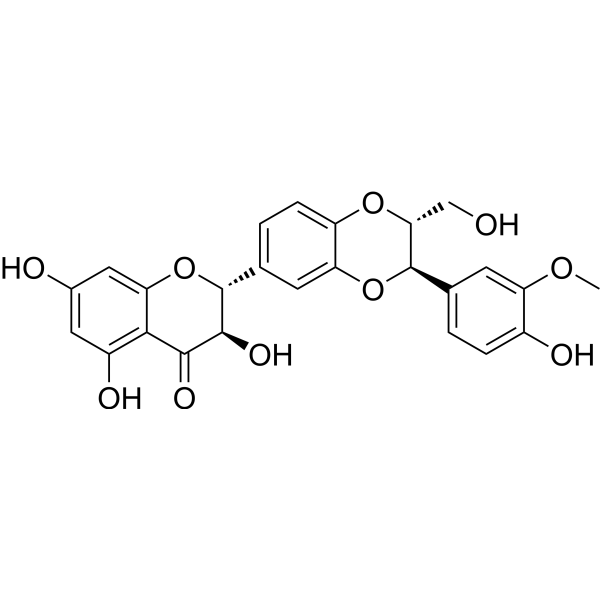
    Silybin A
    10+ Cited Publications

    Silibinin A

    Autophagy Reactive Oxygen Species (ROS) Cancer
    Silybin A (Silibinin A), an effective anti-cancer and chemopreventive agent, has been shown to exert multiple effects on cancer cells, including inhibition of both cell proliferation and migration.
    Silybin A
  • HY-N0015
    Astragalin
    15+ Cited Publications

    Astragaline; 3-Glucosylkaempferol; Kaempferol 3-β-D-glucopyranoside

    Apoptosis NF-κB Infection Inflammation/Immunology Cancer
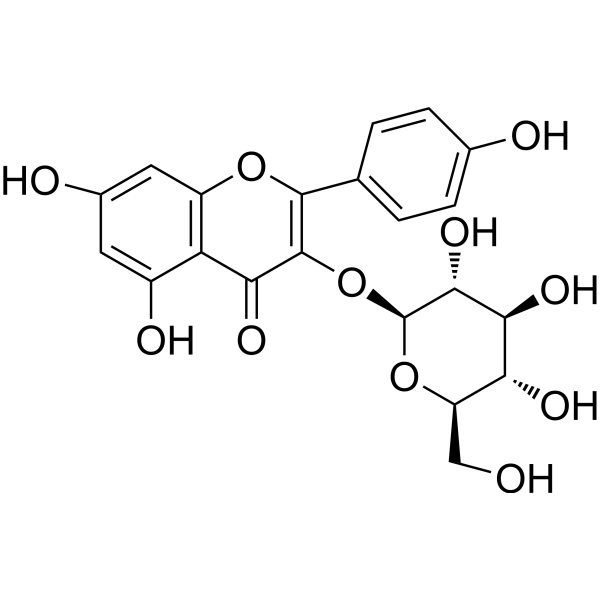
    Astragalin (Astragaline) a flavonoid with anti-inflammatory, antioxidant, anticancer, bacteriostatic activity. Astragalin inhibits cancer cells proliferation and migration, induces apoptosis. Astragalin is orally active and provides nerve and heart protection, and resistance against and osteoporosis .
    Astragalin
  • HY-115686
    8-Azaadenosine
    5 Publications Verification

    Adenosine Deaminase Inflammation/Immunology Cancer
    8-Azaadenosine is a potent ADAR1 inhibitor and an A-to-I editing inhibitor. 8-Azaadenosine blocks RNA editing and inhibits proliferation, 3D growth, invasion, and migration in thyroid cancer cells .
    8-Azaadenosine
  • HY-157122
    VJDT
    3 Publications Verification

    TREM receptor Transmembrane Glycoprotein Akt PI3K Interleukin Related NF-κB Inflammation/Immunology Cancer
    VJDT is a TREM1 inhibitor that can effectively block TREM1 signaling. VJDT inhibits tumor cell proliferation and migration and induces cell cycle arrest. VJDT has immunomodulatory and antitumor activities, and can be used for the research of tumors such as melanoma .
    VJDT
  • HY-A0020
    Eldecalcitol
    4 Publications Verification

    ED-71; 2-(3-hydroxypropoxy)-1,25-dihydroxyvitamin D3

    VD/VDR Apoptosis Metabolic Disease Inflammation/Immunology Cancer
    Eldecalcitol (ED-71) is an orally active vitamin D3 analogue, inhibits bone resorption and increases bone mineral density. Eldecalcitol (ED-71) displays anti-tumor effect and inhibits cell proliferation, migration and induces apoptosis by suppressing GPx-1 .
    Eldecalcitol
  • HY-136383
    AZA1
    1 Publications Verification

    Rac1/Cdc42-IN-1

    Ras Apoptosis Cancer
    AZA1 is a potent dual inhibitor of Rac1 and Cdc42. AZA1 induces prostate cancer cells apoptosis and inhibits prostate cancer cells proliferation, migration and invasion .
    AZA1
  • HY-B1360
    Chlorquinaldol
    5+ Cited Publications

    Chloquinan

    Antibiotic Bacterial Fungal β-catenin Apoptosis Infection Cancer
    Chlorquinaldol (Chloquinan) is an antibacterial agent with the potential use in topical skin conditions and vaginal infections. Chlorquinaldol is a β-catenin/TCF4 inhibitor, showing anti-proliferation, anti-migration, and apoptosis-inducing activity in cancer cells .
    Chlorquinaldol
  • HY-D0056

    Fluorescent Dye Others
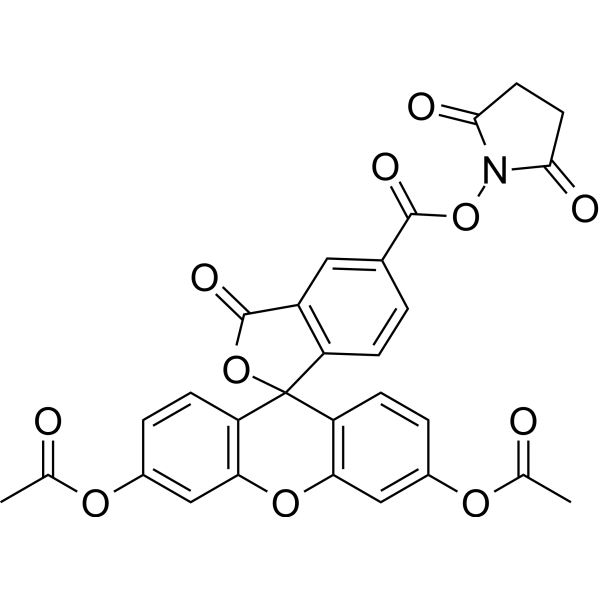
    5-Carboxyfluorescein diacetate N-succinimidyl ester is a cell permeable dye (Ex=492 nm, Em=517 nm). 5-Carboxyfluorescein diacetate N-succinimidyl ester can label cells by covalently binding to intracellular molecules. 5-Carboxyfluorescein diacetate N-succinimidyl ester is used to track lymphocyte migration and proliferation .
    5-Carboxyfluorescein diacetate N-succinimidyl ester
  • HY-18643
    TZ9
    2 Publications Verification

    E1/E2/E3 Enzyme Apoptosis Cancer
    TZ9 is a selective Rad6 inhibitor. TZ9 inhibits Rad6B-induced histone H2A ubiquitination, downregulates intracellular β-catenin, induces G2-M arrest and apoptosis, and inhibits the proliferation and migration of metastatic human breast cancer cells .
    TZ9
  • HY-147390

    Macrophage migration inhibitory factor (MIF) Inflammation/Immunology
    MIF098 is a macrophage migration inhibitory factor (MIF) antagonist. MIF098 inhibits proliferation, migration and fibrosis of pulmonary smooth muscle cells. MIF098 can be used for immunoinflammation-related disease research .
    MIF098
  • HY-N1966
    (E)-Osmundacetone
    2 Publications Verification

    p38 MAPK PPAR Cancer
    (E)-Osmundacetone is an inhibitor of the MAPK pathway. (E)-Osmundacetone inhibits the activation of the MAPK signaling pathway and restores the expression of PPARα/ACOX1. (E)-Osmundacetone abrogates abnormal cell proliferation, migration and liver metastasis induced by PTPRO silencing in colorectal cancer cells. (E)-Osmundacetone blocks OA-RD17-mediated activation of the MAPK signaling pathway, thereby reducing macrophage proliferation and migration. (E)-Osmundacetone is applicable to relevant research on colorectal cancer .
    (E)-Osmundacetone
  • HY-75954
    2-Hydroxyhexanoic acid
    2 Publications Verification

    Endogenous Metabolite Cancer
    2-Hydroxyhexanoic acid is a metabolite. 2-Hydroxyhexanoic acid is elevated in metastatic pancreatic neuroendocrine tumors. 2-Hydroxyhexanoic acid does not promote the proliferation, migration or invasion of pancreatic neuroendocrine tumor cells. 2-Hydroxyhexanoic acid can be used in the research of metastatic pancreatic neuroendocrine tumors .
    2-Hydroxyhexanoic acid
  • HY-NP132A

    Biochemical Assay Reagents Integrin Autophagy Apoptosis Discoidin Domain Receptor Cancer
    Recombinant humanized type III collagen (MW 55900) is a type III collagen with a molecular weight of 55900 Da. Recombinant humanized type III collagen has various biological functions, such as promoting skin extracellular matrix regeneration and improving the cell microenvironment. Recombinant humanized type III collagen inhibits the proliferation, migration, and invasion of breast cancer cells. Type III collagen functions in cell adhesion, migration, proliferation and differentiation through its interaction with integrins .
    Recombinant humanized type III collagen (MW 55900)
  • HY-121204

    3-Methylthiopropyl isothiocyanate

    Apoptosis Reactive Oxygen Species (ROS) Cancer
    Iberverin (-Methylthiopropyl isothiocyanate) is a sulforaphane homolog. Iberverin has anticancer activity. Iberverin inhibits cell proliferation and migration. Iberverin induces mitochondrial-related apoptosis and intracellular reactive oxygen species .
    Iberverin
  • HY-NP132

    Biochemical Assay Reagents Integrin Autophagy Apoptosis Discoidin Domain Receptor Cancer
    Recombinant Humanized Type III Collagen 28.6kDa is a 28.6 kDa recombinant humanized type III collagen. Recombinant Humanized Type III Collagen possesses a variety of biological functions, such as promoting the regeneration of the skin extracellular matrix and improving the cellular microenvironment. Recombinant Humanized Type III Collagen can also inhibit the proliferation, migration and invasion of breast cancer cells. Recombinant Humanized Type III Collagen plays a role in cell adhesion, migration, proliferation and differentiation by interacting with Integrin .
    Recombinant Humanized Type III Collagen 28.6kDa
  • HY-P99196

    c-Met/HGFR Cancer
    Ficlatuzumab is a monoclonal antibody (McAb) targeting human hepatocyte growth factor (HGF). Ficlatuzumab blocks the activation of the HGF/c-Met signaling pathway, and inhibits c-Met receptor-mediated cancer cell proliferation, migration, and invasion .
    Ficlatuzumab
  • HY-162153

    FGFR Cancer
    CYY292 is an FGFR1 inhibitor that specifically targets the FGFR1/AKT/Snail pathway in GBM cells. CYY292 dose-dependently inhibits cancer cell proliferation, epithelial-mesenchymal transition, stemness, invasion, and migration in vitro .
    CYY292
  • HY-17522

    2,4-DNOPC

    Fungal ERK JNK p38 MAPK Apoptosis Mitochondrial Metabolism Infection Endocrinology
    Meptyldinocap (2,4-DNOPC) is a fungicide and cytotoxic agent that acts against powdery mildew. Meptyldinocap upregulates the phosphorylation levels of ERK1/2, JNK and p38. Meptyldinocap induces apoptosis and endoplasmic reticulum stress, disrupts calcium homeostasis, inhibits cell proliferation and migration, downregulates the expression of proliferation- and pregnancy-related genes, and triggers mitochondrial dysfunction. Meptyldinocap can be used in studies related to powdery mildew and implantation failure .
    Meptyldinocap
  • HY-160093

    PTEN Akt PI3K Metabolic Disease
    SQLE-IN-1 (compound 19) is a squalene epoxidase (SQLE) inhibitor. SQLE-IN-1 inhibits the proliferation and migration of Huh7 cells. SQLE-IN-1 inhibits the cell cholesterol generation. SQLE-IN-1 increases the expression of PTEN and inhibits PI3K and AKT .
    SQLE-IN-1
  • HY-168529

    Myosin Cancer
    NU074381b (compound 5b) is a potent S100A4 inhibitor. NU074381b inhibits S100A4-NMII complex formation with an IC50 value of 0.48 µM. NU074381b inhibits cell proliferation and migration .
    NU074381b
  • HY-18965

    PKC Cardiovascular Disease
    TAS-301 is an inhibitor of smooth muscle cell migration and proliferation, and inhibits PKC activation induced by PDGF.
    TAS-301
  • HY-P3695

    FGFR Cancer
    VSPPLTLGQLLS is a small peptide FGFR3 inhibitor, peptide P3, inhibits FGFR3 phosphorylation. VSPPLTLGQLLS inhibits 9-cisRA-induced tracheal lymphangiogenesis and blocks lymphatic endothelial cell (LEC) proliferation, migration, and tubule formation .
    VSPPLTLGQLLS
  • HY-156293

    Formyl Peptide Receptor (FPR) Apoptosis Cancer
    FPR1 antagonist 1 (compound 24a) is a formyl peptide receptor 1 (FPR1) antagonist with an IC50 of 25 nM. FPR1 antagonist 1 inhibits cell growth through a combined effect on cell proliferation and apoptosis and reduces cell migration, while inducing an increase in angiogenesis .
    FPR1 antagonist 1
  • HY-113062

    20-OH-P

    Endogenous Metabolite Cytochrome P450 Endocrinology Cancer
    20α-Dihydroprogesterone is the metabolite of Progesterone (HY-N0437). 20α-Dihydroprogesterone inhibits cell proliferation and migration in breast tissue. 20α-Dihydroprogesterone inhibits aromatase in cell MCF-7aro with IC50 about 5 μM .
    20α-Dihydroprogesterone
  • HY-N0015R

    Astragaline (Standard); 3-Glucosylkaempferol (Standard); Kaempferol 3-β-D-glucopyranoside (Standard)

    Reference Standards Apoptosis NF-κB Infection Inflammation/Immunology Cancer
    Astragalin (Standard) is the analytical standard of Astragalin. This product is intended for research and analytical applications. Astragalin (Astragaline) a flavonoid with anti-inflammatory, antioxidant, anticancer, bacteriostatic activity. Astragalin inhibits cancer cells proliferation and migration, induces apoptosis. Astragalin is orally active and provides nerve and heart protection, and resistance against and osteoporosis .
    Astragalin (Standard)
  • HY-117522
    Sepin-1
    2 Publications Verification

    Separase Cancer
    Sepin-1 is a potent separase inhibitor with an IC50 value of 14.8 µM. Sepin-1 inhibits cell proliferation, migration and wound healing. Sepin-1 decreases the expression of FoxM1 protein and mRNA level. Sepin-1 shows anti-tumor activity .
    Sepin-1
  • HY-P2982

    Liposome Metabolic Disease
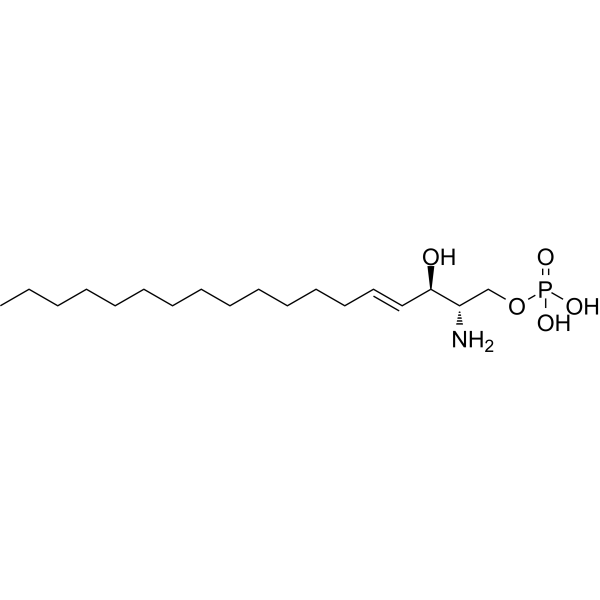
    Ceramide 1-phosphate is a bioactive lipid and one of the key components of sphingolipids. Ceramide 1-phosphate playing diverse roles in cellular behaviors such as cell differentiation, migration, proliferation and death .
    Ceramide 1-phosphate
  • HY-144627

    PROTACs TAM Receptor Cancer
    PROTAC Axl Degrader 2 is a potent and selective PROTAC Axl degrader with an IC50 of 1.61 μM. PROTAC Axl Degrader 2 shows anti-proliferation activity, anti-migration activity in vitro. PROTAC Axl Degrader 2 induces mehuosis .
    PROTAC Axl Degrader 2
  • HY-168596

    ROCK Apoptosis Cancer
    RhoA-ROCK-IN-1 (Compound b19) is an inhibitor of RhoA/ROCK. RhoA-ROCK-IN-1 can significantly inhibit cell proliferation, migration, and invasion, while promoting cell apoptosis. RhoA-ROCK-IN-1 demonstrates remarkable anticancer activity by inhibiting the RhoA/ROCK pathway .
    RhoA-ROCK-IN-1
  • HY-112547

    CRT0066051

    PKD Others
    CRT5, a pyrazine benzamide, is a potent and selective inhibitor for all three isoforms of PKD in endothelial cells treated with VEGF (IC50s = 1, 2, and 1.5 nM for PKD1, PKD2, and PKD3, respectively). CRT5 decreases VEGF-induced endothelial migration, proliferation and tubulogenesis .
    CRT5
  • HY-N7790

    Others Cancer
    Citrusinol is a natural product isolated from D. caudatum. Citrusinol has anticancer activity and inhibits the proliferation and migration of human hepatocytes HepG 2 .
    Citrusinol
  • HY-113127

    Apoptosis Others
    L-Tryptophanamide is a compound discovered in wet age-related macular degeneration research, which has activities related to affecting retinal cell proliferation, apoptosis, necrosis and angiogenesis. In in vitro experiments, L-Tryptophanamide affects the proliferation, apoptosis and necrosis of human retinal pigment epithelial cells, and promotes tube formation and migration of human retinal endothelial cells.
    L-Tryptophanamide
  • HY-100498A
    GSK-2256098 hydrochloride
    5+ Cited Publications

    FAK Apoptosis Cancer
    GSK-2256098 hydrochloride is a focal adhesion kinase (FAK) inhibitor that exhibits potential antiangiogenic and antineoplastic activities. GSK-2256098 hydrochloride targets FAK to inhibit tumor cell growth by regulating cell adhesion, migration, proliferation, and survival.
    GSK-2256098 hydrochloride
  • HY-144624

    PROTACs TAM Receptor Cancer
    PROTAC Axl Degrader 1 is a potent and selective PROTAC Axl degrader with an IC50 of 0.92 μM. PROTAC Axl Degrader 1 shows anti-proliferation activity, anti-migration activity in vitro. PROTAC Axl Degrader 1 induces mehuosis .
    PROTAC Axl Degrader 1
  • HY-126771

    Chr-A

    Antibiotic Bacterial Akt GSK-3 β-catenin c-Myc Infection Cancer
    Chrysomycin A (Chr-A), an antibiotic, can be obtained from Streptomyces. Chrysomycin A exhibits antitumor and anti-tuberculous and MRSA activities. As for glioblastoma, Chrysomycin A inhibits the proliferation, migration, and invasion of cancer cells through the Akt/GSK-3β/β-catenin signaling pathway .
    Chrysomycin A
  • HY-129461

    DTS

    Cathepsin Cancer
    Dibenzyl trisulfide (DTS) is an active ingredient that can be isolated from Petiveria alliacea L.. Dibenzyl trisulfide inhibits cell proliferation and migration. Dibenzyl trisulfide decreased the mRNA and protein expression of BAK-1 and LTA. Dibenzyl trisulfide induces lysosomal membrane permeabilization and cathepsin B release .
    Dibenzyl trisulfide
  • HY-NP131

    Discoidin Domain Receptor Apoptosis Autophagy Cancer
    Recombinant Humanized Type III Collagen 10.4kDa is a novel biomaterial that have anticancer effects. Recombinant Humanized Type III Collagen 10.4kDa activates discoidin domain receptor 1 (DDR1), and thus inhibits autophagy, proliferation, and migration of cancer cells, and induces apoptosis .
    Recombinant Humanized Type III Collagen (10.4kDa)
  • HY-161268

    Apoptosis NEDD8-activating Enzyme Reactive Oxygen Species (ROS) Cancer
    NAE-IN-1 (compound X-10) is a potent NAE1 inhibitor. NAE-IN-1 induces apoptosis and cell cycle arrest at the G2/M phase. NAE-IN-1 increases ROS levels and prevents cell migration. NAE-IN-1 shows anti-proliferation activity .
    NAE-IN-1
  • HY-P3995

    VEGFR Cardiovascular Disease
    Scospondistatin is an anti-angiogenic peptide that can inhibit proliferation and migration of human umbilical vein endothelial cells in vitro .
    Scospondistatin
  • HY-P4002

    ADAMTS Cancer
    Adamtsostatin 18 is an anti-angiogenic peptide derived from proteins containing type I thrombospondin motifs. Adamtsostatin 18 inhibits cell migration and proliferation .
    Adamtsostatin 18
  • HY-N9954

    Apoptosis Cancer
    Isoharringtonine is a natural alkaloid that can be purified from Cephalotaxus koreana Nakai. Isoharringtonine can inhibit cancer cell proliferation and migration, and induce cancer cell apoptosis. Isoharringtonine can be used for the research of cancers .
    Isoharringtonine
  • HY-175753

    Others Cancer
    Z17544625 is a Fascin inhibitor. Z17544625 has a strong binding capacity to fascin and inhibits Actin bundling. Z17544625 significantly reduces proliferation and impairs migration of CRC cells. Z17544625 can be used for cancer, especially colorectal cancer (CRC) research .
    Z17544625
  • HY-179035

    Molecular Glues CXCR Cancer
    TBS6b is a potent and selective ACKR3 molecular glue degrader. TBS6b degrades ACKR3 via the ubiquitin-proteasome pathway. TBS6b inhibits hepatocellular carcinoma cell proliferation, migration, and invasion. TBS6b is relevant to hepatocellular carcinoma (HCC) research .
    TBS6b
  • HY-149631

    HDAC Cancer
    HFY-4A is a HDAC inhibitor. HFY-4A inhibits breast cancer cell proliferation, migration, and invasion, and induces cell apoptosis. HFY-4A induces immunogenic cell death (ICD). HFY-4A inhibits tumor growth in breast cancer xenograft mouse models .
    HFY-4A
  • HY-136699

    MMP FAK Src Integrin Cancer
    Excisanin A is a potent anticancer agent. Excisanin A inhibits cell proliferation, migration, adhesion and invasion. Excisanin A decreases the expression of MMP-2, MMP-9, p-FAK, p-Src, integrin β1 protein. Excisanin A has the potential for the research of breast cancer .
    Excisanin A
  • HY-N8835

    p38 MAPK Neurological Disease
    Cannabisin D inhibits proliferation and migration of glioblastoma cells through MAPKs signaling .
    Cannabisin D
  • HY-133570

    HSP ADC Payload Cancer
    17-AEP-GA, an HSP90 antagonist, is a potent inhibitor of glioblastoma cell proliferation, survival, migration and invasion. ADCs Toxin .
    17-AEP-GA
  • HY-174510

    mRNA Cancer
    Human VEGFA mRNA encodes the human vascular endothelial growth factor A (VEGFA) protein, a member of the PDGF/VEGF growth factor family. VEGFA could induce proliferation and migration of vascular endothelial cells, and is essential for both physiological and pathological angiogenesis.
    Human VEGFA mRNA

Inquiry Online

Your information is safe with us. * Required Fields.

Salutation


Country or Region *

Applicant Name *


Organization Name *

Department *


Email Address *


Product Name *

Cat. No.


Requested quantity *

Phone Number *


Remarks

Inquiry Online

Inquiry Information

Product Name:
Cat. No.:
Quantity:
MCE Japan Authorized Agent:

