



bFGF (119-126)
Based on 6 publication(s) in Google Scholar
bFGF (119-126) is a ligand of bFGF. The complex formed by bFGF (119-126) and bFGF can bind to FGFR1, while inhibiting the bFGF-FGFR1 interaction, FGFR1 phosphorylation and downstream signaling pathways. Therefore, bFGF (119-126) induces cell apoptosis and inhibits cell proliferation, migration, angiogenesis and metastasis. When conjugated with a carrier, bFGF (119-126) enhances cellular uptake via FGFR-mediated endocytosis and serves as an effective FGFR-targeted ligand. When used in combination with ultrasound and Doxorubicin (HY-15142A), bFGF (119-126) significantly enhances the inhibitory effect on tumors. bFGF (119-126) is applicable to research related to lung cancer, breast cancer, glioblastoma and ovarian cancer.
For research use only. We do not sell to patients.
- Purity : 99.93%
- CAS No.: 152051-61-1
- Formula: C44H76N14O12
- Molecular Weight:993.16
-
Storage:
Sealed storage, away from moisture and light.
Powder -80°C, 2 years , -20°C, 1 year* In solvent : -80°C, 6 months; -20°C, 1 month (sealed storage, away from moisture and light)


To place orders, for customer services and technical support, please contact: MedChemExpress USA
Tel: 609-228-6898 E-mail: [email protected] [email protected]


-
 Biological Activity
-
Chemical Information
-
Solvent & Solubility
- Protocols
- Purity & Documentation
- References
-
 Help & FAQs


-

HY-P7109
EGF Protein, Human -
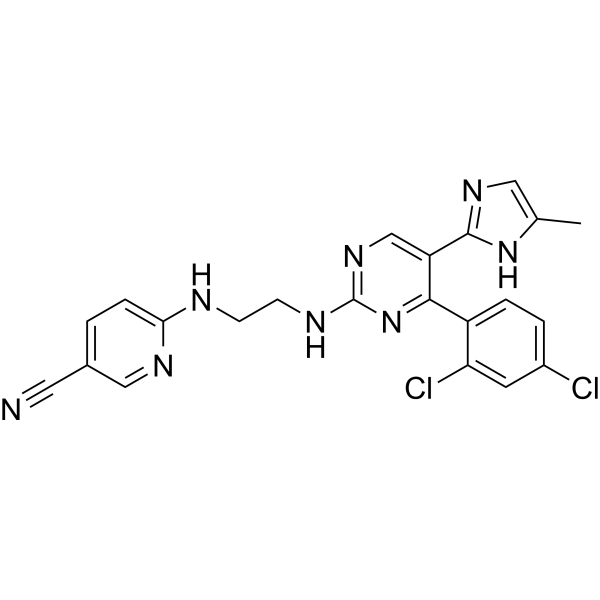
HY-10182
LaduviglusibGSK-3 Inhibitor -
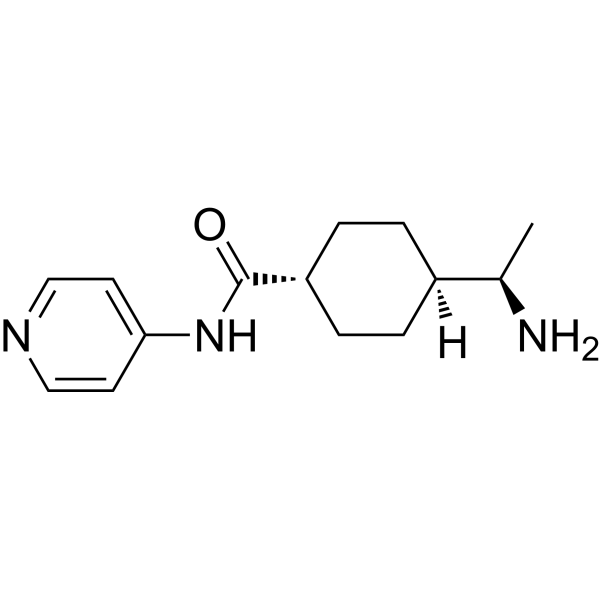
HY-10071
Y-27632ROCK Inhibitor -
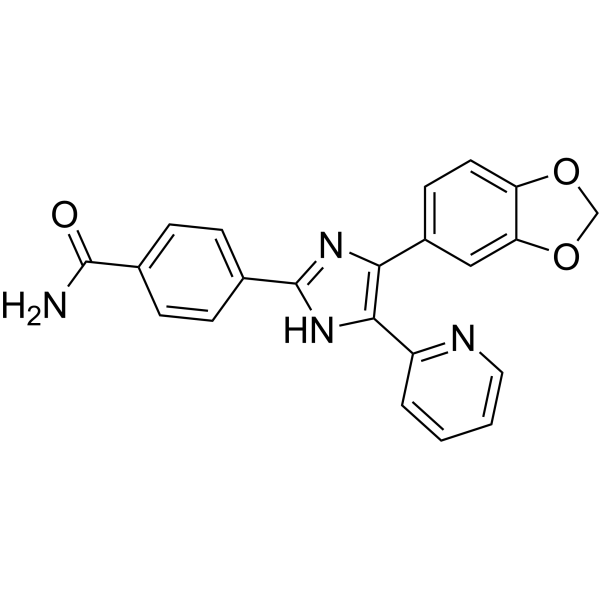
HY-10431
SB-431542TGF-β Receptor Kinase Inhibitor -
HY-P7067
EGF Protein, Mouse -
HY-P7007
BMP-4 Protein, Human -
HY-P7110A
VEGF165 Protein, Human (HEK293) -
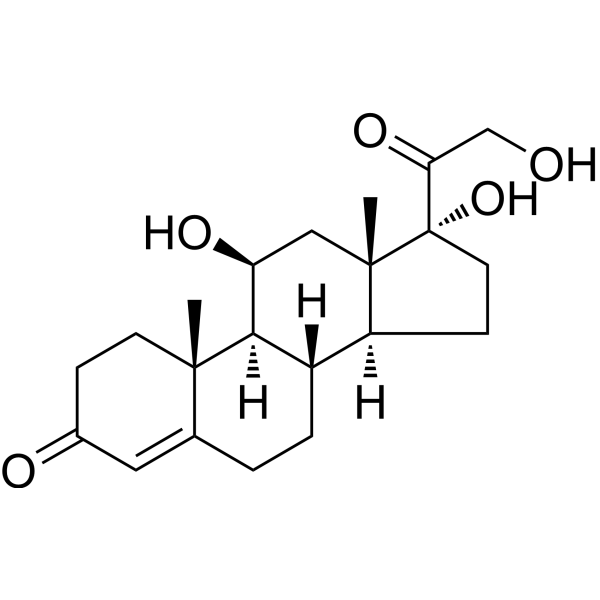
HY-N0583
HydrocortisoneGlucocorticoid Receptor Agonist -
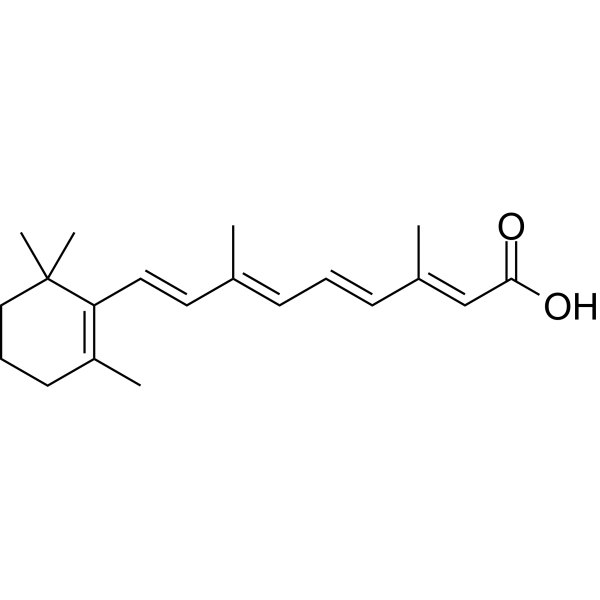
HY-14649
Retinoic acidRAR Agonist -
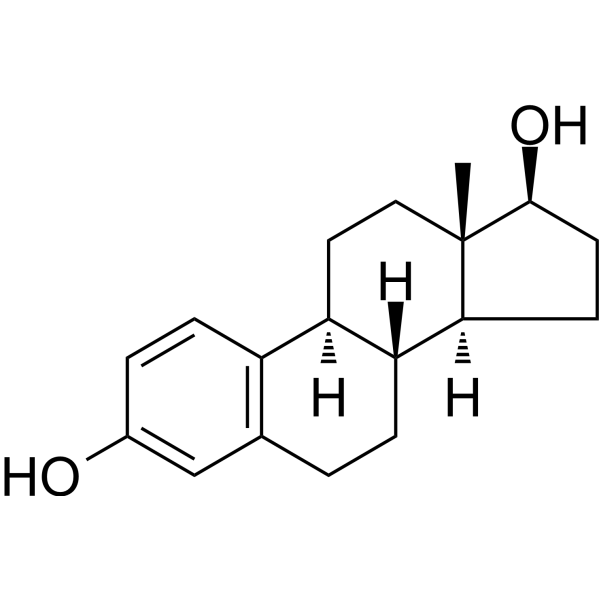
HY-B0141
EstradiolHuman Endogenous Metabolite -
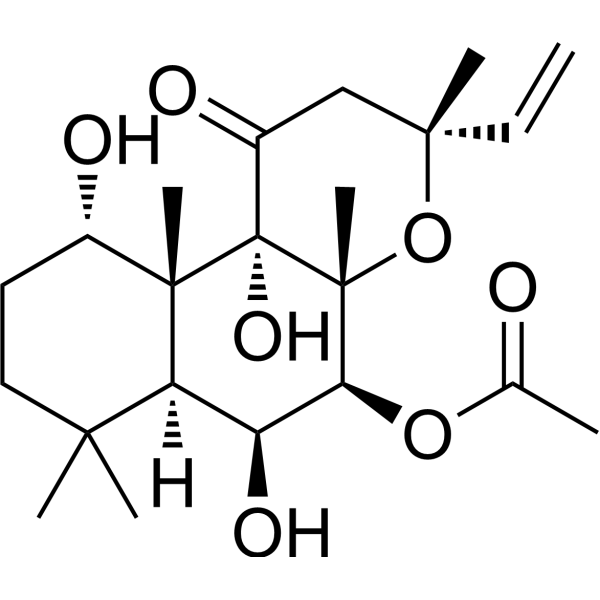
HY-15371
ForskolinAdenylate Cyclase Activator -
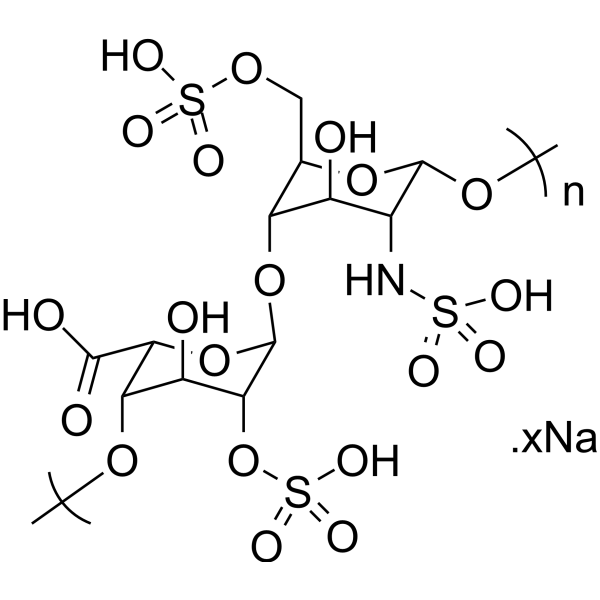
HY-17567A
Heparin sodium saltAnticoagulant
Publications Citing Use of MedChemExpress (MCE) bFGF (119-126)
More

Biological Activity
Description
In Vitro
FITC-bFGFp-BSA, a peptide derived from bFGF (119-126), at 50 μg/mL for 2 h, is significantly internalized by NIH3T3 cells with high FGFRs expression, and this internalization effect is significantly inhibited by excess free bFGFp[2].
Cyclic peptide BGF1 derived from bFGF (119-126) (0.22~1.8 mM; 48 h) dose-dependently inhibits the proliferation of HUVECs, 4T1, U87 and SKOV3 cells induced by 20 ng/mL bFGF, with IC50 values of 1.09 μM, 1.27 mM, 0.65 μM and 0.18 μM for different cells, respectively. The linear peptide at 3 mM shows no such proliferation-inhibiting effect[3].
MedChemExpress (MCE) has not independently confirmed the accuracy of these methods. They are for reference only.
-
Cell Line:NIH3T3 mouse embryonic fibroblast cells
-
Concentration:0.1 μM, 1.0 μM free bFGFp; 0.72 μg/mL, 7.2 μg/mL bFGFp-BSA; 4 μM, 40 μM bFGFp-modified liposomes
-
Incubation Time:72 h
-
Result:Neither the free bFGFp, bFGFp-BSA conjugate, nor bFGFp-modified liposomes altered the proliferation and viability of NIH3T3 cells, regardless of the presence or absence of 1 nM bFGF in the culture medium.
In Vivo
MedChemExpress (MCE) has not independently confirmed the accuracy of these methods. They are for reference only.
-
Animal Model:6–8 weeks-old female BALB/c mice with 4T1 murine mammary carcinoma subcutaneous metastatic tumor model, transplanted with 4T1 tumor fragments subcutaneously on the right flank, treatment initiated when tumor volume reached ~150 mm3 (14 days after tumor implantation)[3]
-
Dosage:Cyclic peptide BGF1 at 2 mg/kg and 10 mg/kg, linear peptide BGF2 at 2 mg/kg and 10 mg/kg
-
Administration:all via intraperitoneal (i.p.) injection daily for 3 weeks; Avastin at 5 mg/kg via intravenous (i.v.) injection once every 14 days (total 2 times); PBS as vehicle control via daily i.p. injection. All agents were dissolved in phosphate-buffered saline
-
Result:The 10 mg/kg BGF1 treatment group achieved ~70% tumor growth inhibition on day 34 after implantation, which was significantly more effective than the Avastin group, while the 2 mg/kg BGF1 group showed ~14% tumor growth inhibition.
Neither 2 mg/kg nor 10 mg/kg of linear peptide BGF2 showed significant inhibitory effect on tumor growth compared with the PBS control group. All mice in the 10 mg/kg BGF1 group survived until the end of the experiment, while the mortality rate was 29% in the PBS group, 86% in the Avastin group, 29% in the 2 mg/kg BGF1 group, and 29% in the BGF2 groups.
Mice in the BGF1 treatment groups gained weight during the experiment, while the Avastin group showed significant weight loss.
- Human pluripotent stem cell endothelial-cell differentiation
- Cell migration
- Somatic Cell Culture
- Breast Cancer Modeling
- Detection of Apoptosis
- TUNEL staining for apoptotic DNA fragmentation
- Endothelial Tube Formation Assay
- Apoptosis Solutions
- MTT Cell Proliferation Assay
- Endothelial Cell Migration/Angiogenic Sprouting Assay
- Western Blot
- Vascular/Branching Fractal Analysis
- Annexin V plus membrane-impermeant dye apoptosis staining
- BrdU Incorporation Assay
- CFSE Dye Dilution Proliferation Assay
- Dye-dilution cell tracking and proliferation staining
- CCK-8/WST-8 Cell Proliferation Assay
- Protocol for Cell Cycle
- Cell Counting-Based Growth Curve Assay
- Colony Formation (Clonogenic) Assay
- Cell Viability Determination by MTT Colorimetric Assay
- Kinase activity and phosphorylation assays
- EdU Incorporation Assay (Click Chemistry-Based DNA Synthesis Measurement)
- Ki-67 Immunostaining Proliferation Assay
- PCNA Immunodetection Proliferation Assay
- Protocol for Cell Counting and Cell Density Analysis
- Protocol for Kinase activity and phosphorylation assays
- Orthotopic Cell-Line Xenograft


Chemical Information
-
CAS No. 152051-61-1
-
Appearance Solid
-
Molecular Weight 993.16
-
Formula C44H76N14O12
-
Color White to off-white
-
Sequence
Lys-Arg-Thr-Gly-Gln-Tyr-Lys-Leu
-
Sequence Shortening
KRTGQYKL
-
Shipping
Room temperature in continental US; may vary elsewhere.
-
Storage
Sealed storage, away from moisture and light
Powder -80°C 2 years -20°C 1 year * In solvent : -80°C, 6 months; -20°C, 1 month (sealed storage, away from moisture and light)


Publications (6)
-
Journal Impact Factor
-
Most Recent
-
Adv Sci (Weinh)
DTX3L Inhibits the EMT, Metastasis, and Stem-Like Features of Gastric Cancer Through Promoting GSK-3β Dependent SNAI1 Decay. [Abstract]2026 Jul;13(37):e24036. PMID: 41972409 -
Research (Wash D C)
Lactate-Induced Mitochondrial Calcium Uptake 3 Aggravates Myocardial Ischemia-Reperfusion Injury by Promoting Neutrophil Extracellular Trap Formation. [Abstract]2025 May 30:8:0705. PMID: 40452820 -
J Hazard Mater
Integrating scRNA-seq to explore offspring neurodevelopmental toxicity induced by Cyfluthrin exposure during pregnancy: A fate decision for NSCs. [Abstract]2025 Jul 15:492:138205. PMID: 40209410 -
Oncogene
TRIM21-mediated ubiquitination of SIX2 attenuates breast cancer stemness via LGSN suppression. [Abstract]2025 Sep 15. PMID: 40954199 -
Int J Mol Sci
The Retinoic-Acid-Related Orphan Receptor Alpha May Be Highly Involved in the Regulation of Seasonal Hair Molting. [Abstract]2025 Feb 13;26(4):1579. PMID: 40004044 -
Future Sci OA
The P7 peptide antagonizes bFGF-induced malignant behaviors of ovarian cancer by inhibiting MEK/ERK signaling pathway. [Abstract]2026 Dec;12(1):2615619. PMID: 41562160


Solvent & Solubility
In Vitro:
H2O : ≥ 100 mg/mL (100.69 mM)
DMSO : 50 mg/mL (50.34 mM; Need ultrasonic; Hygroscopic DMSO has a significant impact on the solubility of product, please use newly opened DMSO)
* "≥" means soluble, but saturation unknown.
Please refer to the solubility information to select the appropriate solvent. Once prepared, please aliquot and store the solution to prevent product inactivation from repeated freeze-thaw cycles.
Storage method and period of stock solution: -80°C, 6 months; -20°C, 1 month (sealed storage, away from moisture and light). When stored at -80°C, please use it within 6 months. When stored at -20°C, please use it within 1 month.
* Note: If you choose water as the stock solution, please dilute it to the working solution, then filter and sterilize it with a 0.22 μm filter before use.
Please refer to the solubility information to select the appropriate solvent. Once prepared, please aliquot and store the solution to prevent product inactivation from repeated freeze-thaw cycles.
Storage method and period of stock solution: -80°C, 6 months; -20°C, 1 month (sealed storage, away from moisture and light). When stored at -80°C, please use it within 6 months. When stored at -20°C, please use it within 1 month.
* Note: If you choose water as the stock solution, please dilute it to the working solution, then filter and sterilize it with a 0.22 μm filter before use.
Concentration (start) × Volume (start) = Concentration (final) × Volume (final)


Purity & Documentation
-
Data Sheet (275 KB)
-
SDS (252 KB)
- English - EN (252 KB)
- Français - FR (252 KB)
- Deutsch - DE (252 KB)
- Norwegian - NO (252 KB)
- Español - ES (252 KB)
- Swedish - SV (252 KB)
- Italian - IT (252 KB)
- Korean - KR (252 KB)
- Portuguese - PT (252 KB)
-
Handling Instructions (2659 KB)
References
[1]. Terada T, et al. Basic fibroblast growth factor-binding peptide as a novel targeting ligand of drug carrier to tumor cells. J Drug Target. 2006;14(8):536-545. [Content Brief]
[2]. Wu Y, et al. Preparation and antitumor activity of bFGF-mediated active targeting doxorubicin microbubbles. Drug Dev Ind Pharm. 2013;39(11):1712-1719. [Content Brief]
[3]. Allahmoradi H, et al. Anti-tumor and anti-metastatic activity of the FGF2 118-126 fragment dependent on the loop structure. Biochem J. 2022;479(12):1285-1302. [Content Brief]


Complete Stock Solution Preparation Table
Please refer to the solubility information to select the appropriate solvent. Once prepared, please aliquot and store the solution to prevent product inactivation from repeated freeze-thaw cycles.
Storage method and period of stock solution: -80°C, 6 months; -20°C, 1 month (sealed storage, away from moisture and light). When stored at -80°C, please use it within 6 months. When stored at -20°C, please use it within 1 month.
| Optional Solvent | Concentration Solvent Mass | 1 mg | 5 mg | 10 mg | 25 mg |
|---|---|---|---|---|---|
| DMSO / H2O | 1 mM | 1.0069 mL | 5.0344 mL | 10.0689 mL | 25.1722 mL |
| 5 mM | 0.2014 mL | 1.0069 mL | 2.0138 mL | 5.0344 mL | |
| 10 mM | 0.1007 mL | 0.5034 mL | 1.0069 mL | 2.5172 mL | |
| 15 mM | 0.0671 mL | 0.3356 mL | 0.6713 mL | 1.6781 mL | |
| 20 mM | 0.0503 mL | 0.2517 mL | 0.5034 mL | 1.2586 mL | |
| 25 mM | 0.0403 mL | 0.2014 mL | 0.4028 mL | 1.0069 mL | |
| 30 mM | 0.0336 mL | 0.1678 mL | 0.3356 mL | 0.8391 mL | |
| 40 mM | 0.0252 mL | 0.1259 mL | 0.2517 mL | 0.6293 mL | |
| 50 mM | 0.0201 mL | 0.1007 mL | 0.2014 mL | 0.5034 mL | |
| H2O | 60 mM | 0.0168 mL | 0.0839 mL | 0.1678 mL | 0.4195 mL |
| 80 mM | 0.0126 mL | 0.0629 mL | 0.1259 mL | 0.3147 mL | |
| 100 mM | 0.0101 mL | 0.0503 mL | 0.1007 mL | 0.2517 mL |
* Note: If you choose water as the stock solution, please dilute it to the working solution, then filter and sterilize it with a 0.22 μm filter before use.


bFGF (119-126) Related Classifications
HY-P5321 Related Classifications
 Powered by Bioz