



FGFR3
FGFR3 encodes a receptor tyrosine kinase that acts as a negative regulator of endochondral bone growth by limiting chondrocyte proliferation, hypertrophic differentiation, and osteogenesis in growth plate cartilage[1][2]. Mechanistically, activated FGFR3 signaling inhibits bone growth through MAPK-dependent suppression of chondrocyte differentiation and STAT1-associated suppression of chondrocyte proliferation[3]. In skeletal disease models, activating FGFR3 mutations explain achondroplasia as gain-of-function lesions that intensify this inhibitory growth-control program[1]. In cancer, activating FGFR3 mutations occur in bladder and cervix carcinomas, and FGFR3-TACC3 fusions show oncogenic activity in glioblastoma models[4][5]. Compared with related isoforms, alternative splicing of the FGFR3 IgIII domain generates IIIb/IIIc variants with distinct ligand-binding properties, and FGFR3 IIIb binds only acidic FGF in the reported binding assays[6]. For experimental and translational applications, erdafitinib, an FGFR1-4 tyrosine kinase inhibitor, produced clinical activity in advanced urothelial carcinoma with susceptible FGFR2/3 alterations and later improved overall survival versus chemotherapy after anti-PD-1/PD-L1 treatment[7][8].
Referencias:
- [1]. Deng C, et al. Fibroblast growth factor receptor 3 is a negative regulator of bone growth. Cell. 1996;84(6):911-921.
- [2]. Wang Q, Green RP, Zhao G, Ornitz DM. Differential regulation of endochondral bone growth and joint development by FGFR1 and FGFR3 tyrosine kinase domains. Development. 2001 Oct;128(19):3867-76. [Content Brief]
- [3]. Murakami S, et al. Constitutive activation of MEK1 in chondrocytes causes Stat1-independent achondroplasia-like dwarfism and rescues the Fgfr3-deficient mouse phenotype. Genes Dev. 2004 Feb 1;18(3):290-305. [Content Brief]
- [4]. Cappellen D, et al. Frequent activating mutations of FGFR3 in human bladder and cervix carcinomas. Nat Genet. 1999 Sep;23(1):18-20. [Content Brief]
- [5]. Singh D, et al. Transforming fusions of FGFR and TACC genes in human glioblastoma. Science. 2012 Sep 7;337(6099):1231-5. [Content Brief]
- [6]. Chellaiah AT, et al. Fibroblast growth factor receptor (FGFR) 3. Alternative splicing in immunoglobulin-like domain III creates a receptor highly specific for acidic FGF/FGF-1. J Biol Chem. 1994 Apr 15;269(15):11620-7. [Content Brief]
- [7]. Loriot Y, et al. Erdafitinib in Locally Advanced or Metastatic Urothelial Carcinoma. N Engl J Med. 2019 Jul 25;381(4):338-348. [Content Brief]
- [8]. Loriot Y, et al. Erdafitinib or Chemotherapy in Advanced or Metastatic Urothelial Carcinoma. N Engl J Med. 2023 Nov 23;389(21):1961-1971. [Content Brief]
-
Productos relacionados con FGFR3 (14)
Productos relacionados con (14)

- 1
-
Secretoneurin, rat
 0 ImagesSecretoneurin, rat is a 33-amino acid neuropeptide produced by proteolytic processing of chromogranin II, widely distributed in the central and peripheral nervous systems, and its release is calcium-dependent. Secretoneurin, rat modulates the activities of caspase-3, caspase-1, the NLRP3 inflammasome, IGF-1R, VEGFR1, VEGFR2, FGFR3, AMPK, ERK1/2/MAPK, and Jak2/Stat3 pathways. Secretoneurin, rat regulates neuronal apoptosis, synaptic structure, inflammation, neurogenesis, angiogenesis, oxidative stress, cardiomyocyte hypertrophy, dopamine release, and cell migration and proliferation. Secretoneurin, rat is used in studies of global cerebral ischemia, myocardial infarction, stroke, and cardiac hypertrophy.
-
IMC-D11
 0 ImagesReferencia número: HY-P991106Pureza: 98.51%Synonyms: LY-3076226 antibodyIMC-D11 (LY-3076226 antibody) is an anti-FGFR3 IgG1 monoclonal antibody with an EC50 of approximately 0.1 nM against hFGFR3b and hFGFR3c. IMC-D11 inhibits the growth of FGFR3-dependent lung adenocarcinoma in mouse models and shows no effect on tumors that do not express FGFR3. IMC-D11 can serve as an ADC Antibody for ADC synthesis, such as LY3076226. IMC-D11 is applicable to research related to urothelial carcinoma, multiple myeloma, lung adenocarcinoma, as well as advanced or metastatic cancers.
-
LC-MF-4
 0 ImagesReferencia número: HY-174981Pureza: 98.46%LC-MF-4 is an orally active VHL-recruiting FGFR3 PROTAC degrader and hERG potassium channel inhibitor. LC-MF-4 has an IC50 of 16.6 nM against human FGFR3, exhibits inhibitory activity against hERG potassium channels, suppresses the expression of genes related to mitochondrial biogenesis and ATP synthesis, inhibits cancer cell proliferation, and shows significant antitumor activity in mice. LC-MF-4 can be used in the research of bladder cancer, urothelial carcinoma, FGFR3Y373C mutant cancers, and FGFR3-TACC3 fusion-positive cancers.
-
Recifercept
 0 ImagesReferencia número: HY-P99823No. CAS: 2226238-09-9Synonyms: TA-46; sFGFR3; PF-07256472Recifercept (TA-46) is a FGFR3 that binds to FGF1, FGF2, FGF8, FGF9, FGF16, FGF17, FGF18, and FGF20 with Kd values of 0.74, 3.4, 4.28, 0.75, 0.94, 2.73, 4.17, and 7.1 nM, respectively. Recifercept acts as a decoy receptor, preventing FGF from binding to mutant FGFR3. Recifercept impairs MAPK and reduces FGF-induced ERK phosphorylation. Recifercept corrects achondroplastic bone growth and craniofacial abnormalities. Recifercept prevents visceral obesity and restores glucose metabolism, insulin/glucagon, hepatic responses, and energy metabolism. Recifercept can be used for research on idiopathic pulmonary fibrosis.
-
Lavengratinib
 0 ImagesReferencia número: HY-187793No. CAS: 2412854-49-8Synonyms: ABSK061Lavengratinib (ABSK061) is a FGFR2/FGFR3 inhibitor. Lavengratinib selectively inhibits FGFR2 and FGFR3 signaling pathways and reduces the risk of FGFR1-mediated hyperphosphatemia. Lavengratinib is suitable for research on advanced solid tumors (including cholangiocarcinoma, gastric cancer, non-small cell lung cancer, cervical cancer and urothelial cancer).
-
FGFR3-IN-10
 0 ImagesReferencia número: HY-122833No. CAS: 2833703-74-3FGFR3-IN-10 is a FGFR3 inhibitor with an IC50 of <350 nM. FGFR3-IN-10 is applicable to research related to cancer, systemic sclerosis, fibrosis, achondroplasia, thanatophoric dysplasia, and Muenke syndrome.
-
Dabogratinib (GMP)
 0 ImagesReferencia número: HY-159642GNo. CAS: 2800223-30-5Synonyms: TYRA-300 (GMP)Dabogratinib (GMP) is the GMP-grade version of Dabogratinib (HY-159642). Dabogratinib (TYRA-300) is an orally active, selective FGFR3 inhibitor with an IC50 of 11 nM. Dabogratinib exhibits antitumor activity against urothelial carcinoma and solid tumors. Dabogratinib downregulates the FGFR3 and ERK1/2 signaling pathways, and induces tumor growth inhibition and regression in FGFR3-altered xenograft models. Dabogratinib promotes chondrocyte proliferation and differentiation, drives endochondral bone formation and overall body growth, partially restores long bone proportions, and improves craniofacial and spinal morphology. Dabogratinib can be used for the research of metastatic urothelial carcinoma, achondroplasia and hypochondroplasia.
-
FGFR-IN-27
 0 ImagesReferencia número: HY-183780FGFR-IN-27 is an orally active, broad-spectrum FGFR inhibitor, with an IC50 of 0.24 nM against human FGFR1, 0.71 nM against FGFR2, 0.87 nM against FGFR3, and 6.50 nM against FGFR4. FGFR-IN-27 inhibits cancer cell proliferation and blocks tumor growth. FGFR-IN-27 reduces the phosphorylation levels of AKT and ERK, induces apoptosis and ferroptosis, increases ROS levels, and decreases GSH levels. FGFR-IN-27 can be used in the research of hepatocellular carcinoma.
-
FGFR-IN-28
 0 ImagesReferencia número: HY-184250No. CAS: 2634677-16-8FGFR-IN-28 is a FGFR inhibitor with inhibitory activity against multiple subtypes of the FGFR family, with an IC50 of 4.4 nM against FGFR4. FGFR-IN-28 inhibits kinase activity and phosphorylation processes, and blocks the downstream MAPK and AKT signaling pathways. FGFR-IN-28 induces cellular DNA damage, cell cycle arrest, apoptosis and ferroptosis, and reduces the adhesion, invasion and metastasis abilities of cancer cells. FGFR-IN-28 exhibits anti-tumor activity in in vitro experiments on colon cancer cells, and inhibits tumor growth in colon cancer xenograft models. FGFR-IN-28 can be used in colon cancer-related research.
-
FGFR-IN-29
 0 ImagesReferencia número: HY-189241FGFR-IN-29 is an orally active pan-FGFR inhibitor that suppresses the kinase activities of FGFR1, FGFR2, FGFR3, and FGFR4. FGFR-IN-29 blocks the intracellular phosphorylation process of FGFR and arrests downstream tumor cell proliferation signaling. FGFR-IN-29 inhibits tumor growth in solid tumor xenograft mouse models. FGFR-IN-29 is applicable for cancer-related research.
-
FGFR3-IN-12
 0 ImagesReferencia número: HY-181752No. CAS: 3127143-52-3FGFR3-IN-12 is a selective fibroblast growth factor receptor 3 (FGFR3) inhibitor with an IC50 of 6.8 nM. FGFR3-IN-12 shows an IC50 of 19.2 nM against FGFR3V555M and an IC50 of 16.9 nM against TNK1 (Thirty-eight Negative Kinase 1). FGFR3-IN-12 inhibits cancer cells proliferation and induces caspase-mediated apoptosis. FGFR3-IN-12 exhibits antitumor activity in bladder cancer xenografts mice models. FGFR3-IN-12 can be used for the research of cancer, such as bladder cancer.
-
FGFR-IN-12
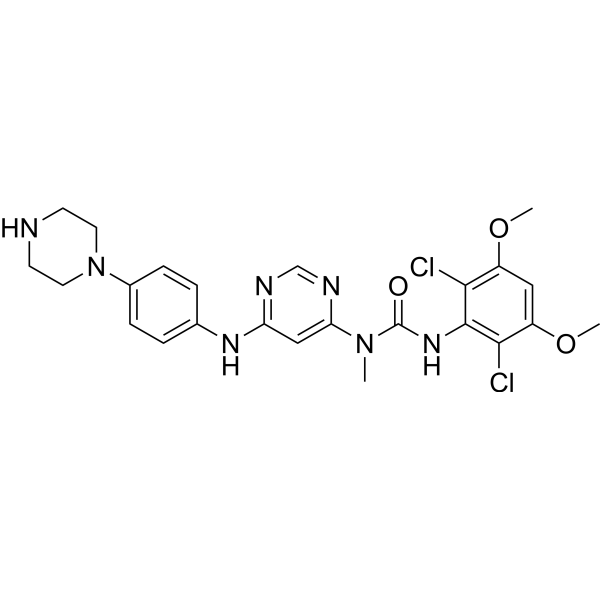 0 ImagesReferencia número: HY-160013No. CAS: 943189-02-4FGFR-IN-12 (example 14), a pyrimidinyl aryl urea derivative, is a potent FGFR inhibitor.
-
FGFR3-IN-11
 0 ImagesReferencia número: HY-181152FGFR3-IN-11 (compound B10) is a Fibroblast growth factor receptor 3 (FGFR3) inhibitor with a Ka value of 4.8 μM. FGFR3-IN-11 induces apoptosis, suppresses colony formation, and causes dose-dependent G0/G1 cell cycle arrest in cancer cells. FGFR3-IN-11 exerts anticancer activity against cancer cells with minimal toxicity toward normal hepatocytes and demonstrates tumor growth suppression in xenograft mouse models. FGFR3-IN-11 can be used for the research of hepatocellular carcinoma.
-
CYB-5067
 0 ImagesReferencia número: HY-184598CYB-5067 is a FGFR molecular glue degrader with a DC50 of 27 nM against FGFR2. CYB-5067 inhibits FGFR1, FGFR3, FGFR4 and downstream FGFR signaling pathways, induces antiproliferative activity in vitro, and exhibits sustained target protein inhibition in vivo without obvious hook effect. CYB-5067 shows significant tumor growth inhibitory activity in the ETV6-FGFR2 fusion Ba/F3 xenograft model. CYB-5067 can be used for the research of FGFR-driven cancers.
- 1



