FGFR
FGFRs are transmembrane receptor tyrosine kinases for fibroblast growth factors, and four FGFRs possess intracellular protein-tyrosine kinase activity[1]. Mechanistically, FGFR signaling activates MAPK, JNK, β-catenin, and related transcriptional programs that regulate proliferation, differentiation, survival, migration, and organogenesis[2][3][4]. In developmental models, FGFR1 supports neurulation and limb development, whereas FGFR2IIIb controls mesenchymal-epithelial signaling during early organogenesis[5][6]. In epithelial and cancer models, isoform context strongly changes biological output: FGFR1-IIIb induces proliferation through p44/42 MAP kinase and JNK pathways, FGFR2IIIb differs from FGFR2IIIc in ligand-binding specificity and tissue distribution, and FGFR4 mediates FGF19 signaling to the prolactin promoter[2][6][7]. Disease relevance also differs by isoform, because FGFR3 mutations account for achondroplasia, hypochondroplasia, and thanatophoric dwarfism, while FGFR4 overexpression associates with poor survival in high-grade serous ovarian carcinoma[8][9]. For experimental applications, FGFR inhibitors such as erdafitinib, infigratinib, futibatinib, and fisogatinib provide tools to interrogate kinase-dependent FGFR signaling and FGFR-driven cancers[1][10].
Referencias:
- [1]. Roskoski R Jr. The role of fibroblast growth factor receptor (FGFR) protein-tyrosine kinase inhibitors in the treatment of cancers including those of the urinary bladder. Pharmacol Res. 2020 Jan;151:104567. doi: 10.1016/j.phrs.2019.104567. Epub 2019 Nov 23. PMID: 31770593. et al. The role of fibroblast growth factor receptor (FGFR) protein-tyrosine kinase inhibitors in the treatment of cancers including those of the urinary bladder. Pharmacol Res. 2020 Jan;151:104567. [Content Brief]
- [2]. Fukamachi A, et al. Postoperative extradural hematomas: computed tomographic survey of 1105 intracranial operations. Neurosurgery. 1986 Oct;19(4):589-93. [Content Brief]
- [3]. Brodrick B, et al. Fibroblast growth factor receptor-3 (FGFR-3) regulates expression of paneth cell lineage-specific genes in intestinal epithelial cells through both TCF4/beta-catenin-dependent and -independent signaling pathways. J Biol Chem. 2011 May 27;286(21):18515-25. [Content Brief]
- [4]. Rosenthal R, et al. The fibroblast growth factor receptors, FGFR-1 and FGFR-2, mediate two independent signalling pathways in human retinal pigment epithelial cells. Biochem Biophys Res Commun. 2005 Nov 11;337(1):241-7. [Content Brief]
- [5]. Deng C, et al. Fibroblast growth factor receptor-1 (FGFR-1) is essential for normal neural tube and limb development. Dev Biol. 1997 May 1;185(1):42-54. [Content Brief]
- [6]. Spencer-Dene B, et al. An Important Role for the IIIb Isoform of Fibroblast Growth Factor Receptor 2 in Mesenchymal-Epithelial Signalling during Mouse Organogenesis. Clinical Science. 2000 Aug 1;99(s43):5P-.
- [7]. Yu S, et al. Fibroblast growth factor receptor 4 (FGFR4) mediates signaling to the prolactin but not the FGFR4 promoter. Am J Physiol Endocrinol Metab. 2002 Sep;283(3):E490-5. [Content Brief]
- [8]. Bonaventure J, et al. Common mutations in the fibroblast growth factor receptor 3 (FGFR 3) gene account for achondroplasia, hypochondroplasia, and thanatophoric dwarfism. Am J Med Genet. 1996 May 3;63(1):148-54. [Content Brief]
- [9]. Hao X, et al. Electromagnetic Functional Properties of Flexible Picosecond Laser-Induced Graphene Films Modified with Silver Nanoparticles. ACS Appl Mater Interfaces. 2026 May 27;18(20):28957-28968. [Content Brief]
- [10]. Lu X, et al. Fibroblast Growth Factor Receptor 4 (FGFR4) Selective Inhibitors as Hepatocellular Carcinoma Therapy: Advances and Prospects. J Med Chem. 2019 Mar 28;62(6):2905-2915. [Content Brief]
-
Productos relacionados con FGFR (188)
Productos relacionados con (188)

-
bFGF (119-126)
 0 ImagesbFGF (119-126) is a ligand of bFGF. The complex formed by bFGF (119-126) and bFGF can bind to FGFR1, while inhibiting the bFGF-FGFR1 interaction, FGFR1 phosphorylation and downstream signaling pathways. Therefore, bFGF (119-126) induces cell apoptosis and inhibits cell proliferation, migration, angiogenesis and metastasis. When conjugated with a carrier, bFGF (119-126) enhances cellular uptake via FGFR-mediated endocytosis and serves as an effective FGFR-targeted ligand. When used in combination with ultrasound and Doxorubicin (HY-15142A), bFGF (119-126) significantly enhances the inhibitory effect on tumors. bFGF (119-126) is applicable to research related to lung cancer, breast cancer, glioblastoma and ovarian cancer.
-
Triamcinolone acetonide
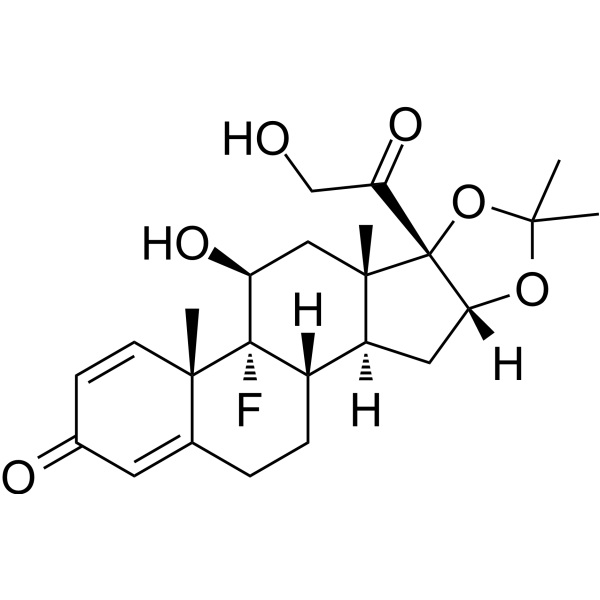 0 ImagesTriamcinolone acetonide inhibits basic fibroblast growth factor (bFGF) induced proliferation of retinal endothelial cells. Triamcinolone acetonide reduces chondrocyte viability and leads to cartilage destruction. Triamcinolone acetonide activates macrophage with anti-inflammatory characteristics. Triamcinolone acetonide can be used in the study of diseases such as atopic dermatitis.
-
Masitinib
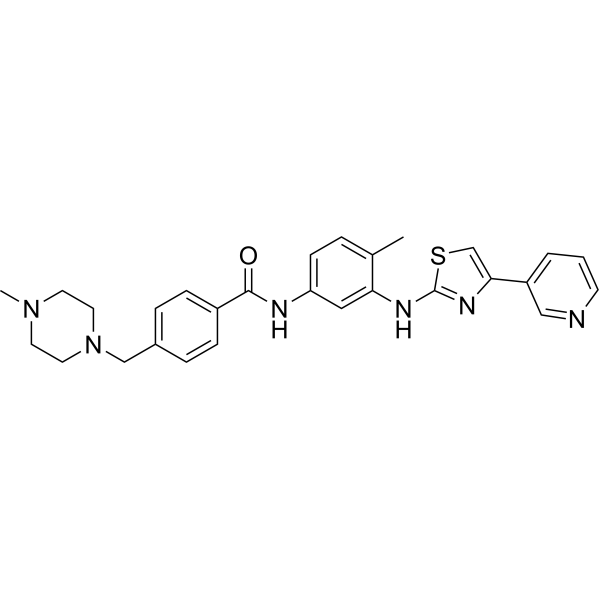 0 ImagesSynonyms: AB1010Masitinib (AB1010) is a potent, orally bioavailable, and selective inhibitor of c-Kit (IC50=200 nM for human recombinant c-Kit). It also inhibits PDGFRα/β (IC50s=540/800 nM), Lyn (IC50= 510 nM for LynB), Lck, and, to a lesser extent, FGFR3 and FAK. Masitinib (AB1010) has anti-proliferative, pro-apoptotic activity and low toxicity.
-
Vosoritide acetate
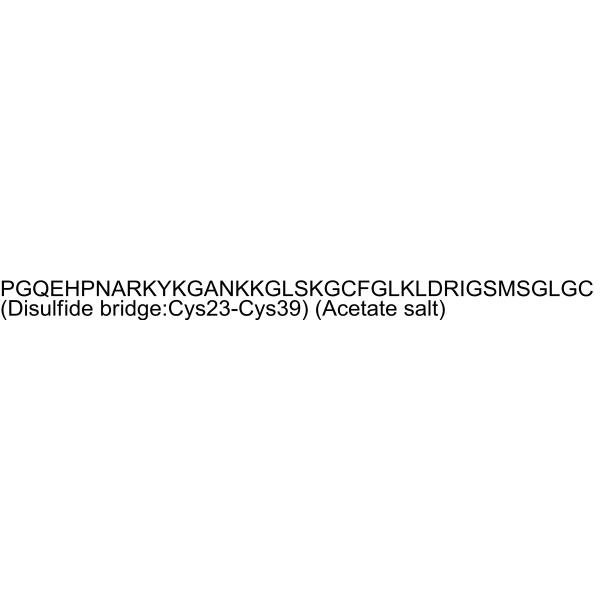 0 ImagesReferencia número: HY-P3503APureza: 99.96%Synonyms: BMN 111 acetateVosoritide (BMN 111) acetate is a natriuretic peptide receptor 2 (NPR2) agonist that acts on the proliferation and differentiation of chondrocytes to promote bone growth.
-
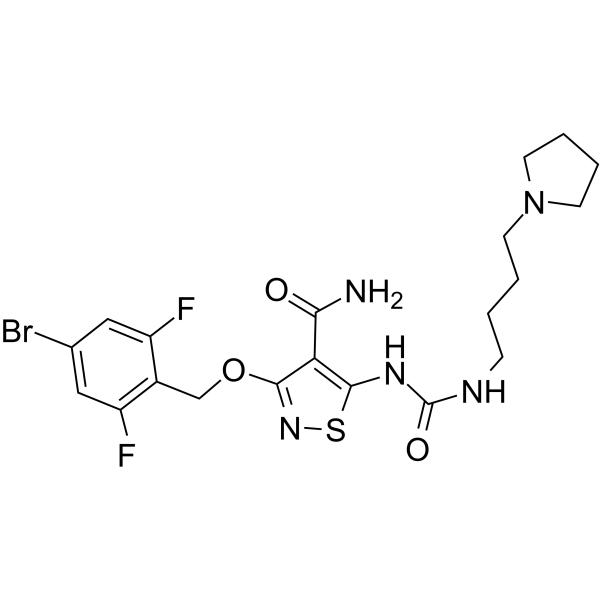
Bemarituzumab
 0 ImagesSynonyms: AMG 552; FPA-144
-
Gunagratinib
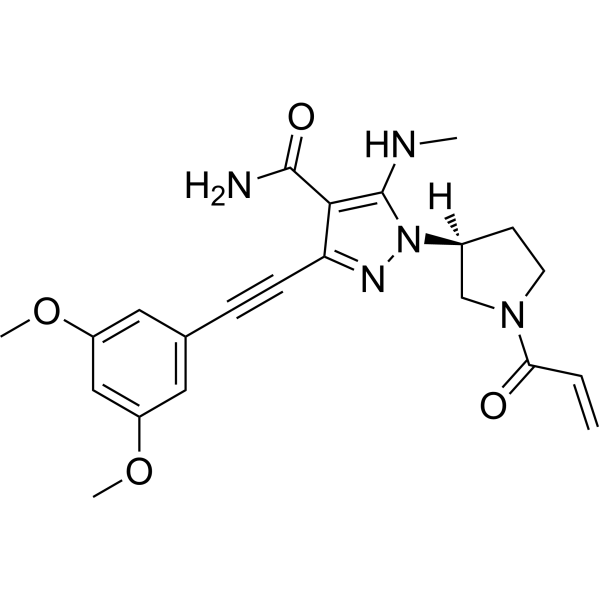 0 ImagesSynonyms: ICP-192Gunagratinib (ICP-192) is a low toxicity and orally active pan-FGFR (fibroblast growth factor receptors) inhibitor that potently and selectively inhibits FGFR activities irreversibly by covalent binding. Gunagratinib can be used for the research of cancer. Gunagratinib is a click chemistry reagent, it contains an Alkyne group and can undergo copper-catalyzed azide-alkyne cycloaddition (CuAAc) with molecules containing Azide groups.
-
Vosoritide
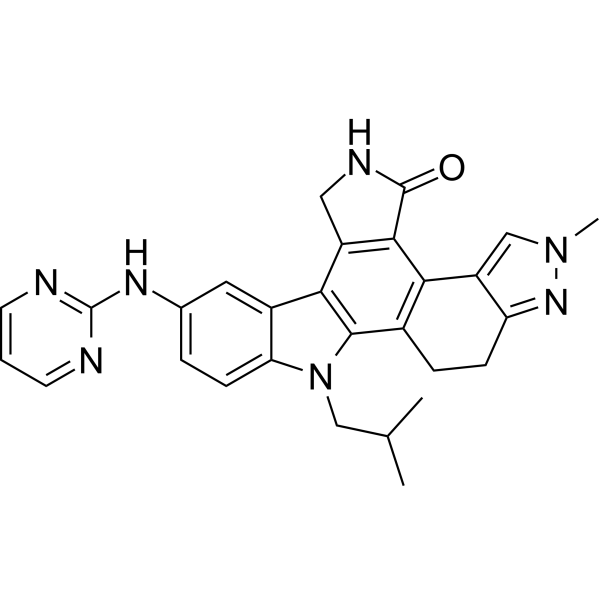
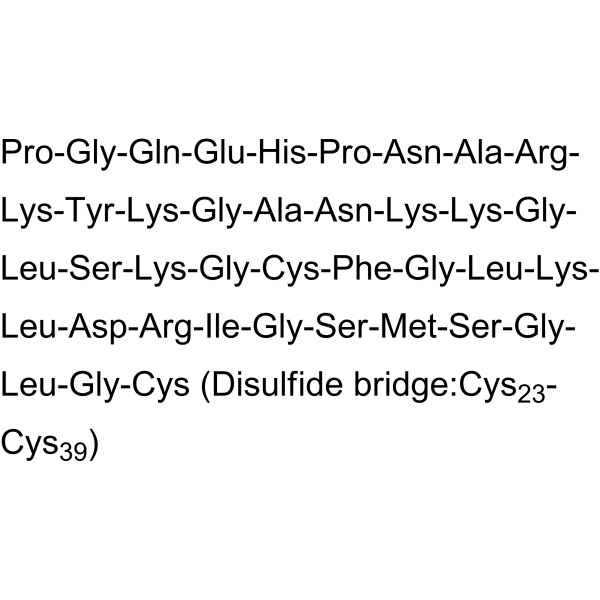 0 ImagesSynonyms: BMN 111Vosoritide (BMN 111) is a modified recombinant CNP (C-type natriuretic peptide) analogue, binds to NPR-B (natriuretic peptide receptor type B) and reduces the activity of FGFR3 (fibroblast growth factor receptor 3). Vosoritide can be used in achondroplasia and dwarfism research.
-
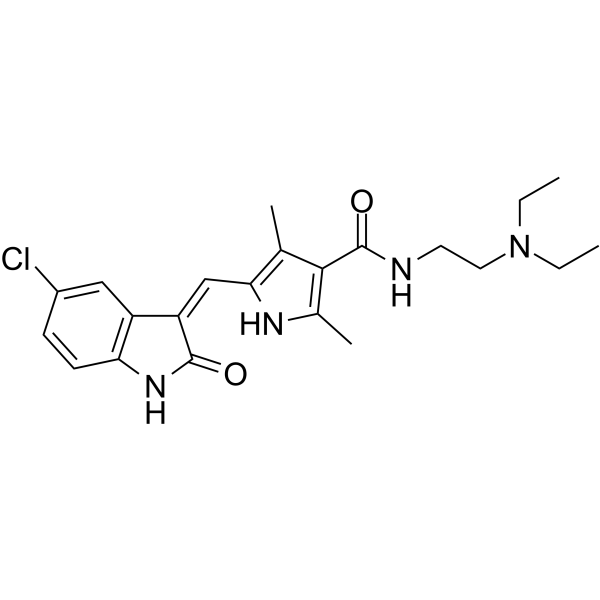
Bemarituzumab (FUT8-KO)
 0 ImagesReferencia número: HY-P99010APureza: 99.00%Bemarituzumab (FUT8-KO) is an anti-FGFR2b monoclonal antibody expressed by CHO cells with the fucosyltransferase 8 gene (FUT8) knocked out. Fucose deficiency enhances the ADCC effect of the antibody. Bemarituzumab (FUT8-KO) lacks a core fucose in the polysaccharide portion of the Fc domain of the antibody, and results in a high affinity to human FcγRIIIa.
-
Masitinib mesylate
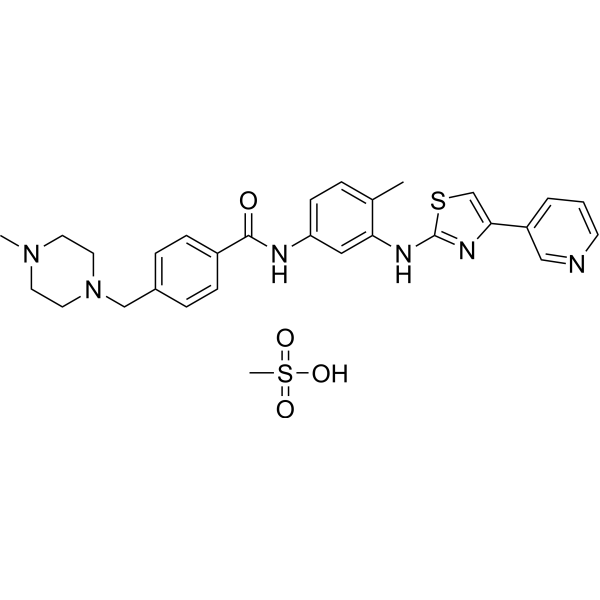 0 ImagesSynonyms: AB-1010 mesylateMasitinib mesylate (AB-1010 mesylate) is a potent, orally bioavailable, and selective inhibitor of c-Kit (IC50=200 nM for human recombinant c-Kit). It also inhibits PDGFRα/β (IC50s=540/800 nM), Lyn (IC50= 510 nM for LynB), Lck, and, to a lesser extent, FGFR3 and FAK. Masitinib mesylate (AB-1010 mesylate) has anti-proliferative, pro-apoptotic activity and low toxicity.
-
Efimosfermin alfa
 0 ImagesSynonyms: BOS-580; LLF580Efimosfermin alfa is a genetically engineered FGF21 variant. Efimosfermin alfa exerts its function by activating the FGFR1c/β-Klotho complex. Efimosfermin alfa is applicable to researches on metabolic dysfunction-associated steatohepatitis, obesity and mild hypertriglyceridemia.
-
BO-264
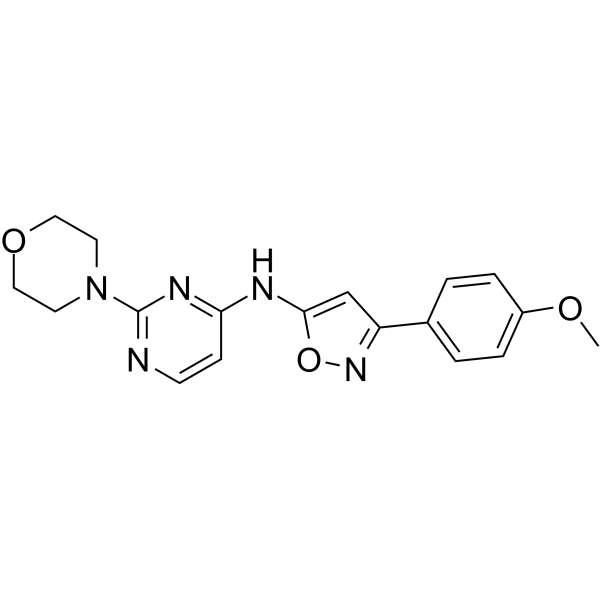 0 ImagesBO-264 is a highly potent and orally active transforming acidic coiled-coil 3 (TACC3) inhibitor with an IC50 of 188 nM and a Kd of 1.5 nM. BO-264 specifically blocks the function of FGFR3-TACC3 fusion protein. BO-264 induces spindle assembly checkpoint (SAC)-dependent mitotic arrest, DNA damage and apoptosis. BO-264 has broad-spectrum antitumor activity.
-
Ferulic acid sodium
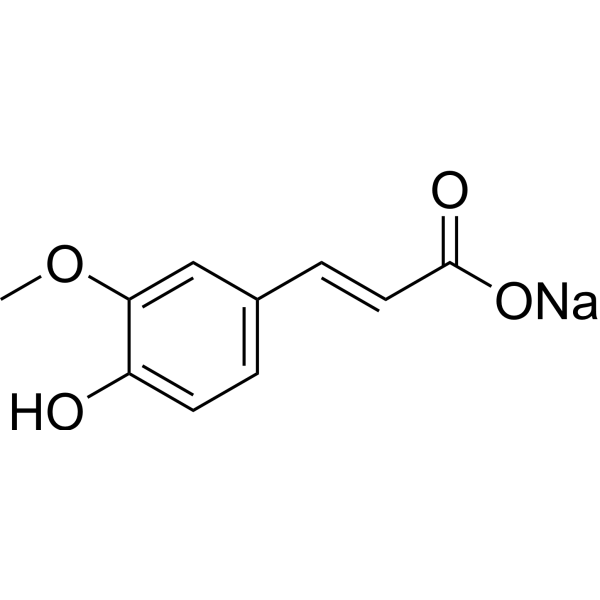 0 ImagesSynonyms: Coniferic acid sodiumFerulic acid sodium is a novel fibroblast growth factor receptor 1 (FGFR1) inhibitor with IC50s of 3.78 and 12.5 μM for FGFR1 and FGFR2, respectively.
-
Ferulic acid (Standard)
 0 ImagesFerulic acid (Standard) is the analytical standard of Ferulic acid. This product is intended for research and analytical applications. Ferulic acid is a novel fibroblast growth factor receptor 1 (FGFR1) inhibitor with IC50s of 3.78 and 12.5 μM for FGFR1 and FGFR2, respectively.
-
Irpagratinib
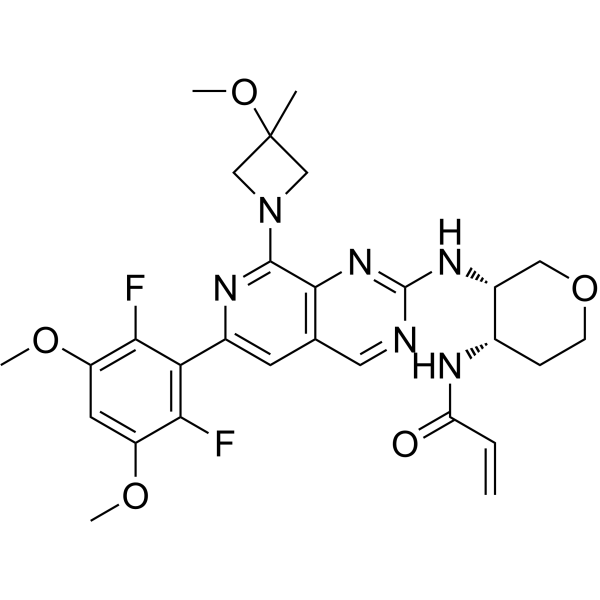 0 ImagesSynonyms: ABSK011Irpagratinib (ABSK011) is an orally active FGFR4 inhibitor (IC50<10 nM). Irpagratinib inhibits FGFR4 autophosphorylation and blocks signaling from FGFR4 to downstream pathway activation. Irpagratinib has shown high exposure in PK studies in mice, rats, and dogs, and also demonstrated antitumor activity in a subcutaneous xenograft tumor model.
-
T3Inh-1
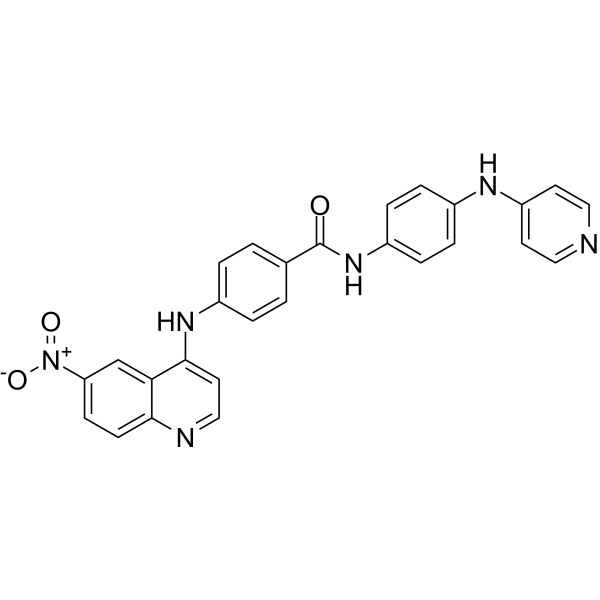 0 ImagesT3Inh-1 is a potent and selective inhibitor of ppGalNAc-T3 (IC50=7 μM). T3Inh-1 reduces FGF23 hormone levels in both tissue cells and mice, without causing any toxic side effects. T3Inh-1 also prevents breast cancer cells. The enzyme ppGalNAc-T3 is implicated in at least two medically important pathways: cancer metastasis and stabilization of FGF23 (regulates phosphate levels in the bloodstream).
-
Oncaspar
 0 ImagesSynonyms: PEG-L-asparaginase; PegasparaginaseOncaspar (PEG-L-asparaginase; Pegasparaginase), a pegylated form of native Escherichia coli-derived L-asparaginase, breaks down the amino acid asparagine that are circulating in the bloodstream. Oncaspar plays an important role in acute lymphoblastic leukemia (ALL) through asparagine hydrolysis and activation of the integrated stress response (ISR) pathway.