



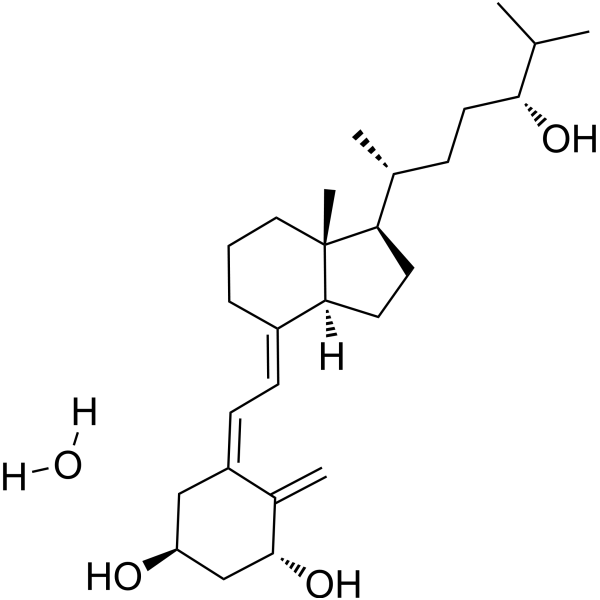
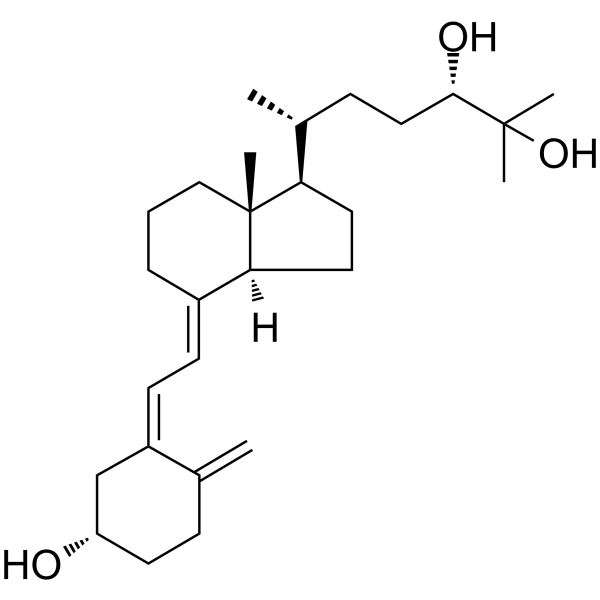
Tacalcitol monohydrate
Based on 3 publication(s) in Google Scholar
Tacalcitol monohydrate (1,24(R)-Dihydroxyvitamin D3; 1.alpha.,24R-Dihydroxyvitamin D3 monohydrate) can promote normal bone growth by regulating calcium ions. Tacalcitol monohydrate inhibits cancer cell proliferation and migration. Tacalcitol monohydrate can be used in the research of inflammation, cancer, and skin diseases.
For research use only. We do not sell to patients.
- Purity : 99.85%
- CAS No.: 93129-94-3
- Formula: C27H46O4
- Molecular Weight:434.65
-
Storage:
4°C, protect from light, stored under nitrogen
* In solvent : -80°C, 6 months; -20°C, 1 month (protect from light, stored under nitrogen)

To place orders, for customer services and technical support, please contact: MedChemExpress USA
Tel: 609-228-6898 E-mail: [email protected] [email protected]


-
 Biological Activity
-
Chemical Information
- Protocols
- Purity & Documentation
- References
-
 Help & FAQs


-
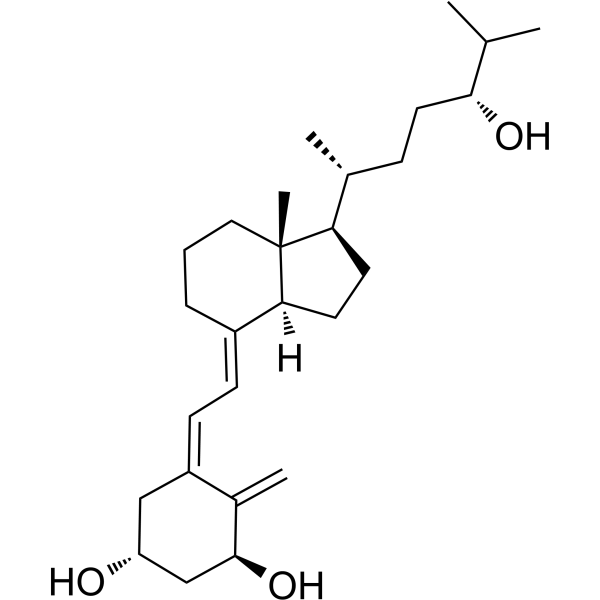
HY-32337
TacalcitolVitamin D3 Analogue -
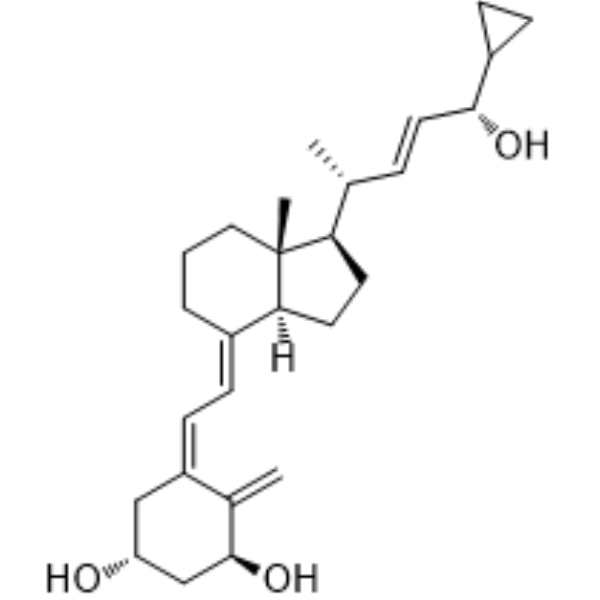
HY-10001
CalcipotriolVitamin D3 Analog -
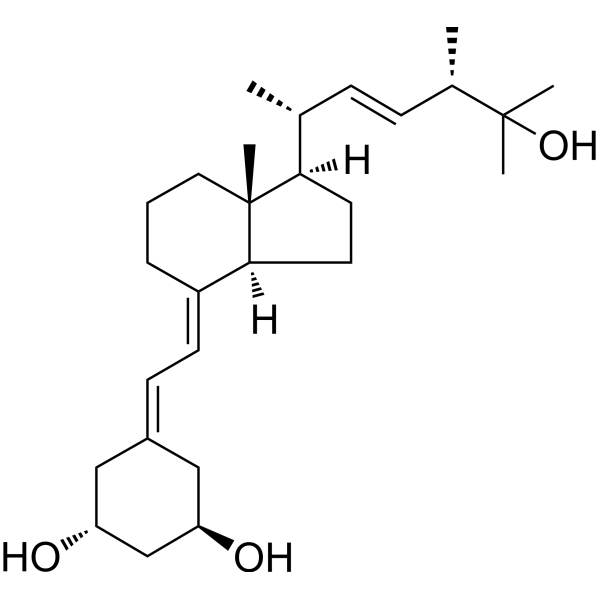
HY-50919
ParicalcitolVitamin D Receptor Agonist -
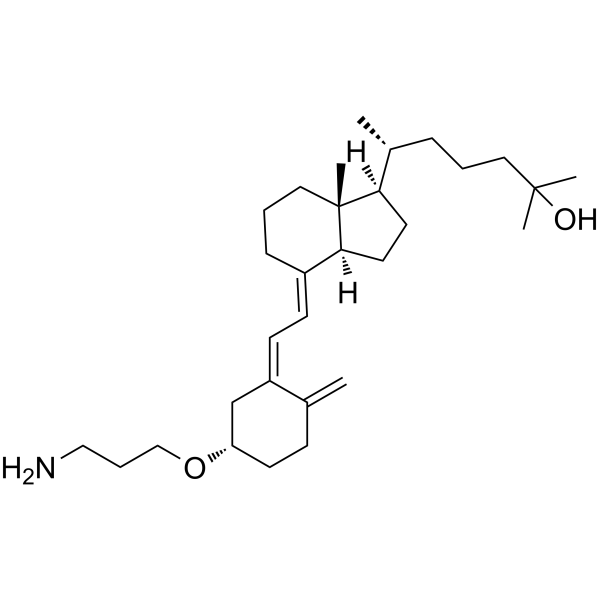
HY-15254
3-O-(2-Aminoethyl)-25-hydroxyvitamin D3Vitamin D3 Derivative -
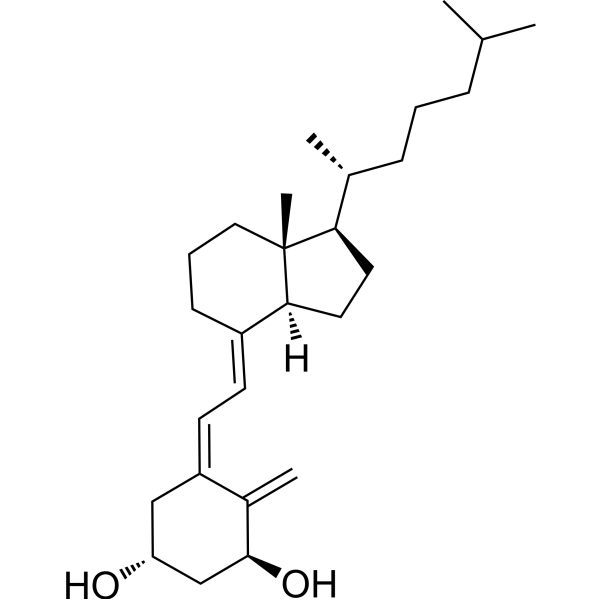
HY-10003
AlfacalcidolVDR Activator -
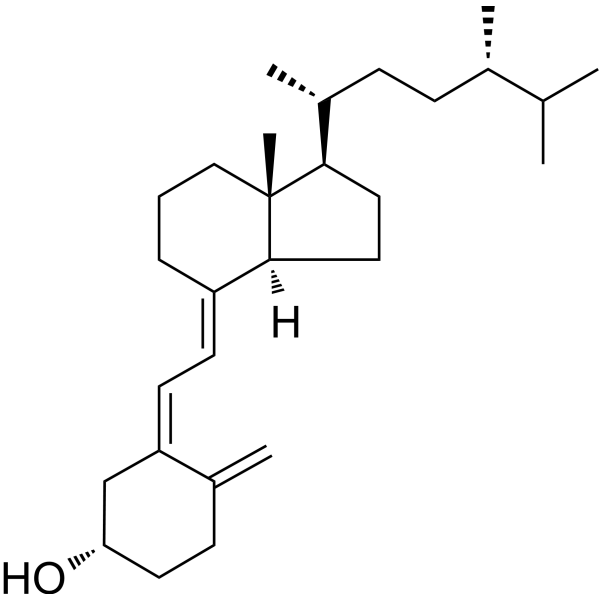
HY-75958
Vitamin D4VD/VDR Activator -
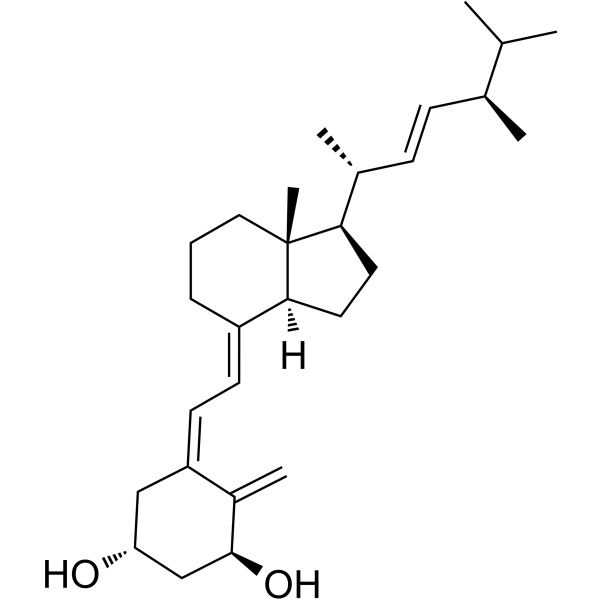
HY-32348
DoxercalciferolVD/VDR Activator -
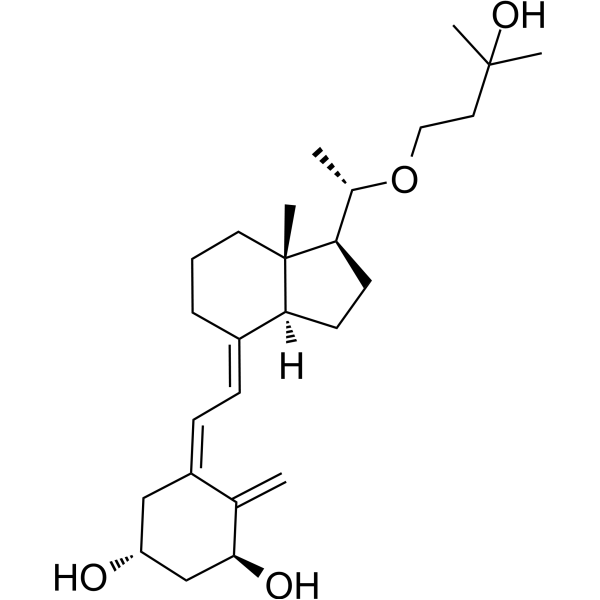
HY-32339
MaxacalcitolVDR Agonist -
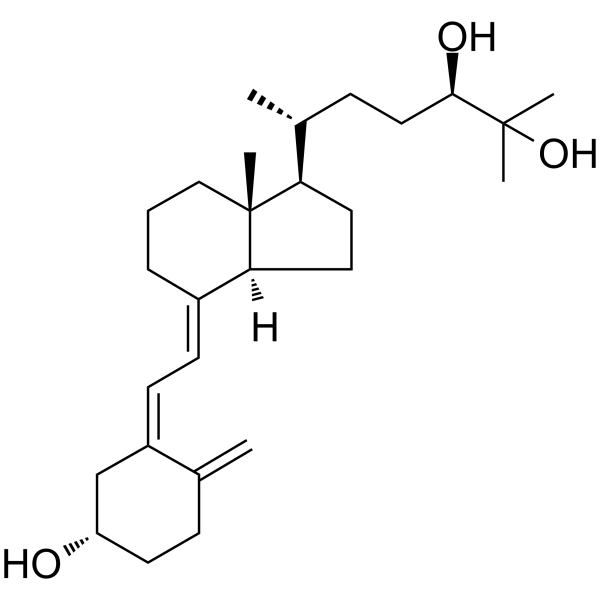
HY-32343
SecalciferolVitamin D Metabolite -
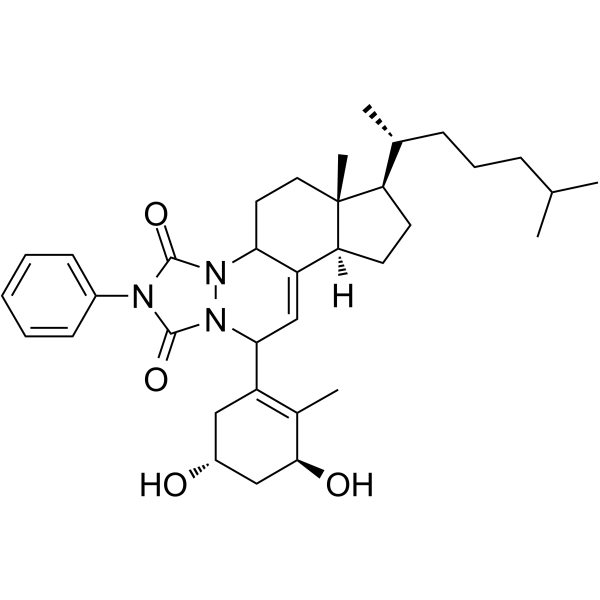
HY-13294
Impurity C of AlfacalcidolAlfacalcidol Impurity -
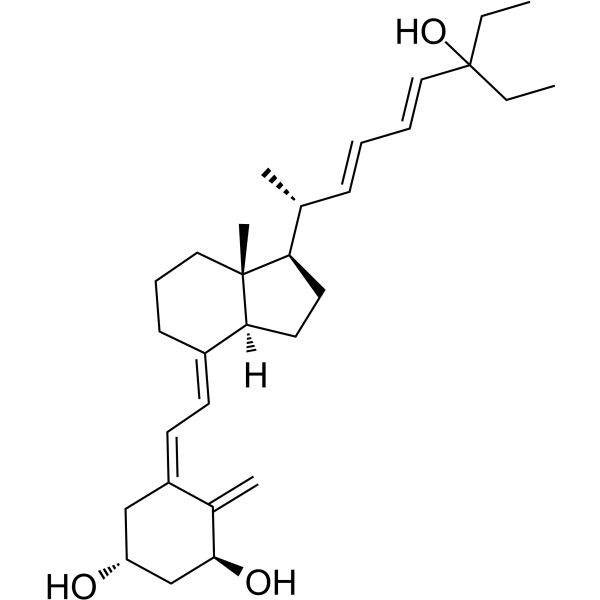
HY-32341
SeocalcitolVitamin D Agonist -
HY-15439
(24S)-24,25-Dihydroxyvitamin D3Vitamin D3 Inactive Form
Publications Citing Use of MedChemExpress (MCE) Tacalcitol monohydrate
More

Biological Activity
Description
In Vitro
Tacalcitol (0.1-100 μM, 24 h) monohydrate inhibits synthesis of both IL-6 and IL-8 in cultures derived from nasal polyps in dose-dependent manner[1].
Tacalcitol (10-4-1 μM, 48 h or one week) monohydrate induces cell differentiation in normal human keratinocytes. Tacalcitol inhibits the growth of normal and psoriatic human keratinocytes[2][3].
Tacalcitol (0-1 μM, 48 h) monohydrate inhibits DNA synthesis in normal human keratinocytes[3].
Tacalcitol (0.001-10 μM, 6 days) monohydrate strongly reduces proliferation of human glioblastoma[4].
Tacalcitol (10 μM, 41 h) monohydrate inhibits human glioblastoma migration[4].
MedChemExpress (MCE) has not independently confirmed the accuracy of these methods. They are for reference only.
-
Cell Line:normal human keratinocytes
-
Concentration:10-10, 10-9, 10-8, 10-7, 10-6 M
-
Incubation Time:one week
-
Result:Significantly inhibited the growth of human keratinocytes at concentrations higher than 10-8 M.
The growth of keratinocytes was 65% inhibited by 10-8 M and 90% inhibited by 10-7 M
-
Cell Line:T98G cells
-
Concentration:0.001, 0.01, 0.1, 1, 10 μM
-
Incubation Time:6 days
-
Result:Treatment for 6 days resulted in a significant, dose-dependent inhibitory effect on cell viability/growth.
Treatment of cells for less than 6 days did not influence cell viability/growth.
-
Cell Line:T98G cells
-
Concentration:10 μM
-
Incubation Time:41 h (pre-treated for 24 h, then cells were scraped and monitore for 17 h)
-
Result:Reduced the migration rate.
After 17 hr, the wound closure of control cells was about 60%, while treated cells had a wound closure of about 35-45%.
In Vivo
MedChemExpress (MCE) has not independently confirmed the accuracy of these methods. They are for reference only.
-
Animal Model:Female SKH1 (hr/hr) hairless mice (7-8 weeks old, Phorbol 12-myristate 13-acetate (HY-18739) (12-Otetradecanoylphorbol 13-acetate (TPA)) was topically applied to 6 cm2 area of the dorsal skin to induce cutaneous inflammation)[5]
-
Dosage:0.2, 2, 20 μg/g
-
Administration:Applied to the cutaneous inflammation area
-
Result:Significantly inhibited TPA-induced cutaneous inflammation, histopathologically.
The effect of 20 μg/g on cutaneous inflammation was much stronger than that of 2 μg/g.
20 μg/g also significantly inhibited TPA-induced myeloperoxidase (MPO) activity.
The effect on epidermal proliferation was significant at the doses of 2 μg/g and 20 μg/g, and that on epidermal differentiation was significant at the doses of 0.2 μg/g or more.
- BrdU Incorporation Assay
- Cell migration
- Somatic Cell Culture
- CFSE Dye Dilution Proliferation Assay
- Dye-dilution cell tracking and proliferation staining
- CCK-8/WST-8 Cell Proliferation Assay
- Protocol for Cell Cycle
- Cell Counting-Based Growth Curve Assay
- Research Protocol for Inflammation-related Diseases
- Colony Formation (Clonogenic) Assay
- Cell Viability Determination by MTT Colorimetric Assay
- EdU Incorporation Assay (Click Chemistry-Based DNA Synthesis Measurement)
- Ki-67 Immunostaining Proliferation Assay
- PCNA Immunodetection Proliferation Assay
- Protocol for Cell Counting and Cell Density Analysis
- MTT Cell Proliferation Assay
Clinical Trial
| NCT Number | Sponsor | Condition | Start Date |
Phase

|
|---|---|---|---|---|
| NCT01329991 | Plexxikon| | 2011-05 | PHASE1 |


Chemical Information
-
CAS No. 93129-94-3
-
Appearance Solid
-
Molecular Weight 434.65
-
Formula C27H46O4
-
Color White to off-white
-
SMILES
CC([C@@H](CC[C@H]([C@@H](CC[C@]1/2[H])[C@@]1(C)CCCC2=C/C=C3C[C@@H](C[C@H](C/3=C)O)O)C)O)C.[H]O[H]
-
Synonyms
1,24(R)-Dihydroxyvitamin D3 monohydrate
-
Shipping
Room temperature in continental US; may vary elsewhere.
-
Storage
4°C, protect from light, stored under nitrogen
* In solvent : -80°C, 6 months; -20°C, 1 month (protect from light, stored under nitrogen)


Publications (3)
-
Journal Impact Factor
-
Most Recent
-
Virol Sin
Antiviral activity of vitamin D derivatives against severe fever with thrombocytopenia syndrome virus in vitro and in vivo. [Abstract]2024 Oct;39(5):802-811. PMID: 39168248 -
FEBS Open Bio
Vitamin D3 suppresses the cholesterol homeostasis pathway in patient-derived glioma cell lines. [Abstract]2023 Sep;13(9):1789-1806. PMID: 37489660 -


Purity & Documentation
-
Data Sheet (280 KB)
-
SDS (419 KB)
- English - EN (419 KB)
- Français - FR (419 KB)
- Deutsch - DE (419 KB)
- Norwegian - NO (419 KB)
- Español - ES (419 KB)
- Swedish - SV (419 KB)
- Italian - IT (419 KB)
- Korean - KR (419 KB)
- Portuguese - PT (419 KB)
-
Handling Instructions (2659 KB)
References
[1]. Rostkowska-Nadolska B, et al. Vitamin D derivatives: calcitriol and tacalcitol inhibits interleukin-6 and interleukin-8 expression in human nasal polyp fibroblast cultures. Adv Med Sci. 2010;55(1):86-92. [Content Brief]
[2]. Kobayashi T, et al. 1 alpha,24R-dihydroxyvitamin D3 has an ability comparable to that of 1 alpha,25-dihydroxyvitamin D3 to induce keratinocyte differentiation. J Dermatol. 1990 Nov;17(11):707-9. [Content Brief]
[3]. Matsumoto K, et al. K. Effect of 1,24R-dihydroxyvitamin D3 on the growth of human keratinocytes. J Dermatol. 1990 Feb;17(2):97-103. [Content Brief]
[4]. Emanuelsson I, et al. Vitamin D Analogues Tacalcitol and Calcipotriol Inhibit Proliferation and Migration of T98G Human Glioblastoma Cells. Basic Clin Pharmacol Toxicol. 2018 Aug;123(2):130-136. [Content Brief]
[5]. Sato H, et al. Pharmacological profiles of high-concentration (20 microg/g) tacalcitol ointment: effects on cutaneous inflammation, epidermal proliferation, and differentiation in mice. J Dermatol. 2003 Jul;30(7):510-24. [Content Brief]

Calculators
Concentration (start) × Volume (start) = Concentration (final) × Volume (final)


Tacalcitol monohydrate Related Classifications
HY-32338 Related Classifications
 Powered by Bioz