



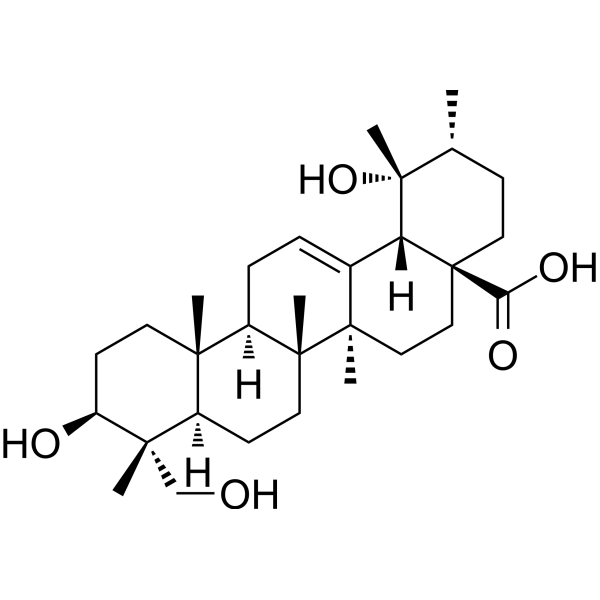
Rotundic acid

Based on 1 Customer Validation
Rotundic acid is an orally effective triterpenoid with a Kd value of 51.3 µM for PTP1B. Rotundic acid downregulates the AKT/mTOR pro-survival pathway and modulates the MAPK pathway. Rotundic acid induces cell cycle S-phase arrest, DNA damage and apoptosis; it inhibits migration, invasion, angiogenesis and proliferation of cancer cells. Rotundic acid improves leptin sensitivity, regulates gut microbiota and reduces cellular senescence. Rotundic acid can be used in research related to hepatocellular carcinoma, obesity, aging, acute lung injury and type 2 diabetes.
For research use only. We do not sell to patients.
- Purity : 98.41%
- CAS No.: 20137-37-5
- Formula: C30H48O5
- Molecular Weight:488.70
-
Storage:
4°C, protect from light
* In solvent : -80°C, 6 months; -20°C, 1 month (protect from light)

To place orders, for customer services and technical support, please contact: MedChemExpress USA
Tel: 609-228-6898 E-mail: [email protected] [email protected]


-
 Biological Activity
-
Chemical Information
-
Solvent & Solubility
- Protocols
- Purity & Documentation
- References
-
 Help & FAQs


-
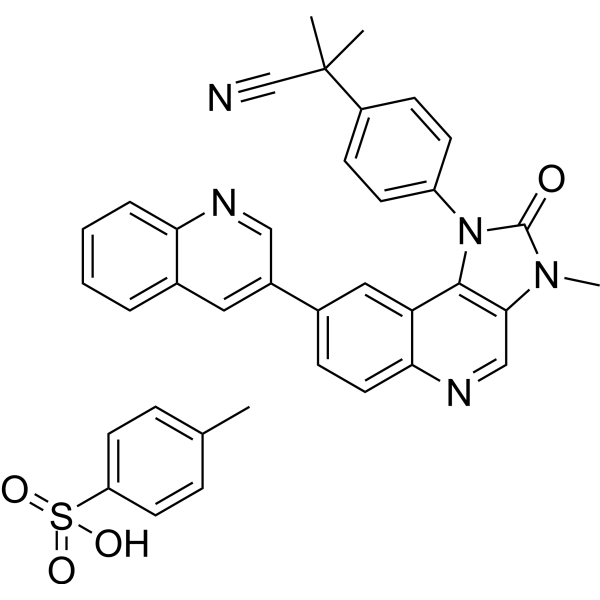
HY-15174
Dactolisib TosylateAutophagy Inducer -
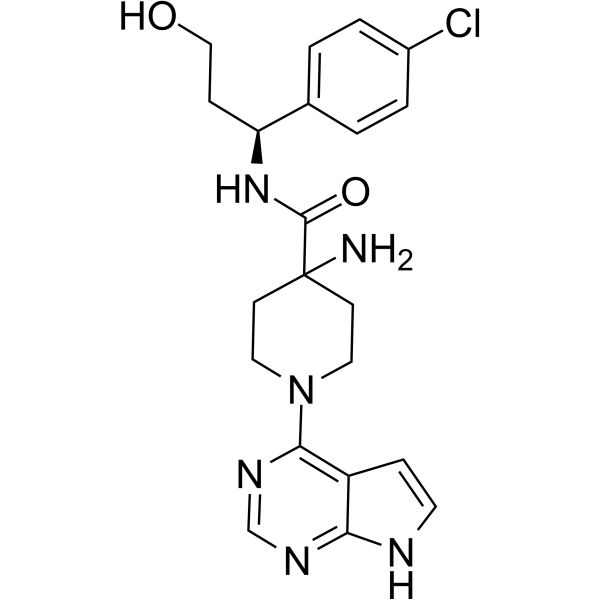
HY-15431
CapivasertibAkt Inhibitor -
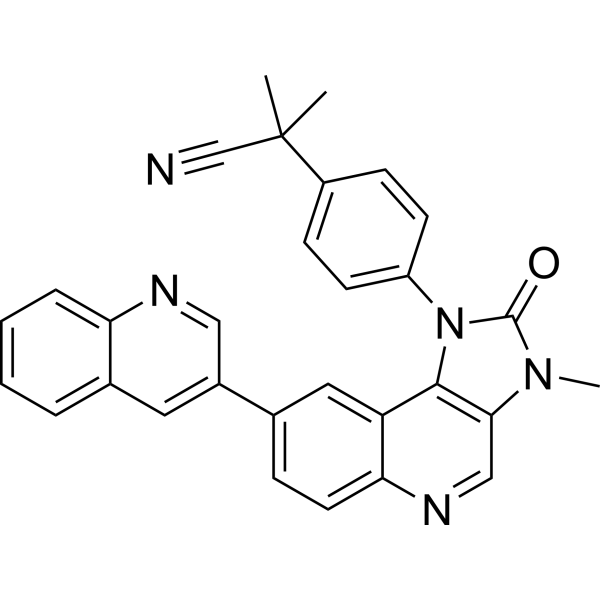
HY-50673
DactolisibPI3K/mTOR Inhibitor -
HY-15177
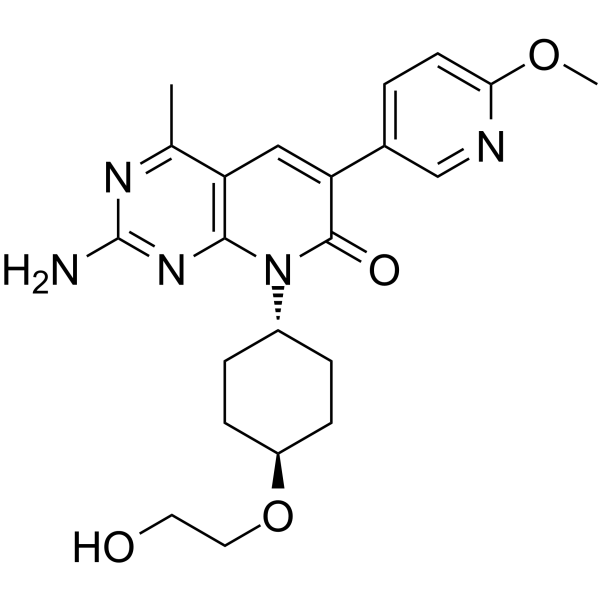
PF-04691502PI3K/mTOR Inhibitor -
HY-10358
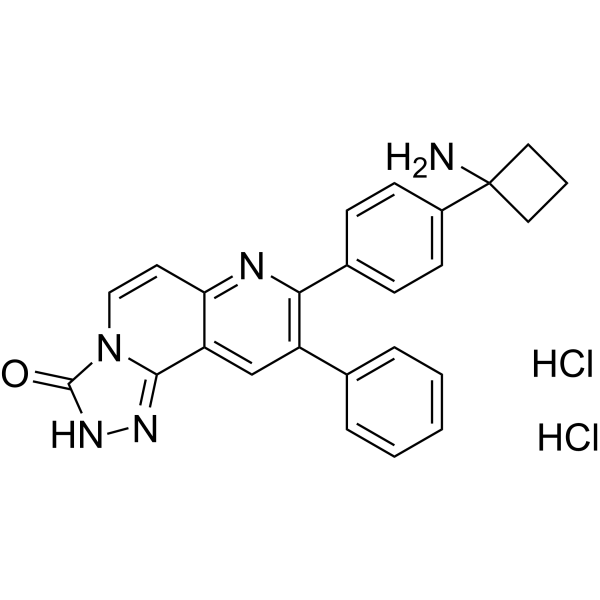
MK-2206 dihydrochlorideAllosteric Akt Inhibitor -
HY-124719
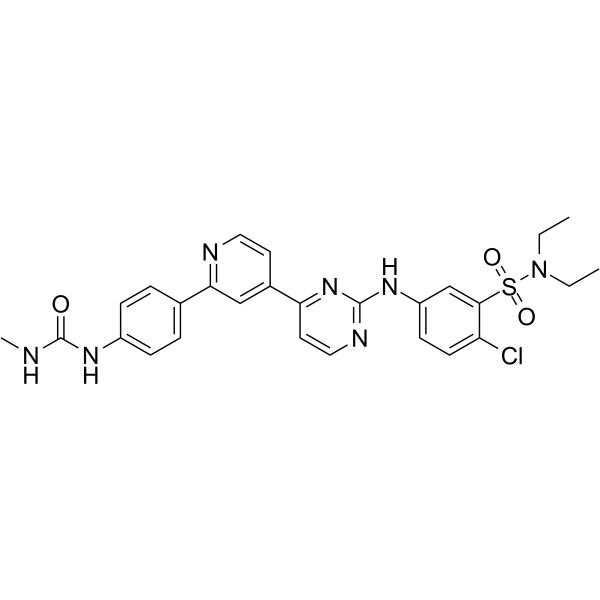
hSMG-1 inhibitor 11jhSMG-1 Inhibitor -
HY-14581
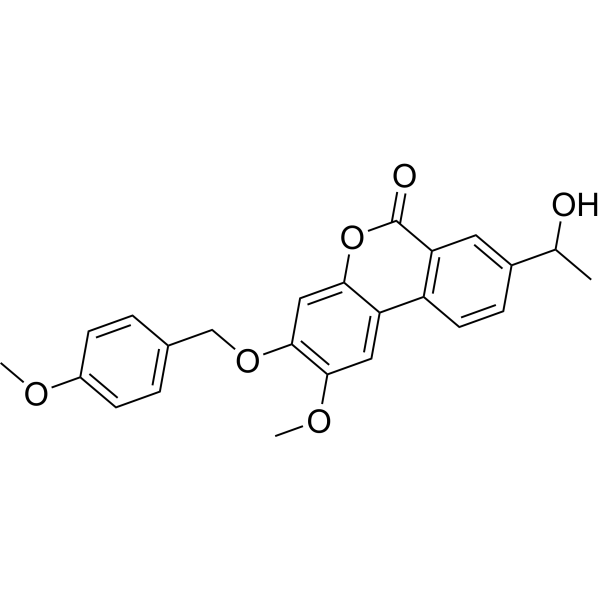
Palomid 529Apoptosis Inducer -
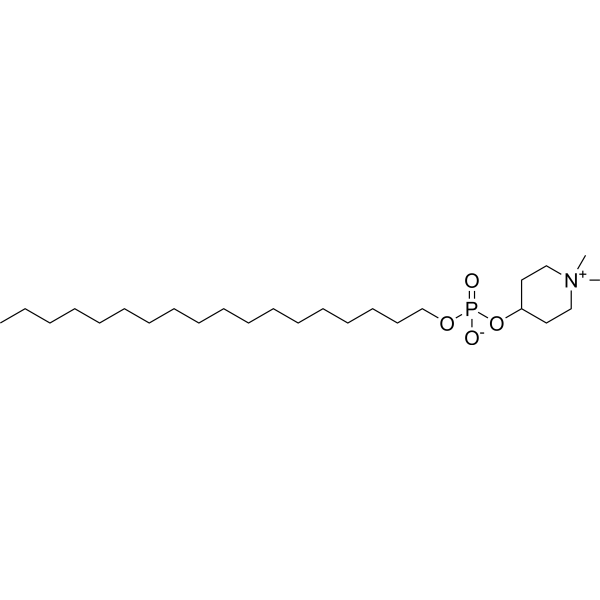
HY-50909
PerifosineAkt Inhibitor -
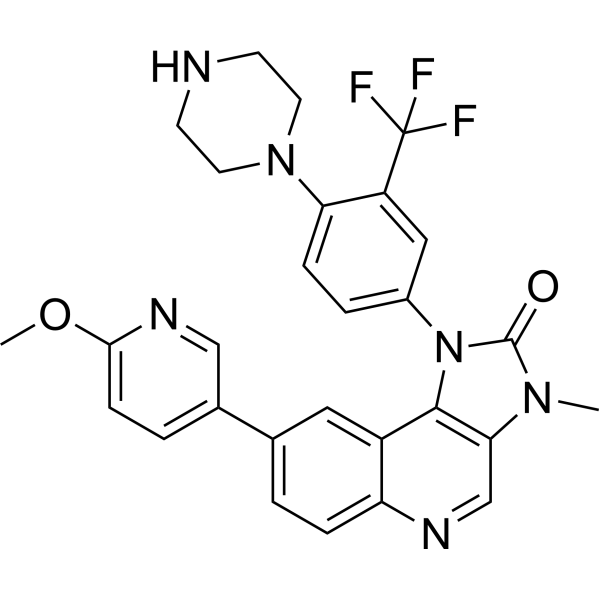
HY-13334A
BGT226Autophagy Inducer -

HY-N2217R
Rotundic acid (Standard)Standard -
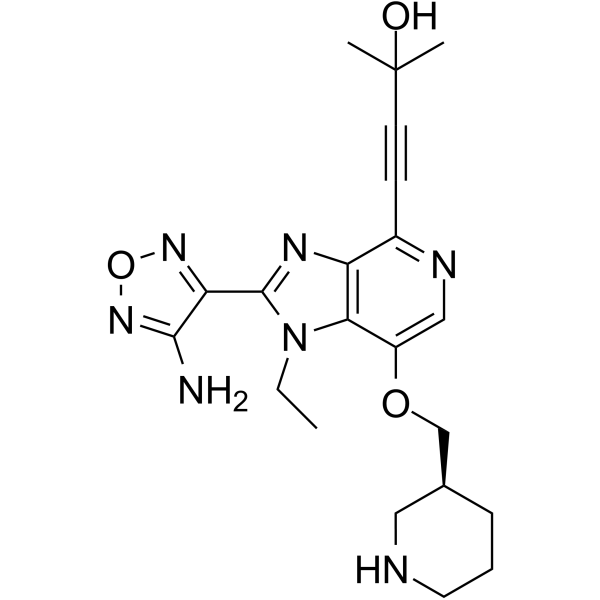
HY-10249
GSK-690693Akt Inhibitor


Biological Activity
Description
IC50 & Target
|
mTOR |
p38 MAPK |
Cellular Effect
|
Cell Line

|
Type | Value | Description | References |
|---|---|---|---|---|
| A-375 | IC50 |
16.58 μM
Compound: 1, RA, Rotundic acid
|
Cytotoxicity against human A375 cells after 24 hrs by MTT assay
Cytotoxicity against human A375 cells after 24 hrs by MTT assay
|
[PMID: 23558236] |
| HeLa | IC50 |
31.92 μM
Compound: 1, RA, Rotundic acid
|
Cytotoxicity against human HeLa cells after 24 hrs by MTT assay
Cytotoxicity against human HeLa cells after 24 hrs by MTT assay
|
[PMID: 23558236] |
| HepG2 | IC50 |
7.33 μM
Compound: 1, RA, Rotundic acid
|
Cytotoxicity against human HepG2 cells after 24 hrs by MTT assay
Cytotoxicity against human HepG2 cells after 24 hrs by MTT assay
|
[PMID: 23558236] |
| NCI-H446 | IC50 |
11.4 μM
Compound: 1, RA, Rotundic acid
|
Cytotoxicity against human NCI-H446 cells after 24 hrs by MTT assay
Cytotoxicity against human NCI-H446 cells after 24 hrs by MTT assay
|
[PMID: 23558236] |
In Vitro
Rotundic acid (10-30 μM) dose-dependently inhibits the migration of HUVEC cells[1].
Rotundic acid (0-1000 μM) is a non-competitive inhibitor of human PTP1B, whose optimal inhibitory effect depends on the C-terminus of this protein. The IC50 values against PTP1B1-298, PTP1B1-321 and PTP1B1-393 are 2 mM, 481.8 μM and 443.7 μM, respectively[2].
Rotundic acid (3.125-100 μM; 48 h) significantly extends the replicative lifespan of BY4741 yeast cells, with a maximum extension of up to 135% at the concentration of 12.5 μM[2].
Rotundic acid (5-20 μM; 24 h) reduces cellular senescence levels in senescent WI-38 human embryonic lung fibroblasts, as evidenced by a decrease in SA-β-gal-positive cells; it also promotes cell proliferation at a concentration of 12.5 μM[2].
Rotundic acid (15-60 μM; 24 h) shows no cytotoxicity against RAW264.7 mouse macrophages, and its concentration can reach up to 60 μM after 24 h of incubation[3].
Rotundic acid (15-60 μM; 1 h pretreatment) dose-dependently reduces nitrite production in LPS (HY-D1056)-stimulated RAW264.7 murine macrophages[3].
Rotundic acid (15-60 μM; 1 h pretreatment) inhibits LPS-induced release of TNF-α and IL-6 in RAW264.7 mouse macrophages[3].
Rotundic acid (15-60 μM; 1 h pretreatment) regulates multiple inflammatory signaling pathways in LPS-stimulated RAW264.7 murine macrophages, including inhibiting the activation of NF-κB, MAPK and PI3K/Akt/mTOR, upregulating the Keap-1/Nrf2/HO-1 signaling pathway and reducing the expression of TLR4[3].
Rotundic acid (15-60 μM; 1 h pretreatment) reduces LPS-induced NO release, ROS production and intracellular Ca2+ levels in RAW264.7 murine macrophages[3].
Rotundic acid exhibits significant cytotoxic activity against Daoy, Hep-2 and MCF-7 human tumor cell lines[4].
MedChemExpress (MCE) has not independently confirmed the accuracy of these methods. They are for reference only.
-
Cell Line:RAW264.7 murine macrophages
-
Concentration:15, 30, 60 μM
-
Incubation Time:24 h
-
Result:Showed no cytotoxic effect on RAW264.7 macrophages at all tested concentrations, with cell viability remaining above 80% relative to the control group.
-
Cell Line:LPS-stimulated RAW264.7 murine macrophages
-
Concentration:15-60 μM
-
Incubation Time:1 h pretreatment, followed by 18 h LPS stimulation
-
Result:Significantly decreased the release of TNF-α and IL-6 at all tested concentrations, with consistent, significant inhibition across doses.
Increased TNF-α and IL-6 release strongly when LPS was applied alone.
In Vivo
Rotundic acid (40 mg/kg; i.p.; 1 week per month for 6 consecutive months) extends the average lifespan of naturally aged male C57BL/6J mice by 16.2% and improves their aging-related functional indicators[2].
Rotundic acid (40 mg/kg; i.p.; once daily; for 14 consecutive days) reduces the body weight of high-fat diet-induced obese mice by up to 26.3% and decreases their food intake in a dose-dependent manner[2].
Rotundic acid (i.p.; 40 mg/kg; once daily for 14 consecutive days) reduces body weight by 25.1% in high-fat diet-induced obese mice with an average body weight of approximately 58 g, while also decreasing their food intake, reducing adipose tissue weight, and downregulating plasma leptin levels[2].
Rotundic acid (40 mg/kg; i.p.; once daily for 14 consecutive days) exerts no effect on body weight, food intake, or adipose tissue mass in normal lean male C57BL/6N mice[2].
Rotundic acid (40 mg/kg; i.p.; once daily for 14 consecutive days) improves glucose homeostasis and insulin sensitivity in high-fat diet-induced obese mice[2].
Rotundic acid (20-40 mg/kg; i.p.) reduces xylene-induced ear swelling in mice by more than 80% and ameliorates associated pathological tissue damage[3].
Rotundic acid (20-40 mg/kg; i.p.) increases the 144-hour survival rate of LPS-induced endotoxic shock mice to 30%[3].
Rotundic acid (10-40 mg/kg; i.p.) reduces LPS-induced levels of inflammatory markers, ameliorates pulmonary function impairment, and alleviates lung pathological damage in a mouse model of acute lung injury[3].
Rotundic acid (40 mg/kg; oral gavage; daily; 8 weeks) improves glucose and lipid metabolism, reduces blood pressure, protects against cardiovascular, hepatic and renal damage, alleviates oxidative stress and inflammatory responses, and restores gut microbiota dysbiosis induced by a high-fat diet combined with low-dose streptozotocin in type 2 diabetic rats[4].
MedChemExpress (MCE) has not independently confirmed the accuracy of these methods. They are for reference only.
-
Animal Model:Balb/c nude (male, 5 weeks old, subcutaneous HepG2 cell xenograft)[1]
-
Dosage:50 mg/kg
-
Administration:i.p.; every 2 days; 60 days
-
Result:Reduced mean tumor volume to 78.95 mm3 (vs. 323.64 mm3 in controls), achieving 75.6% tumor growth inhibition.
Reduced tumor weights significantly compared to controls.
Showed no significant body weight loss.
Reduced expression of proliferation marker Ki-67, angiogenesis marker CD-31, phosphorylated AKT, and phosphorylated mTOR in tumor tissue.
Increased expression of phosphorylated p38 MAPK in tumor tissue.
Induced apoptosis via increased cleaved PARP and cleaved caspase-3 in tumor tissue.
-
Animal Model:C57BL/6N (male, 8 weeks old, high-fat diet-induced obese)[2]
-
Dosage:40 mg/kg
-
Administration:i.p.; daily; 14 days
-
Result:Reduced body weight in a dose-dependent manner, with the 40 mg/kg dose causing a 26.3% decrease.
Reduced daily food intake by 62.3% in the first week of 40 mg/kg treatment.
-
Animal Model:BALB/c (male, 18-20 g, LPS-induced acute lung injury model)[3]
-
Dosage:10 mg/kg; 20 mg/kg; 40 mg/kg
-
Administration:i.p.; two doses: 2 hours before LPS, 4 hours after LPS
-
Result:Decreased LPS-induced increases in blood lymphocytes, neutrophils, and white blood cells.
Reduced levels of TNF-α, IL-6, and IL-1β in serum, bronchoalveolar lavage fluid, and lung tissue homogenate.
Reduced myeloperoxidase activity in lung tissue.
Significantly recovered mouse lung function including peak expiratory flow, dynamic lung compliance, inspiratory resistance, expiratory resistance, and minute ventilation volume.
Ameliorated LPS-induced alveolar interstitial exudation, alveolar structural destruction, and inflammatory cell infiltration observed via H&E staining.
-
Animal Model:Sprague-Dawley (5-week-old male, weight 180-220 g, type 2 diabetes induced by high-fat diet + low-dose streptozotocin)[4]
-
Dosage:40 mg/kg
-
Administration:i.g.; daily; 8 weeks
-
Result:Increased body weight compared to T2D model rats.
Decreased water intake and increased food intake compared to T2D model rats.
Reduced fasting glucose, glycated hemoglobin A1c (HbA1c), and insulin levels compared to T2D model rats.
Reduced glucose area under the curve (AUC) for OGTT and ITT, and reduced HOMA-IR index compared to T2D model rats.
Significantly reduced serum total glyceride (TG), total cholesterol (TC), low-density lipoprotein cholesterol (LDL-C), and free fatty acid (FFA) levels, and increased high-density lipoprotein cholesterol (HDL-C) levels compared to T2D model rats.
Reduced systolic blood pressure (SYS), diastolic blood pressure (DIA), mean arterial pressure (MAP), and serum angiotensin-2 (ANG-2) levels compared to T2D model rats.
Significantly reduced serum myocardial enzymes (α-HBDH: 151.9 U/L, CK: 0.418 U/L, CK-MB: 191.7 U/L, LDH: 1854.0 U/L), C-reactive protein (CRP: 422.7 pg/mL), endothelin-1 (ET-1: 48.9 pg/mL), alanine aminotransferase (ALT: 44.6 IU/L), aspartate aminotransferase (AST: 99.32 IU/L), alkaline phosphatase (ALP: 15.1 KU/100 mL), uric acid (UA: 131.0 μmol/L), and urea nitrogen (BUN: 5.3 mmol/L) compared to T2D model rats.
Increased serum superoxide dismutase (SOD: 246.7 U/L) and interleukin-4 (IL-4: 55.2 pg/mL) levels compared to T2D model rats.
Decreased serum malondialdehyde (MDA: 4.73 nmol/mL), tumor necrosis factor-α (TNF-α: 259.1 pg/mL), interferon-γ (INF-γ: 16.6 pg/mL), interleukin-1β (IL-1β: 11.0 pg/mL), and interleukin-6 (IL-6: 8.7 pg/mL) levels compared to T2D model rats.
Increased Chao1 and Shannon α-diversity indices compared to T2D model rats.
Reversed the elevated Firmicutes-to-Bacteroidetes ratio seen in T2D model rats.
Increased relative abundances of beneficial/commensal genera Prevotella, Ruminococcus, Leuconostoc, and Streptococcus compared to T2D model rats.
Decreased relative abundances of opportunistic pathogen genera Klebsiella and Proteus compared to T2D model rats.
- Human pluripotent stem cell endothelial-cell differentiation
- Vascular/Branching Fractal Analysis
- Annexin V plus membrane-impermeant dye apoptosis staining
- BrdU Incorporation Assay
- Cell migration
- Research Protocol for Microbiome Analysis
- Protocol for Cell Cycle
- Liver Cancer Modeling
- Research Protocol for Metabolic Diseases
- Senescence-associated β-galactosidase staining
- Cell Viability Determination by MTT Colorimetric Assay
- Detection of Apoptosis
- TUNEL staining for apoptotic DNA fragmentation
- Flow cytometric DNA-content cell-cycle staining
- Endothelial Tube Formation Assay
- Apoptosis Solutions
- Cell invasion
- Inhalation Toxicity Study
- Genotoxicity/Mutagenicity Study
- Endothelial Cell Migration/Angiogenic Sprouting Assay


Chemical Information
-
CAS No. 20137-37-5
-
Appearance Solid
-
Molecular Weight 488.70
-
Formula C30H48O5
-
Color White to off-white
-
SMILES
C[C@@]1(CO)[C@@H](O)CC[C@]2(C)[C@@]3([H])CC=C4[C@]5([H])[C@](C)(O)[C@H](C)CC[C@@](C(O)=O)5CC[C@](C)4[C@@](C)3CC[C@@]12[H]
-
Structure Classification
-
Initial Source
-
Shipping
Room temperature in continental US; may vary elsewhere.
-
Storage
4°C, protect from light
* In solvent : -80°C, 6 months; -20°C, 1 month (protect from light)


Solvent & Solubility
In Vitro:
DMSO : 100 mg/mL (204.62 mM; Need ultrasonic; Hygroscopic DMSO has a significant impact on the solubility of product, please use newly opened DMSO)
Please refer to the solubility information to select the appropriate solvent. Once prepared, please aliquot and store the solution to prevent product inactivation from repeated freeze-thaw cycles.
Storage method and period of stock solution: -80°C, 6 months; -20°C, 1 month (protect from light). When stored at -80°C, please use it within 6 months. When stored at -20°C, please use it within 1 month.
Please refer to the solubility information to select the appropriate solvent. Once prepared, please aliquot and store the solution to prevent product inactivation from repeated freeze-thaw cycles.
Storage method and period of stock solution: -80°C, 6 months; -20°C, 1 month (protect from light). When stored at -80°C, please use it within 6 months. When stored at -20°C, please use it within 1 month.
Concentration (start) × Volume (start) = Concentration (final) × Volume (final)
In Vivo:
Select the appropriate dissolution method based on your experimental animal and administration route.
- For the following dissolution methods, please ensure to first prepare a clear stock solution using an In Vitro approach and then sequentially add co-solvents:
- To ensure reliable experimental results, the clarified stock solution can be appropriately stored based on storage conditions. As for the working solution for In Vivo experiments, it is recommended to prepare freshly and use it on the same day.
- The percentages shown for the solvents indicate their volumetric ratio in the final prepared solution. If precipitation or phase separation occurs during preparation, heat and/or sonication can be used to aid dissolution.
Add each solvent one by one: 10% DMSO 40% PEG300 5% Tween-80 45% Saline
Solubility: 2.5 mg/mL (5.12 mM); Suspended solution; Need ultrasonic
This protocol yields a suspended solution of 2.5 mg/mL. Suspended solution can be used for oral and intraperitoneal injection.
Taking 1 mL working solution as an example, add 100 μL DMSO stock solution (25.0 mg/mL) to 400 μL PEG300, and mix evenly; then add 50 μL Tween-80 and mix evenly; then add 450 μL Saline to adjust the volume to 1 mL.
Preparation of Saline: Dissolve 0.9 g sodium chloride in ddH₂O and dilute to 100 mL to obtain a clear Saline solution.
Add each solvent one by one: 10% DMSO 90% (20% SBE-β-CD in Saline)
Solubility: 2.5 mg/mL (5.12 mM); Suspended solution; Need ultrasonic
This protocol yields a suspended solution of 2.5 mg/mL. Suspended solution can be used for oral and intraperitoneal injection.
Taking 1 mL working solution as an example, add 100 μL DMSO stock solution (25.0 mg/mL) to 900 μL 20% SBE-β-CD in Saline, and mix evenly.
Preparation of 20% SBE-β-CD in Saline (4°C, storage for one week): 2 g SBE-β-CD powder is dissolved in 10 mL Saline, completely dissolve until clear.
In Vivo Dissolution Calculator
Please enter the basic information of animal experiments:
-
-
-
-
Recommended: Prepare an additional quantity of animals to account for potential losses during experiments.
Please enter your animal formula composition:
-
%DMSO +
Recommended: Keep the proportion of DMSO in working solution below 2% if your animal is weak.
-
%+
-
+%Tween-80 + +
-
%Saline +
The co-solvents required include: DMSO, . All of co-solvents are available by MedChemExpress (MCE). , Tween 80. All of co-solvents are available by MedChemExpress (MCE).
Working solution concentration: 0.22 mg/mL
Method for preparing stock solution: mg drug dissolved in μL DMSO. Stock solution concentration: mg/mL. * In solvent : -80°C, 6 months; -20°C, 1 month (protect from light)
1. Take μL DMSO stock solution;
2. Add μL .
μL , mix evenly;
3. Then add μL Tween 80, mix evenly;
4. Then add μL
Please ensure that the stock solution in the first step is dissolved to a clear state, and add co-solvents in sequence. You can use ultrasonic heating (ultrasonic cleaner, recommended frequency 20-40 kHz), vortexing, etc. to assist dissolution.


Purity & Documentation
-
Data Sheet (293 KB)
-
SDS (252 KB)
- English - EN (252 KB)
- Français - FR (252 KB)
- Deutsch - DE (252 KB)
- Norwegian - NO (252 KB)
- Español - ES (252 KB)
- Swedish - SV (252 KB)
- Italian - IT (252 KB)
- Korean - KR (252 KB)
- Portuguese - PT (252 KB)
-
Handling Instructions (2659 KB)
References
[1]. Roy G, et al. Rotundic Acid Induces DNA Damage and Cell Death in Hepatocellular Carcinoma Through AKT/mTOR and MAPK Pathways. Front Oncol. 2019;9:545. Published 2019 Jun 26. [Content Brief]
[2]. Zhu J, et al. The natural product rotundic acid treats both aging and obesity by inhibiting PTP1B. Life Med. 2022;1(3):372-386. Published 2022 Oct 26. [Content Brief]
[3]. Li XX, et al. Rotundic acid reduces LPS-induced acute lung injury in vitro and in vivo through regulating TLR4 dimer. Phytother Res. 2021;35(8):4485-4498. [Content Brief]
[4]. Yan Z, et al. Rotundic Acid Protects against Metabolic Disturbance and Improves Gut Microbiota in Type 2 Diabetes Rats. Nutrients. 2019;12(1):67. Published 2019 Dec 26. [Content Brief]


Complete Stock Solution Preparation Table
Please refer to the solubility information to select the appropriate solvent. Once prepared, please aliquot and store the solution to prevent product inactivation from repeated freeze-thaw cycles.
Storage method and period of stock solution: -80°C, 6 months; -20°C, 1 month (protect from light). When stored at -80°C, please use it within 6 months. When stored at -20°C, please use it within 1 month.
| Optional Solvent | Concentration Solvent Mass | 1 mg | 5 mg | 10 mg | 25 mg |
|---|---|---|---|---|---|
| DMSO | 1 mM | 2.0462 mL | 10.2312 mL | 20.4625 mL | 51.1561 mL |
| 5 mM | 0.4092 mL | 2.0462 mL | 4.0925 mL | 10.2312 mL | |
| 10 mM | 0.2046 mL | 1.0231 mL | 2.0462 mL | 5.1156 mL | |
| 15 mM | 0.1364 mL | 0.6821 mL | 1.3642 mL | 3.4104 mL | |
| 20 mM | 0.1023 mL | 0.5116 mL | 1.0231 mL | 2.5578 mL | |
| 25 mM | 0.0818 mL | 0.4092 mL | 0.8185 mL | 2.0462 mL | |
| 30 mM | 0.0682 mL | 0.3410 mL | 0.6821 mL | 1.7052 mL | |
| 40 mM | 0.0512 mL | 0.2558 mL | 0.5116 mL | 1.2789 mL | |
| 50 mM | 0.0409 mL | 0.2046 mL | 0.4092 mL | 1.0231 mL | |
| 60 mM | 0.0341 mL | 0.1705 mL | 0.3410 mL | 0.8526 mL | |
| 80 mM | 0.0256 mL | 0.1279 mL | 0.2558 mL | 0.6395 mL | |
| 100 mM | 0.0205 mL | 0.1023 mL | 0.2046 mL | 0.5116 mL |


Rotundic acid Related Classifications
HY-N2217 Related Classifications
 Powered by Bioz
Keywords
- Rotundic acid
- 20137-37-5
- Akt
- mTOR
- p38 MAPK
- Apoptosis
- Phosphatase
- Interleukin Related
- NF-κB
- PI3K
- Keap1-Nrf2
- Heme Oxygenase (HO)
- Toll-like Receptor (TLR)
- Reactive Oxygen Species (ROS)
- hepatocellular carcinoma
- BY4741 yeast cells
- MAPK pathway
- Caco-2 cells
- WI-38 human embryonic lung fibroblast cells
- HUVEC cells
- PTP1B
- RAW264.7 murine macrophages
- AKT/mTOR pro-survival pathway
- HepG2 xenograft Balb/c nude mouse model
- Inhibitor
- inhibitor
- inhibit