



Tirofiban
Based on 6 publication(s) in Google Scholar
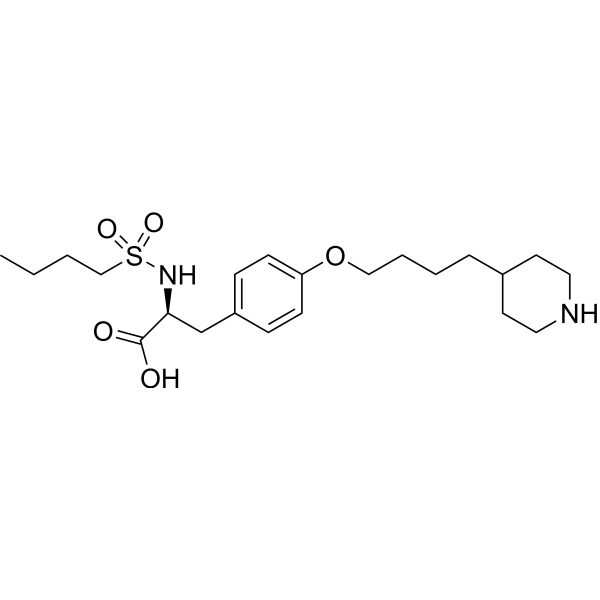
Tirofiban (L700462) is a selective and reversible platelet integrin receptor (Gp IIb/IIIa) antagonist that inhibits fibrinogen binding to this receptor and has antithrombotic activity. Tirofiban induces proliferation and migration on endothelial cell by inducing production of VEGF. Tirofiban can significantly reduces myocardial no-reflow and ischemia-reperfusion injury by alleviating myocardial microvascular structural and endothelial dysfunction in the ischemic area.
Nos produits utilisent uniquement pour la recherche. Nous ne vendons pas aux patients.
- Pureté : 99.95%
- CAS No.: 144494-65-5
- Formule: C22H36N2O5S
- Masse moléculaire:440.60
-
Stockage:Powder -20°C, 3 years , 4°C, 2 years ; In solvent -80°C, 6 months , -20°C, 1 month

To place orders, for customer services and technical support, please contact: MedChemExpress USA
Tel: 609-228-6898 E-mail: [email protected] [email protected]


-
 Activité biologique
-
Chemical Information
-
Solvant et solubilité
- Protocole
- Pureté et documentation
- Références
-
 Help & FAQs


-
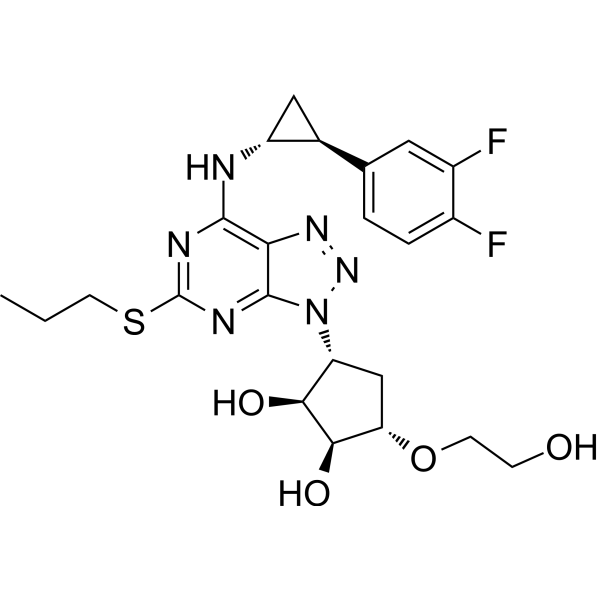
HY-10064
TicagrelorP2Y12 Antagonist -
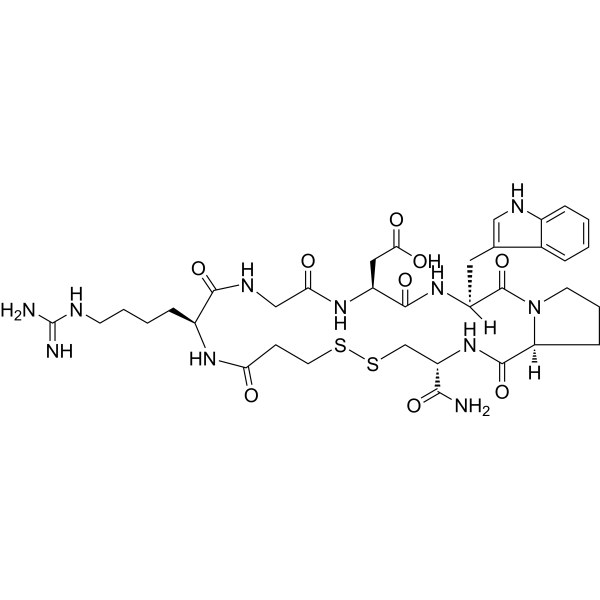
HY-B0686
EptifibatideGlycoprotein IIb/IIIa Receptor Inhibitor -
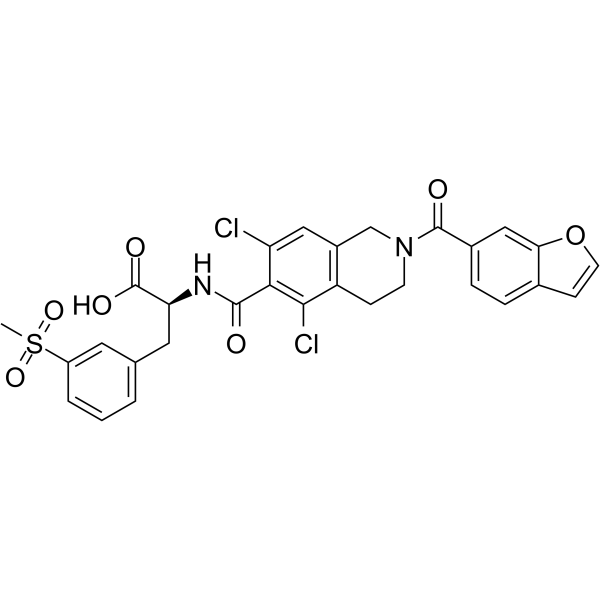
HY-19344
LifitegrastLFA-1/ICAM-1 Antagonist -
HY-B0215
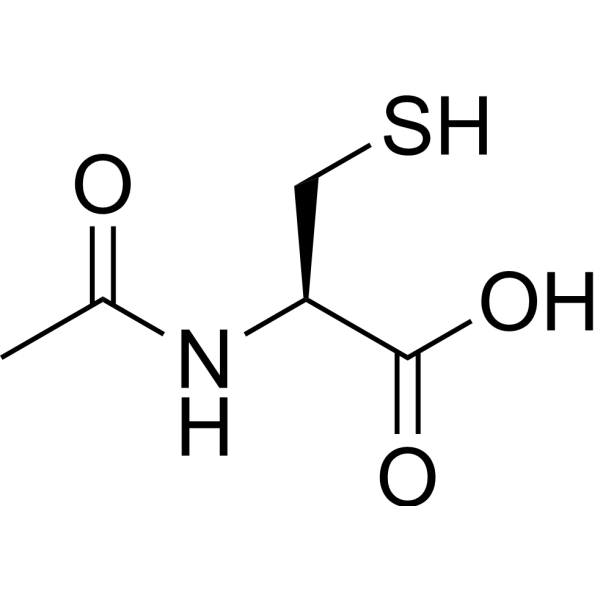
AcetylcysteineMucolytic Agent -
HY-14571
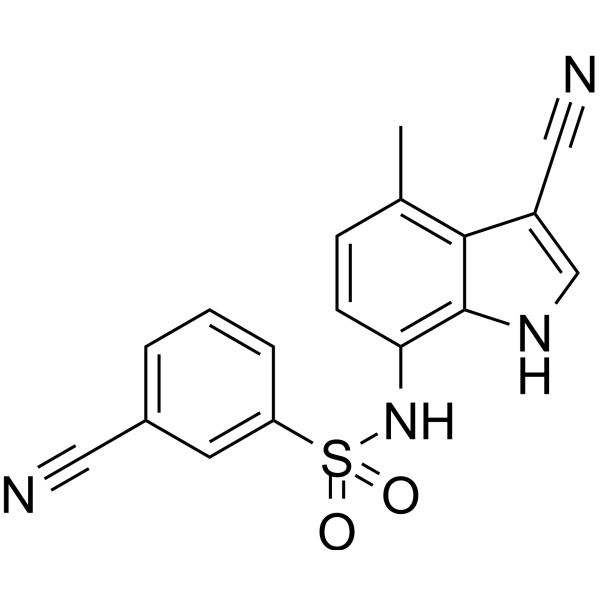
E7820Angiogenesis Inhibitor -
HY-109590
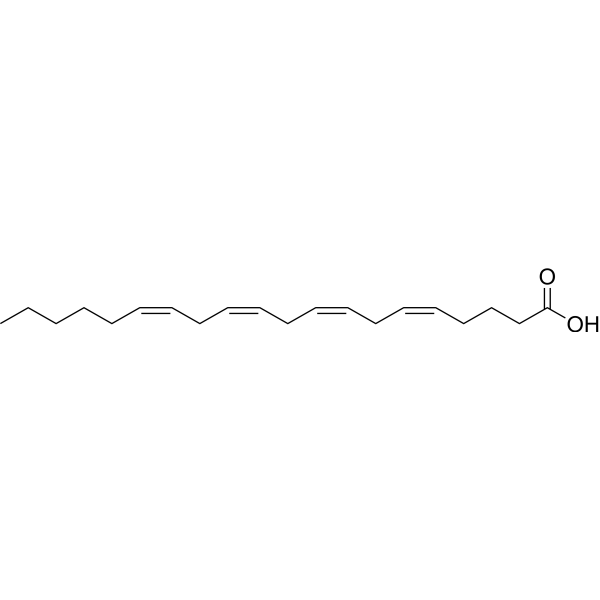
Arachidonic acidPolyunsaturated Fatty Acid -
HY-50903
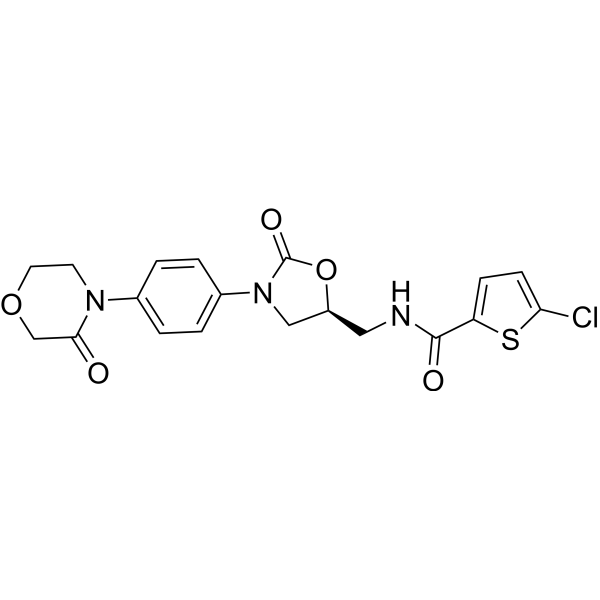
RivaroxabanFactor Xa Inhibitor -
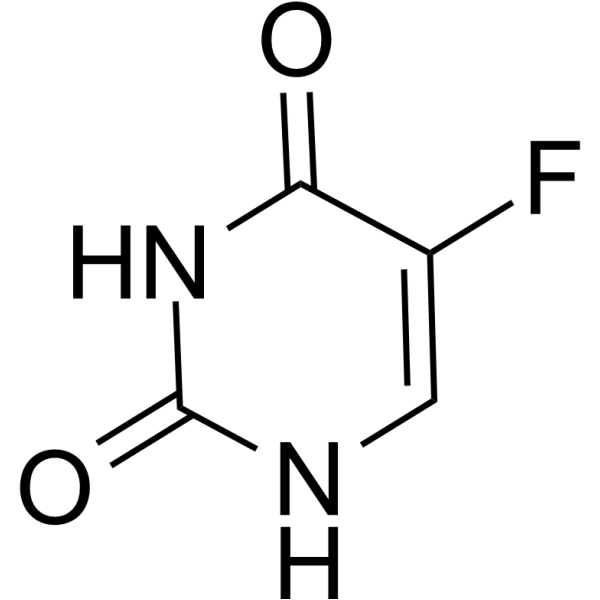
HY-90006
5-FluorouracilThymidylate Synthase Inhibitor -
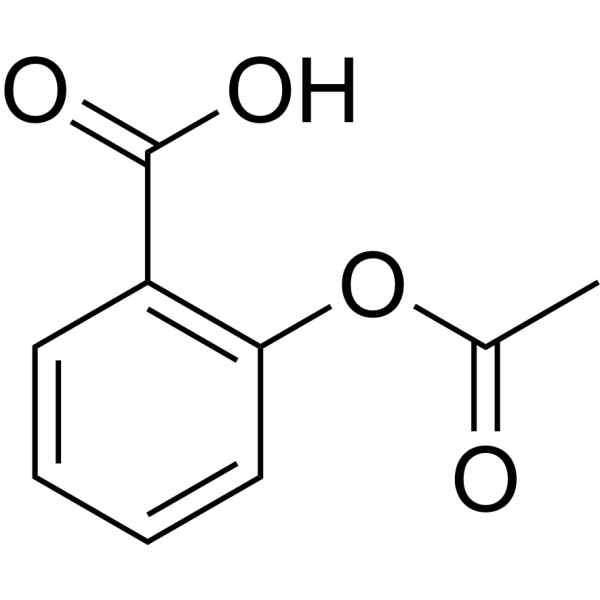
HY-14654
AspirinCOX Inhibitor -
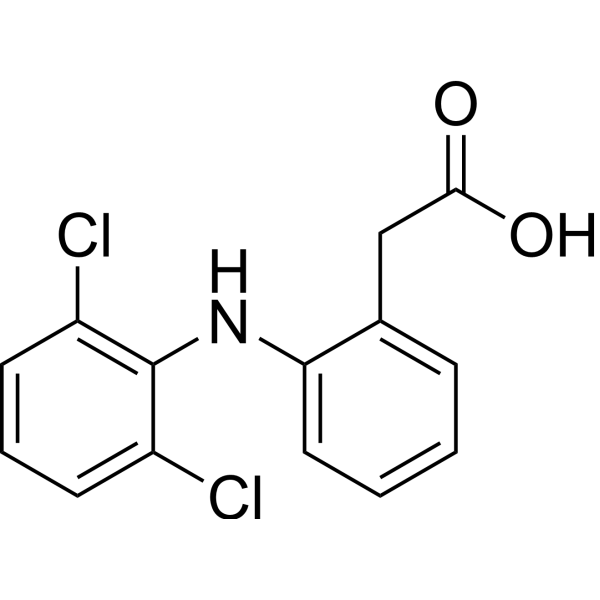
HY-15036
DiclofenacCOX Inhibitor -
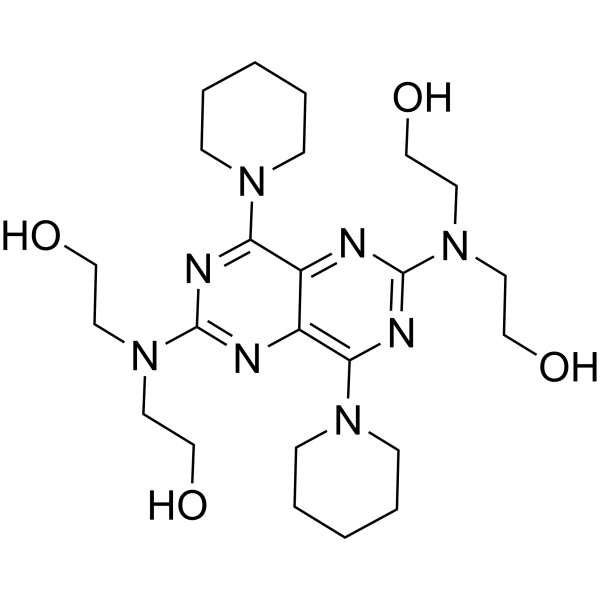
HY-B0312
DipyridamolePDE Inhibitor -
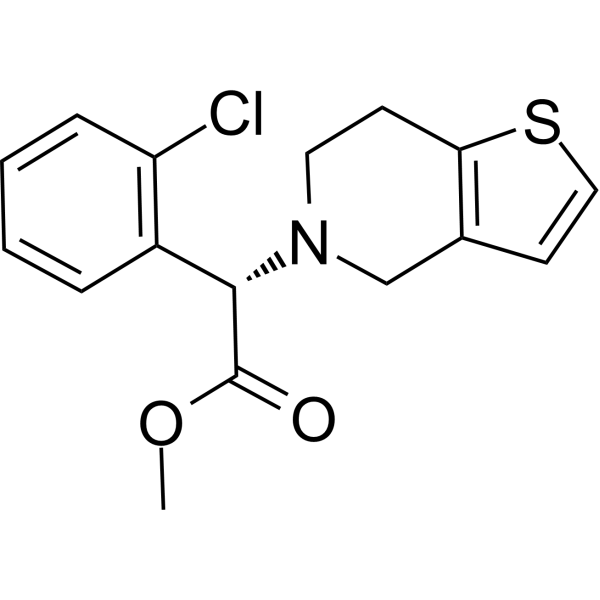
HY-15283
ClopidogrelAntiplatelet Agent
Publications Citing Use of MedChemExpress (MCE) Tirofiban
More Customer Validation & Images

-
Bio/Physico-chemical Assay
-
Cell Proliferation/Viability Assay
-
Cell Migration/Invasion Assay
-
ELISA
-
ELISA


Activité biologique
Description
IC50 & Target
Gp IIb/IIIa Receptor[1]
Cellular Effect
|
Cell Line

|
Type | Value | Description | References |
|---|---|---|---|---|
| HUVEC | IC50 |
>300 μM
Compound: 17
|
Inhibition of HUVEC attachment to human fibronectin
Inhibition of HUVEC attachment to human fibronectin
|
[PMID: 1469694] |
| HUVEC | IC50 |
100 μM
Compound: 17
|
Inhibition of HUVEC attachment to human vitronectin
Inhibition of HUVEC attachment to human vitronectin
|
[PMID: 1469694] |
| HUVEC | IC50 |
260 μM
Compound: 17
|
Inhibition of HUVEC attachment to human fibrinogen
Inhibition of HUVEC attachment to human fibrinogen
|
[PMID: 1469694] |
| Platelet | IC50 |
0.03 μM
Compound: Tirofiban
|
Antiplatelet activity in human platelet rich plasma assessed as inhibition of ADP-induced platelet aggregation by Born's method
Antiplatelet activity in human platelet rich plasma assessed as inhibition of ADP-induced platelet aggregation by Born's method
|
[PMID: 26912112] |
| Platelet | IC50 |
0.032 μM
Compound: Tirofiban
|
Inhibition of ADP-induced human platelet aggregation in platelet-rich plasma by Born's method
Inhibition of ADP-induced human platelet aggregation in platelet-rich plasma by Born's method
|
[PMID: 23757209] |
In Vitro
Tirofiban (0.25, 1, 3 μg/mL; 72 hours) increases proliferation of HAEC cells[1].
Tirofiban (24 hours) closes the scratch of HUVECs migration within 18 hours[1].
Tirofiban (0.25, 1 μg/mL; 1 hour) induces production of VEGF after 30 minutes which can stimulates proliferation of endothelial cells[1].
MedChemExpress (MCE) has not independently confirmed the accuracy of these methods. They are for reference only.
-
Cell Line:HAEC cells
-
Concentration:0.25, 1, 3 μg/mL
-
Incubation Time:72 hours
-
Result:Increased proliferation of HAEC cells.
-
Cell Line:HUVEC cells
-
Concentration:
-
Incubation Time:24 hours
-
Result:Stimulated the migratory capacity of endothelial cells.
-
Cell Line:HAEC cells
-
Concentration:0.05, 0.12, 0.25, 1 μg/mL
-
Incubation Time:1 hour
-
Result:Induced production of VEGF which stimulated proliferation of endothelial cells.
In Vivo
Tirofiban (60 μg/kg; i.v.; once) enhances eNOS activity, decreases iNOS activity and reduces area of no-reflow after reperfusion following AMI[2].
Tirofiban (50 μg/per; irrigate; once) shows anticoagulant effect with patency rates of 59% at 24 hours after microvascular anastomosis in the crush model[3].
MedChemExpress (MCE) has not independently confirmed the accuracy of these methods. They are for reference only.
-
Animal Model:Male Sprague-Dawley rats (10 to 15-week-age; 270-330 g)[2].
-
Dosage:60 μg/kg
-
Administration:Intravenous injection; once.
-
Result:Increased contraction force, ventricular compliance, and improved heart function.
Reduced the size of no-reflow and infarct.
-
Animal Model:Sprague-Dawley rats (350-400 g; crush injury model)[3]
-
Dosage:50 µg/per (50 µg/mL, 1 mL for each)
-
Administration:Irrigate 1 mL within the vessel lumen (before placement of the last suture); once.
-
Result:Showed anticoagulant effect with patency rates of 59%.


Chemical Information
-
CAS No. 144494-65-5
-
Appearance Solid
-
Masse moléculaire 440.60
-
Formule C22H36N2O5S
-
Color White to off-white
-
SMILES
O=S(N[C@H](C(O)=O)CC1=CC=C(OCCCCC2CCNCC2)C=C1)(CCCC)=O
-
Synonyms
L700462; MK383
-
Livraison
Room temperature in continental US; may vary elsewhere.
-
Stockage
Powder -20°C 3 years 4°C 2 years In solvent -80°C 6 months -20°C 1 month


Publications (6)
-
Journal Impact Factor
-
Most Recent
-
Microsyst Nanoeng
2026 Jan 1;12(1):7. PMID: 41476049
Tirofiban purchased from MedChemExpress. Usage Cited in: Microsyst Nanoeng. 2026 Jan 1;12(1):7. [Abstract]
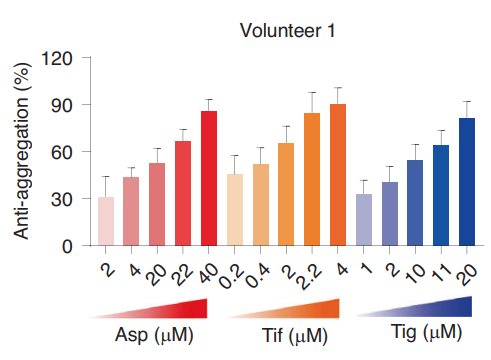
Anti-aggregation efficiency of single-drug combinations for platelets in the combinatorial screening tests for Volunteer 1. For Aspirin (Asp), the concentrations were 2 μM, 4 μM (2 μM + 2 μM), 20 μM, 22 μM (2 μM + 20 μM), and 40 μM (20 μM + 20 μM). For Tirofiban (Tif), the concentrations were 0.2 μM, 0.4 μM (0.2 μM + 0.2 μM), 2 μM, 2.2 μM (0.2 μM + 2 μM), and 4 μM (2 μM + 2 μM). For Ticagrelor, the concentrations were 1 μM, 2 μM (1 μM + 1 μM), 10 μM, 11 μM (10 μM + 1 μM), and 20 μM (10 μM + 10 μM). The results showed that 4 μM Tif (Tirofiban) exhibited the strongest platelet aggregation inhibition.
-
Am J Respir Cell Mol Biol
GP IIb/IIIa-ICAM-1 Mediated Platelet-Endothelial Adhesion Exacerbates Pulmonary Hypertension. [Abstract]2025 Feb 28. PMID: 40019848
Tirofiban purchased from MedChemExpress. Usage Cited in: Am J Respir Cell Mol Biol. 2025 Feb 28. [Abstract]
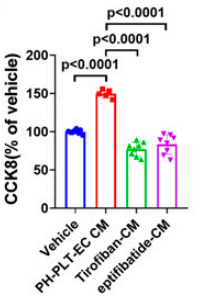
CCK8 analysis indicated that the proliferation effect of PH-PLT-EC CM on PASMCs was diminished by Tirofiban (30 μg/mL) or eptifibatide (10 μg/mL). MFI = mean fluorescence intensity.
Tirofiban purchased from MedChemExpress. Usage Cited in: Am J Respir Cell Mol Biol. 2025 Feb 28. [Abstract]
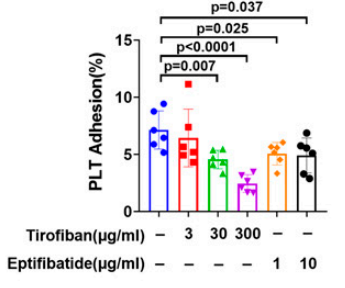
Treatment with GPIIb/IIIa antagonists Tirofiban (30 or 300 μg/mL; 45 min) or eptifibatide (1; 10 μg/mL) decreased platelet–EC adhesion. Platelet adhesion was measured by quantifying the remaining fluorescence intensity after the unattached platelets were removed.
Tirofiban purchased from MedChemExpress. Usage Cited in: Am J Respir Cell Mol Biol. 2025 Feb 28. [Abstract]
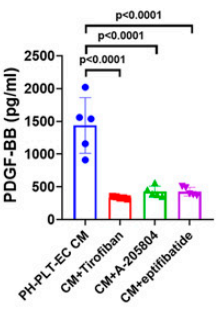
The conditioned medium from EC–platelet cocultures treated with Tirofiban (30 μg/mL), eptifibatide (10 μg/mL), or A-205804 (250 μmol/L) showed reduced PDGF-BB levels.
-
Front Pharmacol
Berberine and Its Main Metabolite Berberrubine Inhibit Platelet Activation Through Suppressing the Class I PI3Kβ/Rasa3/Rap1 Pathway. [Abstract]2021 Oct 8:12:734603. PMID: 34690771 -
Mol Divers
Repurposed drugs as PCSK9-LDLR disruptors for lipid lowering and cardiovascular disease therapeutics. [Abstract]2024 Dec 8. PMID: 39645639 -
-
Tirofiban purchased from MedChemExpress. Usage Cited in: bioRxiv. 2025 February 01.
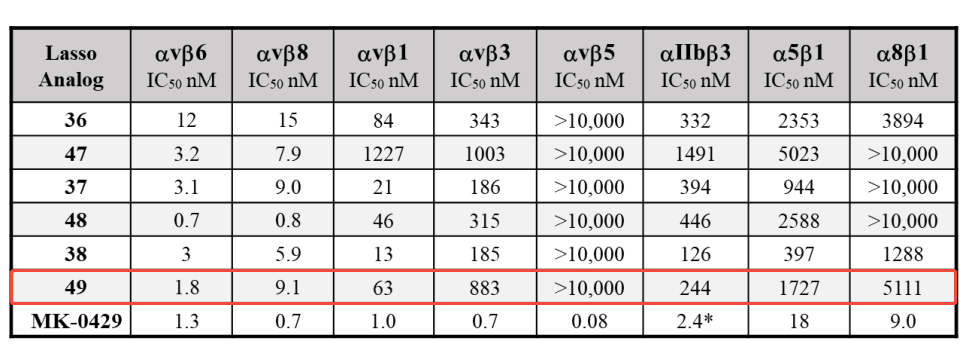
RGD-integrin selectivity of lassotides 36-38 and conjugates 47-49 (shaded), as measured by competitive inhibition vs LAP in ELISA assays against integrins αvβ3, αvβ6 and αvβ8 (as described above) and αvβ1, αvβ5, αIIbβ3, α5β1, and α8β1. *MK-042948 was used as a positive control for all integrin assays except αIIbβ3, where Tirofiban49 was employed.


Solvant et solubilité
In Vitro:
1M HCl : 50 mg/mL (113.48 mM; ultrasonic and adjust pH to 1 with HCl)
DMSO : < 1 mg/mL (insoluble or slightly soluble)
H2O : < 0.1 mg/mL (insoluble)
Please refer to the solubility information to select the appropriate solvent. Once prepared, please aliquot and store the solution to prevent product inactivation from repeated freeze-thaw cycles.
Storage method and period of stock solution: -80°C, 6 months; -20°C, 1 month. When stored at -80°C, please use it within 6 months. When stored at -20°C, please use it within 1 month.
Please refer to the solubility information to select the appropriate solvent. Once prepared, please aliquot and store the solution to prevent product inactivation from repeated freeze-thaw cycles.
Storage method and period of stock solution: -80°C, 6 months; -20°C, 1 month. When stored at -80°C, please use it within 6 months. When stored at -20°C, please use it within 1 month.
Concentration (start) × Volume (start) = Concentration (final) × Volume (final)


Pureté et documentation
-
Fiche technique (275 KB)
-
SDS (393 KB)
- English - EN (393 KB)
- Français - FR (393 KB)
- Deutsch - DE (393 KB)
- Norwegian - NO (393 KB)
- Español - ES (393 KB)
- Swedish - SV (393 KB)
- Italian - IT (393 KB)
- Korean - KR (393 KB)
- Portuguese - PT (393 KB)
-
Instruction de manipulation (2659 KB)
Références
[1]. Giordano A, et al. Tirofiban induces VEGF production and stimulates migration and proliferation of endothelial cells. Vascul Pharmacol. 2014 May-Jun;61(2-3):63-71. [Content Brief]
[2]. Liu X, et al. Effects of tirofiban on the reperfusion-related no-reflow in rats with acute myocardial infarction. J Geriatr Cardiol. 2013 Mar;10(1):52-8. [Content Brief]
[3]. Yates YJ, et al. The effect of tirofiban on microvascular thrombosis: crush model. Plast Reconstr Surg. 2005 Jul;116(1):205-8. [Content Brief]


Complete Stock Solution Preparation Table
Please refer to the solubility information to select the appropriate solvent. Once prepared, please aliquot and store the solution to prevent product inactivation from repeated freeze-thaw cycles.
Storage method and period of stock solution: -80°C, 6 months; -20°C, 1 month. When stored at -80°C, please use it within 6 months. When stored at -20°C, please use it within 1 month.
| Optional Solvent | Concentration Solvent Mass | 1 mg | 5 mg | 10 mg | 25 mg |
|---|---|---|---|---|---|
| 1M HCl | 1 mM | 2.2696 mL | 11.3482 mL | 22.6963 mL | 56.7408 mL |
| 5 mM | 0.4539 mL | 2.2696 mL | 4.5393 mL | 11.3482 mL | |
| 10 mM | 0.2270 mL | 1.1348 mL | 2.2696 mL | 5.6741 mL | |
| 15 mM | 0.1513 mL | 0.7565 mL | 1.5131 mL | 3.7827 mL | |
| 20 mM | 0.1135 mL | 0.5674 mL | 1.1348 mL | 2.8370 mL | |
| 25 mM | 0.0908 mL | 0.4539 mL | 0.9079 mL | 2.2696 mL | |
| 30 mM | 0.0757 mL | 0.3783 mL | 0.7565 mL | 1.8914 mL | |
| 40 mM | 0.0567 mL | 0.2837 mL | 0.5674 mL | 1.4185 mL | |
| 50 mM | 0.0454 mL | 0.2270 mL | 0.4539 mL | 1.1348 mL | |
| 60 mM | 0.0378 mL | 0.1891 mL | 0.3783 mL | 0.9457 mL | |
| 80 mM | 0.0284 mL | 0.1419 mL | 0.2837 mL | 0.7093 mL | |
| 100 mM | 0.0227 mL | 0.1135 mL | 0.2270 mL | 0.5674 mL |


Tirofiban Related Classifications
HY-17369B Related Classifications
 Powered by Bioz