



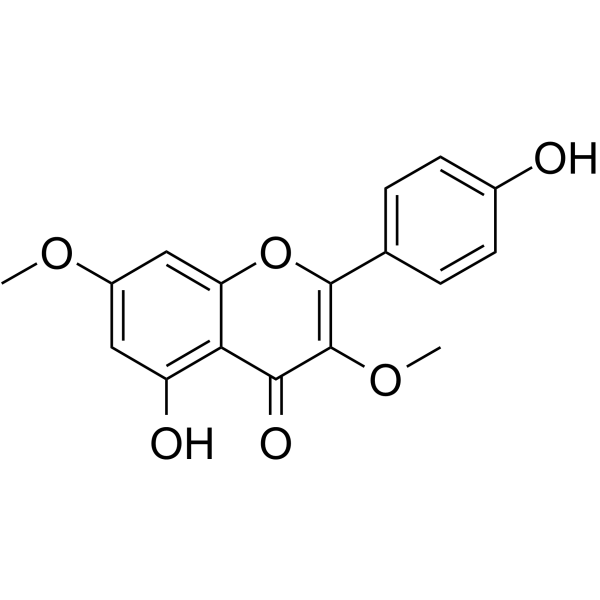
Kumatakenin
Based on 1 publication(s) in Google Scholar
Kumatakenin is an orally active apoptosis inducer and autophagy inhibitor, with a Kd value of 2.94 μM for mouse ATG5. Kumatakenin increases the activities of caspase-3, caspase-8 and caspase-9, thereby inducing caspase-dependent apoptosis in ovarian cancer cells. Kumatakenin reduces the expression of chemokines and pro-oncogenic factors in ovarian cancer cells, and inhibits M2 macrophage polarization. Kumatakenin inactivates TRIM65 function, reduces the expression and stability of FASN, and thus inhibits the proliferation, migration, invasion and tumor progression of esophageal cancer cells. Kumatakenin interacts with ATG5 to reduce its protein level, decrease LC3 level, and reduce the number of autophagosomes in the hippocampus. Kumatakenin binds to Eno3 to upregulate its expression, reduce the stability and expression level of IRP1 mRNA, inhibit ferroptosis, alleviate intestinal inflammation, and restore epithelial barrier function. Kumatakenin enhances the efficacy of antibiotics against pathogenic bacteria, inhibits SARS-CoV-2 replication, and reduces cytokine production. Kumatakenin is applicable to research related to ovarian cancer, esophageal cancer, depression and colitis.
For research use only. We do not sell to patients.
- Purity : 99.31%
- CAS No.: 3301-49-3
- Formula: C17H14O6
- Molecular Weight:314.29
-
Storage:
4°C, sealed storage, away from moisture and light
* In solvent : -80°C, 6 months; -20°C, 1 month (sealed storage, away from moisture and light)

To place orders, for customer services and technical support, please contact: MedChemExpress USA
Tel: 609-228-6898 E-mail: [email protected] [email protected]


-
 Biological Activity
-
Chemical Information
-
Solvent & Solubility
- Protocols
- Purity & Documentation
- References
-
 Help & FAQs


Publications Citing Use of MedChemExpress (MCE) Kumatakenin
MoreAll Caspase Isoforms
More

Biological Activity
Description
Cellular Effect
|
Cell Line

|
Type | Value | Description | References |
|---|---|---|---|---|
| B16 | IC50 |
57.5 μM
Compound: 13
|
Cytotoxicity against mouse B16 cells assessed as cell viability after 48 hrs by MTT assay
Cytotoxicity against mouse B16 cells assessed as cell viability after 48 hrs by MTT assay
|
[PMID: 25659770] |
| HeLa | IC50 |
8.1 μM
Compound: Kamatakenin
|
Cytotoxicity against human HeLa cells assessed as reduction in cell viability incubated for 48 hrs by MTT assay
Cytotoxicity against human HeLa cells assessed as reduction in cell viability incubated for 48 hrs by MTT assay
|
[PMID: 31784199] |
| MCF7 | IC50 |
10.3 μM
Compound: Kamatakenin
|
Cytotoxicity against human MCF7 cells assessed as reduction in cell viability incubated for 48 hrs by MTT assay
Cytotoxicity against human MCF7 cells assessed as reduction in cell viability incubated for 48 hrs by MTT assay
|
[PMID: 31784199] |
| Neutrophil | IC50 |
0.7 μg/mL
Compound: 12
|
Antiinflammatory activity in human neutrophils assessed as inhibition of fMet-Leu-Phe/Cytochalasin B-induced elastase release
Antiinflammatory activity in human neutrophils assessed as inhibition of fMet-Leu-Phe/Cytochalasin B-induced elastase release
|
[PMID: 18163582] |
| Neutrophil | IC50 |
1.2 μg/mL
Compound: 12
|
Antiinflammatory activity in human neutrophils assessed as inhibition of fMet-Leu-Phe/Cytochalasin B-induced superoxide anion generation
Antiinflammatory activity in human neutrophils assessed as inhibition of fMet-Leu-Phe/Cytochalasin B-induced superoxide anion generation
|
[PMID: 18163582] |
In Vitro
Kumatakenin (0-100 μM; 48 h) induces dose-dependent inhibition of cell growth in human A2780 and SKOV3 ovarian cancer cells[1].
Kumatakenin (0-30 μM; 48 h) increases the proportion of sub-G1 phase cells, a marker of cell death, in human SKOV3 ovarian cancer cells without inducing cell cycle arrest. It triggers apoptotic cell death mediated by caspase-3 activation, and induces dose-dependent activation of caspase-3, caspase-8 and caspase-9[1].
Kumatakenin (0-30 μM; 24 h) dose-dependently downregulates the mRNA expression and secretion of MCP-1 and RANTES in human SKOV3 ovarian cancer cells[1].
Kumatakenin (0-40 μM; 24 h) dose-dependently reduces the mRNA and protein expression of M2 macrophage markers CD206 and Trem-2 in THP-1-derived tumor-associated macrophages (TAMs), decreases the mRNA expression of pro-tumor factors IL-10, VEGF, MMP-2 and MMP-9, reduces the protein expression levels of MMP-2 and MMP-9, and inhibits the secretion of IL-10 and VEGF[1].
Kumatakenin (0-40 μM; 12 h) dose-dependently reduces the mRNA expression levels of TRIM65 and FASN in KYSE410, TE-1, TE-10 and Case17 esophageal cancer cells[2].
Kumatakenin (0-40 μM; 12 h) inhibits the co-expression of TRIM65 and FASN in KYSE410, TE-1, TE-10 and Case17 esophageal cancer cells[2].
Kumatakenin (0-40 μM; 12 h) reduces the migration and invasion abilities of KYSE410, TE-1, TE-10 and Case17 esophageal cancer cells and downregulates the expression of pro-EMT markers in a dose-dependent manner, while upregulating the expression of anti-EMT markers after 12 h of treatment[2].
Kumatakenin (0-40 μM; 24 h) reduces palmitic acid (PA) (HY-N0830) and oleic acid (OA) (HY-N1446)-induced triglyceride accumulation in KYSE410 and TE-1 esophageal cancer cells in a dose-dependent manner after 24 h of co-treatment, and decreases intracellular lipid deposition and TRIM65 expression[2].
Kumatakenin (40 μM; 24 h) reduces the level of de novo palmitate synthesis from glucose in KYSE410 and TE-1 esophageal cancer cells[2].
Kumatakenin (40 μM) inhibits TRIM65-mediated K63-linked polyubiquitination of FASN in TRIM65-reconstituted KYSE410 and TE-1 esophageal cancer cells[2].
Kumatakenin (40-80 μM) reduces TRIM65-mediated K63-linked polyubiquitination of FASN in PA-treated, TRIM65-reconstituted KYSE410 and TE-1 esophageal cancer cells[2].
Kumatakenin (6.25-100 μM) binds to purified ATG5 protein with a Kd of 2.94×10⁻⁶ M[3].
Kumatakenin (1-20 μM) reverses the loss of HT-22 cell viability induced by Corticosterone (CORT) (HY-B1618) and regulates the expression levels of autophagy-related proteins in HT-22 cells (upregulating P62, downregulating ATG5 and LC3), but these effects are abrogated by ATG5 overexpression[3].
Kumatakenin (10-80 μM; 48 h) increases the viability of MODE-K mouse colonic epithelial cells treated with Erastin (HY-15763), reduces the level of lipid ROS in the cells, decreases intracellular iron levels and increases IRP1 protein levels, and accelerates the degradation rate of IRP1 mRNA in the cells in an Eno3-dependent manner[5].
MedChemExpress (MCE) has not independently confirmed the accuracy of these methods. They are for reference only.
-
Cell Line:human A2780 ovarian cancer cells, human SKOV3 ovarian cancer cells
-
Concentration:0, 1.563, 3.125, 6.25, 12.5, 25, 50, 100 μM
-
Incubation Time:48 h
-
Result:Induced dose-dependent cell growth inhibition in both A2780 and SKOV3 cells, with increasing inhibition observed at higher concentrations.
-
Cell Line:human SKOV3 ovarian cancer cells
-
Concentration:0, 5, 15, 30 μM
-
Incubation Time:48 h
-
Result:Increased the percentage of cells in the sub-G1 phase from 2.33% (untreated) to 6.52% (5 μM), 8.58% (15 μM), and 21.06% (30 μM).
Did not induce significant cell cycle arrest in other phases.
-
Cell Line:human SKOV3 ovarian cancer cells
-
Concentration:30 μM
-
Incubation Time:0, 12, 24, 48 h
-
Result:Increased the total apoptotic cell population from 1.47% (0 h) to 11.14% (12 h), 23.01% (24 h), and 62.19% (48 h).
-
Cell Line:human SKOV3 ovarian cancer cells
-
Concentration:0, 5, 15, 30 μM
-
Incubation Time:48 h
-
Result:Induced dose-dependent increases in cleaved caspase-3, cleaved caspase-8, and cleaved caspase-9, with fold changes (normalized to β-actin) ranging from 1 to >3 for all three caspases at increasing concentrations.
-
Cell Line:human SKOV3 ovarian cancer cells
-
Concentration:0, 5, 15, 30 μM
-
Incubation Time:24 h
-
Result:Reduced MCP-1 mRNA expression to ~90% (5 μM), ~75% (15 μM), and ~55% (30 μM) of control levels.
Reduced RANTES mRNA expression to ~90% (5 μM), ~65% (15 μM), and ~55% (30 μM) of control levels.
-
Cell Line:human SKOV3 ovarian cancer cells
-
Concentration:30 μM
-
Incubation Time:24 h
-
Result:Reduced MCP-1 secretion to ~60% of control levels.
Reduced RANTES secretion to ~70% of control levels.
-
Cell Line:THP-1-derived tumour-associated macrophages (TAMs)
-
Concentration:0, 10, 20, 40 μM
-
Incubation Time:24 h
-
Result:Reduced CD206 mRNA expression to ~95% (10 μM), ~75% (20 μM), and ~65% of TAM control levels.
Reduced Trem-2 mRNA expression to ~95% (10 μM), ~85% (20 μM), and ~75% of TAM control levels.\nReduced IL-10 mRNA expression to ~95% (10 μM), ~35% (20 μM), and ~25% of TAM control levels.
Reduced VEGF mRNA expression to ~90% (10 μM), ~45% (20 μM), and ~35% of TAM control levels.
Reduced MMP-2 mRNA expression to ~95% (10 μM), ~30% (20 μM), and ~20% of TAM control levels.
Reduced MMP-9 mRNA expression to ~95% (10 μM), ~60% (20 μM), and ~50% of TAM control levels.
-
Cell Line:THP-1-derived tumour-associated macrophages (TAMs)
-
Concentration:30 μM
-
Incubation Time:24 h
-
Result:Reduced CD206 protein expression to ~40% of TAM control levels.
Reduced Trem-2 protein expression to ~60% of TAM control levels.\nReduced MMP-2 and MMP-9 protein expression compared to TAM control levels.
-
Cell Line:THP-1-derived tumour-associated macrophages (TAMs)
-
Concentration:40 μM
-
Incubation Time:24 h
-
Result:Reduced IL-10 secretion to ~65% of TAM control levels.
Reduced VEGF secretion to ~45% of TAM control levels.
-
Cell Line:KYSE410, TE-1, TE-10, Case17
-
Concentration:0 μM, 10 μM, 20 μM, 40 μM
-
Incubation Time:12 h
-
Result:Caused a dose-dependent reduction in TRIM65 mRNA expression in all four cell lines.
Caused a dose-dependent reduction in FASN mRNA expression in all four cell lines.
-
Cell Line:KYSE410, TE-1, TE-10, Case17
-
Concentration:40 μM
-
Incubation Time:12 h
-
Result:Inhibited the co-expression of TRIM65 and FASN in all four cell lines.
-
Cell Line:KYSE410, TE-10, TE-1, Case17
-
Concentration:0 μM, 10 μM, 20 μM, 40 μM
-
Incubation Time:12 h
-
Result:Caused a dose-dependent reduction in the migratory and invasive capabilities of KYSE410 and TE-10 cell lines.
Caused a dose-dependent decrease in mRNA expression of EMT-associated markers N-Cadherin, ZEB-1, Vimentin, and MMP13, and a dose-dependent increase in mRNA expression of E-cadherin and ZO-1 in KYSE410, TE-10, TE-1, and Case17 cells.
-
Cell Line:KYSE410, TE-1
-
Concentration:40 μM (concurrent with PA/OA treatment)
-
Incubation Time:24 h (concurrent with PA/OA treatment)
-
Result:Reduced lipid deposition and TRIM65 expression in both PA-treated and OA-treated KYSE410 and TE-1 cells.
-
Cell Line:MODE-K murine colonic epithelial cells
-
Concentration:10 μM, 80 μM
-
Incubation Time:48 h
-
Result:Reversed erastin-induced MODE-K cell death, increasing cell survival rates relative to erastin-only treatment.
In Vivo
Kumatakenin (0.56-2.25 mg/kg) alleviates CORT-induced depressive-like behaviors in male C57BL/6J mice by reducing plasma CORT levels, increasing plasma 5-HT, DA and BDNF levels, downregulating the expression of ATG5 and LC3 to inhibit excessive autophagy in the hippocampus, and restoring hippocampal neuronal structure and BDNF levels[3].
Kumatakenin (25-100 mg/kg; p.o.; once daily; for 9 consecutive days) significantly alleviates DSS (HY-116282C)-induced colitis in male C57BL/6 mice by upregulating Eno3 and modulating the Eno3-IRP1 axis to reduce cellular iron levels and inhibit ferroptosis in colonic epithelial cells[5].
MedChemExpress (MCE) has not independently confirmed the accuracy of these methods. They are for reference only.
-
Animal Model:Balb/c nude (male, 4 weeks old, 18-20 g, subcutaneously injected with 1×10⁷ KYSE410 esophageal cancer cells/1×107 TE-1 esophageal cancer cells/1×107 TRIM65-overexpressing AdTRIM65 KYSE410 esophageal cancer cells)[2]
-
Dosage:80 mg/kg
-
Administration:p.o.; daily; 22 days
-
Result:Reduced tumor volume over the 22-day observation period (final mean tumor volume was lower than controls).
Reduced final tumor weight.
-
Animal Model:C57BL/6 (male, 28-35 g, DSS-induced colitis)[5]
-
Dosage:25 mg/kg; 100 mg/kg
-
Administration:i.g.; daily; 9 days
-
Result:Restored colonic mucosal bleeding, vascular patterns, intestinal villi atrophy, and reduced inflammatory cell infiltration.
Increased colon length, decreased Disease Activity Index score, alleviated diarrhea and rectal bleeding, and increased body weight and food intake.
Reduced colonic myeloperoxidase activity, and colonic levels of pro-inflammatory cytokines TNF-α and IL-6, and reduced serum fluorescein isothiocyanate-dextran levels, restoring epithelial barrier function.
Restored mitochondrial morphology in colonic epithelial cells, reduced colonic iron levels, decreased colonic malonaldehyde content, and reduced 4-hydroxynonenal expression in colonic tissues, suppressing ferroptosis.
Upregulated Eno3 protein expression in colonic tissues.
Reversed protective effects (improved colonoscopy findings, increased colon length, reduced Disease Activity Index, restored mitochondrial morphology, reduced colonic iron levels) when Eno3 was inhibited with ENOblock.
Reduced colonic IRP1 mRNA and protein expression, and promoted IRP1 mRNA degradation.
Blocked regulation of IRP1 expression when Eno3 was inhibited.
- RNA extraction experimental
- Western Blot
- Annexin V plus membrane-impermeant dye apoptosis staining
- Cell migration
- Research Protocol for Inflammation-related Diseases
- Cell Viability Determination by MTT Colorimetric Assay
- Phagocytosis Functional Assay
- Detection of Apoptosis
- TUNEL staining for apoptotic DNA fragmentation
- DSS-Induced Colitis
- TNBS-Induced Colitis
- Autophagy
- Apoptosis Solutions
- Primary monocyte-to-macrophage differentiation
- Transepithelial/transendothelial electrical resistance assay
- Cell invasion
- Lysosome and acidic-vesicle live-cell staining
- Ferroptosis Solutions
- Macroautophagy Solutions


Chemical Information
-
CAS No. 3301-49-3
-
Appearance Solid
-
Molecular Weight 314.29
-
Formula C17H14O6
-
Color Light yellow to green yellow
-
SMILES
O=C1C2=C(O)C=C(OC)C=C2OC(C3=CC=C(O)C=C3)=C1OC
-
Structure Classification
-
Initial Source
-
Shipping
Room temperature in continental US; may vary elsewhere.
-
Storage
4°C, sealed storage, away from moisture and light
* In solvent : -80°C, 6 months; -20°C, 1 month (sealed storage, away from moisture and light)


Publications (1)
-
Journal Impact Factor
-
Most Recent


Solvent & Solubility
In Vitro:
DMSO : 25 mg/mL (79.54 mM; ultrasonic and warming and heat to 60°C; Hygroscopic DMSO has a significant impact on the solubility of product, please use newly opened DMSO)
Please refer to the solubility information to select the appropriate solvent. Once prepared, please aliquot and store the solution to prevent product inactivation from repeated freeze-thaw cycles.
Storage method and period of stock solution: -80°C, 6 months; -20°C, 1 month (sealed storage, away from moisture and light). When stored at -80°C, please use it within 6 months. When stored at -20°C, please use it within 1 month.
Please refer to the solubility information to select the appropriate solvent. Once prepared, please aliquot and store the solution to prevent product inactivation from repeated freeze-thaw cycles.
Storage method and period of stock solution: -80°C, 6 months; -20°C, 1 month (sealed storage, away from moisture and light). When stored at -80°C, please use it within 6 months. When stored at -20°C, please use it within 1 month.
Concentration (start) × Volume (start) = Concentration (final) × Volume (final)


Purity & Documentation
-
Data Sheet (295 KB)
-
SDS (394 KB)
- English - EN (394 KB)
- Français - FR (394 KB)
- Deutsch - DE (394 KB)
- Norwegian - NO (394 KB)
- Español - ES (394 KB)
- Swedish - SV (394 KB)
- Italian - IT (394 KB)
- Korean - KR (394 KB)
- Portuguese - PT (394 KB)
-
Handling Instructions (2659 KB)
References
[1]. Woo JH, et al. Effect of Kumatakenin Isolated From Cloves on the Apoptosis of Cancer Cells and the Alternative Activation of Tumor-Associated Macrophages. J Agric Food Chem. 2017 Sep 13;65(36):7893-7899. [Content Brief]
[3]. Li L, et al. Kumatakenin alleviates depressive-like behaviors by suppressing excessive autophagy in hippocampus via ATG5. Eur J Pharmacol. 2025;999:177688. [Content Brief]
[4]. Ripperger H, et al. Steroidal alkaloid glycosides from Solanum suaveolens. Phytochemistry. 1997;46(7):1279-1282. [Content Brief]
[5]. Arenbaoligao, et al. Kumatakenin inhibited iron-ferroptosis in epithelial cells from colitis mice by regulating the Eno3-IRP1-axis. Front Pharmacol. 2023;14:1127931. Published 2023 Mar 17. [Content Brief]


Complete Stock Solution Preparation Table
Please refer to the solubility information to select the appropriate solvent. Once prepared, please aliquot and store the solution to prevent product inactivation from repeated freeze-thaw cycles.
Storage method and period of stock solution: -80°C, 6 months; -20°C, 1 month (sealed storage, away from moisture and light). When stored at -80°C, please use it within 6 months. When stored at -20°C, please use it within 1 month.
| Optional Solvent | Concentration Solvent Mass | 1 mg | 5 mg | 10 mg | 25 mg |
|---|---|---|---|---|---|
| DMSO | 1 mM | 3.1818 mL | 15.9089 mL | 31.8177 mL | 79.5444 mL |
| 5 mM | 0.6364 mL | 3.1818 mL | 6.3635 mL | 15.9089 mL | |
| 10 mM | 0.3182 mL | 1.5909 mL | 3.1818 mL | 7.9544 mL | |
| 15 mM | 0.2121 mL | 1.0606 mL | 2.1212 mL | 5.3030 mL | |
| 20 mM | 0.1591 mL | 0.7954 mL | 1.5909 mL | 3.9772 mL | |
| 25 mM | 0.1273 mL | 0.6364 mL | 1.2727 mL | 3.1818 mL | |
| 30 mM | 0.1061 mL | 0.5303 mL | 1.0606 mL | 2.6515 mL | |
| 40 mM | 0.0795 mL | 0.3977 mL | 0.7954 mL | 1.9886 mL | |
| 50 mM | 0.0636 mL | 0.3182 mL | 0.6364 mL | 1.5909 mL | |
| 60 mM | 0.0530 mL | 0.2651 mL | 0.5303 mL | 1.3257 mL |


Kumatakenin Related Classifications
HY-N3415 Related Classifications
 Powered by Bioz
Keywords
- Kumatakenin
- 3301-49-3
- Apoptosis
- Autophagy
- Caspase
- Ferroptosis
- SARS-CoV
- apoptosis inducer
- autophagy inhibitor
- ovarian cancer
- esophageal cancer
- depression and colitis
- A2780cells
- SKOV3 cells
- TAMs
- KYSE410 cells
- TE-1 cells
- TE-10 cells
- Case17 esophageal cancer cells
- MODE-K mouse colonic epithelial cells
- Balb/c nude mice
- C57BL/6 mice
- Inhibitor
- inhibitor
- inhibit