



Onalespib lactate
Based on 11 publication(s) in Google Scholar
Onalespib lactate is a potent and cross the blood-brain barrier heat-shock-protein-90 (Hsp90) inhibitor with an Kd value of 0.71 nM. Onalespib lactate inhibits the proliferation, survival and migration. Onalespib lactate decreases the expression of EGFR, p-EGFR, AKT, P-AKT, ERK1/2, P-ERK1/2, S6, P-S6 protein. Onalespib lactate shows antitumor activity. Onalespib lactate has the potential for the research of non-small cell lung cancer (NSCLC).
Nos produits utilisent uniquement pour la recherche. Nous ne vendons pas aux patients.
- CAS No.: 1019889-35-0
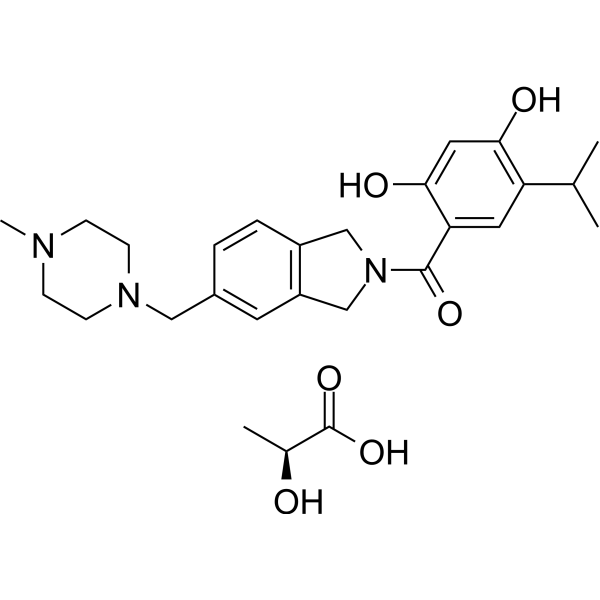
- Formule: C27H37N3O6
- Masse moléculaire:499.60
-
Stockage:
Please store the product under the recommended conditions in the Certificate of Analysis.

To place orders, for customer services and technical support, please contact: MedChemExpress USA
Tel: 609-228-6898 E-mail: [email protected] [email protected]


-
 Activité biologique
-
Chemical Information
- Protocole
- Pureté et documentation
- Références
-
 Help & FAQs


Publications Citing Use of MedChemExpress (MCE) Onalespib lactate
More- Theranostics. 2019 Aug 12;9(20):5769-5783. [Abstract]
- Nano Res. 07 May 2022.
- Immunology. 2021 Jan;162(1):84-91. [Abstract]
- Sci Rep. 2017 Mar 15;7(1):201. [Abstract]
- J Appl Toxicol. 2017 Nov;37(11):1325-1332. [Abstract]
- Prostate. 2022 Jun;82(8):917-932. [Abstract]
- J Labelled Comp Radiopharm. 2025 Apr;68(4):e4144. [Abstract]
- Research Square Preprint. 2024 Oct 10.
- Research Square Print. December 12th, 2022.
- Oncotarget. 2020 Nov 3;11(44):3921-3932. [Abstract]
- Methods Mol Biol. 2018:1711:351-398. [Abstract]
 Customer Validation & Images

-
Histological Imaging/Staining
-
Bio/Physico-chemical Assay
-
Apoptosis Analysis
-
Cell Proliferation/Viability Assay
-
Cell Proliferation/Viability Assay


Activité biologique
Description
IC50 & Target
[4]|
HSP90 0.71 nM (Kd) |
In Vitro
Onalespib lactate (0-0.4 µM; 72 h, 48 h) inhibits the proliferation, survival and migration of glioma cells[2].
Onalespib lactate (0-0.4 µM; 48 h) decreases the expression of EGFR, p-EGFR, AKT, P-AKT, ERK1/2, P-ERK1/2, S6, P-S6 protein in a dose-dependent manner[2].
MedChemExpress (MCE) has not independently confirmed the accuracy of these methods. They are for reference only. Further protocols information, click here.
-
Cell Line:LN229, U251 and A172 cells
-
Concentration:0.1, 0.2, 0.4 µM
-
Incubation Time:72 h
-
Result:Inhibited cell proliferation in a dose-dependent manner.
-
Cell Line:LN229, U251 and A172 cells
-
Concentration:0.1, 0.2, 0.4 µM
-
Incubation Time:48 h
-
Result:Decreased the expression of EGFR, p-EGFR, AKT, P-AKT, ERK1/2, P-ERK1/2, S6, P-S6 protein in a dose-dependent manner.
In Vivo
Onalespib lactate (0.5 µM; from 5 to 10 days post-transplant) and TMZ (10 µM) reduce tumor growth and extend survival in zebrafish embryos[2].
Onalespib lactate (5, 10 mg/kg for HCT116 xenografts, 20 mg/kg for A431 xenografts; i.p.; daily for 3 days) shows anti-tumor activity in HCT116 and A431 xenografts[3].
MedChemExpress (MCE) has not independently confirmed the accuracy of these methods. They are for reference only.
-
Animal Model:Female nu/nu Balb/c mice (HCT116 and A431 xenografts)[3]
-
Dosage:5, 10 mg/kg for HCT116 xenografts, 20 mg/kg for A431 xenografts
-
Administration:I.p.; on day 1, 2, and 3 days
-
Result:Inhibited tumor growth and had a median survival of 9.5 days and the maximum survival was 14 days in HCT116 xenografts, reduced the tumor size significantly by 32% in A431 xenografts.


Chemical Information
-
CAS No. 1019889-35-0
-
Masse moléculaire 499.60
-
Formule C27H37N3O6
-
SMILES
C[C@H](O)C(O)=O.O=C(N1CC2=C(C=C(CN3CCN(C)CC3)C=C2)C1)C4=CC(C(C)C)=C(O)C=C4O
-
Synonyms
AT13387 lactate
-
Livraison
Room temperature in continental US; may vary elsewhere.
-
Stockage
Please store the product under the recommended conditions in the Certificate of Analysis.


Publications (11)
-
Journal Impact Factor
-
Most Recent
-
Theranostics
Inhibition of HSP90β Improves Lipid Disorders by Promoting Mature SREBPs Degradation via the Ubiquitin-proteasome System. [Abstract]2019 Aug 12;9(20):5769-5783. PMID: 31534518 -
-
Immunology
2021 Jan;162(1):84-91. PMID: 32954500 -
Sci Rep
Proteomic analysis of proteome and histone post-translational modifications in heat shock protein 90 inhibition-mediated bladder cancer therapeutics. [Abstract]2017 Mar 15;7(1):201. PMID: 28298630
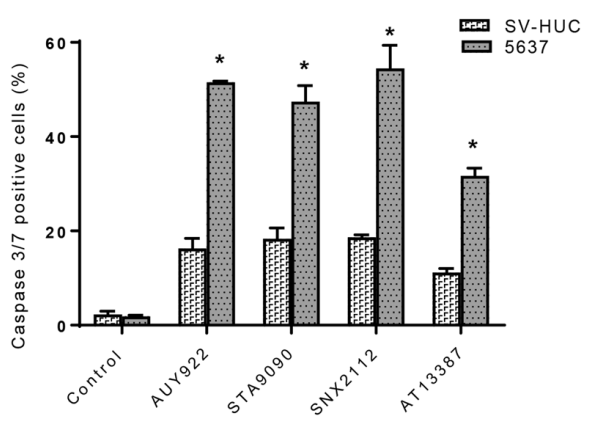
Onalespib lactate purchased from MedChemExpress. Usage Cited in: Sci Rep. 2017 Mar 15;7(1):201. [Abstract]
5637 and SV-HUC cells (1 × 10⁴ per well) were evenly distributed in 96-well plates overnight. Cells were incubated with AUY922 (10 nM), ganetespib (10 nM), SNX2112 (100 nM), or AT13387 (Onalespib) (100 nM) for 48 h. For the caspase 3/7 assay, the HSP90 inhibitor-treated 5637 or SV-HUC cells are stained with Nexcelom ViaStain Caspase 3/7 reagent and Hoechst 33342. Caspase 3/7 positive cells are identified using the Celigo imaging cytometer, and the percentage of apoptotic caspase 3/7 positive cells is calculated with the Celigo software.
Onalespib lactate purchased from MedChemExpress. Usage Cited in: Sci Rep. 2017 Mar 15;7(1):201. [Abstract]
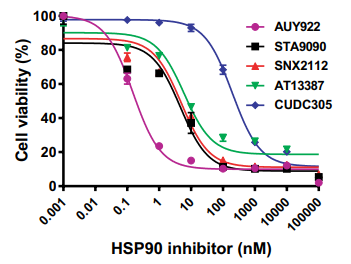
Heat shock protein 90 (HSP90) inhibitors suppress cell growth and proliferation in human bladder carcinoma cells. 5637 cells were evenly distributed in 96-well plates (5 × 10³ cells/well) and treated for 72 h with AUY922, ganetespib (STA9090), SNX2112, AT13387 (Onalespib), or CUDC395 at the indicated concentrations. The ability of HSP90 inhibitors to inhibit cell growth and proliferation was determined by the MTS assay.
-
J Appl Toxicol
2017 Nov;37(11):1325-1332. PMID: 28543094
Onalespib lactate purchased from MedChemExpress. Usage Cited in: J Appl Toxicol. 2017 Nov;37(11):1325-1332. [Abstract]
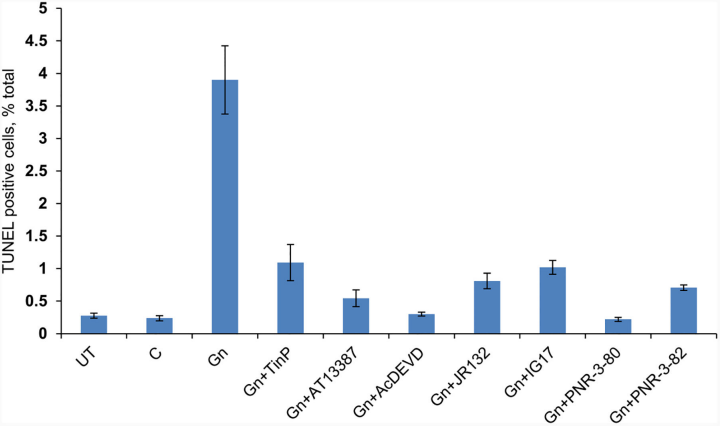
Alleviation of graphene toxicity by using chemical inhibitors (Onalespib (AT13387 et al; 20 nM pretreatment 2 h)) after 48 h exposure of NRK-52E cells with graphene (50 μg/ml). Quantification of TUNEL-positive cells in NRK-52E cells treated with graphene in the presence of chemical inhibitors for HO-1, HSP90, caspase 3, DNase I and EndoG (p < 0.01 for all bars vs. Gn).
-
Prostate
Diptoindonesin G antagonizes AR signaling and enhances the efficacy of antiandrogen therapy in prostate cancer. [Abstract]2022 Jun;82(8):917-932. PMID: 35322879 -
J Labelled Comp Radiopharm
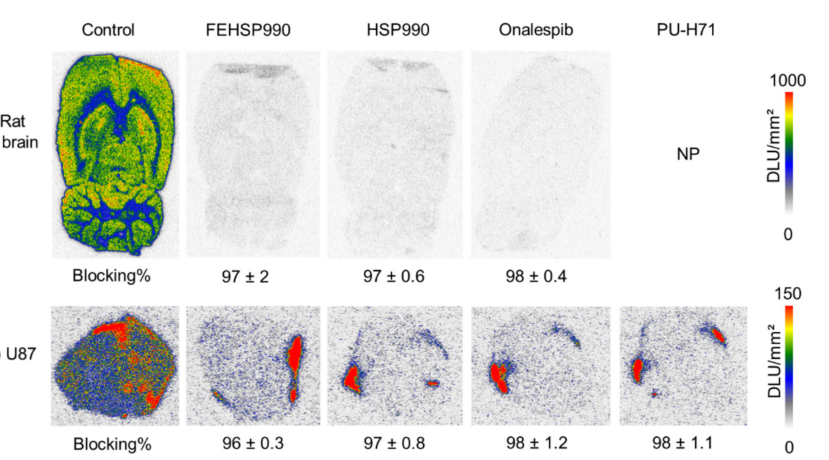
Radiosynthesis and Evaluation of [18F]FEHSP990 as Novel PET Tracer for Hsp90 PET Imaging. [Abstract]2025 Apr;68(4):e4144. PMID: 40219580
Onalespib lactate purchased from MedChemExpress. Usage Cited in: J Labelled Comp Radiopharm. 2025 Apr;68(4):e4144. [Abstract]
In vitro autoradiography study. Slices were incubated with [18F]FEHSP990 (11 kBq/mL). Binding specificity was assessed by preincubation with authentic reference compound (FEHSP990), homologous (HSP990) and heterologous (Onalespib, PU‐H71) inhibitors (10 μM; 10 min) at RT. Rat brain slices (n = 3 per preincubation condition) and U87 tumour slices (n = 3 per preincubation condition).
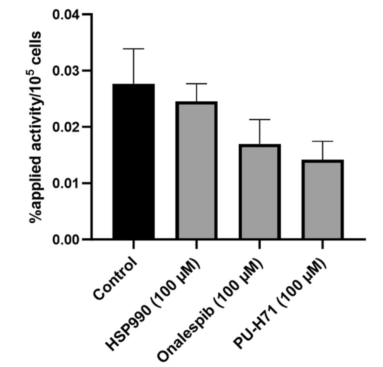
Onalespib lactate purchased from MedChemExpress. Usage Cited in: J Labelled Comp Radiopharm. 2025 Apr;68(4):e4144. [Abstract]
In vitro cell binding study. U87 cells were incubated with [18F]FEHSP990 (84 kBq/mL). Binding specificity was assessed by preincubation with homologous (HSP990) and heterologous (Onalespib, PU‐H71) inhibitors (100 μM; 60 min) at 37°C (n = 3 per preincubation condition).
-
-
-
Oncotarget
2020 Nov 3;11(44):3921-3932. PMID: 33216841 -
Methods Mol Biol
2018:1711:351-398. PMID: 29344898

Protocole
-
RNA extraction experimental
By lysing cells, releasing RNA, and removing impurities such as proteins and DNA, high-purity RNA products are finally obtained. The commonly used traditional method is the guanidine isothiocyanate/phenol/chloroform method (Trizol), which is suitable for a variety of animal materials including animal tissues, microorganisms, cultured cells, etc., and most plant materials.
-
Cell migration
Cell migration is a method that plays an important role in wound healing, cell differentiation, embryonic development, etc.
-
Subcutaneous Cell-Line-Derived Xenograft
Subcutaneous cell-line-derived xenograft (CDX) models are established by implanting cultured human cancer cell lines into immunodeficient mice, where the injected cells form localized tumors that can be monitored in vivo as a measure of tumorigenic potential, growth kinetics, and treatment response. These models are widely used in oncology research because they allow reproducible tumor formation and enable comparative assessment of tumor growth between different cell lines or genetic manipulations in a controlled in vivo microenvironment. Subcutaneous implantation of cancer cells in immunodeficient mice is a standard approach for evaluating tumor growth behavior and therapeutic response across multiple cancer types, including prostate, esophageal, pancreatic, and colon cancer models.
-
Cell Viability Determination by MTT Colorimetric Assay
The following protocol uses the MTT colorimetric assay as a classic literature-established method for assessing cell viability/metabolic activity in cultured mammalian cells. MTT[3-(4,5-dimethylthiazol-2-yl)-2,5-diphenyltetrazolium bromide] is reduced by metabolically active cells to a colored formazan product; the amount of formazan is quantified spectrophotometrically and provides an indirect measure of metabolically active viable cells. Importantly, MTT reduction reflects cellular oxidoreductase/metabolic activity rather than an absolute direct count of living cells, so changes in cellular metabolism can alter the signal independently of cell number.


Pureté et documentation
Références
[1]. Riess JW, et al. Erlotinib and Onalespib Lactate Focused on EGFR Exon 20 Insertion Non-Small Cell Lung Cancer (NSCLC): A California Cancer Consortium Phase I/II Trial (NCI 9878). Clin Lung Cancer. 2021 Nov;22(6):541-548. [Content Brief]
[2]. Canella A, et al. Efficacy of Onalespib, a Long-Acting Second-Generation HSP90 Inhibitor, as a Single Agent and in Combination with Temozolomide against Malignant Gliomas. Clin Cancer Res. 2017 Oct 15;23(20):6215-6226. [Content Brief]
[3]. Spiegelberg D, et al. The HSP90 inhibitor Onalespib exerts synergistic anti-cancer effects when combined with radiotherapy: an in vitro and in vivo approach. Sci Rep. 2020 Apr 3;10(1):5923. [Content Brief]
[4]. Woodhead AJ, et al. Discovery of (2,4-dihydroxy-5-isopropylphenyl)-[5-(4-methylpiperazin-1-ylmethyl)-1,3-dihydroisoindol-2-yl]methanone (AT13387), a novel inhibitor of the molecular chaperone Hsp90 by fragment based drug design. J Med Chem. 2010 Aug 26;53(16):5956-69. [Content Brief]

Calculators
Concentration (start) × Volume (start) = Concentration (final) × Volume (final)


Onalespib lactate Related Classifications
HY-113916 Related Classifications
 Powered by Bioz