



Capmatinib (Standard)
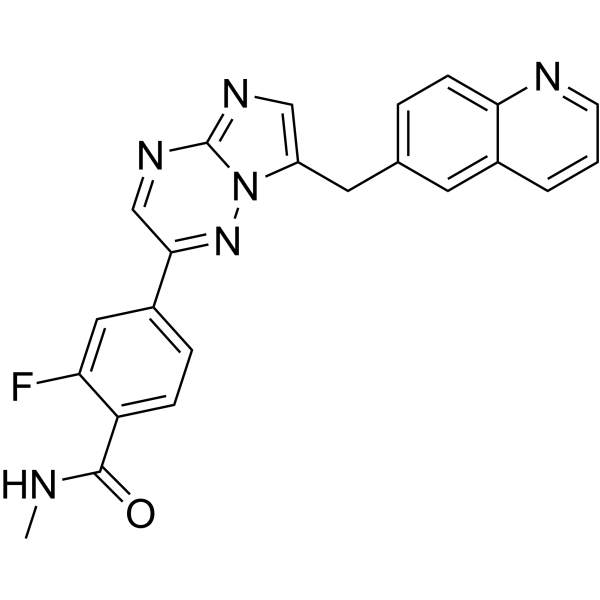
Capmatinib (Standard) is the analytical standard of Capmatinib. This product is intended for research and analytical applications. Capmatinib (INC280; INCB28060) is a potent, orally active, selective, and ATP competitive c-Met kinase inhibitor (IC50=0.13 nM). Capmatinib can inhibit phosphorylation of c-MET as well as c-MET pathway downstream effectors such as ERK1/2, AKT, FAK, GAB1, and STAT3/5. Capmatinib potently inhibits c-MET-dependent tumor cell proliferation and migration and effectively induces apoptosis. Antitumor activity. Capmatinib is largely metabolized by CYP3A4 and aldehyde oxidase.
For research use only. We do not sell to patients.
- Purity : 98%
- CAS No.: 1029712-80-8
- Formula: C23H17FN6O
- Molecular Weight:412.42
-
Storage:
Please store the product under the recommended conditions in the Certificate of Analysis.


To place orders, for customer services and technical support, please contact: MedChemExpress USA
Tel: 609-228-6898 E-mail: [email protected] [email protected]


-
 Product Information
-
Chemical Information
- Purity & Documentation
-
 Help & FAQs


-
HY-13404
Capmatinibc-MET Kinase Inhibitor -
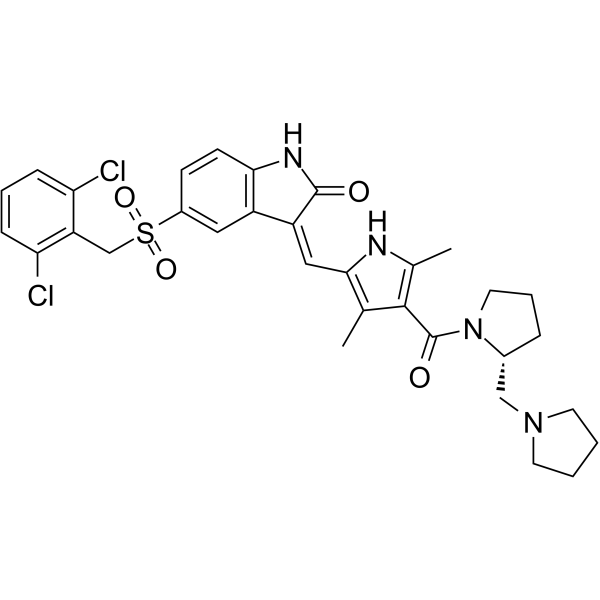
HY-11107
PHA-665752c-Met Inhibitor -
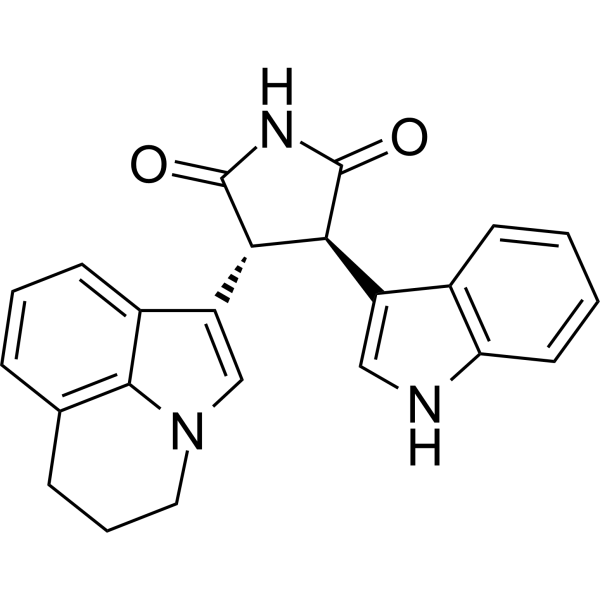
HY-50686
Tivantinibc-Met Inhibitor -
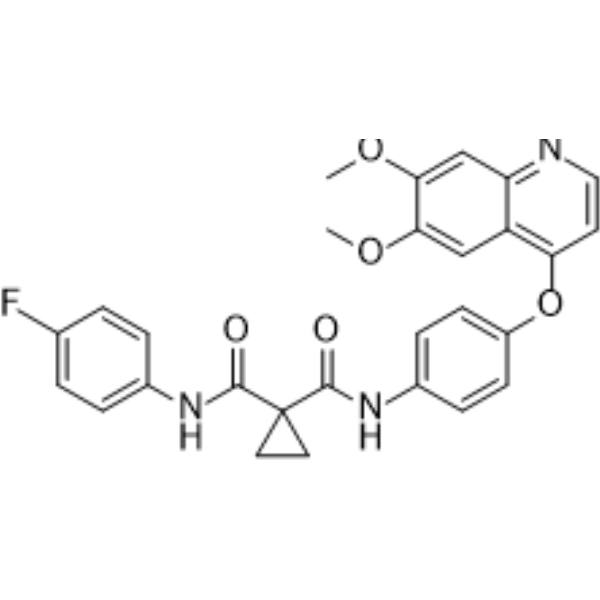
HY-13016
CabozantinibVEGFR2/MET Inhibitor -
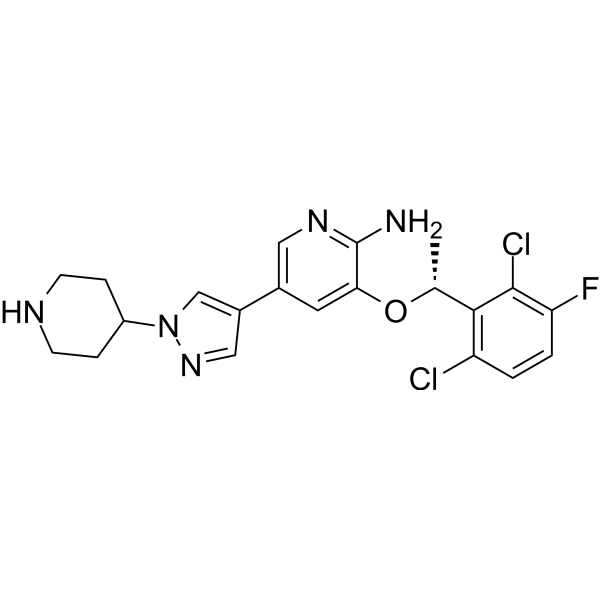
HY-50878
CrizotinibALK/c-Met/ROS1 Inhibitor -
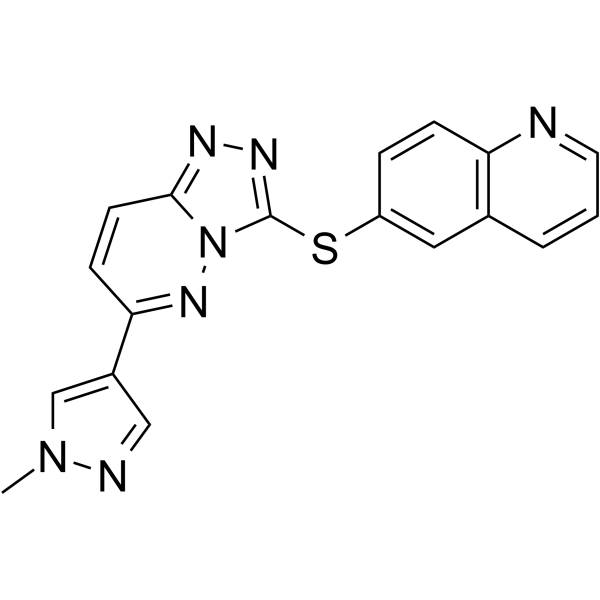
HY-12019
SGX-523MET Inhibitor -
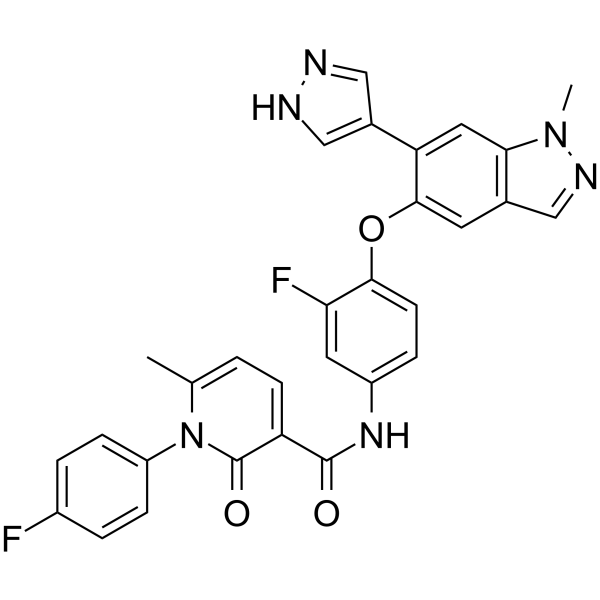
HY-15514
Merestinibc-Met Inhibitor -
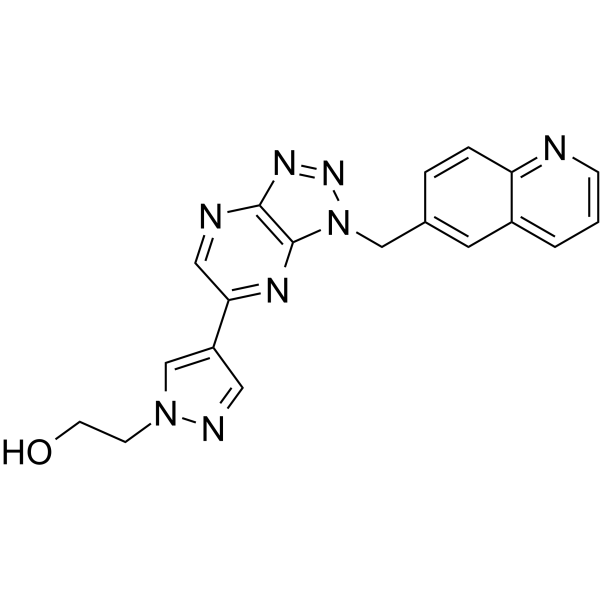
HY-12017
PF-04217903c-Met Kinase Inhibitor -
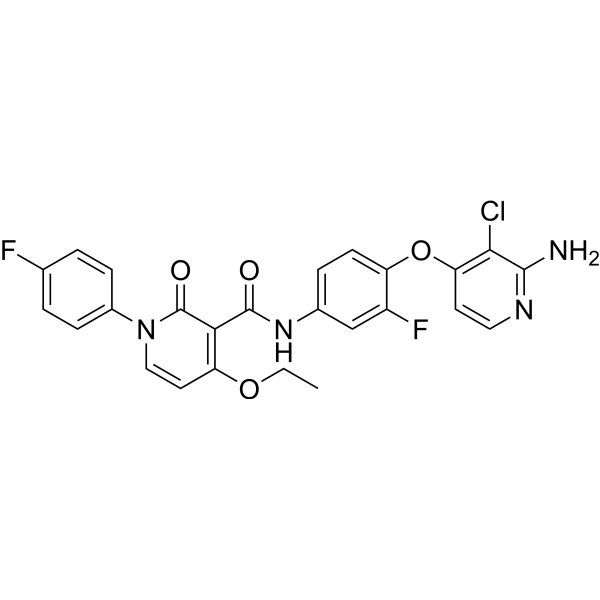
HY-12076
BMS 777607c-Met/Axl Inhibitor -
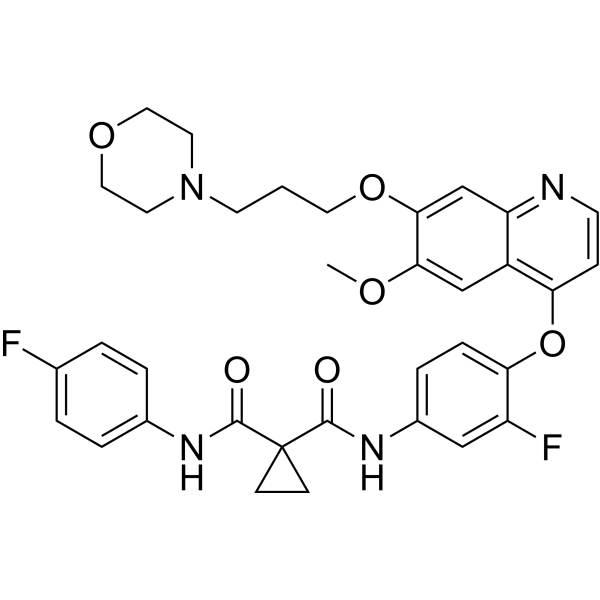
HY-10338
ForetinibMET/VEGFR2/KDR Inhibitor -
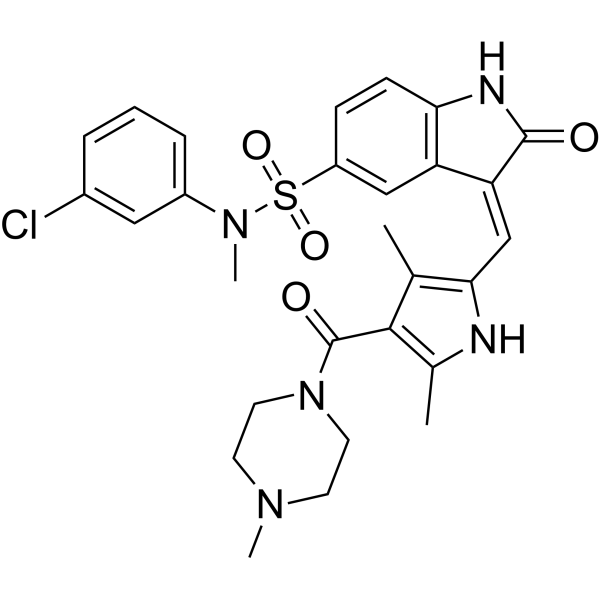
HY-12014
SU11274c-Met/HGFR Inhibitor


Product Information
Information
Application
The compound is the grade of analytical standard, which is the reference standard supplied assay. It is commonly used in qualitative, quantitative and methodological research experiments in HPLC, GC and MS.


Chemical Information
-
CAS No. 1029712-80-8
-
Molecular Weight 412.42
-
Formula C23H17FN6O
-
SMILES
O=C(NC)C1=CC=C(C2=NN3C(N=C2)=NC=C3CC4=CC=C5N=CC=CC5=C4)C=C1F
-
Synonyms
INC280 (Standard); INCB28060 (Standard)
-
Shipping
Room temperature in continental US; may vary elsewhere.
-
Storage
Please store the product under the recommended conditions in the Certificate of Analysis.


Purity & Documentation
References
[1]. Liu X, et al. A novel kinase inhibitor, INCB28060, blocks c-MET-dependent signaling, neoplastic activities, and cross-talk with EGFR and HER-3. Clin Cancer Res. 2011 Nov 15;17(22):7127-38. [Content Brief]
[2]. Baltschukat S, et al. Capmatinib (INC280) Is Active Against Models of Non-Small Cell Lung Cancer and Other Cancer Types with Defined Mechanisms of MET Activation. Clin Cancer Res. 2019 May 15;25(10):3164-3175. [Content Brief]
[3]. Dhillon S. Capmatinib: First Approval. Drugs. 2020 Jul;80(11):1125-1131. [Content Brief]

Calculators
Concentration (start) × Volume (start) = Concentration (final) × Volume (final)


Capmatinib (Standard) Related Classifications
HY-13404R Related Classifications
 Powered by Bioz