1. Search Result
Search Result
Results for "

G2/M-phase arrest

" in MedChemExpress (MCE) Product Catalog:

431

Inhibitors & Agonists

3

Fluorescent Dyes

9

Biochemical Assay Reagents

1

Peptides

3

Inhibitory Antibodies

58

Natural
Products

10

Isotope-Labeled Compounds

5

Click Chemistry

1

GMP Molecules

Cat. No. Product Name Target Research Areas Chemical Structure
  • HY-13442A
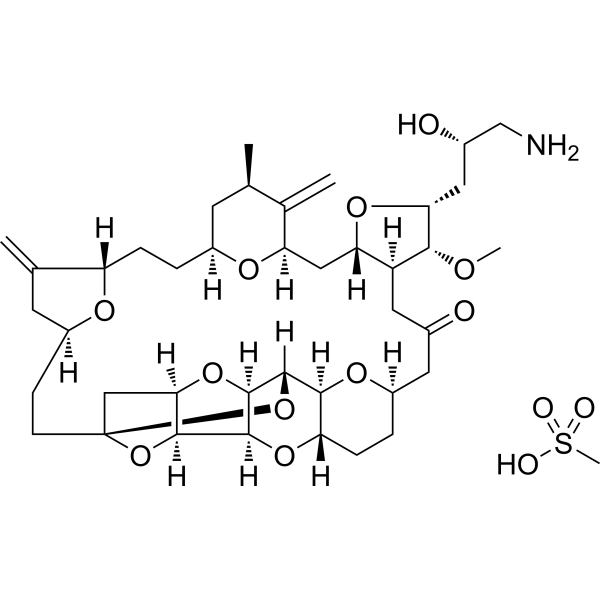
    Eribulin mesylate
    5+ Cited Publications

    B1939 mesylate; E7389 mesylate; ER-086526 mesylate

    Microtubule/Tubulin Apoptosis Cancer
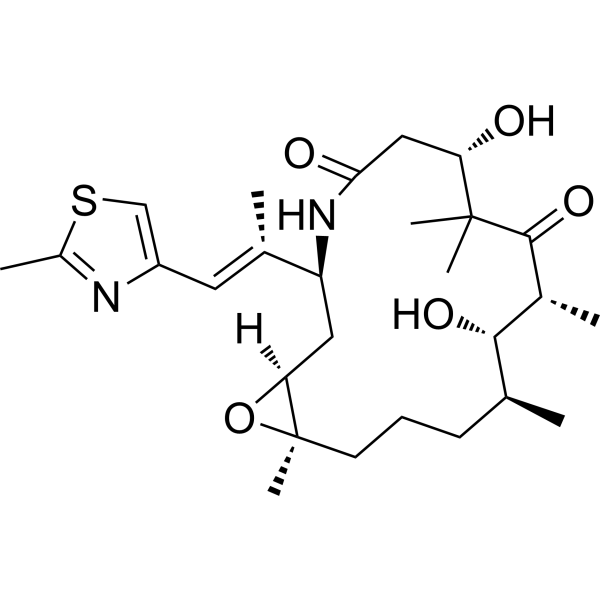
    Eribulin mesylate is an inhibitor for microtubule. Eribulin mesylate inhibits the proliferation of cancer cell LM8 and Dunn, inhibits the cell migration of LM8, arrests the cell cycle at G2/M phase, and induces apoptosis in LM8. Eribulin mesylate exhibits antitumor efficacy in mouse model .
    Eribulin mesylate
  • HY-N6722
    Swainsonine
    1 Publications Verification

    Tridolgosir

    Apoptosis Antibiotic Infection Cancer
    Swainsonine (Tridolgosir) is an natural indolizidine alkaloid, a potent and reversible α-mannosidase inhibitor. Swainsonine induces apoptosis and cell cycle arrest at G2/M phase. Swainsonine shows anti-tumor activity .
    Swainsonine
  • HY-N0047
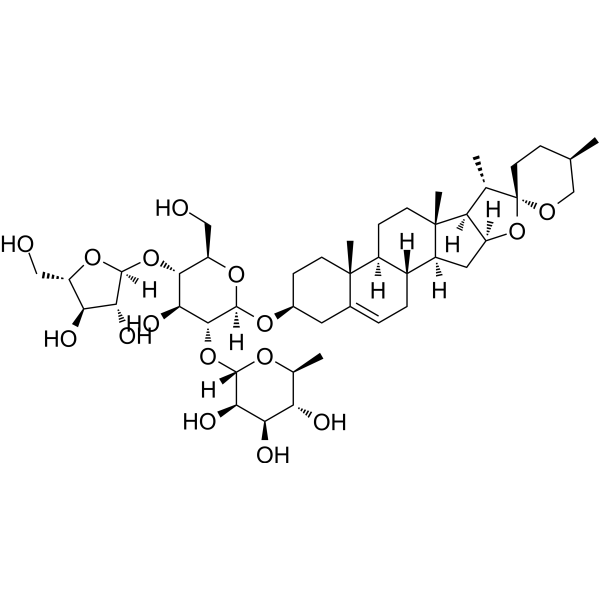
    Polyphyllin I
    5 Publications Verification

    JNK mTOR Akt PDK-1 Autophagy Apoptosis Cancer
    Polyphyllin I is a bioactive constituent extracted from Paris polyphylla, has strong anti-tumor activity. Polyphyllin I is an activator of the JNK signaling pathway and is an inhibitor of PDK1/Akt/mTOR signaling. Polyphyllin I induces autophagy, G2/M phase arrest and apoptosis .
    Polyphyllin I
  • HY-10222
    Ixabepilone
    5+ Cited Publications

    BMS-247550; Aza-epothilone B

    Microtubule/Tubulin Apoptosis Bacterial Cancer
    Ixabepilone (BMS-247550) is an orally bioavailable microtubule inhibitor, which binds to tubulin and promotes tubulin polymerization and microtubule stabilization, thereby arrests cells in the G2-M phase of the cell cycle and induces tumor cell apoptosis.
    Ixabepilone
  • HY-N0421
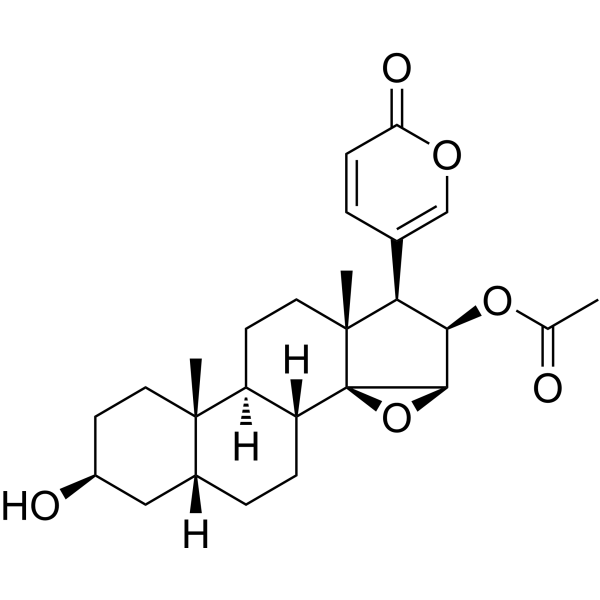
    Cinobufagin
    5+ Cited Publications

    Cinobufagine

    Apoptosis Neurological Disease Cancer
    Cinobufagin is an anticancer agent that can be secreted by the Asiatic toad Bufo gargarizans. Cinobufagin induces the cell cycle arrests in the G1 phase or G2/M phase, leading to apoptosis in cancer cells. Cinobufagin inhibits tumor growth in melanoma and glioblastoma multiforme xenograft mouse models .
    Cinobufagin
  • HY-105930
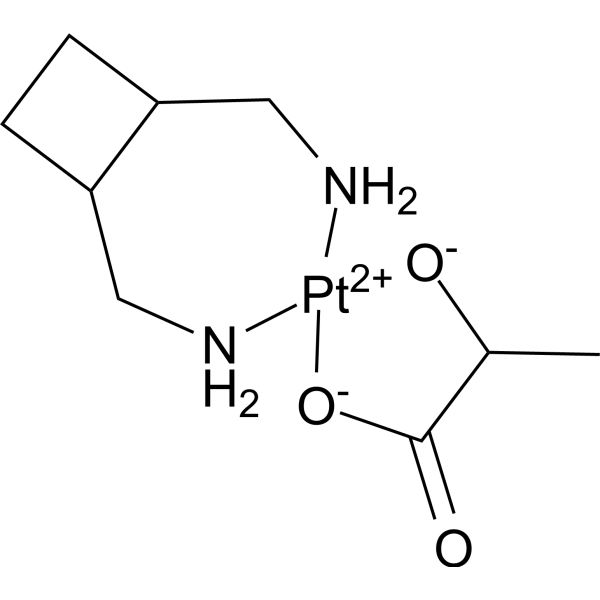
    Lobaplatin
    5 Publications Verification

    D-19466

    Apoptosis Caspase Bcl-2 Family Cancer
    Lobaplatin (D-19466) is a diastereometric mixture of platinum(II) complexe. Lobaplatin arrests cell cycle at G1 and G2/M phase. Lobaplatin induces apoptosis by increasing expressions of caspase and Bax, decreasing expression of Bcl-2. Lobaplatin can be used for research of cancer .
    Lobaplatin
  • HY-147895
    PCAF-IN-2
    2 Publications Verification

    Histone Acetyltransferase Apoptosis Cancer
    PCAF-IN-2 (compound 17) is a potent PCAF inhibitor with an IC50 value of 5.31 µM. PCAF-IN-2 shows anti-tumour activity. CAF-IN-2 induces apoptosis and arrest the cell cycle at the G2/M phase .
    PCAF-IN-2
  • HY-112607

    Microtubule/Tubulin Apoptosis Cancer
    Tubulin inhibitor 1 is a tubulin inhibitor, inhibits tubulin polymerization. Tubulin inhibitor 1 shows potent anti-tumor activity, casues cellular mitotic arrest in the G2/M phase, and induces cellular apoptosis .
    Tubulin inhibitor 1
  • HY-W127705
    Quinacrine mustard dihydrochloride
    1 Publications Verification

    Fluorescent Dye Others
    Quinacrine mustard dihydrochloride is a fluorochrome. Quinacrine mustard dihydrochloride as a polycyclic aromatic agent can be used as mutagenic agent induces the mutants of bacteria. Quinacrine mustard dihydrochloride induces cell cycle arrest at G2/M-phase. Quinacrine mustard dihydrochloride has the potential for the research of plant, animal, or human chromosomes .
    Quinacrine mustard dihydrochloride
  • HY-122496

    Syringidin

    Apoptosis Cancer
    Malvidin (chloride) is a bioactive compound isolated from grape. Malvidin shows cytotoxicity through the arrest of the G2/M phase of cell cycle and induction of apoptosis. Malvidin can be used for the research of cancer .
    Malvidin chloride
  • HY-149530

    EGFR Apoptosis Cancer
    EGFR-IN-86 (compound 4i) is an EGFR inhibitor (IC50: 1.5 nM) with high activity against glioblastoma. EGFR-IN-86 induces apoptosis and arrests the U87 cell cycle in the G2/M phase .
    EGFR-IN-86
  • HY-155439

    FAK Cancer
    FAK-IN-14 (compound 8d) is a focal adhesion kinase(FAK) inhibitor with an IC50 value of 0.2438 nM. FAK-IN-14 induces U87-MG cell early apoptosis and arrest the cell at the G2/M phase .
    FAK-IN-14
  • HY-118798

    NSC663285

    Phosphatase Cancer
    DA 3003-2 is a potent and selectively Cdc25 inhibitor. DA 3003-2 shows antiproliferative activity. DA 3003-2 induces cell cycle arrest at the G2/M phase and increases the expression of P-tyr 15 Cdc2. DA 3003-2 has the potential for the research of prostate cancer .
    DA 3003-2
  • HY-162276

    Reactive Oxygen Species (ROS) DNA/RNA Synthesis Cancer
    Anticancer agent 188 (compound D43) inhibits DNA synthesis in TNBC cells, leading to cell cycle arrest at the G2/M phase. Anticancer agent 188 has anti-cancer viability by inducing ROS-mediated apoptosis and DNA damage .
    Anticancer agent 188
  • HY-161268

    Apoptosis NEDD8-activating Enzyme Reactive Oxygen Species (ROS) Cancer
    NAE-IN-1 (compound X-10) is a potent NAE1 inhibitor. NAE-IN-1 induces apoptosis and cell cycle arrest at the G2/M phase. NAE-IN-1 increases ROS levels and prevents cell migration. NAE-IN-1 shows anti-proliferation activity .
    NAE-IN-1
  • HY-146818

    Microtubule/Tubulin Cancer
    Tubulin polymerization-IN-12 is a tubulin polymerization inhibitor (IC50=0.75 μM). Tubulin polymerization-IN-12 arrests cell cycle at G2/M phase, and exhibits cytotoxicity against cancer cells .
    Tubulin polymerization-IN-12
  • HY-149249

    Microtubule/Tubulin Apoptosis Histone Demethylase Cancer
    MY-943 is a potent tubulin polymerization and LSD1 inhibitor with anticancer activity. MY-943 induces G2/M phase arrest and apoptosis, and inhibits cell migration. MY-943 can be used for gastric cancer research .
    MY-943
  • HY-101990

    VEGFR Others
    IMS2186 is an anti-choroidal neovascularization (CNV) agent that inhibits angiogenesis upstream of VEGF. IMS2186 can arrest cancer cell cycle in G2/M phase, thus exerting anti-proliferation and anti-angiogenesis effects. IMS2186 has no intraocular toxicity and reduces the amount of eye leakage and diseased cells .
    IMS2186
  • HY-16375

    D-63153

    GnRH Receptor Apoptosis Cancer
    Ozarelix (D-63153) is a GnRH antagonist. Ozarelix induces cell apoptosis and arrests cell in G2/M phase. Ozarelix can be used in the research of prostate cancer .
    Ozarelix
  • HY-125132

    (-)-Agelastatin A; AglA

    Apoptosis Cancer
    Agelastatin A ((-)-Agelastatin A; AglA), a tetracyclic alkaloid isolated from the sponge Agelas dendromorpha, induces apoptosis and arrests cells in the G2/M phase of the cell cycle, exhibiting antitumor activity .
    Agelastatin A
  • HY-123369

    CDK Apoptosis Cancer
    BMI-1026 is a cyclin-dependent kinase 1 (Cdk1) inhibitor with IC50 of 2.3 nM. BMI-1026 induces apoptosis by arresting the G2-M phase .
    BMI-1026
  • HY-147896

    Microtubule/Tubulin Cancer
    Tubulin polymerization-IN-29 (compound 6g) is a potent tubulin polymerization inhibitor. Tubulin polymerization-IN-29 exhibits potent antiproliferative activity. Tubulin polymerization-IN-29 can induce HeLa cells arrest in G2/M phase .
    Tubulin polymerization-IN-29
  • HY-N9968

    Akt Apoptosis Cancer
    Cucurbitacin C is a triterpenoid calabinoid that can be isolated from Cucurbitaceae plants. Cucurbitacin C has anti-cancer activity in vivo and in vitro. Cucurbitacin C can induce cell cycle arrest in G1 or G2/M phase and apoptosis by inhibiting Akt signaling .
    Cucurbitacin C
  • HY-161141

    c-Met/HGFR Cancer
    EGFR/ C-Met-in-2 (Compound H-22) is a dual inhibitor of EGFR/c-Met. EGFR/c-Met-IN-2 inhibits cell proliferation by arresting G2/M phase. EGFR/c-Met-IN-2 has antitumor activity .
    EGFR/c-Met-IN-2
  • HY-137005

    Topoisomerase Apoptosis Cancer
    CS1 is a potent DNA Topo II α inhibitor. CS1 displays broad-spectrum in vitro antitumor effects, low toxicity in vivo and potential anti-multidrug resistance capabilities. CS1 leads to DNA damage, cell cycle arrest at G2/M phase and apoptosis .
    CS1
  • HY-126566

    Fungal HDAC Apoptosis Infection Cancer
    Trichostatin C is an inhibitor for histone deacetylase (HDAC), induces apoptosis and arrests cell cycle at G2/M phase, and exhibits anticancer activity against lung cancer and urothelial bladder cancer . Trichostatin C induces differentation of Friend leukemic cells . Trichostatin C exhibits antifungal activity .
    Trichostatin C
  • HY-156916

    Microtubule‐associated serine/threonine kinase (MAST) Metabolic Disease
    WAY-230563 (ST045945) is a serine/threonine kinase inhibitor that can block CHK1/CHK2-mediated cell cycle checkpoints. WAY-230563 can induce G2/M phase arrest and DNA damage in tumor cells .
    ST045945
  • HY-12300A

    CFI-400945 hydrochloride

    Polo-like Kinase (PLK) Apoptosis Cancer
    Ocifisertib hydrochloride (CFI-400945 hydrochloride) is the hydrochloride salt form of Ocifisertib (HY-12300). Ocifisertib hydrochloride is an orally active PLK4 inhibitor with a Ki and an IC50 of 0.26 nM and 2.8 nM. Ocifisertib hydrochloride inhibits growth of various cancer cells, arrests cell cycles at G2/M phase, and induces apoptosis. Ocifisertib hydrochloride exhibits antitumor efficacy in mouse model .
    Ocifisertib hydrochloride
  • HY-156266

    Rhiz

    Others Cancer
    Rhizochalinin (Rhiz) is a cytotoxic sphingolipid. Rhizochalinin (Rhiz) counteracts glioblastoma cell proliferation by inducing apoptosis, G2/M-phase cell cycle arrest, and inhibition of autophagy. Rhizochalinin (Rhiz) can be used for human glioblastoma research .
    Rhizochalinin
  • HY-156183

    MDM-2/p53 ERK Cancer
    Antiproliferative agent-37 (compound 10J) shows anti-proliferative effect by arresting the cells at the G2/M phase of the cell cycle .
    Antiproliferative agent-37
  • HY-N10670

    Methylpluviatolide

    Apoptosis Cancer
    Bursehernin (Methylpluviatolide) is an antitumor agent. Bursehernin induces Apoptosis and cell cycle arrest at G2/M phase. Bursehernin shows anti-proliferative activity .
    Bursehernin
  • HY-N14881

    Bacterial Infection Cancer
    Monorden E has the effect of arresting the cell cycle of Jurket cells in G1 and G2/M phases. Monorden E has anti-Aspergillus niger activity .
    Monorden E
  • HY-N14866

    Bacterial Infection Cancer
    Monorden B has the effect of arresting the cell cycle of Jurket cells in G1 and G2/M phases. Monorden B has anti-Aspergillus niger activity .
    Monorden B
  • HY-N10394

    Others Cancer
    Metachromins X is a sesquiterpene quinone that arrests the cell cycle progression of HeLa/Fucci2 cells at S/G2/M phase .
    Metachromins X
  • HY-W749442

    Microtubule/Tubulin Cancer
    7a-Hydroxyfrullanolide has anticancer properties. 7a-Hydroxyfrullanolide reduces polymerization of α-, β-tubulin. 7a-Hydroxyfrullanolide preferrs to bind to β-tubulin over α-tubulin. 7a-Hydroxyfrullanolide also triggers DNA damage response arrests cells in the G2/M-phase. 7a-Hydroxyfrullanolide is an eudesmanolide sesquiterpene lactone (SL) and can be isolated from the flowering plants of the Asteraceae family .
    7a-Hydroxyfrullanolide
  • HY-N10798

    (-)-Kusunokinin

    Apoptosis Cancer
    Kusunokinin ((-)-Kusunokinin) is a nature product that could be isolated form P. nigrum. Kusunokinin has anticancer activity. Kusunokinin arrests cell cycle at G2/M phase and induce apoptosis .
    Kusunokinin
  • HY-172940

    Apoptosis Cancer
    TBP-134 induce apoptosis primarily through DR5 and causes G2/M phase arrest. TBP-134 can be used in the research for pancreatic tumor .
    TBP-134
  • HY-163444

    Apoptosis Cancer
    Apoptosis inducer 15 (Compound 3) induces cell apoptosis and cell cycle arrest at G2/M phase. Apoptosis inducer 15 is cytotoxicitic without causing DNA fragmentation .
    Apoptosis inducer 15
  • HY-147824

    Microtubule/Tubulin Apoptosis Cancer
    Tubulin polymerization-IN-22 is a tubulin polymerization inhibitor with an IC50 of 8.1 μM. Tubulin polymerization-IN-22 arrests cell cycle at G2/M phase and induces apoptosis .
    Tubulin polymerization-IN-22
  • HY-147848

    Microtubule/Tubulin Cancer
    Tubulin polymerization-IN-27 (compound 5j) is a tubulin polymerization inhibitor. Tubulin polymerization-IN-27 can arrest cell cycle at G2/M phase and induce apoptosis .
    Tubulin polymerization-IN-27
  • HY-122151

    Microtubule/Tubulin Apoptosis Cancer
    MPT0B002 is a potent microtubule inhibitor with anticancer activities. MPT0B002 disrupts tubulin polymerization, induces apoptosis, and arrests cell cycle at the G2/M phase .
    MPT0B002
  • HY-146189

    Topoisomerase Apoptosis Cancer
    Topoisomerase II inhibitor 9 (Compound 19b) is a Topo II inhibitor with an IC50 of 0.97 μM. Topoisomerase II inhibitor 9 is also a classical DNA-intercalator with an IC50 of 43.51 μM. Topoisomerase II inhibitor 9 arrests the cell cycle at the G2/M phase and induces apoptosis in Hep G‐2 cells .
    Topoisomerase II inhibitor 9
  • HY-163808

    Apoptosis Cancer
    Anticancer agent 237 (compound 13) is a potent anticancer agent. Anticancer agent 237 shows cytotoxicity. Anticancer agent 237 induces apoptosis and cell cycle arrest at the S and G2/M phases .
    Anticancer agent 237
  • HY-100761

    Microtubule/Tubulin Apoptosis Cancer
    SS28, a SRT501 analog with oral bioavailability, inhibits tubulin polymerization to cause cell cycle arrest at G2/M phase. SS28 results in apoptosis rather than necrosis tubulin .
    SS28
  • HY-144299

    Microtubule/Tubulin Apoptosis Cancer
    Tubulin polymerization-IN-5 (compound 20q) is a potent tubulin inhibitor with potential anticancer activities. Tubulin polymerization-IN-5 can arrest ESCC cells at G2/M phase and cause cells apoptosis .
    Tubulin polymerization-IN-5
  • HY-117473

    Microtubule/Tubulin Apoptosis Cancer
    DAT-230 is a microtubule inhibitor. DAT-230 induces cell apoptosis and results in microtubule de-polymerization and G2/M phase arrest. DAT-230 inhibits cell growth in vitro and in vivo .
    DAT-230
  • HY-108053

    Parasite Apoptosis Infection
    CDRI-97/78 is an antimalarial agent. CDRI-97/78 has phototoxicity and can induce cell apoptosis and G2/M phase arrest. CDRI-97/78 can be used for the research of infection .
    CDRI-97/78
  • HY-155686

    Microtubule/Tubulin Cancer
    Tubulinpolymer-in-44 (compound 7w) is a strong and effective Tubulin inhibitor, with an IC50 value of 0.21 μM. Tubulinpolymer-in-44 induces apoptosis by arresting G2/M phase, which can be used for cancer research.
    Tubulin polymerization-IN-44
  • HY-122249

    Microtubule/Tubulin Cancer
    MT-7 is a potent mitotic inhibitor. MT-7 shows antiproliferative activity. MT-7 induces cell cycle arrest at G2/M phase. MT-7 induces specific, reversible mitotic arrest and inhibits the polymerization of cellular microtubules .
    MT-7
  • HY-161256

    Microtubule/Tubulin Apoptosis Cancer
    Tubulin inhibitor 41 (Compd D19), a promising anti-GBM (glioblastoma) lead compound and tublin inhibitor with BBB permeability, induces G2/M phase arrest, resulted in cell apoptosis and inhibits the migration of U87 cells .
    Tubulin inhibitor 41

Inquiry Online

Your information is safe with us. * Required Fields.

Salutation


Country or Region *

Applicant Name *


Organization Name *

Department *


Email Address *


Product Name *

Cat. No.


Requested quantity *

Phone Number *


Remarks

Inquiry Online

Inquiry Information

Product Name:
Cat. No.:
Quantity:
MCE Japan Authorized Agent:

