
1. Search Result
Search Result
Results for "

aeruginosa

" in MedChemExpress (MCE) Product Catalog:

562

Inhibitors & Agonists

2

Fluorescent Dyes

10

Biochemical Assay Reagents

67

Peptides

4

Inhibitory Antibodies

120

Natural
Products

4

Recombinant Proteins

11

Isotope-Labeled Compounds

3

Oligonucleotides

Cat. No. Product Name Target Research Areas Chemical Structure
  • HY-B1369A
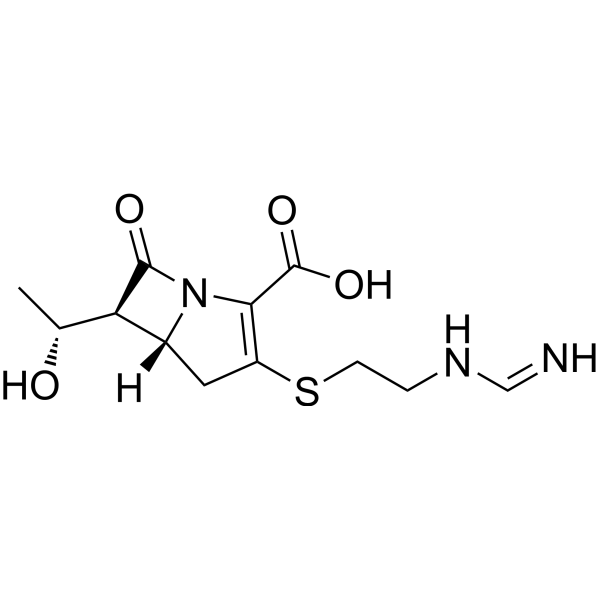
    Imipenem
    30+ Cited Publications

    N-Formimidoyl thienamycin; MK0787

    Antibiotic Bacterial Infection
    Imipenem (MK0787), a stable crystalline derivative of thienamycin, is an antibiotic and has the excellent activity against a broad range of gram-positive and gram-negative aerobic and anaerobic bacteria. Imipenem can be used for the research of carbapenem-nonsusceptible and P. aeruginosa biofilm infections .
    Imipenem
  • HY-B0441
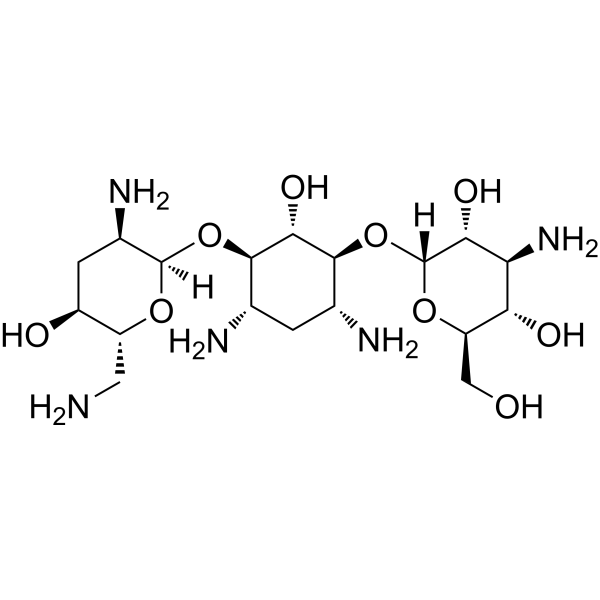
    Tobramycin
    15+ Cited Publications

    Nebramycin Factor 6; Deoxykanamycin B

    Bacterial Antibiotic Infection Cancer
    Tobramycin (Nebramycin Factor 6) is a parenterally administered, broad spectrum aminoglycoside antibiotic that is widely used in the treatment of moderate to severe bacterial infections due to sensitive organisms .Tobramycin can be used to pneumonia research caused by Pseudomonas aeruginosa .
    Tobramycin
  • HY-B1369
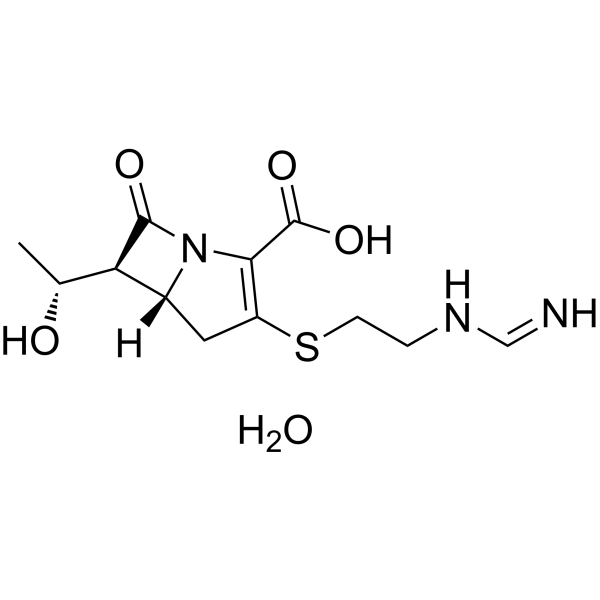
    Imipenem monohydrate
    Maximum Cited Publications
    35 Publications Verification

    N-Formimidoyl thienamycin monohydrate; MK0787 monohydrate

    Antibiotic Bacterial Infection
    Imipenem monohydrate, a stable crystalline derivative of thienamycin, is an antibiotic and has the excellent activity against a broad range of gram-positive and gram-negative aerobic and anaerobic bacteria. Imipenem monohydrate can be used for the research of carbapenem-nonsusceptible and P. aeruginosa biofilm infections .
    Imipenem monohydrate
  • HY-19806A
    Ceftolozane sulfate
    2 Publications Verification

    CXA-101; FR264205

    Bacterial Infection
    Ceftolozane (CXA-101) sulfate is an antipseudomonal cephalosporin. Ceftolozane binds to P. aeruginosa essential PBPs (1b, 1c, 2 and 3) with high affinity. Ceftolozane inhibits cell wall synthesis by binding the PBPs. Ceftolozane sulfate inhibits P. aeruginosa and Enterobacteriaceae .
    Ceftolozane sulfate
  • HY-W017277

    D-Menthol

    Fungal Neurological Disease
    (+)-Menthol (D-Menthol) is one of the optical isomers of Menthol. (+)-Menthol can reduce the electrically evoked contractions of rat phrenic hemidiaphragm in vitro. Local anaesthetic activity. (+)-Menthol inhibits fungal growth and sporulation. (+)-Menthol can also inhibit the growth of Microcystis aeruginosa cells .
    (+)-Menthol
  • HY-N4136
    Lonicerin
    1 Publications Verification

    Veronicastroside

    Bacterial Apoptosis Xanthine Oxidase Fungal Infection Neurological Disease Inflammation/Immunology
    Lonicerin (Veronicastroside) is a flavonoid with multiple biological activities. Lonicerin inhibits xanthine oxidase with an IC50 of 37.4 µg/mL. Lonicerin inhibits alginate secretion protein (AlgE). Lonicerin inhibits P. aeruginosa and C. albicans. Lonicerin has anti-inflammatory, anti-arthritic, antioxidant, antifungal, anti-bacterial, and neuroprotective properties .
    Lonicerin
  • HY-128200
    Pseudomonas quinolone signal
    2 Publications Verification

    PQS

    Bacterial Infection Inflammation/Immunology
    Pseudomonas quinolone signal (PQS) is a quorum-sensing signaling molecule produced by Pseudomonas aeruginosa. The synthesis of Pseudomonas quinolone signal relies on the las quorum-sensing system, and its biological activity is associated with the rhl system. Pseudomonas quinolone signal regulates the expression of the virulence gene lasB. Additionally, Pseudomonas quinolone signal plays roles in iron acquisition, cytotoxicity, outer-membrane vesicle biogenesis, and host immune modulation .
    Pseudomonas quinolone signal
  • HY-19806

    CXA-101 free base; FR264205 free base

    Antibiotic Bacterial Infection
    Ceftolozane (CXA-101 free base; FR264205 free base) is a cephalosporin antibiotic with potent activity againstPseudomonas aeruginosa and strains Enterobacteriaceae, with MICs of 0.5 and 0.25-0.5 mg/L .
    Ceftolozane
  • HY-13212

    cis-2-Decenoic acid

    Bacterial Cancer
    (Z)-2-decenoic acid (cis-2-Decenoic acid) is an unsaturated fatty acid produced by Pseudomonas aeruginosa. (Z)-2-decenoic acid induces a dispersion response in biofilms formed by a range of gram-negative bacteria, including P. aeruginosa, and by gram-positive bacteria. (Z)-2-decenoic acid inhibits biofilm development .
    (Z)-2-Decenoic acid
  • HY-N2036
    Mosloflavone
    1 Publications Verification

    TNF Receptor Enterovirus Bacterial Infection
    Mosloflavone is a flavonoid isolated from Scutellaria baicalensis Georgi with ?anti-EV71 activity. Mosloflavone? inhibits VP2 virus replication and protein expression during the initial stage of virus infection and inhibits viral VP2 capsid protein synthesis. Mosloflavone is a promising biocide and inhibits P. aeruginosa virulence and biofilm formation.
    Mosloflavone
  • HY-D1056E

    LPS, from Pseudomonas aeruginosa (10)

    Toll-like Receptor (TLR) Inflammation/Immunology
    Lipopolysaccharides from P. aeruginosa (Pseudomonas aeruginosa) 10 are lipopolysaccharide endotoxins and TLR4 activators derived from Pseudomonas aeruginosa 10, and are classified as S-type LPS. Lipopolysaccharides from P. aeruginosa 10 exhibit a typical three-part structure: O-antigen, core oligosaccharide, and lipid A. The lipopolysaccharides of P. aeruginosa 10 have a fatty acid composition distinct from common enterobacteria, an exceptionally high degree of phosphorylation (triphosphate residues have been detected), and a unique outer region of the core oligosaccharide. Additionally, their O-specific side chains are typically rich in novel aminosugars. Lipopolysaccharides from P. aeruginosa 10 demonstrate susceptibility to viruses, with the level of susceptibility determined by the content of high molecular weight polysaccharides in their composition. The absence of high molecular weight polysaccharides increases their sensitivity to bacteriophages .
    It is recommended to prepare a solution with concentration ≥2 mg/mL. Vortex thoroughly for more than 10 minutes. Due to the adsorption characteristics of LPS, silanized container or low adsorption centrifuge tubes should be used for aliquoting and storage, and mix thoroughly before use.
    Lipopolysaccharides, from P. aeruginosa 10
  • HY-162475

    Dihydrofolate reductase (DHFR) Bacterial Infection
    Fluorofolin is a dihydrofolate reductase (DHFR) inhibitor with an IC50 of 2.5 nM. Fluorofolin exhibits significant activity against P. aeruginosa .
    Fluorofolin
  • HY-119808

    Melanocortin Receptor Apoptosis Antibiotic Cancer
    Terrein is a melanogenesis inhibitor . Terrein induces apoptosis in breast cancer cell lines . Terrein is an inhibitor of quorum sensing and c-di-GMP in Pseudomonas aeruginosa .
    Terrein
  • HY-B1369R

    N-Formimidoyl thienamycin monohydrate (Standard); MK0787 monohydrate (Standard)

    Reference Standards Antibiotic Bacterial Infection
    Imipenem (monohydrate) (Standard) is the analytical standard of Imipenem (monohydrate). This product is intended for research and analytical applications. Imipenem monohydrate, a stable crystalline derivative of thienamycin, is an antibiotic and has the excellent activity against a broad range of gram-positive and gram-negative aerobic and anaerobic bacteria. Imipenem monohydrate can be used for the research of carbapenem-nonsusceptible and P. aeruginosa biofilm infections .
    Imipenem monohydrate (Standard)
  • HY-N1096

    Environmental Pollutants Bacterial Parasite Infection
    Veratraldehyde is an orally active aromatic compound and antibacterial agent. Veratraldehyde can be isolated from essential oils of plants such as peppermint and ginger. Veratraldehyde targets the PilY1 protein. Veratraldehyde has antibacterial activity against Pseudomonas aeruginosa. Veratraldehyde has a repellent effect against mosquitoes and ticks. Veratraldehyde can be used as a flavoring agent .
    Veratraldehyde
  • HY-Y0532
    N-Chlorosuccinimide
    1 Publications Verification

    Succinchlorimide

    Environmental Pollutants Bacterial Infection
    N-Chlorosuccinimide is a five-membered N-containing heterocyclic molecule. N-Chlorosuccinimide is a versatile reagent and can be used for different types of reactions, such as aliphatic and aromatic chlorination. N-Chlorosuccinimide can enhance the antimicrobial effect of Benzalkonium chloride (HY-B2232) on biofilm Pseudomonas aeruginosa .
    N-Chlorosuccinimide
  • HY-P99214

    KBPA101

    Bacterial Infection
    Panobacumab (KBPA101) is a fully human IgM/κ monoclonal antibody generated by immortalizing human B lymphocytes against the LPS O polysaccharide of serotype O11 of P. aeruginosa .
    Panobacumab
  • HY-P5731

    Bacterial Infection
    Bac7(1-35) is a proline-rich antimicrobial peptide. Bac7(1-35) efficiently binds to different regions of prokaryote ribosomes, leading to the inhibition of protein synthesis. Bac7(1-35) demonstrates in vitro activity against P. aeruginosa strains .
    Bac7(1-35)
  • HY-P5016A

    Antibiotic Fungal Bacterial Infection Cancer
    CRAMP-18 (mouse) acetate is an antibiotic peptide without hemolytic activity. CRAMP-18 (mouse) acetate has good inhibitory activity against Gram-negative bacteria, such as S. typhimurium and P. aeruginosa. CRAMP-18 (mouse) acetate has the potential to study antifungal, antibacterial and antitumor .
    CRAMP-18 (mouse) acetate
  • HY-168509

    Bacterial Infection
    IMPDH-IN-1 (compound 44) is a bacterial inosine 5'-monophosphate dehydrogenase (IMPDH) inhibitor. IMPDH-IN-1 specifically binds to the catalytic domain of IMPDH. IMPDH-IN-1 potently inhibits the IMPDH of Pseudomonas aeruginosa, Staphylococcus aureus and Escherichia coli .
    IMPDH-IN-1
  • HY-N16590

    Bacterial Infection
    Diphylloside A is a flavonoid compound with antioxidant activity. Diphylloside A exhibits significant antibacterial activity against Pseudomonas aeruginosa .
    Diphylloside A
  • HY-146328

    Bacterial Antibiotic Infection
    PqsR/LasR-IN-2 (Compound 3) is a potent inhibitor of PqsR and LasR systems in P. aeruginosa. PqsR/LasR-IN-2 also inhibits hERG with the IC50 of 1.408 µM .
    PqsR/LasR-IN-2
  • HY-146329

    Bacterial Antibiotic Infection
    PqsR/LasR-IN-3 (Compound 7a) is a potent inhibitor of PqsR and LasR systems in P. aeruginosa. PqsR/LasR-IN-3 also inhibits hERG with the IC50 of 109.01 µM .
    PqsR/LasR-IN-3
  • HY-P10389

    Bacterial Infection
    Globomycin derivative G2A (Compound G2A) is an inhibitor for lipoprotein signal peptidase II (LspA), with an IC50 of 604 nM. Globomycin derivative G2A inhibits E. coli, P. aeruginosa and A. baumannii, with MIC ranging from 12.5 to 32 μg/mL .
    Globomycin derivative G2A
  • HY-P10559

    Bacterial Infection
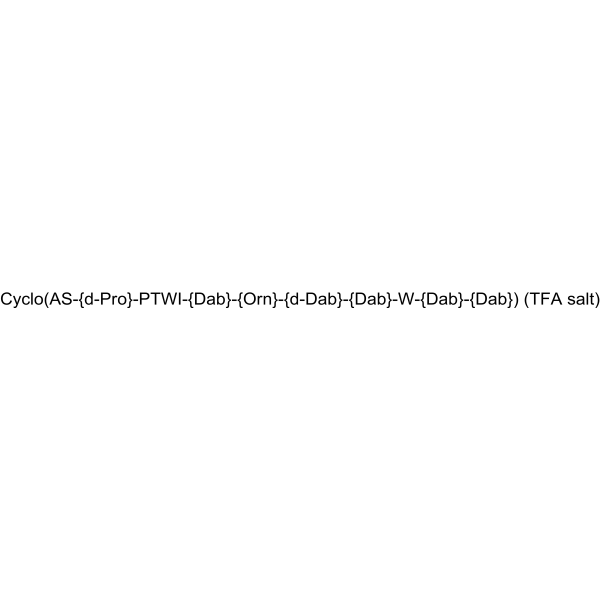
    (RXR)4XB is a cell-penetrating peptide, that binds the phosphorodiamidate morpholino oligomers (PMOs), forms peptide-conjugated PMOs (PPMOs), and improves the delivery of PMO into bacterial cells. (RXR)4XB-PMO conjugate prevents the formation of biofilms, inhibits Pseudomonas aeruginosa with MIC50 of 0.5 to 16 μM, and reduces the bacterial burden in mouse acute pneumonia models .
    (RXR)4XB
  • HY-P5731A

    Bacterial Infection
    Bac7(1-35) acetate is a proline-rich antimicrobial peptide. Bac7(1-35) acetate efficiently binds to different regions of prokaryote ribosomes, leading to the inhibition of protein synthesis. Bac7(1-35) acetate demonstrates in vitro activity against P. aeruginosa strains .
    Bac7(1-35) acetate
  • HY-126461

    Bacterial Fungal Infection
    Salazinic acid has antibacterial activity against bacteria and fungi. Salazinic acid does not show antibacterial activity against Listeria monocytogenes, Pseudomonas aeruginosa, Yersinia enterocolitica, and Enterococcus faecalis, but it does have antibacterial activity against Pseudomonas aeruginosa and Salmonella typhimurium .
    Salazinic acid
  • HY-120366

    Penicillin-binding protein (PBP) Beta-lactamase Bacterial Infection
    WCK-5153 is a Penicillin-Binding Protein 2 (PBP2) inhibitor with an IC50 of 0.14 μg/ml (for P. aeruginosa PBP2) and acts as a β-lactam enhancer against Pseudomonas aeruginosa. WCK-5153 can be used in studies of multidrug-resistant (MDR) pathogens .
    WCK-5153
  • HY-177852

    Bacterial Infection
    Anthranilyl-AMSN is a potent PqsA inhibitor, with a Kiapp of 170 nM. Anthranilyl-AMSN decreases HHQ and PQS production. Anthranilyl-AMSN can be used in the research of Pseudomonas aeruginosa infections .
    Anthranilyl-AMSN
  • HY-P11091

    Bacterial Infection
    PA2-GNU7 is an antimicrobial peptide (AMP). PA2-GNU7 exhibits potent antimicrobial activity with minimal inhibitory concentration (MIC) against P. aeruginosa, E. coli, S. typhimurium, S. aureus, and C. albicans are 2 μM, 1 μM, 2 μM, 2 μM, and 8 μM, respectively. PA2-GNU7 rapidly and selectively kills Pseudomonas aeruginosa without affecting other commensal bacteria. PA2-GNU7 significantly improves survival of mice infected with P. aeruginosa. PA2-GNU7 can be used for the research and development of therapeutic agents against MDR Pseudomonas aeruginosa infections .
    PA2-GNU7
  • HY-163338

    Beta-lactamase Infection
    Metallo-β-lactamase-IN-13 (Compound 13i) is a pan Metallo-β-Lactamase inhibitor. Metallo-β-lactamase-IN-13 provides broader coverage of metallo-β-lactamases expressing Gram-negative (GN) bacteria. Metallo-β-lactamase-IN-13 has antibacterial activity against P. aeruginosa .
    Metallo-β-lactamase-IN-13
  • HY-101444

    Bacterial Infection
    MC-207110 is a broad-spectrum efflux pump inhibitor. MC-207110 is active against all three known Mex efflux pumps from P. aeruginosa and their close Escherichia coli efflux pump homolog (AcrAB-TolC). MC-207110 can decrease the intrinsic resistance of P. aeruginosa to fluoroquinolones. MC-207110 can be used for the research of infection .
    MC-207110
  • HY-Y0532R

    Bacterial Reference Standards Infection
    N-Chlorosuccinimide is a five-membered N-containing heterocyclic molecule. N-Chlorosuccinimide is a versatile reagent and can be used for different types of reactions, such as aliphatic and aromatic chlorination. N-Chlorosuccinimide can enhance the antimicrobial effect of Benzalkonium chloride (HY-B2232) on biofilm Pseudomonas aeruginosa .
    N-Chlorosuccinimide (Standard)
  • HY-120659

    Fluorescent Dye Others
    Gly-Gly-AMC is a fluorogenic peptide substrate. Gly-Gly-AMC can be used to assess bacterial protease activity of P. aeruginosa and S. aureus .
    Gly-Gly-AMC
  • HY-B0441R

    Nebramycin Factor 6 (Standard); Deoxykanamycin B (Standard)

    Reference Standards Bacterial Antibiotic Infection Cancer
    Tobramycin (Standard) is the analytical standard of Tobramycin. This product is intended for research and analytical applications. Tobramycin (Nebramycin Factor 6) is a parenterally administered, broad spectrum aminoglycoside antibiotic that is widely used in the treatment of moderate to severe bacterial infections due to sensitive organisms .Tobramycin can be used to pneumonia research caused by Pseudomonas aeruginosa .
    Tobramycin (Standard)
  • HY-147866

    Bacterial DNA/RNA Synthesis ROS Kinase Infection
    Antibacterial agent 110 (Compound 4e) is a potent antibacterial agent with a MIC value of 1 μg/mL against P. aeruginosa. Antibacterial agent 110 possesses favorable antibiofilm activity and can destroy cell membranes. Antibacterial agent 110 causes metabolic arrest and intracellular oxidative stress, and obstructs DNA replication .
    Antibacterial agent 110
  • HY-P10559A

    Bacterial Infection
    (RXR)4XB TFA is a cell-penetrating peptide, that binds the phosphorodiamidate morpholino oligomers (PMOs), forms peptide-conjugated PMOs (PPMOs), and improves the delivery of PMO into bacterial cells. (RXR)4XB TFA-PMO conjugate prevents the formation of biofilms, inhibits Pseudomonas aeruginosa with MIC50 of 0.5 to 16 μM, and reduces the bacterial burden in mouse acute pneumonia models .
    (RXR)4XB TFA
  • HY-P5547

    Bacterial Infection
    Lynronne-3 is an antimicrobial peptide. Lynronne-1 is active against Gram-positive bacterials, including MDR strains (MIC: 32-128 μg/mL for methicillin-resistant MRSA strains). Lynronne-3 is also effective against P. aeruginosa infection
    Lynronne-3
  • HY-179389

    Bacterial Glutathione S-transferase Elastase Infection
    XDS-23 is a selective biofilm inhibitor with an IC50 of 1.26 µM against Pseudomonas aeruginosa. XDS-23 exerts a dual inhibitory effect on the LasI/LasR System (las) and Pseudomonas Quinolone Signal System (pqs). XDS-23 suppress the production of key virulence factors including elastase, pyocyanin, and extracellular polysaccharides. XDS-23 exhibits synergistic antibacterial activity and can enhance the efficacy of multiple antibiotics in both in vitro and in vivo models, while maintaining a favorable safety profile. XDS-23 can be employed for research in combating biofilm-mediated drug-resistant P. aeruginosa infections .
    XDS-23
  • HY-129734

    Endogenous Metabolite Others
    Aeruginosin B is a phenazine pigment, which can be isolated from Pseudomonas aeruginosa .
    Aeruginosin B
  • HY-172976

    Bacterial Infection
    Antibacterial agent 279 (compound A12) is a potent antibacterial agent. Antibacterial agent 279 inhibits Pseudomonas aeruginosa SOS response .
    Antibacterial agent 279
  • HY-150983

    ATP Synthase Bacterial Infection
    ATP synthase inhibitor 2 is a Pseudomonas aeruginosa (PA) ATP synthase inhibitor (IC50=10 μg/mL). ATP synthase inhibitor 2 can inhibit Pseudomonas aeruginosa (PA) ATP synthesis activity completely at 128 μg/mL .
    ATP synthase inhibitor 2
  • HY-158124

    Bacterial Infection
    LasR antagonist 1 (Compound 7) is an antagonist for LasR with an IC50 of 0.4 μM, that modulates the quorum sensing (QS) in the opportunistic pathogen Pseudomonas aeruginosa .
    LasR antagonist 1
  • HY-150983A

    ATP Synthase Bacterial Infection
    ATP synthase inhibitor 2 (Compound 22) TFA is a Pseudomonas aeruginosa (PA) ATP synthase inhibitor (IC50=10 μg/mL). ATP synthase inhibitor 2 TFA can inhibit Pseudomonas aeruginosa (PA) ATP synthesis activity completely at 128 μg/mL .
    ATP synthase inhibitor 2 TFA
  • HY-111440

    Bacterial Infection
    MC-04124 is an efflux pump inhibitor. MC-04124 significantly enhances the activity of Levofloxacin (HY-B0330) against Pseudomonas aeruginosa .
    MC-04124
  • HY-168948

    Bacterial Infection
    Quorum sensing-IN-9 (Compound 7d) inhibits quorum sensing in Pseudomonas aeruginosa by binding PqsR proteins. Quorum sensing-IN-9 inhibits the expression of quorum sensing systems related genes lasB, rhlA and pqsA, blocks the generation of virulence factors elastase, pyocyanin and rhamnolipid. Quorum sensing-IN-9 destorys the motility of P. aeruginosa, inhibits the biofilm formation, decreasing the virulence and pathogenicity of P. aeruginosa. Quorum sensing-IN-9 exhibits anti-infectious activity in Galleria mellonella larval model .
    Quorum sensing-IN-9
  • HY-172945

    Bacterial Infection
    LpxC-IN-16 (Compound P-2) is an LpxC inhibitor. LpxC-IN-16 has anti-MDR P. aeruginosa activity .
    LpxC-IN-16
  • HY-121083

    Others Others
    Aerugidiol is a bridge-head oxygenated sesquiterpene isolated from the rhizomes of Curcuma aeruginosa .
    Aerugidiol
  • HY-173519

    Toll-like Receptor (TLR) Inflammation/Immunology
    FP20Rha is a potent TLR4 agonist. FP20Rha enhances vaccine efficacy against Pseudomonas aeruginosa .
    FP20Rha
  • HY-155462

    Bacterial Infection
    hERG-IN-1 (compound 2a) is an antibacterial agent and inhibitor of hERG. hERG-IN-1 inhibits pulmonary infection caused by Pseudomonas aeruginosa strain ATCC 27853 .
    hERG-IN-1

Inquiry Online

Your information is safe with us. * Required Fields.

Salutation


Country or Region *

Applicant Name *


Organization Name *

Department *


Email Address *


Product Name *

Cat. No.


Requested quantity *

Phone Number *


Remarks

Inquiry Online

Inquiry Information

Product Name:
Cat. No.:
Quantity:
MCE Japan Authorized Agent:

